Product successfully added to your shopping cart
Quantity
Total
There are 0 items in your cart. There is 1 item in your cart.
Total products
Total shipping To be determined
Total

2.0L 20v - 175A3
Manufacturers
2.0L 20v - 175A3
Warning: Last items in stock!
New product
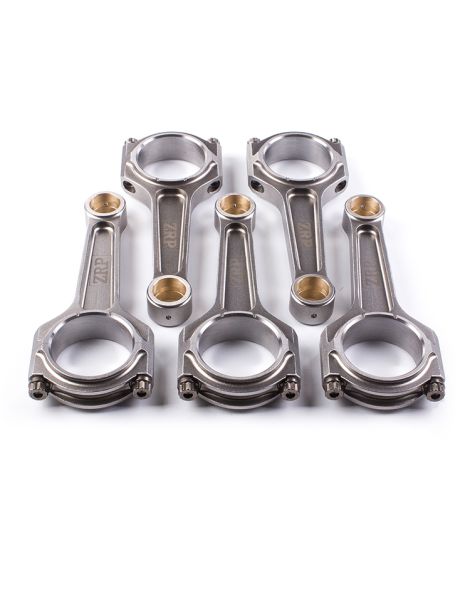
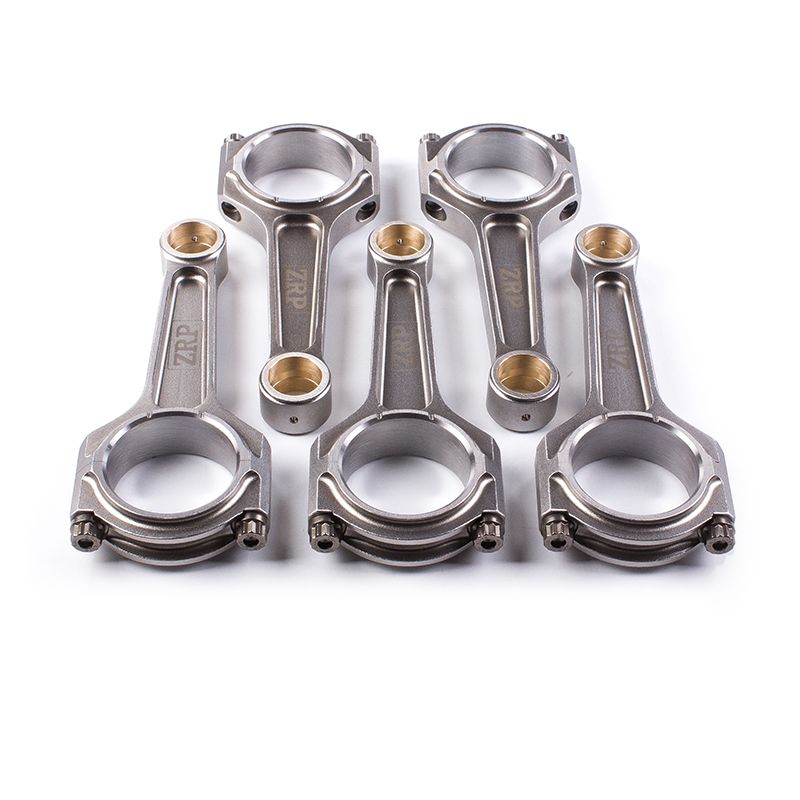
Set of 5 forged 4340 steel connecting rods for the Fiat Coupé 2.0 20V 5-cylinder 175A/182A.
In 1996 the Fiat Coupé received a 1,998 cc 20-valve in-line five that took over from the four-cylinder units of the first series. Two versions shared the range: the naturally aspirated 182A1.000 with 147 hp and the turbocharged 175A3.000 with 220 hp, for a long time one of the most powerful front-wheel-drive cars of its day.
The layout is an in-line five with an 82 mm bore and a 75.65 mm stroke, slightly oversquare dimensions that explain both the torque available low down and the engine’s distinctive sound. The block takes preparation readily, which is what made it a favourite base among tuners.
The limit lies in the reciprocating assembly. The factory rods are sized for standard output; as soon as boost pressure climbs, engine speed rises or heavier forged pistons go in, they become the link that gives way. Replacing them with forged rods is the precondition for any lasting power increase on a prepared 175A or 182A.
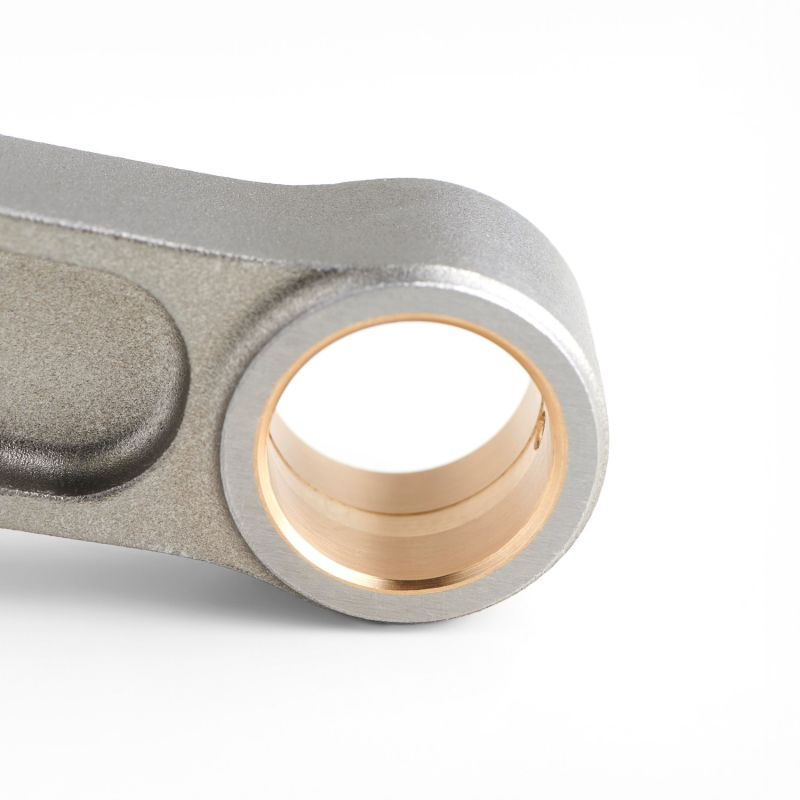
ZRP forged rods replace the factory 175A / 182A items with beams machined from 4340 steel and assembled with ARP hardware. Built to the original dimensions (145 mm centre distance, 22 mm pin), they fit without reworking the bottom end and accept power and engine speeds far beyond standard.
They are aimed at in-line fives used in competition and in hard use: rallying, circuit and track days, drift, drag racing, hillclimb and time attack. They secure Stage 2, Stage 3 and Stage 4+ builds, in other words as soon as forged pistons, a larger turbocharger, more boost or a raised rev limit take the original rod outside its working range.
| Reference | Brand | Profile | Bolts | Pin diameter OEM 22 mm | Small-end width | Big-end diameter OEM n.p. | Big-end width | Centre distance OEM 145 mm | Weight per rod |
|---|---|---|---|---|---|---|---|---|---|
| R-FIA-002-I | ZRP | I | ARP 2000-3/8"-38mm | 22 mm | 51,4 mm | 22 mm | 145 mm | 566 g | |
| R-FIA-002-I-L19 | ZRP | I | ARP L19-3/8"-38mm | 22 mm | 51,4 mm | 22 mm | 145 mm | 566 g |
| Rod | Bolts | Torque | Recommended stretch |
|---|---|---|---|
| ZRP (R-FIA-002-I) | ARP 2000 | 61 N·m | 0,140 – 0,152 mm |
| ZRP (R-FIA-002-I-L19) | ARP L19 | 67,8 N·m | 0,152 – 0,165 mm |
Manufacturers recommend the stretch method rather than torque alone: it guarantees the true bolt tension, independent of thRead friction.
| 4340 steel is a low-alloy nickel-chromium-molybdenum steel, used in aerospace and motorsport for its balance of mechanical strength and toughness. Forged then heat-treated by quenching and tempering, it combines high tensile strength, excellent fatigue endurance and real ductility. Against a series sintered-metal rod, optimised for production cost, a forged 4340 rod gains around 19% in yield strength, 8% in tensile strength and 19 to 37% in fatigue resistance, i.e. a service life under cyclic load several times longer. That is what makes it the reference material as soon as boost and engine speed rise. |
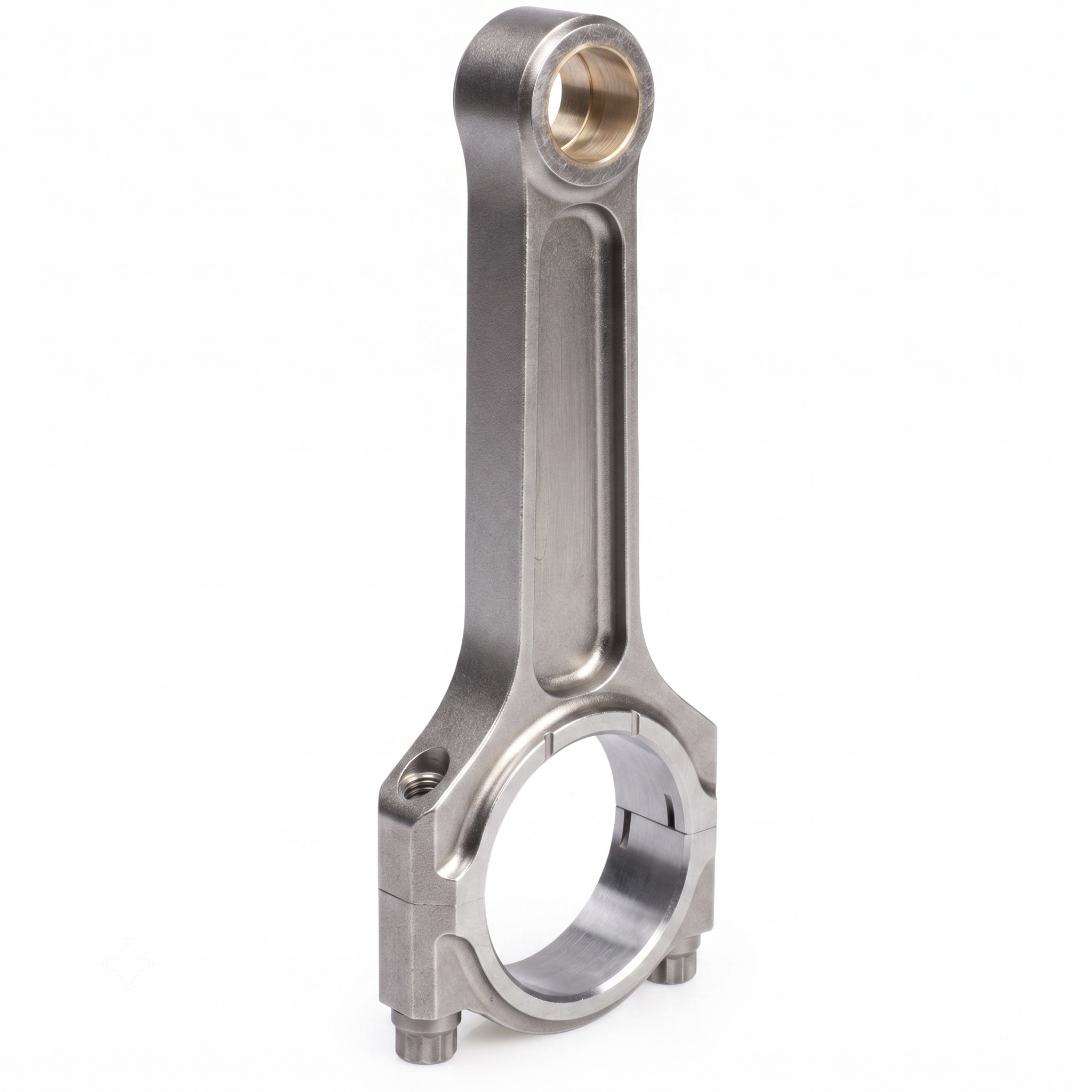 | I profile (I-Beam) The I-section concentrates material where compression and bending loads are highest. Its thinner central section lightens the rod: less inertia and freer revving, for an excellent weight/stiffness compromise. It is the profile of choice on modern turbo engines, perfectly suited to the heavily tuned 20V five-cylinder of the Fiat Coupé, handling high torque without blunting the rev pick-up. |
 How to choose your rod bolts?
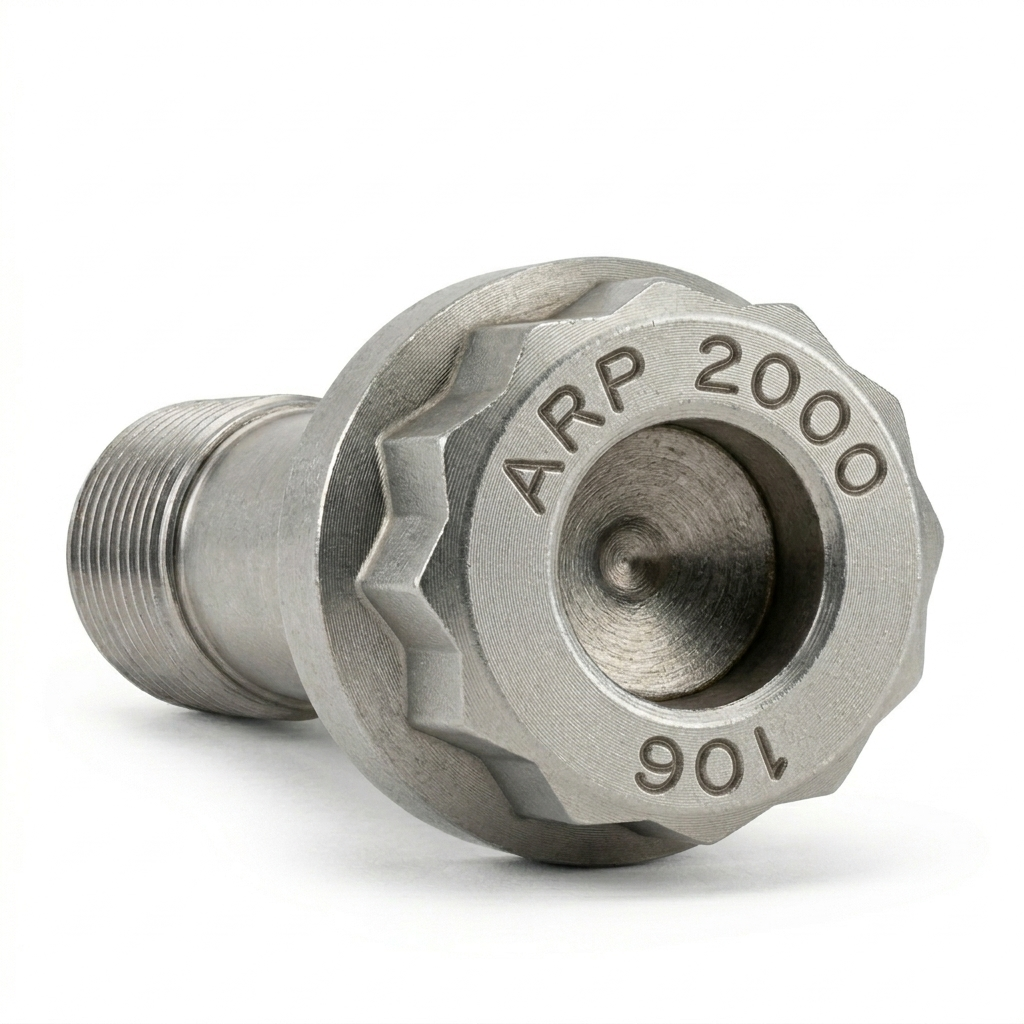 | ARP 2000 (tensile strength around 220,000 psi, i.e. ~1,517 MPa) is the high-performance standard. It covers builds up to 200 hp per cylinder in 3/8", and up to 8,500 rpm. Versatile, rugged and reliable, it fits with no storage constraint and suits track, trackday, drift, rally, drag and hill climb. |
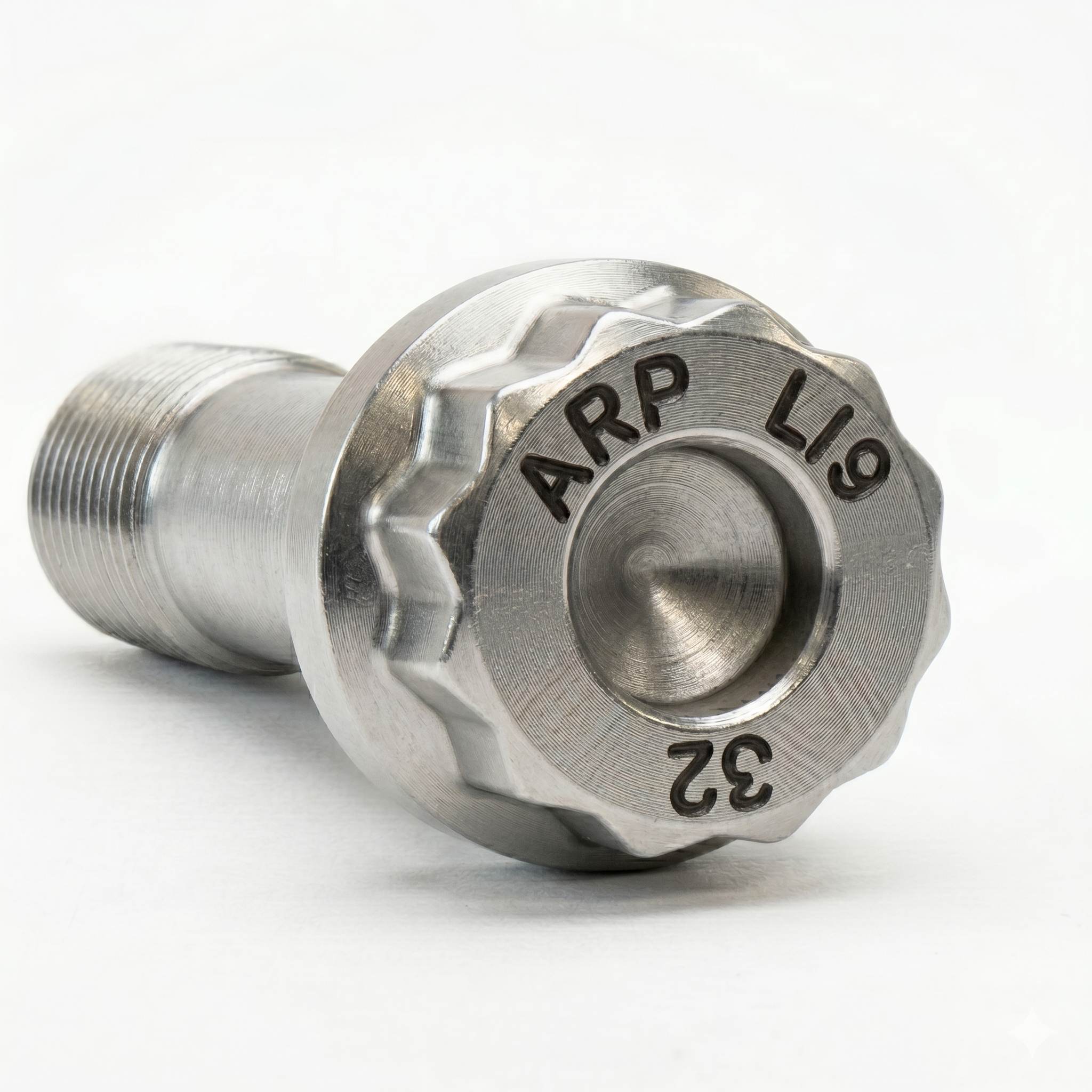 | ARP L19 (tensile strength around 260,000 psi, i.e. ~250 hp per cylinder in 3/8", and up to 10,000 rpm. Sensitive to corrosion and hydrogen embrittlement, it is fitted and stored oiled, away from moisture. |
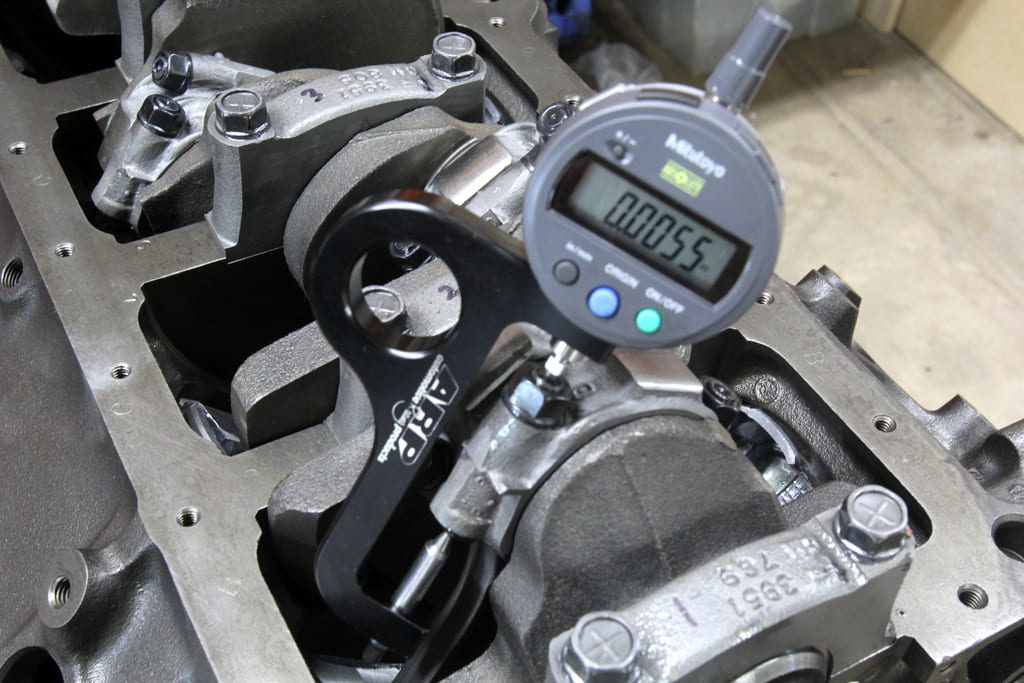
| In addition to torque tightening, measuring bolt stretch with a dial indicator is the most reliable check of a correct, repeatable preload. With the bolt fitted, the dial indicator is placed on the two ends of the bolt and its actual stretch is read, which must match the recommended value: 0.140 to 0.152 mm for ARP 2000 and 0.152 to 0.165 mm for ARP L19. This method frees itself from the friction scatter inherent in torque tightening alone and secures the bottom end of heavily loaded engines, such as a tuned 20V five-cylinder. |
Without a gauge, strictly follow the specified torque.
 | ZRP, a Greek brand of high-performance forged connecting rods designed by Alex Drakos in Athens. Each rod is forged in 4340 steel, precision-machined and balanced to ±1 g to stay reliable at high rpm. Designed and inspected in Greece, proven in rally, on track and in drift, they are offered here in I-Beam profile with ARP 2000 or ARP L19 bolts. |
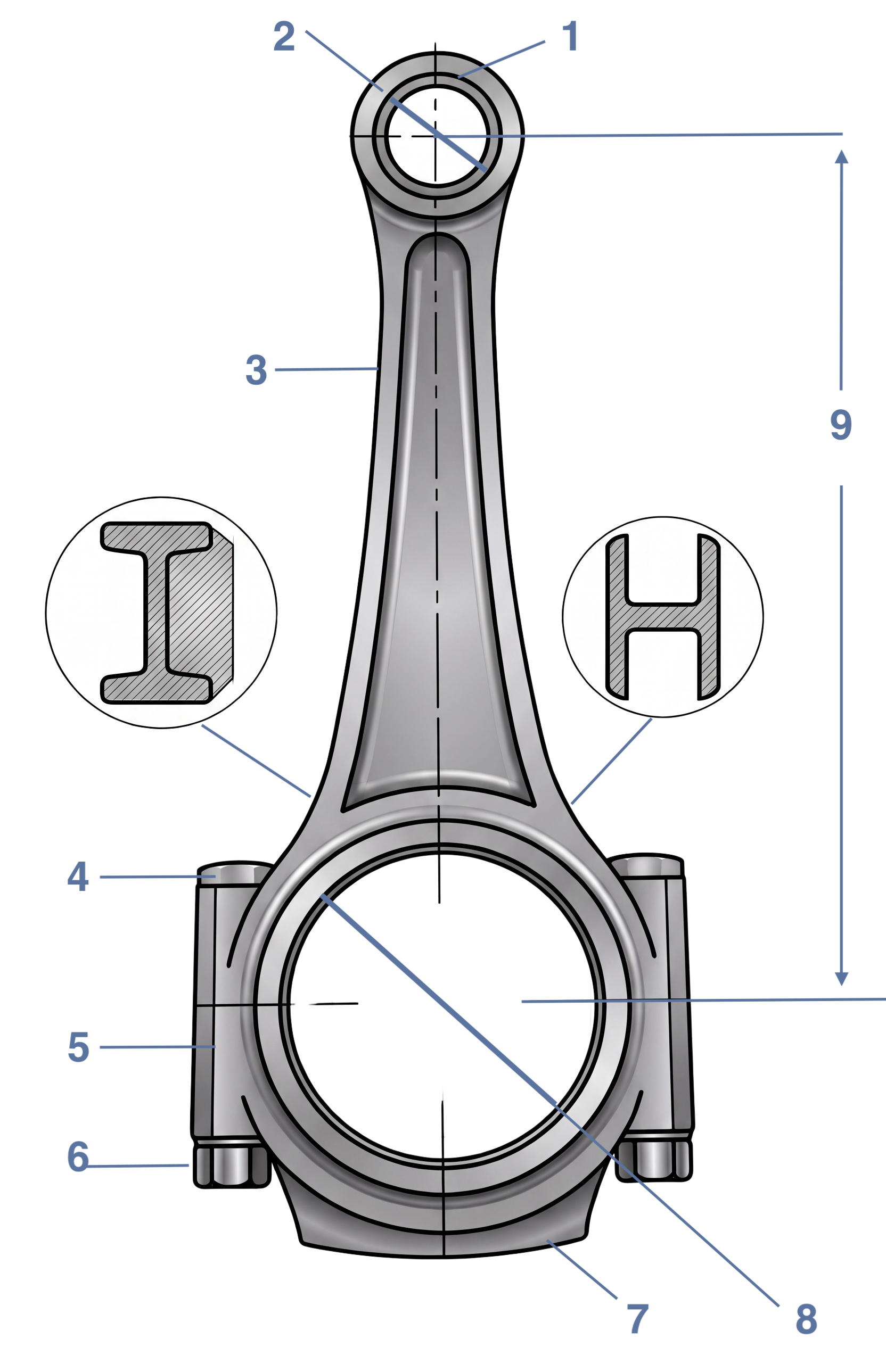 | 1) Small end 2) Small-end diameter 3) Rod beam 4) Rod bolt 5) Big end 6) Rod nut / bolt 7) Rod cap 8) Big-end diameter 9) Center-to-center |
These forged rods fit the 2.0 20-valve five-cylinder of the Fiat Coupé, in both its naturally aspirated and turbo versions.
| Make | Model (chassis) | Engine code | Power | Years |
|---|---|---|---|---|
| Fiat | Coupé (175) 2.0 20V Turbo | 175A3.000 | 162 kW (220 ch) | 1996–2000 |
| Fiat | Coupé (175) 2.0 20V | 182A1.000 | 108 kW (147 ch) | 1996–2000 |
Always check your vehicle's exact engine code before ordering: only the 175A and 182A units with 145 mm centre distance are concerned.
OEM reference: 46424681 (175A) / 46821747 (182A) (set of 5 connecting rods)
Rebuilding a bottom end after a standard rod lets go costs several times the price of a forged set: the rod usually takes the piston with it, marks the crankshaft and damages the liner, when it does not go through the block.
Fitting forged rods while the engine is already open removes that scenario and avoids paying for labour twice. On a prepared 20V Coupé it is the investment that makes all the others usable: forged pistons, a bigger turbocharger, a more ambitious map. Bottom-end reliability then becomes the condition for power, not the variable.