Product successfully added to your shopping cart
Quantity
Total
There are 0 items in your cart. There is 1 item in your cart.
Total products
Total shipping To be determined
Total

2.0L 16v - F4RT 776/874
Manufacturers
2.0L 16v - F4RT 776/874
Warning: Last items in stock!
New product
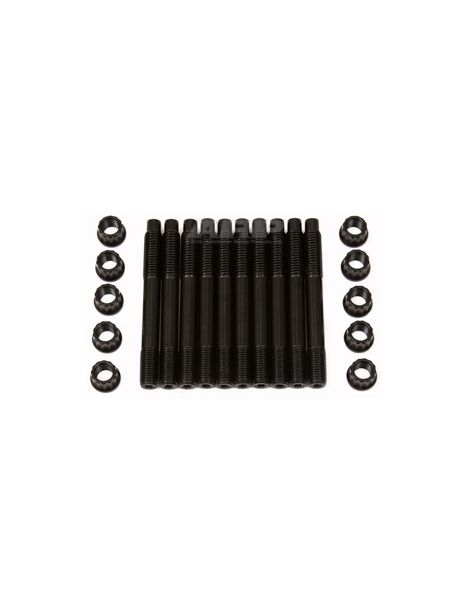
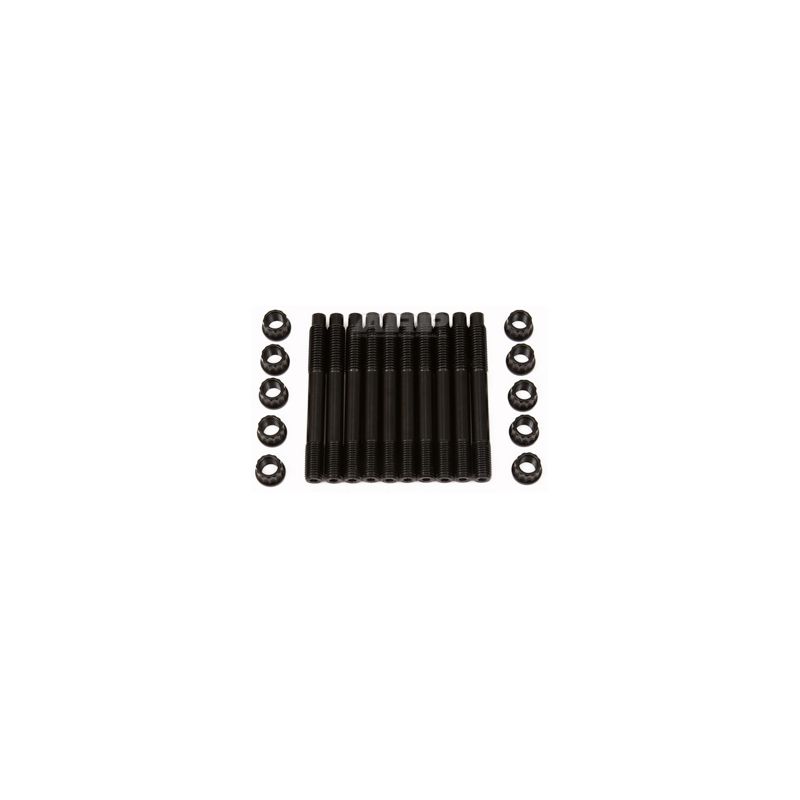
ARP 8740 crankshaft main studs for the Renault F4R 2.0 16V four-cylinder engine.
This kit is for the 2.0-litre, 16-valve Renault F4R four-cylinder, naturally aspirated or turbocharged, in the versions published by ARP and RWB (F4R 730/732, F4R 830/832, F4Rt 776/874) and in those that the NGK catalogue links to the same engine (F4R 738 and 774). It covers the Clio II and III, the Mégane II and III, and the Scénic II with the turbo engine.
The main caps of the F4R are originally held by Renault fasteners; the M10 x 1.5 studs in this kit take their place.
The bottom end rests on its main bearings: combustion after combustion, the loads coming from the connecting rods end up on them. Under this stress the main cap tries to move on its parting line, which eventually brinells the mating faces and distorts the bearing bore.
The 8740 ARP studs in M10 x 1.5 in this kit replace the original main cap fasteners of the F4R. With the block threads cleaned beforehand, each stud goes in by hand only and the caps follow. Threads and nuts receive ARP Ultra-Torque lubricant, and tightening follows in three equal passes, in the manufacturer's sequence: 27, 54 then 81 Nm. ARP advises against engine oil, whose friction makes the clamping force uneven. ARP makes these fasteners in 8740, a chrome-moly steel brought by heat treatment to 190,000 psi tensile strength. As a reference point, an engine's original fasteners generally fall into classes 10.9 and 12.9, whose minimum ranges from 150,800 to 176,900 psi. These 8740 studs in M10 x 1.5 take up to 1,000 hp on this four-cylinder engine (calculated estimate).
| Part number | Brand | Grade / material | Nut | Thread |
| ARP-216-5401 | ARP | 8740 steel | Nut | M10 x 1.5 |
| Reference | Pass 1 | Pass 2 | Pass 3 |
| ARP-216-5401 | 27 Nm | 54 Nm | 81 Nm |
The studs are screwed into the block by hand, with no torque. If the assembly is to remain permanent, the ARP instruction sheet accepts a Loctite thread locker, with tightening carried through before the product cures.
According to ARP instruction sheet 216-5401, the nuts are tightened in three equal passes up to 60 ft-lb, i.e. 81 Nm.
The nuts are tightened in the sequence the manufacturer specifies for the main caps; the instruction sheet supplied with the kit describes the full procedure.
Stronger fasteners change the clamping force: the size and roundness of the main bearing bores are checked after installation, and the bores are line-honed if necessary, using the final fasteners and lubricant.
Values taken from the ARP 216-5401 instruction sheet in force at the date of publication; the official instruction sheet prevails should any difference appear. Read the ARP 216-5401 instruction sheet
The torque figures given only apply with ARP assembly grease, never with engine oil.
| Buy the ARP assembly grease → |
 | Founded in the early 1970s by Gary Holzapfel, who came from the aerospace industry, ARP (Automotive Racing Products) set out to prevent fastener-related engine failures in motorsport. Its thousands of part numbers are designed and manufactured in California, in materials chosen for each use. |
| Criterion | Original main bolts | Reinforced ARP studs |
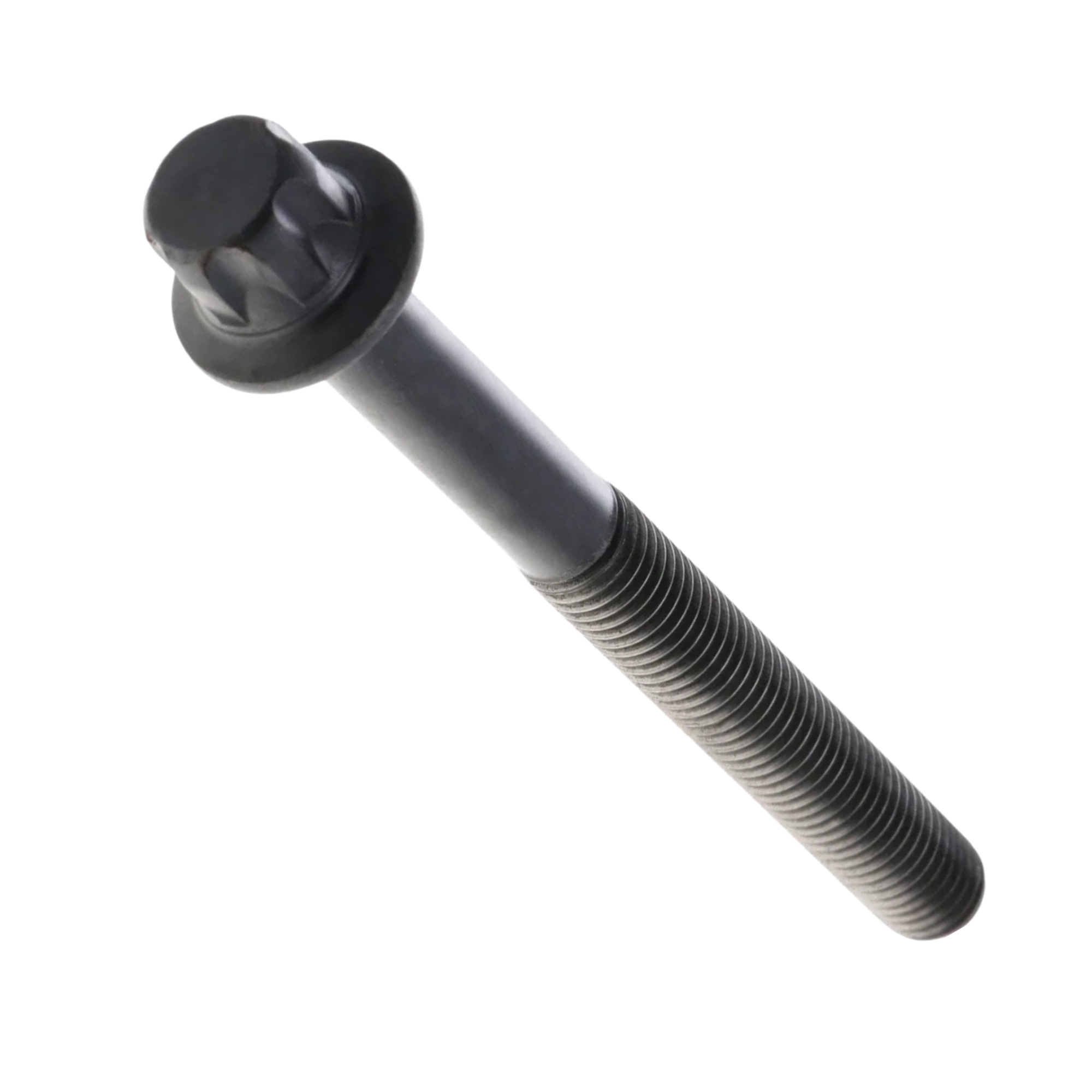 | 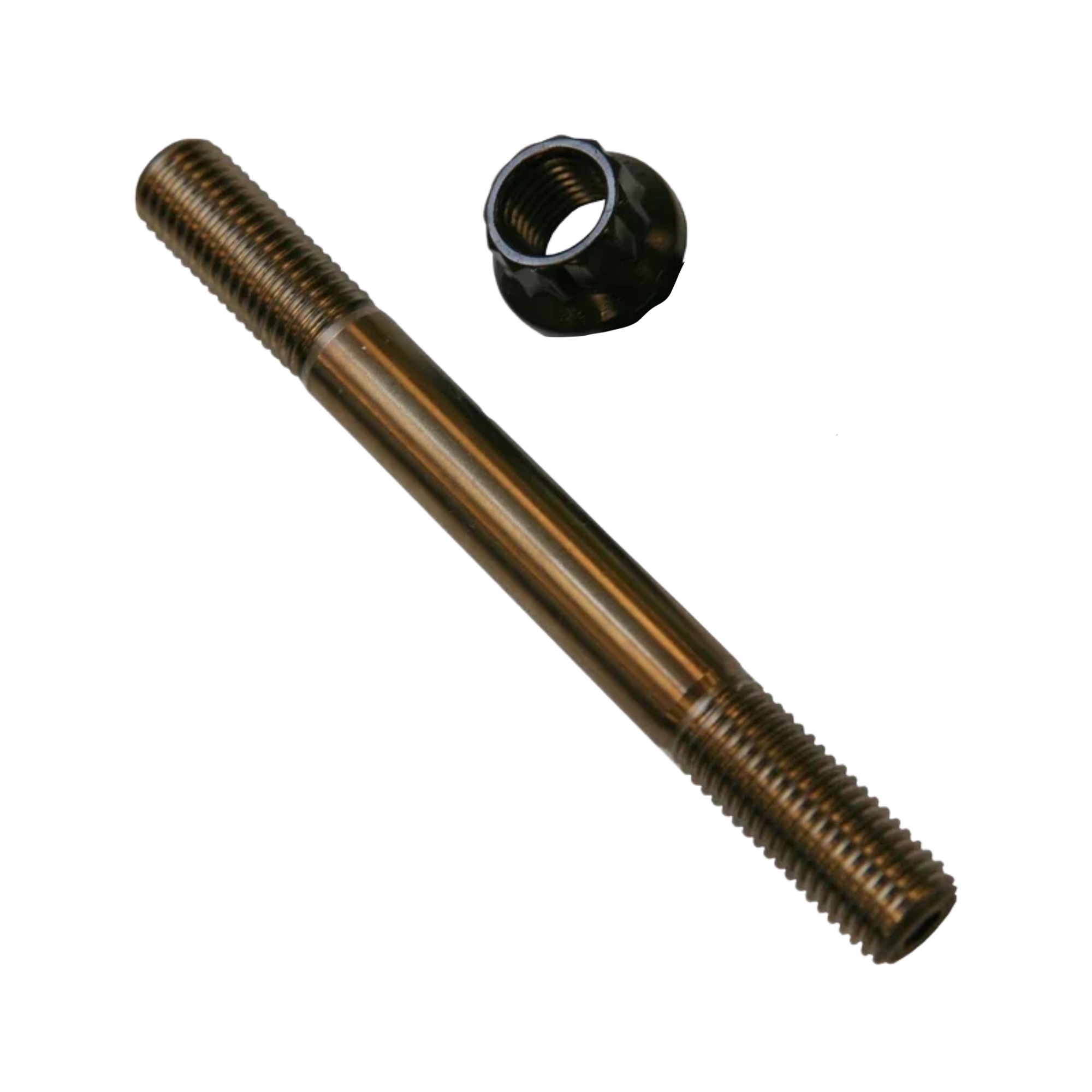 | |
| Fitting | The bolt turns in the block thread at every tightening | The stud stays still, only the nut turns |
| Condition of the threads | Threads stressed at every removal | Block threads spared, stud placed by hand |
| Cap fitting | Cap to be held in place while screwing | The studs locate the cap by themselves |
| Model | Engine code | Power | Years |
| Renault Clio II 2.0 16V Sport (CB0M) | F4R 730 | 169 hp | 2000-2009 |
| Renault Clio II 2.0 16V (CB0M, CB1G) | F4R 730 | 172 hp | 2001-2005 |
| Renault Clio II 2.0 16V Sport | F4R 738 | 179 hp | 2004-2005 |
| Renault Mégane II 2.0 Renault Sport | F4R 774 | 224 hp | 2004-2009 |
| Renault Mégane II 2.0 | F4R 774 | 230 hp | 2006-2008 |
| Renault Mégane II 2.0 16V Turbo | F4R 776 | 163 hp | 2004-2008 |
| Renault Mégane II 2.0 16V Turbo | F4R 776 | 167 hp | 2009 |
| Renault Mégane II Coupé-Cabriolet 2.0 16V Turbo | F4R 776 | 163 hp | 2004-2009 |
| Renault Scénic II 2.0 16V Turbo (JM0W) | F4R 776 | 163 hp | 2004-2008 |
| Renault Grand Scénic II 2.0 | F4R 776 | 163 hp | 2004-2009 |
| Renault Clio III 2.0 16V Sport (CR0N, CR1P) | F4R 830 / 832 | 197 hp | 2006-2012 |
| Renault Clio III 2.0 16V Sport | F4R 832 | 200 hp | 2008-2014 |
| Renault Mégane III Coupé 2.0 TCe (DZ1N) | F4R 874 | 250 hp | 2009-2015 |
| Renault Mégane III Coupé 2.0 R.S. | F4R 874 | 265 hp | 2008-2016 |
| Renault Mégane III Grandtour 2.0 TCe | F4R 874 | 220 hp | 2012-2016 |
| Renault Mégane III Coupé 2.0 TCe 220 | F4R 874 | 220 hp | 2013-2015 |
| Renault Mégane III (BZ0/1, B3) 2.0 TCe 220 | F4R 874 | 220 hp | 2013-2016 |
| Renault Mégane III Coupé 2.0 R.S. | F4R 874 | 273 hp | 2014-2016 |
An F4R pushed in revs or power, in a Clio RS as in a Mégane RS, asks more of the main caps than Renault planned for. A steadier clamp costs little next to a block or crankshaft to be redone, and these ARP studs provide it.
When the bottom end is open, the bearings are replaced too. Here are the tri-metal crankshaft main bearings designed for these engines:
| Crankshaft main bearings Renault F4R → |