Product successfully added to your shopping cart
Quantity
Total
There are 0 items in your cart. There is 1 item in your cart.
Total products
Total shipping To be determined
Total

2.0L 16v - EcoBoost Gen1
Manufacturers
2.0L 16v - EcoBoost Gen1
Warning: Last items in stock!
New product
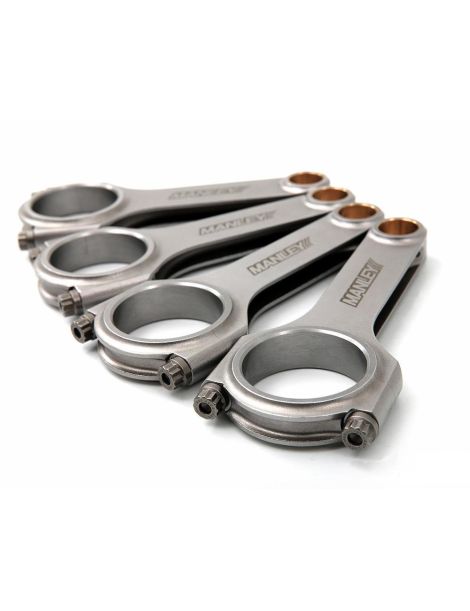
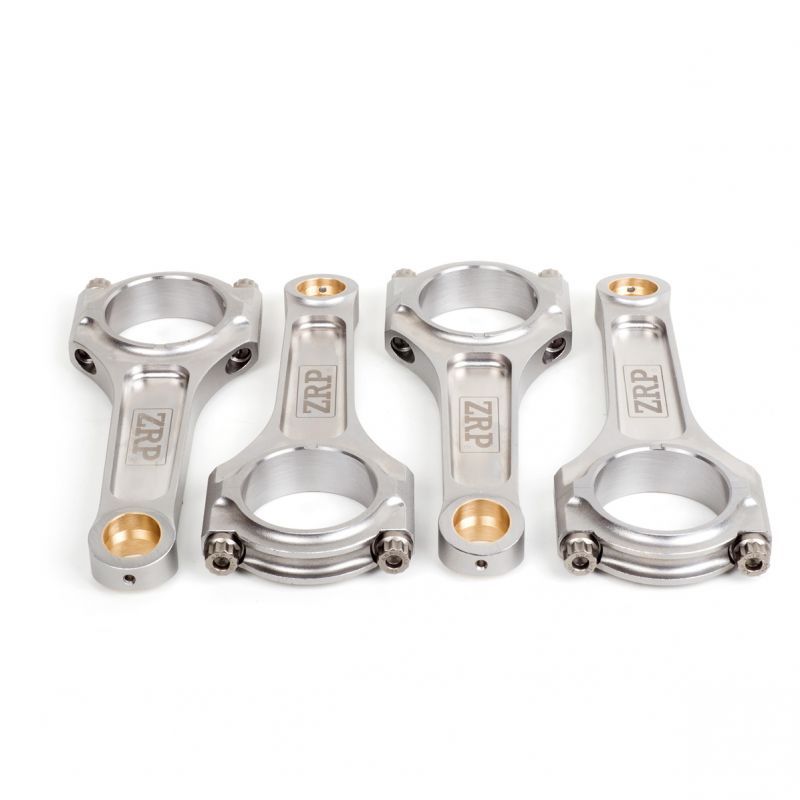
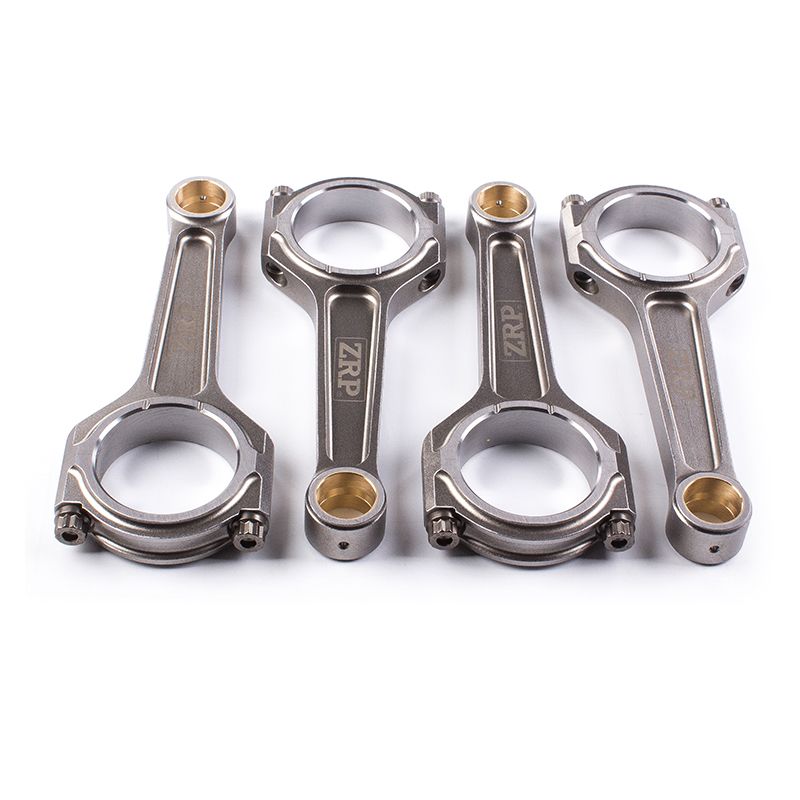
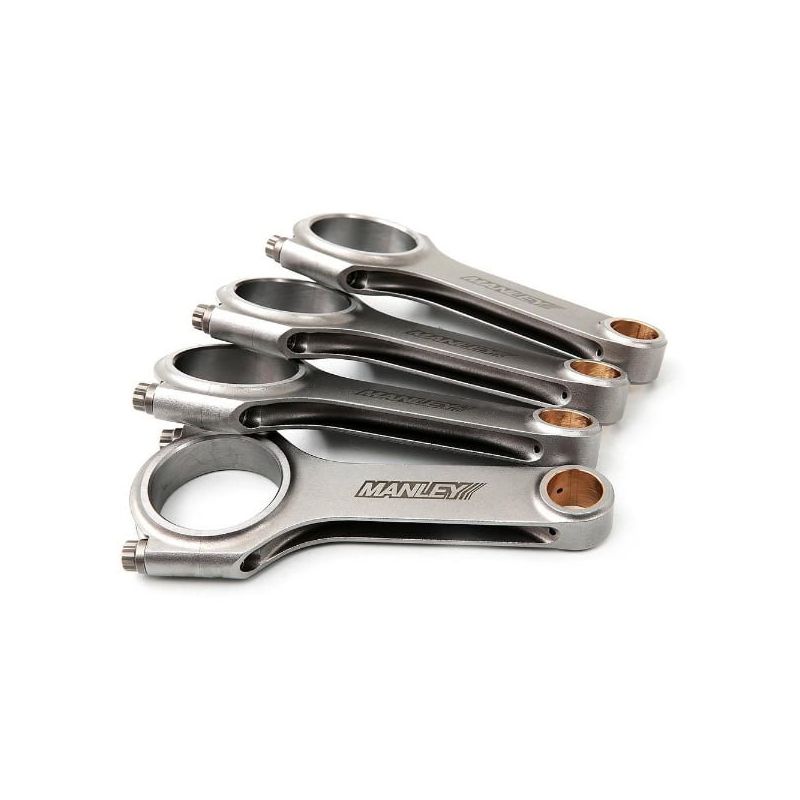
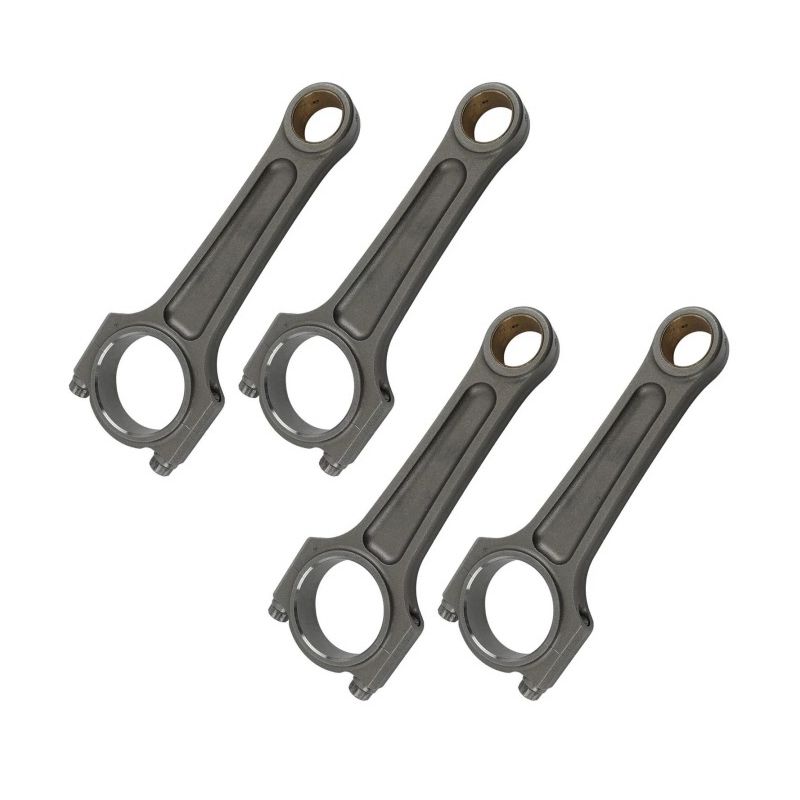
Set of 4 forged connecting rods in 4340 steel for the Ford 2.0L 16V EcoBoost.
The 2.0 EcoBoost is Ford's 1,999 cc direct-injection turbocharged inline four-cylinder, with twin overhead cams and sixteen valves. With an 87.5 mm bore and 83.1 mm stroke, it produces from 240 hp (176 kW) in the Mondeo V, Galaxy III and S-MAX to 250 hp (184 kW) in the Focus III ST, built from 2012 to date. It is the modern GTDI block that replaced the Duratec across the brand's mid-range and sporting line-up. As soon as boost, torque and rpm rise in a build, the factory fracture-split rod, sized for series use, becomes the weak link of the rotating assembly. Replacing it with weight-matched forged rods is the first step towards a reliable, durable 2.0 EcoBoost.
Drop-forged and precision-machined, these rods handle bending, compression and fatigue loads far beyond what the factory 2.0 EcoBoost rod tolerates. They suit every discipline: circuit, time attack, drift, drag, rally and hillclimb. Depending on the build, they support a reliability-focused Stage 1 as well as a Stage 2 or a Stage 3 pushed on boost. Supplied as a complete set of 4 and weight-matched, they preserve the balance of the four-cylinder rotating assembly. All adopt the 2.0 EcoBoost's 22.5 mm piston pin, for a center-to-center length of around 155.85 mm.
| Reference | Brand | Profile | Bolts | Pin Ø (mm) | Small-end width (mm) | Big-end Ø (mm) | Big-end width (mm) | Center-to-center (mm) | Weight (g) |
|---|---|---|---|---|---|---|---|---|---|
| 14080-4 | Manley | H | ARP 2000-3/8"-38mm | 22,5 | 55,04 | 21,84 | 155,85 | 590 | |
| 14433-4 | Manley | I-HD | ARP 2000-3/8"-38mm | 22,5 | 55,04 | 21,84 | 155,85 | 615 | |
| KCR338A-T | Wössner | I | ARP 2000-3/8"-38mm | 22,5 | 21,80 / 11,60 | 55 | 21,85 | 155,75 | 637,55 |
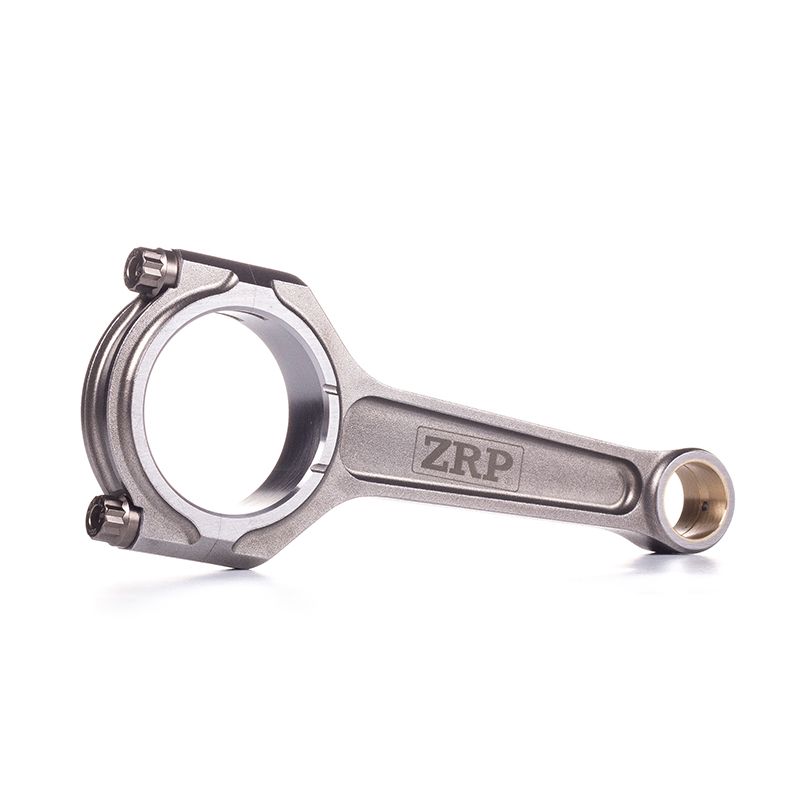
| R-FOR-008-I | ZRP | I | ARP 2000-3/8"-38mm | 22,5 | 55,04 | 21,84 | 155,86 | 575 | |
| R-FOR-008-I-L19 | ZRP | I | ARP L19-3/8"-38mm | 22,5 | 55,04 | 21,84 | 155,86 | 575 |
ZRP: Straight, non-tapered pin end.
A broken rod bolt never leaves the block intact, and it almost always comes from tightening outside the specified range. Under-tightened, the bolt takes an alternating load instead of a steady one: every revolution loads and unloads it, fatigue sets in at the thread root, and meanwhile the cap lifts, the shell is hammered and clearance opens. Over-tightened, it starts its life with stress already close to its limit: the slightest overload makes it fail, not to mention the distorted bearing bore and the oval big end that remove the shell's even contact. On this 2.0 EcoBoost, the Manley, Wössner and ZRP rods are each tightened according to their own row in the table below, using the fastener manufacturer's torque and stretch figures, which differ between ARP 2000 and ARP L19. The stretch gauge is the reference tool for making sure every bolt really works within its elastic domain; assemble with ARP lubricant, the kit instructions taking priority.
| Rod | Bolts | Torque | Recommended stretch |
|---|---|---|---|
| Manley H (14080-4) | ARP 2000 | 81,3 N·m | 0,147 – 0,157 mm |
| Manley I-HD (14433-4) | ARP 2000 | 81,3 N·m | 0,147 – 0,157 mm |
| Wössner I (KCR338A-T) | ARP 2000 | 74,6 N·m | 0,140 – 0,152 mm |
| ZRP I (R-FOR-008-I) | ARP 2000 | 61 N·m | 0,140 – 0,152 mm |
| ZRP I (R-FOR-008-I-L19) | ARP L19 | 67,8 N·m | 0,152 – 0,165 mm |
These rods are forged from 4340 low-alloy nickel-chromium-molybdenum steel, the benchmark for high-performance rods. Forged, then quenched and tempered, it keeps a continuous grain flow that gives high tensile strength and excellent fatigue life, two decisive assets on a heavily boosted 2.0 EcoBoost. Compared with a cost-optimised factory fracture-split rod, a forged 4340 rod gains about +19% yield strength, +8% tensile strength and +19 to +37% in fatigue endurance. It is this margin that absorbs the torque and boost increases of a prepared 2.0 without breakage.
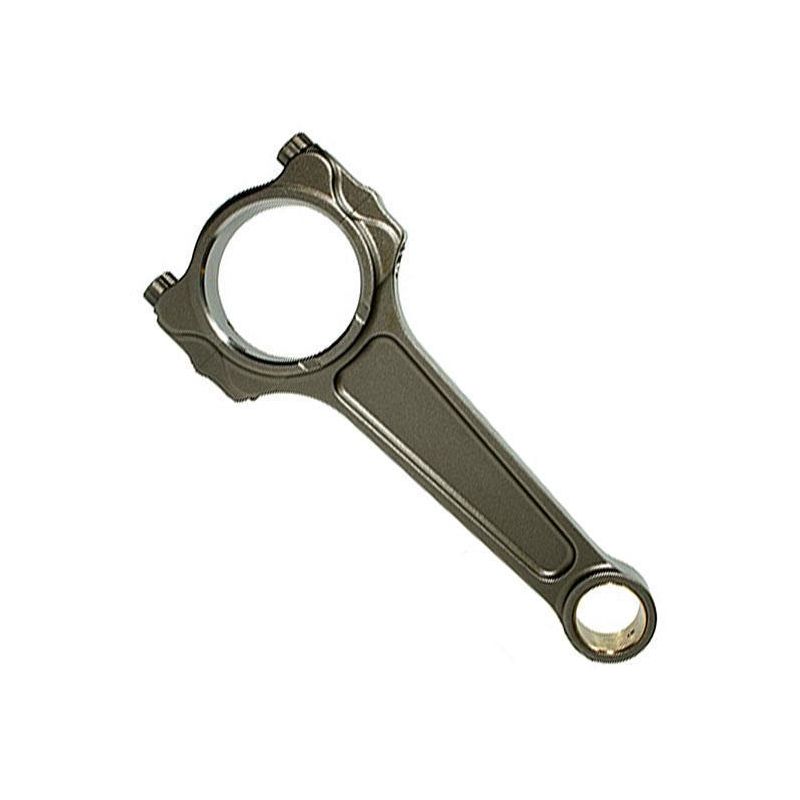
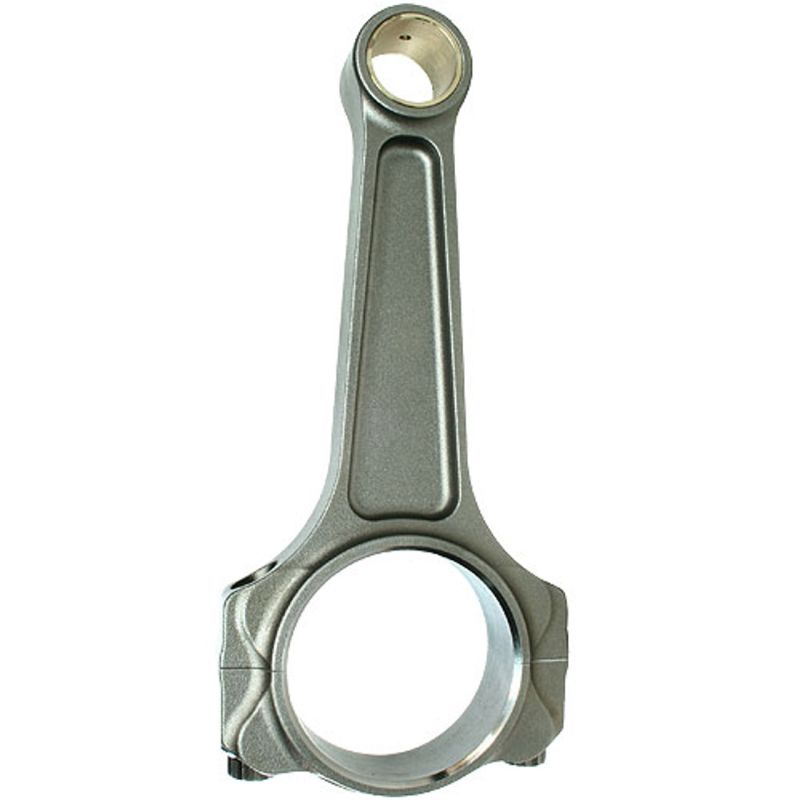
The range brings together three profiles. The I-beam, offered by ZRP and Wössner, gives an excellent stiffness-to-weight balance, particularly relevant on a boosted 2.0 where a light assembly matters as much as bending resistance. Manley offers this profile in an I-HD (Heavy Duty) reinforced section, and also provides an H-beam. The specification table lists, for each reference, the center-to-center length, big-end diameter, big-end width and weight.
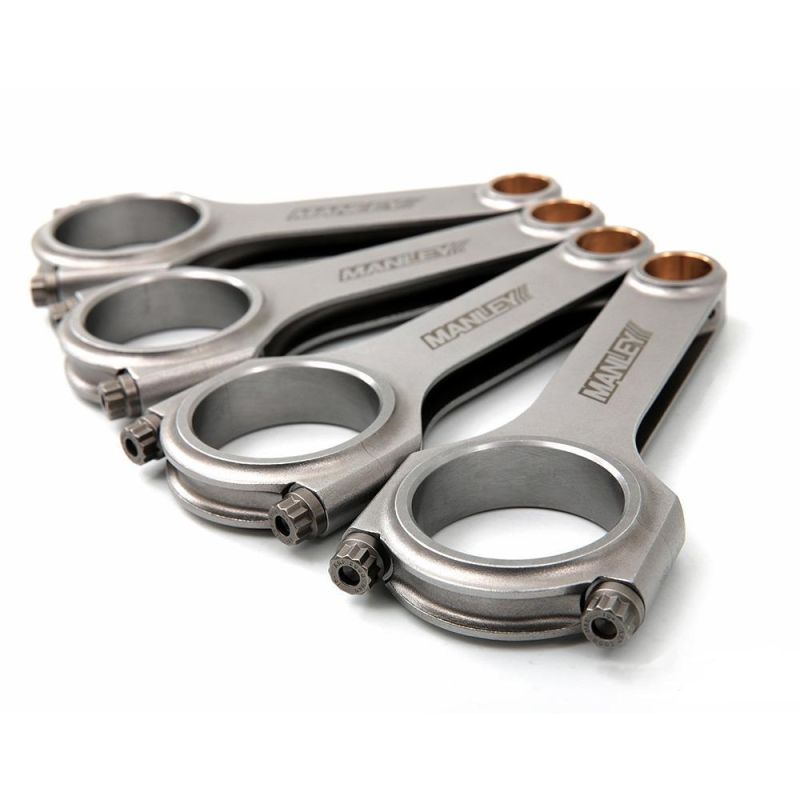
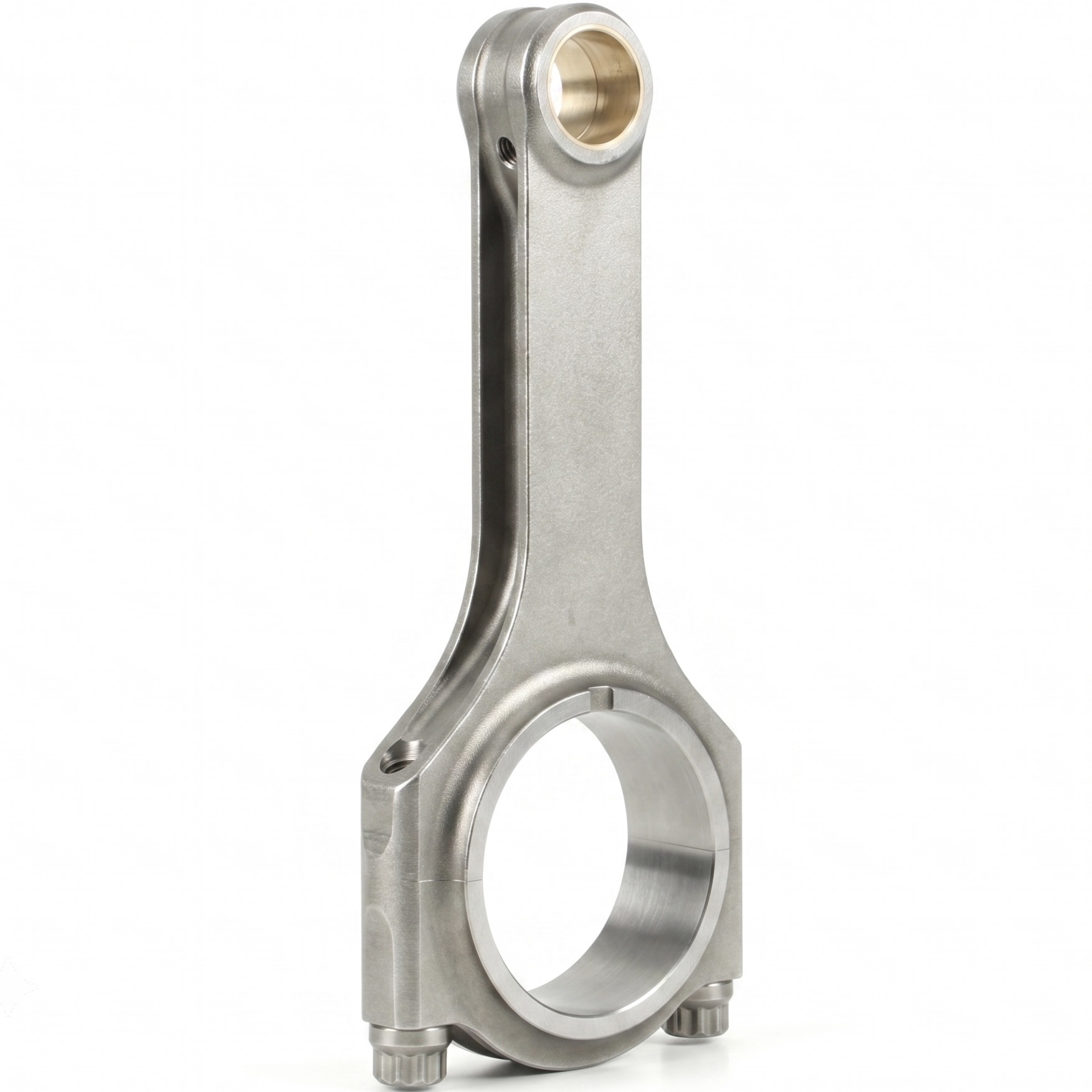 | H profile: H-beam by Manley, whose two flat flanks give high bending stiffness for a controlled weight, favoured on builds carrying heavy torque. |
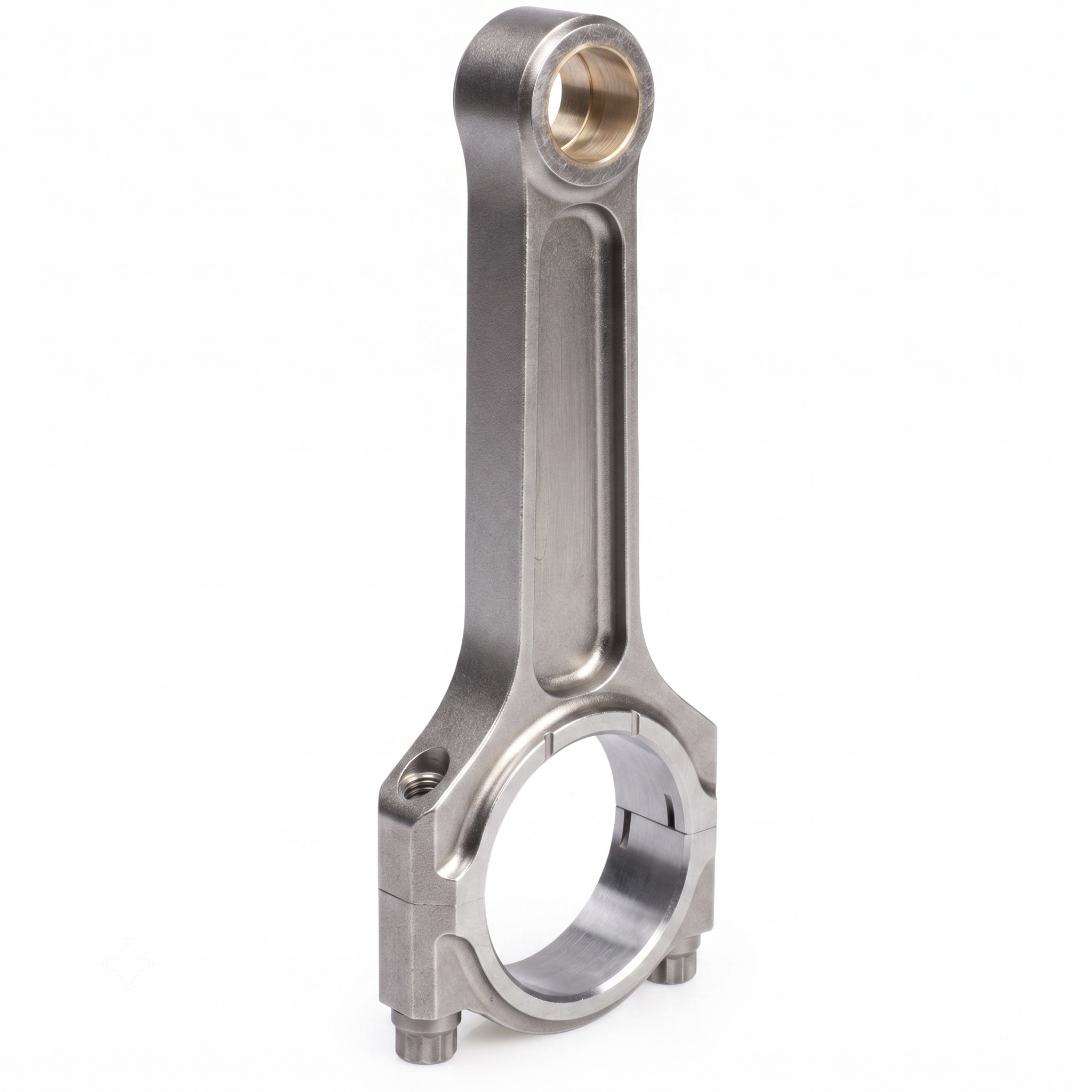 | I profile: I-beam with an optimised stiffness-to-weight ratio, chosen by ZRP and Wössner (which machines it in its A-Beam form, an optimised I-beam); Manley also offers a reinforced I-HD (Turbo Tuff) version with a thicker beam for high boost loads. |
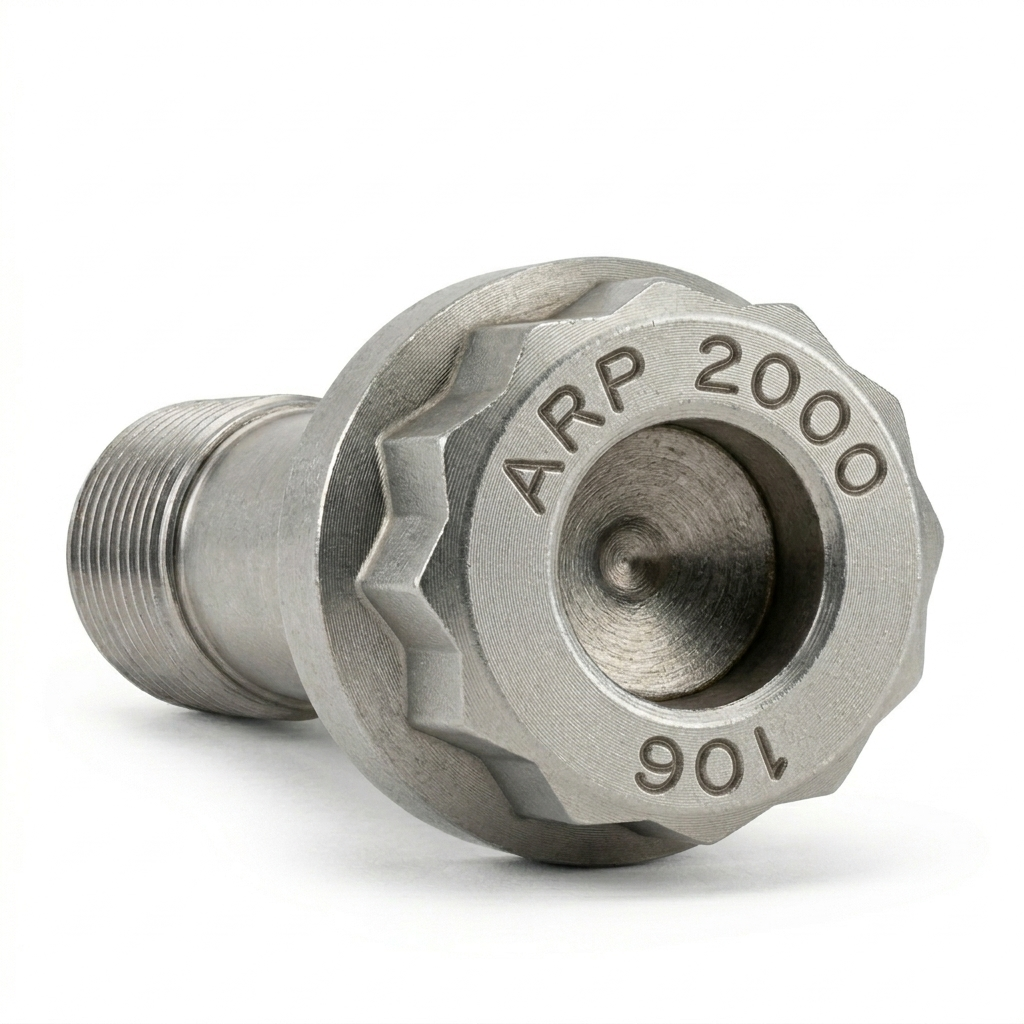 | ARP 2000: the all-round benchmark alloy, with a tensile strength of about 220,000 psi (1,517 MPa). Offered here in 3/8" diameter, it covers the vast majority of 2.0 EcoBoost builds, up to about 200 hp per cylinder, at speeds reaching 8,500 rpm. Sturdy, reliable and with no storage constraints, it is the default choice for a reliable 2.0, from Stage 1 to Stage 3. |
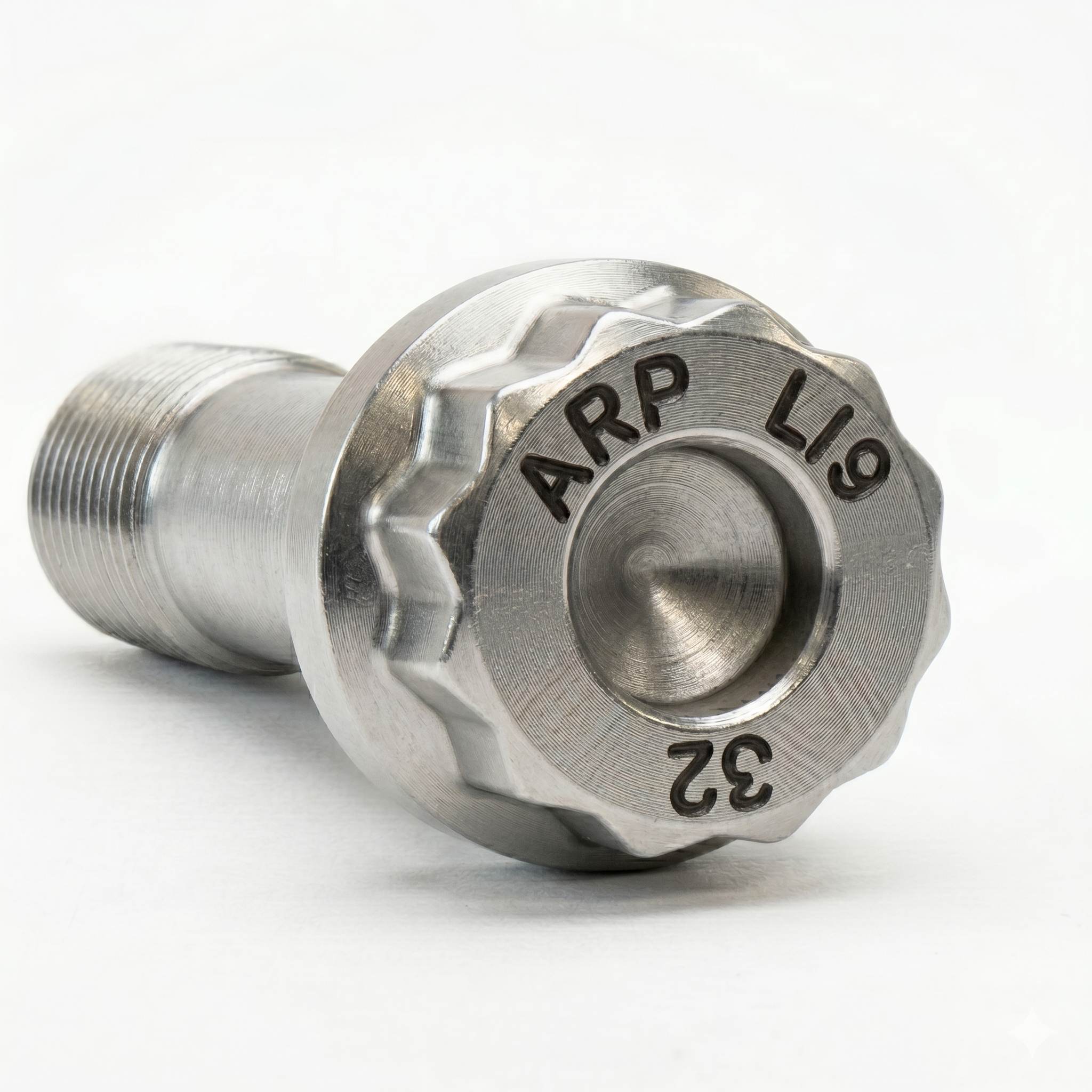 | ARP L19: a very high-strength steel, around 260,000 psi (1,793 MPa), for the most extreme builds. In 3/8" diameter, it targets about 250 hp per cylinder and rpm up to 10,000, on assemblies that climb high on rpm and boost. More sensitive to corrosion, it demands careful oiling and dry storage: it is the bolt choice for hard-run competition engines. |
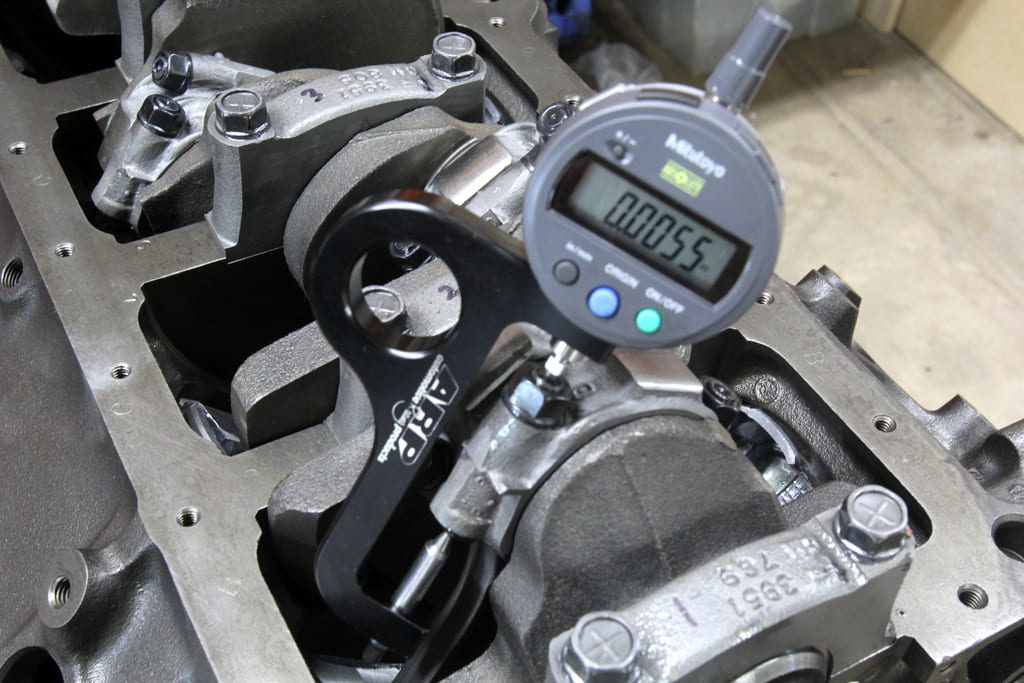
Discover the ARP stretch gauge
This 2.0 EcoBoost range brings together three race forged-rod manufacturers. ZRP precision-machines and weight-matches its rods, in the I profile. Manley, a US reference, offers its H and I-HD (Turbo Tuff) profiles built for heavy loads. Wössner, a respected German manufacturer, offers its A-Beam profile (an optimised I-beam) in 4340 steel. Each reference ships as a complete set of 4, with its dedicated ARP bolts.
 | Manley designs its rods in the United States, a business it has run since 1966. The material is a vacuum-degassed aerospace 4340, shaped by forging and then shot-peened to push back surface fatigue, with every piece inspected before dispatch. The 2.0 EcoBoost can take either the H profile or the I-HD profile, both with ARP 2000 hardware. |
 | Wössner puts its name to an I-profile rod machined in Germany from forged steel, held to the tightest tolerances, then weighed and matched before it leaves the workshop, with its ARP 2000 hardware. The maker is known for the consistency of its batches, an asset when a light and perfectly even set across four cylinders is the goal. |
 | ZRP is produced in Greece by Alex Drakos’ team in Athens, from drawing board to final inspection. For the 2.0 EcoBoost the body is forged in 4340 steel, then ground and lightened before the set of four is weight-matched to ±1 g, which keeps vibration down at the top of the rev range. The I profile is the one offered, with ARP 2000 or ARP L19 bolts. The brand built its name in rallying, circuit racing and drift. |
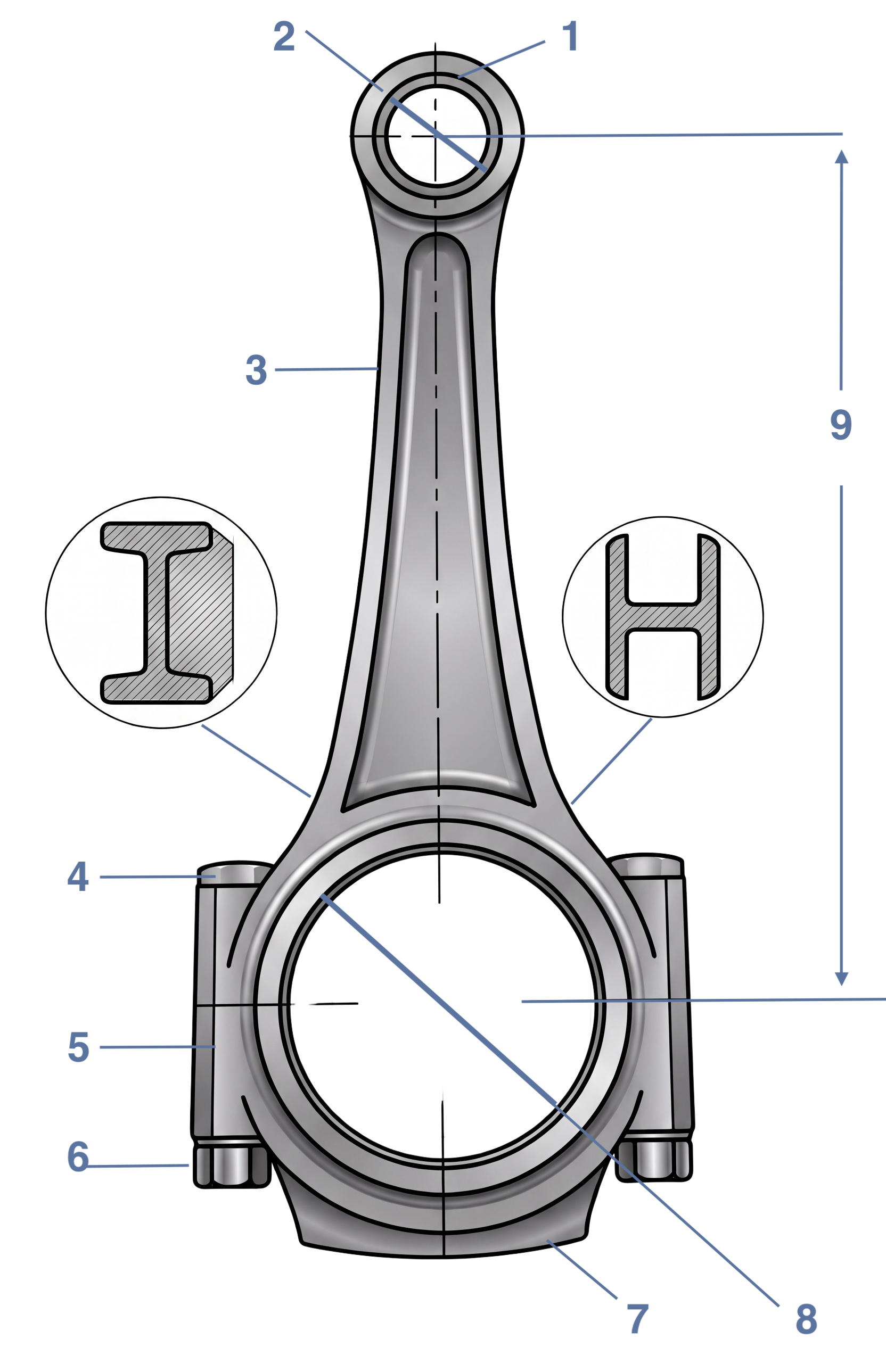 | 1) Small end 2) Small-end diameter 3) Rod beam 4) Rod bolt 5) Big end 6) Rod nut / bolt 7) Rod cap 8) Big-end diameter 9) Center-to-center |
These forged rods fit the Fords powered by the 2.0 L 16-valve EcoBoost four-cylinder (GTDI), from the Focus ST to the Mondeo, Galaxy and S-MAX:
| Brand | Model (chassis) | Engine code | Power | Years |
|---|---|---|---|---|
| Ford | Focus III ST (DYB) | R9DA / R9DB / R9DC / R9DD | 184 kW (250 ch) | 2012–2020 |
| Ford | Mondeo V (CD / CE / CF) | R9CB / R9CD / R9CF / R9CH | 176 kW (240 ch) | 2014–2022 |
| Ford | Galaxy III (CK) | R9CD / R9CI | 176 kW (240 ch) | 2015–2023 |
| Ford | S-MAX (CJ, WA6) | R9CD / R9CI | 176 kW (240 ch) | 2015–2023 |
A set of forged rods costs vastly less than a blown engine: on a 2.0 EcoBoost pushed on boost and rpm, a factory rod that lets go takes out the block and the crankshaft. By fitting weight-matched forged rods from the outset, you make your build reliable for the long term and spare yourself a full rebuild, for a negligible extra cost next to the price of a new engine.