Product successfully added to your shopping cart
Quantity
Total
There are 0 items in your cart. There is 1 item in your cart.
Total products
Total shipping To be determined
Total

2.0 16v - K20A K20Z
Manufacturers
2.0 16v - K20A K20Z
Warning: Last items in stock!
New product
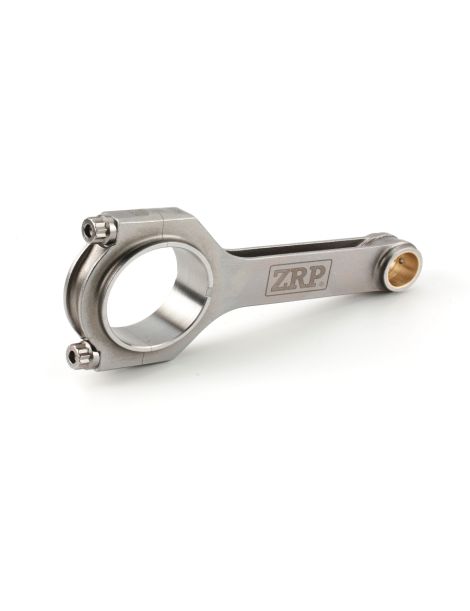
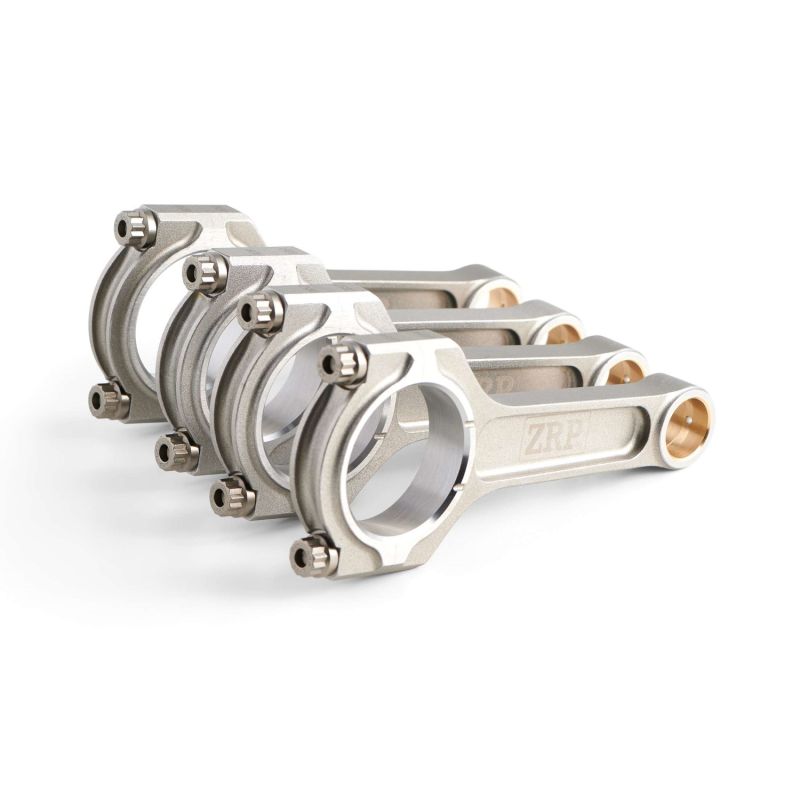
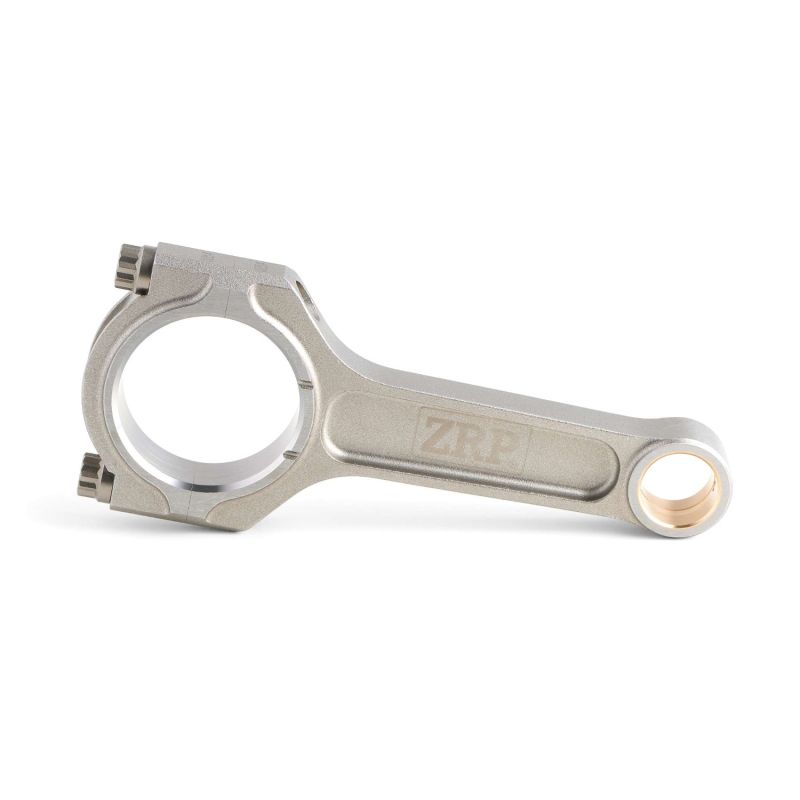
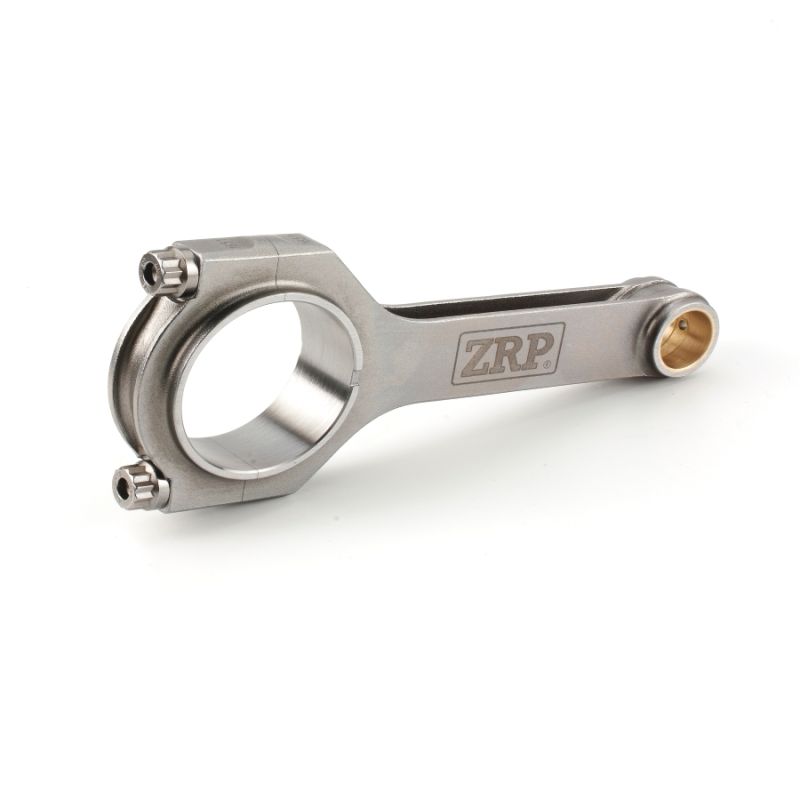
Set of 4 forged 4340 steel connecting rods for Honda K20 2.0 16V i-VTEC, short 135.5 mm center-to-center (stroker build).
Brands: ZRP
Compatibility: Honda/Acura K20 (stroker build)
Engine codes: K20A2, K20A3, K20Z1
Bolts included: ARP 2000 or L19
A 2.0 L (1998 cc) four-cylinder from the K family, the K20 combines sixteen valves, twin cams and i-VTEC variable timing acting on both valve lift and phasing. In its most accomplished naturally aspirated forms (K20A2, K20Z1, K20A3) it spins to around 8,400 rpm and makes 160 to 220 hp, which made it the engine of the Civic Type R EP3 and Acura RSX Type-S. As soon as its stroke, compression height or ratio is altered, typically in a stroker build, the rotating-assembly geometry changes and the factory sintered rod no longer fits. It then becomes the weak point of the assembly, unable to cope durably with the new cylinder pressures and inertia loads. Fitting forged rods of the chosen length, weight-matched, is the foundation of a lastingly reliable stroker K20.
These ZRP rods stand out through their short 135.5 mm center-to-center length, below the K20's factory dimension: they are designed for modified-geometry builds (stroker, revised compression height) and not for a like-for-like swap. Drop-forged then precision-machined, they tolerate compression, bending and fatigue loads far beyond the factory sintered rods. They suit every demanding use: circuit, time attack, drift, drag, rally and hillclimb, on a hard naturally aspirated K20 as on a Stage 2, Stage 3 or Stage 4 turbo or supercharger conversion. Supplied as a complete weight-matched set of 4, they keep the K20's 22 mm piston pin while requiring, because of their length, pistons with adapted compression height.
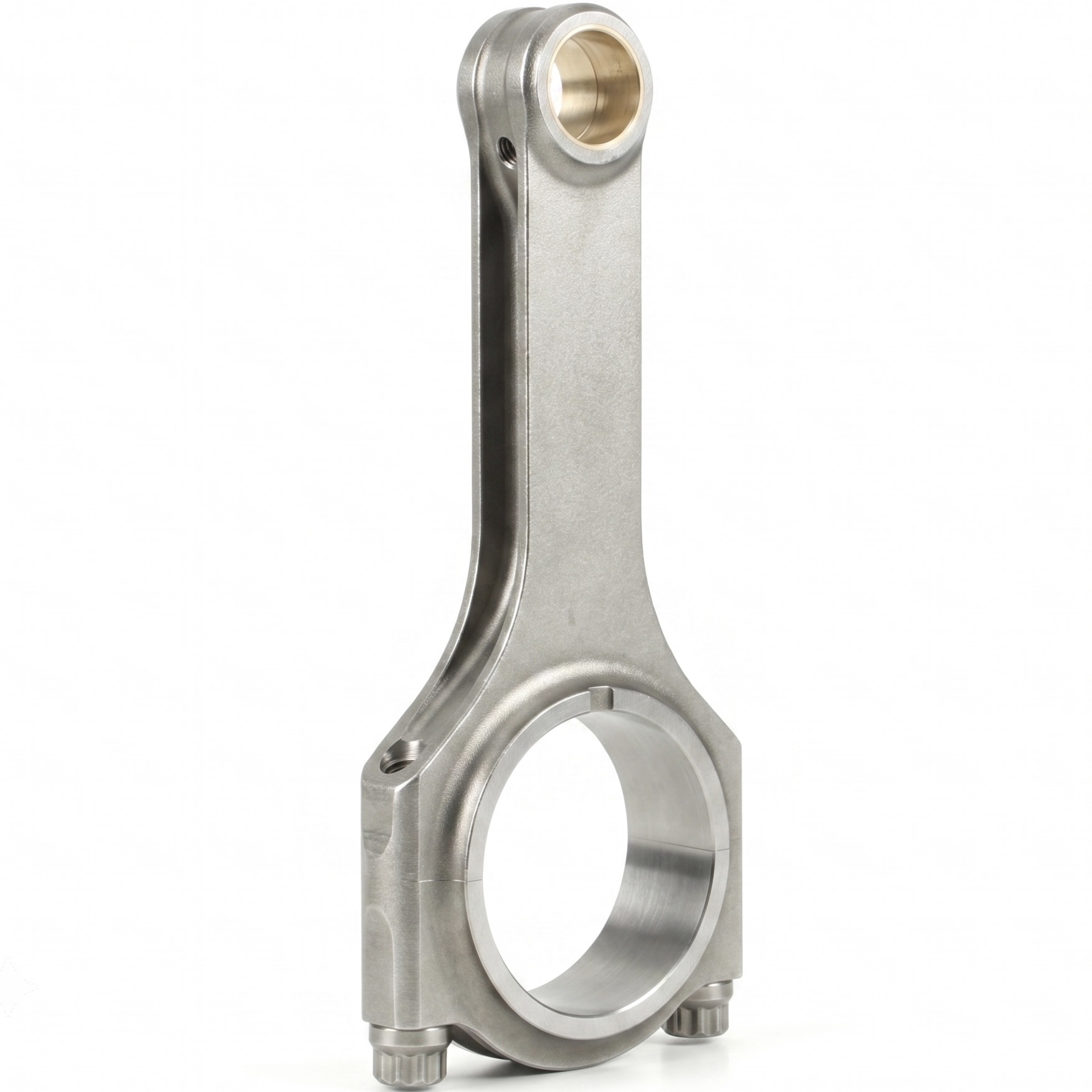 | H-Lite profile: H-beam by ZRP; its two flat flanks give excellent bending stiffness for a controlled weight, a versatile, proven choice for most naturally aspirated or lightly boosted stroker K20 builds. |
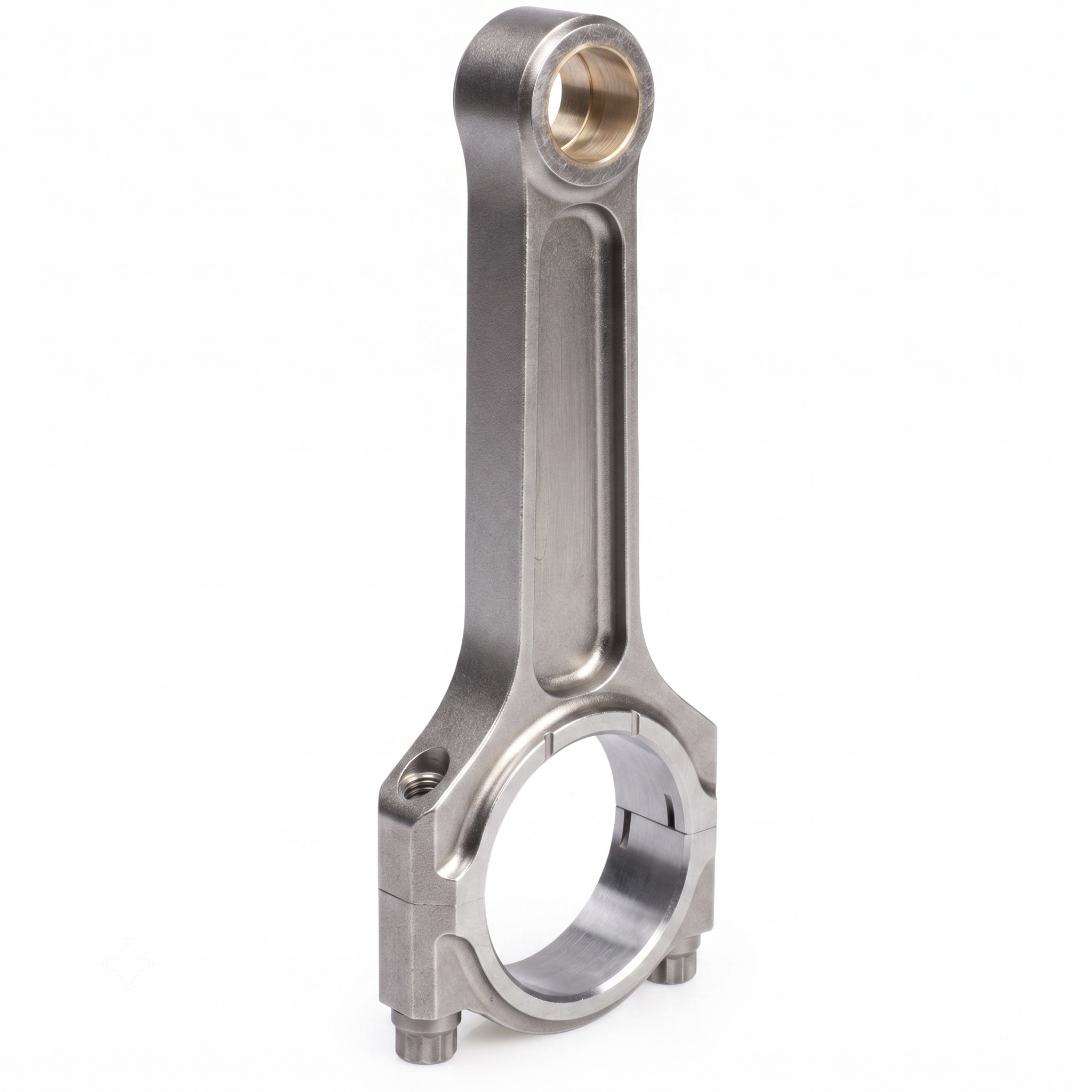 | I-HD profile: reinforced I-beam (Heavy Duty) by ZRP; it combines lightness and strength and favours compression resistance, tailored to a heavily loaded stroker K20, notably under boost. |
R-HON-012-I, R-HON-012-I-L19: Recommended for forced induction engines.
R-HON-012HL, R-HON-012HL-L19: Recommended for naturally aspirated engines.
The 135.5 mm range is limited to two ZRP profiles: the versatile H and the reinforced I-HD (Heavy Duty), more at ease under high load. The specification table details, for each reference, the center-to-center length, big-end diameter and width and the weight, to choose by the power and rpm target of the stroker build.
| Reference | Brand | Profile | Bolts | Pin Ø (mm) | Small-end width (mm) | Big-end Ø (mm) | Big-end width (mm) | Center-to-center (mm) | Weight (g) |
|---|---|---|---|---|---|---|---|---|---|
| R-HON-012HL | ZRP | H-Lite | ARP 2000-3/8"-38mm | 22 | 51 | 19,83 | 135,5 | 451 | |
| R-HON-012HL-L19 | ZRP | H-Lite | ARP L19-3/8"-38mm | 22 | 51 | 19,83 | 135,5 | 451 | |
| R-HON-012-I | ZRP | I-HD | ARP 2000-3/8"-38mm | 22 | 51 | 19,83 | 135,5 | 476 | |
| R-HON-012-I-L19 | ZRP | I-HD | ARP L19-3/8"-38mm | 22 | 51 | 19,83 | 135,5 | 476 |
On these rods the tightening is controlled by bolt stretch, gauge in hand, and not by torque alone: it is the only method that reflects the real tension in the bolt. The values below are given as a guide; the bolt manufacturer’s instructions remain the reference.
| Rod | Bolts | Torque | Recommended stretch |
|---|---|---|---|
| ZRP H (R-HON-012HL) | ARP 2000 | 61 N·m | 0,140 – 0,152 mm |
| ZRP H (R-HON-012HL-L19) | ARP L19 | 67,8 N·m | 0,152 – 0,165 mm |
| ZRP I-HD (R-HON-012-I) | ARP 2000 | 61 N·m | 0,140 – 0,152 mm |
| ZRP I-HD (R-HON-012-I-L19) | ARP L19 | 67,8 N·m | 0,152 – 0,165 mm |
The rod body is die-forged from a low-alloy nickel-chromium-molybdenum steel of the 4340 type, the reference for competition rods. Forged, then quenched and tempered, it keeps a continuous grain flow: from that come its high tensile strength and its fatigue endurance, two decisive qualities on a stroker K20 that revs high for a long time. Compared with a standard sintered rod, designed above all for series production cost, a forged 4340 rod brings about +19 % yield strength, +8 % tensile strength and +19 to +37 % fatigue endurance. That mechanical reserve absorbs, without breaking, the combustion pressure peaks and the inertia forces of an engine whose stroke has been lengthened, with the centre-to-centre length brought to 135.5 mm.
The 135.5 mm range is limited to two ZRP profiles: the versatile H and the reinforced I-HD (Heavy Duty), more at ease under high load. The specification table details, for each reference, the center-to-center length, big-end diameter and width and the weight, to choose by the power and rpm target of the stroker build.
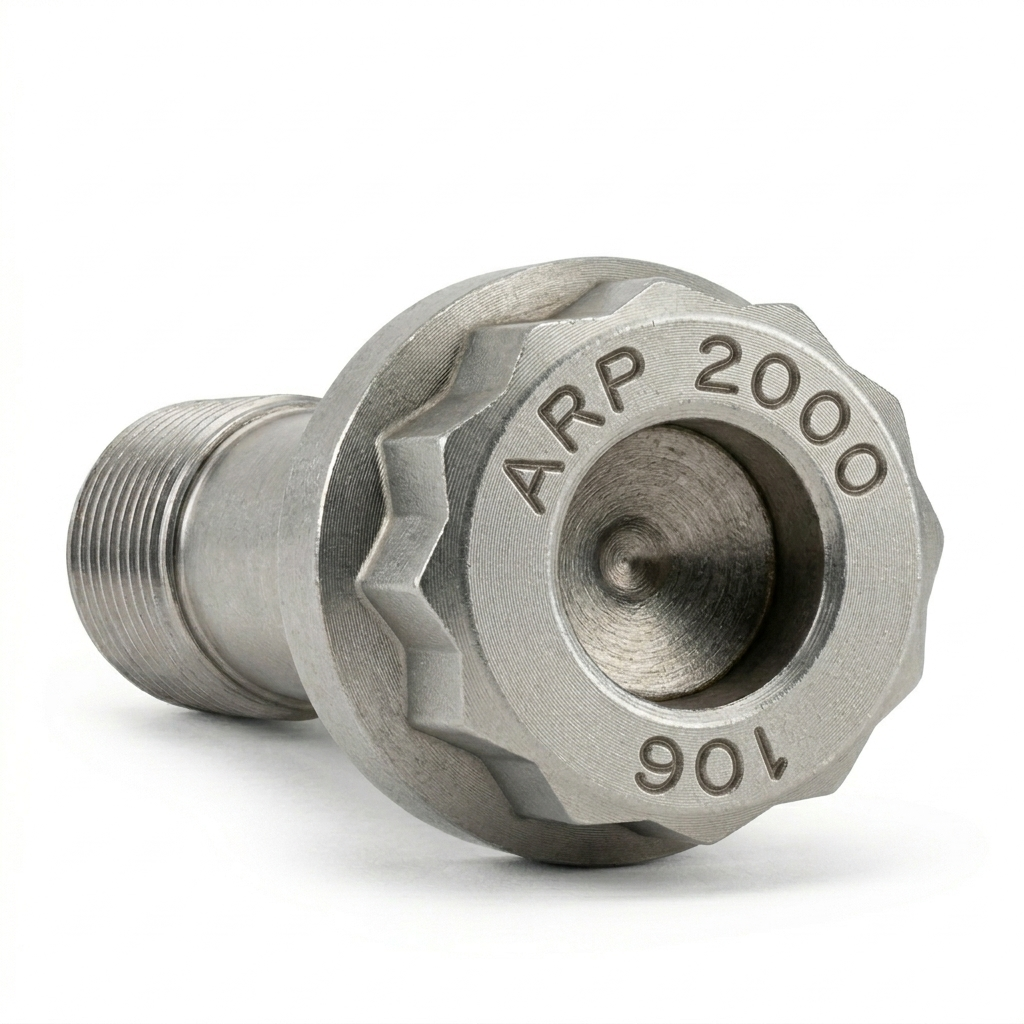 | ARP 2000, credited with ~220,000 psi (~1,517 MPa) tensile strength, covers the vast majority of built K20 engines: up to 200 hp per cylinder in 3/8" and up to 8,500 rpm. It is the grade found in circuit racing and track days, in drift, rally, drag racing and hillclimb, and the one used on most stroker builds with a 135.5 mm centre-to-centre length. It requires no particular storage constraint. |
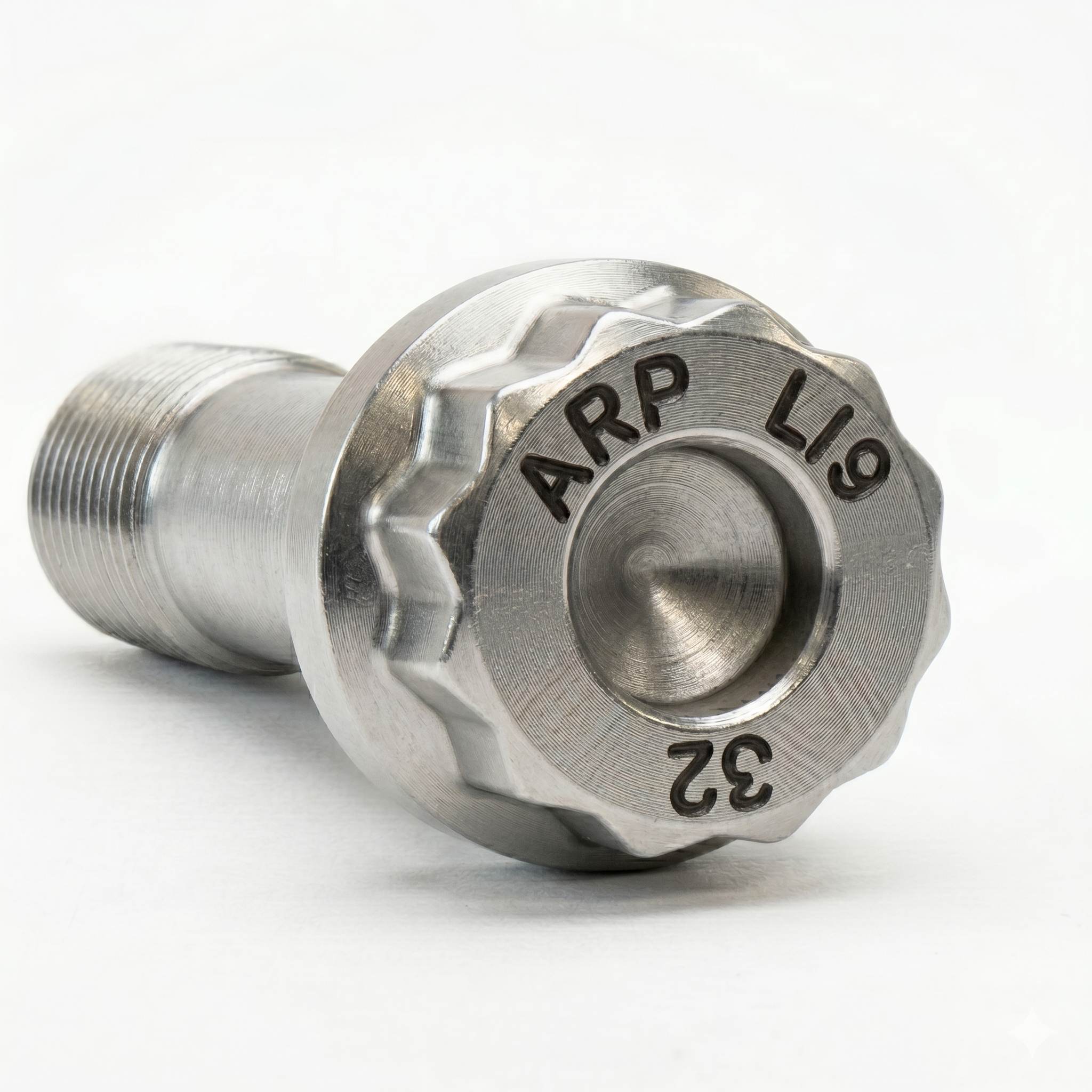 | L19 moves to ~260,000 psi (~1,793 MPa) and allows up to 250 hp per cylinder in 3/8" as well as 10,000 rpm, which matches K20 engines revving very high or working under high boost pressure, with high cylinder pressure: drag racing, drift, rally and circuit at big power levels. In return, the alloy is sensitive to corrosion and to hydrogen embrittlement: oiled storage and fitting, away from moisture. |
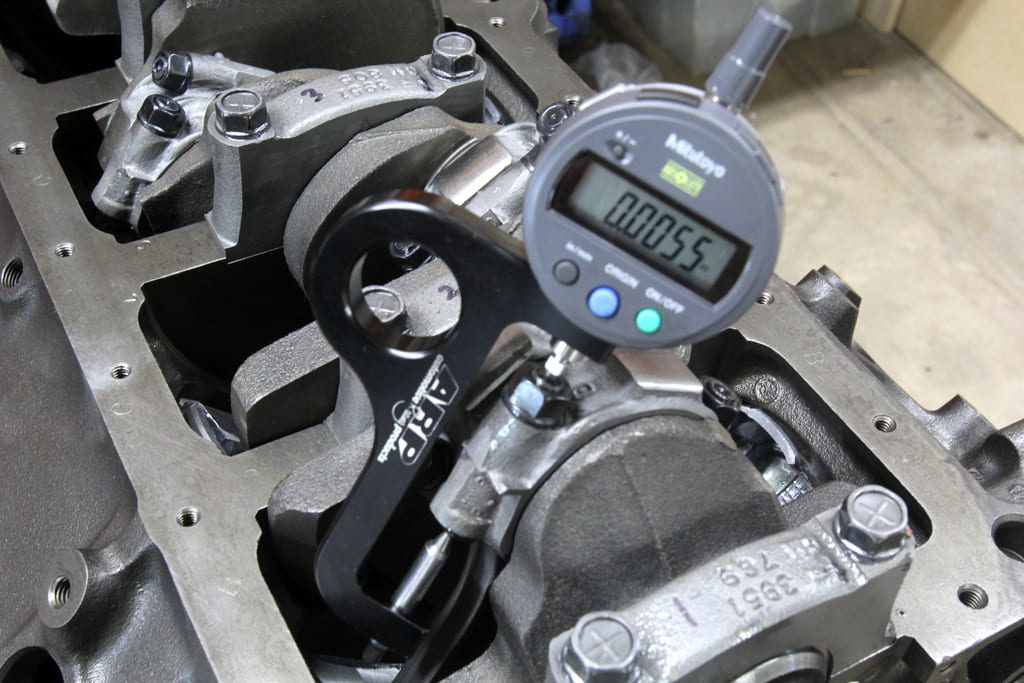
Discover the ARP stretch gauge
 | ZRP is the signature of Alex Drakos, whose Athens workshop designs and manufactures every rod. On this long-centre K20 build the body is forged in 4340 steel, then fully machined and matched to ±1 g, a must for a stroker crank assembly that revs hard. Two designs sit side by side, the H-Lite profile and the I-HD profile, each available with ARP 2000 or ARP L19 bolts. Manufacture and final inspection remain Greek, with feedback gathered in rallying, on track and in drift. |
This 135.5 mm range is made by ZRP, a race forged-rod maker. Both H and I-HD profiles are forged from the same 4340 steel and supplied as a complete set of 4, each with its dedicated ARP bolts.
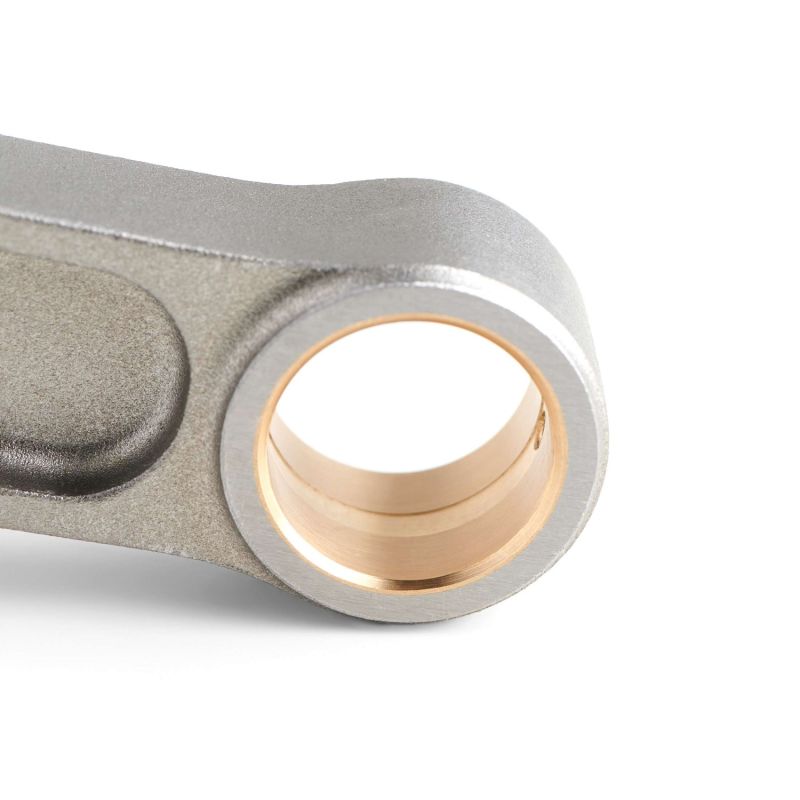
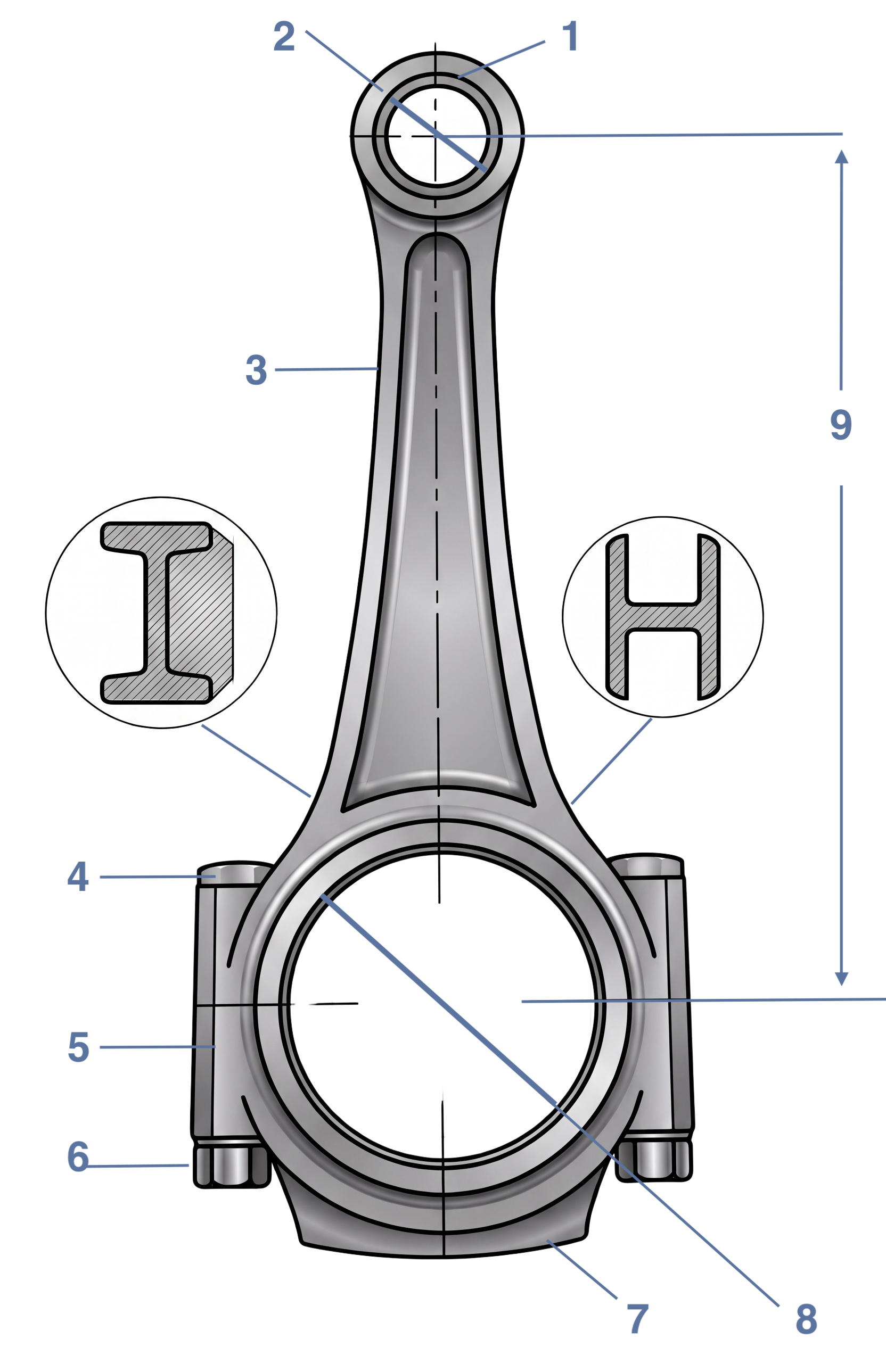 | 1) Small end 2) Small-end diameter 3) Rod beam 4) Rod bolt 5) Big end 6) Rod nut / bolt 7) Rod cap 8) Big-end diameter 9) Center-to-center |
Alternative-length rods (135.5 mm): these are not drop-in replacement rods. Shorter than the K20's factory dimension, they are intended for specific-geometry setups and stroker builds on the K20A2, K20Z1 and K20A3 engines below, and require pistons with adapted compression height:
| Brand | Model (chassis) | Engine code | Power | Years |
|---|---|---|---|---|
| Honda | Civic Type R (EP3) | K20A2 | 147 kW (200 ch) | 2001–2005 |
| Acura | RSX Type-S (DC5) | K20A2 / K20Z1 | 147–154 kW (200–210 ch) | 2002–2006 |
| Honda | Civic 2.0 Sport (EP3) | K20A3 | 118 kW (160 ch) | 2001–2005 |
A set of forged rods costs vastly less than a blown engine: on a stroker K20 pushed in rpm or load, an unsuitable rod that lets go takes out the block, the crankshaft and often the head. By choosing the right forged-rod length, weight-matched, from the outset, you make your build reliable for the long term and spare yourself a full rebuild, for a negligible extra cost next to a new engine.