Product successfully added to your shopping cart
Quantity
Total
There are 0 items in your cart. There is 1 item in your cart.
Total products
Total shipping To be determined
Total

2.0 16v - F20C
Manufacturers
2.0 16v - F20C
Warning: Last items in stock!
New product
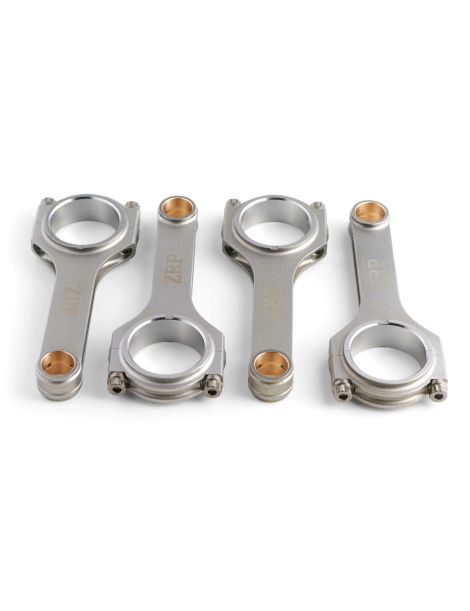
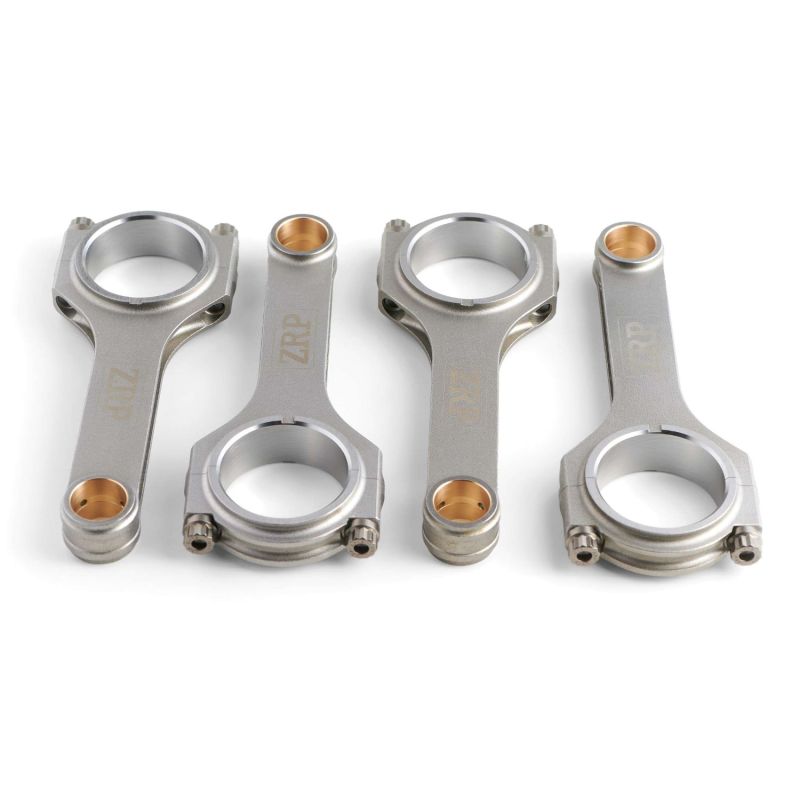
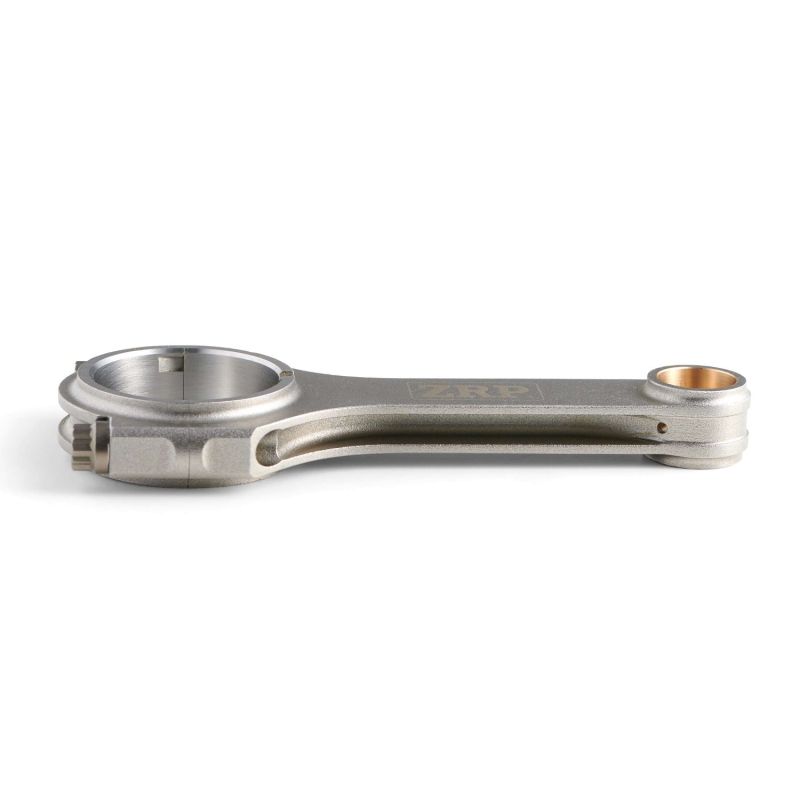
Set of 4 forged 4340 steel connecting rods (146.75 mm centre-to-centre) for the Honda F20C.
Built for the first-generation Honda S2000 (AP1) sold from 1999 to 2009, the F20C is a 2.0-litre naturally aspirated four-cylinder engineered for sustained high revs. Its DOHC 16-valve twin-cam layout with VTEC combines an 87 mm bore with a deliberately short 84 mm stroke, for a displacement of 1,997 cc. That geometry rewards revs: the red line sits around 8,800 to 9,000 rpm and output ranges from 240 to 250 hp depending on the market (240 hp for the F20C, up to 250 hp on the Japanese F20C3), one of the highest specific outputs ever achieved by a mass-produced naturally aspirated engine. Its aluminium block, steel crankshaft and integrated liners give it a healthy tuning base, provided the rotating assembly is strengthened as power and rpm rise, which the shortened 146.75 mm centre-to-centre rods offered here make possible.
Forged from high-tensile 4340 steel, these ZRP rods with a shortened 146.75 mm centre-to-centre length replace the F20C's factory assembly with a far stronger set. They suit every sporting use of the S2000, from circuit and track days to drift, hill climb and time attack, as well as turbo or supercharger conversions. Depending on the chosen bolts, they comfortably support Stage 1 to Stage 3 builds and secure the rotating assembly well beyond stock power levels, while preserving factory balance thanks to tightly controlled dimensions.
| Reference | Brand | Profile | Bolts | Pin diameter OEM 23 mm | Small-end width | Big-end diameter OEM n.p. | Big-end width | Center-to-center OEM 153 mm | Weight |
|---|---|---|---|---|---|---|---|---|---|
| R-HON-014HL | ZRP | H-Lite | ARP 2000-3/8"-38mm | 23 mm | 51 mm | 23,85 mm | 146,75 mm | 458 g | |
| R-HON-014HL-L19 | ZRP | H-Lite | ARP L19-3/8"-38mm | 23 mm | 51 mm | 23,85 mm | 146,75 mm | 458 g |
ZRP: Tapered pin end.
OEM reference: 13050-PCX-000 (set of 4 rods).
| Rod | Bolts | Torque | Recommended stretch |
|---|---|---|---|
| ZRP (R-HON-014HL) | ARP 2000 (3/8") | 61 N·m | 0,140–0,152 mm |
| ZRP (R-HON-014HL-L19) | ARP L19 (3/8") | 67,8 N·m | 0,152–0,165 mm |
| 4340 is a low-alloy nickel-chromium-molybdenum steel prized for its outstanding balance of strength and toughness. Once forged and heat-treated, it reaches a tensile strength of around 1,000 to 1,200 MPa, far above the sintered (powder-metal) steels used in OEM rods, which top out near 600 to 700 MPa and cope poorly with the alternating loads of a performance build. Forging aligns the metal grain flow with the stress paths: the part resists fatigue, high rpm and occasional detonation better. It is the reference material for a reliable reinforced rotating assembly. |
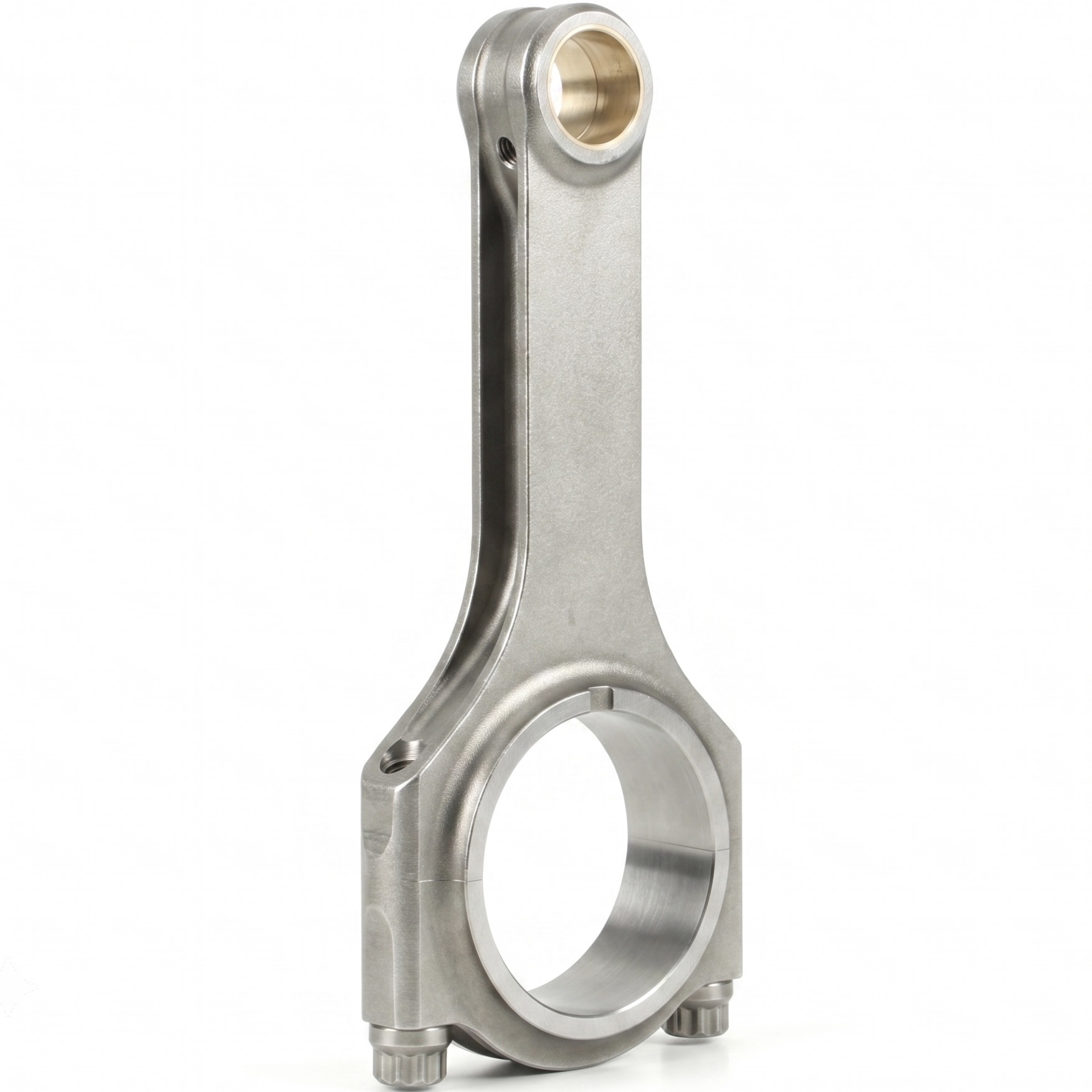 | H-Lite profile: a lightened version of the H-beam, designed for high-revving naturally aspirated engines like the F20C. The H section combines strong bending stiffness with controlled mass, reduces reciprocating loads and helps the engine spin up. It is the profile of choice for a track or time-attack S2000. |
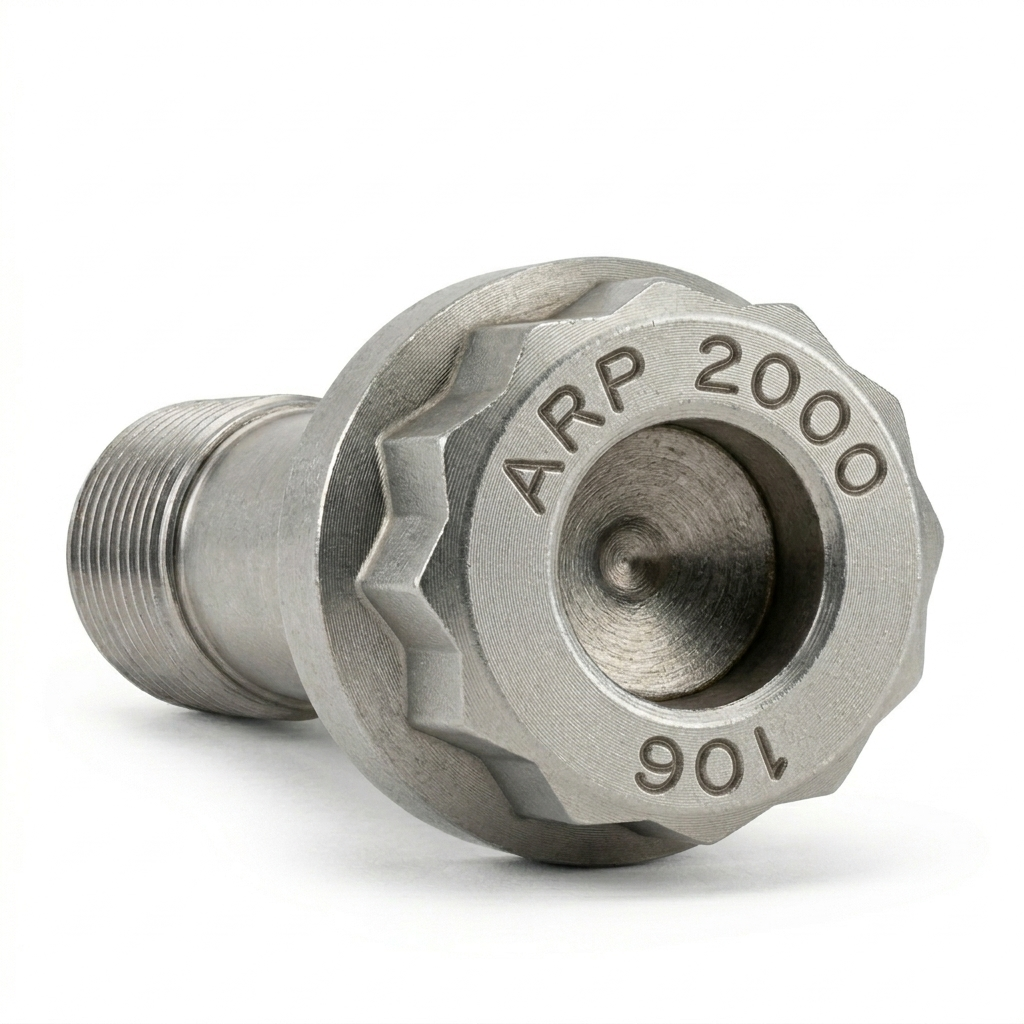 | ARP 2000, quoted at ~220,000 psi (~1,517 MPa) tensile strength, matches everyday use of a built F20C: up to 200 hp per cylinder in 3/8" and up to 8,500 rpm. On this four-cylinder known for its high rpm, the margin stays wide, naturally aspirated as well as with moderate boost. It is the most widespread grade in circuit racing, track days, drift, rally, drag racing and hillclimb, with no particular storage constraint to observe. |
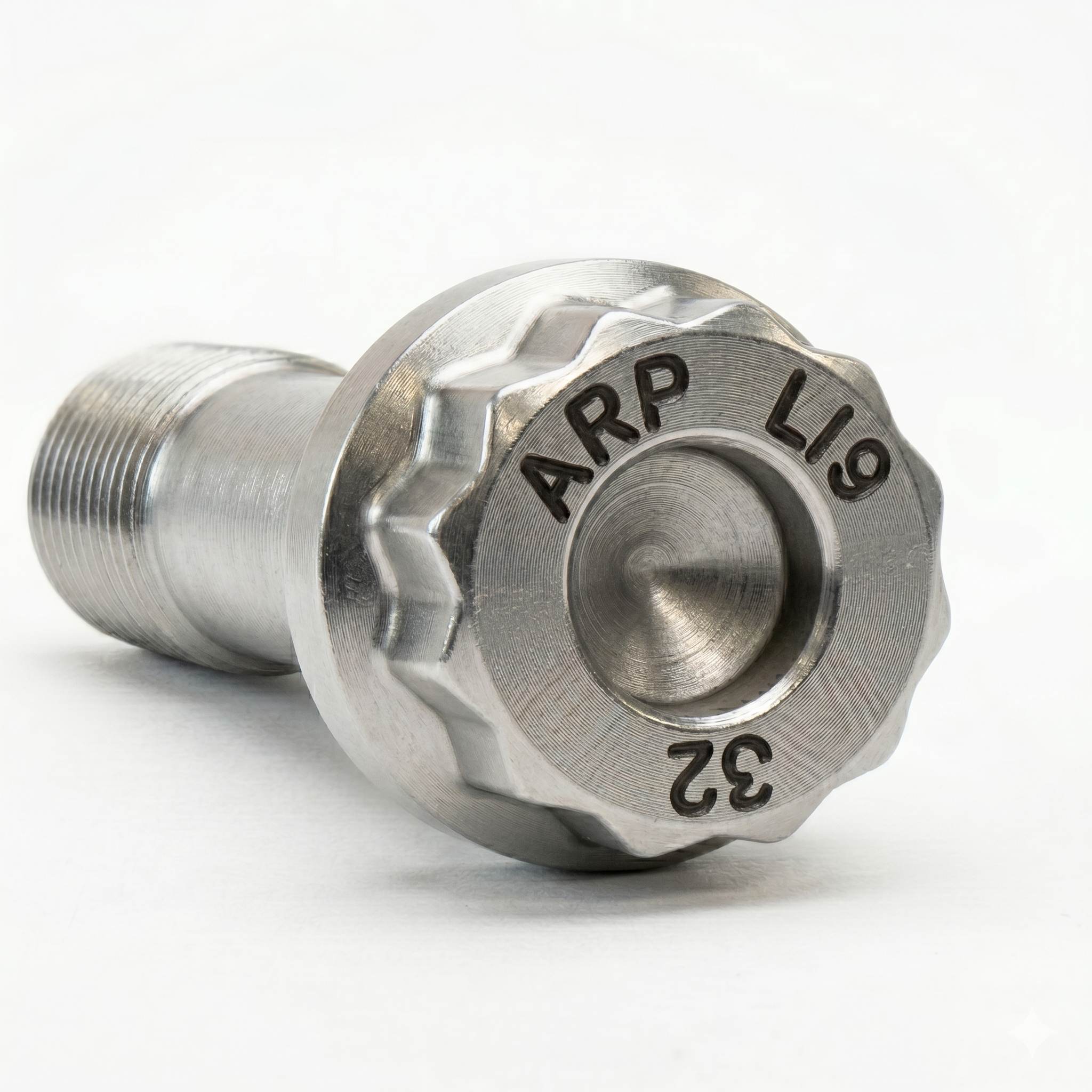 | L19 reaches ~260,000 psi (~1,793 MPa) and covers up to 250 hp per cylinder in 3/8" as well as 10,000 rpm. On an F20C revving high all the time or receiving high boost pressure, with high cylinder pressure, this is the grade that provides the reserve, as on the big power levels in drag racing, drift, rally and circuit. In exchange it demands method: sensitive to corrosion and to hydrogen embrittlement, it is stored and fitted oiled, away from moisture, never bare. |
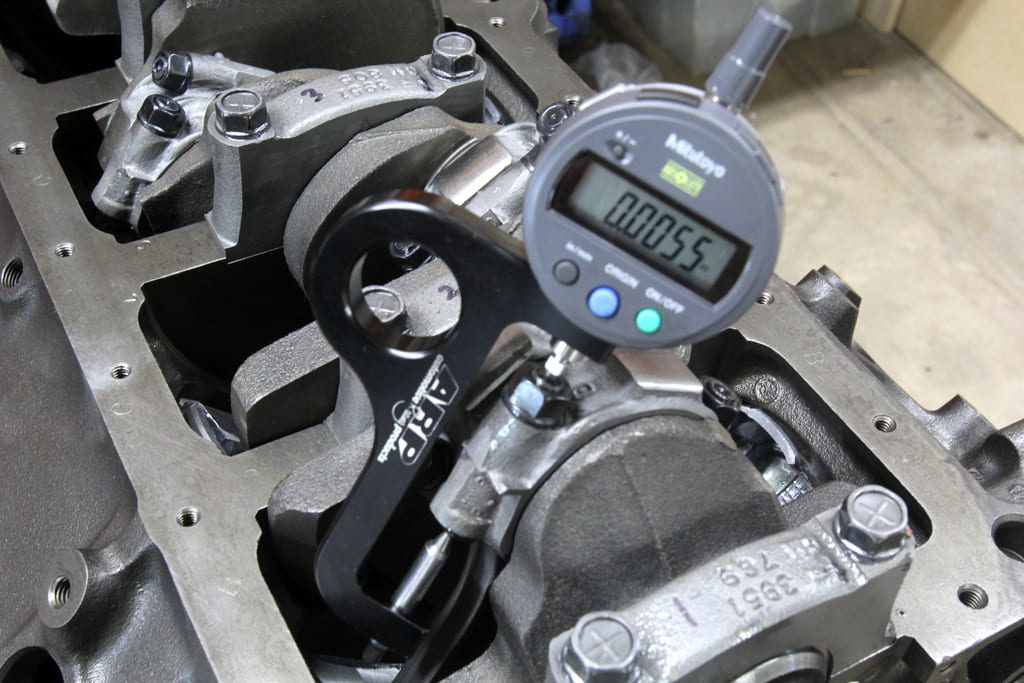
| On premium ARP bolts, torque tightening can be replaced or checked by measuring bolt stretch, a far more accurate method because it directly monitors the real tension in the bolt, independent of friction. The stretch gauge sits between the two ends of the bolt; you tighten until the recommended stretch is reached (see the table above). This is the method ARP recommends for a competition assembly. |
 | ZRP: forged rods designed by Alex Drakos (Athens), known for forging quality, finish. The ZRP range covers the main tuning engines with controlled dimensions and rigorous quality control, in H and I profiles depending on use. For the F20C, the H-Lite profile chosen here favours light weight and high-rpm strength. |
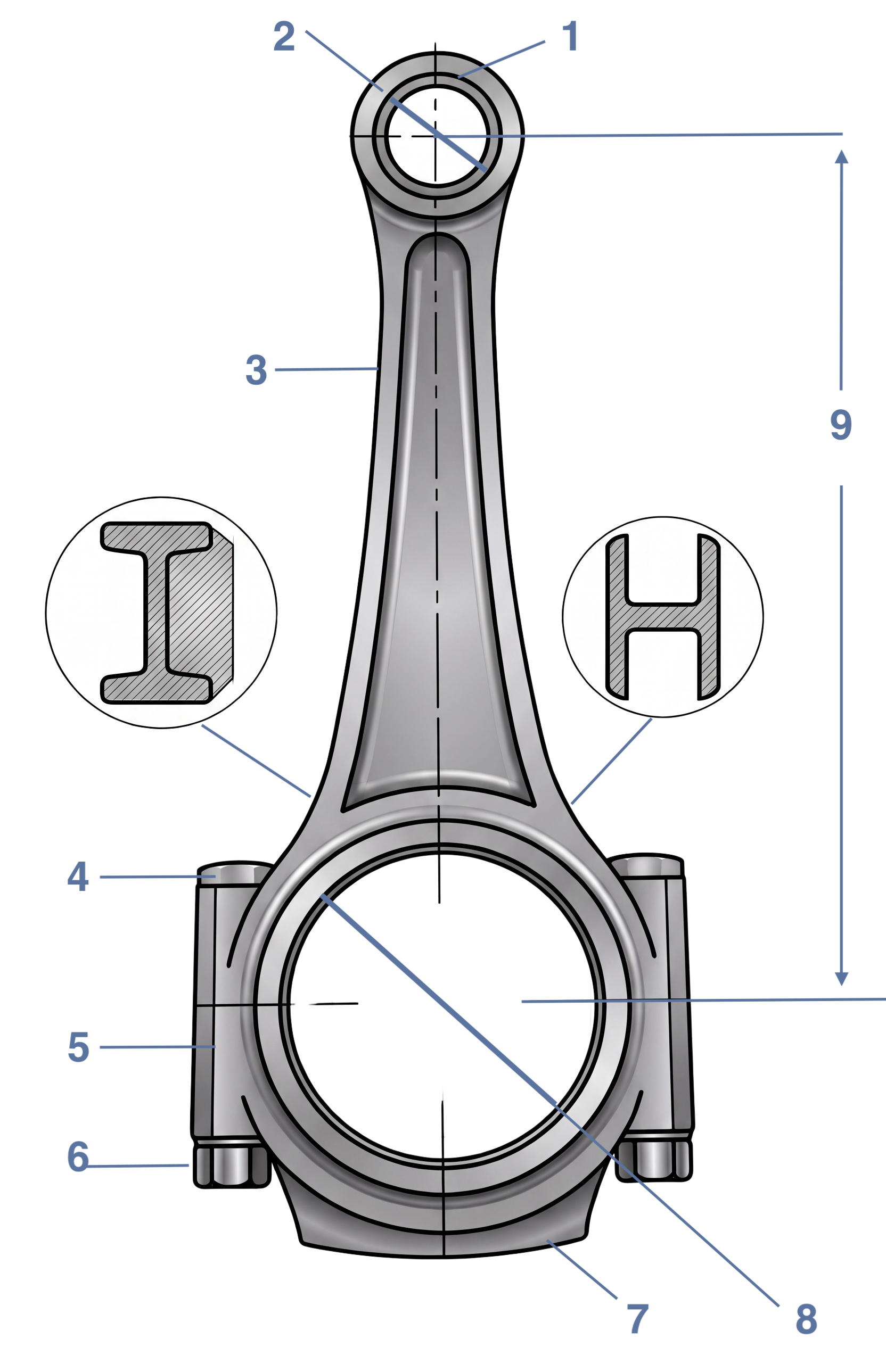 | 1) Small end 2) Small-end diameter 3) Rod beam 4) Rod bolt 5) Big end 6) Rod nut / bolt 7) Rod cap 8) Big-end diameter 9) Center-to-center |
These forged rods are designed for the Honda F20C engine, with a 146.75 mm centre-to-centre length and a 23 mm pin. Always check the exact engine code of your vehicle before ordering, as well as the centre-to-centre length fitted in your bottom end.
| Make | Model (chassis) | Engine code | Power | Years |
|---|---|---|---|---|
| Honda | S2000 (AP1) | F20C | 240–250 ch | 1999–2009 |
On an F20C, a standard rod that breaks is never replaced on its own: the matching piston is lost, the block has to be checked and the crankshaft inspected. Returning to the factory configuration therefore means buying standard rods and pistons, a high bill just to recover exactly the same failure threshold. For a comparable, often lower budget, a set of forged 4340 steel rods combined with forged pistons brings reliability and a safety margin of another order, and above all real room to increase power: the engine will be able to take more rpm or later forced induction without being opened again. This is the solution European engine builders have chosen for more than 15 years on high-revving Honda four-cylinders. For the same budget: more reliability, more potential, more service life.