Product successfully added to your shopping cart
Quantity
Total
There are 0 items in your cart. There is 1 item in your cart.
Total products
Total shipping To be determined
Total

2.0L 16v - M133
Manufacturers
2.0L 16v - M133
Warning: Last items in stock!
New product
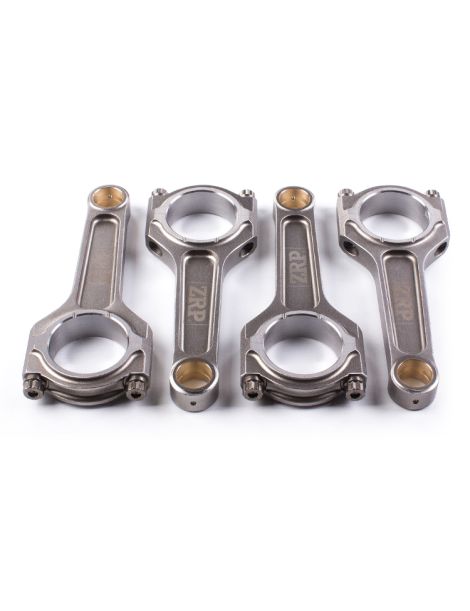
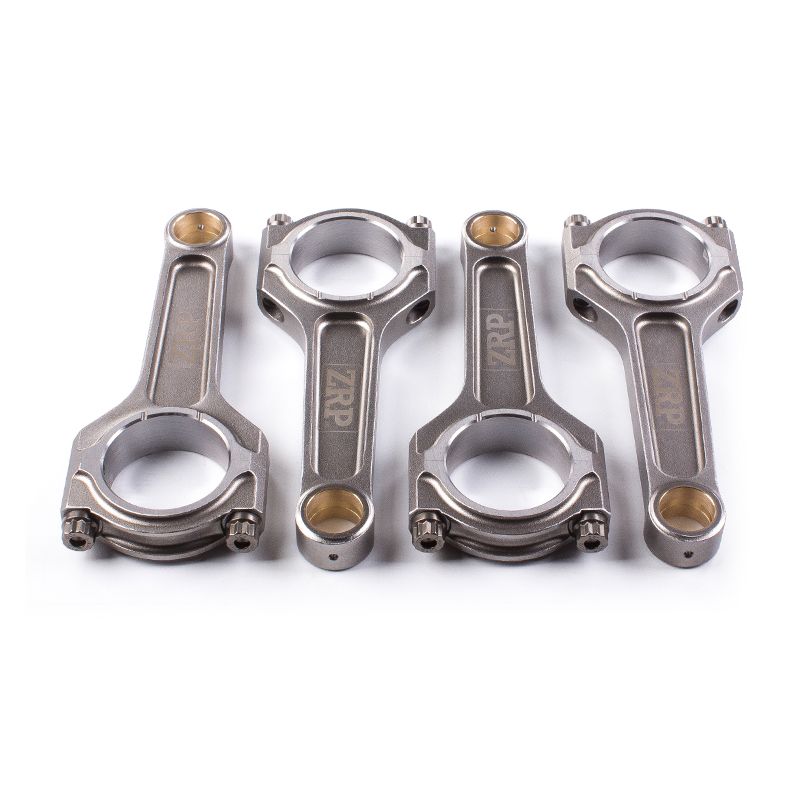
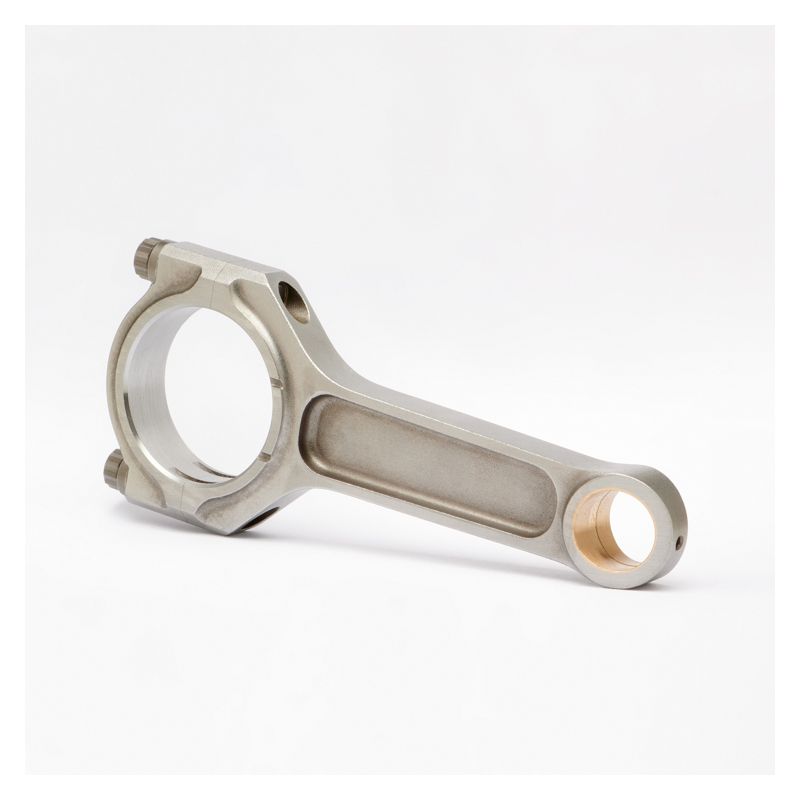
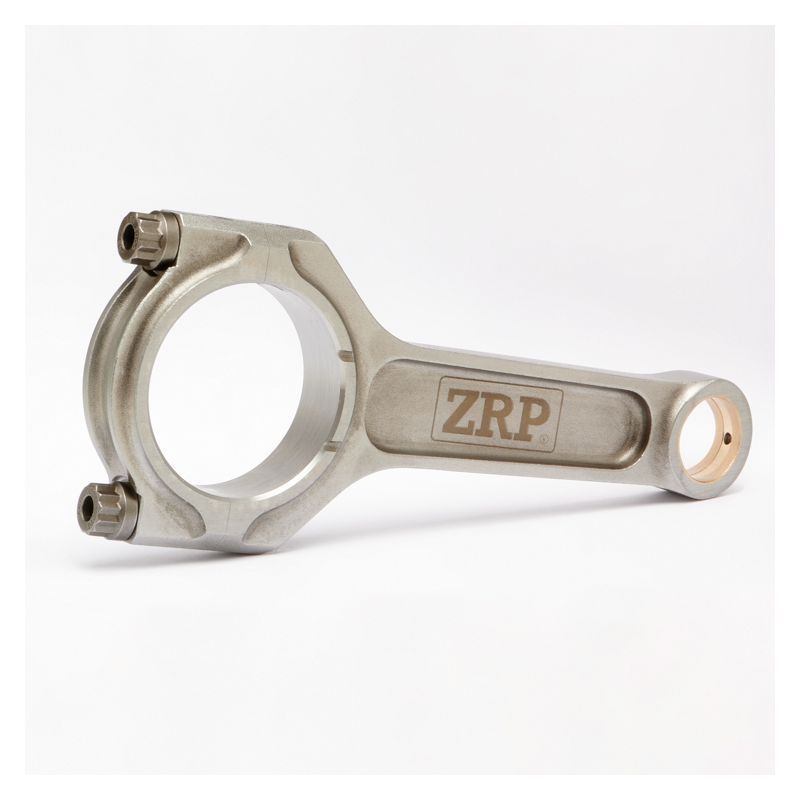
Set of 4 forged 4340 steel connecting rods for Mercedes-AMG 2.0L 16V Turbo (M133/M139).
The M133 is a 2.0-litre (1,991 cc) turbocharged four-cylinder designed by Mercedes-AMG and introduced in 2013. In its initial form it produces 360 hp; the 2015 update raises it to 381 hp thanks to revised boost pressure. A twin-scroll turbocharger, BlueDIRECT direct injection and an 8.6:1 compression ratio earned it several International Engine of the Year titles. It powered the A 45, CLA 45 and GLA 45 AMG until 2019.
Its successor, the M139, keeps the same displacement but adopts the hand-built “one man, one engine” assembly and climbs to 421 hp on the S versions (387 hp in standard form), making it one of the most powerful production four-cylinders in the world. On these heavily stressed engines, the high cylinder pressure demands a reinforced rotating assembly: switching to forged connecting rods is the key to reliably supporting any power increase beyond the factory figure.
Forged from high-strength 4340 steel, these connecting rods replace the standard rotating assembly as soon as power goes beyond the factory specification. They become essential on an M133 or M139 whose boost pressure has been raised, whose rev range has been widened or which receives forged pistons: three situations in which the original Mercedes-AMG rod works beyond its margin.
Designed for the high cylinder pressure of modern boosted four-cylinders, they cover track use and trackdays, drag racing, drift, hillclimb and time attack, and suit a Stage 2 build as well as a Stage 3, a Stage 4+ or an engine built purely for competition.
| Reference | Brand | Profile | Bolts | Pin diameter OEM 22 mm | Small-end width | Big-end diameter OEM n.p. | Big-end width | Center-to-center OEM 138.7 mm | Weight per rod |
|---|---|---|---|---|---|---|---|---|---|
| R-MER-001-I | ZRP | I | ARP 2000-3/8"-38mm | 22 mm | 51.6 mm | 20 mm | 138.7 mm | 480 g | |
| R-MER-001-I-L19 | ZRP | I | ARP L19-3/8"-38mm | 22 mm | 51.6 mm | 20 mm | 138.7 mm | 480 g |
| Rod | Bolts | Torque | Recommended stretch |
|---|---|---|---|
| ZRP (R-MER-001-I) | ARP 2000 | 61 N·m | 0.140 – 0.152 mm |
| ZRP (R-MER-001-I-L19) | ARP L19 | 67.8 N·m | 0.152 – 0.165 mm |
Two bolt grades are offered on this M133 / M139, and each has its own figures: the torque of an ARP 2000 bolt never transfers to an ARP L19, which is stronger and more demanding during assembly. The table above must therefore be read line by line, and the bolt manufacturer’s specifications applied exactly as given. Torque is only an indirect indicator: across the engine’s eight bolts, part of the effort applied at the wrench is absorbed by friction, so two bolts tightened to the same torque are not necessarily preloaded the same way. Measuring stretch with a dial gauge removes that uncertainty, because it checks the elongation of the bolt shank directly. Cleaned threads, an evenly spread film of ARP assembly lubricant and a stepped, alternating tightening sequence are what make the result repeatable. The instruction sheet supplied with the kit remains the reference.
| 4340 is a low-alloy nickel-chromium-molybdenum steel used in aerospace as well as in motorsport. Hot forged and then heat treated by quenching and tempering, it combines high tensile strength, excellent fatigue life and enough ductility to absorb shock loads without breaking cleanly. Compared with a production rod, often made by powder metallurgy and optimised for manufacturing cost, a forged 4340 rod gains around 19% in yield strength, 8% in tensile strength and 19 to 37% in fatigue strength: under cyclic loading its service life is several times longer. That margin is what allows boost pressure to be raised without putting the bottom end at risk. |
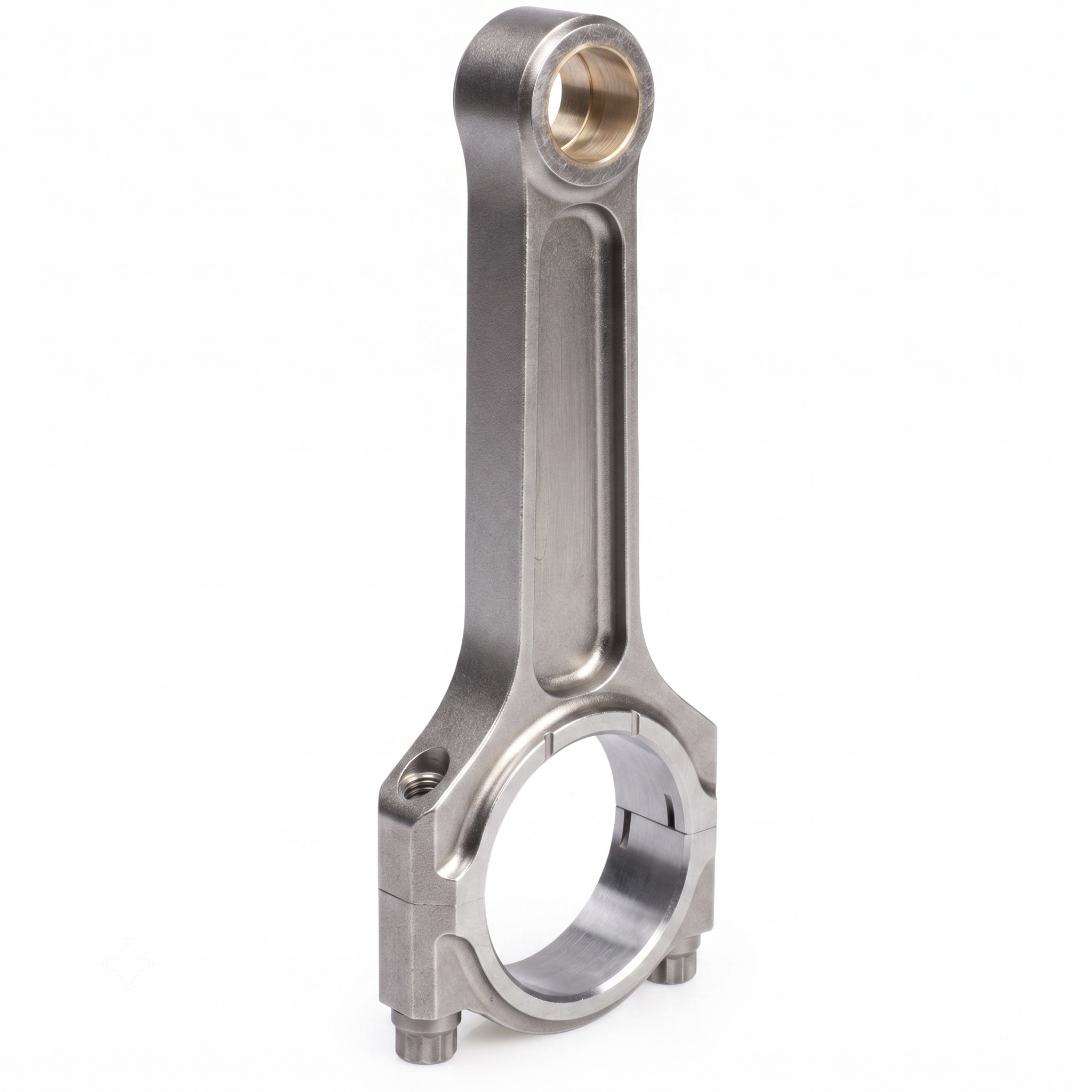 | I-Beam profile The I-shaped beam concentrates material where compression and bending loads peak. Light and rigid, it limits reciprocating mass while retaining great strength: the ideal profile for a high-revving turbo four-cylinder like the M133 / M139. |
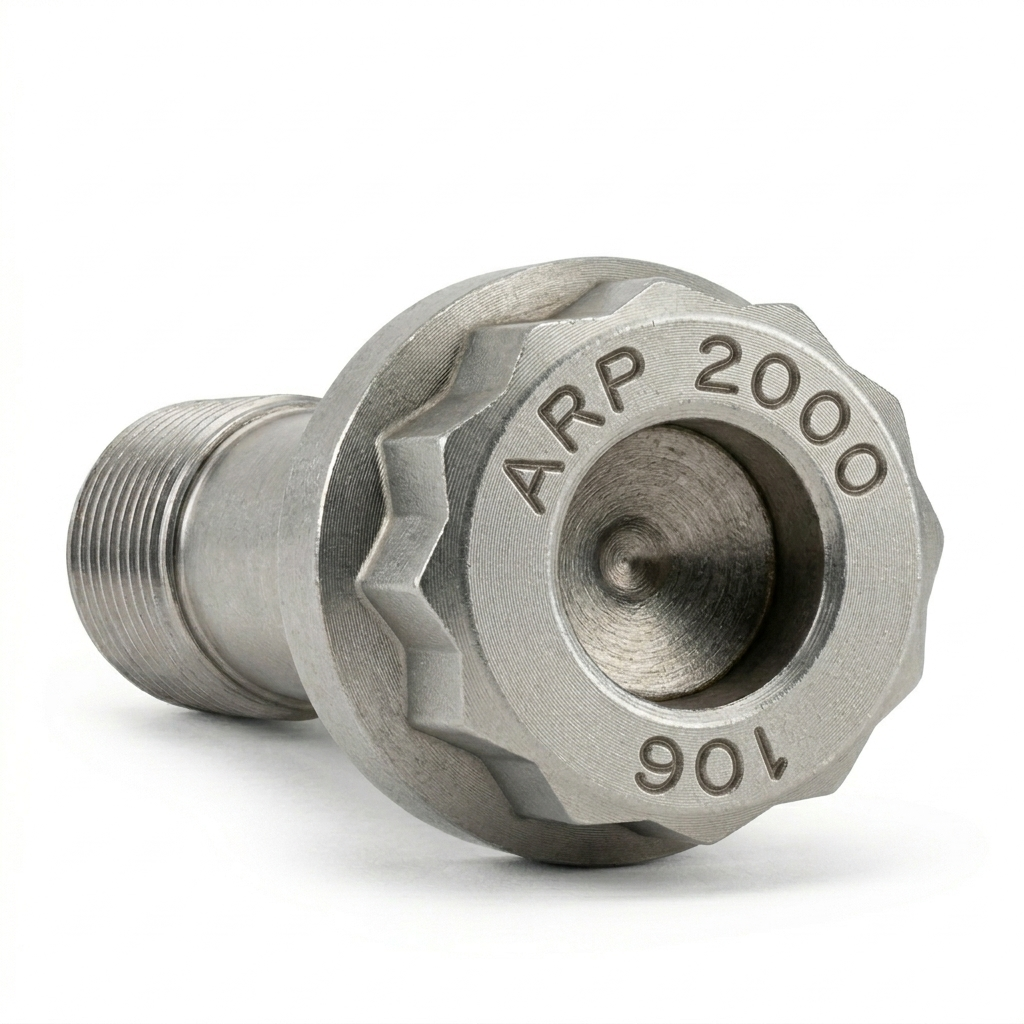 | ARP 2000 The versatile high-performance hardware, with no storage constraints. On 3/8" bolts it covers up to roughly 200 hp per cylinder and 8,500 rpm, ample margin for a built A 45 / CLA 45 / GLA 45. Toughness and reliability for circuit, track day, drift, rally, drag and hillclimb. |
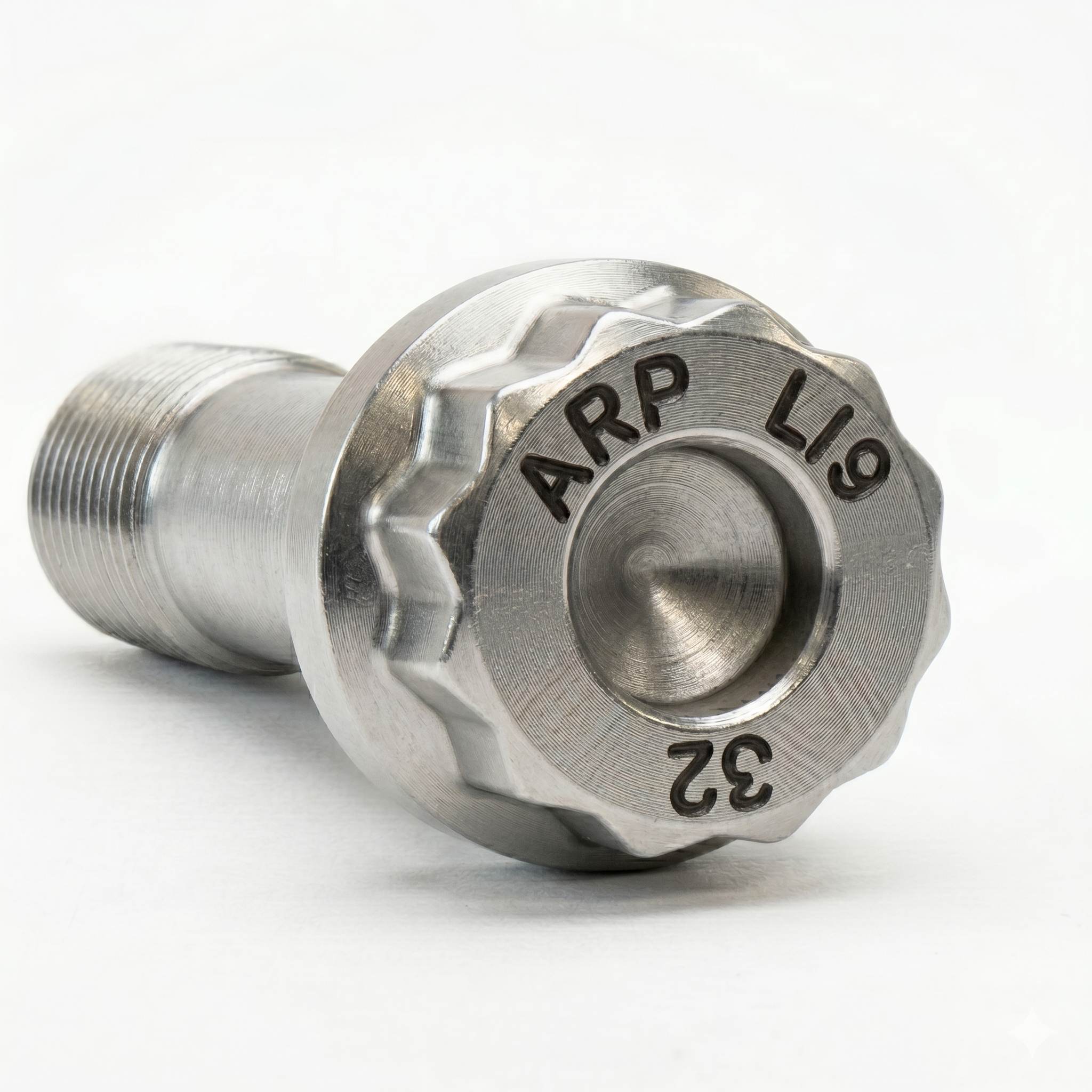 | ARP L19 Designed for engines pushed to the extreme: very high boost pressure, sustained high revs, elevated cylinder pressure. On 3/8" bolts it targets up to roughly 250 hp per cylinder and 10,000 rpm. The choice of big drag, drift, rally and circuit builds. Sensitive to corrosion and hydrogen embrittlement: it is stored and fitted oiled. |
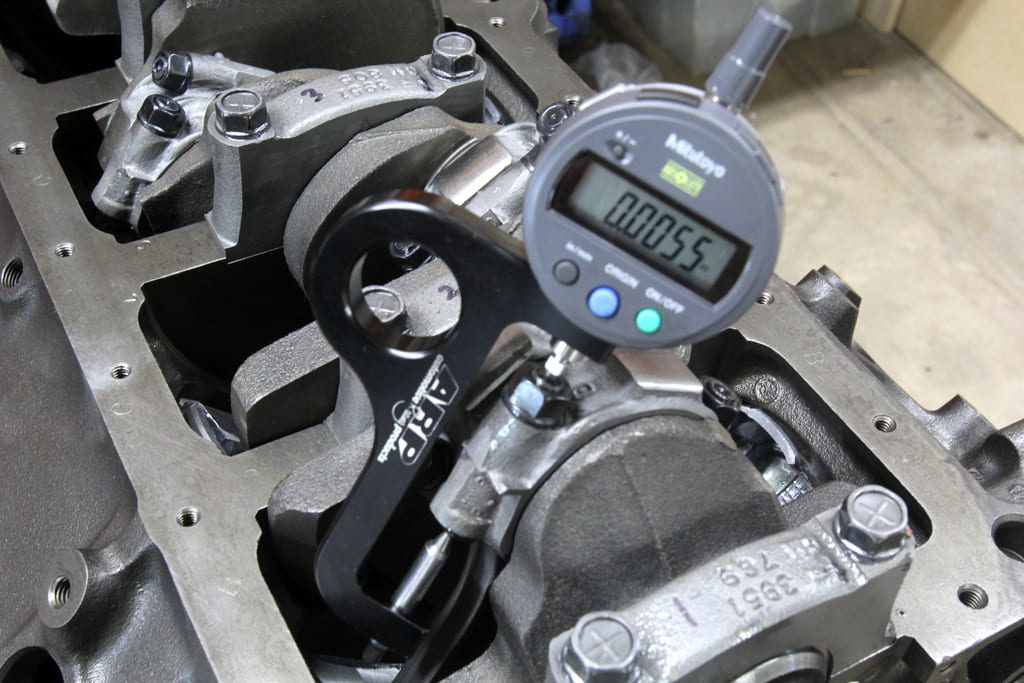
| Checking bolt stretch (with a stretch gauge / dial indicator) is the most reliable way to ensure correct preload. Always refer to the recommended stretch value above and to the manufacturer’s instructions rather than torque alone. |
 | ZRP, a Greek brand of high-performance forged connecting rods, designed by Alex Drakos in Athens. Each rod is forged from 4340 steel, precision-machined and balanced to ±1 g to stay reliable at high rpm. Offered here in the I profile with ARP 2000 or L19 bolts, they are designed and inspected in Greece, and proven in rally, on circuit and in drift. |
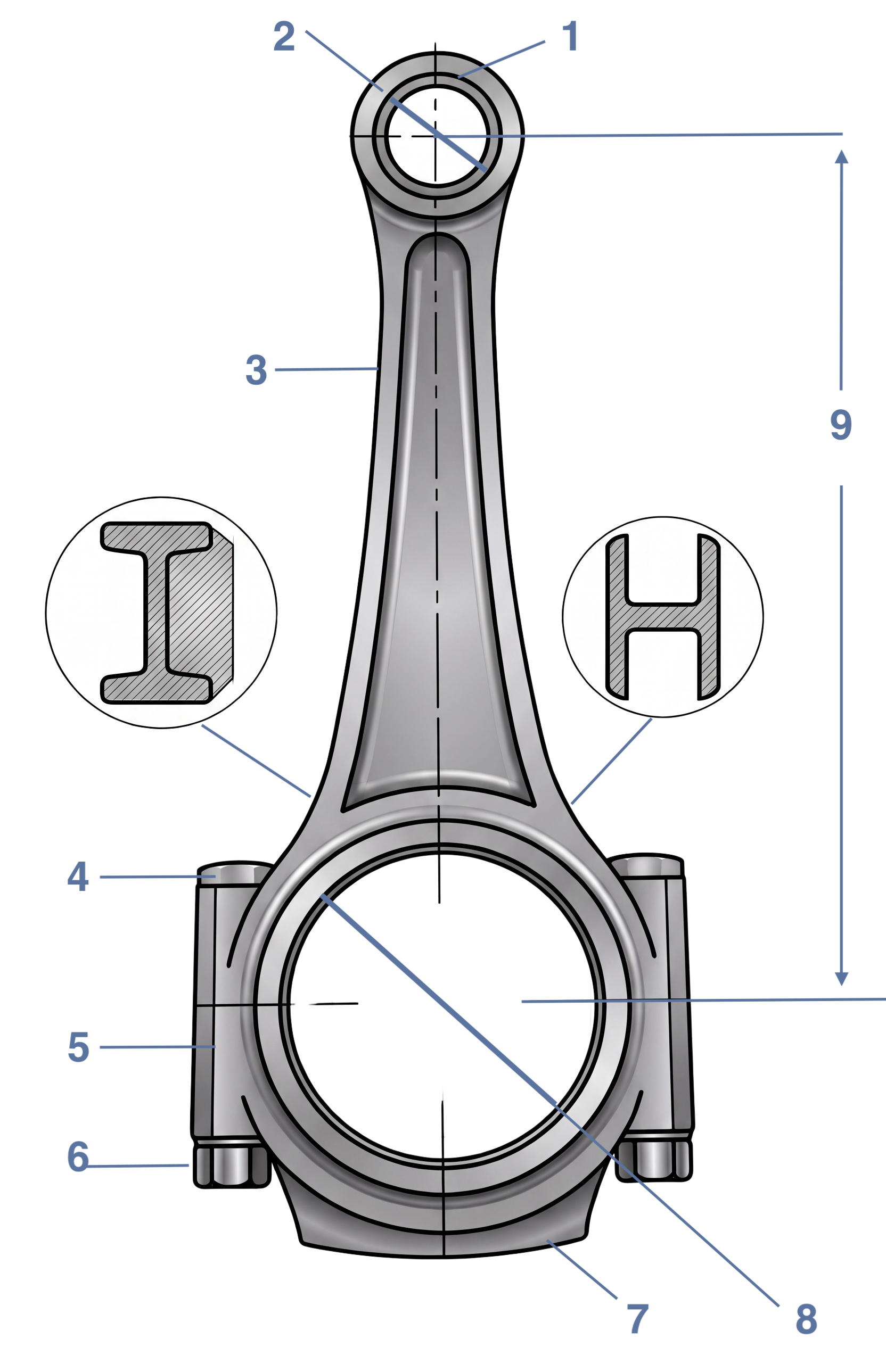 | 1) Small end 2) Small-end diameter 3) Rod beam 4) Rod bolt 5) Big end 6) Rod nut / bolt 7) Rod cap 8) Big-end diameter 9) Center-to-center |
These forged connecting rods are compatible with all vehicles fitted with the Mercedes-AMG M133 and M139 engines listed below.
| Brand | Model (chassis) | Engine code | Power | Years |
|---|---|---|---|---|
| Mercedes-AMG | A 45 / A 45 4MATIC (W176) | M133 | 360–381 hp | 2013–2018 |
| Mercedes-AMG | CLA 45 (C117) | M133 | 360–381 hp | 2013–2019 |
| Mercedes-AMG | GLA 45 (X156) | M133 | 360–381 hp | 2014–2019 |
| Mercedes-AMG | A 45 / A 45 S (W177) | M139 | 387–421 hp | 2019–present |
| Mercedes-AMG | CLA 45 / CLA 45 S (C118) | M139 | 387–421 hp | 2019–present |
| Mercedes-AMG | GLA 45 S (H247) | M139 | 421 hp | 2020–present |
| Mercedes-AMG | GLB 45 (X247) | M139 | 421 hp | 2020–present |
OEM reference: 133 030 00 20 (M133, set of 4 rods); M139 reference not disclosed by the manufacturer.
When a bottom end fails, putting it back together is never limited to the rods: the piston, the crankshaft and sometimes the block go with them, and the bill for a return to factory configuration climbs very quickly for a result that is still only standard.
For comparable spending, a set of forged 4340 rods together with forged pistons brings a safety margin unrelated to the original parts, greater durability under heavy load and, above all, the option of raising power later without opening the engine again. This is the logic European engine builders have applied to AMG four-cylinders for years.
For the same budget: more reliability, more margin, more miles.