
Product successfully added to your shopping cart
Quantity
Total
There are 0 items in your cart. There is 1 item in your cart.
Total products
Total shipping To be determined
Total

BMC B Series
Manufacturers
BMC B Series
 View larger
Warning: Last items in stock!
New product
ARP 8740 steel crankshaft main studs for BMC B-Series engines with five main bearings.
ARP lists this kit for the "B-series" five-main version ("5 cap main" in the catalogue): it is meant for BMC B-Series engines whose crankshaft runs on five main bearings. ARP gives no engine code, model or year for this application, which is shown here exactly as published. Part number 206-5403 is specific to it.
On these engines, the main caps are held by the original fasteners; the 1/2 inch studs in this kit take their place.
On a crankshaft, the main caps are what hold the shaft against the loads passed on by the connecting rods. If their clamping force drops, the cap shifts slightly on its parting line at every cycle: the mating faces brinell, then the bearing bore goes out of round.
Kit 206-5403 contains ARP 8740 steel studs, 1/2 inch. When the block threads are free of any debris, the studs go in by hand, without tools; the caps are then slid on, followed by the washers and nuts, lubricated with ARP Ultra-Torque and not with engine oil. Tightening is carried out in three equal passes, in the manufacturer's order, up to 149 Nm (110 ft-lb): 50, 99 then 149 Nm. Material: 8740, a chrome-moly steel that ARP specifies at 200,000 psi tensile strength, with threads rolled after heat treatment. Factory-fitted fasteners usually belong to classes 10.9 and 12.9, with 150,800 to 176,900 psi minimum tensile strength. The kit replaces the original main cap fasteners and is tightened as the ARP instruction sheet describes; no strength figure is published for this part number.
| Part number | Brand | Grade / material | Nut | Thread |
| ARP-206-5403 | ARP | 8740 steel | Nut | 1/2 inch |
| Reference | Pass 1 | Pass 2 | Pass 3 |
| ARP-206-5403 | 50 Nm | 99 Nm | 149 Nm |
No torque is applied to the stud as it goes into the block: it is screwed in by hand. For a permanent installation, the instruction sheet leaves the option of a thread locker, with the nuts fully tightened before it cures.
The nuts are tightened following the order set by the manufacturer for the caps; every step is given in the ARP instruction sheet.
Moving to reinforced fasteners changes the clamping force on the caps. After installation, the size and roundness of the bores are checked, then honed in line if needed, always with the final fasteners and lubricant.
Torque figures taken from the ARP 206-5403 instruction sheet, in the revision in force on the day of publication. In the event of any difference, the manufacturer's instruction sheet prevails. Read the ARP 206-5403 instruction sheet
Tightening is done with ARP assembly grease: the torque figures in the table were established with it, not with engine oil.
| Buy the ARP assembly grease → |
 | ARP, short for Automotive Racing Products, was born in the early 1970s on the initiative of Gary Holzapfel, an engineer from the aerospace sector, in response to the engine failures caused in racing by inadequate fasteners. Today the brand produces thousands of part numbers in California, offered in several materials depending on the application. |
| Criterion | Original fasteners | Reinforced ARP studs |
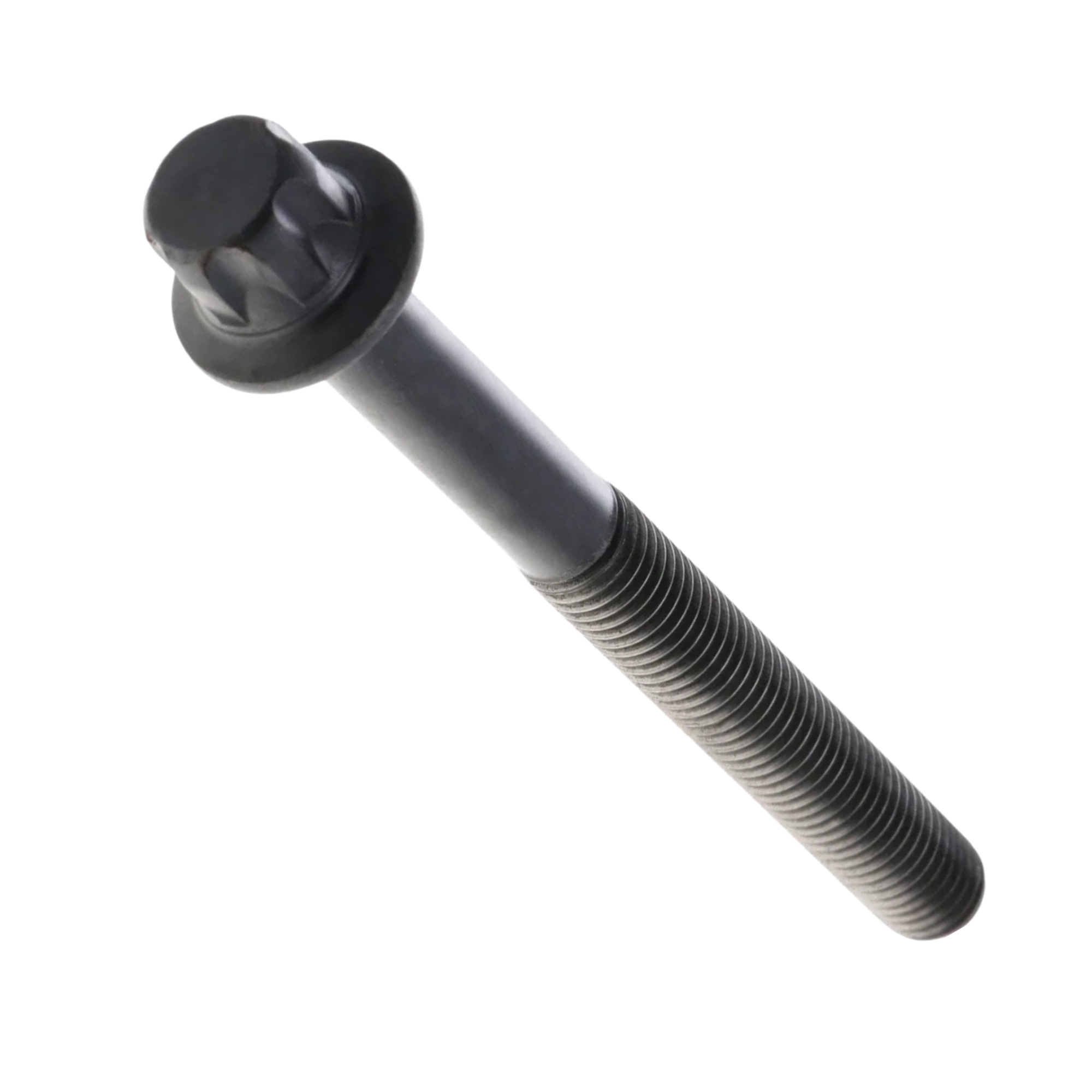 | 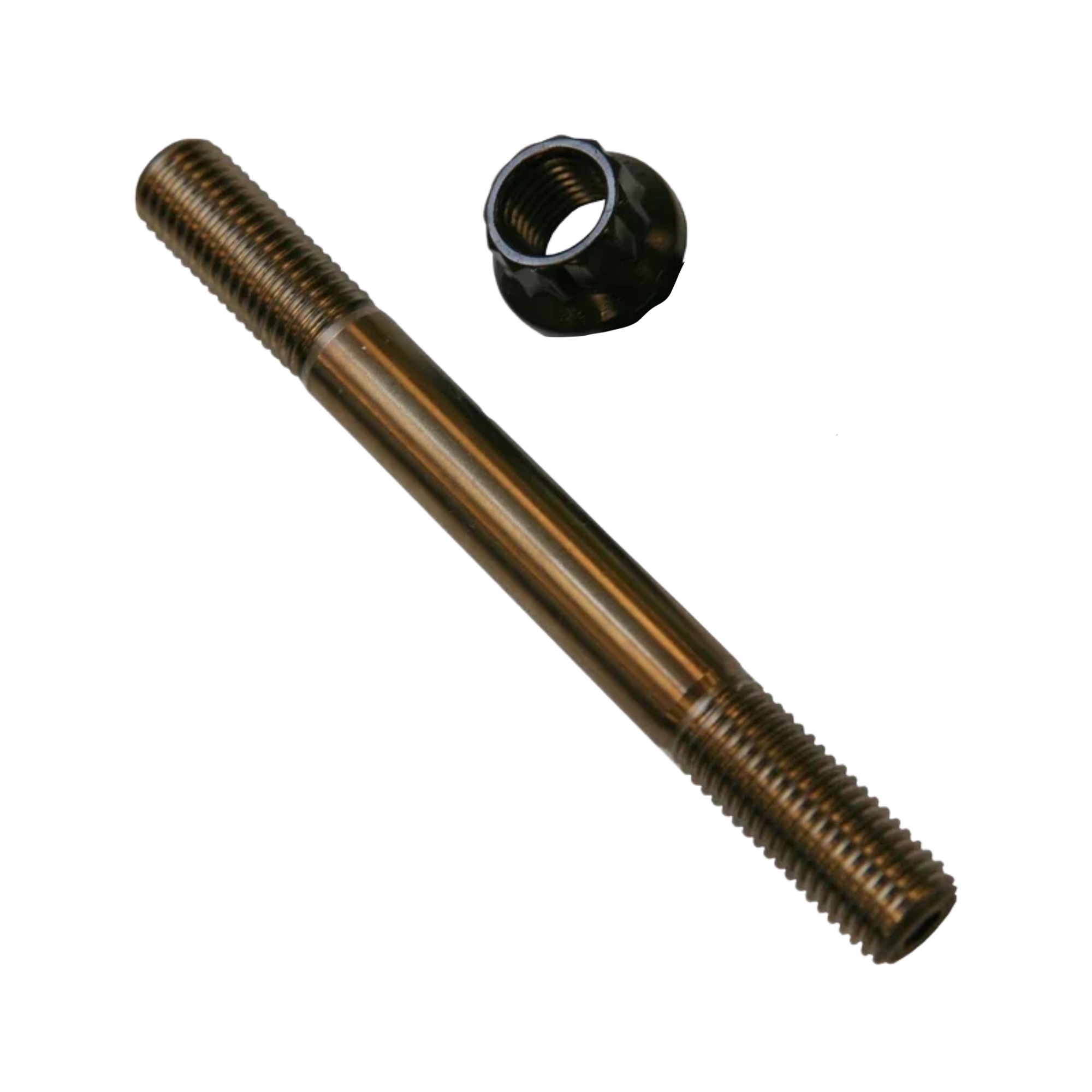 | |
| Where the load goes | Depends on the engine's original fastener | The nut takes the load, the stud no longer turns |
| Removing a cap | Depends on the engine's original fastener | The stud stays screwed in, only the nut comes off |
| Alignment when fitting | Depends on the engine's original fastener | Cap slipped over fixed guides, already centred |
| Model | Engine code | Power | Years |
| BMC B-Series five-main engines (application declared by ARP) | B-Series, 5 main bearings |
A tuned B-Series engine loads its main caps harder. ARP studs cost little compared with a crankshaft or a block to replace.