Product successfully added to your shopping cart
Quantity
Total
There are 0 items in your cart. There is 1 item in your cart.
Total products
Total shipping To be determined
Total

1.6 16v - D16Y8
Manufacturers
1.6 16v - D16Y8
Warning: Last items in stock!
New product
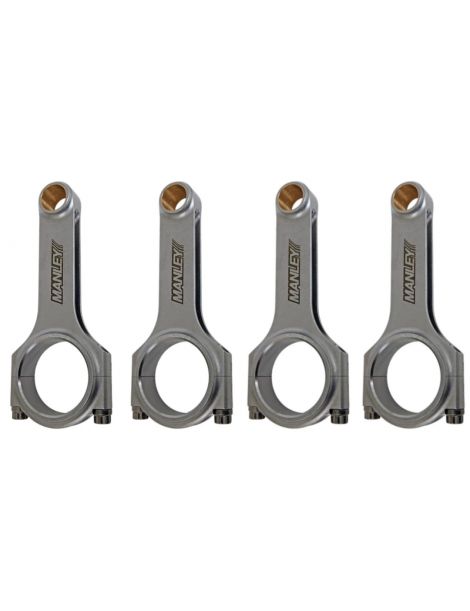
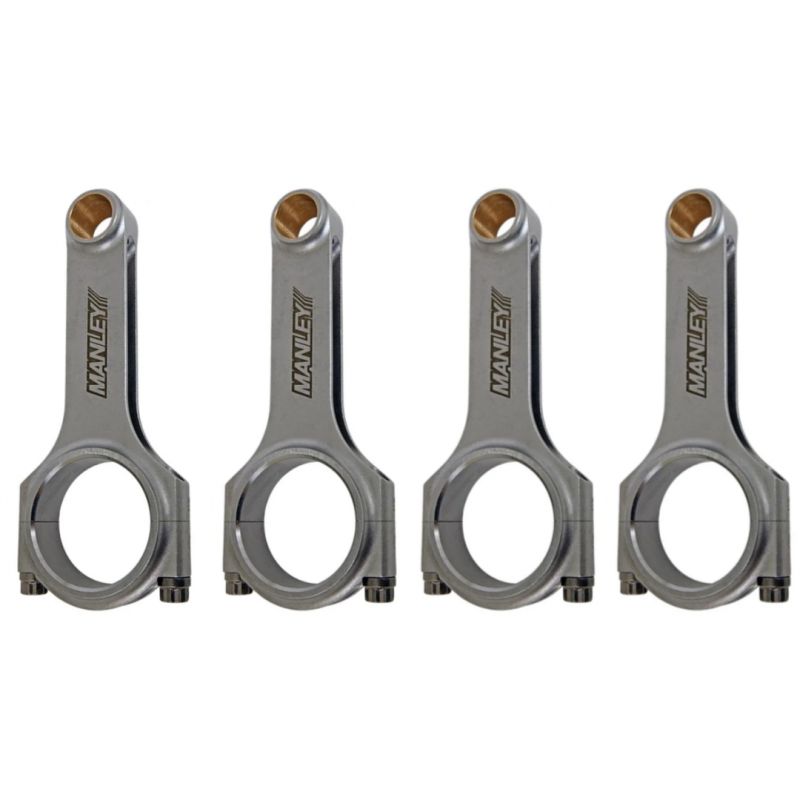
Set of 4 forged 4340 steel connecting rods for Honda D16 / ZC 1.6 16V (19 mm pin).
The Honda D16 family, together with its Japanese ZC counterpart, covers the 1.6-litre (1590 cc) inline-four engines that powered the Civic, CRX, Integra and Accord from 1987 to 2005. With a 75 mm bore and a 90 mm stroke, this naturally aspirated engine came in SOHC and DOHC versions, including the VTEC variants (D16Z6, D16Y8) prized for their top-end pull and high-rpm smoothness.
Light, sturdy and easy to build, the D16/ZC is a favourite base for street builds and amateur competition alike. An efficient head and free-revving character naturally invite more power: intake, exhaust, camshafts, VTEC swap, even forced induction. As soon as load exceeds the factory envelope, the sintered stock rod becomes the weak link of the bottom end.
Machined from high-strength 4340 steel, forged connecting rods reinforce the D16/ZC bottom end as soon as power climbs. They become essential when switching to forged pistons, running an aggressive VTEC build, holding sustained high rpm or adding forced induction (turbo or supercharger), all cases where the original rod reaches its limits.
Designed to withstand the heavy loads of built engines, these forged rods suit every discipline (track and roll racing, drift, drag, rally, hillclimb, time attack) and support Stage 2, Stage 3 and Stage 4+ builds, up to a full competition engine.
| Reference | Brand | Profile | Bolts | Pin diameter OEM 19 mm | Small-end width | Big-end diameter OEM n.p. | Big-end width | Center-to-center OEM 137,01 mm | Weight per rod |
|---|---|---|---|---|---|---|---|---|---|
| 14013-4 | Manley | H | ARP 2000-3/8"-41mm | 19 mm | 48,01 mm | 22,81 mm | 137,01 mm | 525 g |
| Rod | Bolts | Torque | Recommended stretch |
|---|---|---|---|
| Manley (14013-4) | ARP 2000 | 88,1 N·m | 0,147 – 0,157 mm |
On a D16 or a ZC that spends time at high revs, the rod bolt is the link that decides everything: it must stay permanently in tension so that the cap never moves relative to the rod. Too little tightening brings that tension below the inertia load; the cap lifts imperceptibly, the contact face degrades, the shell is hammered, its clearance opens and it ends up driven out of its bore. Too much tightening leaves no more margin: the 3/8" ARP 2000 bolt moves into its plastic domain, keeps a residual elongation, loses its preload and fatigues faster, while the big end goes oval under the overload and the bearing bore stops being cylindrical. The values in the table below, published by the fastener manufacturer for the Manley rod offered here, frame exactly that compromise: they apply with no deviation, including at every reassembly. Stretch measurement with a dial gauge remains the reference method for checking the tension actually obtained; assemble with ARP lubricant, the kit instructions taking priority.
| 4340 steel is a nickel-chromium-molybdenum alloy steel used in aerospace and motorsport alike. Forged then heat-treated (quench and temper), it offers excellent tensile strength, high fatigue resistance and real ductility. Compared with an original rod (often sintered/powder metal, optimised for series-production cost), a 4340 forged rod shows roughly +19% higher yield strength, +8% higher tensile strength and above all +19% to +37% higher fatigue strength, i.e. a fatigue life under cyclic loading several times longer. This is what makes forged 4340 the reference material as soon as boost and rpm climb. |
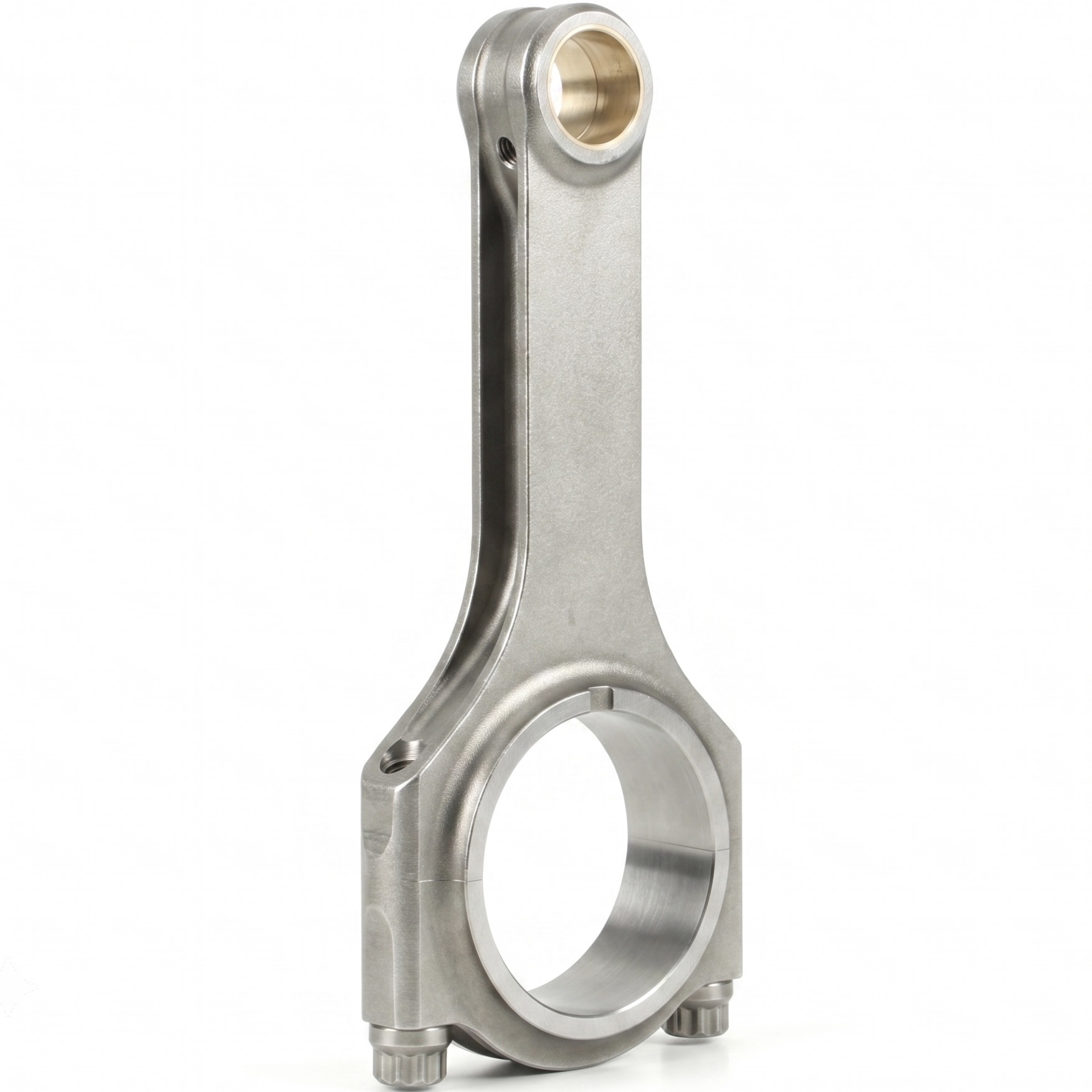 | H profile. The "H" section delivers high rigidity and excellent resistance to both bending and compression. Slightly heavier than an I-beam, it favours strength: the ideal choice to reinforce a built D16/ZC, whether high-revving naturally aspirated or boosted. |
This page offers a single bolt option, ARP 2000 in 3/8"-41 mm supplied with the Manley H-profile rod, so the choice is not about the grade but about the quality of the assembly. A rod bolt is tensioned, not simply nipped up by feel: the preload obtained depends directly on the cleanliness of the threads, on the presence of assembly lubricant and on the consistency of the tightening passes. On this 1.6 with a 19 mm pin and a 137.01 mm centre-to-centre, clean and blow out the threads, lubricate, tighten in three passes, then check preload through stretch measured with a dial gauge, bolt after bolt. The eight bolts can be reused as long as their free length has not grown; the table below recalls the characteristics of the grade and the values to respect.
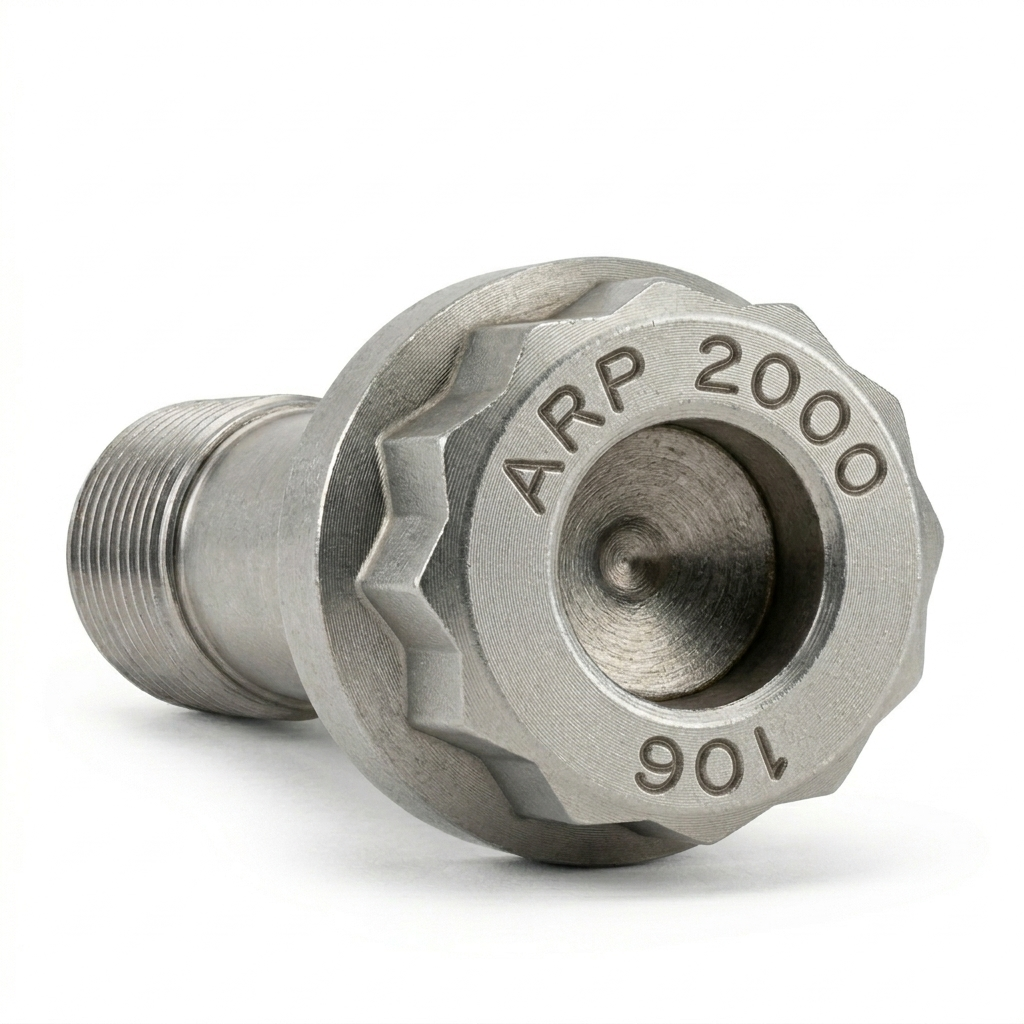 | ARP 2000 (tensile strength ~220,000 psi, i.e. ~1,517 MPa) is the high-performance standard. In 3/8" diameter it covers builds up to around 200 hp per cylinder and up to 8,500 rpm, the vast majority of built D16/ZC engines. Supplied with the rod set, it combines strength, reliability and versatility, with no storage constraints. |
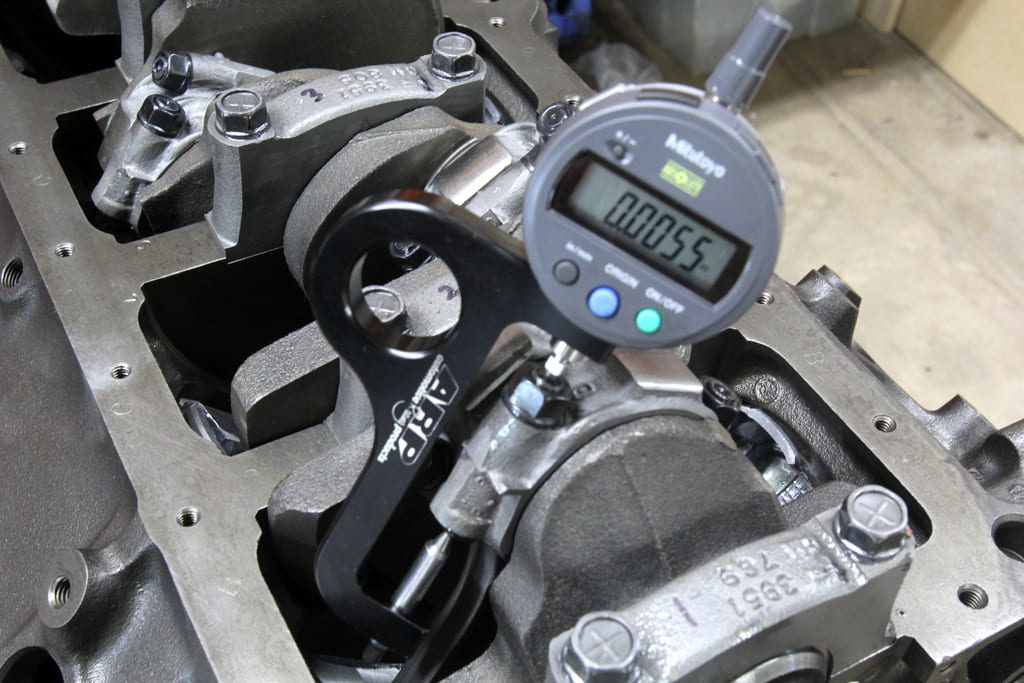
In addition to torque tightening, measuring rod-bolt stretch is the most reliable check for optimal preload. The check is done with the bolt fitted: place the gauge (dial indicator) on the two ends of the bolt and read its actual stretch, which must match the recommended value (see the torque & stretch table above). This method removes the friction variations inherent in torque tightening and secures the assembly on heavily stressed engines. |
 | MANLEY, an American forged connecting rod manufacturer since 1966. Machined from vacuum-degassed aerospace-grade 4340 steel, shot-peened and inspected one by one, its "Turbo Tuff" rods are offered here in H-beam profile with ARP 2000 bolts. A major name in engine building, from street to competition. |
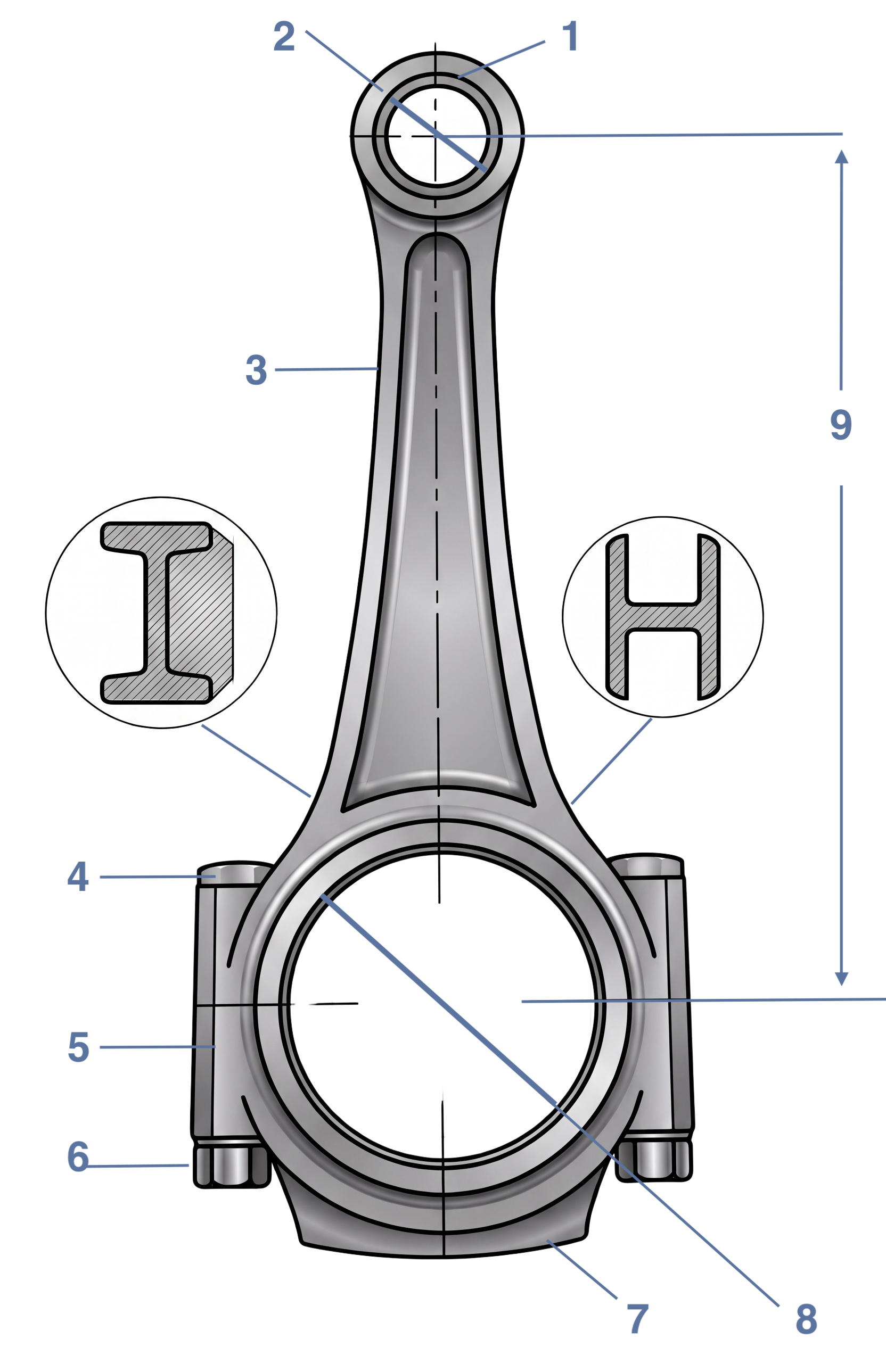 | 1) Small end 2) Small-end diameter 3) Rod beam 4) Rod bolt 5) Big end 6) Rod nut / bolt 7) Rod cap 8) Big-end diameter 9) Center-to-center |
These forged connecting rods are compatible with all vehicles fitted with the Honda D16 / ZC engine (1.6L 16V naturally aspirated):
| Brand | Model (chassis) | Engine code | Power | Years |
|---|---|---|---|---|
| HONDA | Civic IV (ED, EF) | D16A1 / D16A6 / D16A7 / D16A9 / D16Z2 / D16Z5 | 107–130 hp | 1987–1993 |
| HONDA | CRX II (ED, EE) | D16A6 / D16A8 / D16A9 / D16Z5 | 110–130 hp | 1987–1992 |
| HONDA | Civic V (EG, EH) | D16A7 / D16A8 / D16A9 / D16Y1 / D16Z2 / D16Z6 | 107–131 hp | 1991–1996 |
| HONDA | Civic VI (EJ, EK, EM1) | D16B2 / D16Y4 / D16Y5 / D16Y7 / D16Y8 | 107–129 hp | 1996–2001 |
| HONDA | CRX III / del Sol (EG, EH) | D16Y7 / D16Y8 / D16Z6 | 107–129 hp | 1992–1998 |
| HONDA | Integra (DA) | D16A3 / ZC | 118–130 hp | 1989–1993 |
| HONDA | Accord VI (CG, CH) | D16B6 / D16B7 | 107–116 hp | 1997–2003 |
OEM reference: 13210-PM6-000 (set of 4 rods).
When a D16/ZC stock bottom end fails (broken, bent or scored rod), returning to the factory configuration means replacing rods and pistons, often damaged at the same time. The bill climbs quickly, for a mere restoration to stock.
For an equivalent budget, or even less, fitting 4340 forged rods paired with forged pistons brings far greater reliability and safety margin, plus real headroom for more power. It is the solution engine builders have trusted for over fifteen years.
For the same budget: more reliability, more potential, more longevity, rather than replacing one fragile part with another fragile part.