Product successfully added to your shopping cart
Quantity
Total
There are 0 items in your cart. There is 1 item in your cart.
Total products
Total shipping To be determined
Total

5.0L 24v - M70B50
Manufacturers
5.0L 24v - M70B50
Warning: Last items in stock!
New product
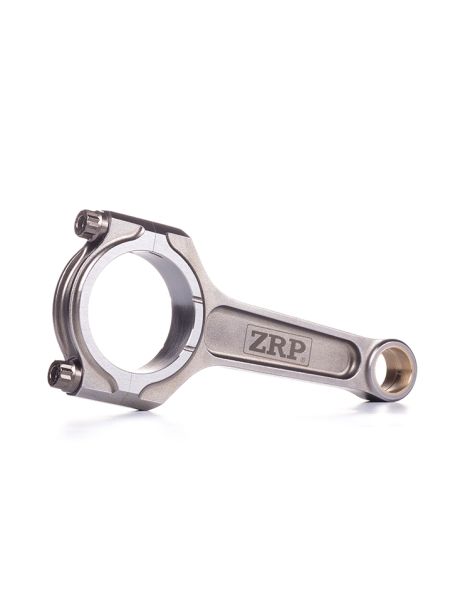
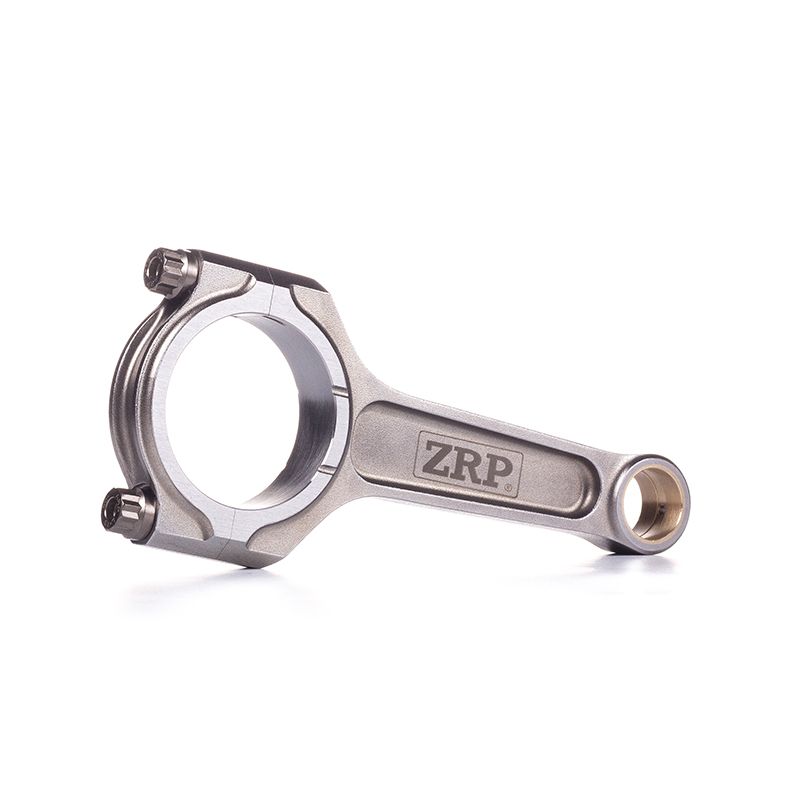
Set of 12 forged 4340 steel connecting rods for BMW V12 M70B50 and M70B54.
The M70 is BMW's first modern-era V12, launched in 1987. With an aluminium block and heads, a single overhead camshaft and two valves per cylinder, it uses a split engine-management layout, each bank of six cylinders having its own ECU. The M70B50 displaces 5.0 litres (4988 cc, 84 mm bore, 75 mm stroke) and produces 300 hp; the range is extended by a 5.4-litre evolution, designated M70B54 by the aftermarket, with more torque.
This twelve-cylinder powers the BMW 7 Series 750i and 750iL (E32 then E38) and the 8 Series 850i and 850Ci (E31), as well as the ALPINA B12 5.0. Renowned for its smoothness, the engine benefits from a reinforced rotating assembly as soon as you aim for high-mileage reliability or tuning: switching to forged connecting rods secures the bottom end and allows a controlled power increase.
The material does everything: these rods are forged from high-strength 4340 steel, with grain flow following the shape of the part, then machined and matched. The bottom end of the M70 V12 gains the reliability it lacks as soon as power goes past factory figures. Moving to forged pistons, raising the rev limit, increasing boost pressure or gaining displacement take the standard rod out of its range; the ZRP I profile, 499 g for a 135 mm centre-to-centre and a 48 mm big end, takes over on all twelve cylinders.
These rods are made for modified engines, turbocharged or supercharged, and cover every discipline: rally, drift, drag, circuit and trackdays, hillclimb, time attack. They support Stage 2, Stage 3 and Stage 4+ builds, right up to the competition block. On a twelve-cylinder, weight consistency from one rod to the next matters as much as strength.
| Reference | Brand | Profile | Bolts | Pin diameter OEM 22 mm | Small-end width | Big-end diameter OEM 48 mm | Big-end width | Center-to-center OEM 135 mm | Weight per rod |
|---|---|---|---|---|---|---|---|---|---|
| R-BMW-017-I | ZRP | I | ARP 2000-3/8"-38mm | 22 mm | 48 mm | 21.9 mm | 135 mm | 499 g | |
| R-BMW-017-I-L19 | ZRP | I | ARP L19-3/8"-38mm | 22 mm | 48 mm | 21.9 mm | 135 mm | 499 g |
| Rod | Bolts | Tightening torque | Recommended stretch |
|---|---|---|---|
| ZRP (R-BMW-017-I) | ARP 2000 | 61 N·m | 0.140 – 0.152 mm |
| ZRP (R-BMW-017-I-L19) | ARP L19 | 67.8 N·m | 0.152 – 0.165 mm |
Twelve rods, twenty-four bolts: on a V12 such as the M70, a single bolt tightened outside the range is enough to condemn the whole engine. A bolt left below the specified figure loses its preload as soon as the inertia load reverses: the cap lifts, the parting face degrades, the shell is hammered, clearance opens and that particular bearing becomes the weak point of the block. A bolt tightened above the range raises a different but equally serious problem: it elongates permanently, retains no useful tension and works in fatigue, while the overload distorts the bearing bore and makes the big end oval. Good practice therefore consists in reading the stretch of every single bolt, one by one, strictly respecting the values in the table below, published by the fastener manufacturer and separate for ARP 2000 and ARP L19 in 3/8". The stretch gauge is the reference method, ARP assembly lubricant is mandatory and the kit instructions always prevail.
| 4340 is a low-alloy nickel-chromium-molybdenum steel used in aerospace and motorsport. Forged then heat-treated by quenching and tempering, it combines high tensile strength, excellent fatigue life and good ductility. Compared with an original sintered-steel rod, it gains around 19% in yield strength, 8% in tensile strength and 19 to 37% in fatigue life: real margin where sintered steel breaks under heavy load. It is the reference material for any high-performance connecting rod. |
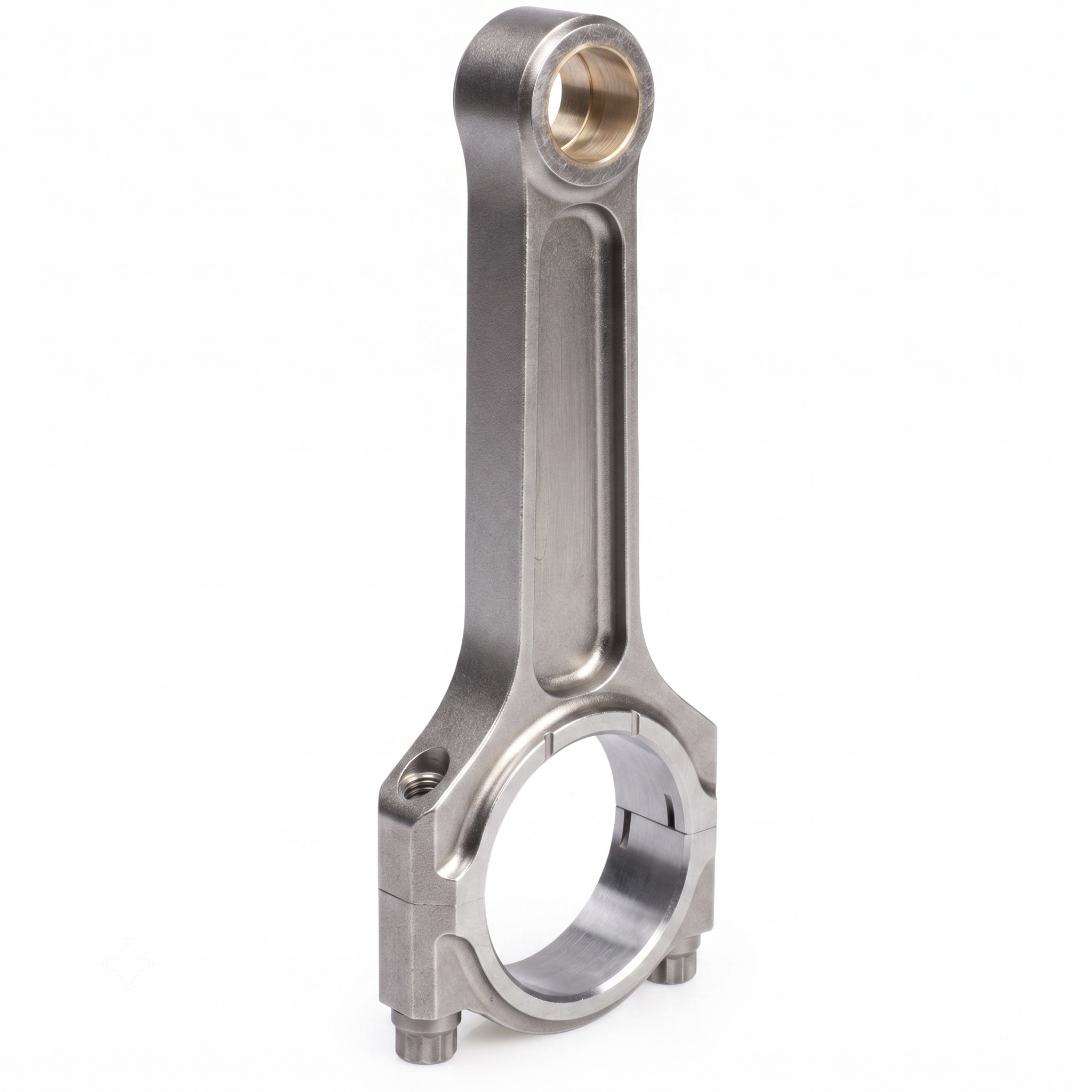 | I-Beam profile. Thin central section and reduced mass: the I-beam rod limits inertia and allows high engine speeds. It is the profile of choice for modern engines, rally builds and high-revving units, drift and time attack in particular. It is the profile chosen for this M40 / M43 kit. |
The performance of a rod bolt comes from its metallurgy, not from its appearance. The alloy grade sets the yield strength and the tensile strength; the heat treatment, carried through the section, guarantees the same hardness from core to surface; the rolling of the threads, done after that treatment, work-hardens the thread root and pushes fatigue initiation far away. Finally, chemical stability decides how the bolt is stored and fitted. This V12 takes its hardware in 3/8"-38 mm, in two grades; choose according to target power and engine speed, then tighten by measured stretch, never by torque alone.
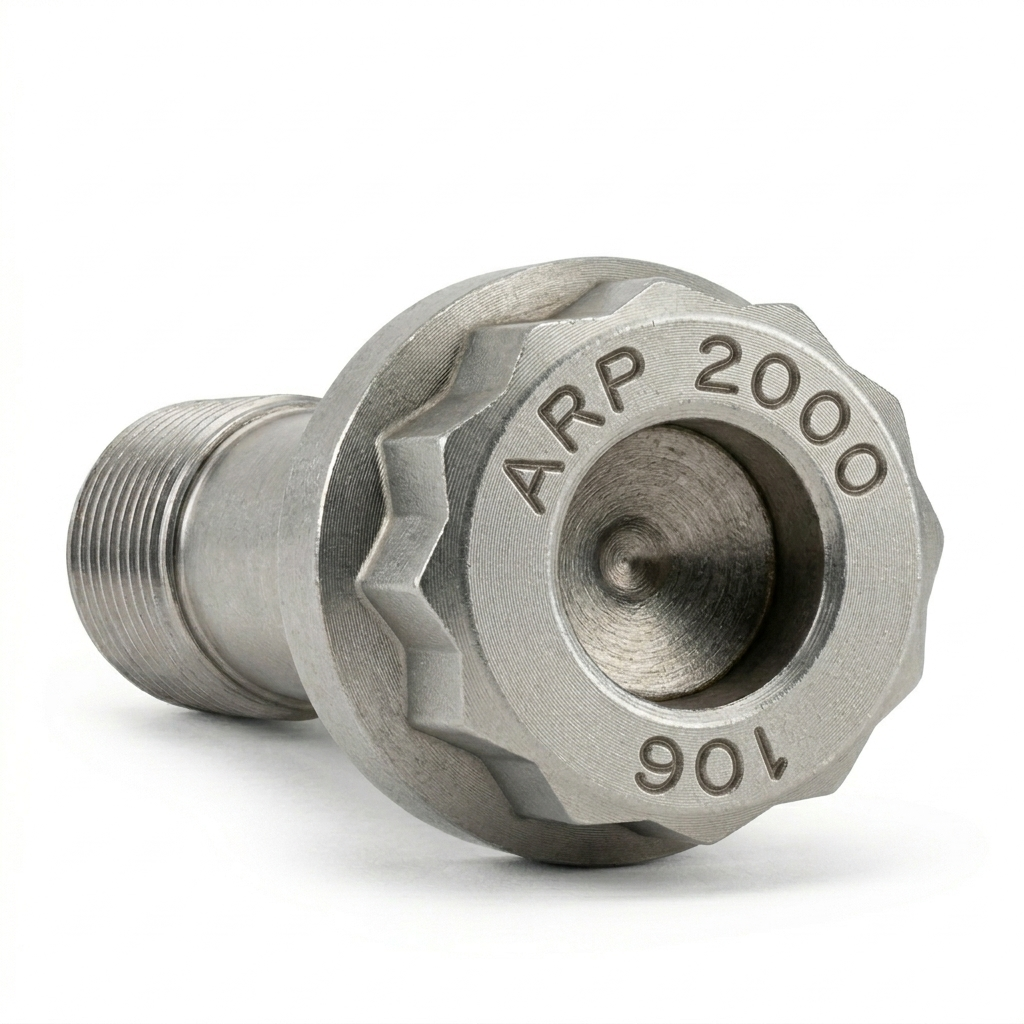 | ARP 2000 (tensile strength around 220,000 psi, ~1,517 MPa) remains the high-performance standard. Its sizing is reasoned per cylinder and by bolt diameter: about 200 hp per cylinder in 3/8", for engine speeds allowed up to 8,500 rpm. It covers circuit, trackday, drift, rally, drag and hillclimb alike, combining strength, reliability and versatility, with no storage constraints. |
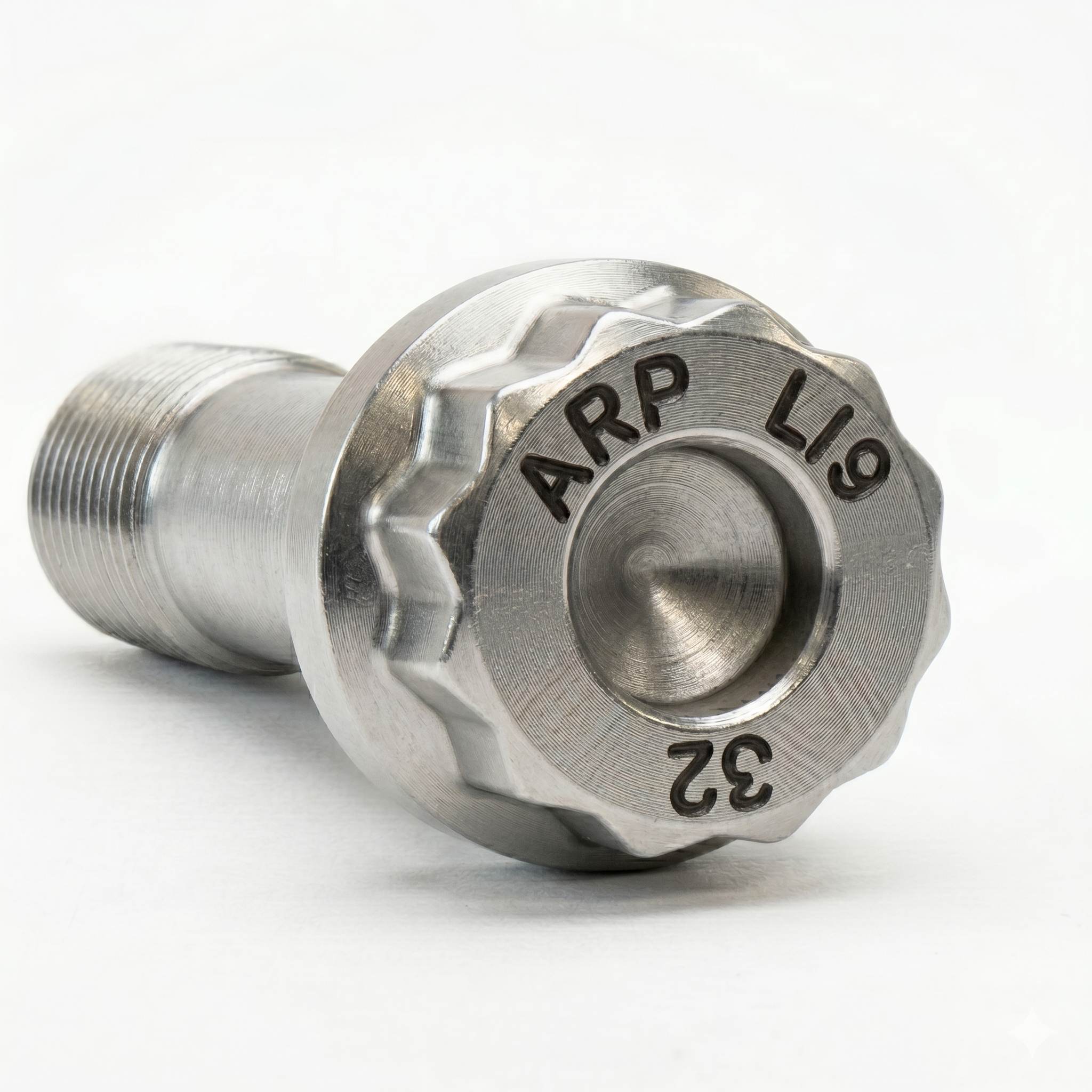 | ARP L19 (tensile strength around 260,000 psi, ~1,793 MPa) is intended for engines pushed to the extreme: high boost pressure, sustained high engine speeds and elevated cylinder pressure. Its thresholds reach about 250 hp per cylinder in 3/8", for engine speeds allowed up to 10,000 rpm, on high-power builds in drag, drift, rally and circuit. Sensitive to corrosion and hydrogen embrittlement, it must be stored and fitted oiled, away from moisture. |
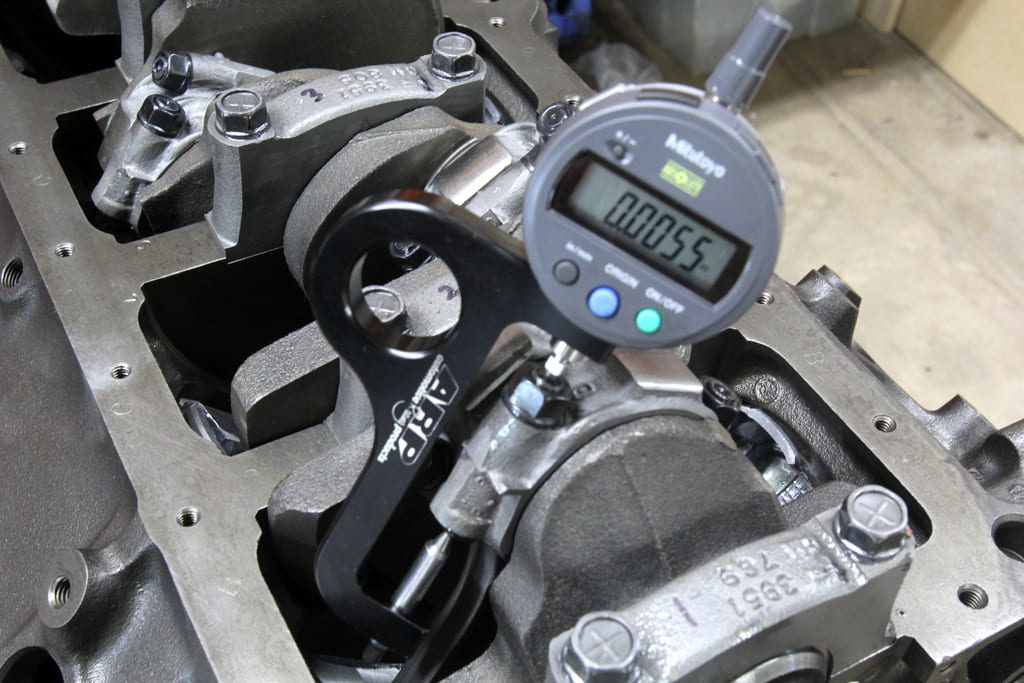
In addition to torque tightening, measuring rod-bolt stretch is the most reliable check for optimal preload. The check is done with the bolt fitted: place the gauge (dial indicator) on the two ends of the bolt and read its actual stretch, which must match the recommended value (see the torque & stretch table above). This method removes the friction variations inherent in torque tightening and secures the assembly on heavily stressed engines. |
 | ZRP : a Greek brand of high-performance forged connecting rods, made by Drakos Engineering in Athens. Each rod is forged from 4340 steel, precision-machined and balanced to stay reliable at high rpm. Available here in I-Beam profile and supplied with ARP 2000 or ARP L19 bolts, they are designed and inspected in Greece and used in rally, on track and in drift. |
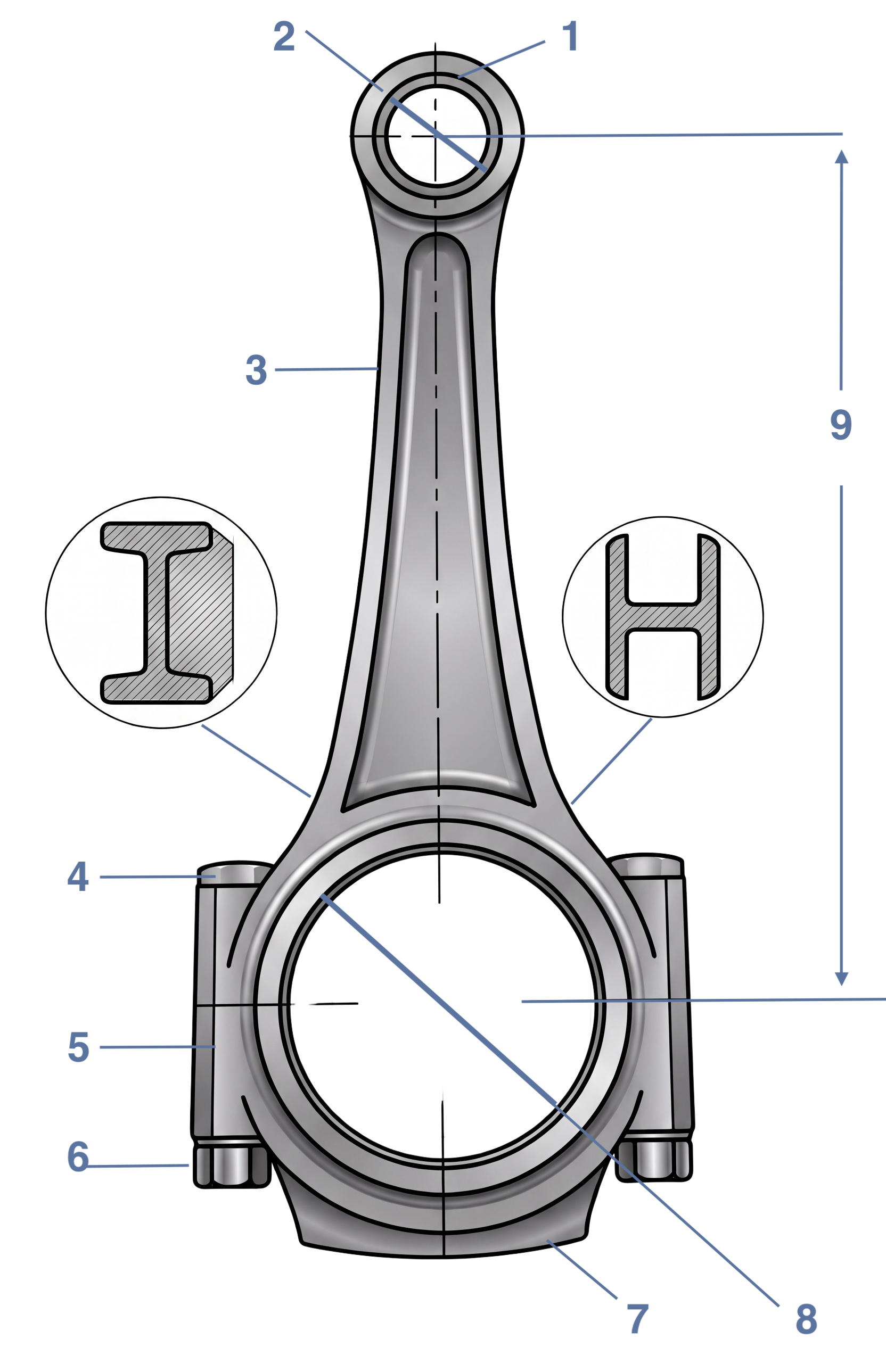 | 1) Small end 2) Small-end diameter 3) Rod beam 4) Rod bolt 5) Big end 6) Rod nut / bolt 7) Rod cap 8) Big-end diameter 9) Center-to-center |
The models listed below receive the rods BMW M70B50 M70B54 engine. Check the piston pin diameter and the rod centre-to-centre length before validating your basket.
| Brand | Model (chassis) | Engine code | Power | Years |
|---|---|---|---|---|
| BMW | 7 Series 750i / 750iL (E32) | M70B50 | 300 hp | 1987–1994 |
| BMW | 8 Series 850i / 850Ci (E31) | M70B50 | 300 hp | 1990–1994 |
| ALPINA | B12 5.0 (E32, E31) | M70B50 | 350 hp | 1988–1994 |
OEM reference: 11 24 1 729 487.
When a standard rod breaks on this kind of engine, the repair is heavy: the rods AND the pistons, almost always damaged in the same incident, have to be replaced, the crankshaft and bearings inspected, sometimes the block reworked. On a twelve-cylinder, the bill for a simple return to factory condition quickly reaches a level that is hard to accept.
For an equivalent or even lower budget, a set of 4340 forged rods combined with forged pistons brings reliability and a safety margin beyond comparison, and opens real room to raise power. This has been the choice of European engine builders for more than fifteen years, on big blocks as on small ones.
For the same budget: more reliability, more potential and more longevity for all twelve cylinders.