Product successfully added to your shopping cart
Quantity
Total
There are 0 items in your cart. There is 1 item in your cart.
Total products
Total shipping To be determined
Total

4.2L 40v - BCY / BRV
Manufacturers
4.2L 40v - BCY / BRV
Warning: Last items in stock!
New product
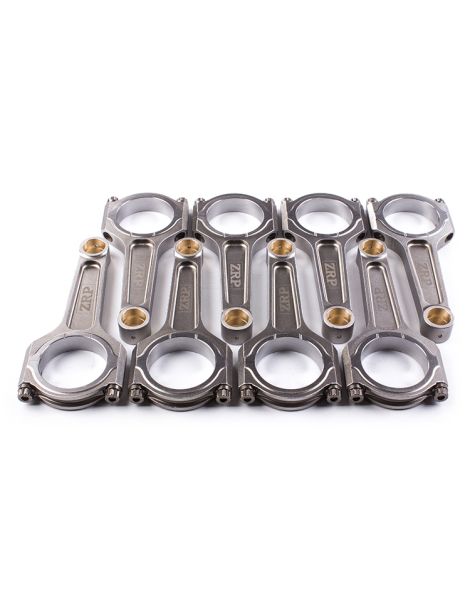
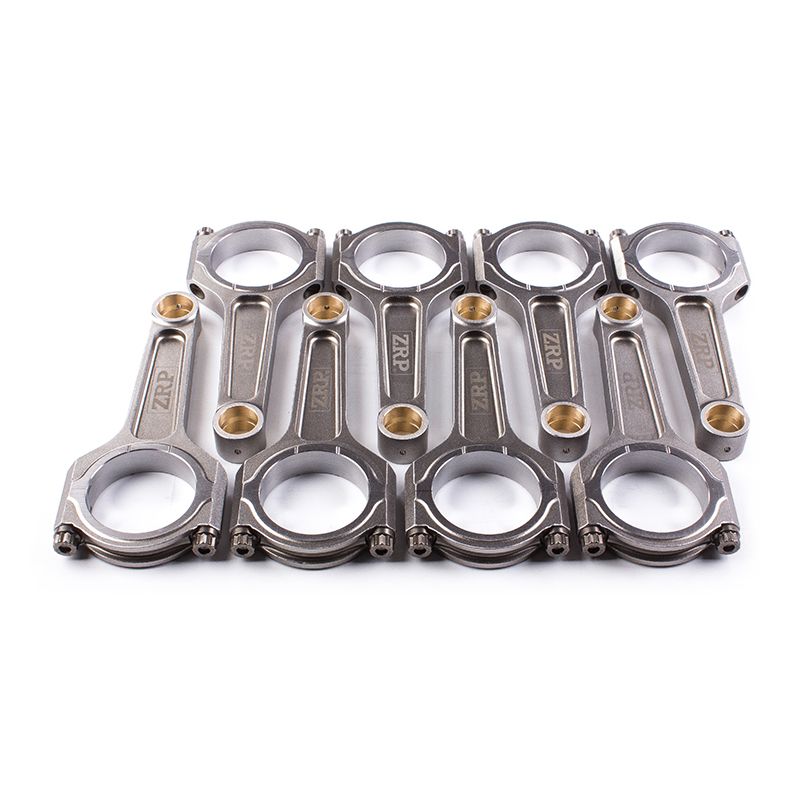
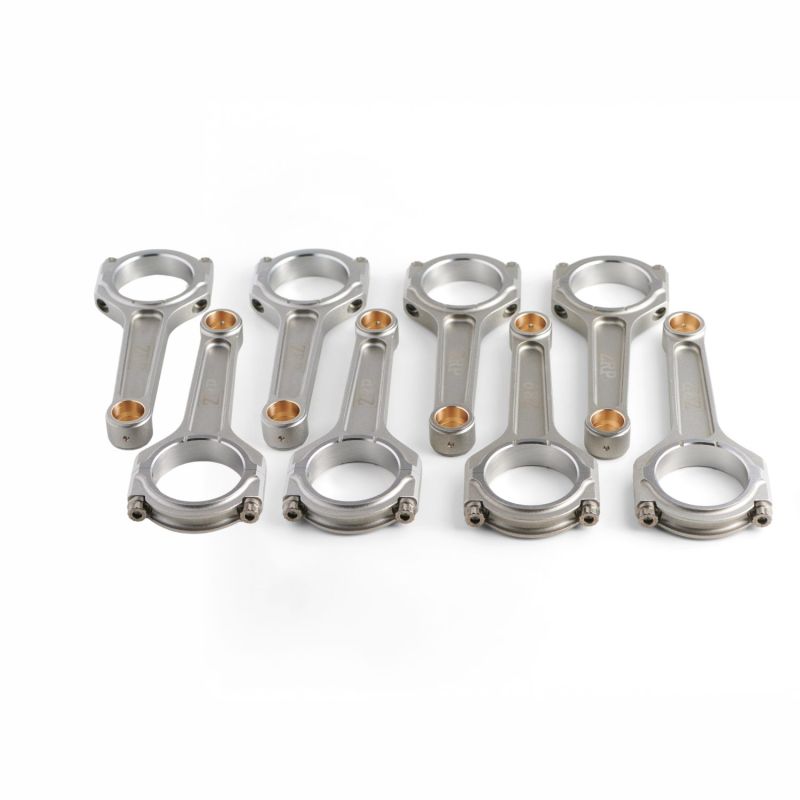
Set of 8 forged connecting rods in 4340 steel for the Audi RS6 (C5) 4.2L V8 Biturbo (BCY / BRV).
Launched in 2002, the Audi RS6 (type C5) uses a 4.2-litre twin-turbo V8 with 40 valves (5 per cylinder), engine codes BCY and BRV, co-developed with Cosworth Technology. Bore 84.5 mm, stroke 93 mm, displacement 4172 cm³. Two KKK/Borg Warner K04 turbochargers, one per cylinder bank, push output to 450 hp (331 kW) on the RS6 quattro (BCY) and 480 hp (353 kW) on the RS6 plus quattro (BRV, Avant only).
On such a highly stressed block, the original sintered-steel connecting rods become the weak point as soon as displacement or boost pressure increases. NSB Concept offers a set of 8 forged ZRP I-beam connecting rods, machined from 4340 high-yield-strength steel, to secure the bottom end on a tuned build.
This twin-turbo architecture with five valves per cylinder takes the first rounds of remapping in its stride, but the standard sintered-metal rod was calculated for 450 to 480 hp with a narrow margin. As soon as boost pressure climbs, the turbochargers give way to larger units or the rev limit is raised, it is the rod that caps the engine. On a V8, a single rod failure destroys the crankshaft, the crankcase and very often the cylinder head on that bank: securing the short block therefore means a complete set of eight forged rods, fitted with forged pistons.
A forged connecting rod only makes sense if the rest of the bottom end follows: forged pistons, reinforced rod bolts and, depending on the build level, suitable bearings. On an RS6 C5 base, this type of reinforcement targets engines built for circuit racing, drift, drag, hillclimb, rally or time attack, once boost pressure, rpm or torque exceed the tolerances of the original part. Tuners generally distinguish several stages (Stage 2, Stage 3, Stage 4 and beyond) depending on the extent of the engine modifications; switching to a forged rod becomes relevant once the targeted power or boost pressure exceeds the safety margin of the original part.
| Référence | Marque | Profil | Visserie | Diamètre axe | Largeur pied | Diamètre tête | Largeur tête | Entraxe | Poids |
|---|---|---|---|---|---|---|---|---|---|
| R-AUD-011-I | ZRP | I | ARP 2000-3/8"-38mm | 21 | 56,8 | 20,12 | 154 | 536 | |
| R-AUD-011-I-L19 | ZRP | I | ARP L19-3/8"-38mm | 21 | 56,8 | 20,12 | 154 | 536 |
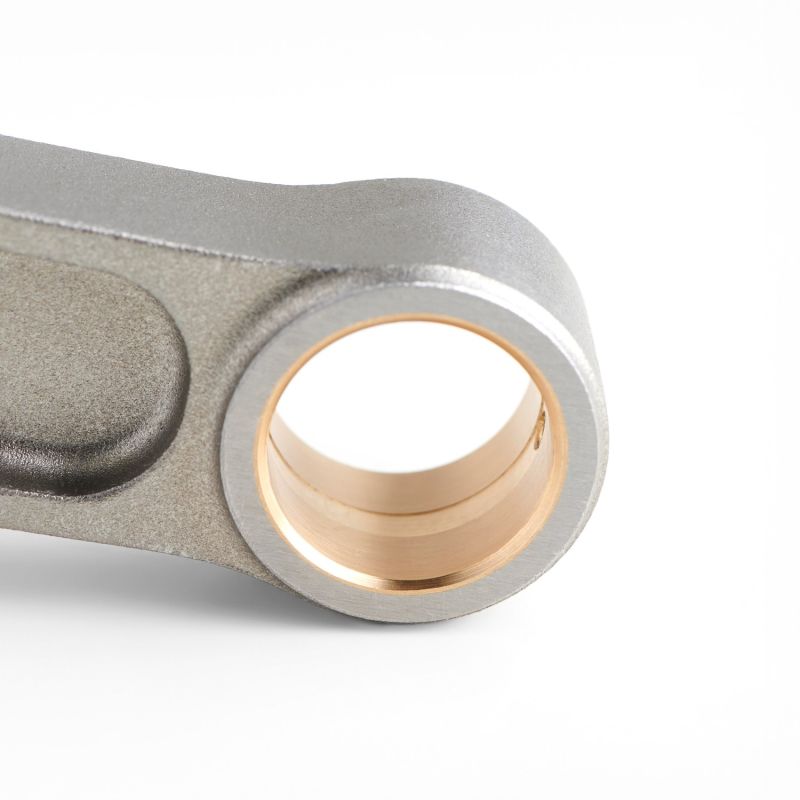
ZRP: Straight, non-tapered pin end.
| Bielle | Visserie | Couple de serrage | Allongement préconisé |
|---|---|---|---|
| ZRP (R-AUD-011-I) | ARP 2000 | 61,0 N·m | 0,140 – 0,152 mm |
| ZRP (R-AUD-011-I-L19) | ARP L19 | 67,8 N·m | 0,152 – 0,165 mm |
| 4340 steel is a nickel-chromium-molybdenum alloy steel used in aerospace and motorsport alike. Forged then heat-treated (quench and temper), it offers excellent tensile strength, high fatigue resistance and real ductility. Compared with an original rod (often sintered/powder metal, optimised for series-production cost), a 4340 forged rod shows roughly +19% higher yield strength, +8% higher tensile strength and above all +19% to +37% higher fatigue strength, i.e. a fatigue life under cyclic loading several times longer. This is what makes forged 4340 the reference material as soon as boost and rpm climb. |
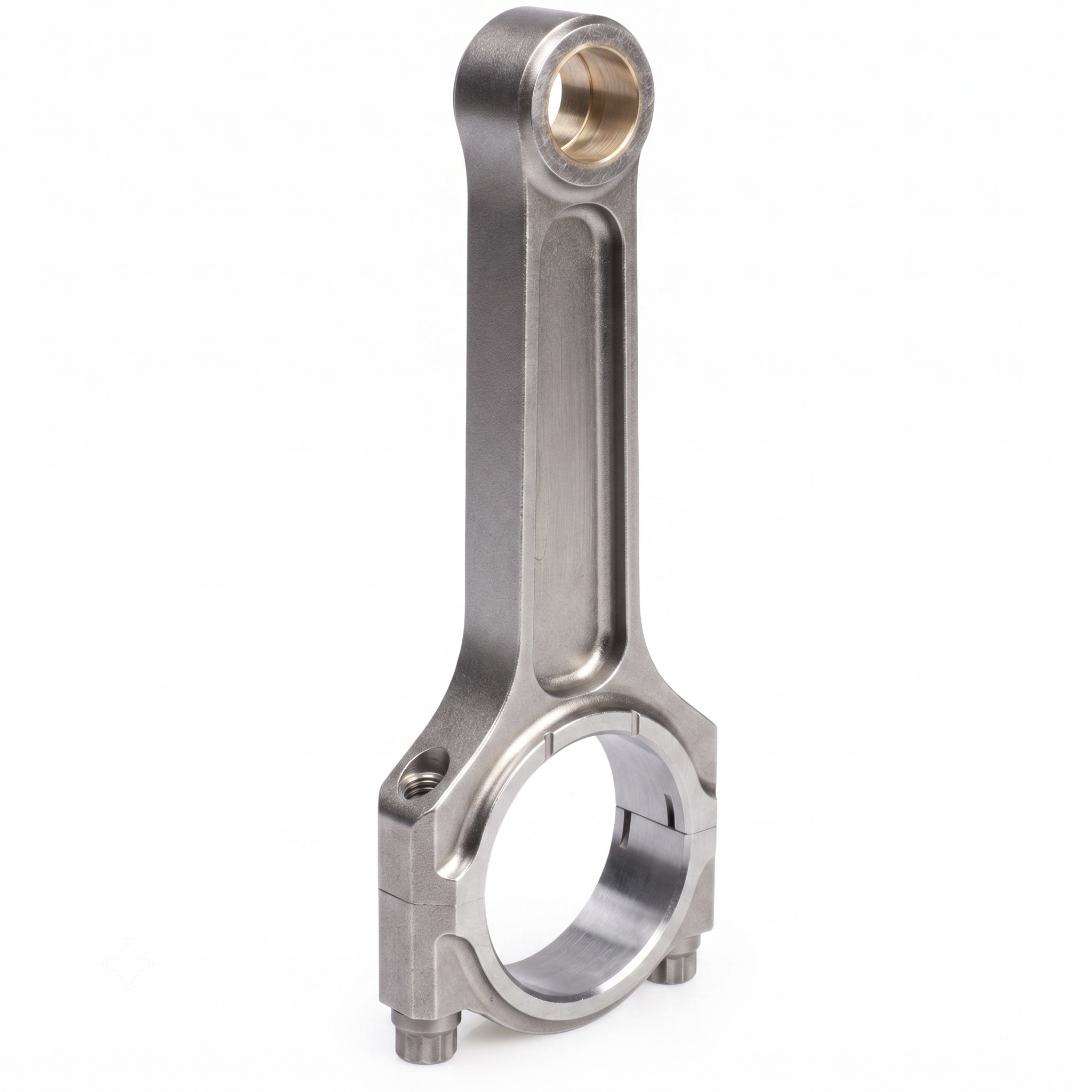 | I-beam profile. With its thinner central section, the I-beam rod is lighter: less inertia and freer rev pick-up. It is the preferred profile on modern turbocharged engines such as the 4.2 V8 biturbo. Its I-HD (Heavy Duty) version is a reinforced variant, designed for higher loads. |
A competition rod bolt is not an ordinary bolt with a better finish: it is a different steel, treated differently. The chosen grade sets the yield strength and the tensile strength, quench and temper carried through the whole section guarantee a uniform structure, and the rolling of the threads, done after that heat treatment, work-hardens the thread root and clearly delays the onset of a fatigue crack. The chemistry of the alloy then decides behaviour towards corrosion and hydrogen, hence the storage conditions. This 4.2-litre V8 takes its bolts in 3/8"-38 mm in two grades; choose according to target power and engine speed, then tighten by measured stretch.
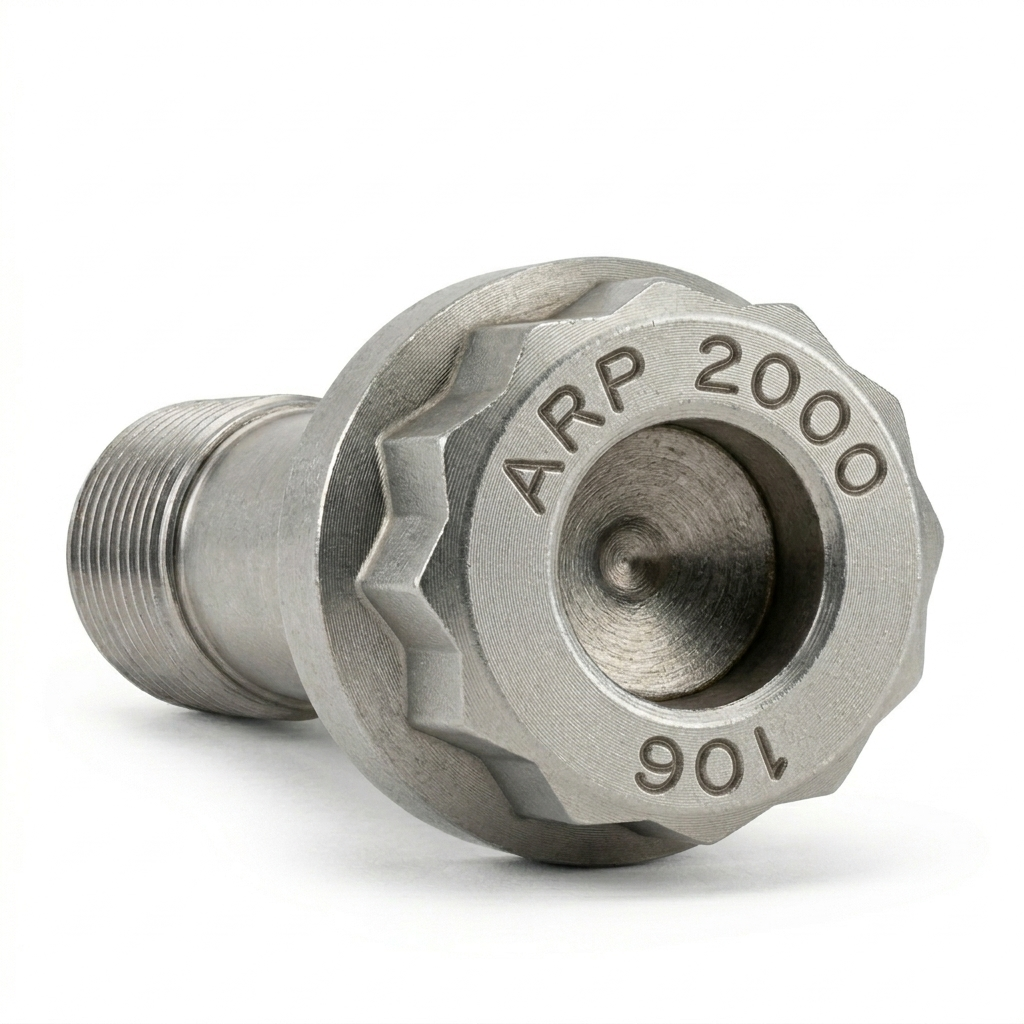 | ARP 2000 is a wrought, through-hardened steel with tensile strength settling around 220,000 psi, i.e. ~1,517 MPa, with threads rolled after heat treatment: cyclic fatigue life is excellent, and stability towards ambient corrosion removes any storage rule. The grade is rated up to 200 hp per cylinder in 3/8" and up to 8,500 rpm, which makes it the most common in circuit racing, trackdays, drift, rally, drag and hillclimb. On this V8 it equips the ZRP I-profile rod with 154 mm centre-to-centre, in 3/8"-38 mm. |
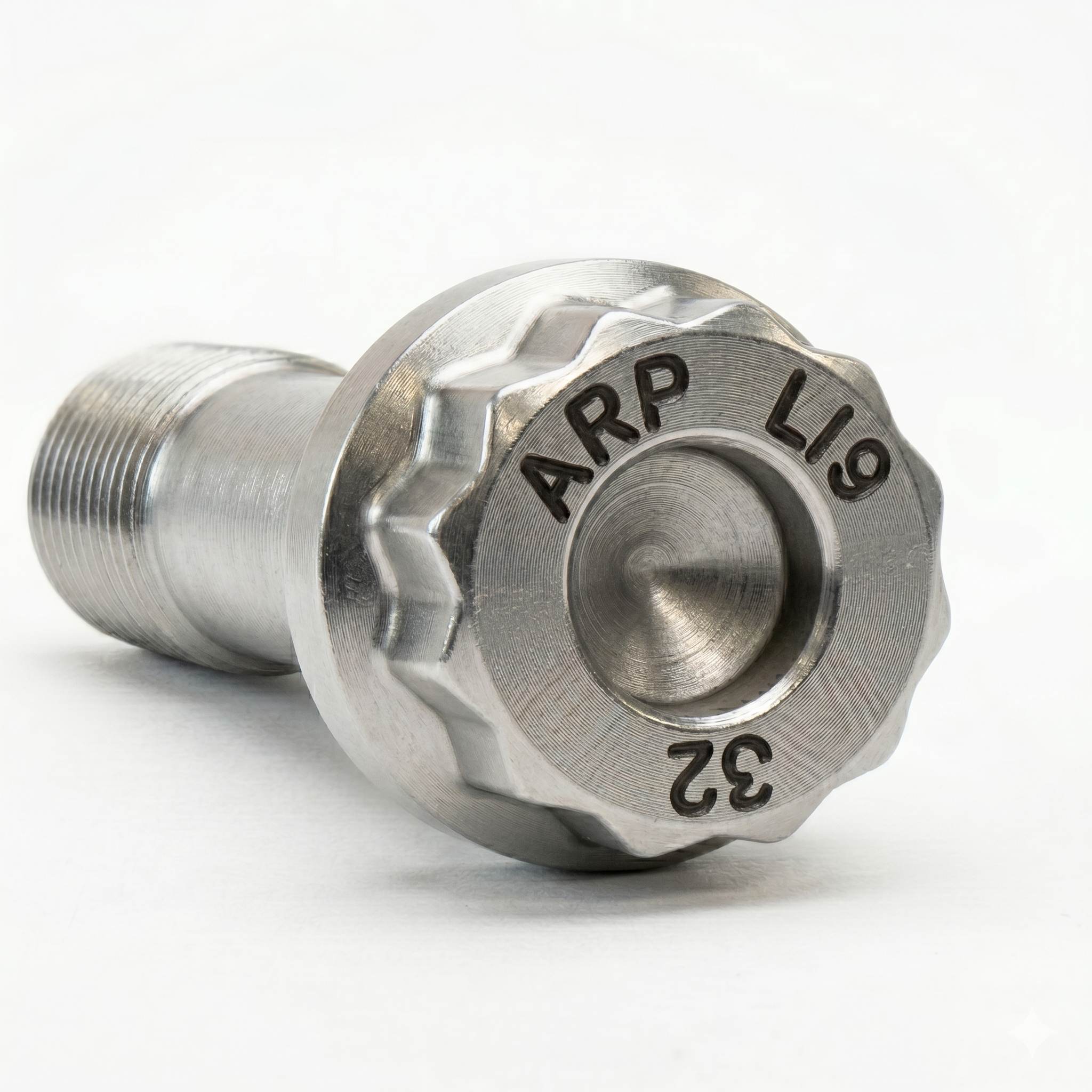 | L19 moves to a more heavily alloyed grade, with a more demanding quench and temper cycle: tensile strength reaches about 260,000 psi, i.e. ~1,793 MPa, for 250 hp per cylinder in 3/8" and up to 10,000 rpm. It is intended for very high boost pressure, sustained high engine speeds and high cylinder pressure, hence for big power in drag, drift, rally and circuit, a common configuration on a modified V8. Its metallurgy imposes one rule: sensitive to corrosion and to hydrogen embrittlement, L19 is stored and fitted oiled, away from moisture. |
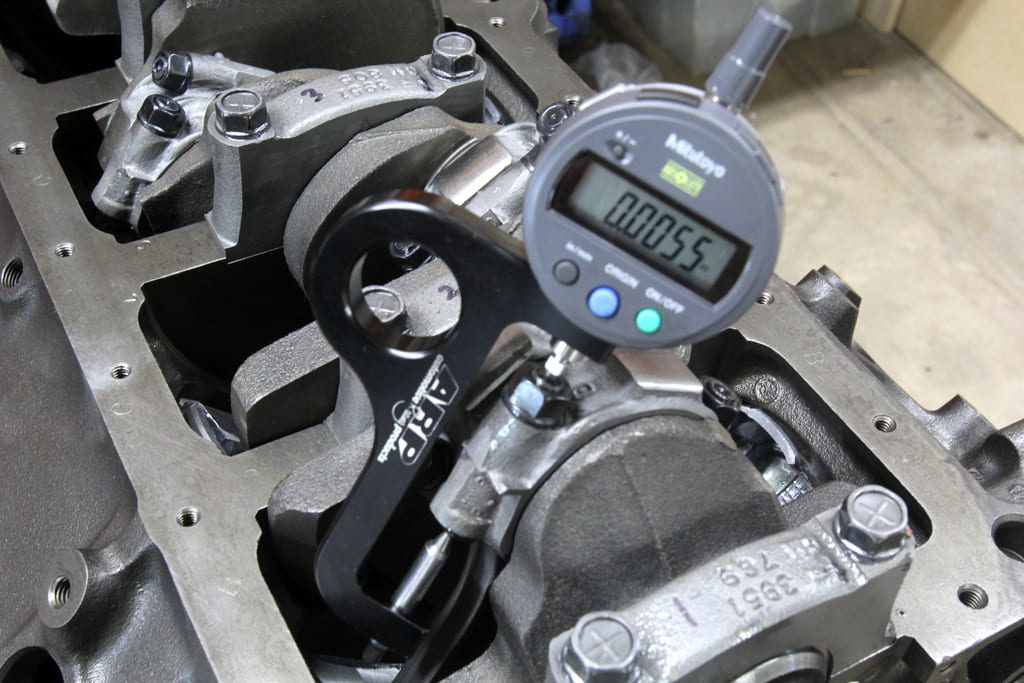
In addition to torque tightening, measuring rod-bolt stretch is the most reliable check for optimal preload. The check is done with the bolt fitted: place the gauge (dial indicator) on the two ends of the bolt and read its actual stretch, which must match the recommended value (see the torque & stretch table above). This method removes the friction variations inherent in torque tightening and secures the assembly on heavily stressed engines. |
 | ZRP, a Greek brand of high-performance forged connecting rods, designed by Alex Drakos in Athens. Each rod is forged from 4340 steel, precision-machined and balanced to ±1 g to stay reliable at high rpm. Available in I-beam or H-beam profile with ARP 2000 or L19 bolts, they are designed and inspected in Greece, and proven in rally, on circuit and in drift. |
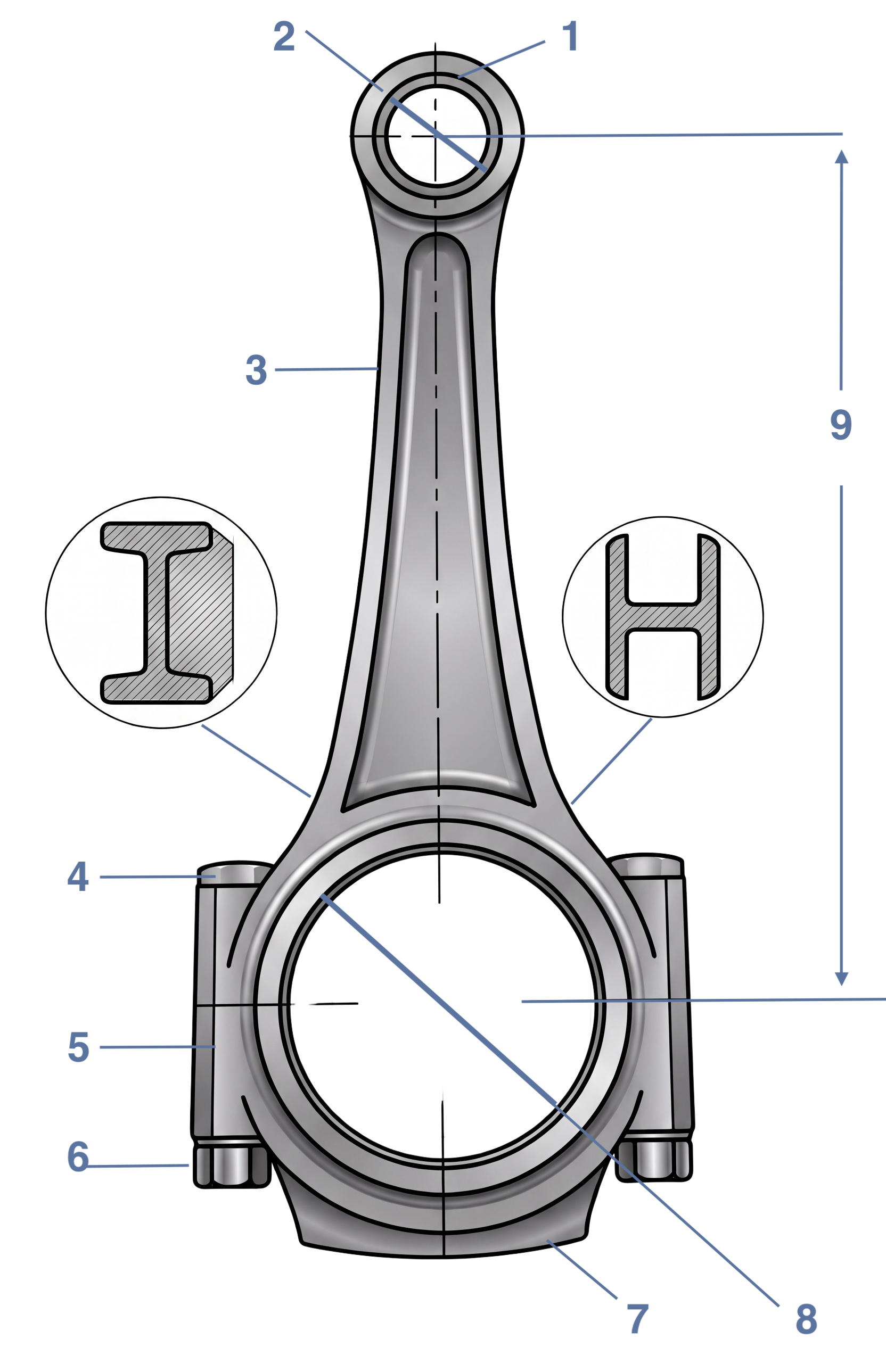 | 1) Small end 2) Small-end diameter 3) Rod beam 4) Rod bolt 5) Big end 6) Rod nut / bolt 7) Rod cap 8) Big-end diameter 9) Center-to-center |
The vehicles in the table below leave the factory with the Audi 4.2L 40V BCY / BRV engine. Confirm the piston pin diameter and the centre-to-centre length of your rods before placing an order.
| Make | Model (chassis) | Engine code | Power | Years |
|---|---|---|---|---|
| Audi | A6 C5 Berline (4B2/4B4) RS6 quattro | BCY | 450 ch (331 kW) | 2002–2005 |
| Audi | A6 C5 Avant (4B5/4B6) RS6 quattro | BCY | 450 ch (331 kW) | 2002–2005 |
| Audi | A6 C5 Avant (4B5/4B6) RS6 plus quattro | BRV | 480 ch (353 kW) | 2004–2005 |
Given the risk of engine damage from a connecting rod failure, investing in a forged rod kit remains modest compared with the cost of a full bottom-end rebuild. It is a safety component for any engine whose power is significantly raised above stock.
Rebuilding an RS6 short block after a failure means a crankshaft, a set of pistons, often a block, and the labour of removing and refitting the V8, which is particularly long on this chassis. A set of eight forged 4340 rods, fitted preventively while the engine is open, represents a fraction of that sum and removes the factory limit instead of reproducing it.
On a controlled budget: a secured short block, and the margin needed to go after power.