Product successfully added to your shopping cart
Quantity
Total
There are 0 items in your cart. There is 1 item in your cart.
Total products
Total shipping To be determined
Total

2.3L 16v - EcoBoost N38/48H YVDA/B
Manufacturers
2.3L 16v - EcoBoost N38/48H YVDA/B
 View larger
 Warning: Last items in stock!
New product
ARP cylinder head bolts and studs for the Ford 2.3-litre EcoBoost YVDA, 39CD, C23HD0D, N38H and N48H.
The YVDA, 39CD, C23HD0D, N38H and N48H are the variants of Ford's 2.3-litre turbocharged EcoBoost four-cylinder (2,261 cc, bore 87.5 mm, stroke 94 mm, sixteen valves), fitted to the Focus RS, the Mustang and the Zenos E10. ARP offers three kits for it: the 151-4301 stud kit in 8740, the 251-4303 stud kit in CA625+ and the 251-3701 bolt kit in ARP2000.
Originally, the cylinder head of the YVDA is held by single-use head bolts, tightened to 7 Nm, 15 Nm and then 55 Nm, before two 90° angles, which each of the three ARP kits replaces.
The job of the head fasteners is to keep the cylinder head locked to the block despite the pressure inside the combustion chambers. They keep the gasket compressed; as soon as their clamping force drops, leaks appear between head and block.
The 151-4301 stud kit has ten M10 x 1.25 studs with 12-point nuts; the 251-4303 stud kit, in CA625+, also takes 12-point nuts, while the 251-3701 bolt kit replaces the original bolts with 12-point head bolts, no nuts. In M10 x 1.25, the 8740 studs hold up to 600 hp on this four-cylinder engine (calculated estimate). As an estimate, equivalent CA625+ cylinder head studs hold up to 600 hp on this four-cylinder engine (calculated estimate).
| Part number | Type | Brand | Grade / material | Nuts | Thread |
| ARP-151-4301 | Studs | ARP | 8740 - Undercut | 12-point | M10 x 1.25 |
| ARP-251-4303 | Studs | ARP | CA625+ | 12-point | |
| ARP-251-3701 | Bolts | ARP | ARP2000 | No nut, 12-point head |
| Part number | Stage 1 | Stage 2 | Stage 3 |
| ARP-151-4301 (studs) | 34 Nm | 68 Nm | 102 Nm |
| ARP-251-4303 (studs) | |||
| ARP-251-3701 (bolts) |
No torque when screwing the studs into the block: hand tight is enough. The instruction sheet says nothing about thread locker; ARP mentions that some engine builders use a blue product on the block end, excluding the nuts and any mixing with its assembly grease, with tightening to be completed before the product sets.
Studs 151-4301: each washer goes on with the stamped side against the cylinder head, and the hex socket at the end of the stud is only for fitting and removal, never for tightening. The sequence includes a loosening: after three passes at 34, 68 then 102 Nm on nuts 1 to 10, all the nuts are loosened from 10 to 1, then the three passes are repeated in the same order.
Follow the tightening sequence recommended by the manufacturer and bring to torque in three stages; the stated values assume ARP lubricant on the threads and under the nuts or bolt heads.
The washers go on dry, clean on both faces, onto degreased cylinder head seats; an oil film at this point would distort the tightening.
The torque and passes in the table come from ARP sheet 151-4301; its full procedure, tightening sequence included, is to be followed to the letter. Read the ARP 151-4301 instruction sheet
To obtain the intended preload, ARP assembly grease must be present on the threads and under the nuts or bolt heads: the torque figures in the table are established with it.
| Buy the ARP assembly grease → |
| Grade | Material | Tensile strength | Strengths |
| 8740 | Chrome-moly steel | 190,000 psi | Widely used grade, threads rolled after heat treatment |
| CA625+ | Super-alloy | 260,000 to 280,000 psi (typical) | Fatigue life, toughness, full corrosion resistance |
| ARP2000 | ARP alloy steel | 220,000 psi | Stronger than 8740, a common step up in racing |
The undercut version is recognisable by its reduced shank between the threads. According to ARP, this profile equalises stretch from one stud to the next and makes the clamping more consistent, while compensating for head gasket compression during installation: engine sealing benefits.
 | Founded in the early 1970s by Gary Holzapfel, who came from the aerospace industry, ARP (Automotive Racing Products) set itself the mission of eliminating engine failures caused by inadequate fasteners in competition. Its thousands of parts are designed and produced in California, in several material grades depending on the application. |
| Criterion | Original head bolts | Reinforced ARP studs | Reinforced ARP bolts |
 | 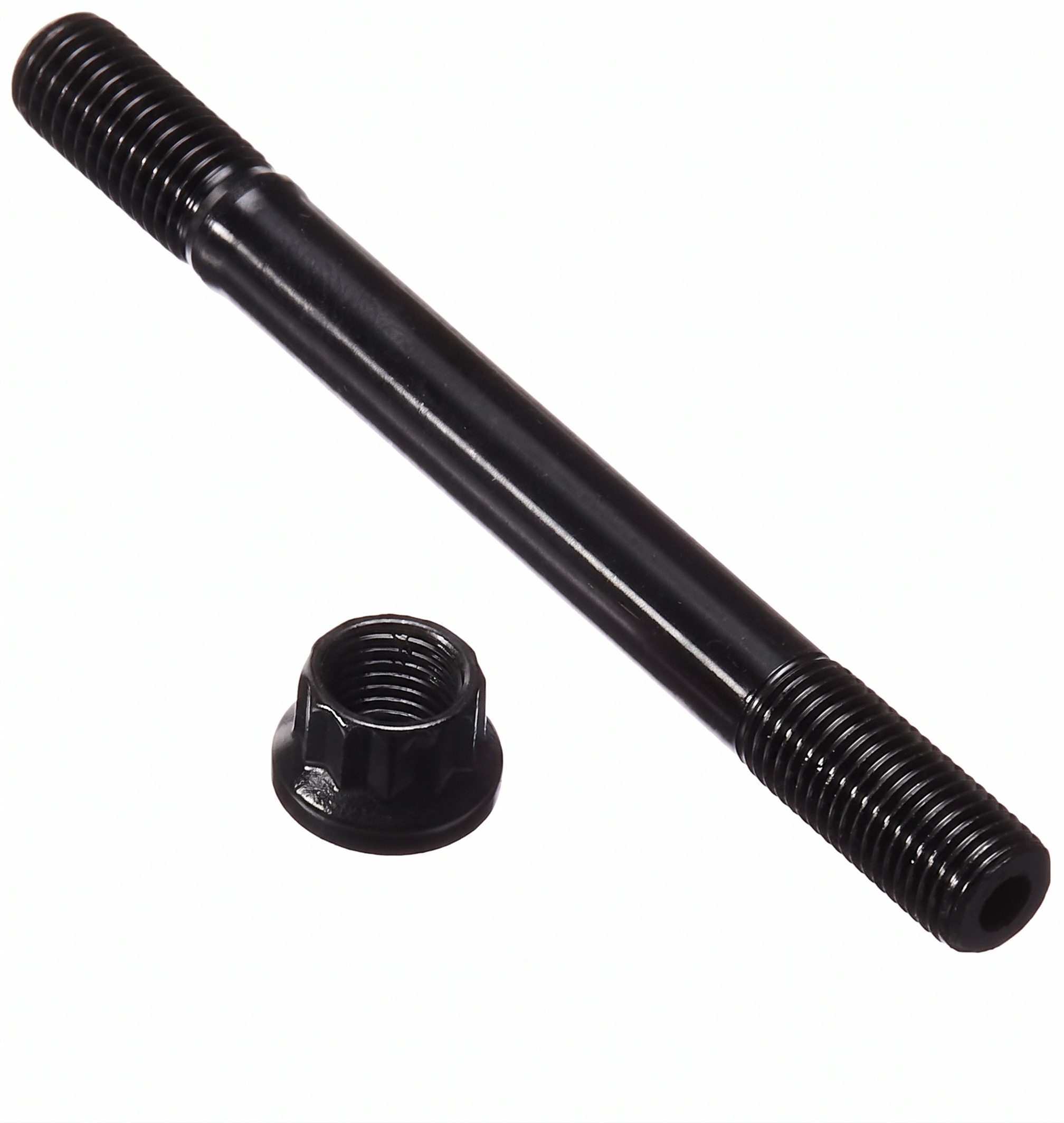 | 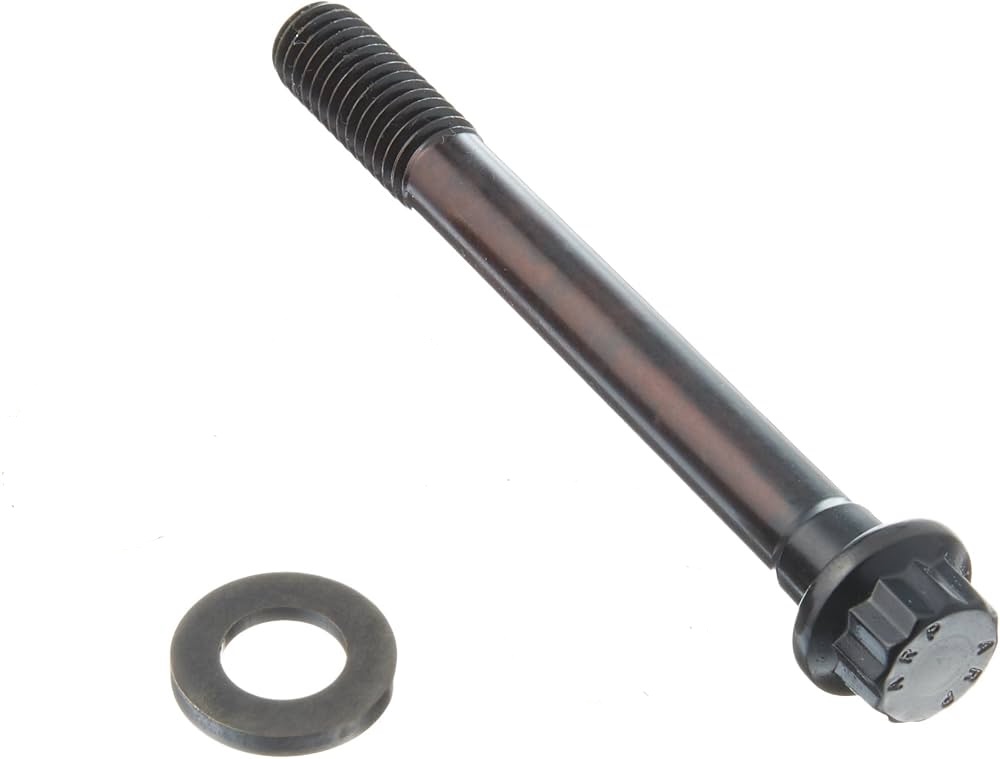 | |
| Fastener | Original head bolt | Stud and 12-point nut | 12-point head bolt |
| Engine block threads | Stressed at every tightening | Preserved: the stud is screwed in by hand | Stressed at every tightening |
The original fasteners are sized for the engine as it leaves the factory. They need to be reinforced when:
| Model | Engine code | Power | Years |
| Ford Focus III RS 2.3 AWD | YVDA, 39CD | 350 hp | 2015-2018 |
| Ford Australia Focus (LZ) RS 2.3 AWD hatchback | YVDA, 39CD | 350 hp | 2015-2018 |
| VUHL 05 convertible 2.3 RR | YVDA, 39CD | 390 hp | since 2016 |
| Ford Mustang Coupe 2.3 EcoBoost | C23HD0D, N38H, N48H | 290 to 330 hp | 2014-2023 |
| Ford Mustang Convertible 2.3 EcoBoost | C23HD0D, N48H | 290 to 330 hp | 2014-2023 |
| Ford Australia Mustang Coupe (FM, FN) 2.3 EcoBoost | C23HD0D | 305 to 321 hp | 2014-2023 |
| Ford Australia Mustang Convertible (FM, FN) 2.3 EcoBoost | C23HD0D | 305 to 317 hp | 2014-2019 |
| Zenos E10 2.3 R | C23HD0D | 350 hp | since 2015 |
On a 2.3-litre EcoBoost run at a higher boost pressure, the single-use original head bolts limit what the gasket can hold. An ARP kit, in studs or bolts, moves that limit for an outlay far below that of reopening a Focus RS or a Mustang after a failed head gasket.
Reinforced fasteners are only fully worthwhile with a head gasket able to resist the same pressure. We offer the following part for this engine:
| Reinforced head gasket Ford 2.3 C23HD0D N48H → |