Product successfully added to your shopping cart
Quantity
Total
There are 0 items in your cart. There is 1 item in your cart.
Total products
Total shipping To be determined
Total

3.0L 24v - EA839
Manufacturers
3.0L 24v - EA839
Warning: Last items in stock!
New product
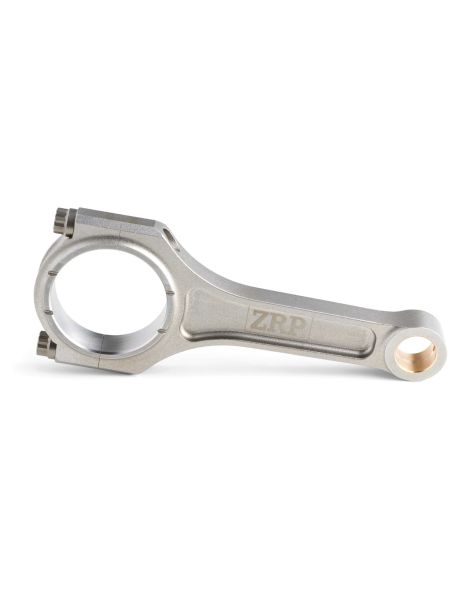
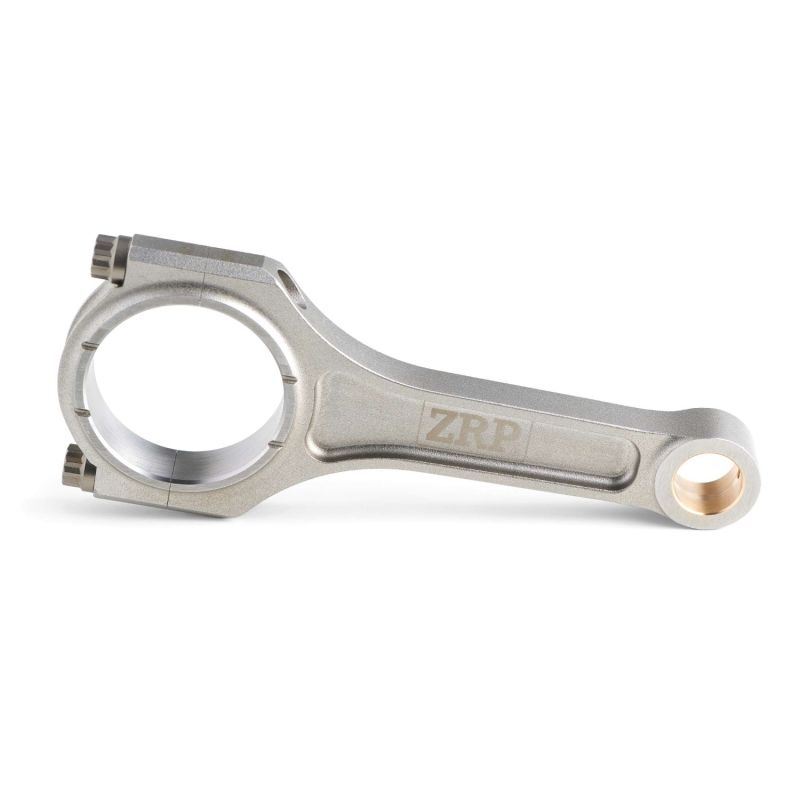
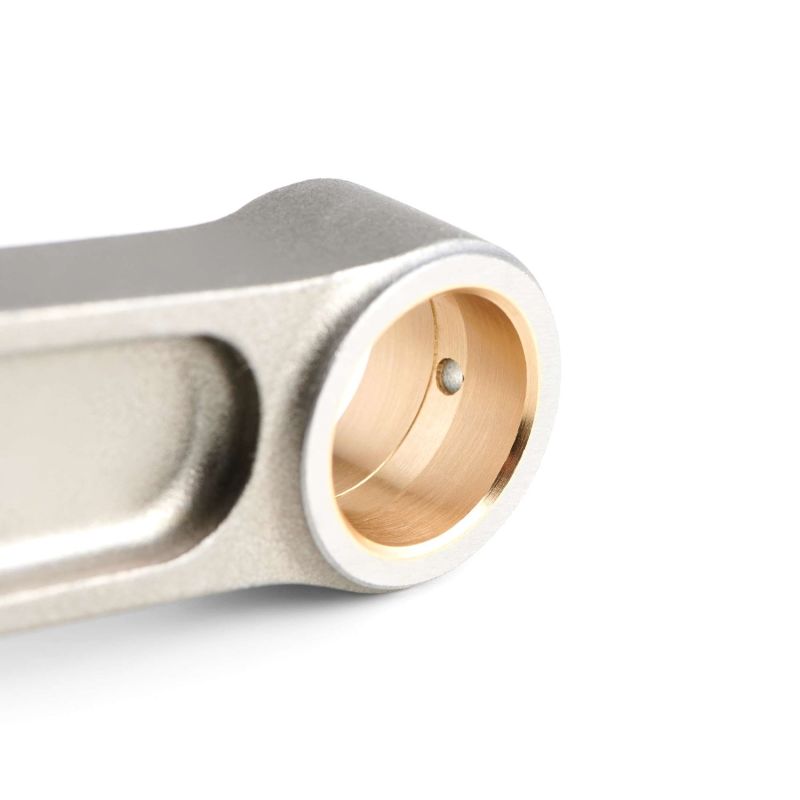
Set of 6 forged 4340 steel connecting rods for Porsche 3.0L 24V Turbo EA839.
Part of the Volkswagen Group's modular EA839 family, this 3.0 TFSI petrol V6 displaces 2,995 cc and was engineered by Audi before being shared with Porsche. It keeps the 'hot-vee' layout, with the turbocharger nestled in the V between the two banks to shorten the gas paths and sharpen response. With an 84.5 mm bore and a long 89 mm stroke, this twin-scroll single-turbo unit powers the Porsche Panamera (971) and Cayenne (9YA), and is also found in the Audi S4, S5 and SQ5 (B9), where it reaches 354 hp.
When boost pressure or ECU tuning rises, the loads borne by the rotating assembly climb quickly. Forged 4340 connecting rods push the failure threshold back and deliver lasting bottom-end reliability, an essential step before exploiting extra torque with confidence.
The central link of the rotating assembly, the connecting rod joins the piston to the crankshaft and turns its linear travel into torque at the crank. At ignition it takes a brutal compression load, then tension as the piston rises. As long as the engine stays stock these stresses remain manageable, but once boost and power climb they intensify, and the factory rod, generally sintered to keep manufacturing costs down, eventually reaches its limit.
The forged rod, by contrast, is hot-hammered from an alloy steel: the resulting grain flow multiplies its resistance to fatigue and breakage. Ground, balanced and clamped by high-performance hardware, it locks in bottom-end reliability. It becomes essential as soon as you fit forged pistons, raise boost pressure, chase higher revs or increase displacement. Designed for built engines, these forged rods suit every discipline (rally, drift, drag racing, circuit and track days, hillclimb, time attack) and support Stage 2, Stage 3 and Stage 4+ builds, up to full competition engines.
| Reference | Brand | Profile | Bolts | Pin diameter | Small-end width | Big-end diameter | Big-end width | Center-to-center | Weight per rod |
|---|---|---|---|---|---|---|---|---|---|
| R-POR-002-I | ZRP | I | ARP 2000-5/16"-38mm | 20 mm | 58.8 mm | 20.05 mm | 155 mm | 522 g | |
| R-POR-002-I-L19 | ZRP | I | ARP L19-5/16"-38mm | 20 mm | 58.8 mm | 20.05 mm | 155 mm | 522 g |
| Rod | Bolts | Tightening torque | Recommended stretch |
|---|---|---|---|
| ZRP (R-POR-002-I) | ARP 2000 | 40.7 N·m | 0.140 – 0.152 mm |
| ZRP (R-POR-002-I-L19) | ARP L19 | 54.2 N·m | 0.127 – 0.140 mm |
Before starting the 3.0 TFSI rebuild, two shop checks head off most of the trouble: the calibration of the torque wrench, worth verifying if the tool has spent the season in a box, and the zero of the stretch gauge, to be reset on the standard supplied with it. Then comes the measuring work, bolt by bolt, free length then length under load, cap by cap. For ARP 2000 as for ARP L19 in 5/16" 38 mm, the table gives the values specified by the bolt manufacturer: they are to be followed scrupulously, and it is the measured stretch, not the torque, that proves the tightening is right.
A low-alloy steel combining nickel, chromium and molybdenum, 4340 is valued in aerospace and motorsport alike for the balance it strikes between hardness and impact resistance. Shaped by forging and then quenched and tempered, it gains high tensile strength, outstanding endurance against repeated cycles and the ability to absorb load peaks without breaking. Against a stock sintered rod, designed for series production, forged 4340 picks up about 19% in yield strength, nearly 8% in tensile strength and 19 to 37% in fatigue endurance: its life under repeated loading is multiplied. Hence its status as the go-to material once pressure and engine speed rise. |
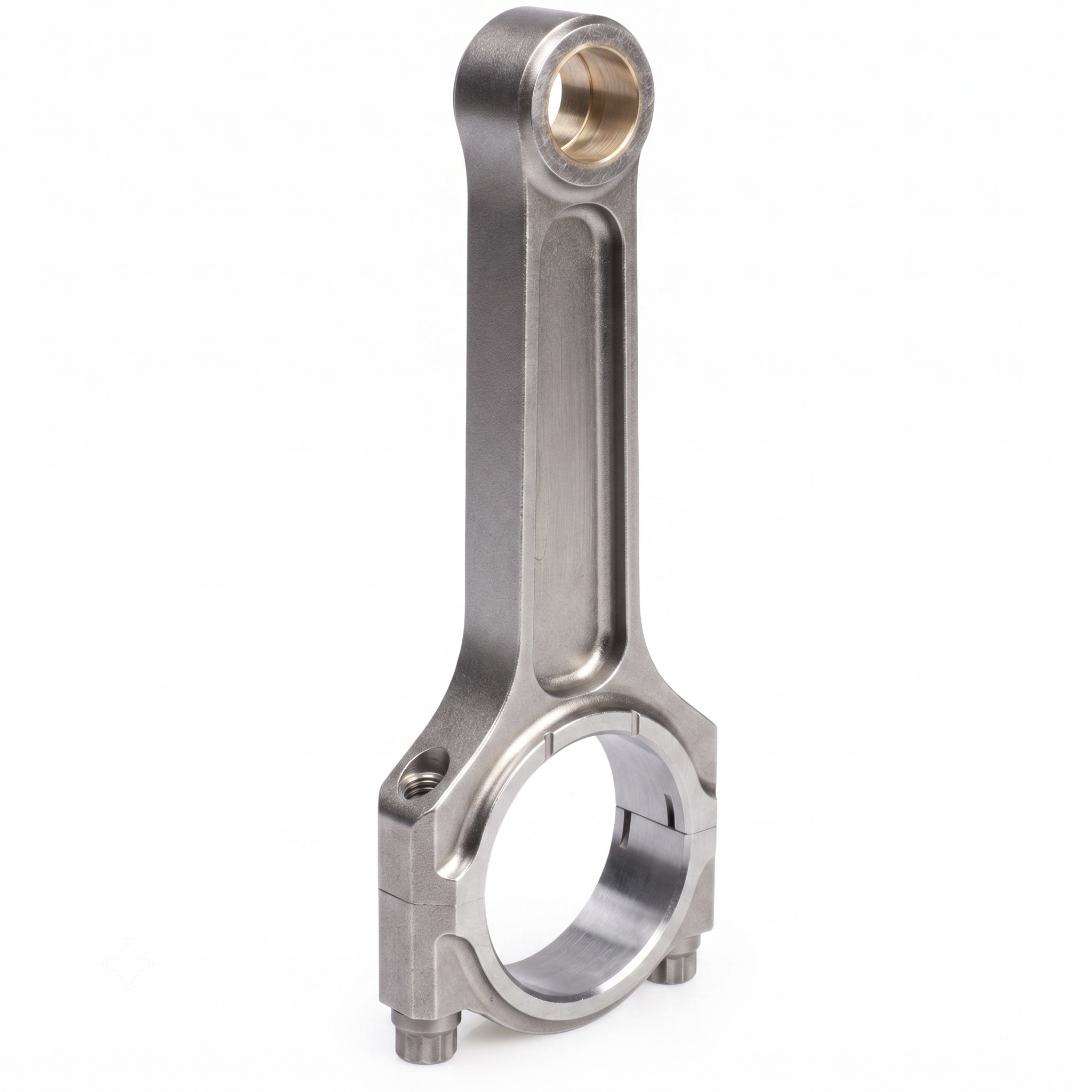 | I-beam profile: the body draws an I with a thinned mid-section. This geometry lightens the part compared with an H-beam, cuts reciprocating mass and encourages crisp pickup. On a recent turbo engine such as the EA839 3.0 it is the most relevant profile, since it best reconciles lightness and strength, from the prepared road car to the track. It is the profile chosen for these rods. |
On a built engine the rod bolt works ceaselessly to keep the cap pressed onto the big end: its quality directly governs how well the assembly holds. The whole point is to choose the ARP grade in line with the intended build, then to apply the tightening torque and stretch with discipline. This listing offers two ARP grades:
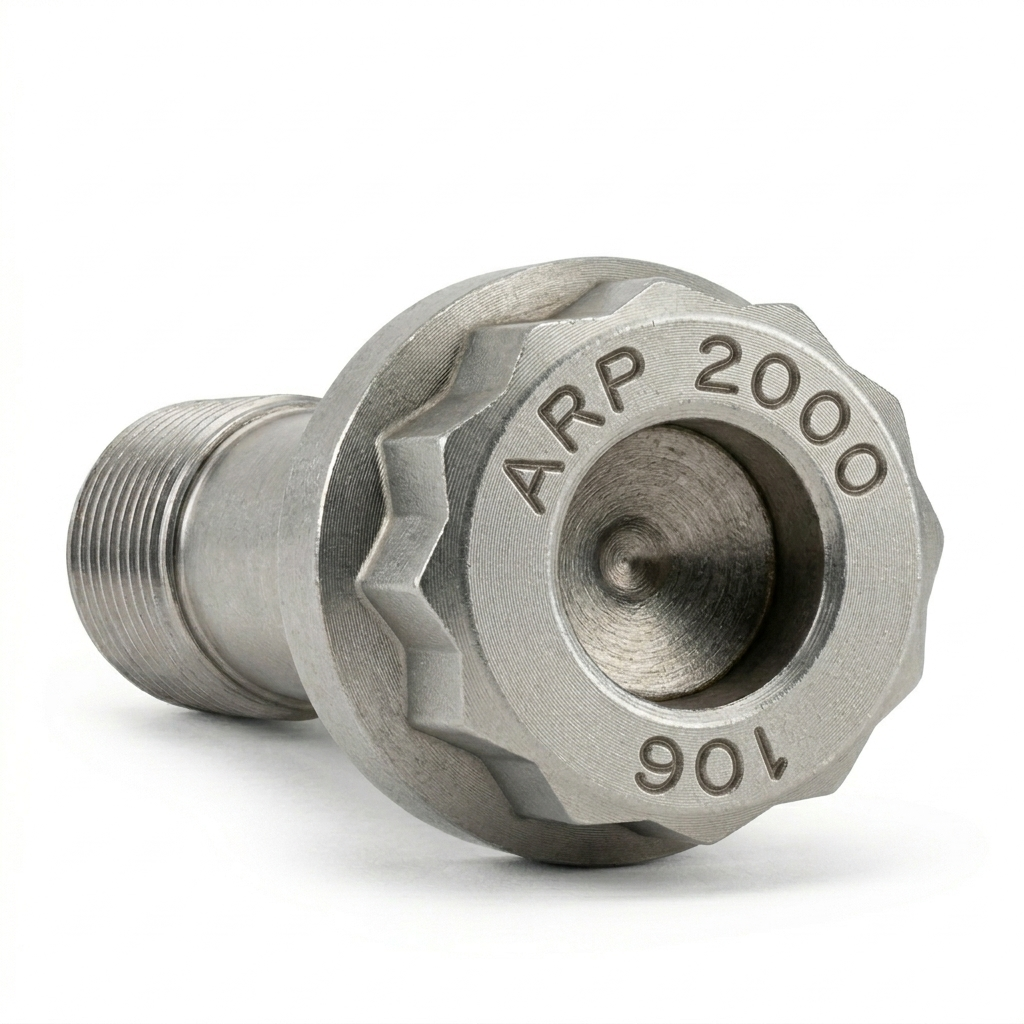 | ARP 2000 (tensile strength around 220,000 psi, i.e. ~1,517 MPa) is the benchmark high-performance grade. It covers builds reaching 150 hp per cylinder in 5/16″, up to 8,500 rpm. Favoured in circuit racing, track days, drift, rally, drag and hillclimb, it stands out for its robustness and versatility, with no particular storage requirement. |
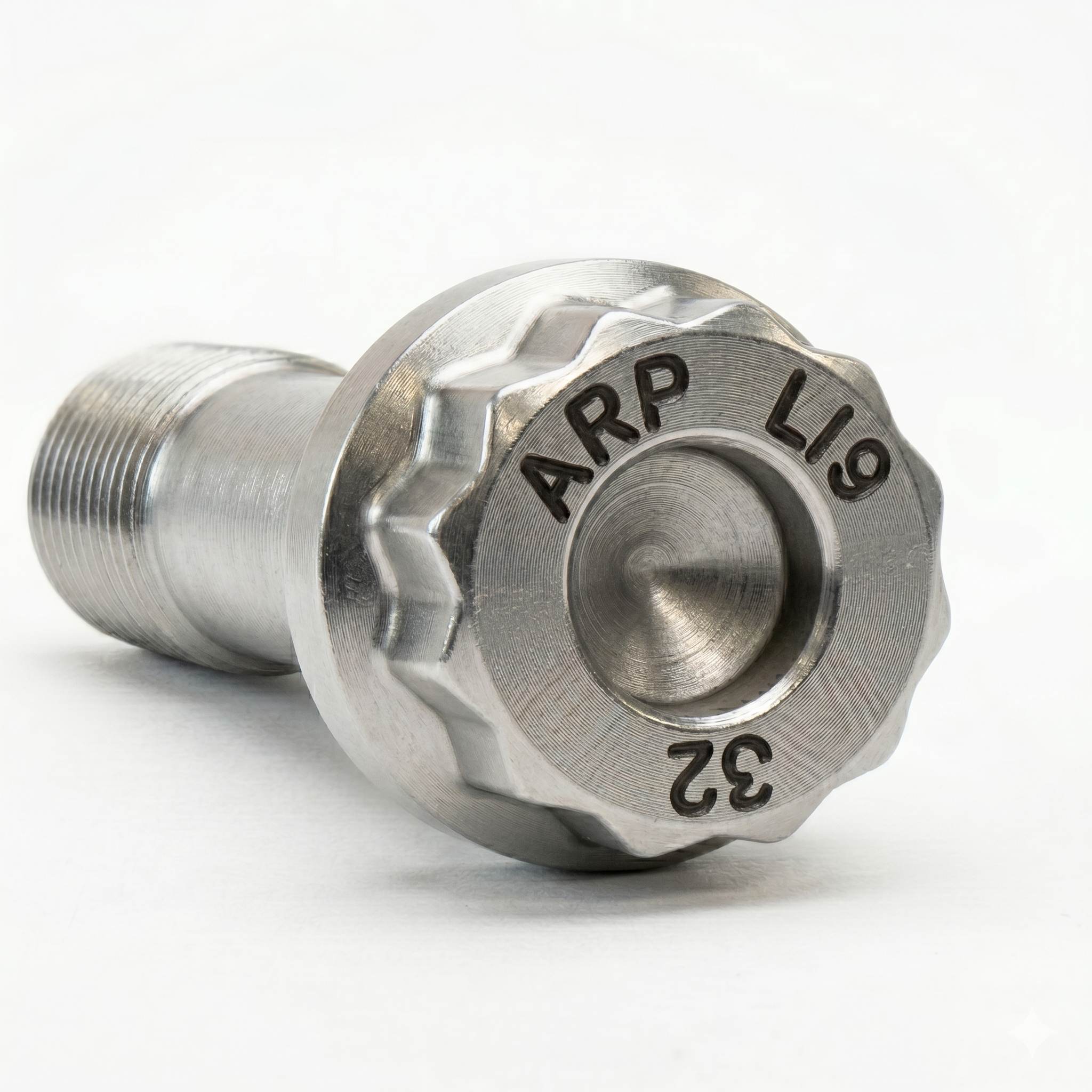 | ARP L19 (tensile strength around 260,000 psi, i.e. ~1,793 MPa) targets engines taken to the highest level: up to 200 hp per cylinder in 5/16″, up to 10,000 rpm, with very high boost pressure and sustained high revs. More demanding, the alloy fears corrosion and hydrogen embrittlement: it must be stored and fitted oiled, away from moisture. |
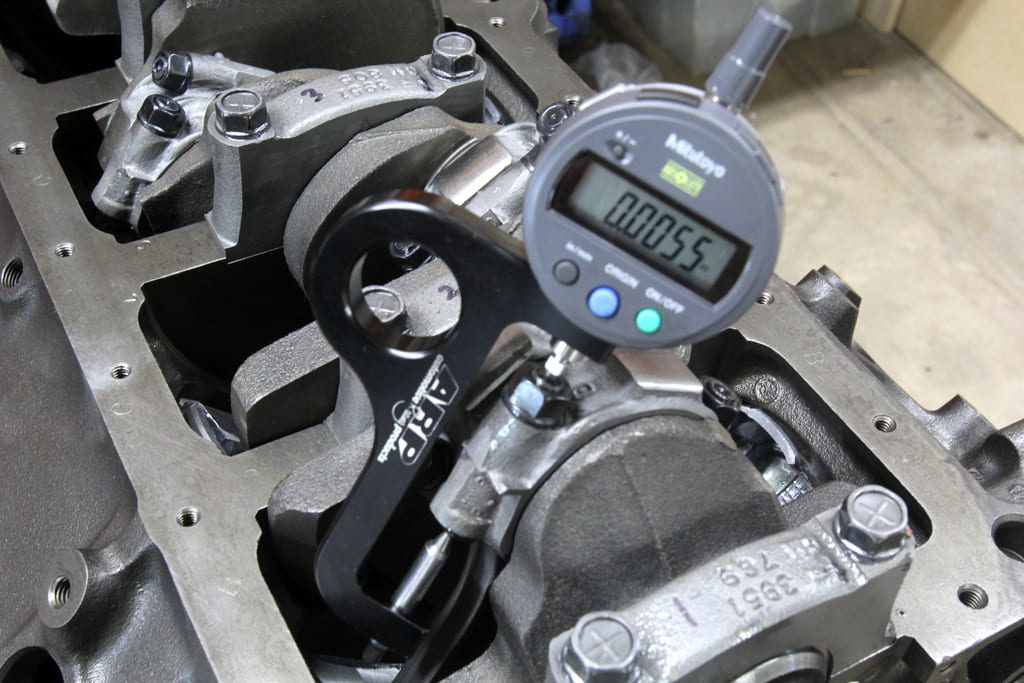
| Stretch measurement complements torque tightening and surpasses it in precision when reaching the target preload. It is done with the bolt fitted: a gauge placed on both ends of the bolt reads the actual stretch, to be compared with the recommended value (torque and stretch table above). By cancelling out the friction variations of torque tightening, this check secures the assembly on heavily stressed engines. |
 | A Greek brand founded by Alex Drakos in Athens, ZRP designs high-performance forged connecting rods. Each one comes from 4340 steel, carefully machined and balanced to ±1 g to hold up at high rpm. Engineered and inspected in Greece, proven in rally, on track and in drift, they are offered here in I-beam profile with ARP 2000 or ARP L19 hardware. |
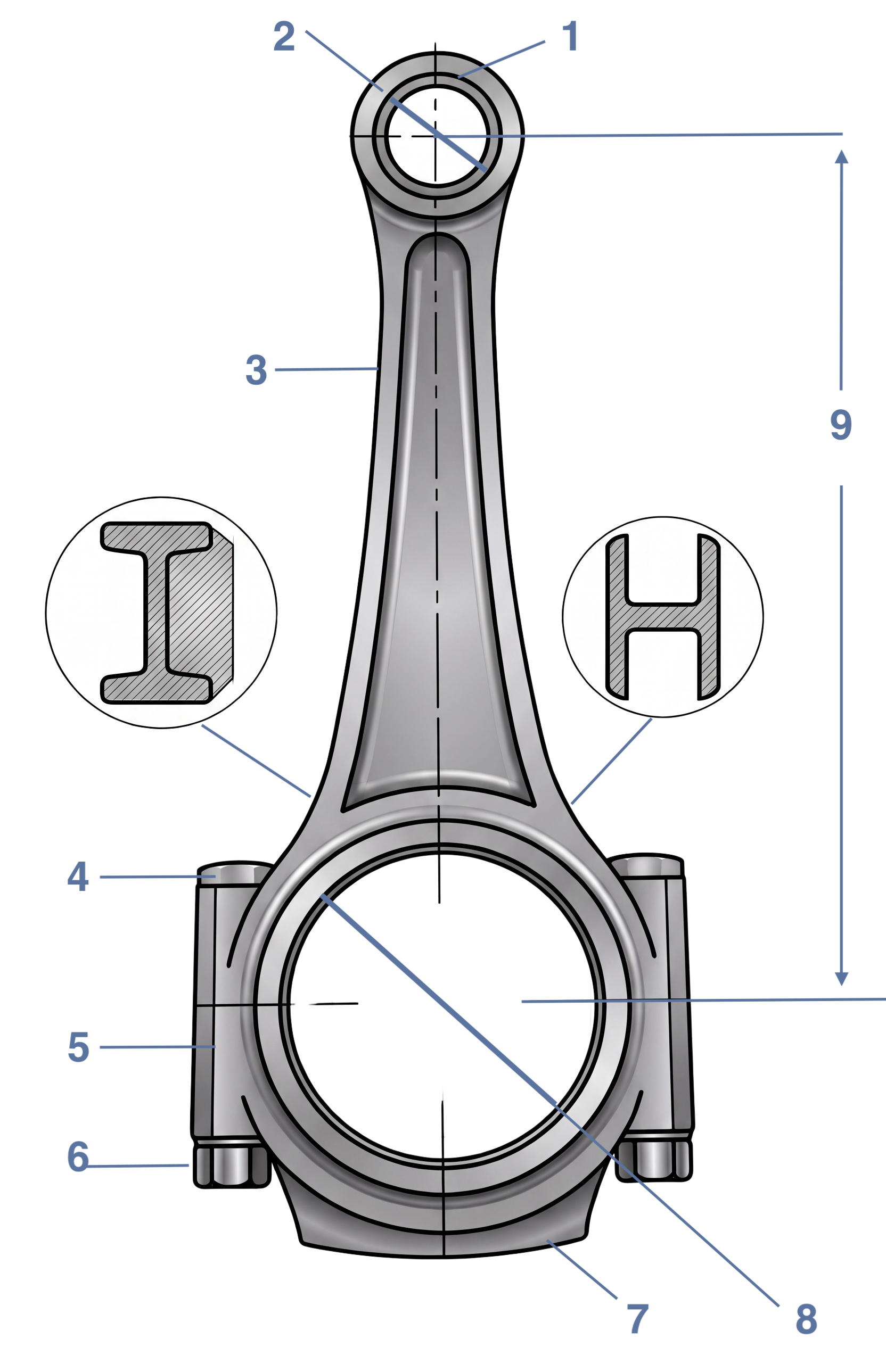 | 1) Small end 2) Small-end diameter 3) Rod beam 4) Rod bolt 5) Big end 6) Rod nut / bolt 7) Rod cap 8) Big-end diameter 9) Center-to-center |
These forged connecting rods fit all the vehicles powered by the 3.0 turbo V6 of the EA839 family listed below.
| Make | Model (chassis) | Engine code | Power | Years |
|---|---|---|---|---|
| Porsche | Panamera (971) | EA839 | 330 hp | 2016 – 2023 |
| Porsche | Cayenne (9YA) | EA839 | 340 hp | 2017 – 2024 |
| Audi | S4 (B9) | EA839 | 354 hp | 2016 – 2024 |
| Audi | S5 (B9) | EA839 | 354 hp | 2016 – 2023 |
| Audi | SQ5 (B9) | EA839 | 354 hp | 2017 – 2024 |
OEM reference:
When a stock bottom end gives way (a rod broken, bent or scored), simply returning to the factory configuration means changing rods and pistons together, almost always damaged at once. The cost then soars for a repair that brings no progress.
Investing from the start in forged 4340 rods and forged pistons, for a similar or even lower budget, brings far higher reliability and safety margin while opening the door to future power increases. It is the approach European engine builders have taken for more than fifteen years.
For the same budget: more reliability, more potential, more longevity.