Product successfully added to your shopping cart
Quantity
Total
There are 0 items in your cart. There is 1 item in your cart.
Total products
Total shipping To be determined
Total

2.0L 16v - ABF
Manufacturers
2.0L 16v - ABF
Warning: Last items in stock!
New product
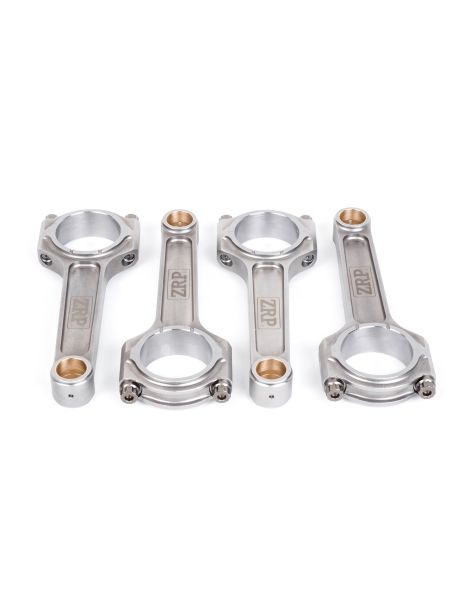
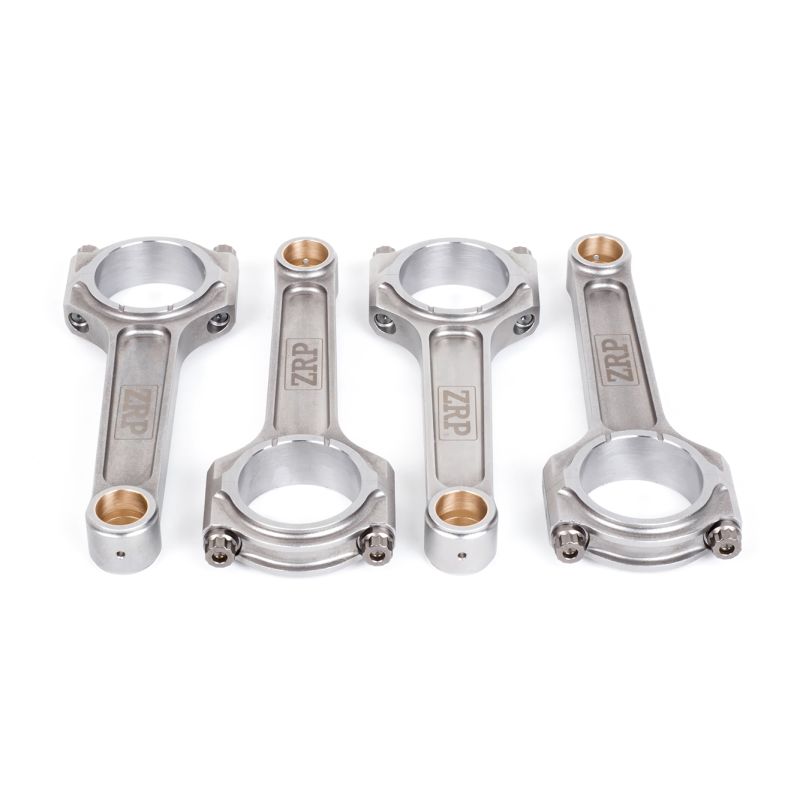
Set of 4 forged 4340 steel connecting rods for Audi/VW 2.0 EA827 (8V & 16V ABF).
The 2.0 EA827 (offered as a « 2.0 8V » or « 2.0 16V ABF » depending on the version) is a naturally aspirated 1,984 cc inline-four from the Volkswagen Group's large modular EA827 family, introduced in the late 1970s. It combines a sturdy cast-iron block, a five-bearing crankshaft and, depending on the engine code, an 8-valve cylinder head (2E, ADY, AGG) or a DOHC 16-valve head (ABF). Bore 82.5 mm, stroke 92.8 mm, compression ratio around 10.4:1 (10.5:1 on the ABF). The 8-valve version produces about 115 hp, while the 16-valve ABF reaches 150 hp at 6,000 rpm.
Fitted to the Volkswagen Golf III GTI, Vento, Passat and several Seat models (Ibiza, Córdoba, Toledo), the 2.0 EA827 was produced from 1989 to 1999. Its simple, hard-wearing cast-iron bottom end makes it a sought-after tuning base: to make a high compression ratio, higher engine speeds or a forced-induction conversion reliable, the original rods are replaced with reinforced 4340 forged steel connecting rods, paired with forged pistons.
Machined from high-strength 4340 steel, these forged connecting rods reinforce the bottom end as soon as mechanical loads rise. They become essential when fitting forged pistons, raising the compression ratio, increasing engine speed or converting to forced induction, all situations where the standard rod eventually reaches its limit.
Designed to withstand the stresses of built engines, whether they stay naturally aspirated or adopt a turbo or supercharger, these forged rods suit every discipline (rally, drift, drag, track and circuit, hillclimb, time attack) and support Stage 2, Stage 3 and Stage 4+ builds, all the way to competition engines.
| Reference | Brand | Profile | Bolts | Pin diameter OEM 21 mm | Small-end width | Big-end diameter OEM n.p. | Big-end width | Center-to-center OEM 159 mm | Weight per rod |
|---|---|---|---|---|---|---|---|---|---|
| R-VW-001-IL | ZRP | I-Lite | ARP 2000-3/8"-38mm | 21 mm | 50,6 mm | 24,89 mm | 159 mm | 566 g | |
| R-VW-001-IL-L19 | ZRP | I-Lite | ARP L19-3/8"-38mm | 21 mm | 50,6 mm | 24,89 mm | 159 mm | 566 g |
ZRP: Lightweight design; recommended for naturally aspirated engines.
| Rod | Bolts | Torque | Recommended stretch |
|---|---|---|---|
| ZRP (R-VW-001-IL) | ARP 2000 | 61 N·m | 0.140 – 0.152 mm |
| ZRP (R-VW-001-IL-L19) | ARP L19 | 67.8 N·m | 0.152 – 0.165 mm |
Manufacturers recommend favouring bolt stretch measurement (stretch gauge) over simple torque tightening, as only this guarantees correct bolt preload. The values shown above correspond to the ARP 2000 and ARP L19 hardware supplied with these rods.
| 4340 is a low-alloy nickel-chromium-molybdenum steel used in aerospace as well as motorsport. Forged and then heat-treated (quench and temper), it combines high tensile strength, excellent fatigue resistance and real ductility. Compared with a standard rod, often made of sintered metal to keep production costs down, a 4340 forged rod offers roughly +19% yield strength, +8% tensile strength and, above all, +19 to +37% fatigue resistance, meaning a service life under cyclic loading several times longer. This is why forged 4340 is the reference material as soon as engine speed and load climb. |
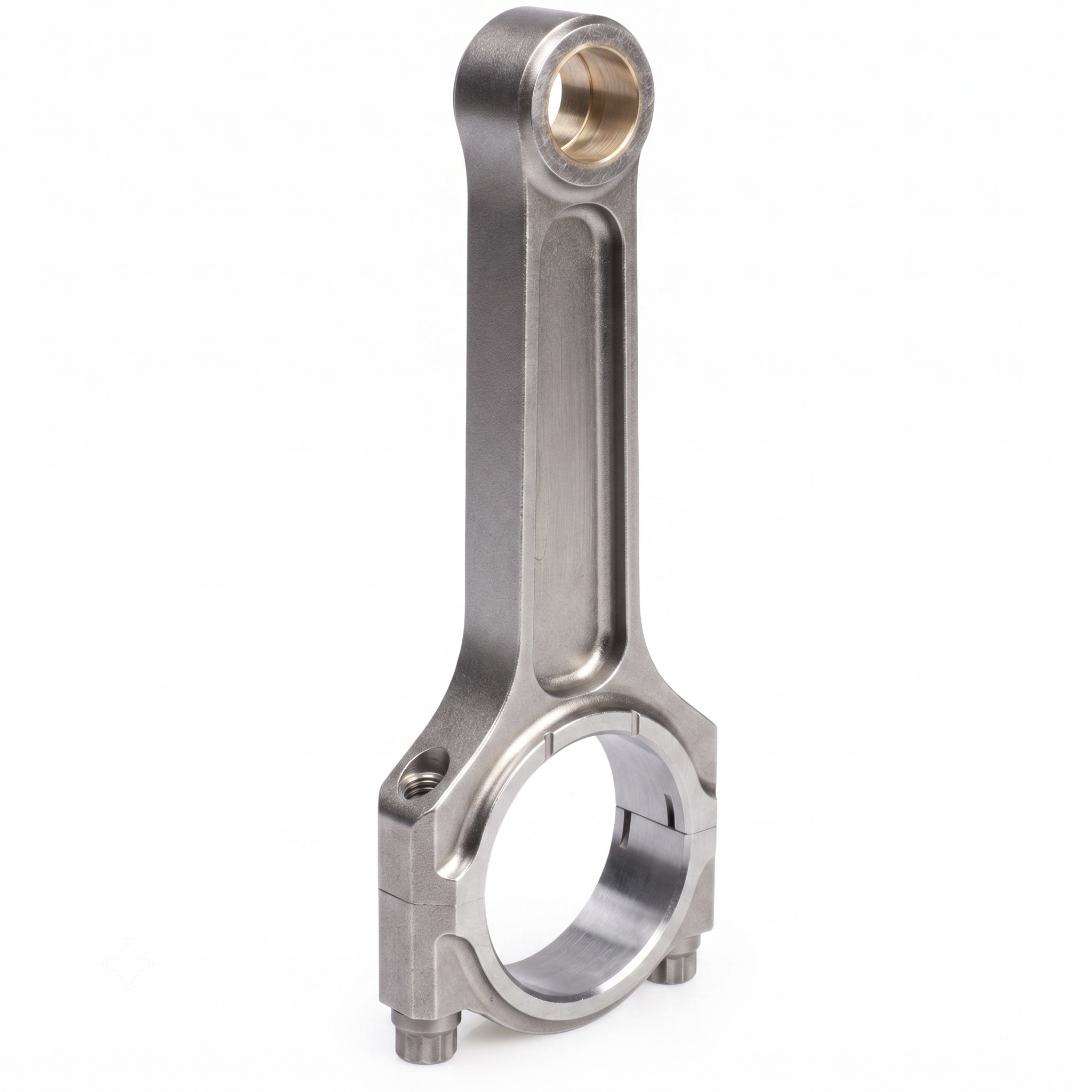 | I-Lite profile (ZRP). A lightened version of the I-beam: its slimmer central section reduces moving mass and therefore inertia, freeing up engine speed and improving efficiency on a tuned naturally aspirated engine. This « Lightweight design » prioritises low weight while keeping the rigidity required for sporting use, a balance perfectly suited to the EA827, a rev-happy engine that favours engine speed over big torque. |
The connecting-rod bolt is among the most heavily loaded parts of an engine. The key is to choose the ARP grade that genuinely matches the intended use, then to scrupulously follow the specified tightening torque and bolt stretch on assembly.
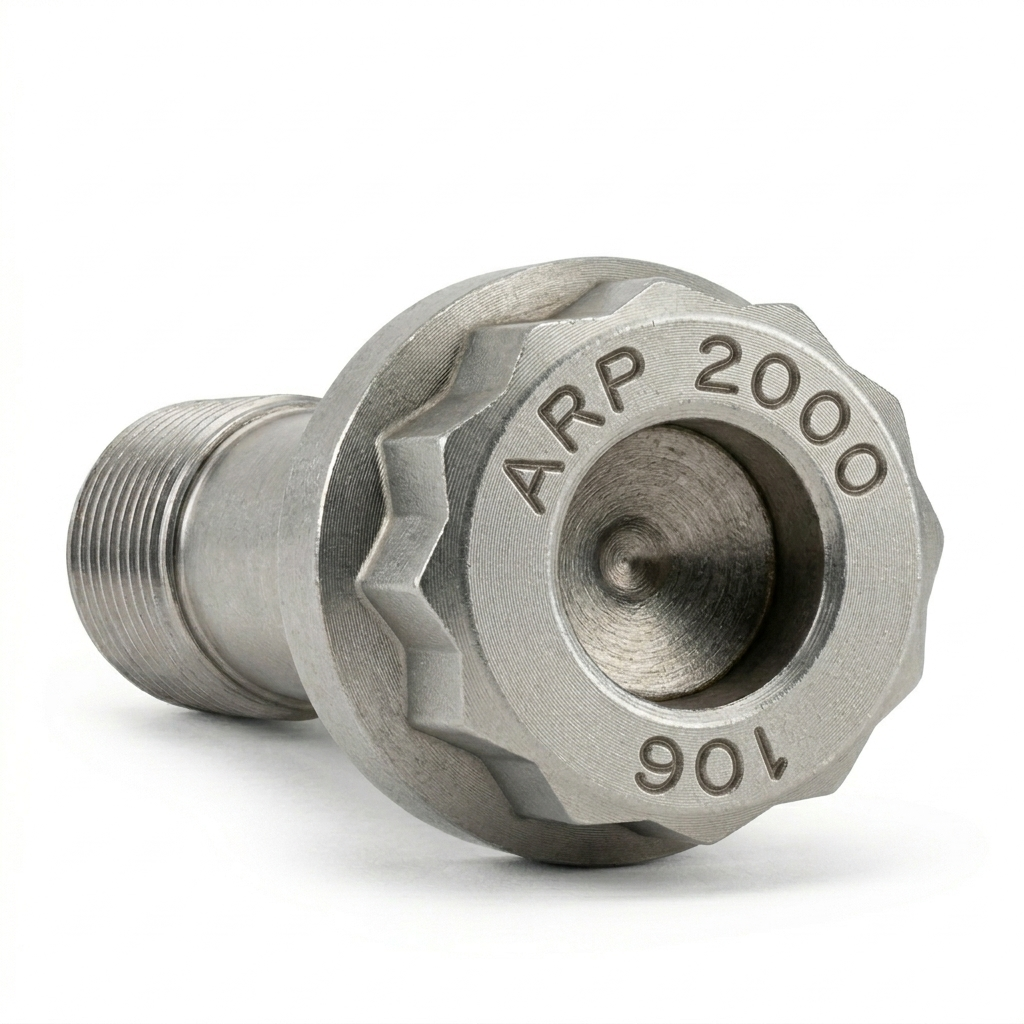 | ARP 2000 (tensile strength around 220,000 psi, i.e. ~1,517 MPa) is the high-performance standard. It covers builds up to 200 hp per cylinder in 3/8", and engine speeds up to 8,500 rpm. It is the most common grade in circuit racing, track days, drift, rally, drag and hillclimb, recognised for its robustness, reliability and versatility, with no particular storage constraint. |
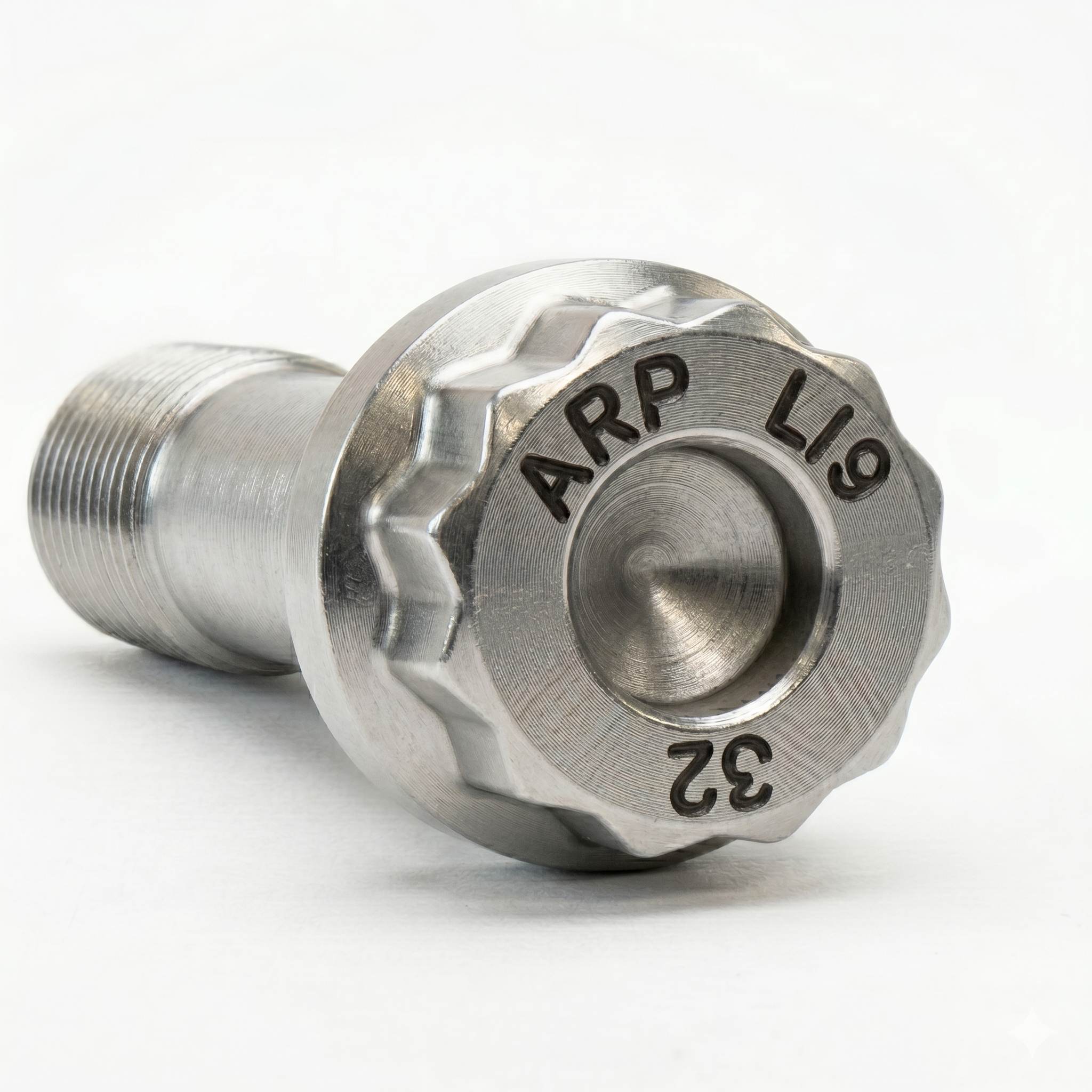 | L19 (tensile strength around 260,000 psi, i.e. ~1,793 MPa) is designed for engines pushed to the extreme: up to 250 hp per cylinder in 3/8", and speeds reaching 10,000 rpm, under very high cylinder pressure. It is the choice for high-power builds: drag, drift, rally and circuit. Sensitive to corrosion and hydrogen embrittlement, it must always be stored and fitted oiled, away from moisture. |
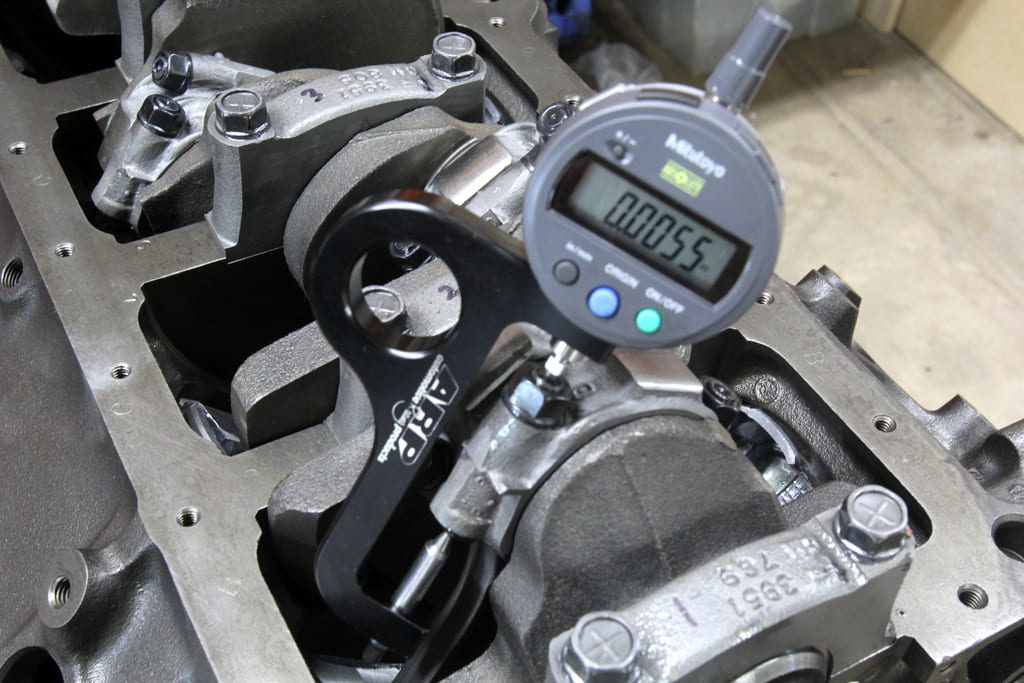
| Beyond torque tightening, measuring connecting-rod bolt stretch remains the most reliable check for optimal preload. It is carried out with the bolt fitted: the gauge (dial indicator) is placed on both ends of the bolt and the actual stretch is read off, which must match the specified value (see the torque and stretch table above). Independent of the friction variations inherent to torque tightening, this method secures assembly on heavily stressed engines. |
 | ZRP is a Greek brand of high-performance forged connecting rods, developed by Alex Drakos in Athens. Each rod is forged from 4340 steel, precision-machined and balanced to ±1 g to stay reliable at high rpm. Offered here in the I-Lite profile with ARP 2000 or L19 hardware, they are designed and inspected in Greece and proven in rally, on circuit and in drift. For the EA827, NSB Concept selects the lightened I-Lite profile, tailored for a rev-loving engine. |
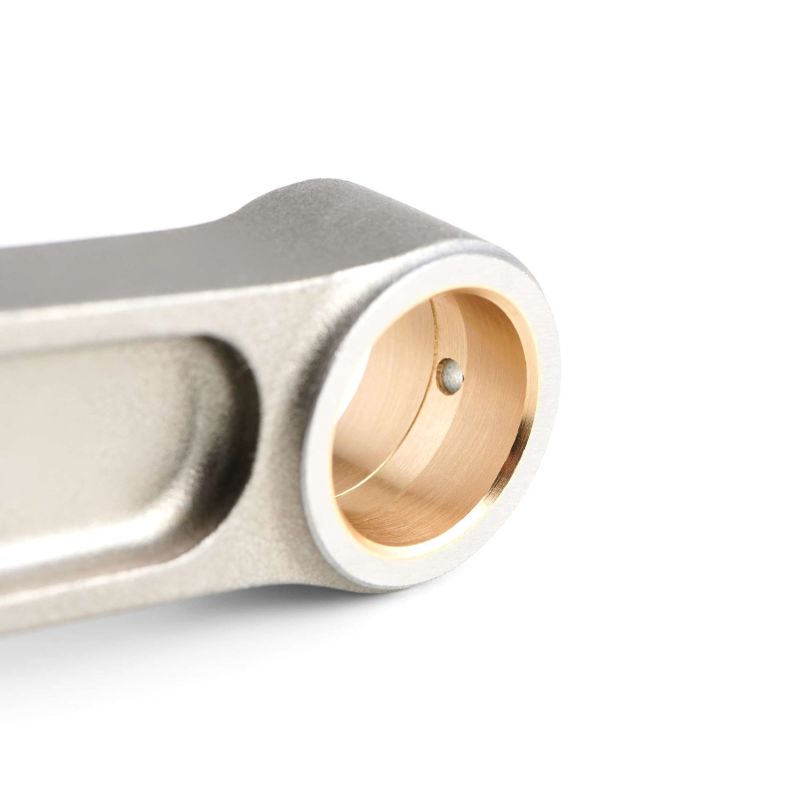
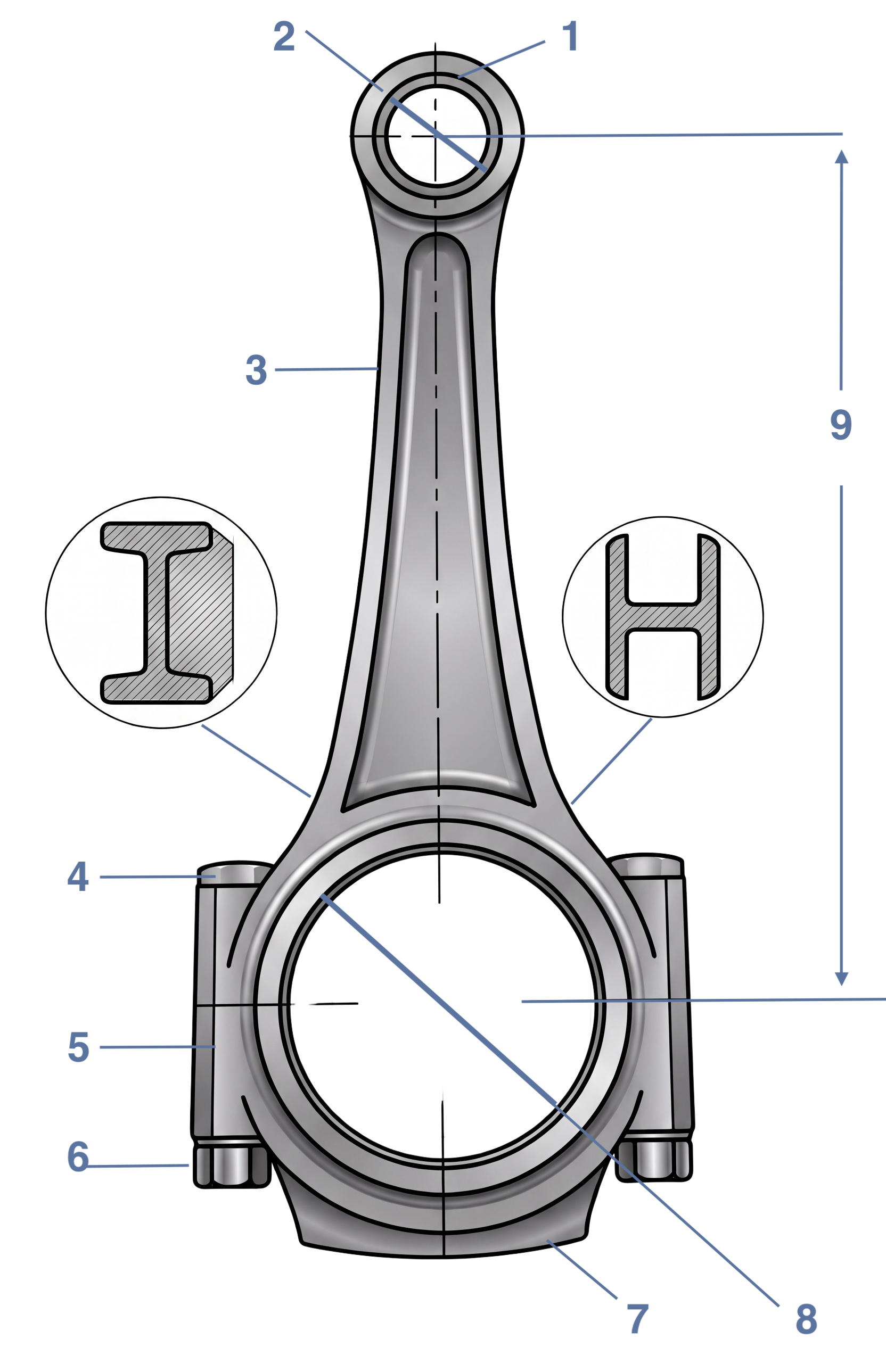 | 1) Small end 2) Small-end diameter 3) Rod beam 4) Rod bolt 5) Big end 6) Rod nut / bolt 7) Rod cap 8) Big-end diameter 9) Center-to-center |
These forged connecting rods are compatible with all vehicles fitted with the Volkswagen Group 2.0 EA827 engine (8- and 16-valve):
| Brand | Model (chassis) | Engine code | Power | Years |
|---|---|---|---|---|
| Volkswagen | Golf III GTI 16V (1H) | ABF | 150 hp | 1992-1997 |
| Volkswagen | Vento 2.0 16V (1H) | ABF | 150 hp | 1992-1998 |
| Volkswagen | Passat 2.0 16V (3A/35i) | ABF | 136-150 hp | 1994-1996 |
| Seat | Ibiza II GTI 16V (6K) | ABF | 150 hp | 1996-1999 |
| Seat | Córdoba 2.0 16V (6K) | ABF | 150 hp | 1996-1999 |
| Seat | Toledo 2.0 16V (1L) | ABF | 150 hp | 1994-1999 |
| Volkswagen | Golf III GTI 8V (1H) | 2E | 115 hp | 1991-1995 |
| Volkswagen | Passat 2.0 (35i) | 2E / AGG | 115 hp | 1990-1996 |
| Volkswagen | Vento 2.0 (1H) | ADY / AGG | 115 hp | 1992-1997 |
| Volkswagen | Sharan 2.0 (7M) | ADY | 115 hp | 1995-2000 |
OEM reference: 026 198 401 (set of 4 connecting rods).
When a stock bottom end fails (a broken, bent or scored rod), returning to the factory configuration means replacing the rods and, more often than not, the pistons damaged in the process. The bill climbs quickly for a simple back-to-standard repair.
For a comparable or even lower budget, fitting 4340 forged steel rods paired with forged pistons delivers significantly higher reliability and safety margin, plus a real reserve to develop power further. It is the route chosen by European engine builders for over fifteen years.
For the same budget: more reliability, more potential, more longevity.