Product successfully added to your shopping cart
Quantity
Total
There are 0 items in your cart. There is 1 item in your cart.
Total products
Total shipping To be determined
Total

1.9L 16v - B4194T
Manufacturers
1.9L 16v - B4194T
Warning: Last items in stock!
New product
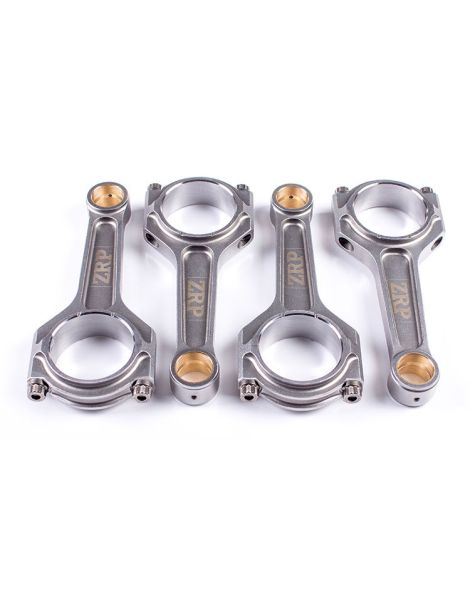
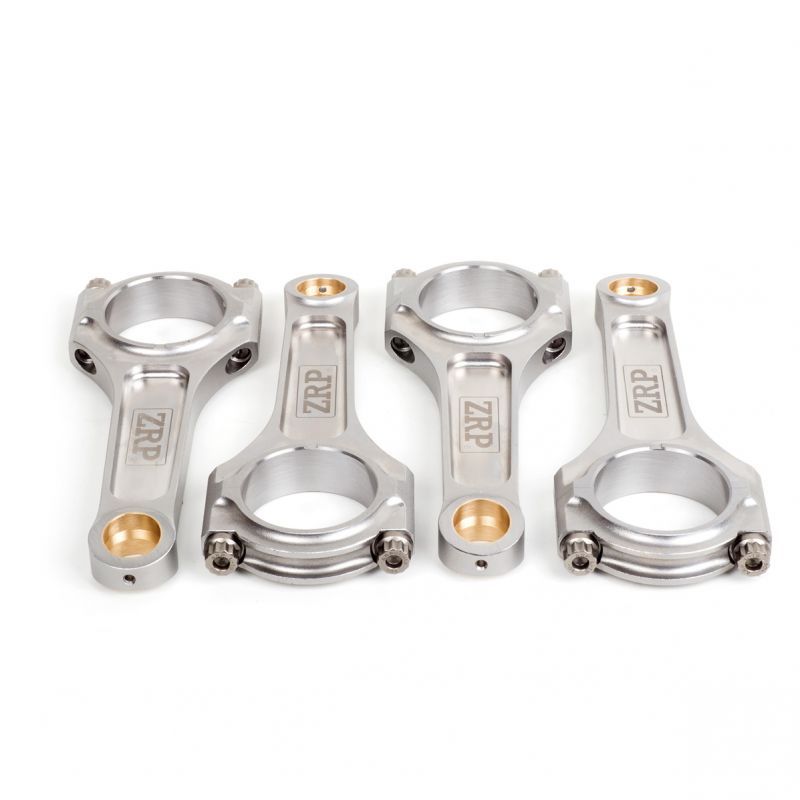
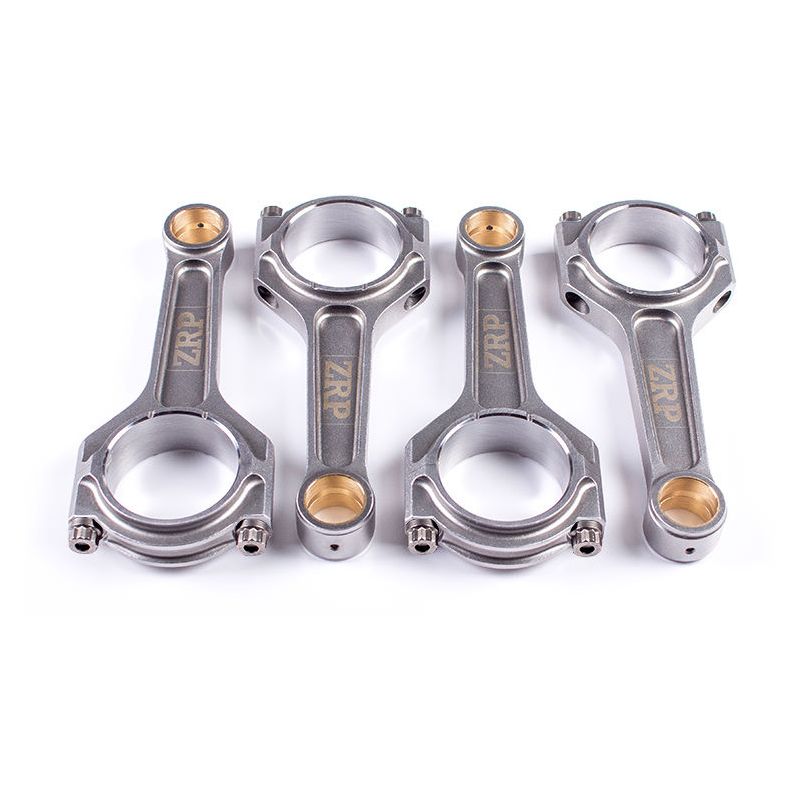
Kit of 4 forged 4340 steel connecting rods for the Volvo S40 / V40 T4 1.9 turbo.
The B4204T / B4194 is part of Volvo’s white block family (modular engines) launched in the early 1990s to replace the red block. It is an all-aluminium inline four of around 1.9 litres (up to 1,948 cc, 81 mm bore), with sixteen valves and twin overhead camshafts, fed by a turbocharger. Compact and light, it powers the punchiest T4 versions of the Swedish compacts.
It sits under the bonnet of the first-generation Volvo S40 and V40 in T4 trim, where it delivers 200 hp (147 kW) and 300 N·m of torque between 1997 and 2004. Praised for its strength and tuning headroom, it nonetheless becomes vulnerable as soon as boost is raised: the sintered factory rod then forms the weak link of the rotating assembly.
Linking piston to crankshaft, the connecting rod turns reciprocating motion into rotation. On every revolution it faces tension, compression and bending loads that grow with engine speed, boost and transmitted torque. On a tuned B4204T / B4194 these loads soon exceed what the original sintered rod was designed for, and a failed rod almost always destroys the block.
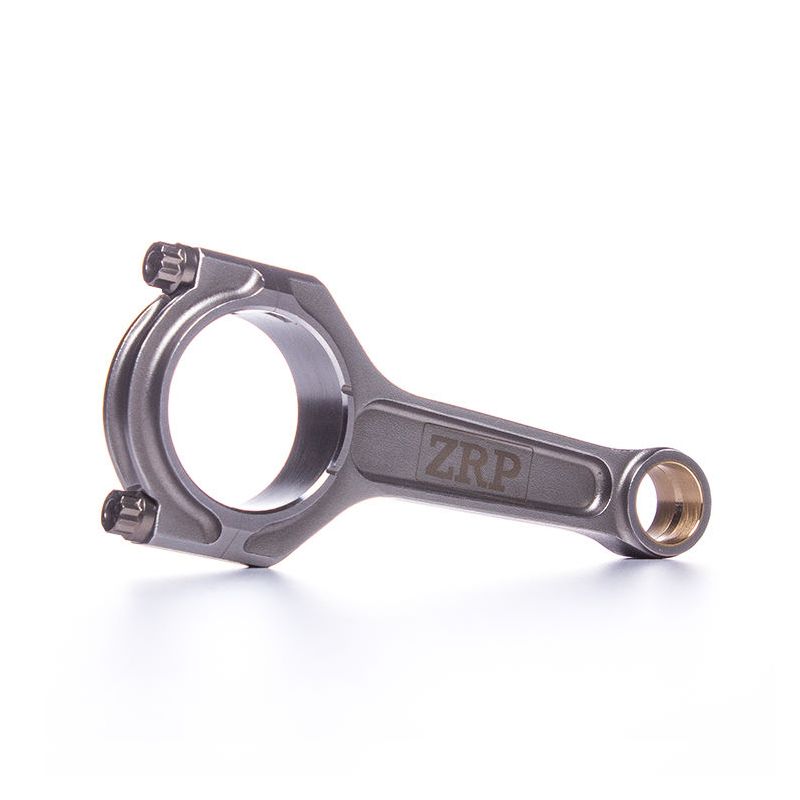
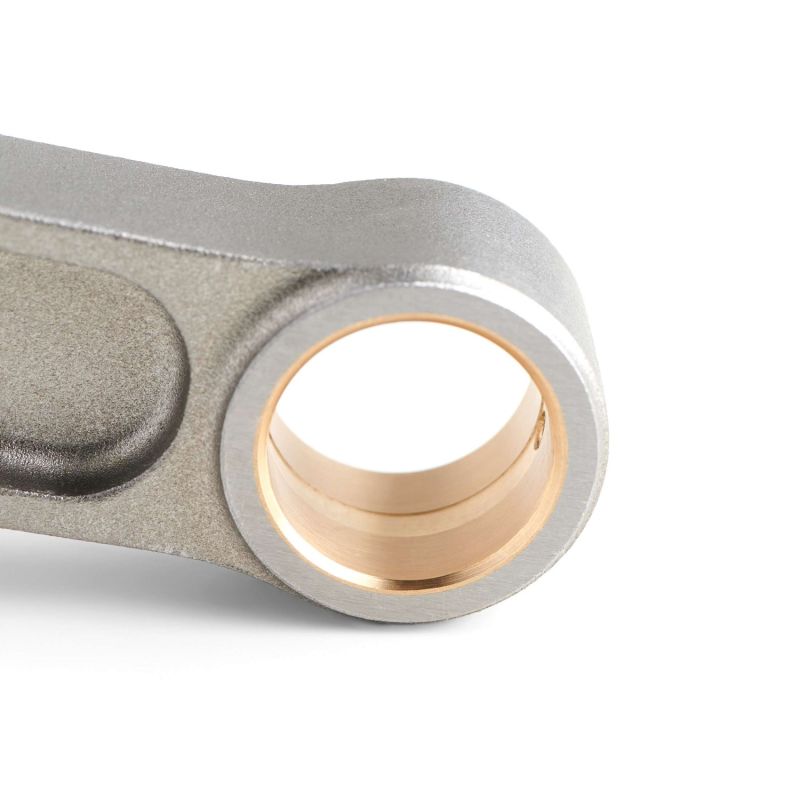
Forged from 4340 steel by hot stamping and then machined, these ZRP rods feature a grain flow that follows the part's shape, giving fatigue strength far above that of a sintered rod. Built to the original dimensions, 139.5 mm centre-to-centre, 23 mm pin, 53 mm big end, they fit without modification and preserve the four-cylinder's balance. Sorted to within ±1 g, they suit both naturally aspirated and turbo builds, from Stage 2 up to competition: circuit, hillclimb, drift, rally, drag and time attack. Combined with forged pistons, they form the basis of a rotating assembly able to withstand sustained high rpm and high cylinder pressure.
| Reference | Brand | Profile | Bolts | Pin Ø OEM 23 mm | Small-end width | Big-end Ø OEM n.p. | Big-end width | Centre-to-centre OEM 139.5 mm | Weight per rod |
|---|---|---|---|---|---|---|---|---|---|
| R-VOL-005-I-4 | ZRP | I | ARP 2000-3/8"-38mm | 23 mm | 53 mm | 25.65 mm | 139.5 mm | 531 g | |
| R-VOL-005-I-4-L19 | ZRP | I | ARP L19-3/8"-38mm | 23 mm | 53 mm | 25.65 mm | 139.5 mm | 531 g |
| Reference | Bolts | Max. torque (no gauge) | Stretch (with gauge) |
|---|---|---|---|
| ZRP (R-VOL-005-I-4) | ARP 2000-3/8"-38mm | 61 N·m | 0.140 – 0.152 mm |
| ZRP (R-VOL-005-I-4-L19) | ARP L19-3/8"-38mm | 67.8 N·m | 0.152 – 0.165 mm |
A stretch measurement only means something at a settled temperature: on the 1.9 turbo, let the rods and bolts come back to shop temperature after cleaning before you reach for the gauge, and avoid holding the bolts in your hand between two readings. A few degrees of difference are enough to shift the reading on the same bolt by a hundredth. The table reproduces the bolt manufacturer's specifications for ARP 2000 as for ARP L19 in 3/8" 38 mm; these torque and stretch figures are to be followed scrupulously, and it is the gauge measurement that remains the reference, torque serving only as a cross-check.
4340 is a low-alloy steel containing nickel, chromium and molybdenum, used in aerospace for the most heavily loaded components. Forged, then quenched and tempered, it combines high mechanical strength with excellent ductility: it absorbs shock without brittle failure. Compared with the factory sintered metal it offers about +19% yield strength, +8% tensile strength and +19 to +37% fatigue strength, and it is precisely this fatigue endurance that matters on an engine that revs hard and holds it.
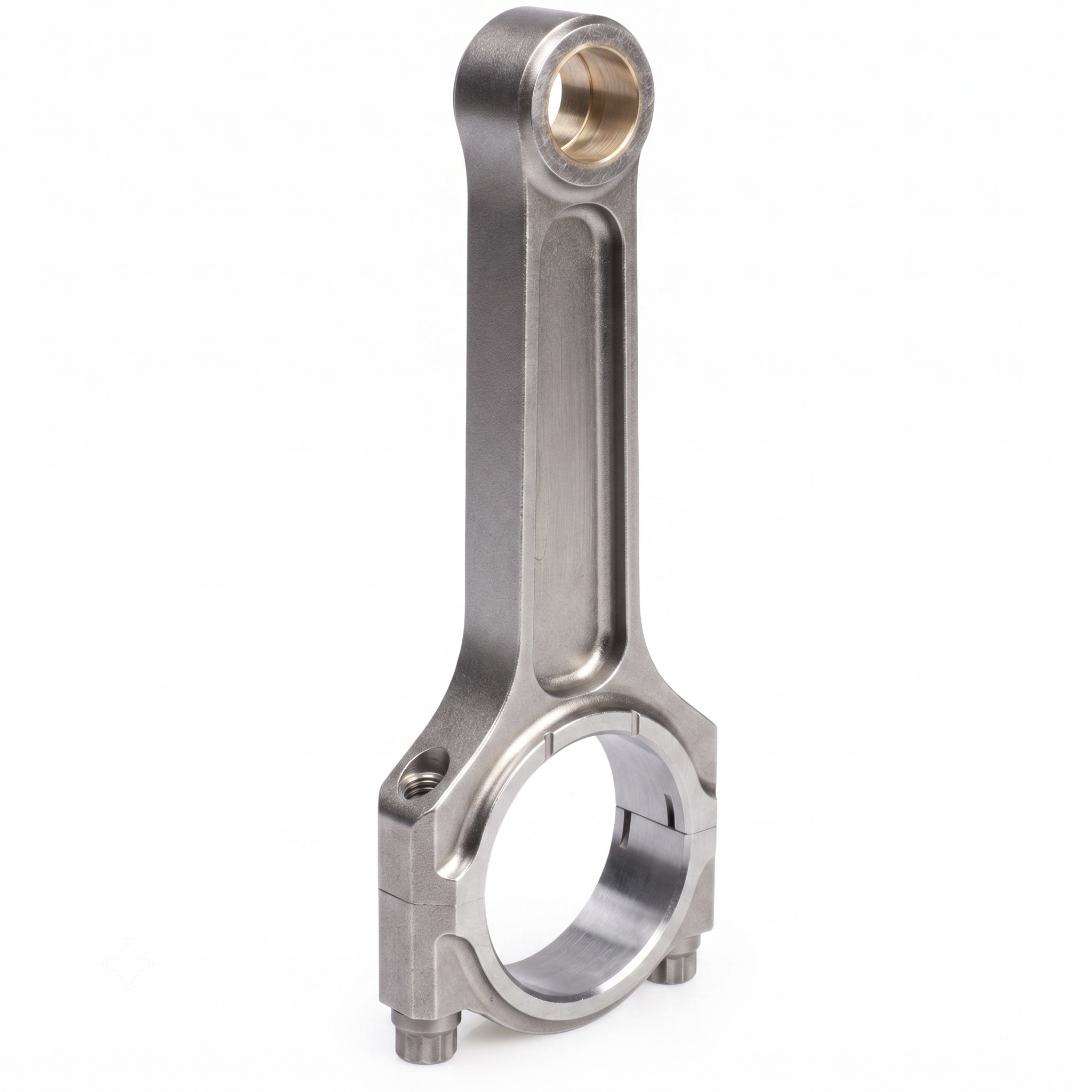 | I-beam profile: this is the section chosen for this application. The I-shaped body places material exactly where the loads act: it stays light, helping the engine pick up revs by reducing the rotating assembly's inertia, while remaining amply stiff for the B4204T / B4194's power range. The best weight / strength compromise, in naturally aspirated as well as turbo builds. |
A rod bolt is not simply done up tight: it has to be tensioned beyond the maximum pull the piston applies to it at top dead centre, otherwise the cap lifts and the bearing shell starts to work. On this 1.9 turbo, both ZRP I-profile versions use a 3/8"-38 mm bolt, and the procedure is identical for ARP 2000 and for ARP L19: threads and seats cleaned, assembly lubricant applied evenly, tightening in progressive passes, preload brought up to the specified stretch and verified with a dial gauge, free length noted for every bolt. A check after the first sessions, then at every strip-down of the bottom end, makes it possible to follow bolt fatigue and to replace the bolts before they become the weak point.
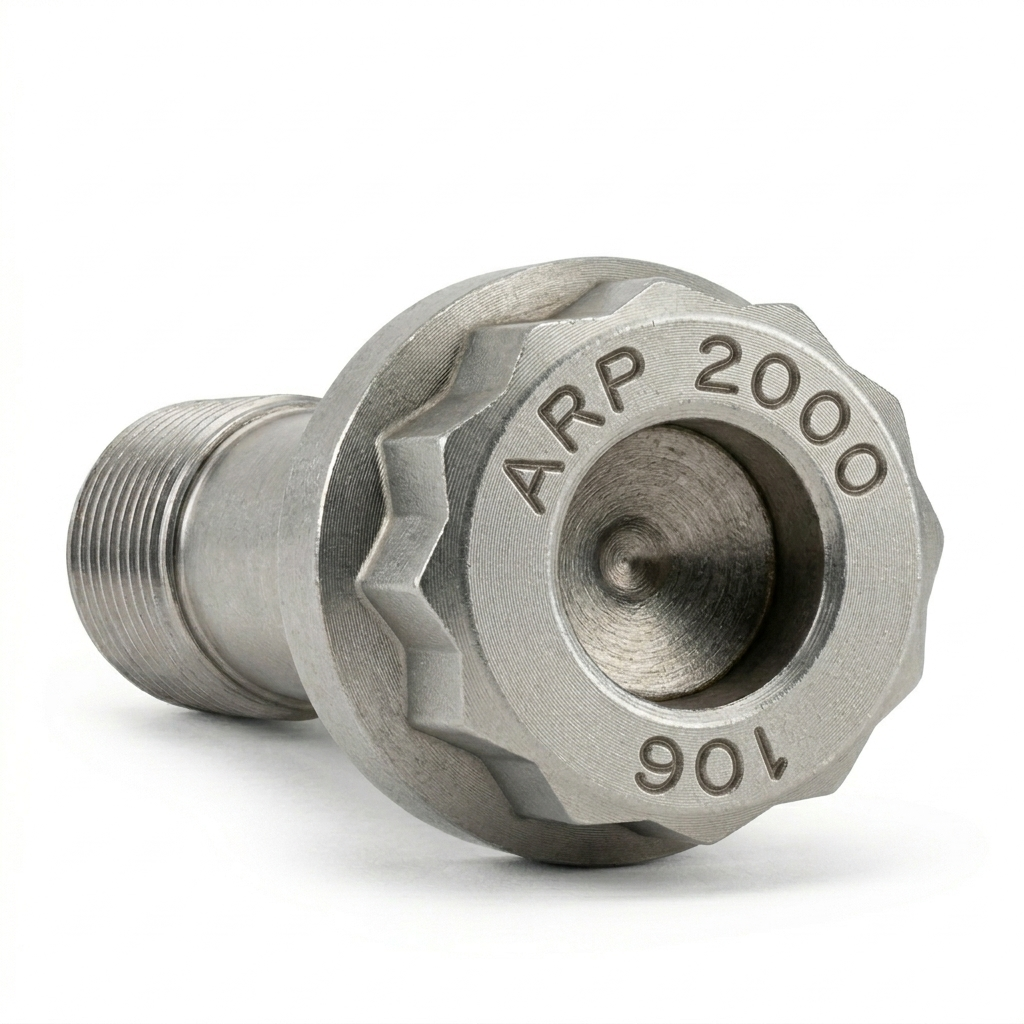 | ARP 2000: tensile strength of around 220,000 psi (~1,517 MPa). It handles up to 200 hp per cylinder in 3/8", for speeds up to 8,500 rpm. It is the benchmark high-performance bolt: robust, reliable and versatile, with no special storage requirement. Perfectly at home on circuit, trackday, drift, rally, drag and hillclimb. |
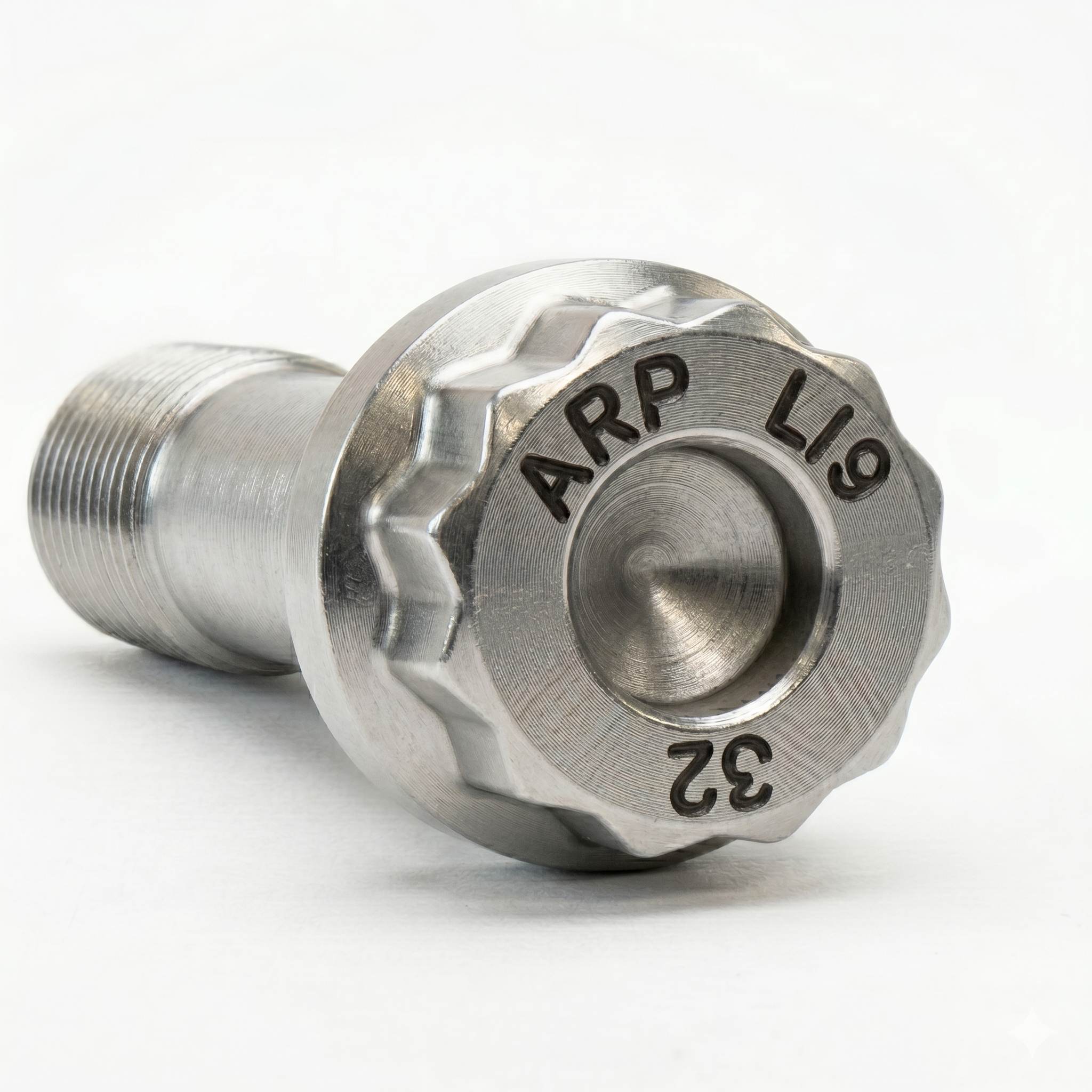 | ARP L19: tensile strength of about 260,000 psi (~1,793 MPa), i.e. 250 hp per cylinder in 3/8", up to 10,000 rpm. It targets engines pushed to the extreme: high boost, sustained high rpm and high cylinder pressure. It is the choice for big-power builds; this hydrogen-sensitive steel must be stored away from moisture. |
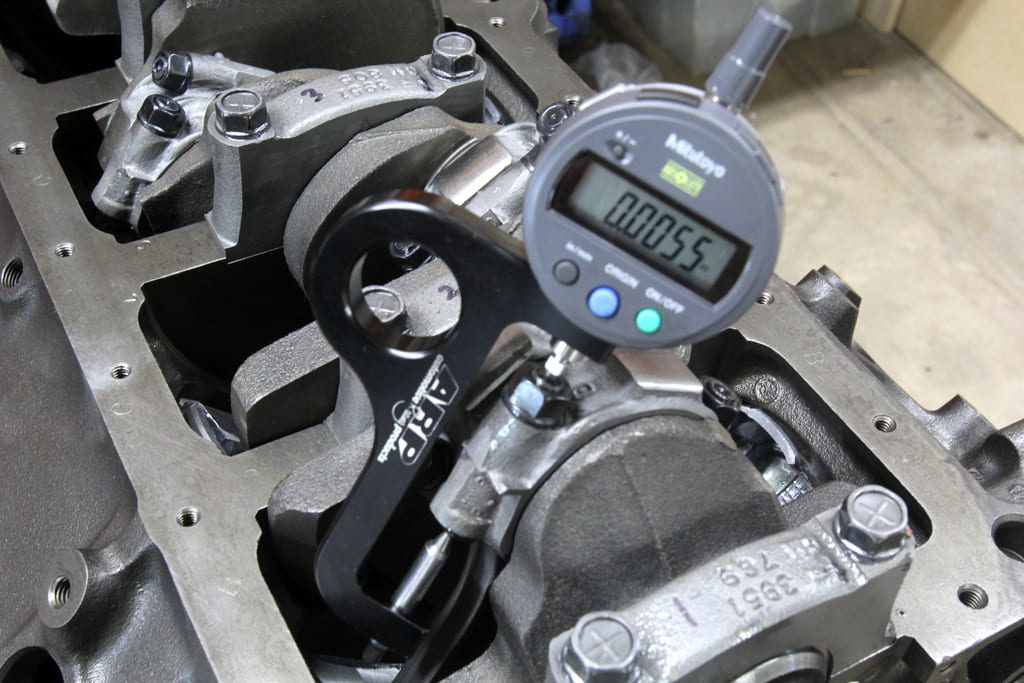
| Pre-loading by stretch is the most accurate way to tighten a rod bolt: instead of relying on torque alone, you measure the bolt's actual elongation once fitted, with a dial gauge. This removes friction-related scatter and gives an even pre-load across all five rods. Where the two disagree, the stretch value always takes precedence over torque: follow the ARP instructions supplied with the kit. |
 | ZRP: a Greek brand founded by Alex Drakos (Athens), specialising in high-performance forged rods. Each rod is forged from 4340 steel, precision-machined and then matched to within ±1 g to limit vibration and imbalance in the rotating assembly. Meticulous manufacturing, proven in competition (circuit, rally, drift, drag), offered here in an I-beam profile with ARP 2000 or ARP L19 bolts. |
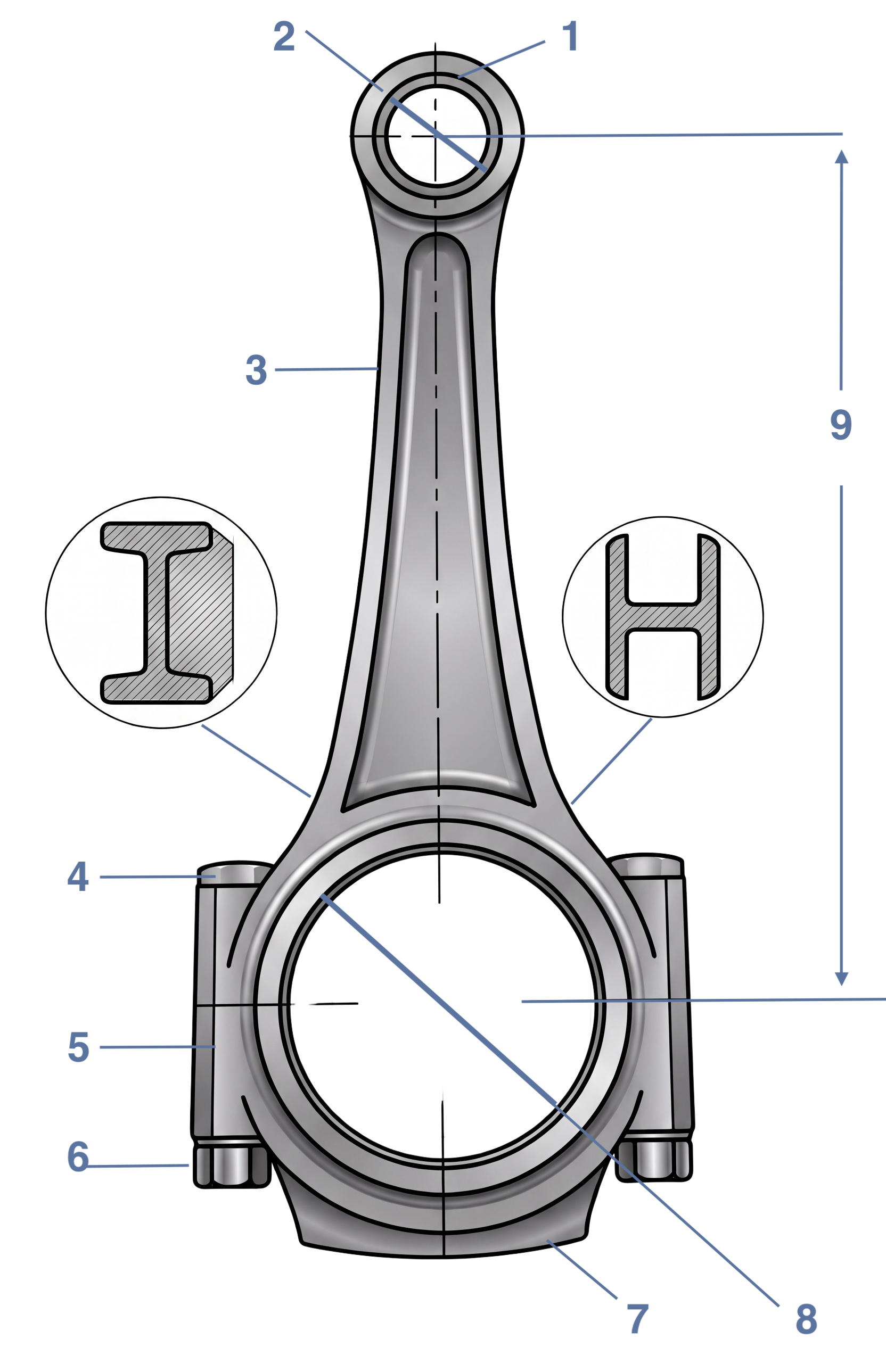 | 1) Small end 2) Small-end diameter 3) Rod beam 4) Rod bolt 5) Big end 6) Rod nut / bolt 7) Rod cap 8) Big-end diameter 9) Center-to-center |
The following summary covers the vehicles fitted with the Volvo 1.9L 16V Turbo B4204T / B4194 engine. A check of the piston pin diameter and of the rod length is required before ordering. Variant concerned: S40 / V40 T4.
| Make | Model (chassis) | Engine code | Power | Years |
|---|---|---|---|---|
| Volvo | S40 T4 | B4194T / B4194T2 | 200 hp | 1997–2000 |
| Volvo | V40 T4 | B4194T / B4194T2 | 200 hp | 1997–2000 |
| Volvo | S40 T4 | B4204T5 | 200 hp | 2001–2004 |
| Volvo | V40 T4 | B4204T5 | 200 hp | 2001–2004 |
OEM reference:
On a tuned B4204T / B4194, a failed factory rod rarely stops at the rod: it takes the block, the crankshaft and often the cylinder head with it. The cost of a full rebuild far exceeds that of a set of forged rods fitted as a precaution. Investing in ZRP 4340 rods from the outset protects the whole rotating assembly and spares you a far heavier repair: it is the part that protects everything else, and therefore the most worthwhile spend on an engine build meant to last.