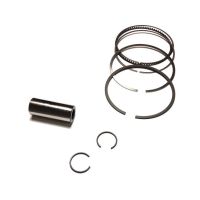
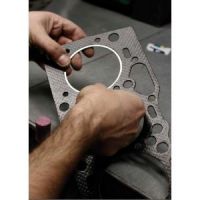
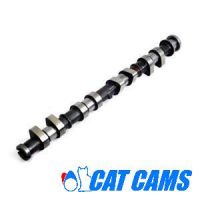
This page brings together the parts that go with a forged piston without always being supplied alongside it: the gudgeon pin, the circlips that retain it and the ring set. Fifty-three part numbers are active here, shared between three piston makers, JE Pistons, Wiseco and Wössner. Each keeps its own coding: JE Pistons numbers its pins behind a JE prefix, Wiseco carries the bore in millimetres after a W followed by a series suffix, Wössner identifies its circlips by CW and the diameter. Selection therefore runs by size rather than by vehicle: pick the part that matches your piston diameter, whatever the engine. Handy when a component is mislaid during reassembly.
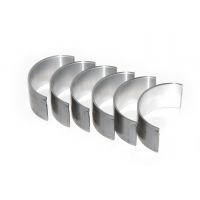
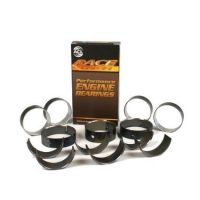
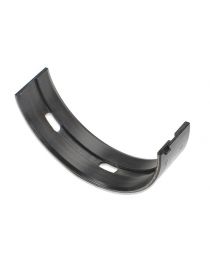
The densest of our part number pages: 3,003 active KS Kolbenschmidt bearings out of 3,008 listings. Two coding systems sit side by side. The first is an eight-digit number taken from the Kolbenschmidt-Rheinmetall catalogue, whose leading pair places the range. The second pairs a type prefix with a size: CB for a big end bearing, MS for a main bearing, TW for a thrust washer, followed by STD, 0.25 or 0.75 depending on how far the crankshaft has been reground. Listings carry neither vehicle nor engine code: this page is browsed with the number in hand, read off the removed bearing or taken from the maker's catalogue. It is the quickest route once the undersize is known.
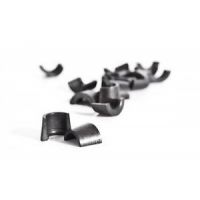
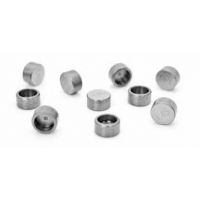
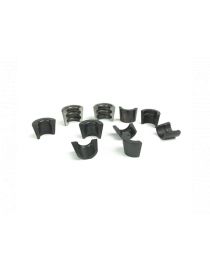
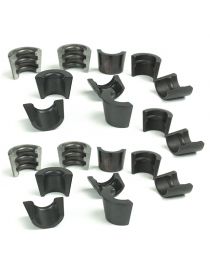
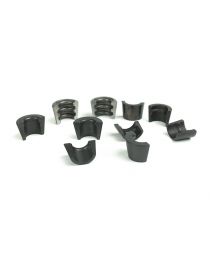
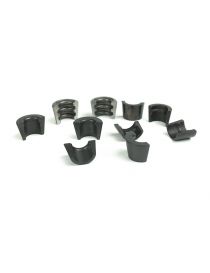
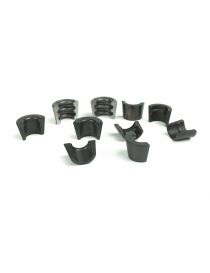
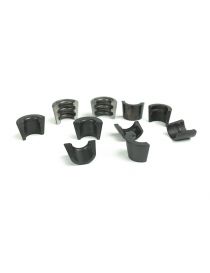
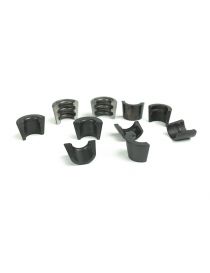
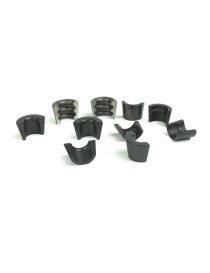
A valve collet is the small tapered piece that locks the retainer onto the valve stem and holds the whole spring stack in place. Thirteen part numbers are active here. They are chosen on two criteria only: the number of pieces in the set, from 6 to 24 depending on how many valves are being fitted, and the stem diameter, from 5 to 7mm. Two makers appear, Ferrea, whose numbers begin with K10, and Supertech. No listing targets a specific vehicle: the part is interchangeable as soon as the size matches. Renewing collets at the same time as the springs is cheap insurance, since wear on the taper is invisible to the naked eye and a failure takes the cylinder head with it.
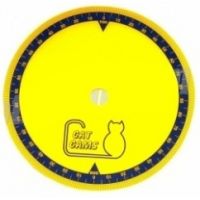
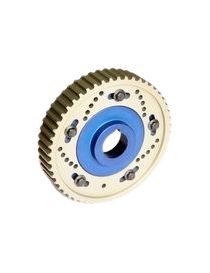
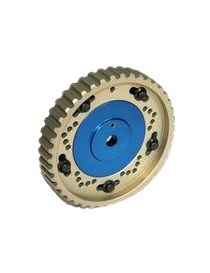
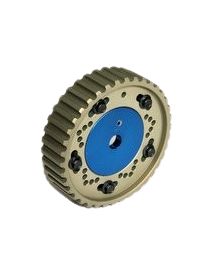
Fitting a performance camshaft without timing it in wastes most of the benefit: a few degrees out shifts the whole torque curve. A degree wheel bolts to the crankshaft nose and is read against a dial gauge to find true top dead centre, then the real opening and closing angles. Two Catcams part numbers are active on this page, one 150mm across under number 99201, the other 200mm under number 99200. The larger disc reads more finely and suits a build bench; the smaller one is easier to use with the engine still in the car. The tool is generic: it depends on neither the engine nor the make of camshaft.
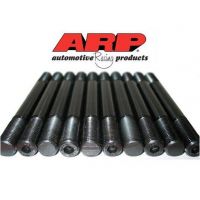
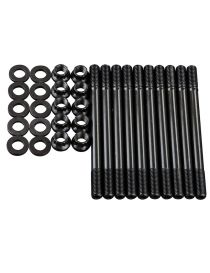
The torque figure quoted by ARP only holds if the thread is lubricated the way the maker intends: run dry, friction absorbs an unpredictable share of the effort and the real clamping load on the stud becomes anyone's guess. This page gathers the brand's assembly consumables. Two part numbers are active. Number 100-9904 is a Teflon thread sealer, intended for studs whose thread breaks into a water jacket, where it stops coolant creeping up the pitch. The second, 117-4226, is a complete ARP2000 head stud kit for the 1.8 litre BMW M40 and M42: it sits here as a way into the matching build.
On a mechanical valvetrain, valve clearance is set with a calibrated shim dropped into the cam follower. Six part numbers are active on this page, from two makers. Catcams numbers them TS100 to TS103, the last digit following the rising valve stem diameter, 5.5 then 6, 7 and 8mm. Supertech uses an LC prefix followed by the diameter in tenths of a millimetre, LC-60 for 6mm and LC-70 for 7mm. None of the part numbers is engine specific: only the stem size matters, which makes the shim interchangeable from one cylinder head to another. Clearance is checked with the engine cold and reset whenever the camshaft or the valves are changed.
As power climbs, the main bearing cap starts to work and the standard bolt, sized for production use, eventually stretches. ARP studs take that load with a higher and, more importantly, a far more consistent clamping force from one cylinder to the next. Eight part numbers are active here. The items specific to the main bearing carry a code beginning with AM, the AM5.000-1LB stud, the AMN12-1 nut and the AMW750N washer, which allows a set to be built up or a single item replaced. Three generic 8740 chromoly bolts, 665-1005, 665-1008 and 665-1011, round out the range for a bespoke build. Tighten by stretch or by torque, with the thread lubricated.
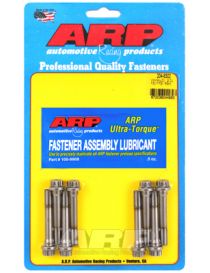
The big end bolt is the hardest working item in a bottom end: every revolution it carries the inertia load of the piston and rod assembly, and if it fails the block goes with it. Twelve part numbers are active on this page. Ten are forged ARP bolts sold individually and identified not by a catalogue code but by their size, diameter and length: that is how engine builders work when rebuilding a rod to measure or replacing a bolt that has stretched. The last two references are the assembly consumables, Ultra-Torque lubricant and the Teflon thread sealer. The maker requires the bolt to be renewed at every strip: it works within its plastic range.
ACL is one of the few makers to cover the whole bottom end in trimetal under a single numbering scheme. Six hundred and thirty-four part numbers are active here. The code reads left to right: a digit then a letter giving the bearing position, B for the big end, M for the main journals, T for the thrust face, followed by the catalogue number, an H, and then the size suffix after the dash, STD for the original size or a regrind figure. The page targets no particular marque: ACL sells by part number, not by vehicle. Use it with the number already to hand, read from the removed bearing or from the crankshaft grinding sheet.
A reinforced head gasket only seals if the head is clamped to suit: it is the stud that does the work, not the gasket. Fifteen ARP part numbers are active on this page. Complete kits follow the seven-digit catalogue format, three digits for the application then four for the kit, for instance 204-4706 or 251-4703. Individual spares use a different, letter-based code for a nut, a washer or a short bolt: they let you top up a part-used kit without buying another. Both generic kits and kits aimed at a specific engine are listed, BMW M40 and M42 or the VAG 1.8 T 20V AEB.
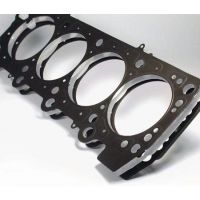
Athena builds its head gaskets in multi-layer steel, the only construction that lives with raised boost pressure over time. One hundred and ninety-four part numbers are active on this page. The code runs to seven characters: six digits then the letter R, marking the reinforced version. Two series dominate, those opening with 330 and with 338, and the prefix denotes a range and a thickness, never a manufacturer. That is why this page is browsed by number rather than by vehicle, taken from the gasket you removed or from the builder's paperwork. A reinforced gasket only makes sense alongside head studs of matching quality: order the two together.
This page is a number-led way into the Catcams camshaft catalogue, meant for anyone who already knows the reference wanted, read off a shaft that has been removed or supplied by their engine builder. A single part number is active today, 7640293, a shaft carried under a plain number with no engine code attached. The rest of the range is browsed by vehicle in the marque sections of the catalogue. Worth remembering before ordering: a higher lift camshaft calls for a piston-to-valve check, a look at spring clearance at full lift and fresh timing with a degree wheel. Fitting the shaft alone rarely delivers the expected gain.
A retainer works in fatigue at engine frequency and lightening it counts twice: every gram taken off the top of the spring pushes back the speed at which the valve floats. Thirty-four Catcams part numbers are active here. The coding is numeric, 99 followed by three digits, and the useful information sits in the suffix. Suffix H marks the tall version in hard anodised aluminium, the lightest of the three. Suffix S marks the steel version, heavier but more forgiving with very stiff springs. Suffix O marks the lower seat or the locating spacer. A few numbers carry no suffix at all. Choose on spring diameter and valve stem size.
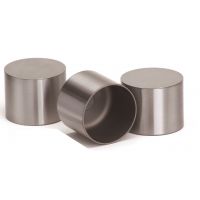
Moving from a hydraulic valvetrain to a mechanical one, or replacing a marked follower, means finding the right number first: outside diameter and height govern the fit far more than the make of engine. Nineteen Catcams cam followers are active on this page, numbered CC002 to CC064 in a continuous series of the maker's own, with no segment coding a vehicle manufacturer. Followers are usually ordered as a full set, one per valve, together with the adjustment shims covered on a separate page. A pitted or oval follower is worth replacing without hesitation: it damages its bore and ends up throwing out the whole valve clearance.
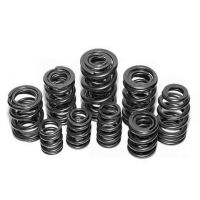
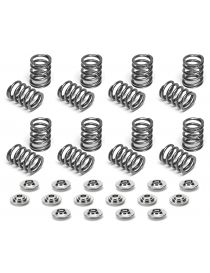
A faster camshaft with more lift overwhelms the standard spring: the valve floats, bounces on its seat and the cylinder head destroys itself in seconds. Catcams springs, made by PAC, are rated to follow those ramps. Twenty-five part numbers are active, and this is the only page in this section where the entire range is in stock. The code reads easily: the PAC prefix is followed by a letter giving the type, D for a double spring, S for a single, E for the outer and I for the inner of a double set, then a number. Always check coil bind clearance at full lift before signing off a build.
Cometic has one feature that explains its standing among engine builders: thickness is something you order, not something you accept. Working with it recovers the tenths of compression ratio lost when a head is skimmed, or deliberately drops compression before boost pressure is raised. Four hundred and fourteen part numbers are active on this page, split across two series. The H series, the older of the two, carries an H followed by four or five digits. The WC series, by far the larger here, runs from WC4132 to WC5783, sometimes followed by a dash and a figure giving the gasket bore in millimetres.
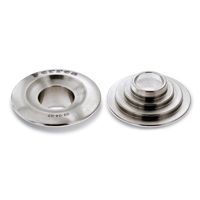
Titanium halves retainer mass at equal stiffness, which takes weight straight off the fastest moving part of the spring stack. Two Ferrea part numbers are active here, both listed for the 2.8 litre 24-valve VR6 fitted by Volkswagen and Seat, engines AQP, AUE, BDE, BDF, AYL and AXK in the Golf IV, Bora, Jetta IV, Sharan, Leon Cupra and Alhambra. The first, E11063, is the titanium retainer on its own, for replacing one piece or completing a set. The second pairs that same retainer with the Ferrea S10087 spring as a matched assembly: the sensible choice when the head is off and springs and retainers are being renewed together.
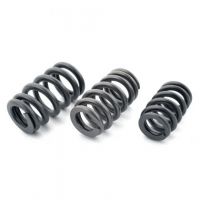
Ferrea numbers its springs in a single series, the letter S followed by four or five digits, S2022, S10049, S10055, S10087 and so on. Eight part numbers are active on this page and every one is in stock. They are sold individually, which lets you replace a single spring without stripping a whole set, and also lets you buy exactly the count a given cylinder head needs. Two applications are named outright in the active range, the 2.8 litre 24-valve VR6 from Volkswagen and Seat and the F20C in the Honda S2000; the remaining numbers are generic and chosen on size. One listing combines spring and retainer in a single item.
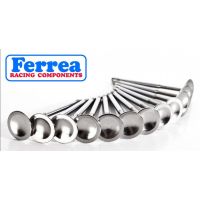
Ferrea codes its ranges into the number itself: every reference opens with the letter F, and the first digit places the series. F1000 and F2000 belong to Competition Plus, on the inlet side as on the exhaust. F5000 covers the large valves of the 5000 Series and F6000 the 6000 Series. Forty-nine part numbers are active on this page. They are chosen on size, head diameter, stem diameter and overall length, rather than by vehicle: only one listing in the active range names an application, the American small block engines. The P suffix, where present, flags the Competition Plus version of that reference.
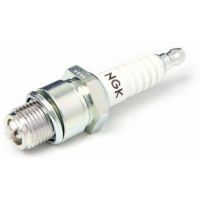
An NGK code reads left to right and tells you almost everything about the plug. The opening letters give the thread and the construction type, B, BKR, BCPR, ZFR, IFR, PFR or LKR among others. The digit that follows is the heat range: the higher it is, the colder the plug, and a tuned engine almost always calls for a step colder. The letters after that describe the technology, iridium or platinum in particular, and the segment beyond the dash usually corresponds to the gap. Eight hundred and sixty-one part numbers are active on this page. None is tied to a vehicle: selection is by code, read off the plug you removed.
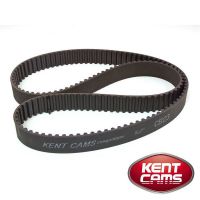
Kent Cams makes its belts in Britain for engines whose camshaft timing has been altered, with a pitch and a carcass able to take stiffer springs without jumping a tooth. Twenty-four part numbers are active on this page. The numbering is a plain catalogue run, CB followed by two digits, from CB02 to CB33: no segment within it codes a manufacturer or a capacity. Selection therefore rests on the physical data of the belt, tooth count and width, taken off the fitted part or supplied by the engine builder. A reinforced belt removes none of the usual precautions: set the tension with the proper tool and renew the tensioner at the same time.
Supertech names its cam followers by their dimensions rather than by a serial number: the reference CF-34/6.5+ reads directly as a 34mm outside diameter and a 6.5mm contact pad. It is the only follower active on the page, and that way of coding makes selection safe, since the part can be checked with a vernier before ordering. Two further Supertech items currently sit on this page without belonging to the family: a titanium spring retainer for the BMW M3 E30 S14 and M5 S38, and an inlet valve for the Toyota UZ-FE V8. The rest of the Supertech range is browsed in the pages devoted to each part family.
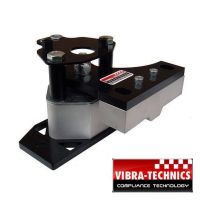
A standard mount is designed to filter vibration, not to hold an engine that has found another hundred horsepower: it deflects, the block moves, gearchange precision goes and the driveline takes the shock. Vibra-Technics takes that job on with a harder elastomer. One hundred and twenty-one part numbers are active here. The coding reads at a glance: three letters for the manufacturer, VAG, FOR, NIS, TOY, POR, VXL, FIA or HON among others, then a number, then the suffix giving the range, M for Street and MX for Competition. Choose between them on how the car is really used, as the Competition version passes noticeably more noise into the cabin.
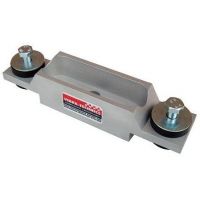
Renewing only the engine mount pushes all the remaining movement onto the gearbox mount, which then becomes the weak link and fails sooner than it would have done as standard. The two belong together. Forty-five part numbers are active on this page, under the same coding as the engine mounts: three manufacturer letters, FOR, FIA, NIS, MAZ, ROV, VAG or SUB among those recorded, a number, then M for the Street range or MX for Competition. One listing on the page covers a differential mount, useful on four-wheel-drive transmissions. On a front-wheel-drive car a stiffer gearbox mount is felt at once in the recovered precision of the gearchange.