Product successfully added to your shopping cart
Quantity
Total
There are 0 items in your cart. There is 1 item in your cart.
Total products
Total shipping To be determined
Total

1.4L 16v - EA111
Manufacturers
1.4L 16v - EA111
Warning: Last items in stock!
New product
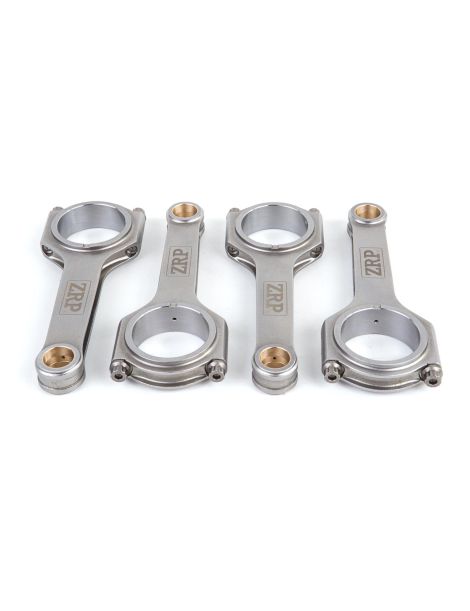
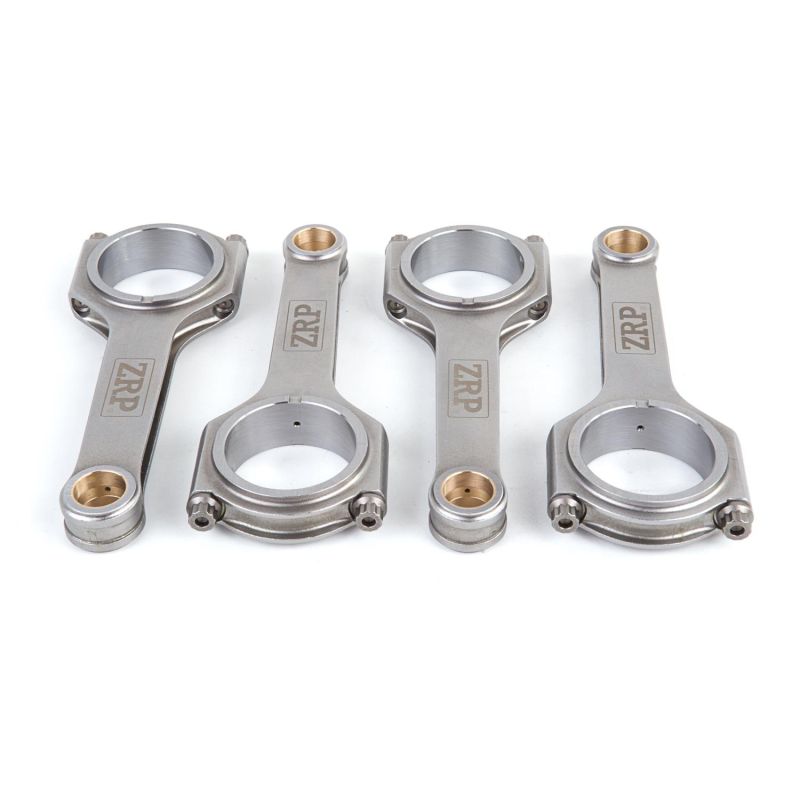
Set of 4 forged 4340-steel connecting rods for the VAG 1.4 TSI EA111 (rifle-drilled).
The VAG EA111 1.4 TSI is an inline four-cylinder of 1,390 cc with direct petrol injection and forced induction, built by the Volkswagen Group from 2005 to 2015. It combines a 76.5 mm bore with a 75.6 mm stroke, chain-driven timing and TSI direct injection. Depending on the version it uses either a single turbocharger or the twincharger setup pairing a supercharger with a turbo, giving a sharp low-end response. It is found notably on the Volkswagen Golf and Polo as well as the SEAT Ibiza (engine codes CAVD, CAXA, CAVA, BLG, CAX, CAV, CVA).
Heavily stressed by boost, the EA111 1.4 TSI sees its factory rods (144 mm centre distance, 19 mm pin) become a weak point as soon as boost pressure or engine speed rise. The forged rods offered here feature a rifle-drilled oil hole that carries oil to the small end to lubricate the wrist pin, securing the bottom end on a built engine.
These rods are forged from high-strength 4340 steel and machined for the EA111 1.4 TSI, with a 19 mm pin, an oil hole and a 144 mm centre-to-centre length. On such a compact engine every increase in boost pressure is felt: replacement is required when fitting forged pistons, when raising the rev range, when increasing boost pressure or displacement.
Intended for built engines, turbocharged as well as supercharged, they cover every discipline: rally, drift, drag racing, circuit and track use, hillclimb, time attack, and follow Stage 2, Stage 3 and Stage 4+ builds up to a fully rebuilt competition engine, in H profile at 457 g per rod. The oil hole of the standard rod is retained.
| Reference | Brand | Profile | Bolts | Pin diameter OEM 19 mm | Small-end width | Big-end diameter | Big-end width | Center-to-center OEM 144 mm | Weight per rod |
|---|---|---|---|---|---|---|---|---|---|
| R-VW-004-HR | ZRP | H | ARP 2000-5/16"-38mm | 19 mm | 50,6 mm | 23 mm | 144 mm | 457 g | |
| R-VW-004-HR-L19 | ZRP | H | ARP L19-5/16"-38mm | 19 mm | 50,6 mm | 23 mm | 144 mm | 457 g |
ZRP: Rifle-drilled rods.
| Rod | Bolts | Torque | Recommended stretch |
|---|---|---|---|
| ZRP H (ARP 2000) | ARP 2000 5/16" | 40,7 N·m | 0,140 – 0,152 mm |
| ZRP H (ARP L19) | ARP L19 5/16" | 67,8 N·m | 0,152 – 0,165 mm |
What is preload actually for? It keeps the cap clamped against the rod body while, twice per revolution, the inertia of the piston and rod assembly pulls it away. If the tension installed in the bolts stays below that separating force, the joint face works, the bearing shell shifts and the rod is lost. That is why the values in the table above, defined by the bolt manufacturer for the EA111, are not open to discussion: they correspond to the required tension, not to a mere wrench setting. Torque only gives an approximate picture of it, since it depends on thread friction and head bearing; stretch measured with a dial gauge, on the other hand, can be read directly. Clean threads, a thin film of ARP assembly lubricant, load built in alternating stages across the eight bolts, and the ARP 2000 or ARP L19 range according to the part fitted. The instruction sheet supplied with the kit remains sovereign.
| 4340 steel is a nickel-chromium-molybdenum alloy steel used in aerospace and motorsport alike. Forged then heat-treated (quench and temper), it offers excellent tensile strength, high fatigue resistance and real ductility. Compared with an original rod (often sintered/powder metal, optimised for series-production cost), a 4340 forged rod shows roughly +19% higher yield strength, +8% higher tensile strength and above all +19% to +37% higher fatigue strength, i.e. a fatigue life under cyclic loading several times longer. This is what makes forged 4340 the reference material as soon as boost and rpm climb. |
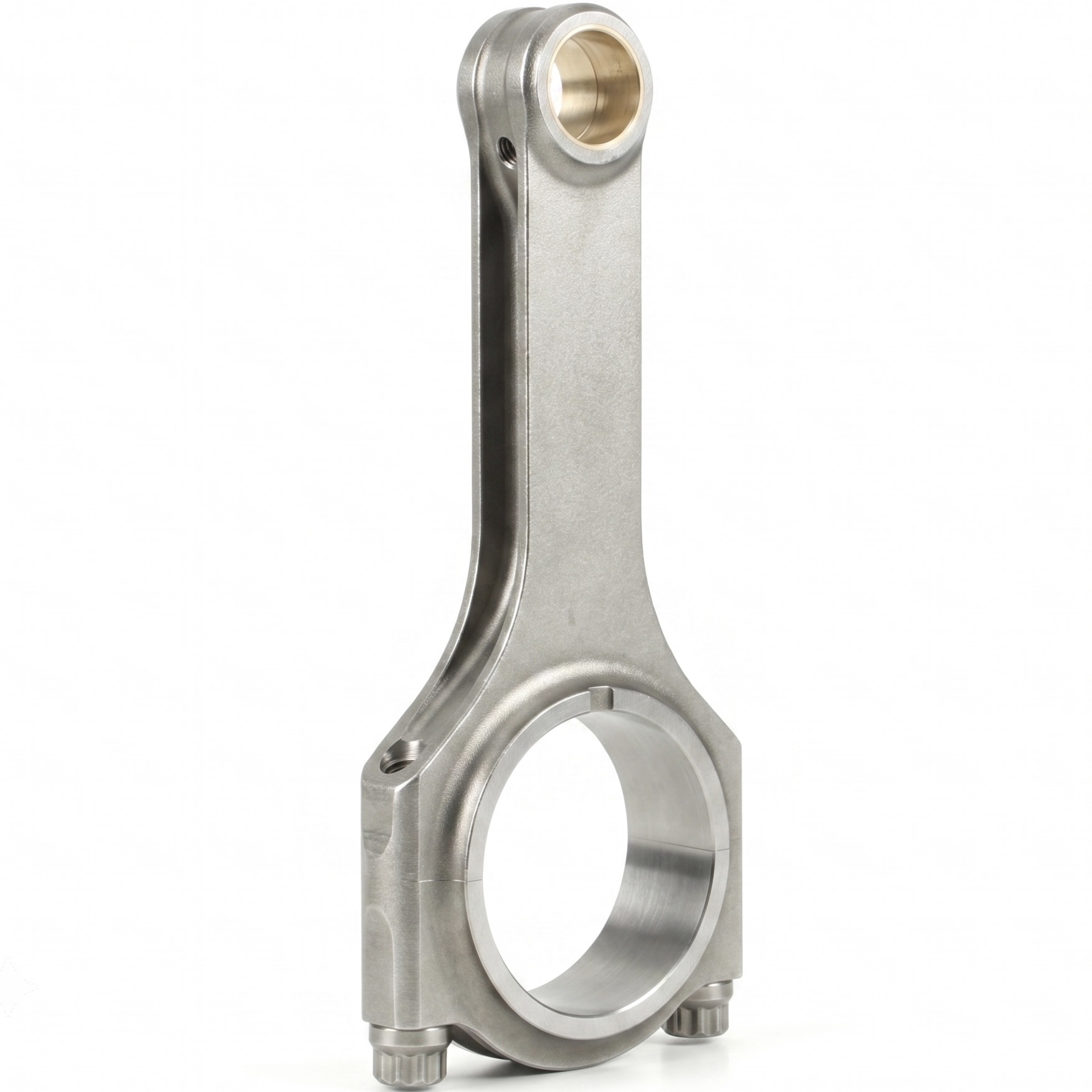 | H-beam profile. “H”-shaped section offering great rigidity and excellent resistance to bending and compression. Slightly heavier than an I-beam, it favours strength: the choice for high-torque engines, large displacements and drag. On a torque-oriented, reliability-focused EA111, it is a safe bet. |
On a built 1.4 TSI the rod bolt carries everything: it sets the maximum rpm and the cylinder pressure that can be sustained. The grade is decided by discipline, from torque demanded low down in rally to rpm held high on circuit, up to the very short load peaks of drag racing, then by the target power per cylinder. On this rod the bolts are offered in 5/16"-38 mm and are fitted to the torque and stretch listed in the table.
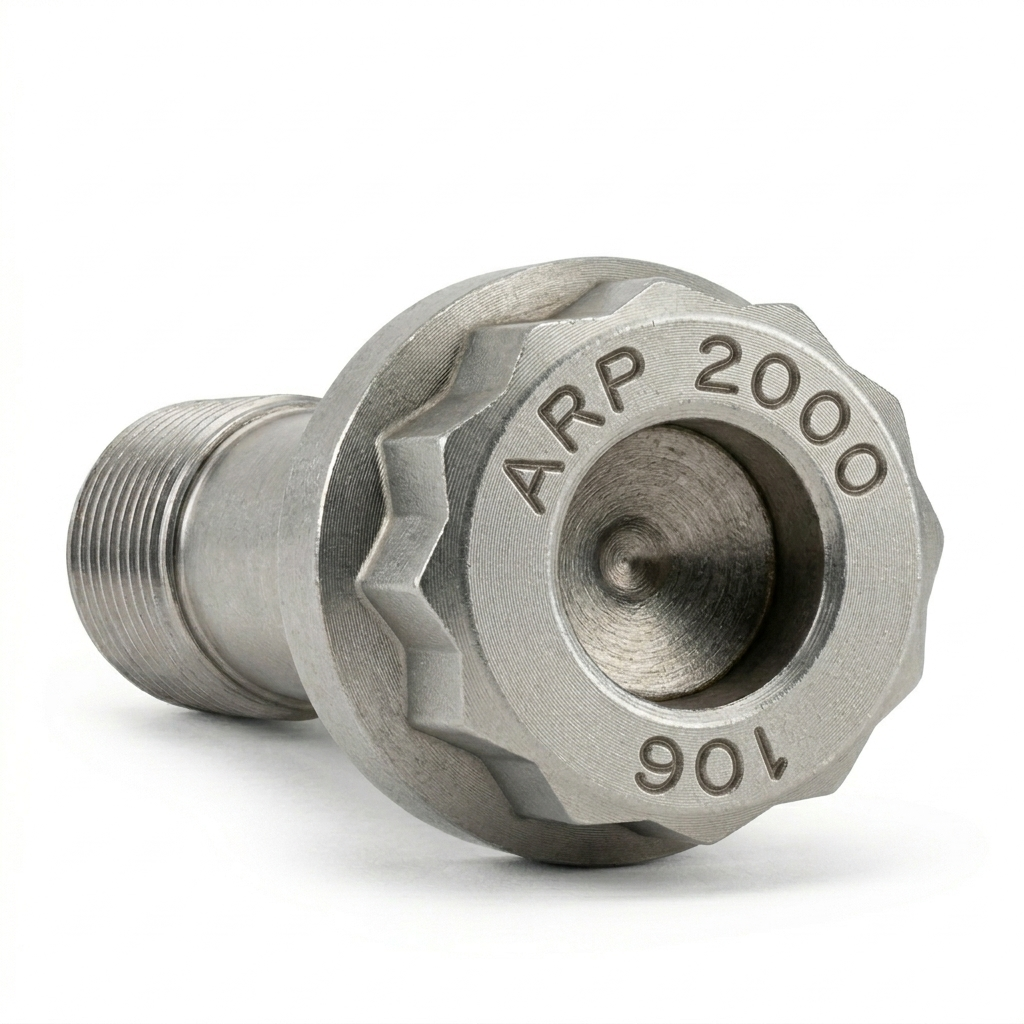 | ARP 2000, quoted at ~220,000 psi (~1,517 MPa) tensile strength, is the high-performance standard: the grade is rated up to 150 hp per cylinder for a 5/16" bolt or 200 hp per cylinder for a 3/8" bolt, and up to 8,500 rpm. It is found in circuit racing and track days, in drift, rally, drag racing and hillclimb. Here it is offered in the 5/16" diameter specific to this rod and requires no particular storage constraint. |
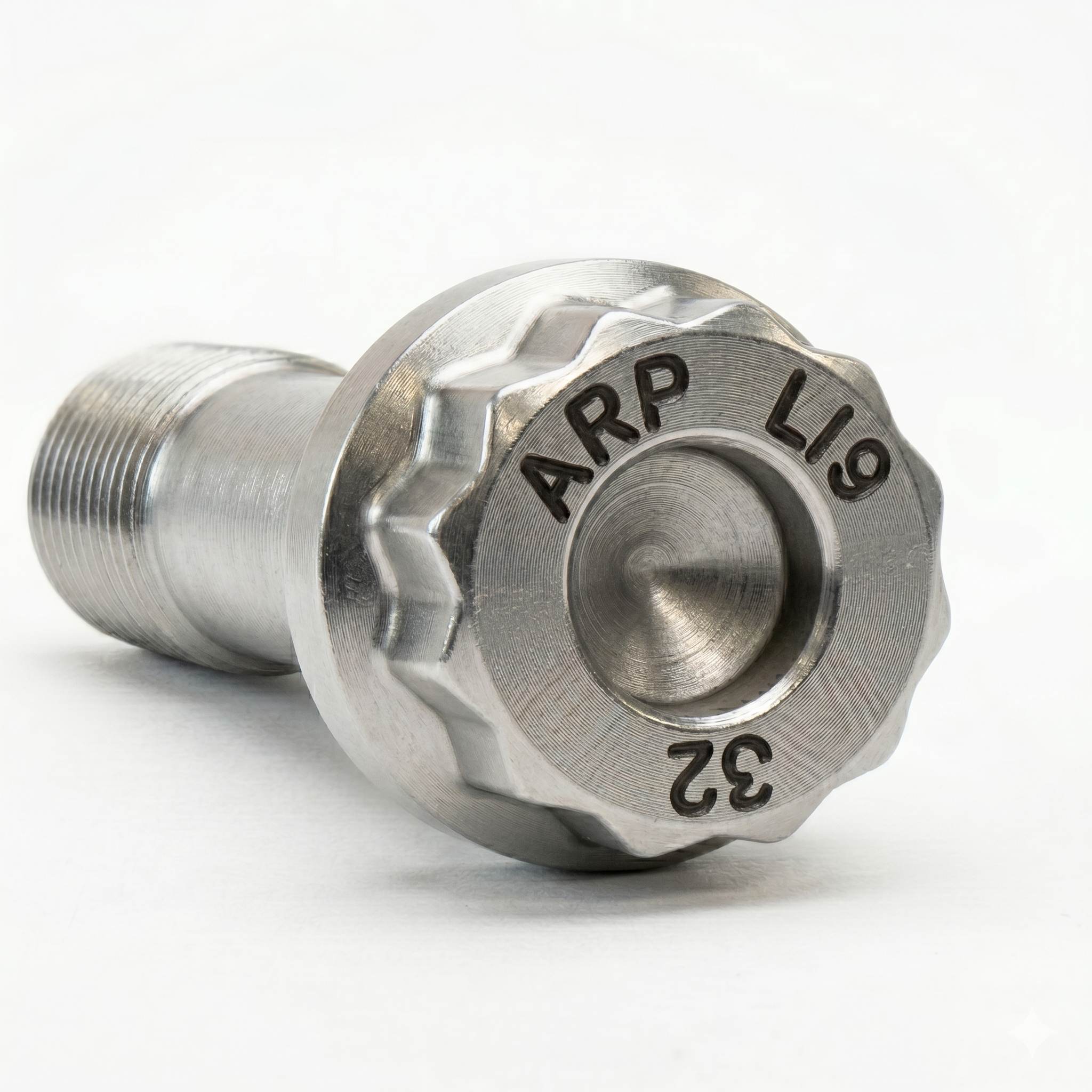 | L19 (tensile strength ~260,000 psi, i.e. ~1,793 MPa) is designed for engines pushed to the extreme, rated up to 200 hp per cylinder for a 5/16" bolt or 250 hp per cylinder for a 3/8" bolt, and up to 10,000 rpm: very high boost pressure, sustained high rpm and high cylinder pressure. It is the choice for big-power builds: drag racing, drift, rally and circuit use. Caution: sensitive to corrosion and hydrogen embrittlement, it must always be stored and fitted oiled, away from moisture. |
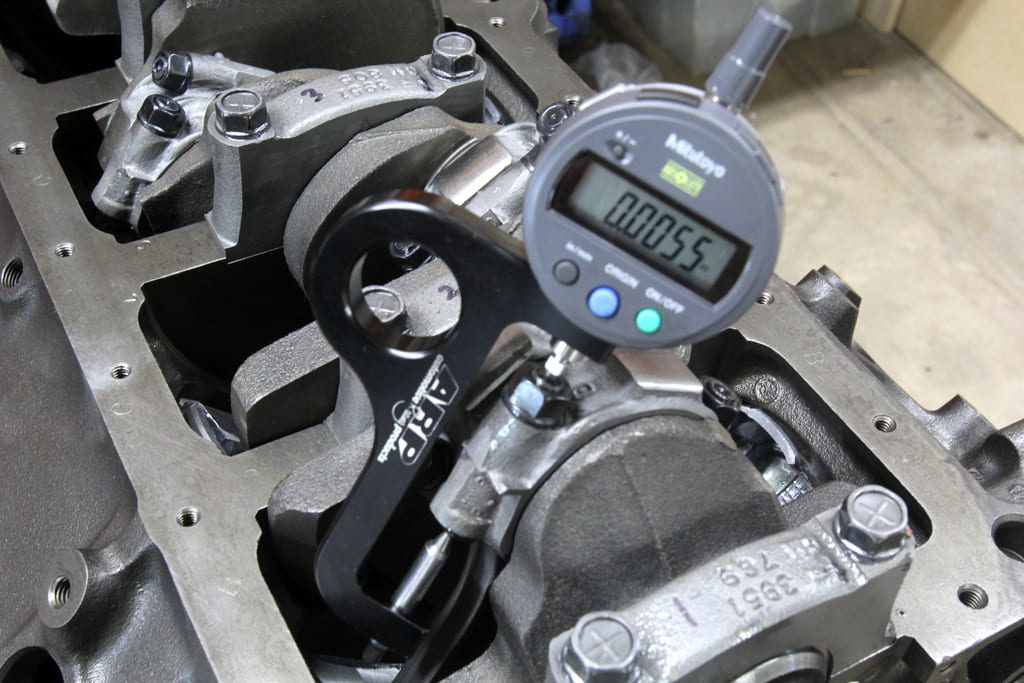
In addition to torque tightening, measuring rod-bolt stretch is the most reliable check for optimal preload. The check is done with the bolt fitted: place the gauge (dial indicator) on the two ends of the bolt and read its actual stretch, which must match the recommended value (see the torque & stretch table above). This method removes the friction variations inherent in torque tightening and secures the assembly on heavily stressed engines. |
 | ZRP, a Greek brand of high-performance forged connecting rods, designed by Alex Drakos in Athens. Each rod is forged from 4340 steel, precision-machined and balanced to ±1 g to stay reliable at high rpm. Offered here in the H profile with ARP 2000 or L19 bolts, they are designed and inspected in Greece, and proven in rally, on circuit and in drift. |
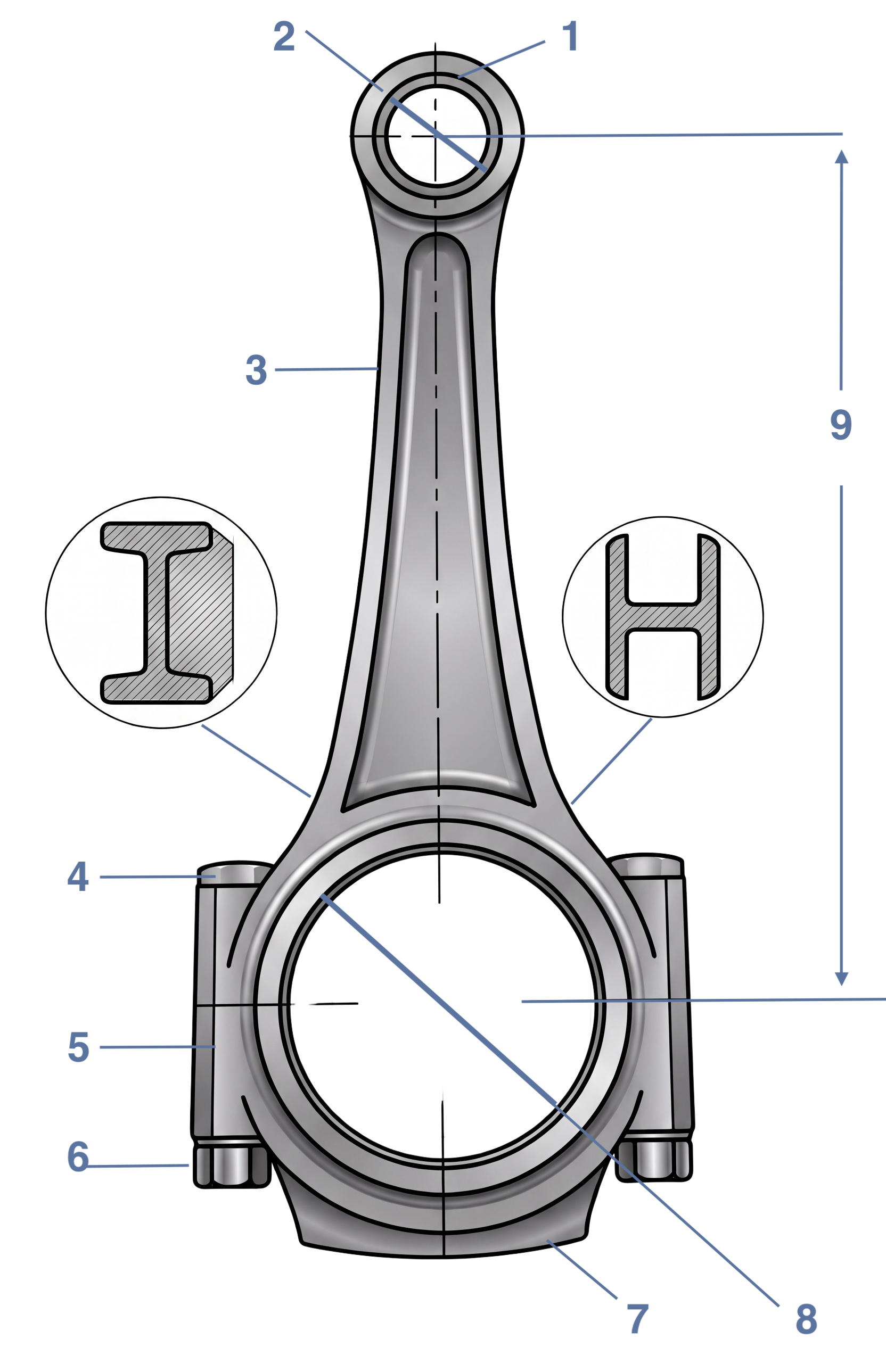 | 1) Small end 2) Small-end diameter 3) Rod beam 4) Rod bolt 5) Big end 6) Rod nut / bolt 7) Rod cap 8) Big-end diameter 9) Center-to-center |
These forged connecting rods are compatible with all vehicles fitted with the VAG EA111 1.4 TSI engine (3.0L 24V twin-turbo):
| Brand | Model (chassis) | Engine code | Power | Years |
|---|---|---|---|---|
| Volkswagen Group (VW / Audi / SEAT / Škoda) | 1.4 TSI (Golf, Polo, Ibiza) | CAVD / CAXA / CAVA / BLG / CAX / CAV / CVA | 2005–2015 |
On an EA111, a standard rod that breaks destroys the piston and calls for a check of the block: putting things right with standard parts is paid for in rods and pistons, without gaining any strength. The engine then recovers exactly the fragility it had before the failure, without a single extra horsepower.
For a comparable, often lower budget, a set of forged 4340 steel rods with forged pistons brings far greater reliability and safety margin, and leaves room for a later power increase. This is what European engine builders have done for more than 15 years on the group’s small boosted engines.
For the same budget: more reliability, more potential, more service life, on a bottom end that finally matches the build.