Product successfully added to your shopping cart
Quantity
Total
There are 0 items in your cart. There is 1 item in your cart.
Total products
Total shipping To be determined
Total

2.0L 16v - Zetec-E Blacktop Euro 1998-2004
Manufacturers
2.0L 16v - Zetec-E Blacktop Euro 1998-2004
Warning: Last items in stock!
New product
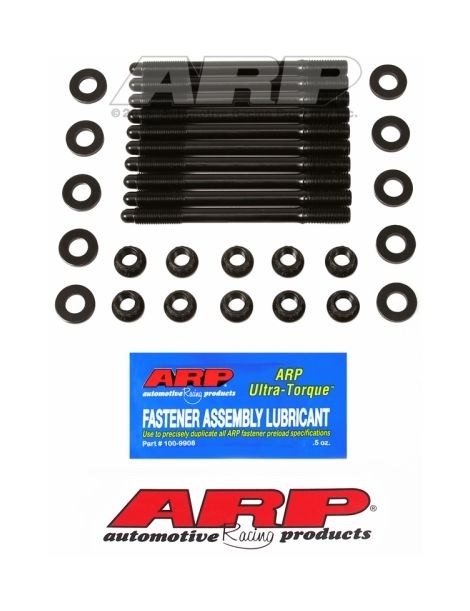
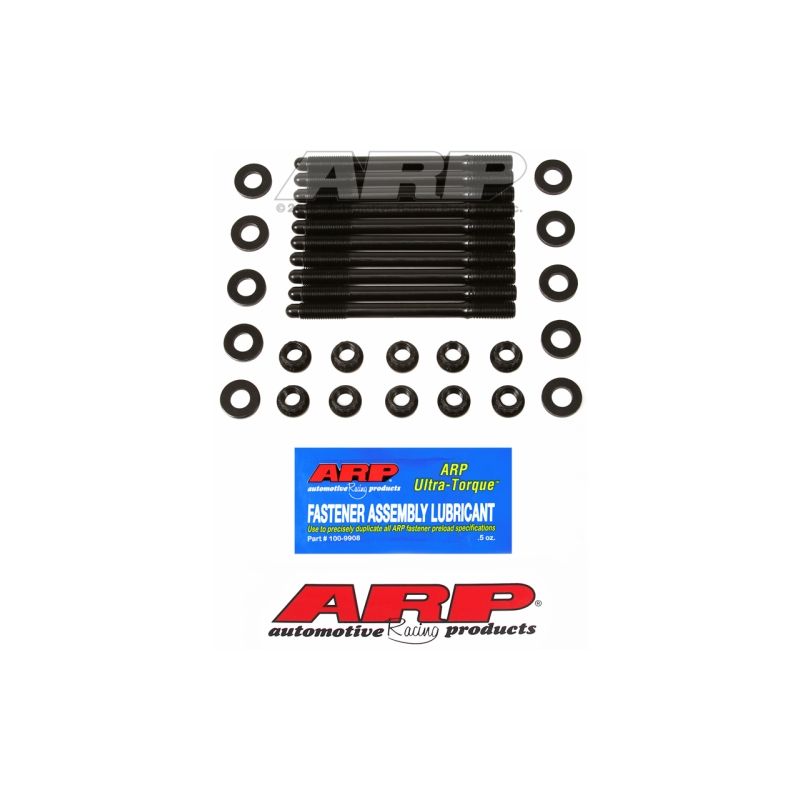
ARP 8740 cylinder head stud kit (251-4702) for the Ford 2.0-litre Zetec-E, four cylinders, 16 valves.
Ford's 2.0-litre Zetec-E (codes EDDB, EDDC, EDDD and EDDF) is a 1,988 cc in-line four-cylinder (84.8 mm bore, 88.0 mm stroke) with 16 valves and twin overhead camshafts. It powers the first-generation Ford Focus, as a hatchback, a saloon and a Turnier estate.
As standard, the cylinder head of this engine is held down by cylinder head bolts, which the ARP studs replace.
The job of the head fasteners is to keep the cylinder head locked to the block despite the pressure inside the combustion chambers. They keep the gasket compressed; as soon as their clamping force drops, leaks appear between head and block.
The ARP 251-4702 kit is made of 8740, 10 mm in diameter. According to its instruction sheet, the studs are screwed into the block by hand before the head is fitted; the threads, washers and nuts, lubricated with ARP Ultra-Torque, are then tightened in three equal passes. Material of the fasteners: 8740, a chrome-molybdenum steel that ARP specifies at 200,000 psi tensile strength. Factory-fitted fasteners usually fall into classes 10.9 and 12.9, with 150,800 to 176,900 psi minimum tensile strength. In M10, the 8740 studs hold up to 500 hp on this four-cylinder engine (calculated estimate).
| Part number | Brand | Grade / material | Nuts | Thread |
| ARP-251-4702 | ARP | 8740 - Undercut | 12-point | M10 |
| Part number | Stage 1 | Stage 2 | Stage 3 |
| ARP-251-4702 | 27 Nm | 54 Nm | 81 Nm |
The studs are fitted into the block by hand, without a torque wrench. For a permanent installation, the instruction sheet accepts thread locker, with tightening to be completed before it sets.
According to the sheet, ARP thread sealer is applied to the block-side threads where the studs open into the water jacket.
Follow the tightening sequence recommended by the manufacturer and bring to torque in three stages; the stated values assume ARP lubricant on the threads and under the nuts.
The washers also receive ARP lubricant, as stated in the instruction sheet.
The torque figures above come from ARP instruction sheet 251-4702, revision applicable on the day the page went online. The official instruction sheet prevails in case of difference and describes the complete procedure, tightening sequence included. Read the ARP 251-4702 instruction sheet
The stated tightening torques only make sense with ARP assembly grease, applied to the threads and under the nuts.
| Buy the ARP assembly grease → |
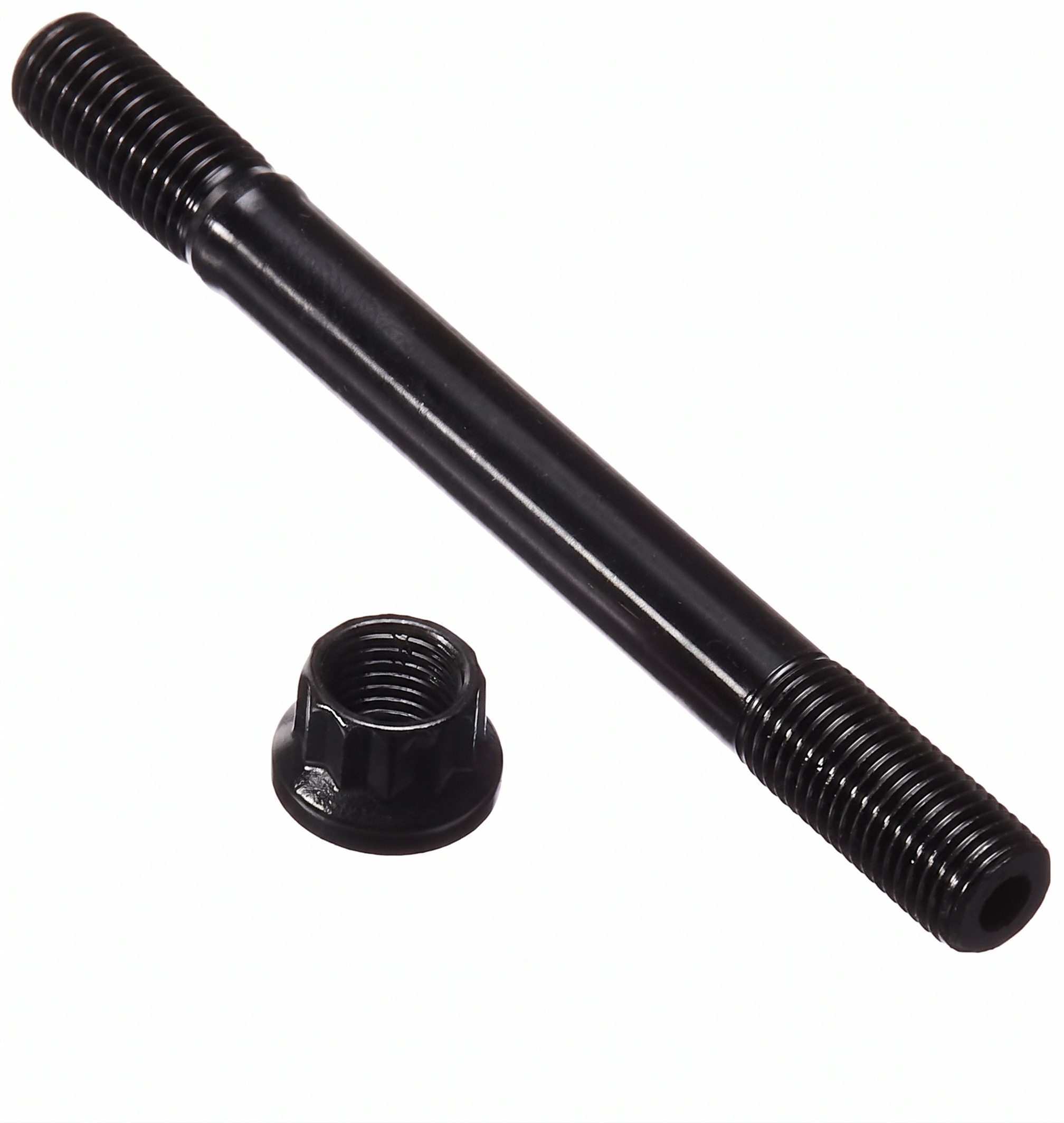
The undercut version is recognisable by its reduced shank between the threads. According to ARP, this profile equalises stretch from one stud to the next and makes the clamping more consistent, while compensating for head gasket compression during installation: engine sealing benefits.
 | Gary Holzapfel, a former aerospace engineer, created ARP (Automotive Racing Products) in the early 1970s to tackle engine failures caused by insufficiently strong fasteners in racing. Today the brand develops and manufactures thousands of parts in California, available in several material grades as needed. |
| Criterion | Original head bolts | Reinforced ARP studs |
 |  | |
| Block threads | Stressed at every tightening | Spared by hand-tight fitting |
On an engine left standard, the original fasteners do their job. Switching to reinforced fasteners becomes worthwhile as soon as:
| Model | Engine code | Power | Years |
| Ford Focus I hatchback (DAW, DBW) | EDDB, EDDC, EDDD, EDDF | 126-131 hp | 1998-2005 |
| Ford Focus I saloon (DFW) | EDDB, EDDC, EDDD, EDDF | 126-131 hp | 1999-2005 |
| Ford Focus I Turnier estate (DNW) | EDDB, EDDC, EDDD, EDDF | 131 hp | 1999-2004 |
A standard Zetec-E works with a safety margin set for series output. As soon as a remap, a turbo kit or a higher compression ratio pushes up cylinder pressure, the head and the gasket are the first parts to suffer. A set of ARP 8740 studs keeps the head pressed down with a steadier clamping load; reopening an engine for a blown gasket costs far more than this kit.
To get the most out of reinforced fasteners, pair them with a head gasket that withstands the same pressure. Here is the gasket we offer for this engine:
| Reinforced head gasket Ford Focus Zetec-E EDDB EDDC EDDD EDDF → |