Product successfully added to your shopping cart
Quantity
Total
There are 0 items in your cart. There is 1 item in your cart.
Total products
Total shipping To be determined
Total

2.0L 16v - XU10J4RS
Manufacturers
2.0L 16v - XU10J4RS
Warning: Last items in stock!
New product
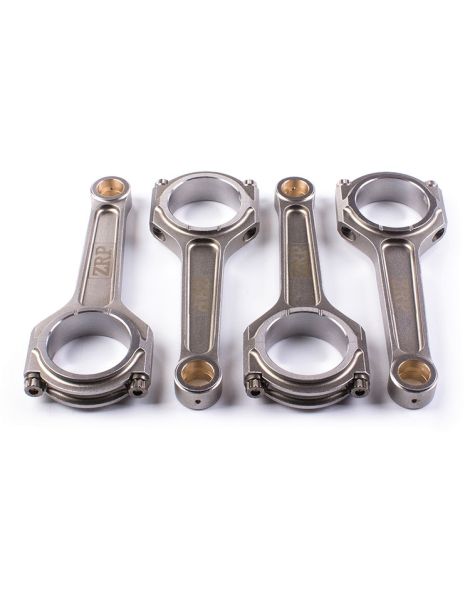
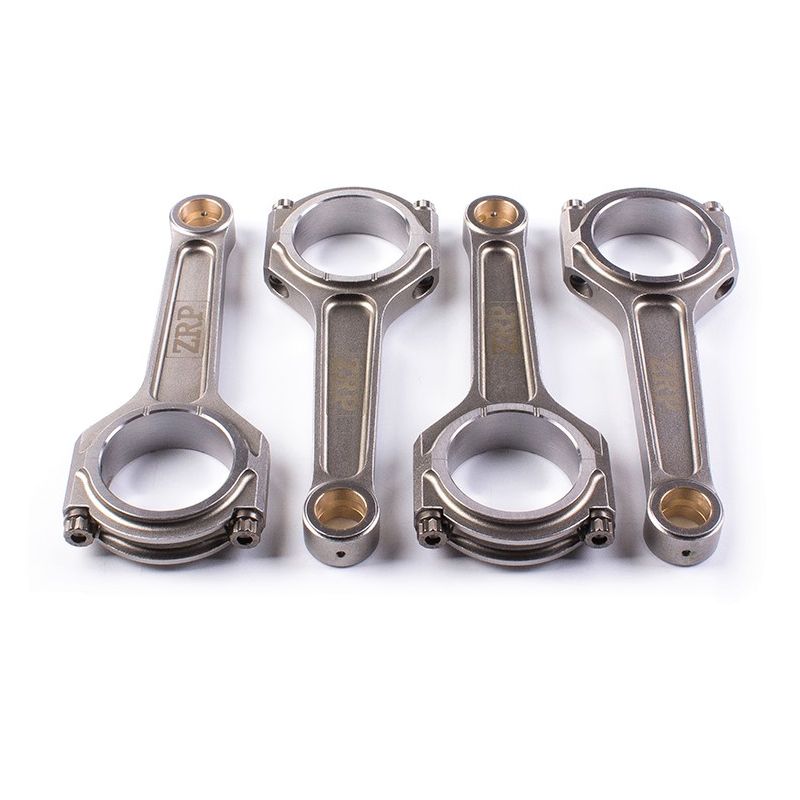
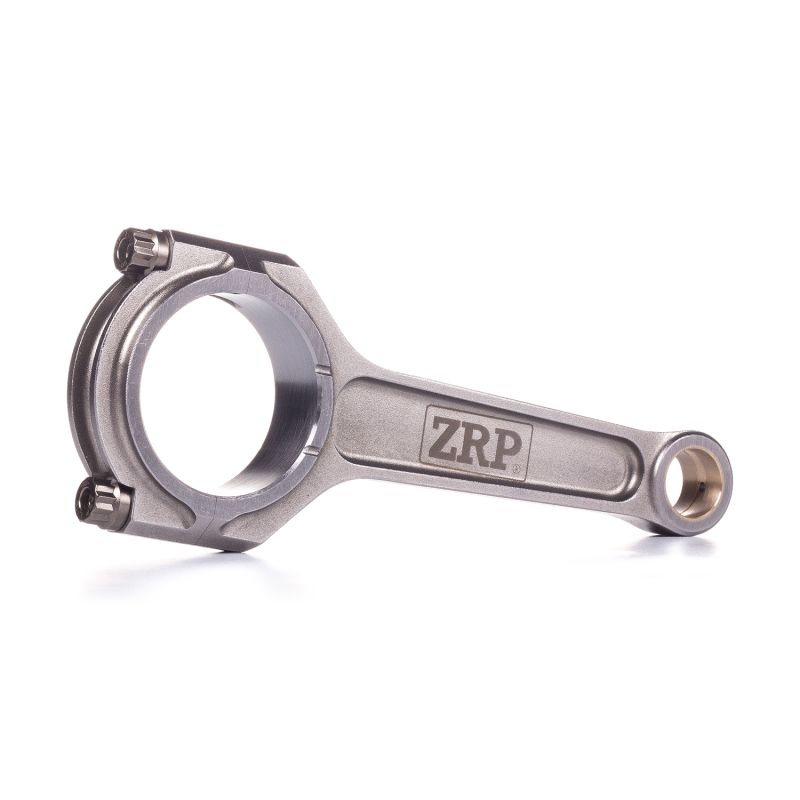
Set of 4 forged 4340 steel connecting rods for Citroën / Peugeot 2.0L 16V XU10J4RS (22 mm pin).
The XU10J4RS is the high-performance 2.0-litre 16-valve unit from the PSA group, derived from the XU family. Naturally aspirated, with a displacement of 1,998 cc and an 86 mm bore and stroke, it powers the sportiest versions of the marque and delivers up to 167 hp thanks to its lively, high-revving 16-valve cylinder head.
It is found under the bonnet of the Peugeot 306 S16, Citroën ZX 16V and Xsara VTS produced between 1996 and 2005. Highly sought after for tuning, it provides a solid basis for competition, where reinforcing the rotating assembly quickly becomes essential to withstand high engine speeds and increased power.
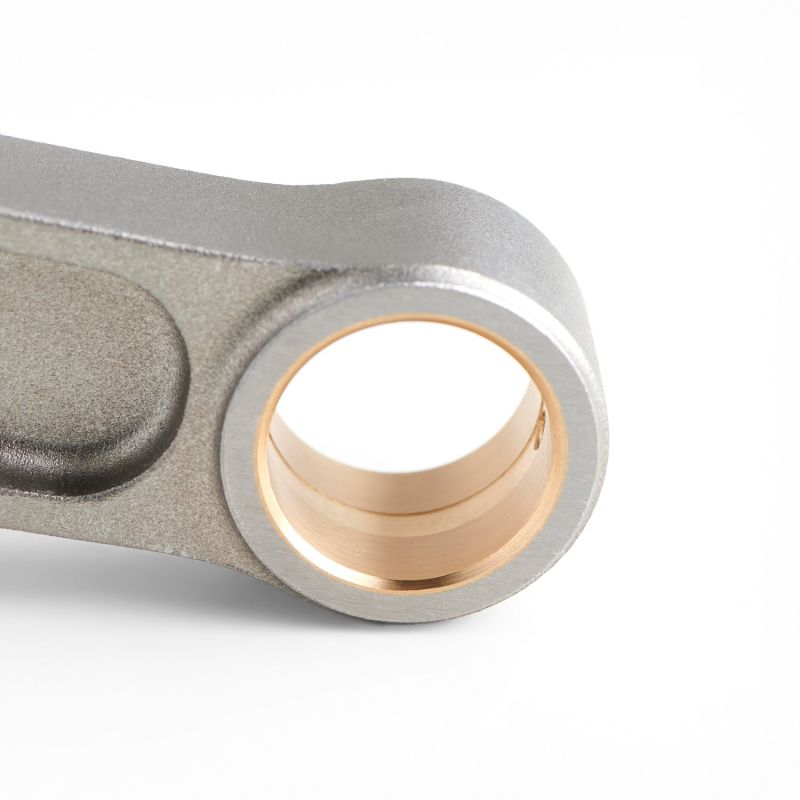
These rods are forged from high-strength 4340 steel, then machined to take a 22 mm piston pin: this is the reinforced version of the XU10J4RS, the one used with forged pistons on an increased pin diameter. Moving to forged rods becomes necessary as soon as the maximum rpm rises, as soon as forced induction is added, cylinder pressure increases or displacement grows.
Developed for competition, on a highly tuned naturally aspirated engine as well as on a boosted one, they cover every discipline: rally, drift, drag racing, circuit and track use, hillclimb, time attack. They support Stage 2, Stage 3 and Stage 4+ builds up to a fully rebuilt engine, at 610 g per rod for a 158 mm centre-to-centre length.
| Reference | Brand | Profile | Bolts | Pin diameter OEM 20 mm | Small-end width | Big-end diameter OEM n.p. | Big-end width | Center-to-center OEM 158 mm | Weight per rod |
|---|---|---|---|---|---|---|---|---|---|
| R-CIT-002-I-22mm | ZRP | I | ARP 2000-3/8"-38mm | 22 mm | 53.7 mm | 24.2 mm | 158 mm | 610 g | |
| R-CIT-002-I-L19-22mm | ZRP | I | ARP L19-3/8"-38mm | 22 mm | 53.7 mm | 24.2 mm | 158 mm | 610 g |
| Rod | Bolts | Torque | Recommended stretch |
|---|---|---|---|
| ZRP (R-CIT-002-I-22mm) | ARP 2000 | 61 N·m | 0.140 – 0.152 mm |
| ZRP (R-CIT-002-I-L19-22mm) | ARP L19 | 67.8 N·m | 0.152 – 0.165 mm |
Tightening a rod bolt means stretching it: the tension holding the cap comes from that elastic elongation, and from nothing else. Insufficient elongation translates immediately into too little preload: the cap separates from the rod at every upward piston travel, the parting face degrades, the shell is hammered, its clearance opens and oil no longer separates it from the crank journal. Excessive elongation means the steel has been pushed into its plastic domain: the bolt stays stretched, its useful tension disappears, the bearing bore distorts under the overload and the big end goes oval, pinching the shell and breaking the oil film. That is exactly why the table below gives a target stretch alongside the torque, at the fastener manufacturer's values, which differ for the ARP 2000 and ARP L19 fasteners in 3/8" fitted to these ZRP rods. The dial gauge remains the reference instrument for checking that elongation; assemble with ARP lubricant, the kit instructions taking priority.
| 4340 steel is a nickel-chromium-molybdenum alloy steel used in both aerospace and motorsport. Forged then heat-treated (quenched and tempered), it combines high tensile strength, excellent fatigue life and real ductility. Compared with a factory rod (often made of sintered metal, optimised for mass-production cost), a 4340 forged rod gains roughly +19% yield strength, +8% tensile strength and above all +19 to +37% fatigue strength, i.e. a service life under cyclic loading several times longer. This is exactly what makes forged 4340 the reference material as soon as engine speed and load rise. |
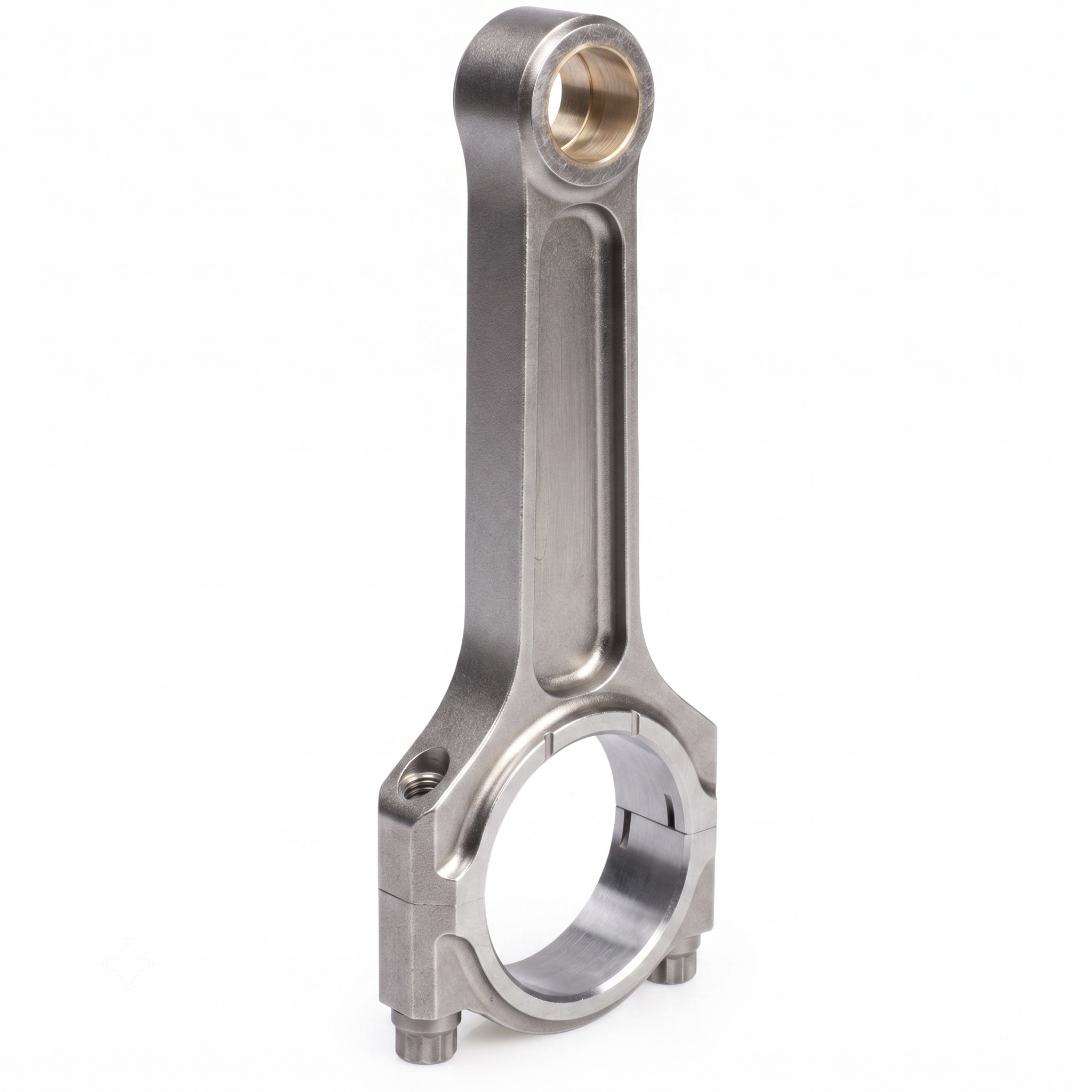 | I-Beam I profile (reinforced I). The I-beam rod, with its thinner central section, is lighter: less inertia and freer revving, an asset on a lively, high-revving engine like the XU10J4RS. Forged from 4340 steel, its reinforced structure handles higher loads without a weight penalty. |
Choosing the bolt grade always starts from how the engine is really used: a rally XU10J4RS does not wear its bolts like a circuit engine holding high rpm for long minutes, nor like a drag engine seeing a few extreme loads. Target power per cylinder and maximum rpm come next. The grades offered here are in 3/8"-38 mm and are fitted to the torque and stretch of the table.
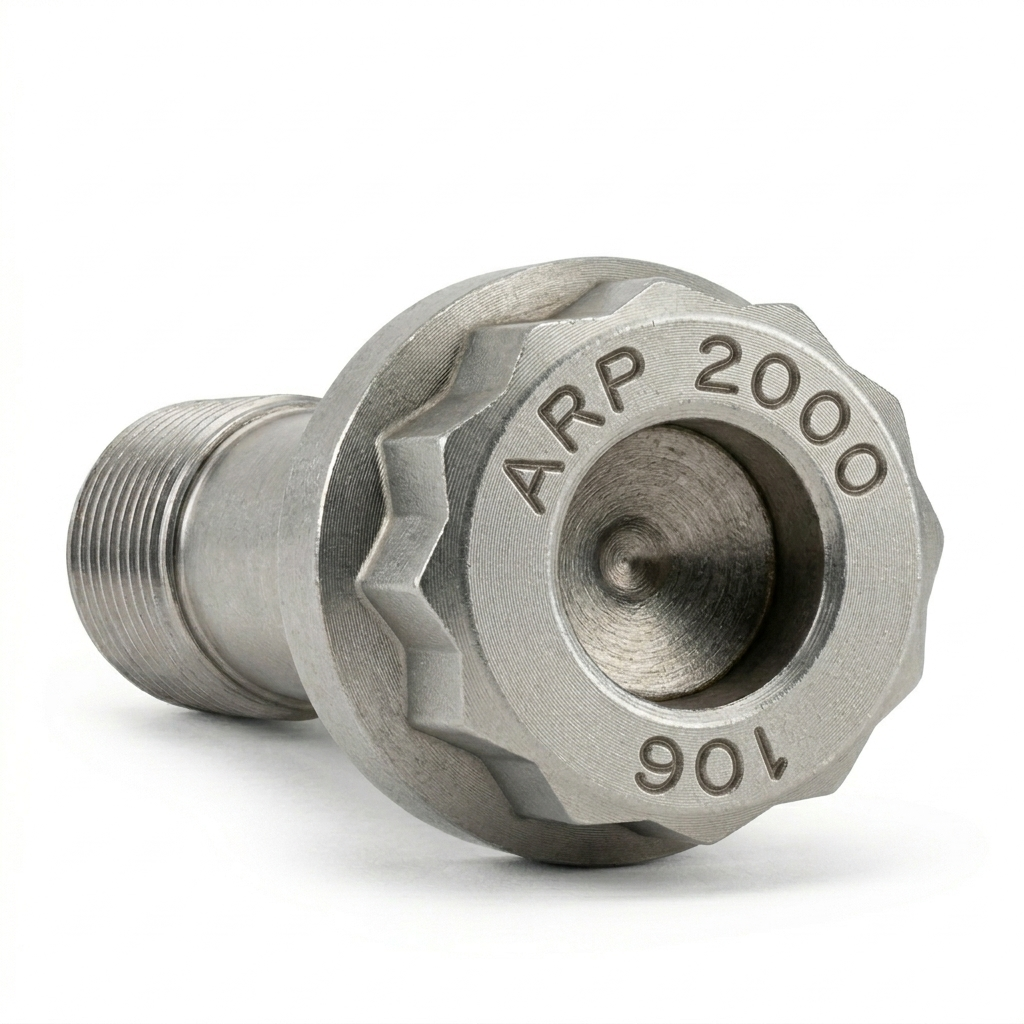 | ARP 2000, with a tensile strength of ~220,000 psi (~1,517 MPa), matches the everyday needs of a built XU10J4RS: up to 200 hp per cylinder in 3/8" and up to 8,500 rpm. It is found in circuit racing and track days, in drift, rally, drag racing and hillclimb, and it imposes no particular storage constraint, which keeps the build simple. On this listing it is used with a 22 mm pin and a 158 mm centre-to-centre length. |
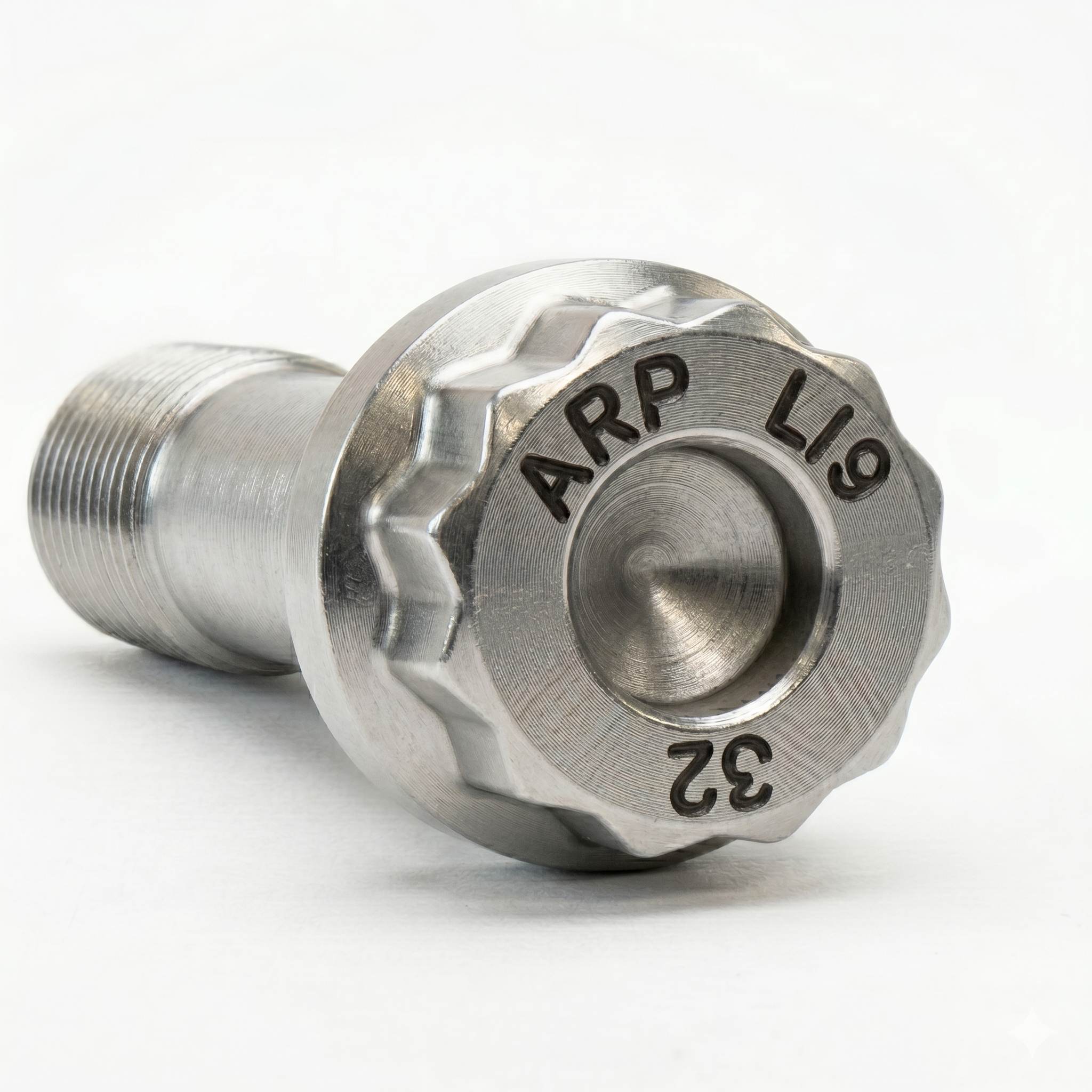 | ARP L19 (tensile strength around 260,000 psi, i.e. ~250 hp per cylinder in 3/8", and up to 10,000 rpm, under very high boost pressure, sustained high revs and high cylinder pressure. It is the choice for big-power builds: drag, drift, rally and circuit. Sensitive to corrosion and hydrogen embrittlement, it must be stored and fitted oiled, away from moisture. |
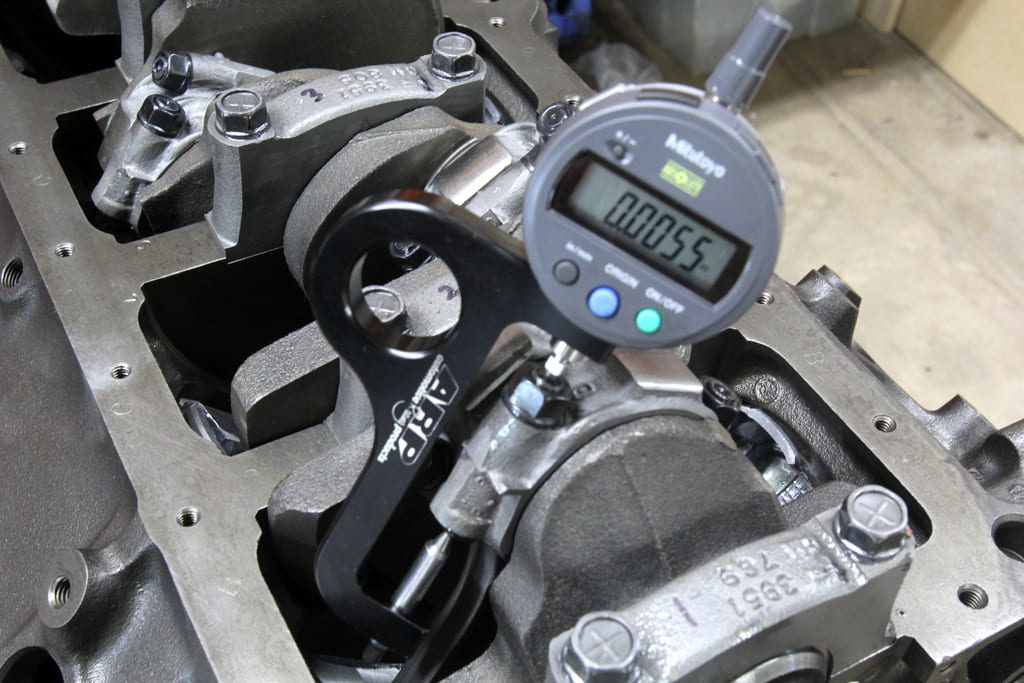
| Beyond torque tightening, measuring rod-bolt stretch remains the most reliable check for achieving correct preload. The measurement is taken with the bolt fitted: place the dial gauge (stretch gauge) on both ends of the bolt and read its actual stretch, which must match the recommended value (see the torque & stretch table above). This method removes the friction variations inherent to torque tightening and secures the assembly on heavily stressed engines. |
 | ZRP is a Greek brand of high-performance forged connecting rods, designed by Alex Drakos in Athens. Each rod is forged from 4340 steel, precision-machined and balanced to ±1 g to stay reliable at high rpm. On this XU10J4RS application they are offered in an I (reinforced I-beam) profile with ARP 2000 or L19 hardware, designed and inspected in Greece, and proven in rallying, on circuit and in drift. |
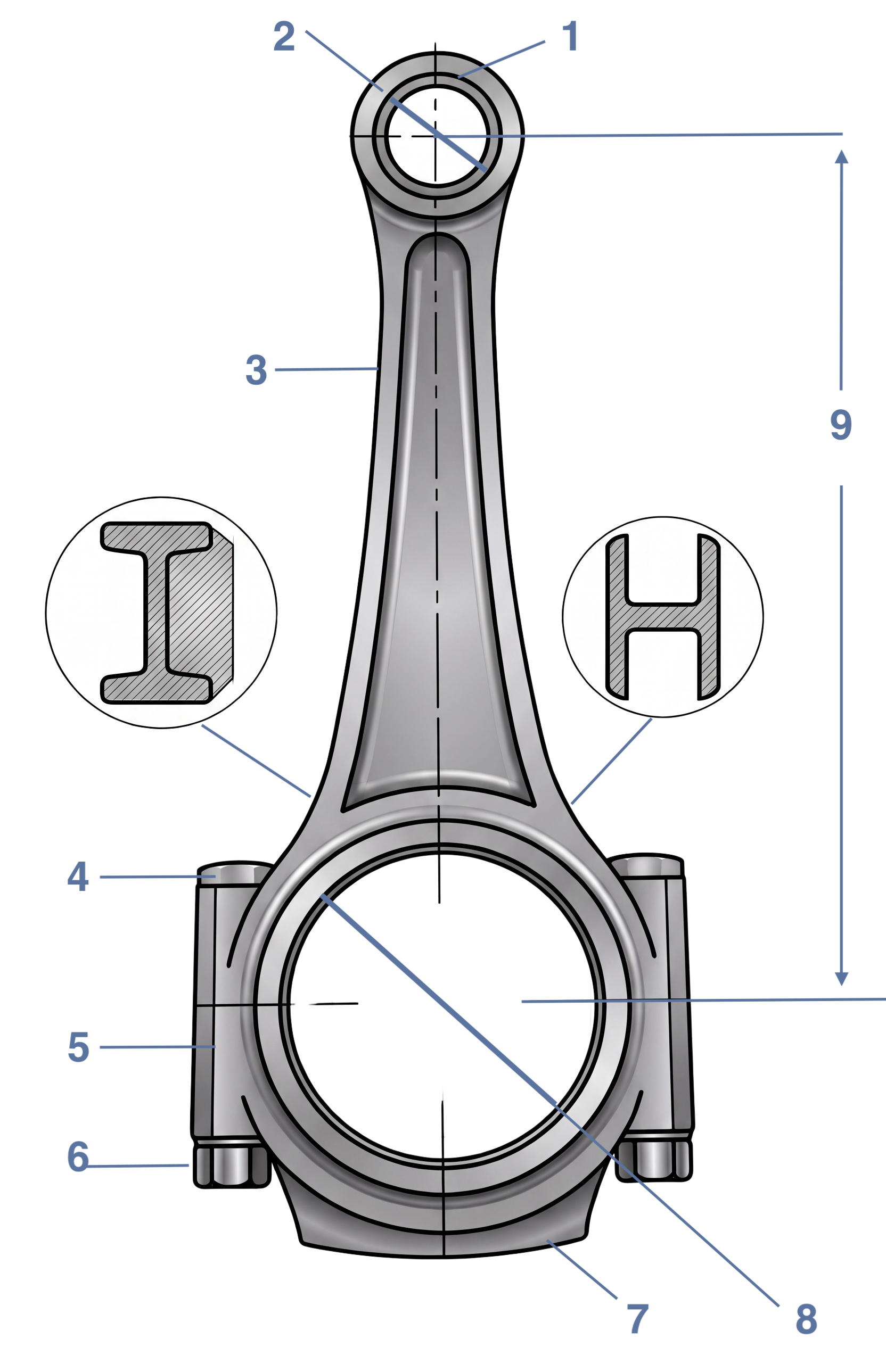 | 1) Small end 2) Small-end diameter 3) Rod beam 4) Rod bolt 5) Big end 6) Rod nut / bolt 7) Rod cap 8) Big-end diameter 9) Center-to-center |
These forged rods, in their 22 mm piston pin version, are intended for vehicles fitted with the 2.0 16V XU10J4RS, with a 158 mm centre-to-centre length. The table below lists the Citroën and Peugeot models concerned.
| Brand | Model (chassis) | Engine code | Power | Years |
|---|---|---|---|---|
| Citroën | Xsara VTS | XU10J4RS | 167 hp | 1998–2005 |
| Citroën | ZX 16V | XU10J4RS | 163 hp | 1996–1997 |
| Peugeot | 306 S16 | XU10J4RS | 163 hp | 1996–2001 |
OEM reference: 0603 60 (set of 4 rods).
On this 2.0 16V, a standard rod that breaks destroys the piston facing it and calls for a check of the block. Restoring the factory state therefore means buying rods and pistons, for an engine that will keep its original limits.
For an equivalent, even lower budget, forged 4340 steel rods and forged pistons bring much higher reliability and safety margin, with power potential that stays available. This is what European engine builders have done for more than 15 years on competition XU engines. The engine then starts again with a real reserve.
For the same budget: more reliability, more potential, more service life, on a reciprocating assembly that finally makes sense.