Product successfully added to your shopping cart
Quantity
Total
There are 0 items in your cart. There is 1 item in your cart.
Total products
Total shipping To be determined
Total

2.0L 16v - EA113 Gen2 K04
Manufacturers
2.0L 16v - EA113 Gen2 K04
Warning: Last items in stock!
New product
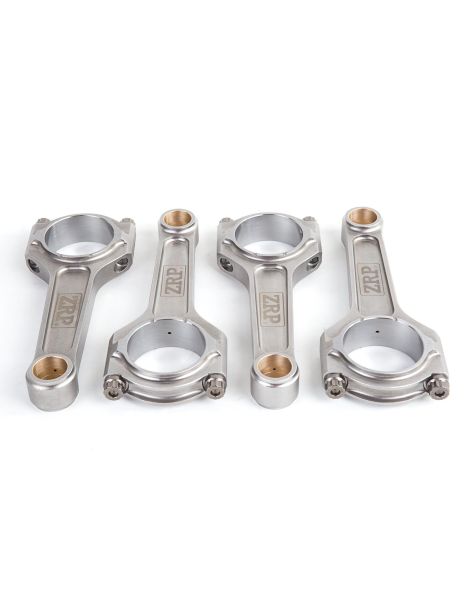
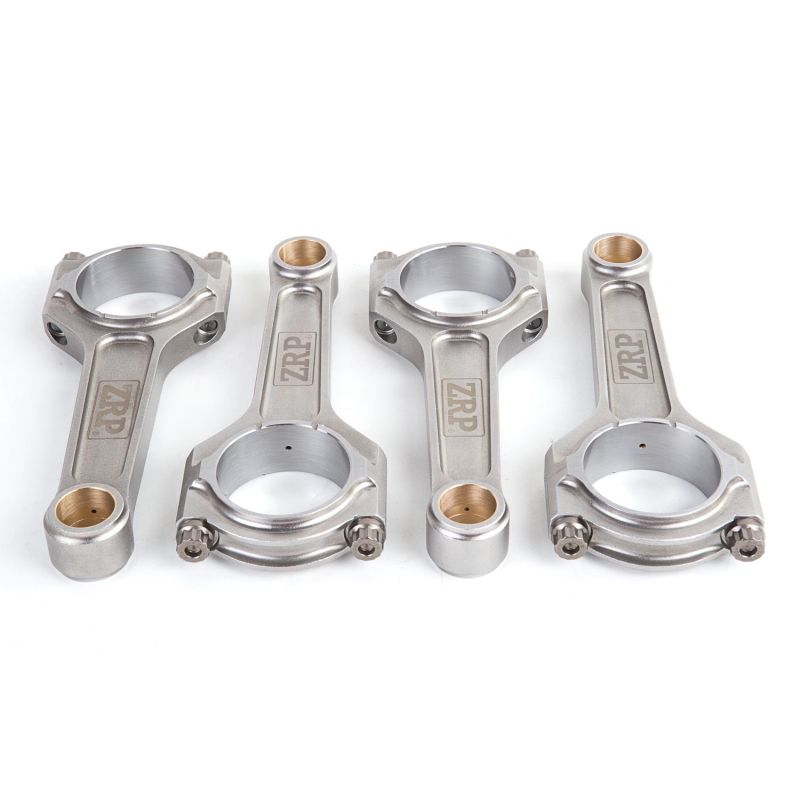
Set of 4 oil-fed forged rods in 4340 steel for the Audi Volkswagen 2.0 TFSI EA113 Gen.2.
Brand: ZRP
Profile: I-HD (rifle-drilled pin)
Compatibility: Audi, Volkswagen 2.0 TFSI
Engine codes: EA113 Gen.2
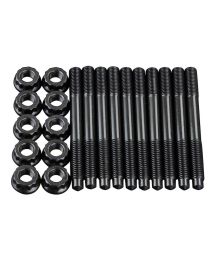
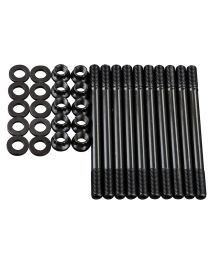
Bolts included: ARP 2000 or L19
The second-generation 2.0 TFSI EA113 is an inline four-cylinder 16-valve petrol engine with direct injection and turbocharging, whose timing is still belt-driven. With 1,984 cc (82.5 mm bore, 92.8 mm stroke) and production concentrated between 2006 and 2013, it is among the most widely used sporty engines of the Volkswagen group. It is found in the Audi A3 and S3 8P, TT and TTS 8J, the Volkswagen Golf V GTI, Golf VI R and Scirocco R, the SEAT Leon Cupra and even the KTM X-Bow, with outputs from 230 to 272 hp depending on the engine code (BHZ, BYD, BZC, CDLA, CDLB, CDLC, CDLF, CDLG, CDMA, CDZA, BWJ). This Gen.2 variant pairs a 21 mm piston pin with a 144 mm connecting-rod center-to-center.
Very tolerant to tuning, the EA113 readily takes large power gains. But as soon as boost, engine speed and torque rise sharply, the factory rod becomes the weak point of the rotating assembly and fails before the other parts. Switching to forged connecting rods therefore remains the essential step to make an EA113 reliable for good when you want to unlock its full potential.
This version is fitted with ZRP forged rods featuring enhanced oiling: the beam is drilled with an oil passage (the so-called « rifle-drilled » technique) that feeds oil to the small end and the piston pin. This forced lubrication lowers the temperature of the pin and its bushing, cuts friction and secures engines worked hard in endurance or at sustained high rpm. The material remains wrought 4340 steel, the benchmark for the most demanding builds, suited to circuit and track days, drift, rally, drag, time attack and hillclimb, from Stage 2 to high-power Stage 3 and right through to Stage 4 and beyond. Each set gathers 4 weight-matched I-HD-profile rods, faithful to the original 21 mm pin and 144 mm center-to-center.
Where the factory rod stays sized for very high-volume production cost, the 4340 forged rod releases a far greater mechanical margin: roughly +19% on yield strength, +8% on tensile strength and +19 to +37% on fatigue life. Combined with the enhanced oiling, this reserve lets the boosted EA113 absorb cylinder-pressure peaks and inertial loads without any crack initiation or pin overheating.
| Reference | Brand | Profile | Rod bolts | Pin bore (mm) | Small-end width (mm) | Big-end bore (mm) | Big-end width (mm) | Center-to-center (mm) | Weight (g) |
|---|---|---|---|---|---|---|---|---|---|
| R-AUD-006-IR | ZRP | I-HD | ARP 2000-3/8"-38mm | 21 | 50.6 | 24.9 | 144 | 507 | |
| R-AUD-006-IR-L19 | ZRP | I-HD | ARP L19-3/8"-38mm | 21 | 50.6 | 24.9 | 144 | 507 |
ZRP: Straight, non-tapered pin end; rifle-drilled rods.
A rod bolt never works alone: its tension decides the shape of the bore, and therefore the oil film thickness between shell and crank journal. Tightened below the range, it lets the cap separate intermittently; the shell is hammered, the journal gets marked, the torn-off particles travel through the circuit and failure can arrive through contamination even before clearance becomes excessive. Tightened above the range, the bolt passes its elastic limit and loses its preload, but above all the overload closes the bearing bore, makes the big end oval and locally strangles the oil film: temperature rises, the shell degrades on the loaded side and the journal ends up scored. For the ZRP rods offered here, the table below lists the fastener manufacturer's torque and stretch figures, which differ depending on whether the bolt is ARP 2000 or ARP L19, in 3/8". The stretch gauge remains the only reliable method for validating the preload obtained; assemble with ARP lubricant, the kit instructions taking priority.
| Reference | Brand | Rod bolts | Torque | Recommended stretch |
|---|---|---|---|---|
| R-AUD-006-IR | ZRP | ARP 2000-3/8"-38mm | 61 N·m | 0.140 to 0.152 mm |
| R-AUD-006-IR-L19 | ZRP | ARP L19-3/8"-38mm | 67.8 N·m | 0.152 to 0.165 mm |
4340 is a highly alloyed nickel-chromium-molybdenum steel prized for its outstanding balance of strength and toughness. Used in aerospace and motorsport alike, it is quenched and then tempered to refine its structure and reach high endurance. Compared with a high-volume sintered steel it gains about +19% yield strength, +8% tensile strength and +19 to +37% fatigue life: this very reserve is what tells apart a forged rod built for a highly tuned engine from a production one. |
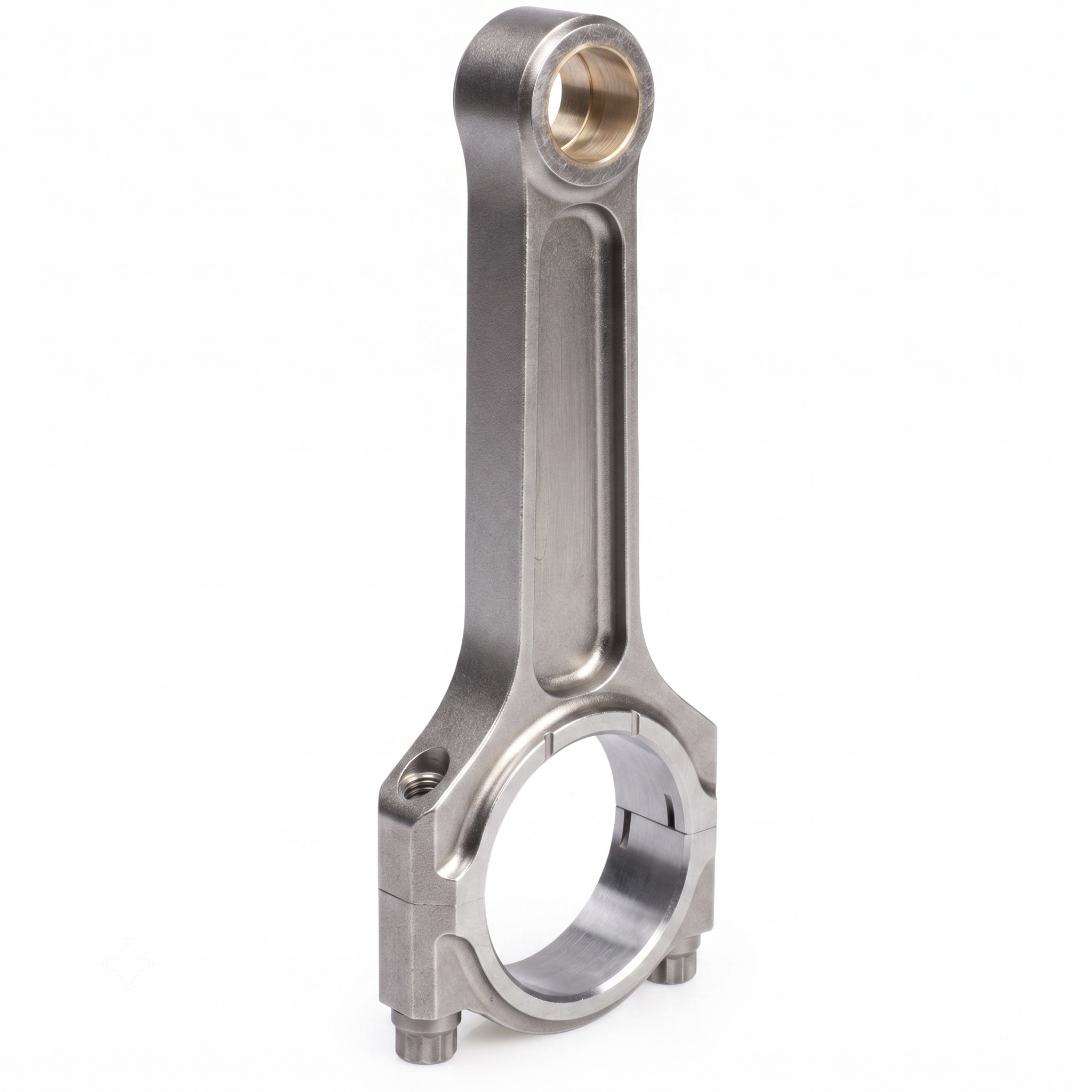 | I-HD profile. The ZRP I-beam section offers the best compromise between light weight and stiffness: by cutting reciprocating mass it limits inertial loads at high rpm. The I-HD (Heavy Duty) version thickens the beam to take more torque and boost, while the rifle-drilled oil passage feeds the small end and the piston pin. It is the geometry of choice for a hard-worked EA113 that spins high and is loaded for long stints. |
Everything about a rod bolt is decided in manufacturing: the alloy grade, the cleanliness of the steel, the quench and temper cycle, then the rolling of the threads once the part is heat treated, an operation that work-hardens the thread root and pushes the appearance of a fatigue crack far away. That process, more than the headline strength figure alone, explains the gap between the two grades offered here in 3/8"-38 mm on the ZRP I-HD rod of this EA113 Gen.2. Once the grade has been chosen according to target power and operating speed, preload must be set by measured stretch, the only check able to guarantee identical tension from one bolt to the next.
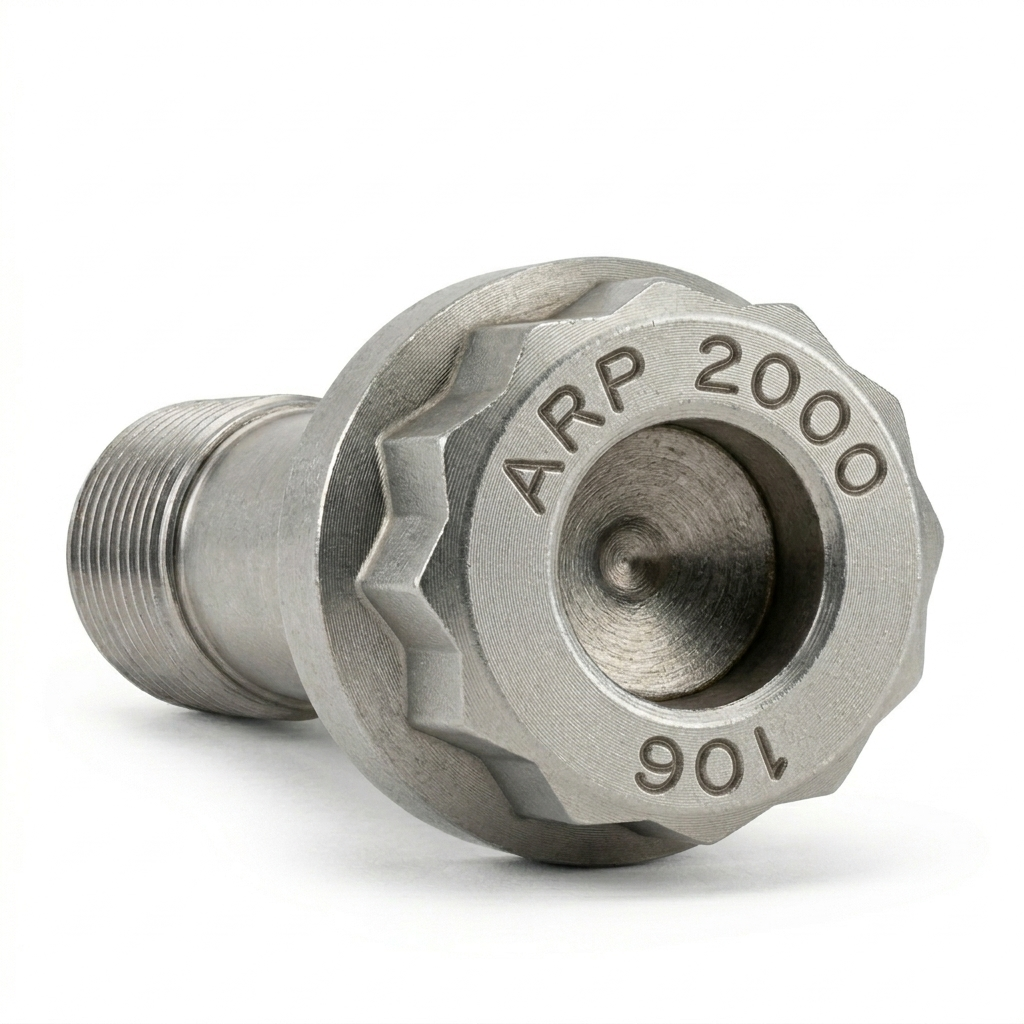 | ARP 2000 is based on a wrought, through-treated steel whose tensile strength reaches about 220,000 psi, i.e. ~1,517 MPa; threads rolled after heat treatment, remarkable cyclic fatigue life and good stability against ambient corrosion. The grade covers builds up to 200 hp per cylinder in 3/8" and up to 8,500 rpm: it is the most widespread choice in circuit racing, trackdays, drift, rally, drag and hillclimb. On the ZRP I-HD rod of this 2.0 TFSI it is fitted in 3/8"-38 mm, with no storage constraint at all. |
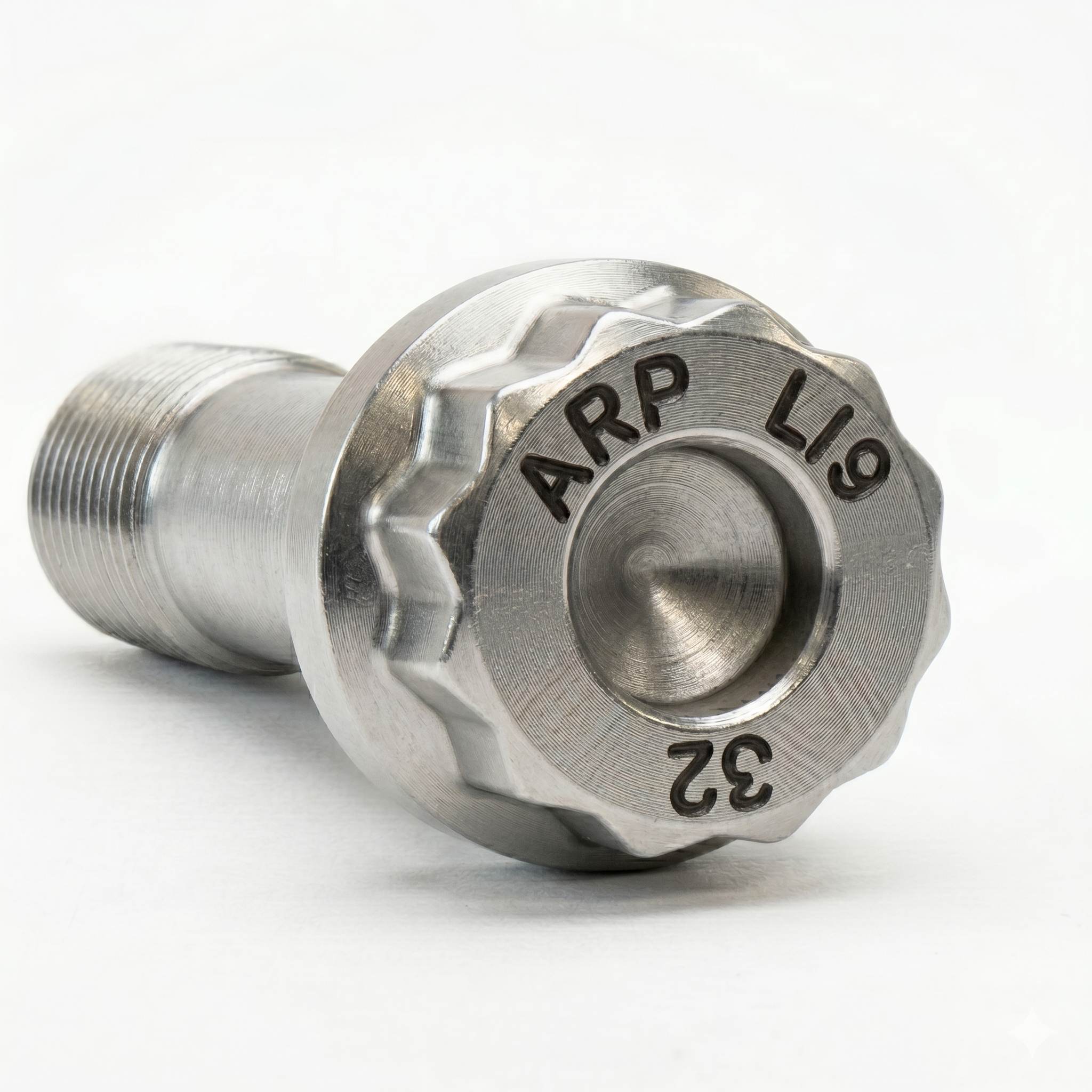 | L19 is the grade obtained with a richer alloy and a more finely controlled heat treatment: tensile strength reaches about 260,000 psi, i.e. ~1,793 MPa, for 250 hp per cylinder in 3/8" and up to 10,000 rpm. It takes very high boost pressure, sustained high engine speeds and high cylinder pressure, which makes it the big-power grade in drag, drift, rally and circuit, including on a heavily boosted EA113. Its metallurgical trade-off is well known: sensitive to corrosion and to hydrogen embrittlement, L19 must be stored and fitted oiled, away from moisture. |
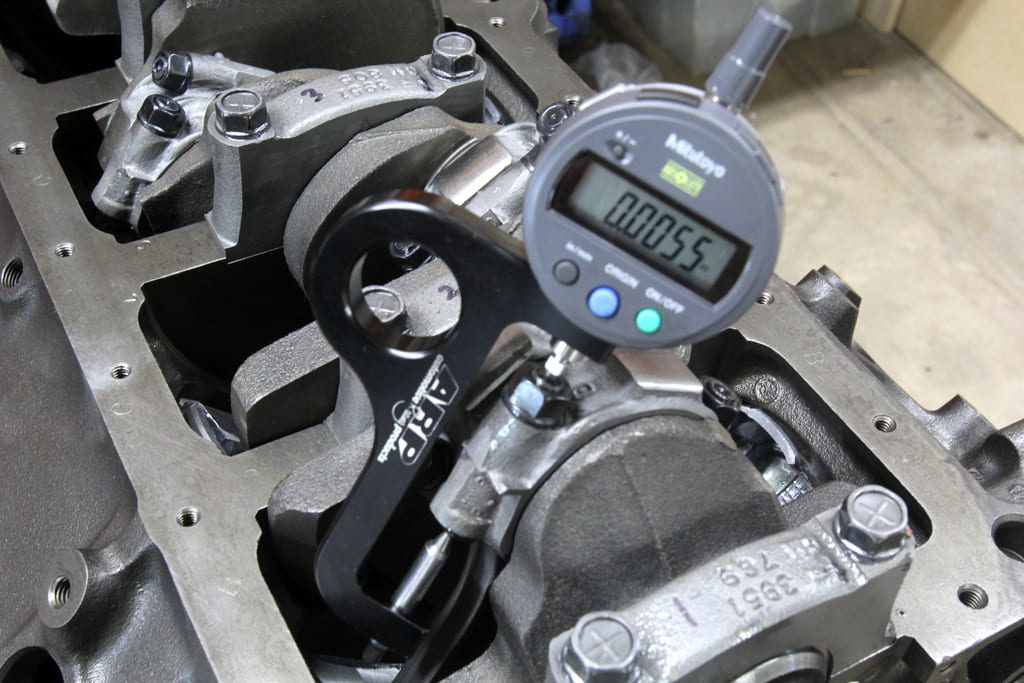
| Manufacturers recommend tightening to stretch rather than to torque: measuring the bolt's actual stretch with a dial gauge guarantees an even, reliable preload from one rod to the next, where a torque wrench depends on thread friction. Each bolt has a target stretch range to respect; you measure the free bolt, then the tightened bolt, and the difference must fall within the recommended window. |
 | ZRP. Designed by Alex Drakos in Athens (Greece), ZRP rods are machined from 4340 steel with high precision and delivered weight-matched to ±1 g. Offered here in the I-HD profile with enhanced oiling (drilled beam) and ARP 2000 or ARP L19 bolts, they stand out in circuit, drift, rally and drag as a robust solution. |
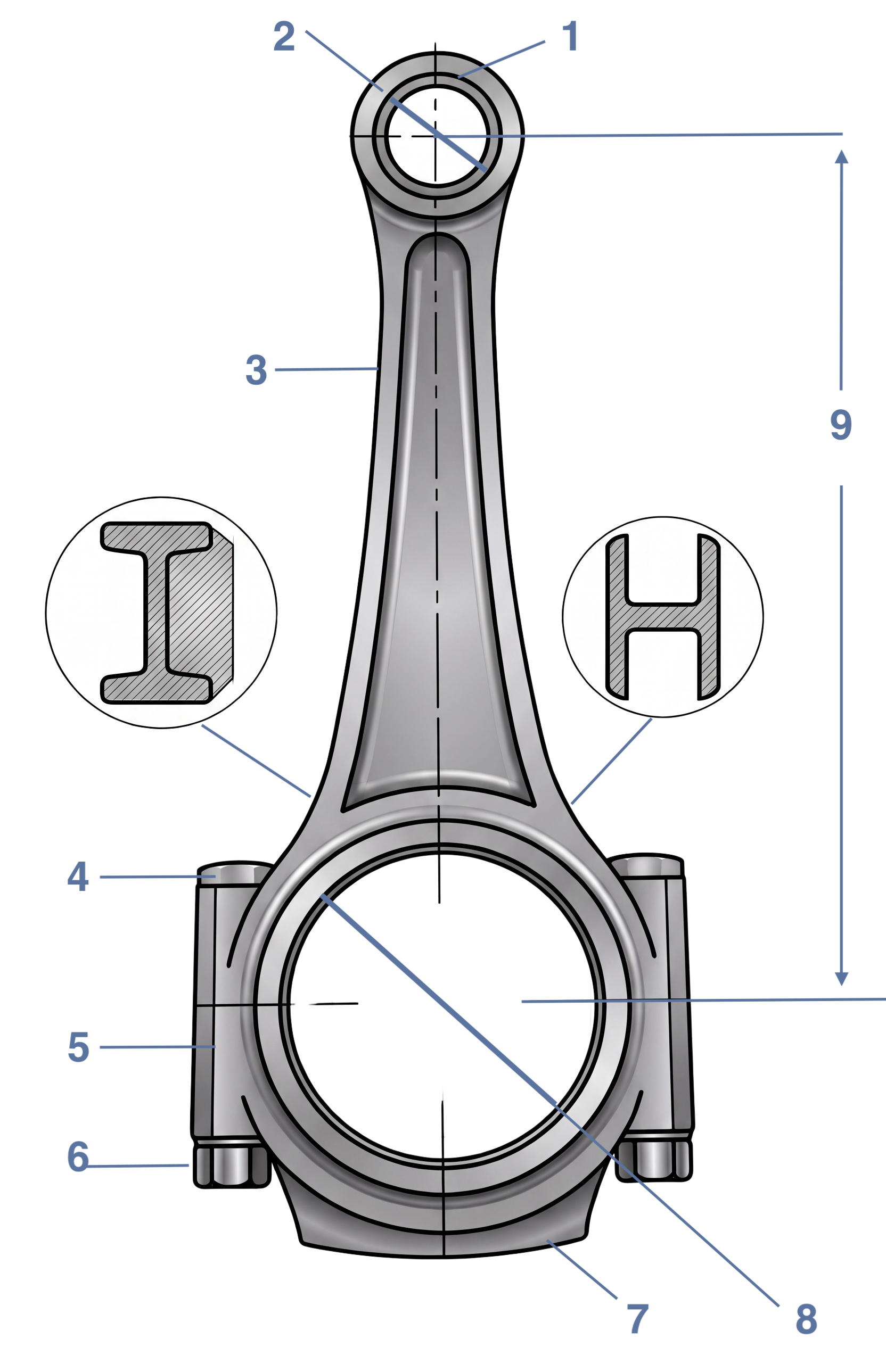 | 1) Small end 2) Small-end diameter 3) Rod beam 4) Rod bolt 5) Big end 6) Rod nut / bolt 7) Rod cap 8) Big-end diameter 9) Center-to-center |
This table gathers the vehicles powered by the Audi Volkswagen 2.0L 16V TFSI EA113 Gen.2. Measure the piston pin diameter and the rod length before ordering to rule out any fitting error. Variant concerned: 21 mm pin, oiling hole.
| Make | Model (chassis) | Engine code | Power | Years |
|---|---|---|---|---|
| Audi | A3 (8P1) S3 quattro | BHZ / CDLA | 265 hp | 2006–2012 |
| Audi | A3 (8P1) S3 quattro | BZC / CDLC | 256 hp | 2007–2012 |
| Audi | A3 Sportback (8PA) S3 quattro | BHZ / CDLA | 265 hp | 2008–2013 |
| Audi | A3 Sportback (8PA) S3 quattro | CDLC | 256 hp | 2008–2013 |
| Audi | TT (8J3) 2.0 TTS quattro | CDLA / CDMA | 265 hp | 2008–2014 |
| Audi | TT (8J3) 2.0 TTS quattro | CDLB | 272 hp | 2008–2014 |
| Audi | TT Roadster (8J9) 2.0 TTS quattro | CDLA / CDMA | 265 hp | 2008–2014 |
| Audi | TT Roadster (8J9) 2.0 TTS quattro | CDLB | 272 hp | 2008–2014 |
| Audi (FAW) | A4L B8 (828) 2.0 35 TFSI | CDZA | 180 hp | 2008–2016 |
| Audi (FAW) | A6L C7 (4X8, 4XL) 2.0 TFSI | CDZA | 180 hp | 2012–2016 |
| Audi (FAW) | Q5 B8 (83B) 35 TFSI quattro | CDZA | 180 hp | 2013–2015 |
| Volkswagen | Golf V (1K1) 2.0 GTI | BYD | 230 hp | 2006–2008 |
| Volkswagen | Golf VI (5K1) 2.0 R 4motion | CDLA / CDLC / CDLF | 256–270 hp | 2009–2013 |
| Volkswagen | Golf VI (5K1) 2.0 GTI | CDLG | 235 hp | 2011–2012 |
| Volkswagen | Golf VI Cabriolet (517) 2.0 R | CDLA | 265 hp | 2013–2016 |
| Volkswagen | Scirocco III (137, 138) 2.0 R | CDLA / CDLC | 256–265 hp | 2009–2017 |
| SEAT | Leon (1P1) 2.0 Cupra R | CDLA | 265 hp | 2009–2012 |
| SEAT | Leon (1P1) 2.0 TFSI | BWJ | 240 hp | 2006–2011 |
| KTM | X-Bow 2.0 (R / RR / GT4) | CDLA | 272–360 hp | 2010– |
Replacing the factory rods with forged rods during a build remains the most cost-effective spend: it is only a fraction of the price of a new engine or of a full rebuild after a failure. On a heavily worked EA113, the oil-fed forged rod averts the failure that would take out block, crankshaft and cylinder head. It is a lasting mechanical insurance to unlock the engine's potential with peace of mind.