Product successfully added to your shopping cart
Quantity
Total
There are 0 items in your cart. There is 1 item in your cart.
Total products
Total shipping To be determined
Total

2.0L 16v - Duratec-RS215
Manufacturers
2.0L 16v - Duratec-RS215
Warning: Last items in stock!
New product
Set of 4 forged connecting rods in 4340 steel for the Ford Focus RS Mk1 2.0 16V Turbo (HMDA), 22 mm piston pin.
The HMDA is the 2.0 L (1,988 cc) inline four-cylinder that brought the Focus into the RS family in 2002. With twin overhead cams and sixteen valves, force-fed by a Garrett turbocharger, it delivers 215 hp (158 kW) and pairs with a Quaife limited-slip differential to put its power down through the front axle. Built in limited numbers from late 2002 to late 2004, the first-generation Focus RS (DAW / DBW chassis) remains one of the most sought-after sporting front-drivers of its decade. As soon as boost and rpm are raised to chase more torque, the factory rod, designed for high-volume production, becomes the weak link of the rotating assembly. Replacing it with a set of weight-matched forged rods is the first safeguard of an HMDA that takes a build for the long term.
Drop-forged and carefully machined, these rods withstand bending, compression and fatigue loads far beyond what the factory Focus RS rod tolerates. They suit every discipline: circuit, time attack, drift, drag, rally and hillclimb. Depending on the build level, they support a reliability-focused Stage 1 as well as a Stage 2 or a Stage 3 pushed on boost. Supplied as a complete set of 4, weight-matched, they preserve the balance of the four-cylinder rotating assembly. They adopt the HMDA's 22 mm piston pin, for a 137 mm center-to-center length.
| Reference | Brand | Profile | Bolts | Pin Ø (mm) | Small-end width (mm) | Big-end Ø (mm) | Big-end width (mm) | Center-to-center (mm) | Weight (g) |
|---|---|---|---|---|---|---|---|---|---|
| KCR085A | Wössner | I | ARP 2000-3/8"-38mm | 22 | 24,25 | 50 | 24,25 | 137 | 615 |
Bearing clearance is checked with the cap tightened to its final figure: approximate tightening therefore makes every later measurement wrong, besides damaging the bearing itself. If the bolt stays below the range, the bore is not closed as intended, the clearance read is too large, and once running the missing preload lets the cap lift; the shell is hammered, crushed intermittently and the real clearance drifts further. If the bolt goes above the range, the bore is closed too far, the measured clearance looks correct while the big end is already oval and the shell pinched; the bolt itself has lost its elastic reserve and its preload falls as soon as the engine warms up. For the Wössner rod of this Focus RS and its 3/8" ARP 2000 fasteners, the torque and stretch figures in the table below are those of the fastener manufacturer and are not substitutes for one another. Stretch measurement with a dial gauge remains the reference method; ARP assembly lubricant and kit instructions take priority.
| Rod | Bolts | Tightening torque | Recommended stretch (mm) |
|---|---|---|---|
| Wössner I (KCR085A) | ARP 2000 | 74,6 N·m | 0,140 – 0,152 |
These rods are forged from 4340, a low-alloy nickel-chromium-molybdenum steel that serves as the benchmark for the high-performance rod. Die-forging, followed by quenching and tempering, keeps a continuous grain flow behind its high tensile strength and outstanding fatigue endurance, two decisive qualities on a boosted, heavily stressed HMDA. Against a factory fracture-split rod optimised above all for manufacturing cost, a forged 4340 rod gains roughly +19% yield strength, +8% tensile strength and +19 to +37% fatigue endurance. It is this mechanical reserve that absorbs the torque and boost increases of a prepared engine without breaking.
The range is offered in the I profile, by Wössner. The I-beam offers an excellent balance between stiffness and mass, particularly relevant on a 2.0 L turbo where a light rotating assembly matters as much as bending resistance. Wössner offers it in its A-Beam form, an optimised I-beam, to combine lightness and strength. The specification table gives the center-to-center length, big-end diameter, big-end width and weight of the reference.
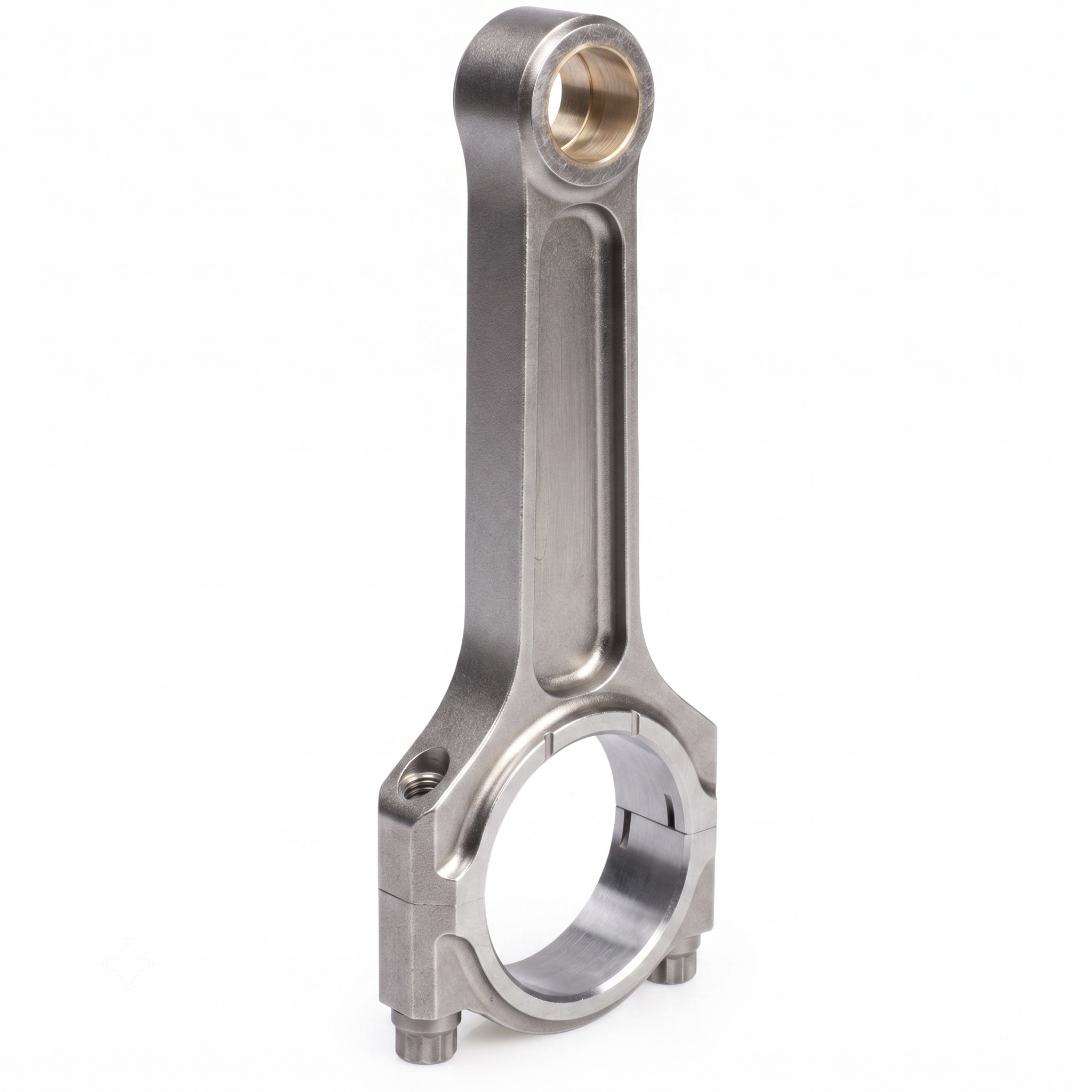 | I-beam profile: the I-section body strikes the best balance between bending stiffness and reciprocating mass, which makes it the natural choice on a 2.0-litre four-cylinder turbo engine built to rev. Wössner machines it as its A-Beam variant, an optimised I-beam whose web thickness and fillet radii are reworked to spread the loads without adding weight to the rotating assembly: inertia stays low, pick-up stays sharp and fatigue life is far above that of the stock rod. |
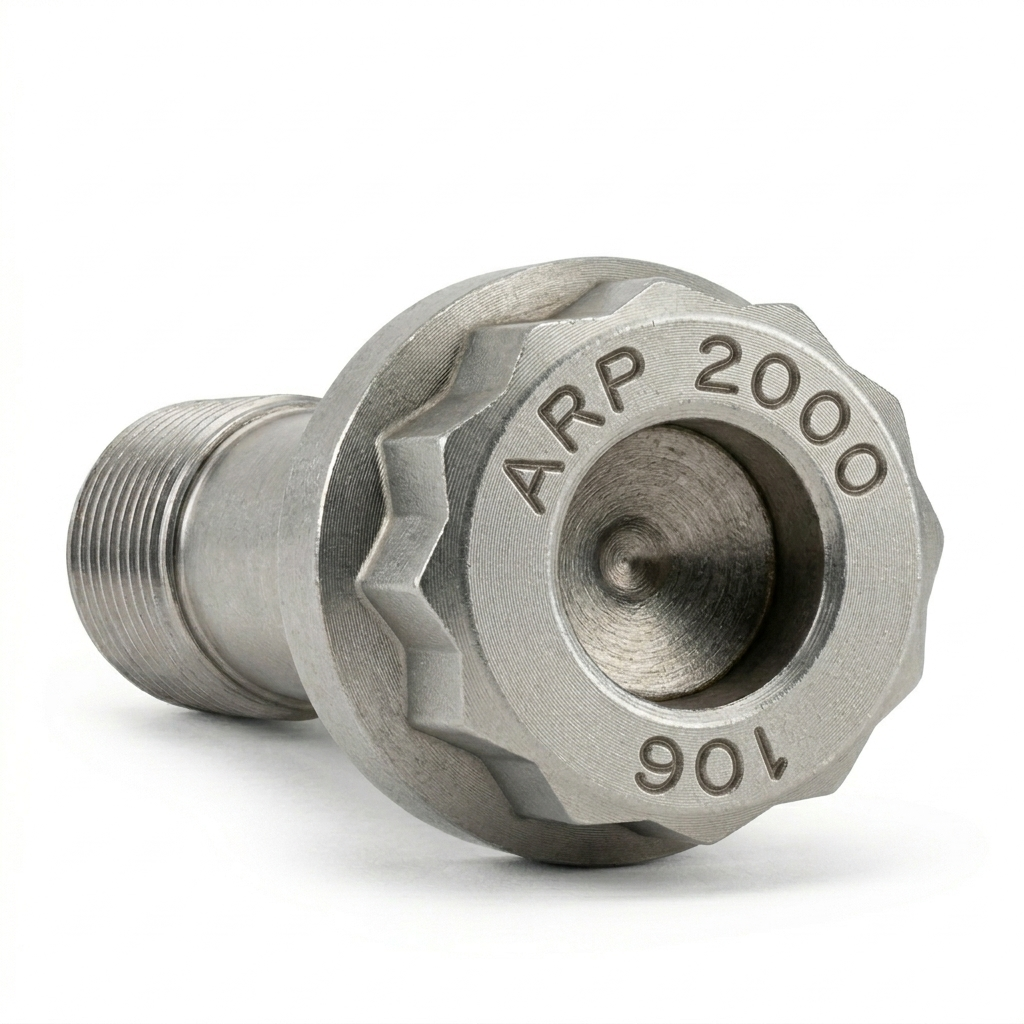 | ARP 2000: the all-round benchmark alloy, with a tensile strength of about 220,000 psi (1,517 MPa). Offered here in 3/8" diameter, it handles the most demanding HMDA builds, up to about 200 hp per cylinder, at speeds reaching 8,500 rpm. Sturdy, reliable and with no storage constraints, it is the reference bolt to make a prepared Focus RS reliable, from Stage 1 to Stage 3. |
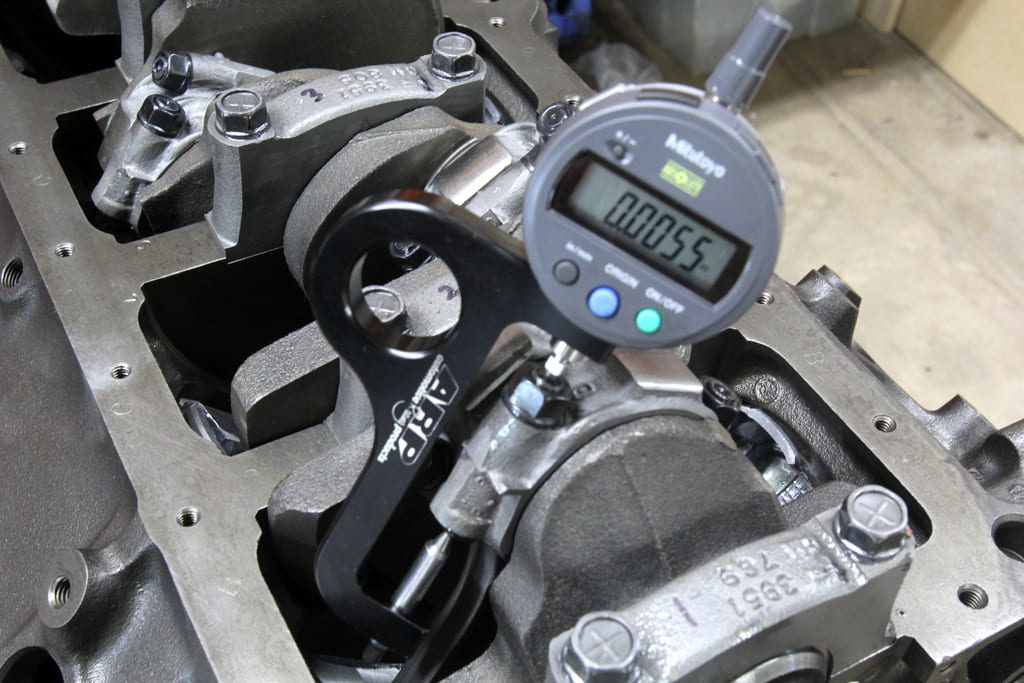
Discover the ARP stretch gauge
 | Wössner is a German forging specialist for engine building, whose pistons and connecting rods are found in karting, motorcycle and competition car engines alike. The KCR085A rod is hot-forged then machined from 4340 steel in the in-house A-Beam profile, an optimised I-beam, with ground and gauged small and big ends. Every set of four is weight-matched to preserve the balance of the HMDA and ships with its dedicated ARP 2000 3/8" 38 mm bolts. |
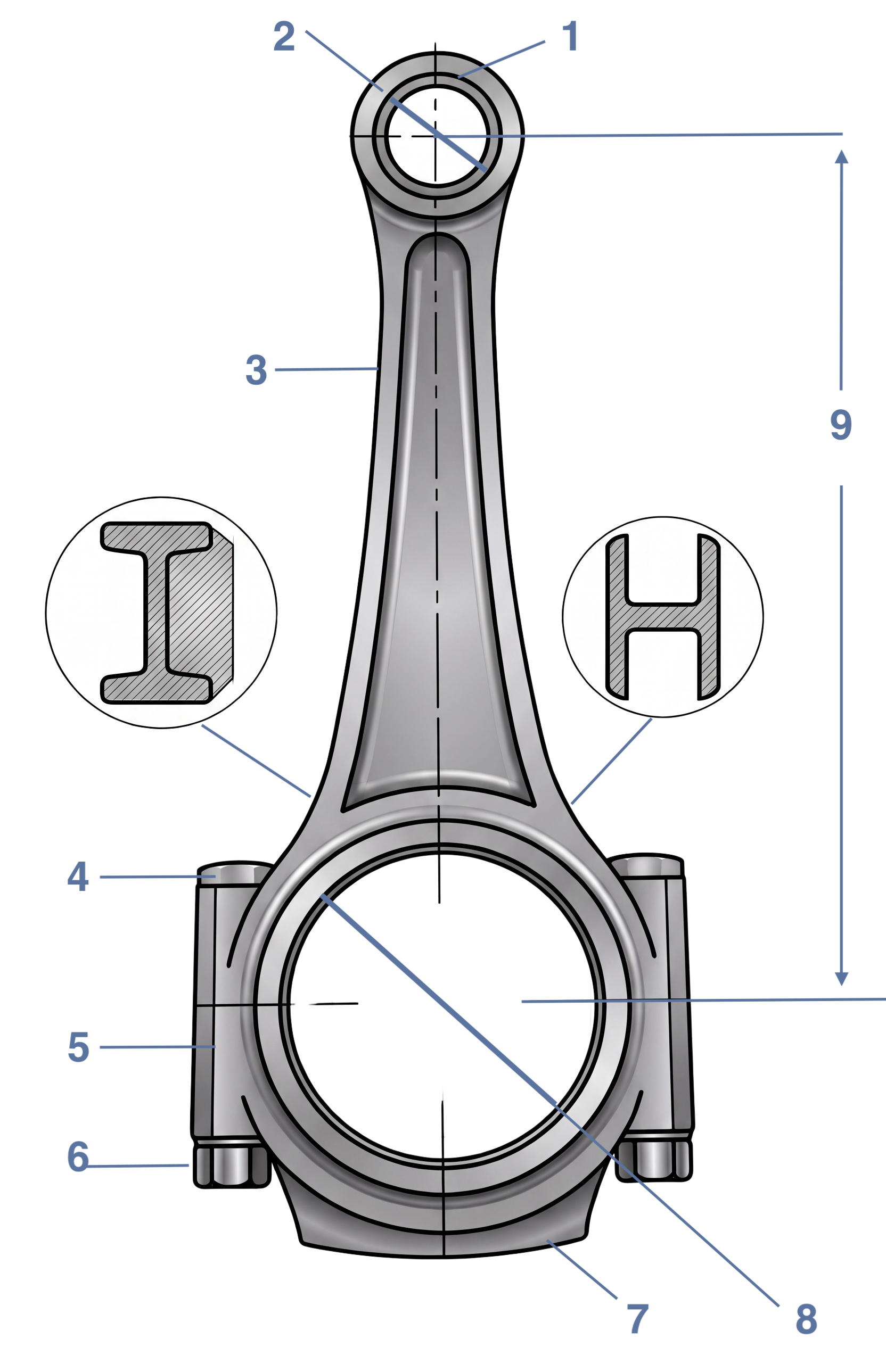 | 1) Small end 2) Small-end diameter 3) Rod beam 4) Rod bolt 5) Big end 6) Rod nut / bolt 7) Rod cap 8) Big-end diameter 9) Center-to-center |
These forged rods fit the first-generation Ford Focus RS powered by the 2.0 L 16-valve turbo (HMDA code):
| Brand | Model (chassis) | Engine code | Power | Years |
|---|---|---|---|---|
| Ford | Focus I RS (DAW / DBW) | HMDA | 158 kW (215 ch) | 2002–2004 |
On a tuned HMDA the stock rod is the first component to let go, and a failure under high boost never stays confined to the guilty part: it scores the crankshaft, damages the bores and usually writes off the whole block.
Rebuilding with factory parts after a failure means buying rods, pistons and often a crankshaft again, only to end up with exactly the limits that caused the breakage. For a comparable invoice, a set of forged 4340 rods combined with forged pistons brings an incomparable safety margin and keeps the door open to a later power increase.
For the same budget: a more reliable, longer-lived HMDA, ready for the next stage of tuning.