- On order
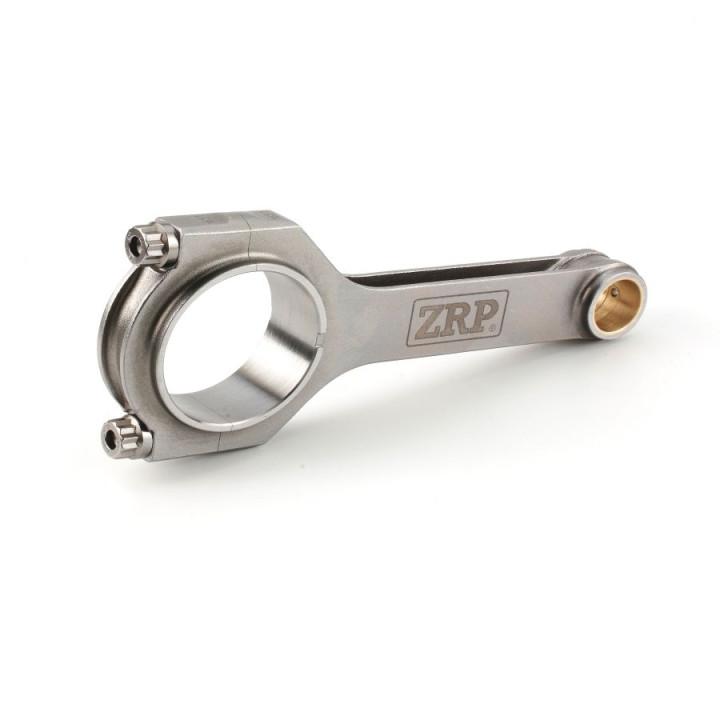

Forged connecting rods Audi Volkswagen - 1.8L 20V Turbo & 2.0L 16V FSI / TFSI - EA113 20 mm pin for forged pistons
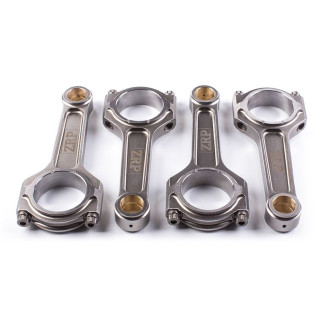
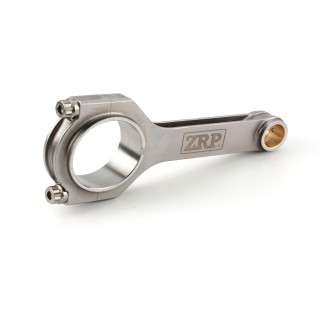
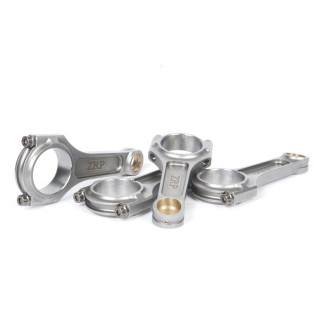
Set of 4 forged connecting rods in 4340 steel for the Audi VW 1.8L 20V Turbo and 2.0L FSI / TFSI EA113.
- Brands: ZRP, Wössner, Manley, Boostline
- Compatibility: A3 8L, S3, TT 8N, Golf 5 GTI
- Engine codes: EA113, 20 mm pin
- Bolts included: ARP 2000, L19 or CA625+
The 1.8T 20V and 2.0 FSI / TFSI EA113 engines
The 1.8T 20V and the 2.0 FSI / TFSI both belong to the EA113 family, itself an evolution of the EA827. The 1.8T 20V is a turbocharged inline-four petrol engine with five valves per cylinder (20 valves in total) and a displacement of 1,781 cm³ (81 mm bore, 86.4 mm stroke). Introduced in 1995 on the Audi A4 B5, it powered an exceptionally broad range of Audi, Volkswagen, SEAT and Škoda models for more than a decade, in longitudinal installations (A4, A6, Passat) as well as transverse ones (Golf IV, Bora, A3 8L, TT, Leon, Octavia). Offered from 150 to 225 hp depending on turbocharger (K03, K04) and mapping, it remains one of the most sought-after tuning platforms on the continent.
The 2.0 FSI / TFSI EA113, built from 2004 to 2010, extends the same family with displacement raised to 1,984 cm³ (82.5 mm bore, 92.8 mm stroke) and direct petrol injection. It shares with the 1.8T 20V the 144 mm rod center-to-center and the 20 mm piston pin diameter: this common set of dimensions, confirmed by our factory specification file, is what allows one and the same forged rod to serve both engines. Tuners list these 144 × 20 mm rods precisely as fitting the 1.8T 20V and the 2.0T FSI EA113. Be careful, however, with the 2.0 TFSI EA113 Gen.2, whose piston pin measures 21 mm: it is not covered by this listing and is catalogued under a separate reference.
That popularity among tuners comes with a downside: as soon as boost pressure and torque climb, the factory rods become the weak link of the bottom end. Fitting forged rods is therefore the decisive step in turning a 1.8T 20V or a 2.0 FSI / TFSI EA113 into a durable high-power block. The version shown here keeps the factory 144 mm center-to-center and the 20 mm piston pin; it is available in several profiles and from several brands, so that every power target is covered without needlessly oversizing the assembly.
The forged connecting rods
Our forged rods for the EA113 engines with a 20 mm pin (1.8T 20V and 2.0 FSI / TFSI) are machined from wrought 4340 steel, the motorsport benchmark. The range spans several profiles (I, reinforced I-HD, I-3P and H) and four manufacturers, to suit every discipline: circuit, drift, rally, drag, time attack and hillclimb. Depending on the target (Stage 2, Stage 3 high power, Stage 4 and beyond), they lock in the torque and rpm increase without ever cutting corners on reliability. Each reference ships as a weight-matched set of 4, with its dedicated ARP bolts.
Against a factory rod sized above all for production cost, a forged 4340 rod offers a far greater mechanical reserve: around +19% yield strength, +8% tensile strength and +19 to +37% fatigue endurance. That margin lets the 1.8T 20V absorb cylinder-pressure peaks and inertia loads without breakage, whether the build stays a strong fast-road setup or moves to a track configuration.
Technical specifications of the EA113 1.8T 20V and 2.0 FSI / TFSI forged rods (20 mm pin, 144 mm center-to-center)
| Reference | Brand | Profile | Rod bolts | Pin bore (mm) | Small-end width (mm) | Big-end bore (mm) | Big-end width (mm) | Center-to-center (mm) | Weight (g) |
|---|---|---|---|---|---|---|---|---|---|
| VW5669-787 | Boostline | I-3P | ARP 2000-3/8"-38mm | 20 | 24,94 | 50,61 | 24,94 | 144 | 636 |
| VW5669-787+ | Boostline | I-3P | ARP CA 625+-3/8"-38mm | 20 | 24,94 | 50,61 | 24,94 | 144 | 636 |
| 14007-4 | Manley | H | ARP 2000-3/8"-38mm | 20 | 50,6 | 24,89 | 144 | 580 | |
| KCR018A | Wössner | I | ARP 2000-3/8"-38mm | 20 | 25 | 50,6 | 24,92 | 144 | 622,45 |
| R-AUD-001-H | ZRP | H | ARP 2000-3/8"-38mm | 20 | 50,6 | 24,89 | 144 | 447 | |
| R-AUD-001-H-L19 | ZRP | H | ARP L19-3/8"-38mm | 20 | 50,6 | 24,89 | 144 | 447 | |
| R-AUD-001-I | ZRP | I-HD | ARP 2000-3/8"-38mm | 20 | 50,6 | 24,89 | 144 | 515 | |
| R-AUD-001-I-L19 | ZRP | I-HD | ARP L19-3/8"-38mm | 20 | 50,6 | 24,89 | 144 | 515 | |
| R-AUD-003-I | ZRP | I | ARP 2000-3/8"-38mm | 20 | 50,6 | 24,89 | 144 | 529 | |
| R-AUD-003-I-L19 | ZRP | I | ARP L19-3/8"-38mm | 20 | 50,6 | 24,89 | 144 | 529 |
R-AUD-001-H, R-AUD-001-H-L19: Straight, non-tapered pin end.
R-AUD-001-I, R-AUD-001-I-L19: Straight, non-tapered pin end.
R-AUD-003-I, R-AUD-003-I-L19: Tapered pin end.
Tightening torque and stretch
The torque and stretch relate to the ARP bolts supplied with each kit; refer to the technical sheet provided. Checking with a stretch gauge remains the most reliable and repeatable method to guarantee preload.
| Reference | Brand | Rod bolts | Torque | Recommended stretch |
|---|---|---|---|---|
| VW5669-787 | Boostline | ARP 2000-3/8"-38mm | 75 N·m | 0.130 to 0.140 mm |
| VW5669-787+ | Boostline | ARP CA 625+-3/8"-38mm | 115 N·m | 0.170 to 0.180 mm |
| 14007-4 | Manley | ARP 2000-3/8"-38mm | 81.3 N·m | 0.147 to 0.157 mm |
| KCR018A | Wössner | ARP 2000-3/8"-38mm | 74.6 N·m | 0.1397 to 0.1524 mm |
| R-AUD-001-H | ZRP | ARP 2000-3/8"-38mm | 61 N·m | 0.140 to 0.152 mm |
| R-AUD-001-H-L19 | ZRP | ARP L19-3/8"-38mm | 67.8 N·m | 0.152 to 0.165 mm |
| R-AUD-001-I | ZRP | ARP 2000-3/8"-38mm | 61 N·m | 0.140 to 0.152 mm |
| R-AUD-001-I-L19 | ZRP | ARP L19-3/8"-38mm | 67.8 N·m | 0.152 to 0.165 mm |
| R-AUD-003-I | ZRP | ARP 2000-3/8"-38mm | 61 N·m | 0.140 to 0.152 mm |
| R-AUD-003-I-L19 | ZRP | ARP L19-3/8"-38mm | 67.8 N·m | 0.152 to 0.165 mm |
Technical guide
Forged 4340 steel: what is it?
| 4340 is a low-alloy steel with nickel, chromium and molybdenum. Forging aligns the metal fibres in the direction of load, closes internal porosity and delivers far greater strength than a factory cast or sintered rod. The result is a tensile strength of around 930 to 1,080 MPa together with high fatigue endurance, essential as soon as the engine gains torque, power or revs. This is the material used across our entire EA113 20 mm pin range. |
The rod profiles offered
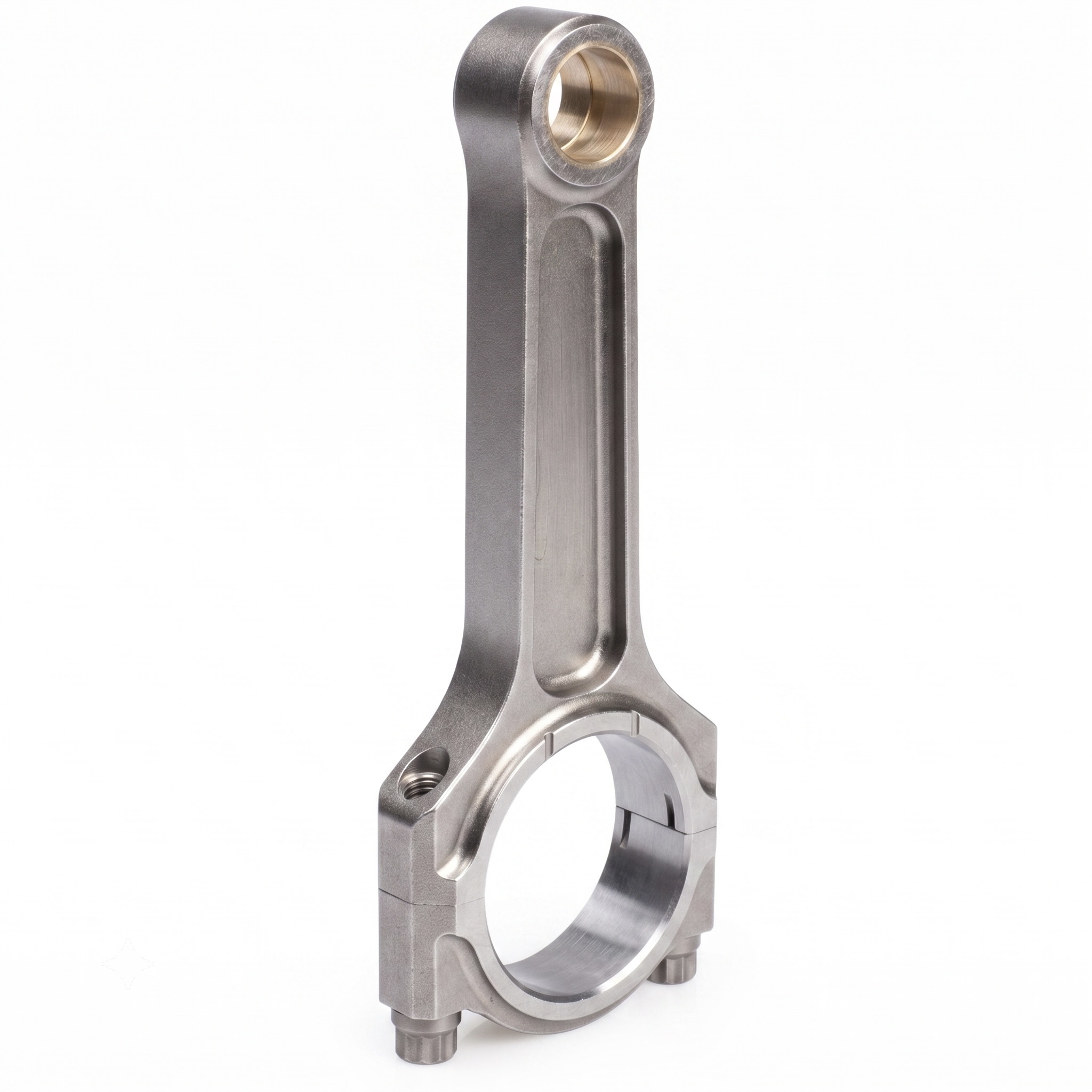 |
I profile. A slim central web held between two flanges that trace the letter “I” gives the rod high stiffness without adding weight; ZRP offers it here, as does Wössner with its A-Beam. On turbocharged engines such as the 1.8T 20V it is the most widely chosen profile, as suited to making the bottom end reliable as to following a rise in boost pressure. Its I-HD (Heavy Duty) variant, with a reinforced, thicker beam, targets extreme loads, with turbo, supercharger or nitrous oxide. |
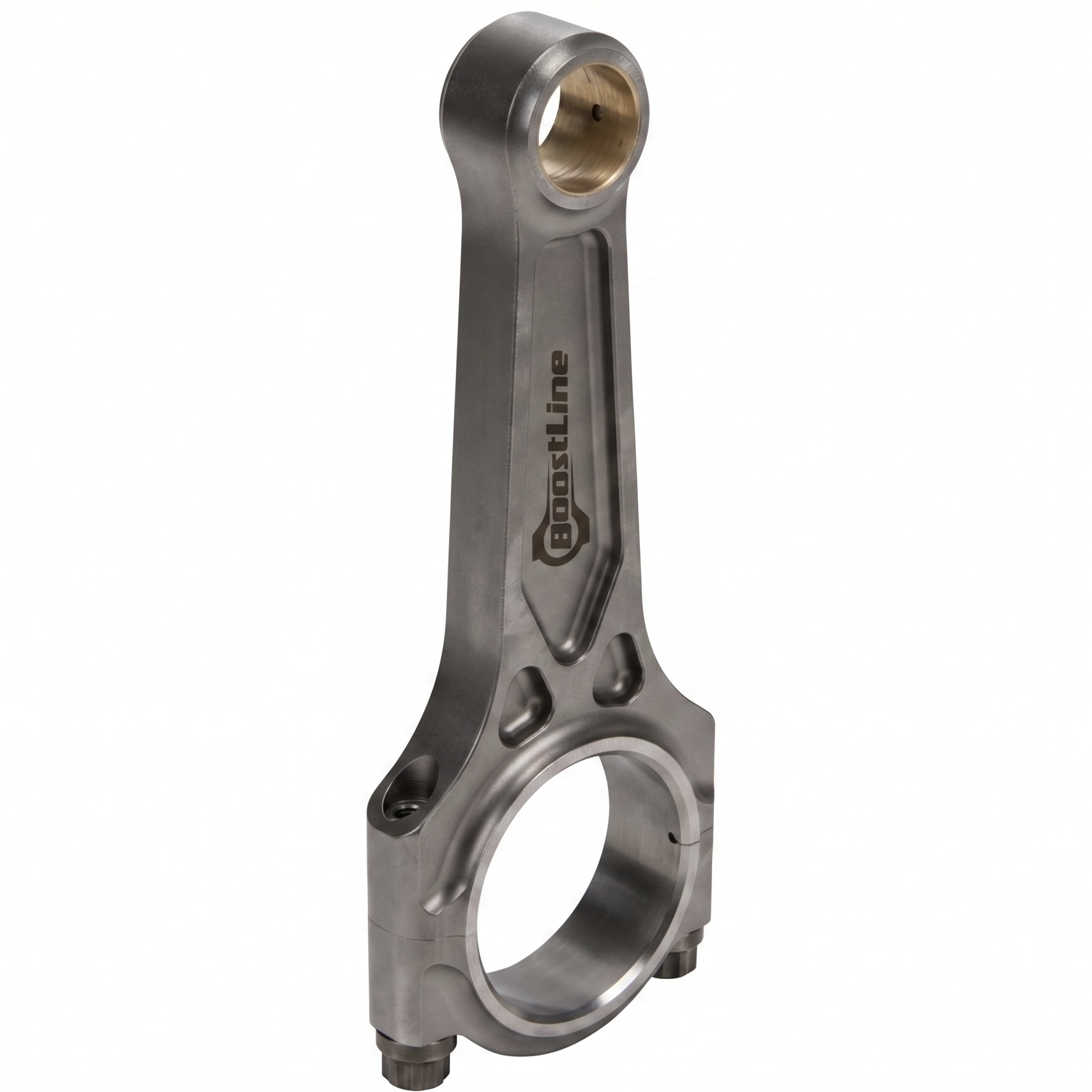 |
I-3P profile (Boostline). Patented by Boostline, this three-pocket profile combines the qualities of H and I sections to deliver maximum strength with reduced rotating mass. The manufacturer reserves it for forced-induction engines, including high boost pressure, whether turbocharged, supercharged or running nitrous oxide. |
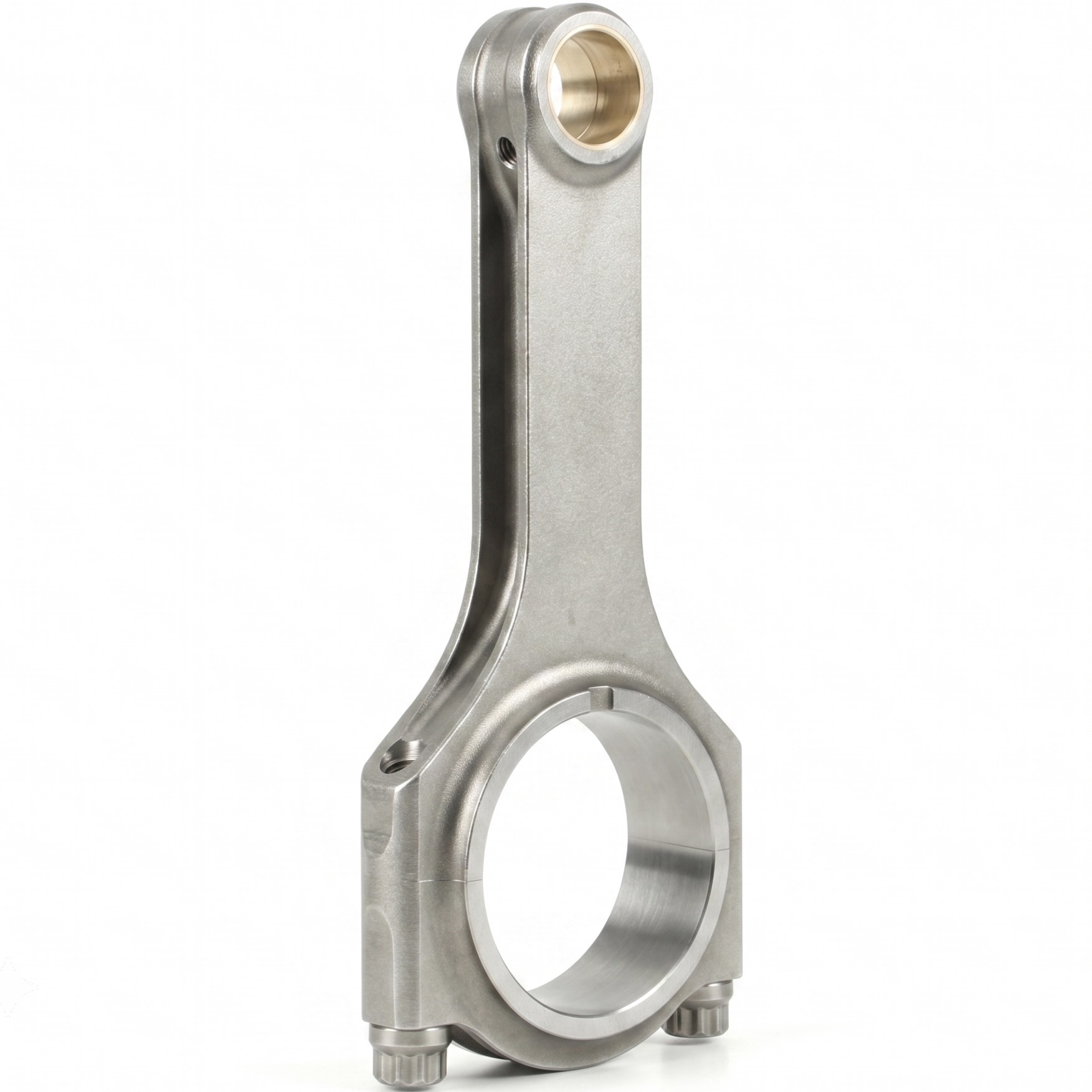 |
H profile. Two wide flat sides joined by a central web form its H-shaped section and give it a massive outline, even from end to end; ZRP and Manley (H-Beam) offer it here. On a turbocharged engine such as the 1.8T 20V, this robust and versatile profile suits typical builds, from fitting forged pistons to make the bottom end reliable up to a measured increase in boost pressure. |
How to choose your rod bolts? 
The bolts are an integral part of the rod: they hold the cap preload under alternating loads. All our EA113 20 mm pin references are offered in 3/8"; depending on the manufacturer and build level, three ARP grades are available.
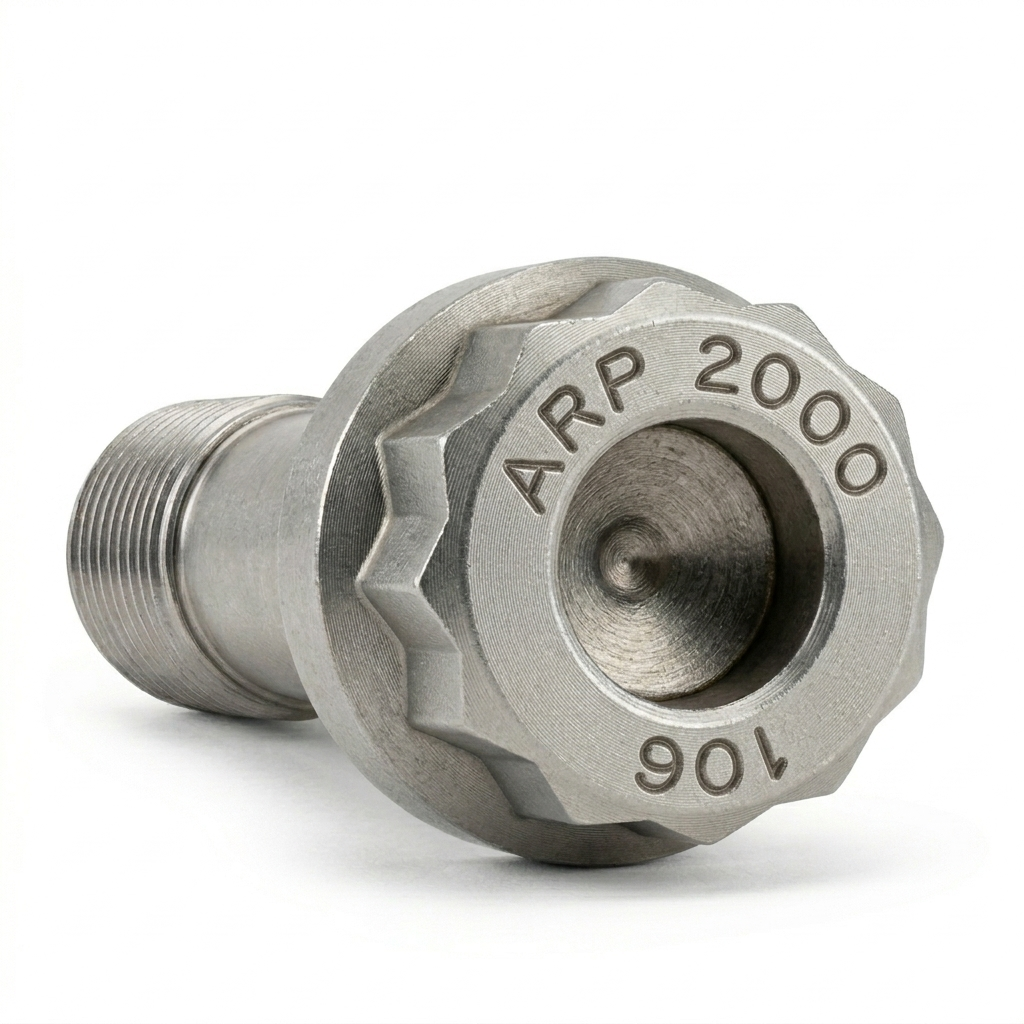 |
ARP 2000 (tensile strength ~220,000 psi, i.e. ~1,517 MPa) is the grade shared by every rod on this page: Boostline, Manley, Wössner and ZRP all offer it in 3/8"-38 mm on these EA113 engines with a 20 mm pin and 144 mm centre-to-centre. It is rated up to 200 hp per cylinder in 3/8" and up to 8,500 rpm, which covers most uses in circuit racing, trackdays, drift, rally, drag and hillclimb. What makes it last is the method: clean threads and seats, assembly lubricant, progressive tightening and preload brought up to the stretch measured with a dial gauge, then a free-length check at the next strip-down. No particular storage constraint, and bolts that can be reused as long as their free length has not changed. |
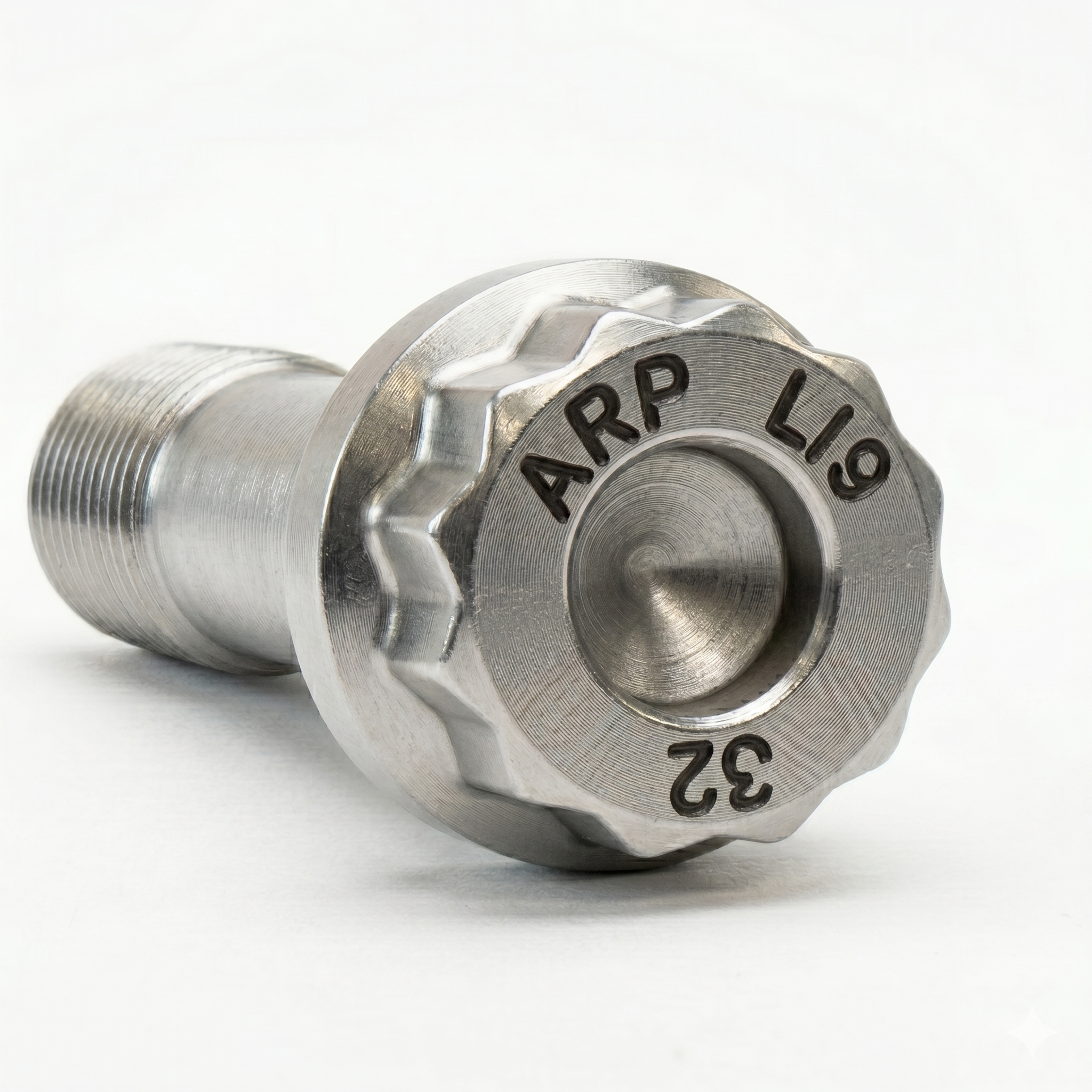 |
ARP L19: a very high strength steel (about 260,000 psi / 1,793 MPa), reserved for extreme builds developing the highest torque and rpm. More sensitive to corrosion, it demands extra care on assembly and protected storage. It targets serious turbo builds, up to nearly 250 hp per cylinder and rpm up to 10,000. |
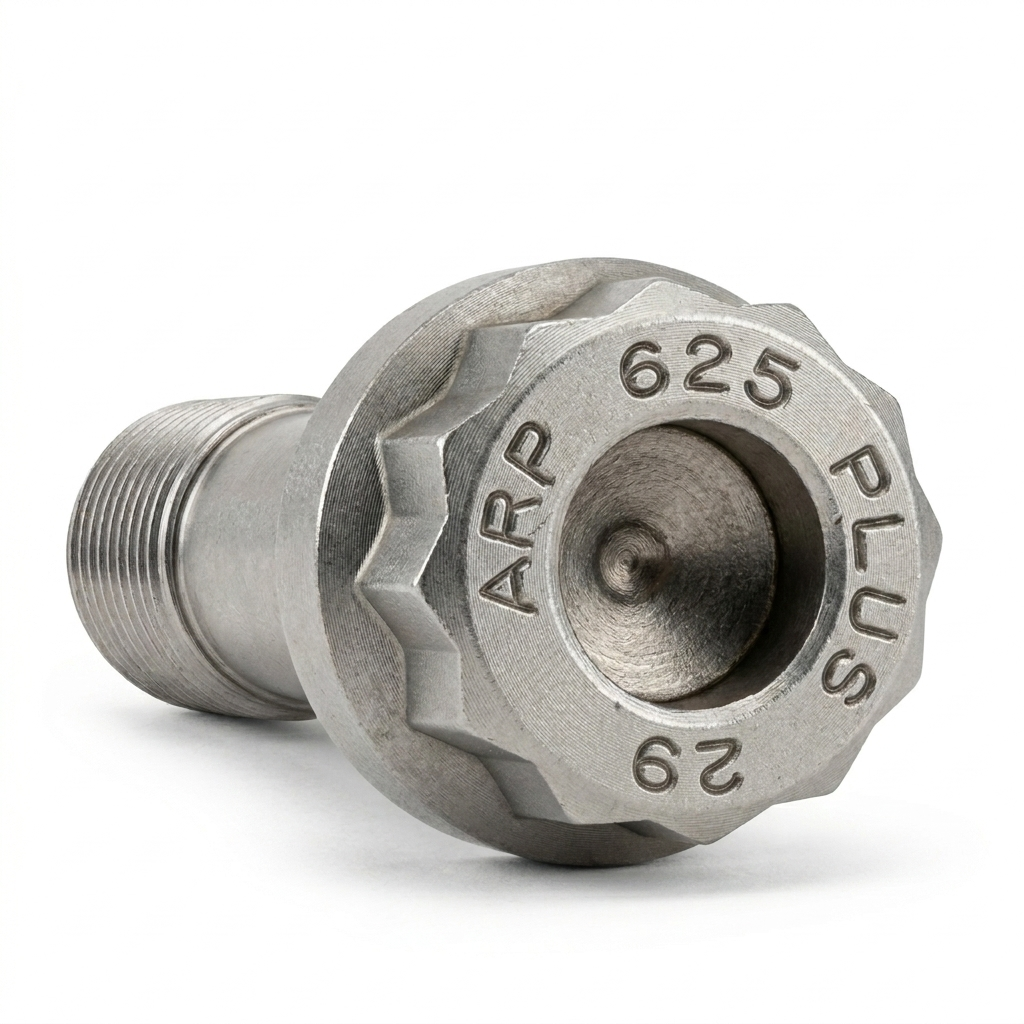 |
ARP CA 625+: a premium stainless steel (about 260,000 to 280,000 psi) at the L19 strength level but immune to corrosion and hydrogen embrittlement. It equips the top Boostline version and targets competition engines seeking the ultimate preload margin. |
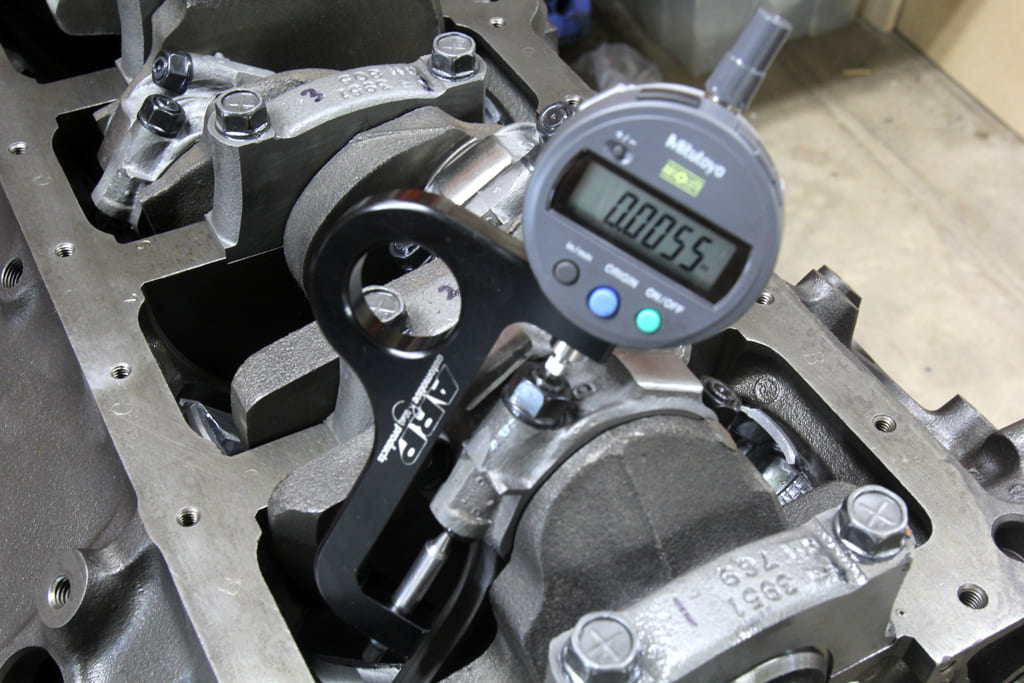
Measuring bolt stretch
| The most reliable way to guarantee preload is not to aim for a torque figure but to measure bolt stretch with a dial gauge. Tighten progressively until the manufacturer’s recommended stretch is reached, typically around 0.140 to 0.152 mm for ARP 2000 and 0.152 to 0.165 mm for ARP L19, ensuring an even, repeatable clamp load, cylinder after cylinder. Always refer to the exact figure given for each reference. |
The brands offered
 |
Boostline develops a three-pocket I-3P profile designed for VAG blocks; on these EA113 engines the VW5669-787 reference is offered with ARP 2000 or ARP CA 625+ bolts for the most demanding builds. |
 |
Manley Performance, a renowned US manufacturer, offers an H-profile rod (ref. 14007-4) renowned for its robustness, supplied with ARP 2000 bolts in 3/8". |
 |
Wössner is a respected European manufacturer of forged pistons and rods. Its I-profile rod for these EA113 engines (ref. KCR018A) ships with ARP 2000 bolts in 3/8" and targets high-rpm builds. |
 |
ZRP (the Greek brand by Alex Drakos, in Athens) machines competition forged rods in 4340 steel, weight-matched to ±1 g. On these EA113 engines it covers the H, I and I-HD profiles, with ARP 2000 or ARP L19 bolts. |
Glossary
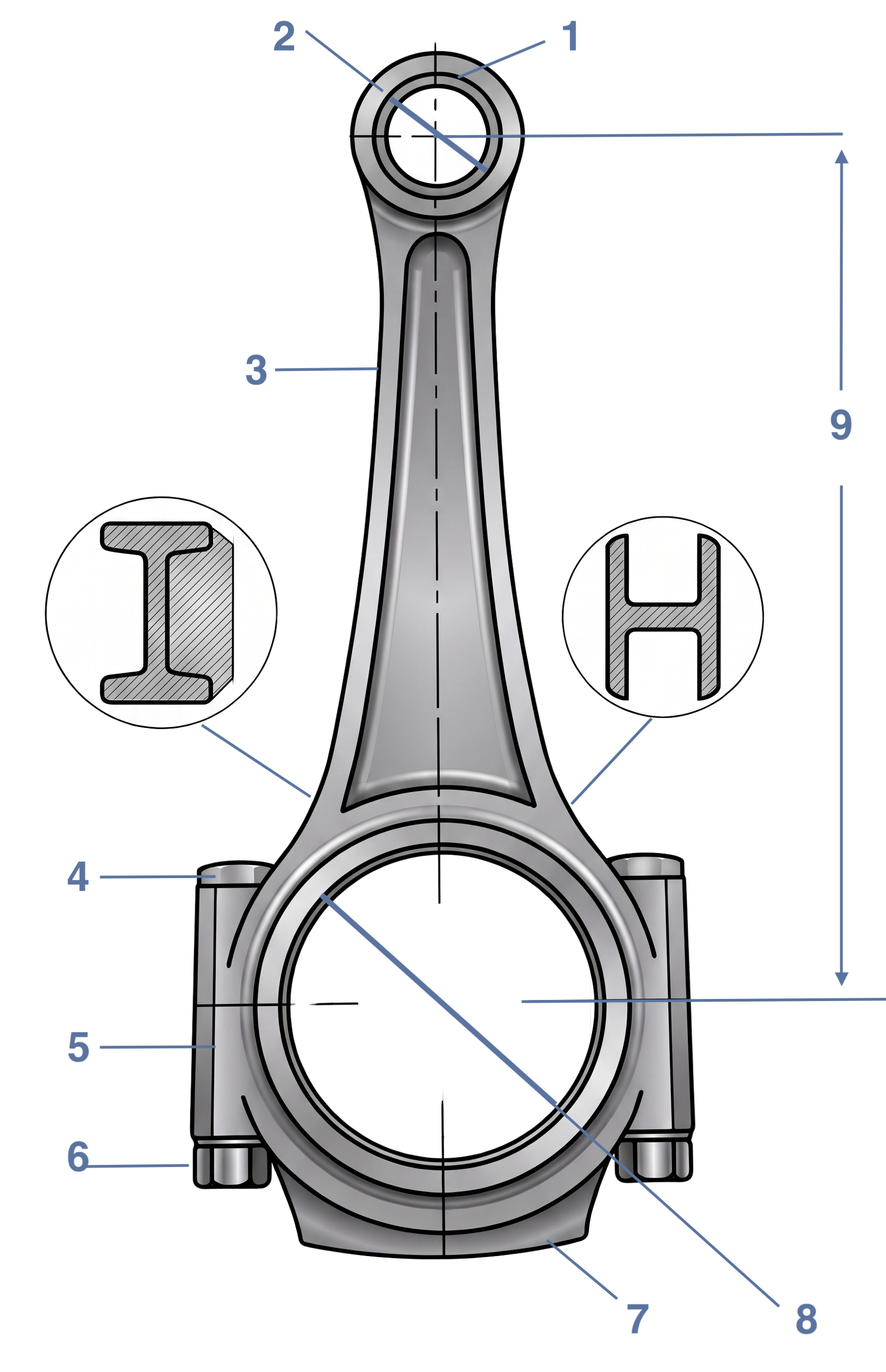 |
1) Small end 2) Small-end diameter 3) Rod beam 4) Rod bolt 5) Big end 6) Rod nut / bolt 7) Rod cap 8) Big-end diameter 9) Center-to-center |
Vehicle compatibility for the 20 mm pin EA113 engines
Below are the vehicles fitted with the Audi Volkswagen 1.8L 20V Turbo & 2.0L 16V FSI / TFSI EA113 20 engine. Measuring the piston pin diameter and the rod length remains essential before any order. Variant concerned: mm pin.
| Make | Model (chassis) | Engine code | Power | Years |
|---|---|---|---|---|
| Audi | A3 (8L) | AGU | 150 hp | 1996-2003 |
| Audi | A3 (8L) S3 quattro | APY, AMK | 210 hp | 1999-2002 |
| Audi | A3 (8L) S3 quattro | BAM | 224 hp | 2001-2003 |
| Audi | A4 (B5) / quattro | AEB, ANB | 150 hp | 1995-2001 |
| Audi | A4 (B6) / quattro | AWM | 170 hp | 2001-2004 |
| Audi | A6 (C5) / quattro | AEB, ANB | 150 hp | 1997-2005 |
| Audi | TT (8N) quattro | APX, BAM | 224 hp | 1998-2006 |
| SEAT | Leon (1M) Cupra R | AMK | 209 hp | 2002-2006 |
| SEAT | Leon (1M) Cupra R | BAM | 225 hp | 2003-2006 |
| Škoda | Octavia I (1U) | AGU | 150 hp | 1997-2010 |
| Volkswagen | Bora (1J) | AGU | 150 hp | 2000-2005 |
| Volkswagen | Golf IV (1J) GTI | AGU | 150 hp | 1997-2005 |
| Volkswagen | New Beetle (9C) | AVC, AWU, AGU | 150 hp | 1999-2010 |
| Volkswagen | Passat (B5) / (B5.5) | AEB, ANB, AWM | 150-170 hp | 1996-2005 |
These rods also fit the 2.0 FSI / TFSI EA113 in its 20 mm piston pin and 144 mm center-to-center version, dimensions identical to those of the 1.8T 20V. The table above lists only the 1.8T 20V models for which we hold verified compatibility; we deliberately publish no list of 2.0 FSI / TFSI models, as we have no exhaustive source on the pin diameter fitted at the factory from one version to the next. The 2.0 TFSI EA113 Gen.2, which uses a 21 mm pin, is not compatible with these rods and is covered by a separate reference. Before ordering, always check the pin diameter of your pistons as well as the center-to-center distance of your original rods; if in any doubt, our technical team is here to help.
Why is it the most economical solution?
On a tuned 1.8T 20V, a stock rod that lets go usually takes the block, crankshaft and pistons with it. Investing in a forged rod set from the outset costs far less than an engine failure followed by a full rebuild. You permanently strengthen the bottom end, preserve the value of your build and drive with peace of mind, in intensive use as much as day to day.
-
Brand
-
ReferenceR-AUD-001-H
16 other products in the same category
Viewed products