Product successfully added to your shopping cart
Quantity
Total
There are 0 items in your cart. There is 1 item in your cart.
Total products
Total shipping To be determined
Total

1.8L 20VT
Manufacturers
1.8L 20VT
Warning: Last items in stock!
New product
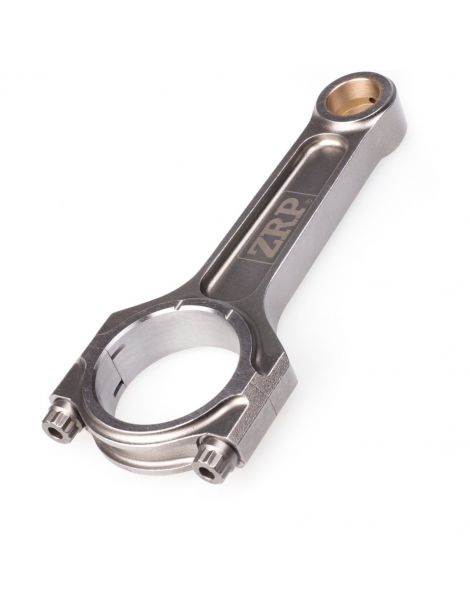
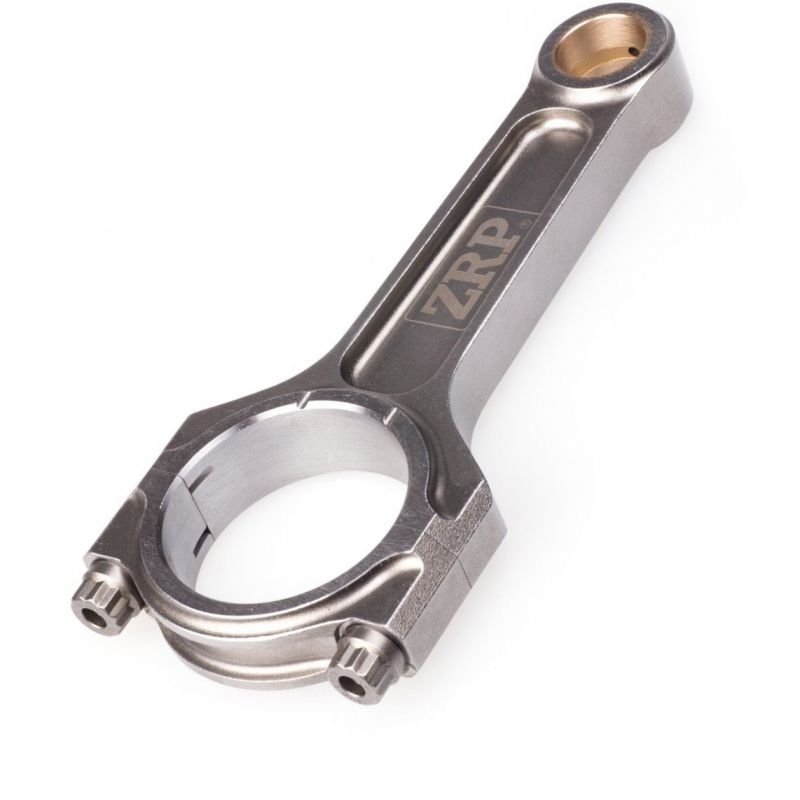
Set of 4 ZRP 4340 forged connecting rods for the Audi Volkswagen 1.8T 20V EA113, 19 mm pin, I profile.
The 1.8T 20V of the EA113 family is a turbocharged inline four-cylinder petrol engine with a five-valve-per-cylinder head, twenty valves in total. Its 1,781 cm³ displacement (81 mm bore, 86.4 mm stroke) and compact layout saw it power a wide range of Audi, Volkswagen, SEAT and Škoda models from the late 1990s to the mid-2000s. It appears both transversely mounted (Audi A3 8L, TT 8N, Golf IV GTI, Bora, SEAT Leon and Toledo, Škoda Octavia RS) and in the A4 saloons. Depending on the turbo (K03, K04) and mapping, it produced 150 to 225 hp as standard.
That tuning popularity has a direct downside : as soon as you raise boost pressure and torque, the stock rods – sized for mass production – become the weak link of the bottom end. Switching to forged connecting rods is therefore the key step to make a high-power 1.8T 20V reliable. The version shown here keeps the original 144 mm center distance and the 19 mm piston pin of the APP, ARY, AUQ, AJQ and BFB engines : a set with OEM-identical geometry, designed to replace the factory rods directly.
Our forged rods for the 1.8T 20V EA113 are hot-forged from wrought 4340 steel, the benchmark of engine building. Offered here in the I profile, they suit every discipline – circuit, time attack, drift, rally, hill climb, drag – and fit a strong street build as much as a full race engine. Whether Stage 2, Stage 3 with high boost or Stage 4 and beyond, they secure the torque increase without ever compromising reliability. Supplied as a weight-matched set of 4, they keep the OEM 144 mm center distance and the 19 mm piston pin (tapered pin end) and weigh 532 g each.
Where the factory rod is above all optimised for production cost, a 4340 forged rod offers a far greater mechanical reserve : about +19 % yield strength, +8 % tensile strength and +19 to +37 % fatigue life. That margin lets the 1.8T 20V absorb cylinder pressure peaks and inertia loads without failure. The I profile, relieved on its flanks, seeks the best balance between stiffness and moving mass : it lightens the reciprocating assembly while keeping the strength required by demanding turbo builds.
| Reference | Brand | Profile | Rod bolts | Pin bore (mm) | Small-end width (mm) | Big-end bore (mm) | Big-end width (mm) | Center-to-center (mm) | Weight (g) |
|---|---|---|---|---|---|---|---|---|---|
| R-AUD-002-I | ZRP | I | ARP 2000-3/8"-38mm ARP L19-3/8"-38mm | 19 | 50,6 | 25 | 144 | 532 |
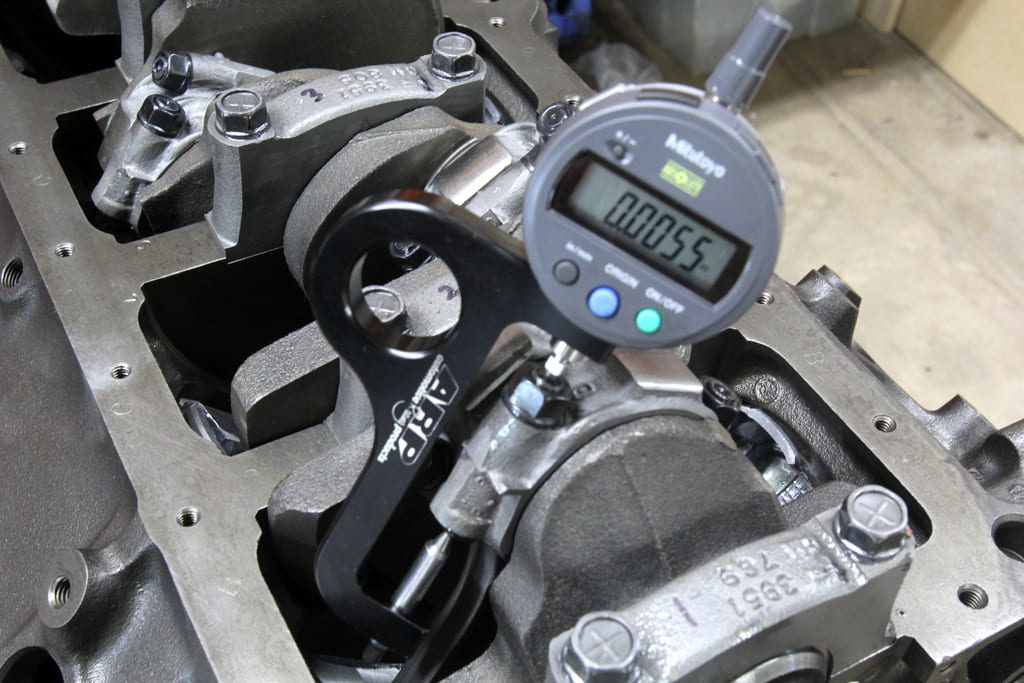
The stated tightening torque and stretch refer to the ARP bolts supplied with the kit (ARP 2000 or ARP L19) ; refer to the accompanying data sheet. With this type of bolt, measuring stretch with a gauge (dial indicator) remains the most reliable and repeatable method to guarantee preload, cylinder after cylinder.
| Reference | Brand | Rod bolts | Max torque (no gauge) | Stretch (gauge check) |
|---|---|---|---|---|
| R-AUD-002-I | ZRP | ARP 2000-3/8"-38mm | 61 | 0.140 to 0.152 |
| R-AUD-002-I-L19 | ZRP | ARP L19-3/8"-38mm | 67.8 | 0.152 to 0.165 |
| 4340 is a low-alloy steel with nickel, chromium and molybdenum. Forging aligns the metal grain flow with the direction of load, closes internal porosity and gives strength far above a cast or sintered factory rod : about +19 % yield strength, +8 % tensile strength and +19 to +37 % fatigue endurance. Tensile strength reaches around 930 to 1,080 MPa, essential as soon as the engine gains torque, power and rpm. This is the material used across our whole EA113 range. |
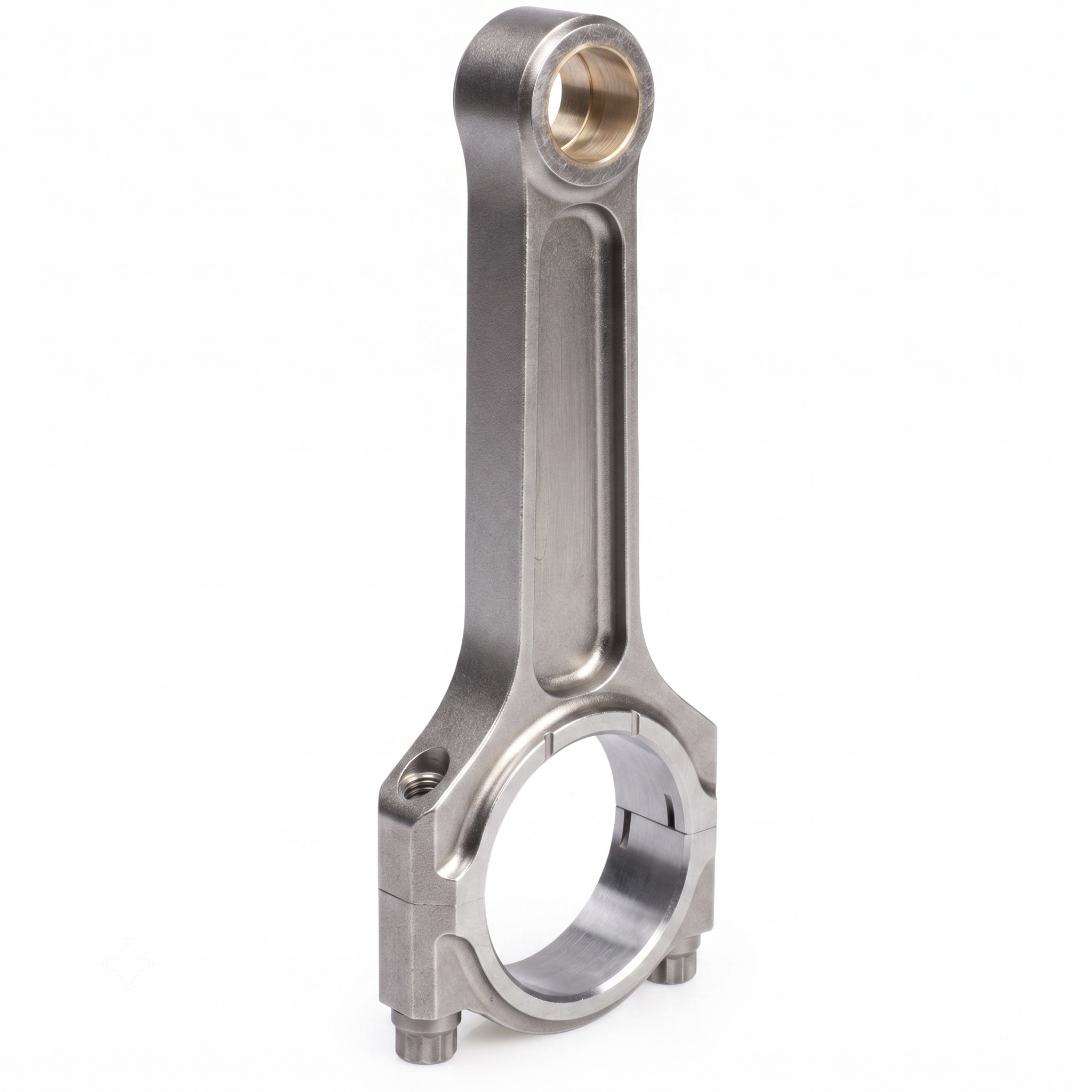 | The I profile (ZRP) has flanks relieved to target the best ratio of stiffness to lightness. By lightening the reciprocating assembly it limits inertia loads at high rpm while keeping strength suited to tuned 1.8T 20V engines. Machined from forged 4340 steel, weighing 532 g and weight-matched across the set, it is supplied with your choice of ARP 2000 or ARP L19 bolts in 3/8". |
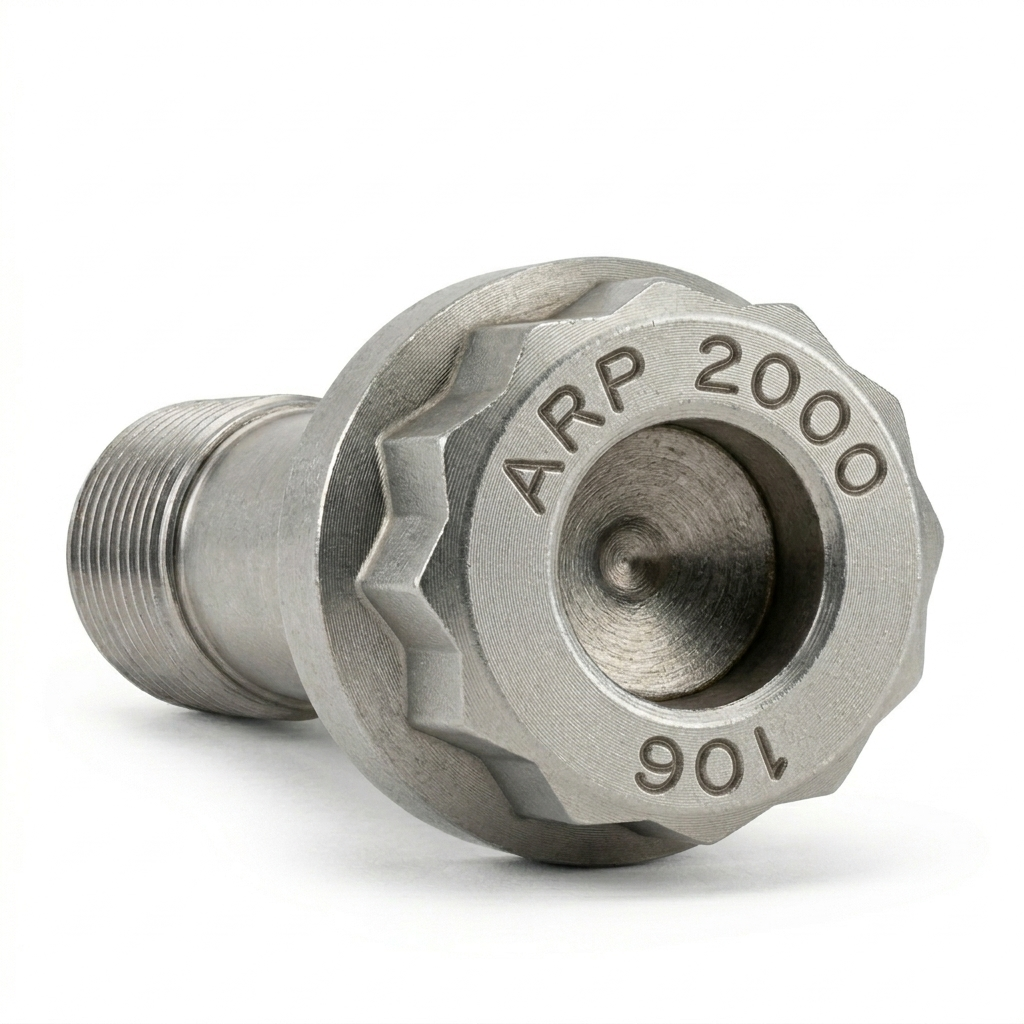 | ARP 2000 : the versatile benchmark alloy, with a tensile strength of about 220,000 psi (1,517 MPa). Offered here in 3/8", it allows around 200 hp per cylinder and rpm up to about 8,500, covering the vast majority of 1.8T 20V builds, from a simple boost increase to high power. It is the default choice to make the bottom end durably reliable. |
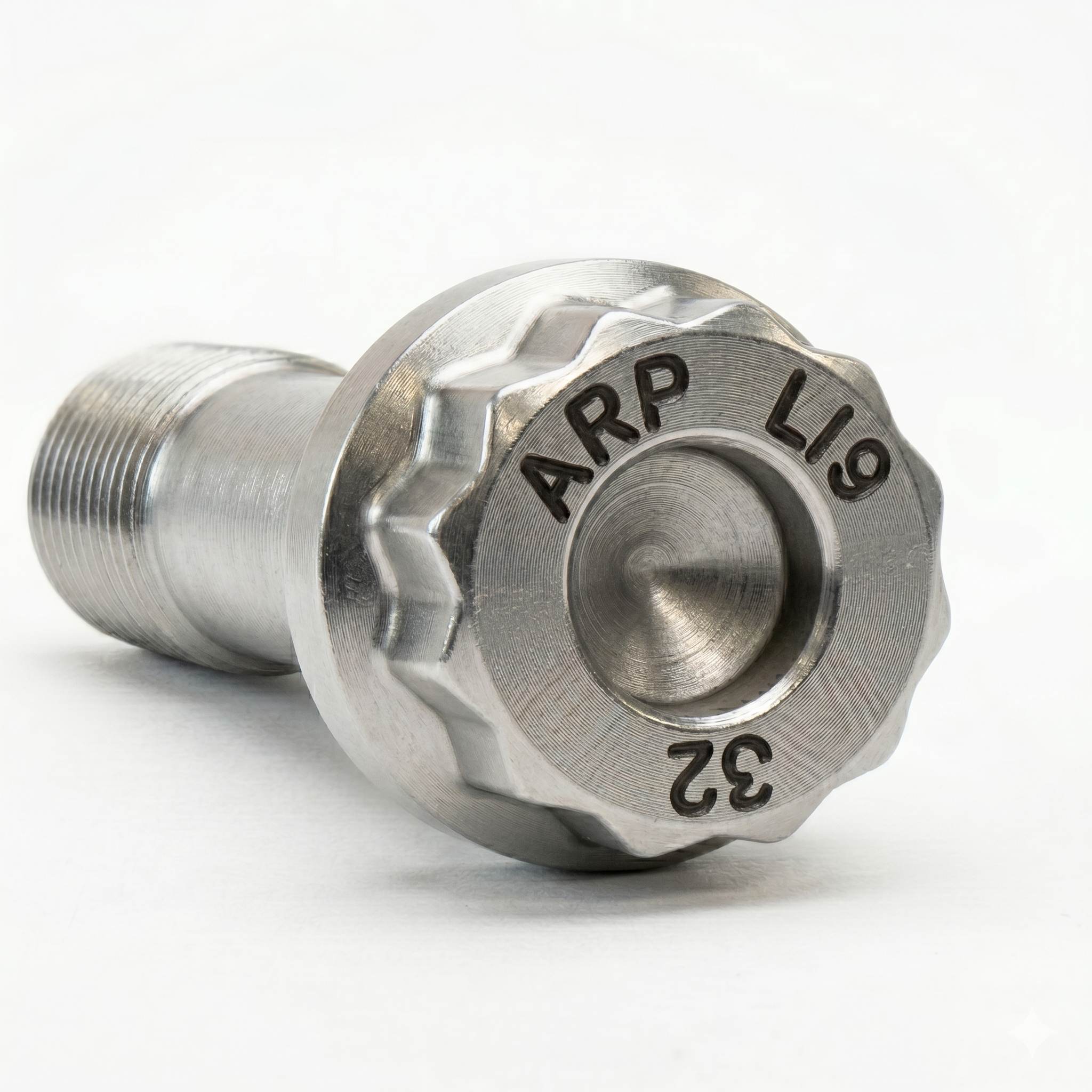 | ARP L19 : a very high strength steel (about 260,000 psi / 1,793 MPa), reserved for extreme builds. In 3/8" it withstands around 250 hp per cylinder and rpm approaching 10,000. More sensitive to corrosion and hydrogen, it requires extra care on assembly and targets race engines seeking the ultimate preload margin. |
| The most reliable way to guarantee preload is not to aim for a torque figure but to measure bolt stretch with a gauge (dial indicator). Tighten in steps up to the recommended stretch – 0.140 to 0.152 mm with ARP 2000, 0.152 to 0.165 mm with ARP L19 – ensuring an even, repeatable preload, bolt after bolt. |
 | This EA113 range is made by ZRP, a specialist in high-performance forged racing rods. Built by Alex Drakos in Athens, these rods are machined from 4340 steel, matched to ±1 g across the set and offered in the I profile with ARP 2000 or ARP L19 bolts in 3/8". Each reference is supplied as a complete set of 4 with its dedicated ARP bolts. |
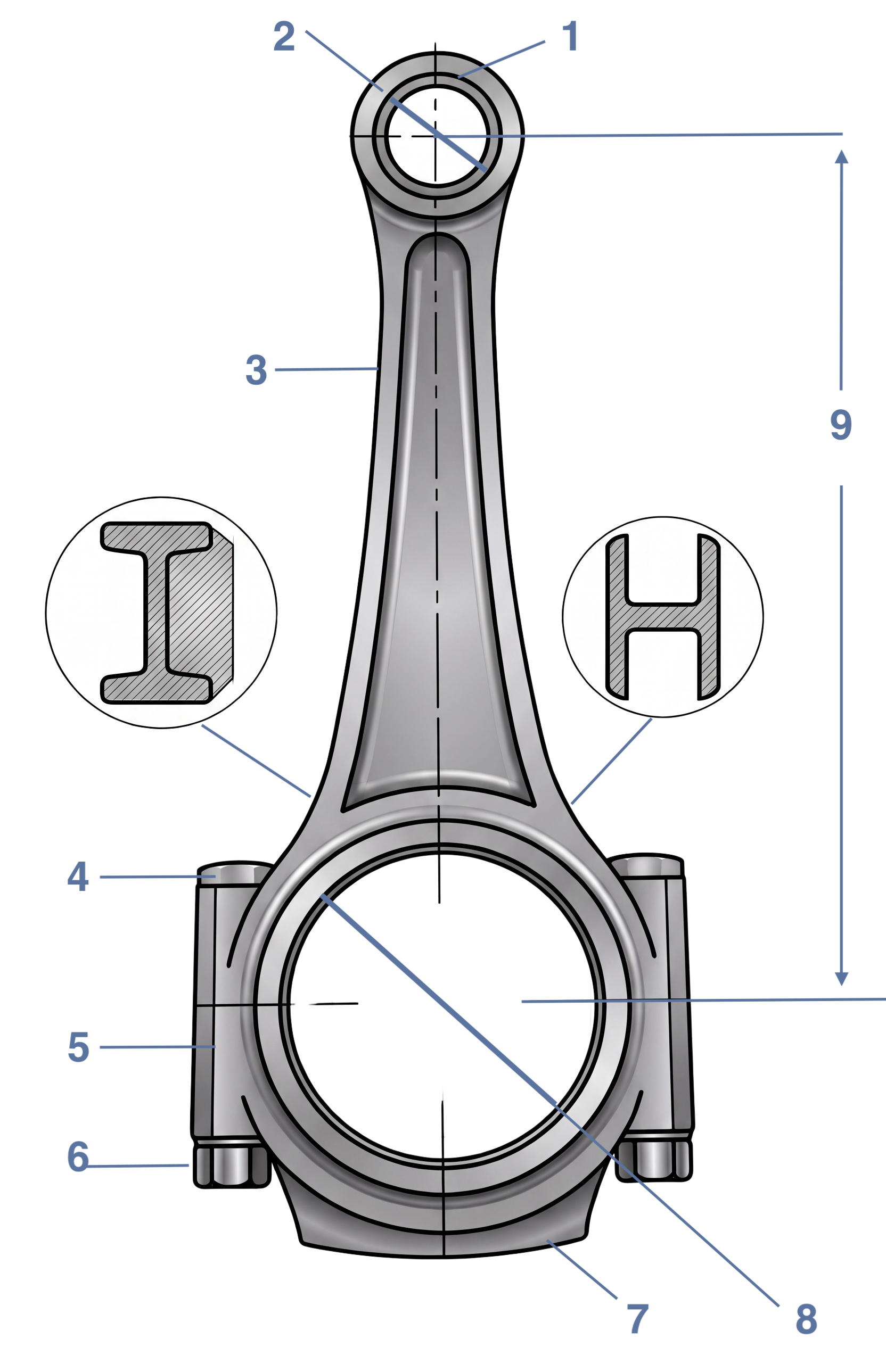 | 1) Small end 2) Small-end diameter 3) Rod beam 4) Rod bolt 5) Big end 6) Rod nut / bolt 7) Rod cap 8) Big-end diameter 9) Center-to-center |
| Make | Model (chassis) | Engine code | Power | Years |
|---|---|---|---|---|
| Audi | A3 (8L) 1.8 T | AJQ, APP, ARY, AUQ | 180 hp | 1998–2003 |
| Audi | A3 (8L) 1.8 T quattro | AJQ, ARY | 180 hp | 1998–2003 |
| Audi | TT / TT Roadster (8N) 1.8 T (+ quattro) | AJQ, APP, ARY, AUQ | 180 hp | 1998–2006 |
| Audi | A4 (B6 / B7) 1.8 T (+ quattro) | BFB | 163 hp | 2002–2009 |
| Seat | Leon (1M) 1.8 20V T (+ T4) | APP, ARY, AJQ, AUQ | 180 hp | 1999–2006 |
| Seat | Toledo II (1M) 1.8 20V T | APP, ARY, AUQ | 180 hp | 2000–2004 |
| Skoda | Octavia I (1U) RS 1.8 T (+ Combi) | AUQ | 180 hp | 2001–2006 |
| Volkswagen | Bora (1J) 1.8 T (+ Variant) | AUQ | 180 hp | 2002–2005 |
| Volkswagen | Golf IV (1J) 1.8 T GTI (+ Variant) | AUQ | 180 hp | 2001–2006 |
On a tuned 1.8T 20V, a factory rod that lets go usually takes the block, the crankshaft and the pistons with it. Investing in a set of forged rods from the start costs far less than an engine failure followed by a full rebuild. You make the bottom end durably reliable, you preserve the value of your build and you drive with peace of mind, in hard use as in daily driving.