Product successfully added to your shopping cart
Quantity
Total
There are 0 items in your cart. There is 1 item in your cart.
Total products
Total shipping To be determined
Total

1.6L 16v - Z16LER Z16LET
Manufacturers
1.6L 16v - Z16LER Z16LET
Warning: Last items in stock!
New product
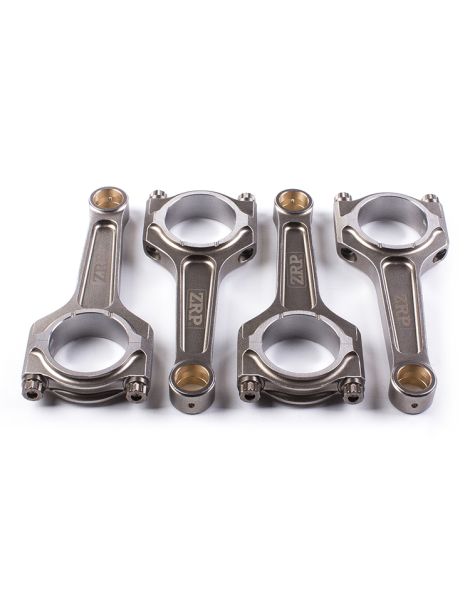
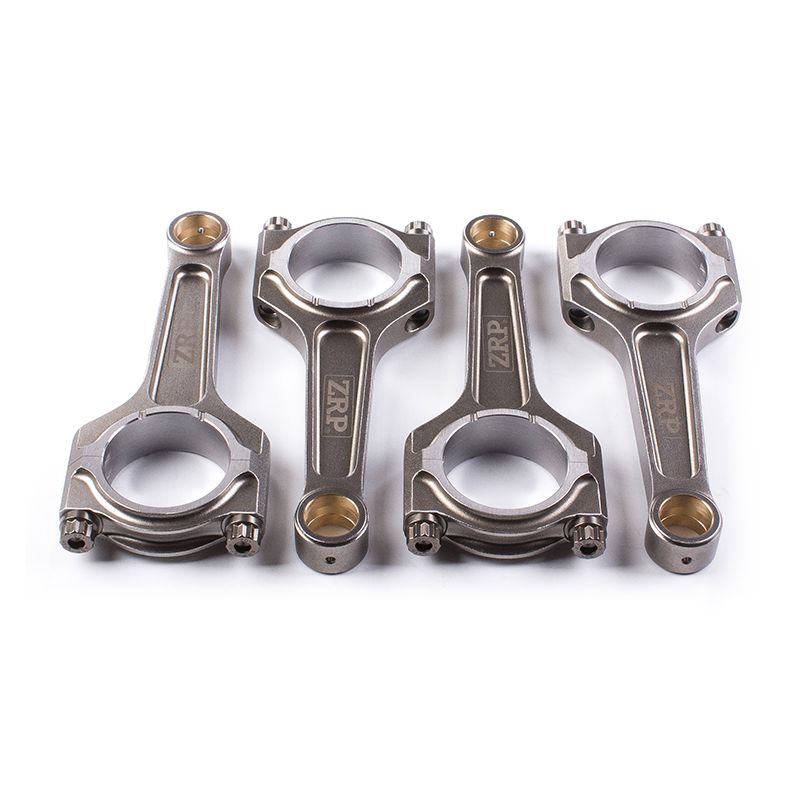
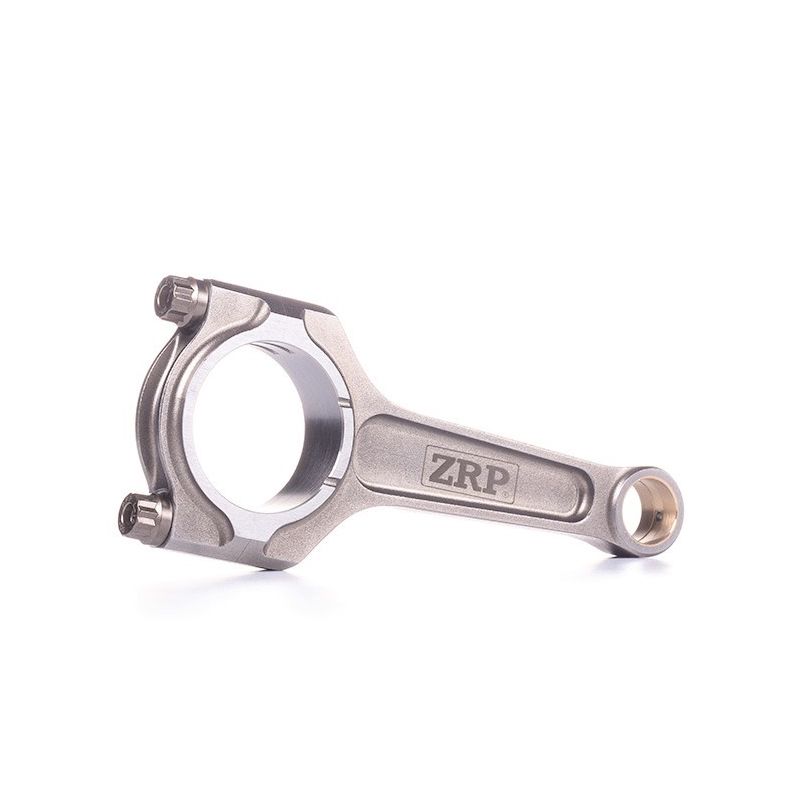
Set of 4 forged connecting rods in 4340 steel for the Opel 1.6L 16V Turbo Z16LET.
Opel's 1.6 16V Turbo belongs to the GM Family 0 and comes under the codes Z16LET, A16LET, Z16LEH, Z16LER and A16LER. This turbocharged inline four-cylinder displaces 1,598 cc, with a 79 mm bore and an 81.5 mm stroke, a sixteen-valve head and twin overhead camshafts with variable timing on both shafts. Introduced in spring 2006 on the Meriva OPC, it is fed by a KKK K03 turbocharger and was produced until the mid-2010s.
Depending on the version it develops from 180 to 192 hp: the A16LER sport variant peaks at 192 hp on the Corsa D OPC / VXR, while the Z16LET and A16LET versions deliver 180 hp on the Astra H, Astra J, Meriva A OPC and Insignia A. As soon as boost pressure is raised or forged pistons are fitted, the standard rotating assembly becomes the weak link: reinforcing the bottom end with forged connecting rods then becomes essential.
Machined from high-strength 4340 chrome-molybdenum steel, forged connecting rods secure the bottom end as soon as power rises. They become essential when switching to forged pistons, raising the rev limit, increasing boost pressure or gaining displacement: all situations where the stock rod eventually bends or breaks.
Unlike original rods, usually produced by sintering, a forged rod has a dense, homogeneous metallurgical structure with no porosity, able to withstand far greater alternating loads. On a tuned 1.6 Turbo, this extra strength significantly raises the breaking threshold and allows ambitious power targets in full reliability.
| Reference | Brand | Profile | Bolts | Pin diameter OEM 19 mm | Small-end width | Big-end diameter OEM n.p. | Big-end width | Center-to-center OEM 129,75 mm | Weight per rod |
|---|---|---|---|---|---|---|---|---|---|
| KCR234A | Wössner | I | ARP 2000-5/16"-38mm | 19 mm | 22 mm | 46 mm | 21,85 mm | 129,7 mm | 539 g |
| R-OPE-005-I | ZRP | I | ARP 2000-3/8"-38mm | 19 mm | 46 mm | 21,9 mm | 129,75 mm | 419 g | |
| R-OPE-005-I-L19 | ZRP | I | ARP L19-3/8"-38mm | 19 mm | 46 mm | 21,9 mm | 129,75 mm | 419 g |
| Rod | Bolts | Torque | Recommended stretch |
|---|---|---|---|
| Wössner (KCR234A) | ARP 2000 | 40,7 N·m | 0,127 – 0,140 mm |
| ZRP (R-OPE-005-I) | ARP 2000 | 61 N·m | 0,140 – 0,152 mm |
| ZRP (R-OPE-005-I-L19) | ARP L19 | 67,8 N·m | 0,152 – 0,165 mm |
Manufacturers recommend the stretch method (torque-to-yield) for precise, repeatable preload. The values above are indicative: always refer to the instructions supplied with your rods.
4340 steel is a low-alloy nickel-chromium-molybdenum steel used in both aerospace and motorsport. Forged then heat-treated (quench and temper), it combines excellent tensile strength, outstanding fatigue endurance and good ductility. Compared with an original rod, often sintered and designed for production cost, a forged 4340 rod gains about 19% in yield strength, 8% in tensile strength and, above all, 19 to 37% in fatigue strength, giving a service life under cyclic load several times higher. This is exactly what makes forged 4340 the reference material as soon as boost and rpm climb.
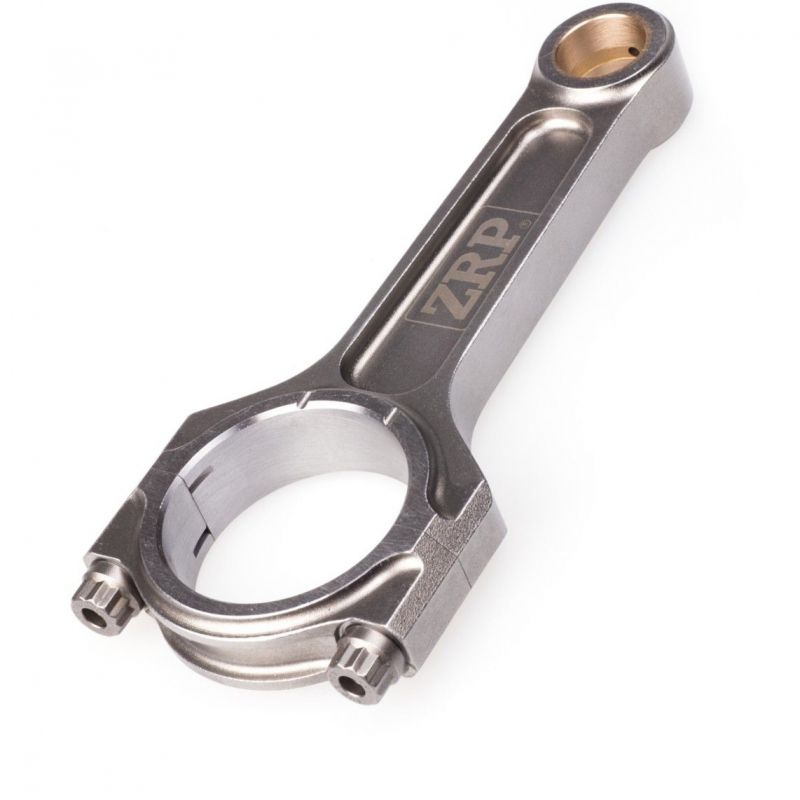
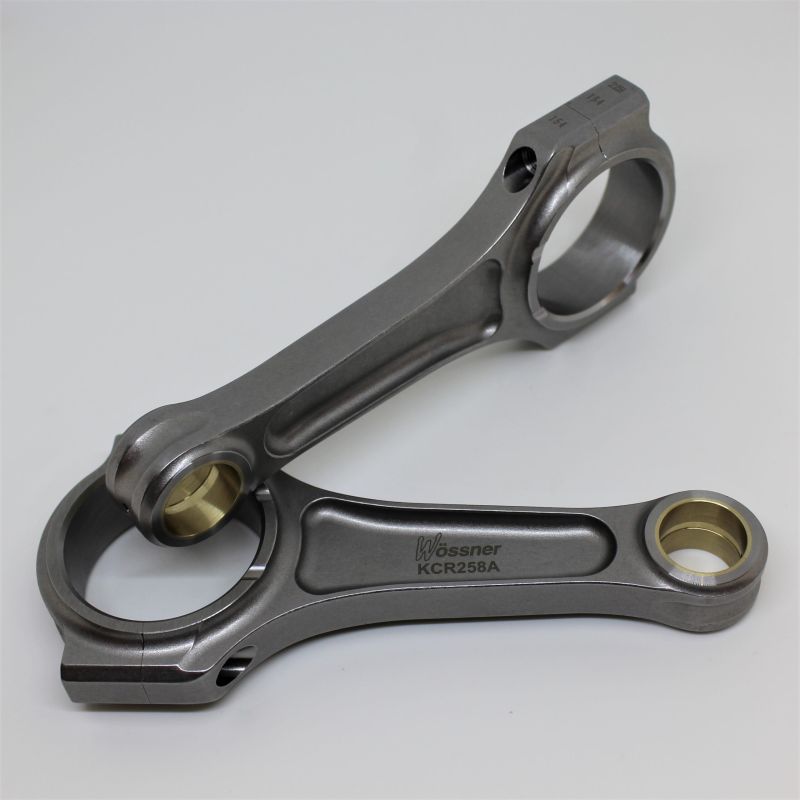
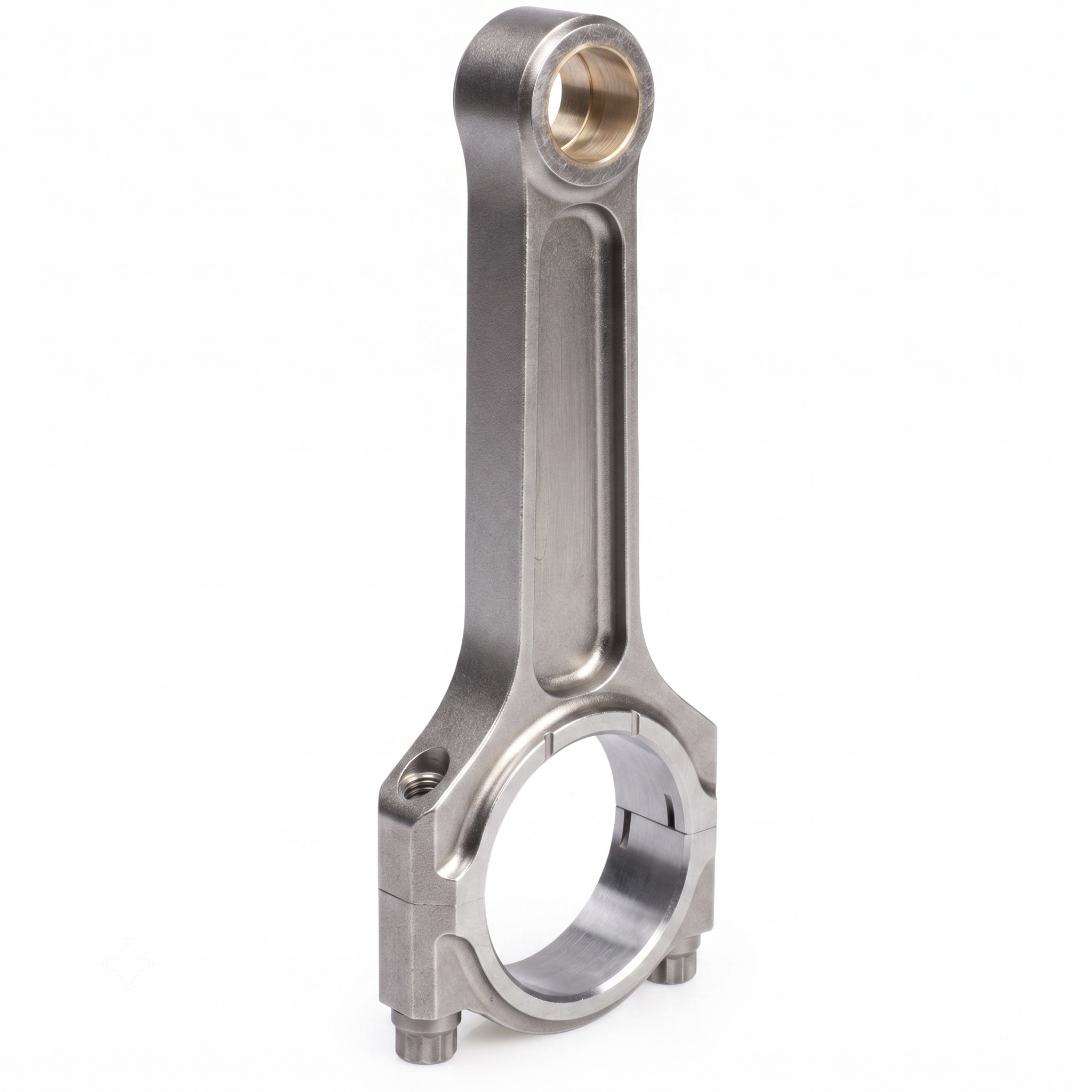 | I-beam profile. Its narrower central section, shaped like an 'I', favours low weight while keeping enough rigidity for the vast majority of turbo builds. This is the profile chosen for this application: an excellent compromise between reduced reciprocating mass and mechanical strength, ideal for reinforcing a 1.6 Turbo fitted with forged pistons without needlessly increasing the rotating mass. |
The rod bolt is one of the most heavily loaded parts of the engine. The key is to choose the grade suited to the target power and maximum rpm, then to follow the tightening method carefully. Two grades are offered for this application, in 3/8" for the ZRP rods and in 5/16" for the Wössner rods:
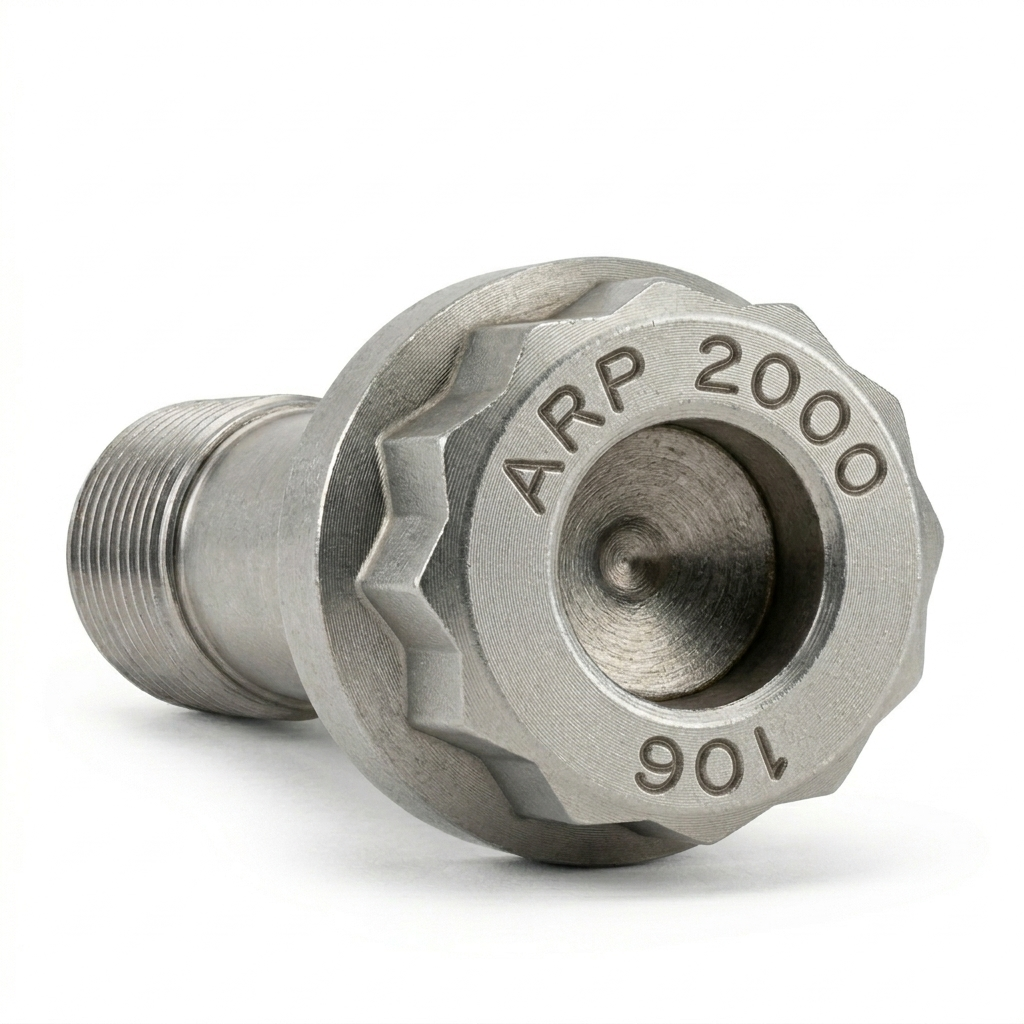 | ARP 2000 (tensile strength ~220,000 psi, i.e. ~1,517 MPa) is the high-performance standard. It suits builds up to about 150 hp per cylinder in 5/16" and 200 hp per cylinder in 3/8", and up to 8,500 rpm. It is the most common grade in circuit racing, track days, drift, rally, drag and hillclimb, valued for its strength, reliability and versatility, with no particular storage constraint. |
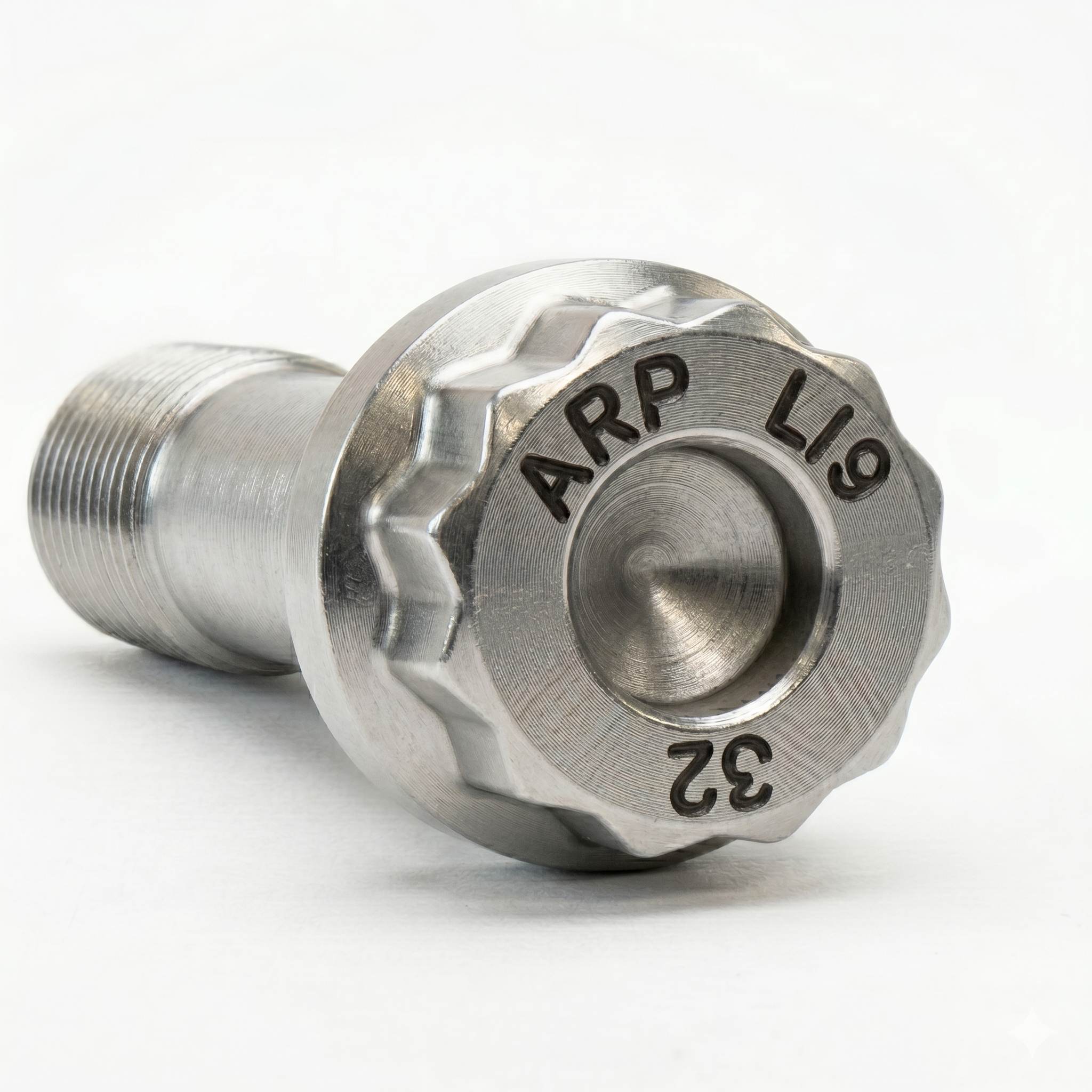 | L19 (tensile strength ~260,000 psi, i.e. ~1,793 MPa) is designed for engines pushed to the extreme, up to about 250 hp per cylinder in 3/8" and up to 10,000 rpm: very high boost, sustained high rpm and high cylinder pressure. It is the choice for big-power builds (drag, drift, rally, circuit). Caution: sensitive to corrosion and hydrogen embrittlement, it must be stored and fitted oiled, away from moisture. |
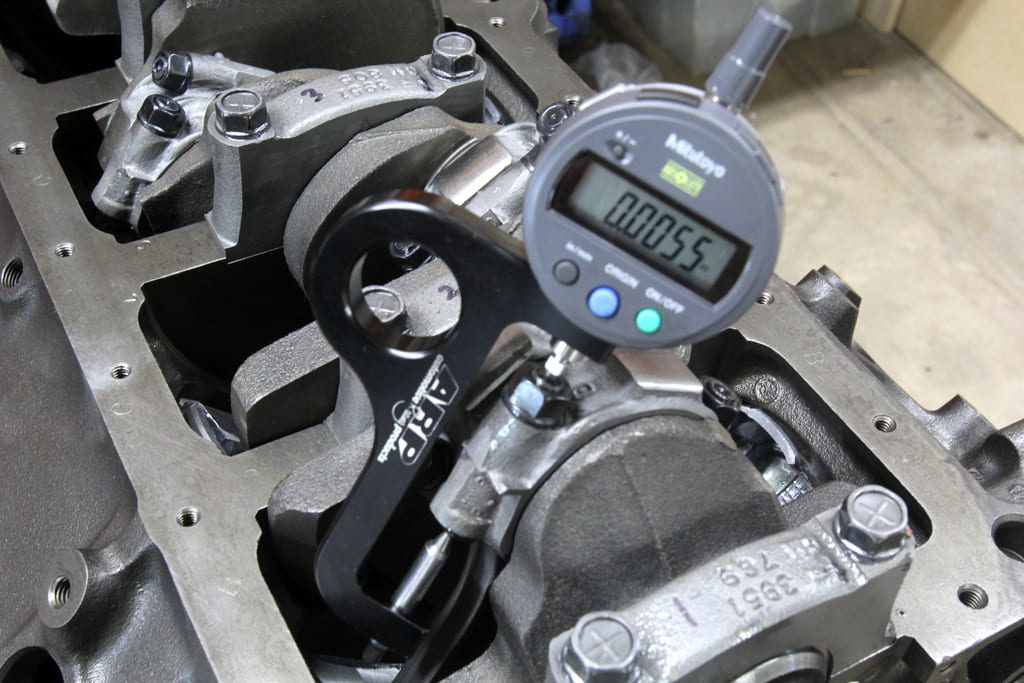
In addition to torque tightening, measuring bolt stretch guarantees optimal, repeatable preload. Using a stretch gauge, you check the actual elongation of each bolt: it is the most reliable method for fitting forged rods, especially on a heavily boosted engine.
 | Wössner : a German maker of pistons and forged connecting rods, known for the fineness of its machining. Its rod for the Opel 1.6 turbo uses an I profile in forged steel, held to tight dimensions, weighed and matched set by set, and is fitted with 5/16" ARP 2000 hardware. The outcome is a light assembly, consistent from one cylinder to the next, with the traceability of European production. |
 | ZRP : a Greek brand born in Athens in Alex Drakos’ workshop, which handles both its design and its production. For the Opel 1.6 turbo the rod comes out of forged 4340 steel, fully machined and then matched to ±1 g across the set of four so that high engine speeds bring no imbalance. The I profile is offered with ARP 2000 or ARP L19 bolts. Development draws on rallying, circuit racing and drift. |
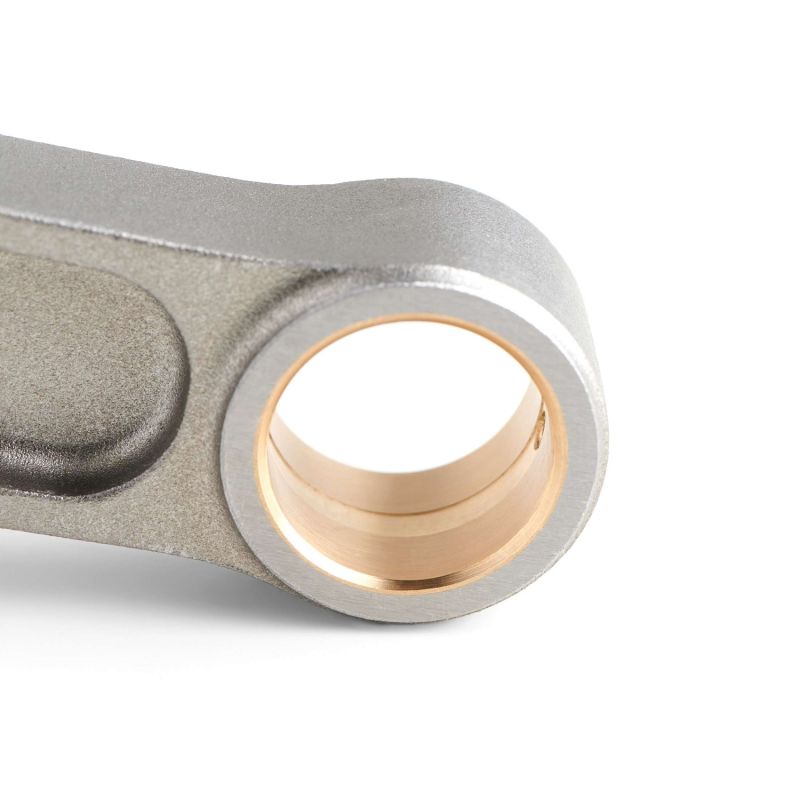
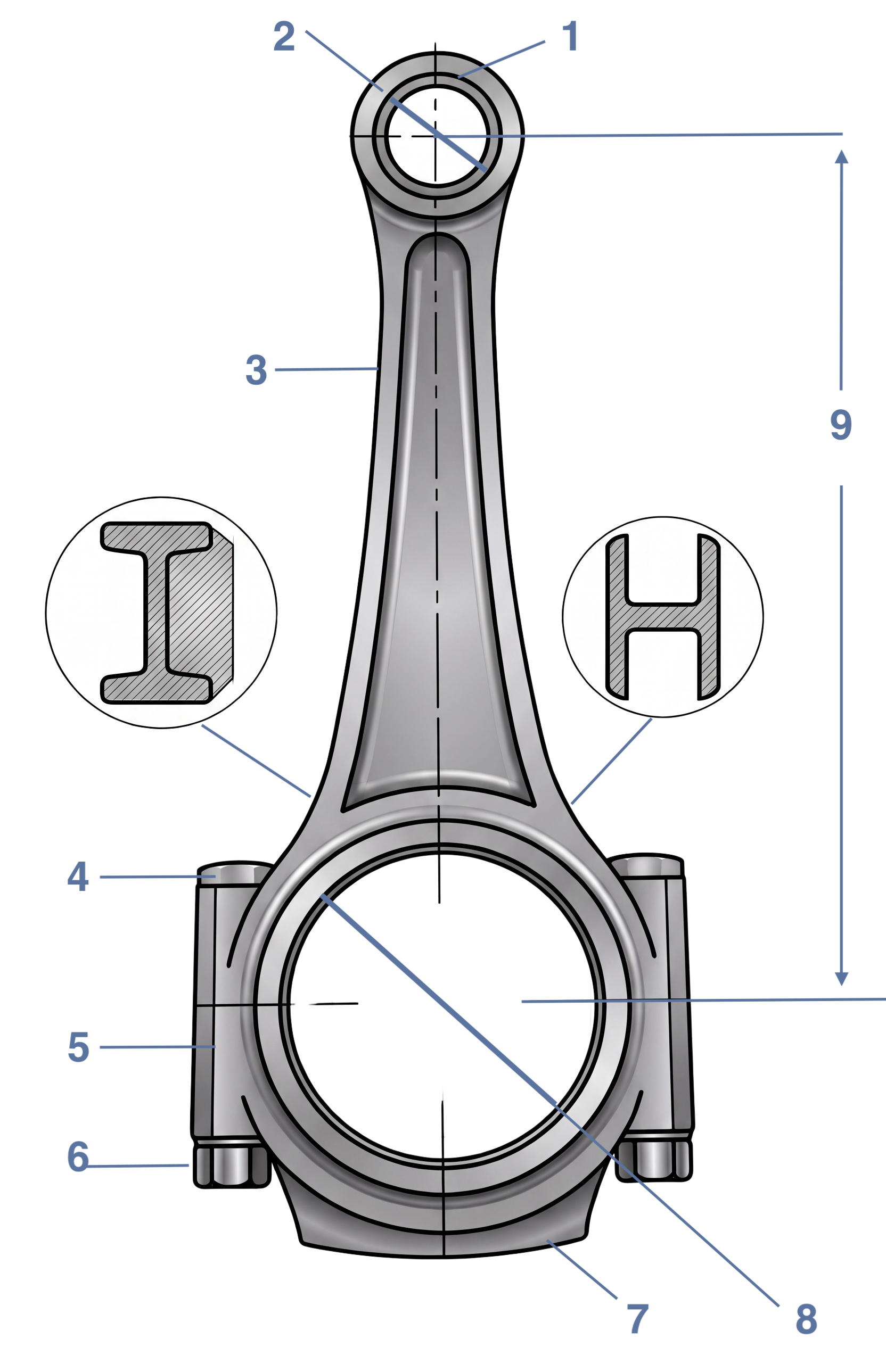 | 1) Small end 2) Small-end diameter 3) Rod beam 4) Rod bolt 5) Big end 6) Rod nut / bolt 7) Rod cap 8) Big-end diameter 9) Center-to-center |
These forged connecting rods are compatible with the following 1.6 16V Turbo engines (Z16LE / A16LE family):
| Brand | Model (chassis) | Engine code | Power | Years |
|---|---|---|---|---|
| Opel / Vauxhall | Corsa D OPC / VXR (S07) | Z16LER / A16LER | 192 ch | 2006–2014 |
| Opel / Vauxhall | Astra H (A04) | Z16LET | 180 ch | 2007–2010 |
| Opel / Vauxhall | Astra J (P10) | A16LET | 180 ch | 2009–2015 |
| Opel / Vauxhall | Meriva A OPC | Z16LET | 180 ch | 2006–2010 |
| Opel / Vauxhall | Insignia A | A16LET | 180 ch | 2008–2014 |
OEM reference: 93181961 (set of 4 rods).
When the original bottom end of a tuned 1.6 Turbo fails, the bill adds up fast: new rods, pistons, machining, labour. Investing in forged rods from the outset avoids this vicious circle.
For a budget equal to, or even lower than, repeated original repairs, you get a rotating assembly built for performance, compatible with forged pistons and able to take a serious build without weakening.
For the same budget: more reliability, more tuning headroom and lasting peace of mind. It is the most rational way to make your 1.6 16V Turbo reliable for the long term.