Product successfully added to your shopping cart
Quantity
Total
There are 0 items in your cart. There is 1 item in your cart.
Total products
Total shipping To be determined
Total

1.5L 12v - Ecoboost
Manufacturers
1.5L 12v - Ecoboost
Warning: Last items in stock!
New product
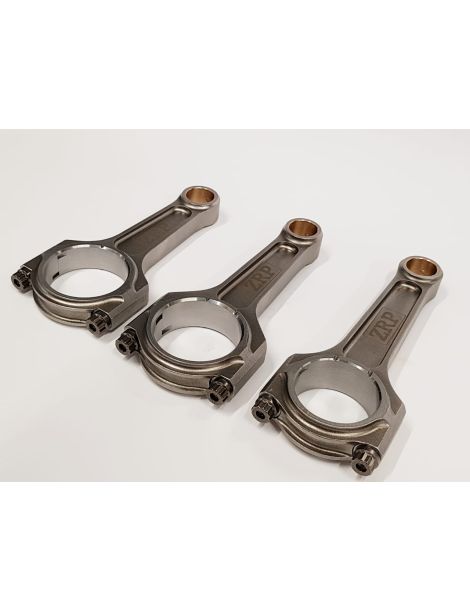
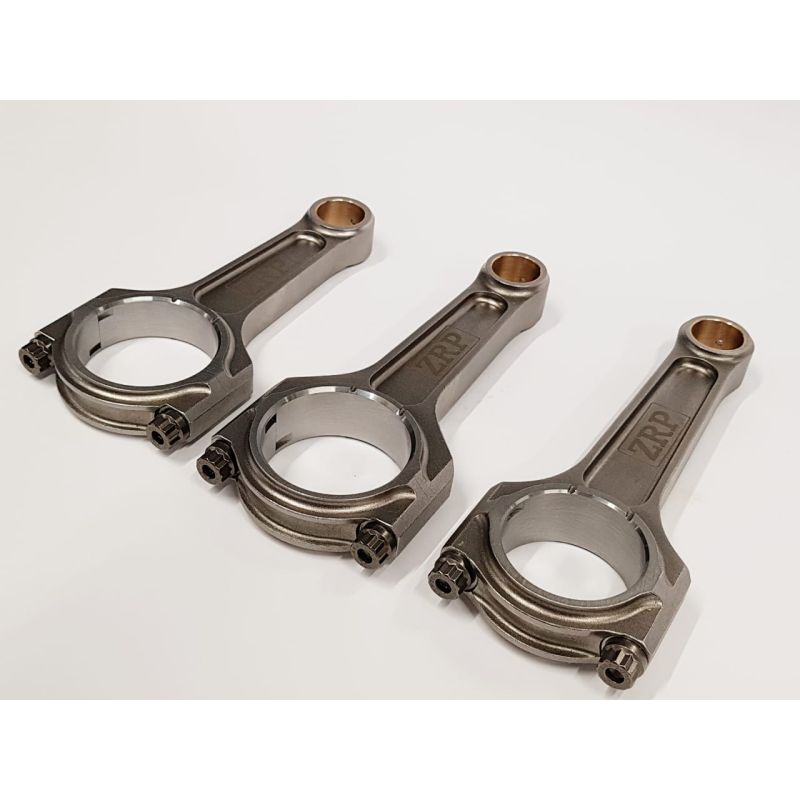
Set of 3 forged connecting rods in 4340 steel for the Ford 1.5 EcoBoost 3-cylinder turbo (GTDI), 21 mm piston pin.
The 1.5 EcoBoost is Ford's 1.5 L (1,497 cc) turbocharged inline three-cylinder, with twin overhead cams and variable valve timing, from the "Dragon" branch of the EcoBoost family. An all-aluminium block and head, integrated exhaust manifold, combined direct and port injection and cylinder deactivation make it a modern, compact engine, assembled in Craiova, Romania. Depending on the application it delivers 150 to 200 hp: up to 200 hp (147 kW) in the Fiesta ST and Puma ST, around 150 to 182 hp in the Focus. As soon as boost, power and rpm rise, the factory fracture-split rod, optimised for series production, becomes the weak link of the rotating assembly. Replacing it with weight-matched forged rods is the first safeguard of a reliable, lasting 1.5 EcoBoost build.
Drop-forged and precision-machined, these rods withstand bending, compression and fatigue loads far beyond those the factory 1.5 EcoBoost rod tolerates. They suit every sporting use: circuit, time attack, drift, drag, rally and hillclimb. Depending on the build, they support a reliability-focused Stage 1 as readily as a Stage 2 or a Stage 3 pushed on boost. Supplied as a complete set of 3, weight-matched, they preserve the balance of the three-cylinder rotating assembly. All adopt the 1.5 EcoBoost's 21 mm piston pin, for a 143.2 mm center-to-center length.
| Reference | Brand | Profile | Bolts | Pin Ø (mm) | Small-end width (mm) | Big-end Ø (mm) | Big-end width (mm) | Center-to-center (mm) | Weight (g) |
|---|---|---|---|---|---|---|---|---|---|
| KCR352A-T | Wössner | I | ARP 2000-5/16"-38mm | 21 | 49 | 20,82 | 143,2 | 516 | |
| R-FOR-011-I | ZRP | I | ARP 2000-5/16"-38mm | 21 | 49,07 | 20,82 | 143,2 | 412 | |
| R-FOR-011-I-L19 | ZRP | I | ARP L19-5/16"-38mm | 21 | 49,07 | 20,82 | 143,2 | 412 |
ZRP: Tapered pin end.
Two tools are enough to reassemble the 1.5 EcoBoost properly, but they have to be beyond reproach: a calibrated torque wrench, used in the middle third of its range, and a rod bolt stretch gauge with the right tips for the bolt. The 5/16" bolts in this engine work over a small section, so a few hundredths of deviation in the reading already change the interpretation. The torque and stretch values in the table are those specified by the bolt manufacturer, ARP 2000 or ARP L19 depending on the variant, and are to be followed scrupulously; stretch measured on the gauge is the reference, torque only checking that the tightening is consistent.
| Rod | Bolts | Tightening torque | Recommended stretch (mm) |
|---|---|---|---|
| Wössner I (KCR352A-T) | ARP 2000 | 40,7 N·m | 0,127 – 0,140 |
| ZRP I (R-FOR-011-I) | ARP 2000 | 40,7 N·m | 0,140 – 0,152 |
| ZRP I (R-FOR-011-I-L19) | ARP L19 | 54,2 N·m | 0,127 – 0,140 |
These rods are forged from 4340 low-alloy nickel-chromium-molybdenum steel, the benchmark for high-performance rods. Forged, then quenched and tempered, it keeps a continuous grain flow that gives high tensile strength and excellent fatigue life, two decisive qualities on a heavily stressed 1.5 EcoBoost. Compared with a cost-optimised factory fracture-split rod, a forged 4340 rod gains about +19% yield strength, +8% tensile strength and +19 to +37% in fatigue endurance. It is this margin that lets a prepared 1.5 EcoBoost absorb torque and boost increases without breakage.
The range is offered in the I profile, by ZRP and Wössner. The I-beam offers an excellent stiffness-to-weight ratio, particularly suited to a turbocharged three-cylinder where a light rotating assembly matters as much as bending resistance. Wössner machines it in its A-Beam form, an optimised I-beam. The specification table gives, for each reference, the center-to-center length, big-end diameter, big-end width and weight.
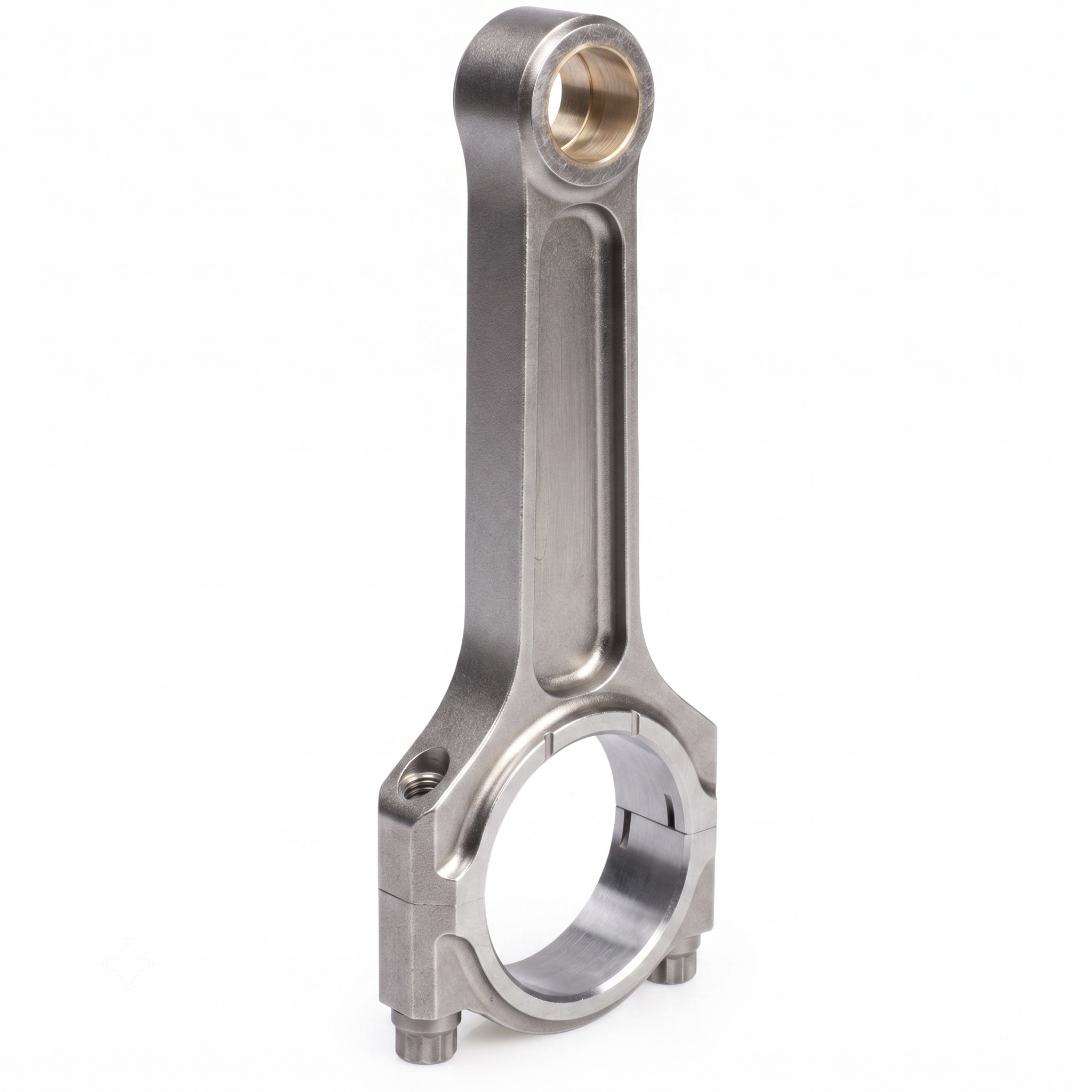 | I profile: I-beam with an optimised stiffness-to-weight ratio, well suited to the turbocharged three-cylinder 1.5 EcoBoost; Wössner machines it in its A-Beam form (an optimised I-beam), valued for its lightness and bending stability on high-revving engines. |
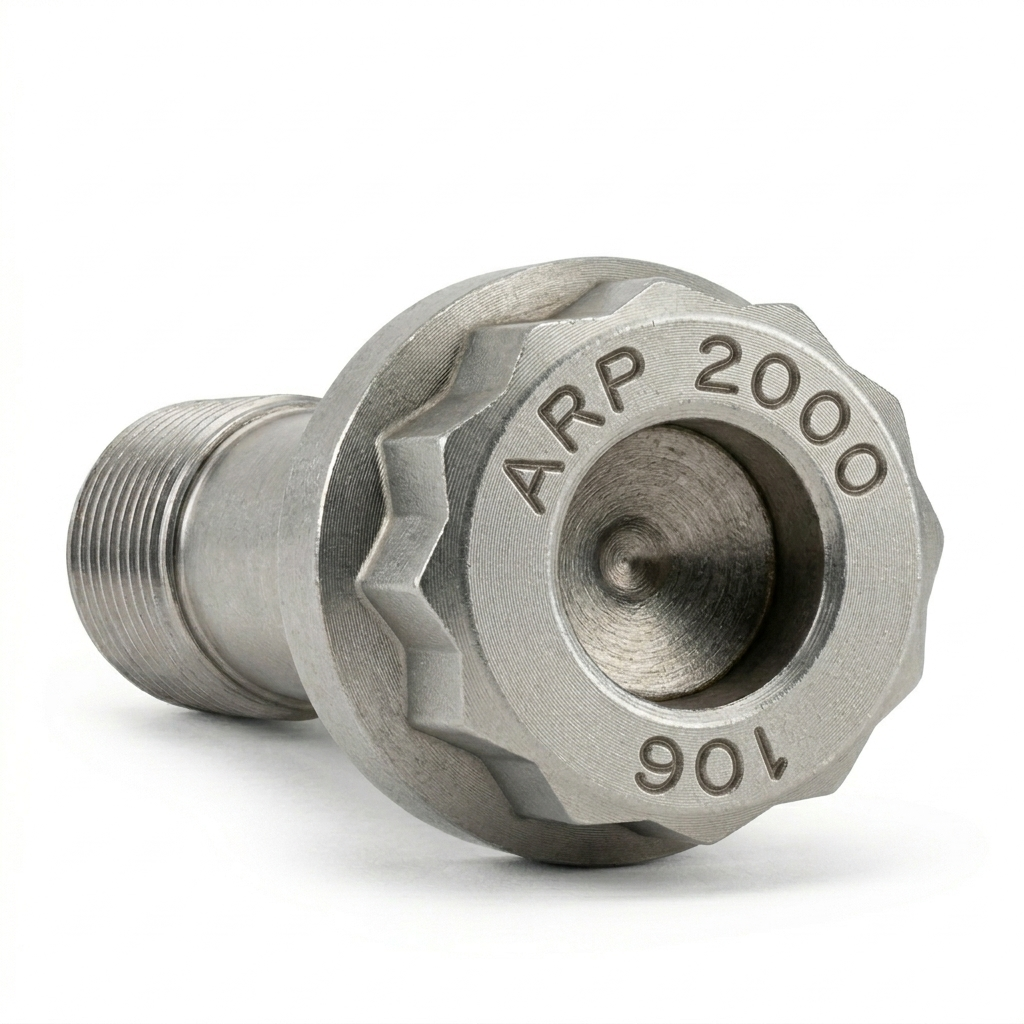 | ARP 2000: the all-round benchmark alloy, with a tensile strength of about 220,000 psi (1,517 MPa). Offered here in 5/16" diameter, it covers the vast majority of 1.5 EcoBoost builds, up to about 150 hp per cylinder, at speeds reaching 8,500 rpm. It is the default choice for a reliable 1.5 EcoBoost. |
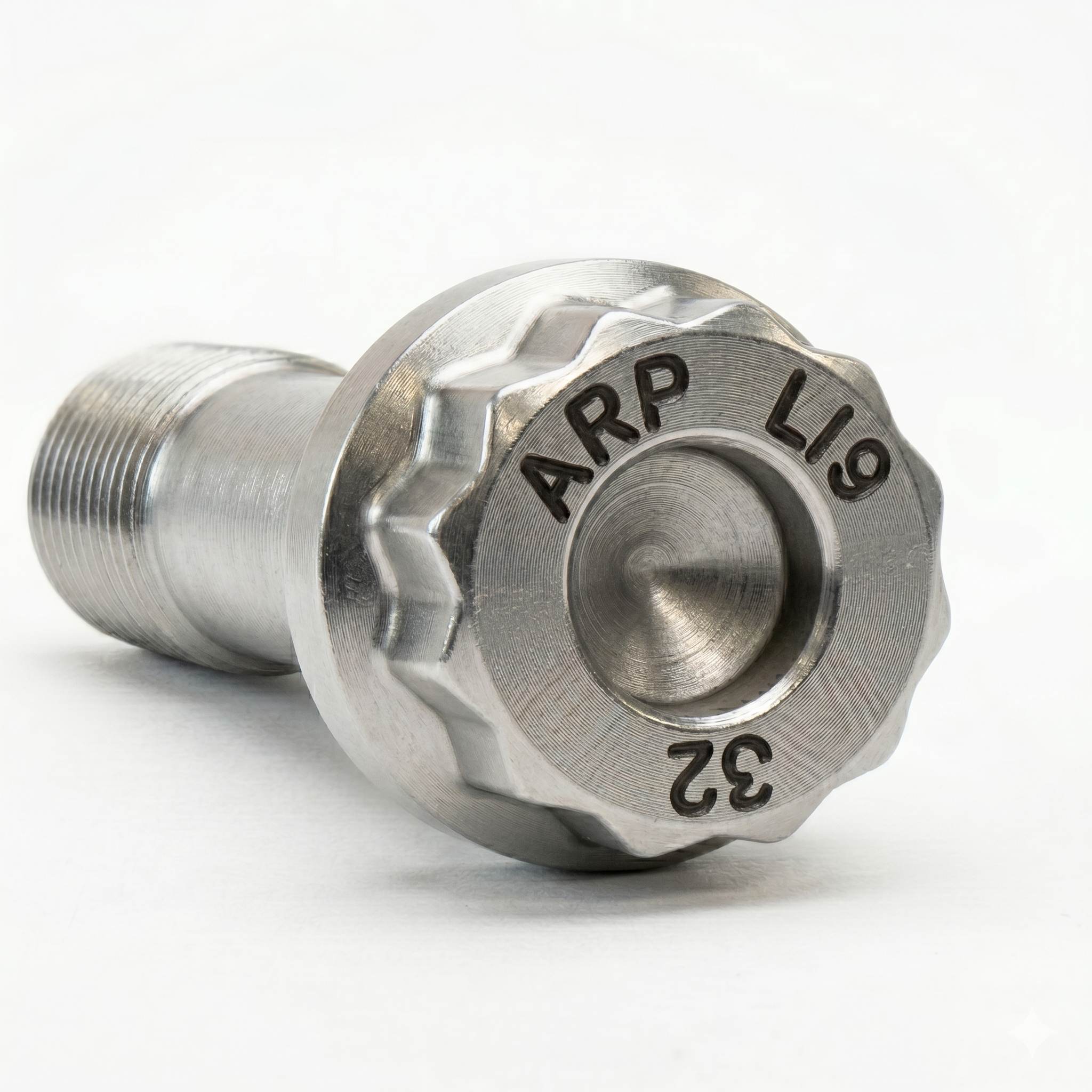 | ARP L19: a superior alloy (approx. 260,000 psi / 1,793 MPa), for the 1.5 EcoBoost builds most stressed in torque and rpm. In 5/16" diameter it pushes the safety margin beyond the ARP 2000, up to about 200 hp per cylinder and rpm up to 10,000, for the most demanding builds. More sensitive to corrosion and hydrogen embrittlement, it must be oiled and stored with care. |
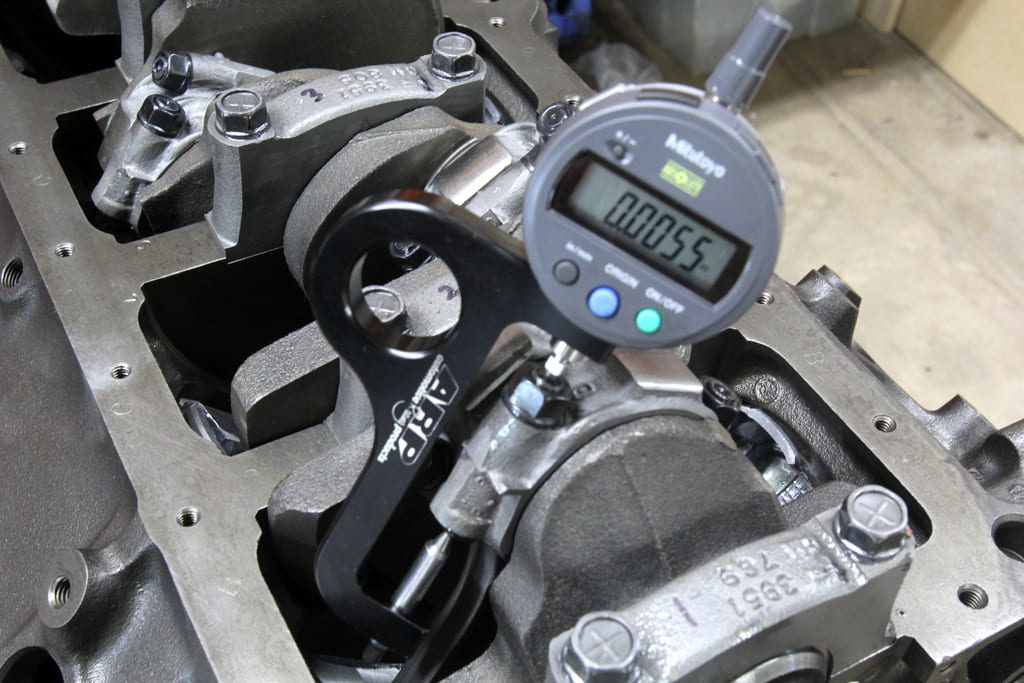
Discover the ARP stretch gauge
This 1.5 EcoBoost range brings together two race forged-rod manufacturers. Each reference ships as a complete set of 3, with its dedicated ARP bolts.
 | Wössner, a respected German manufacturer, offers its A-Beam profile (an optimised I-beam) in 4340 steel. |
 | ZRP precision-machines and weight-matches its rods, in the I profile. |
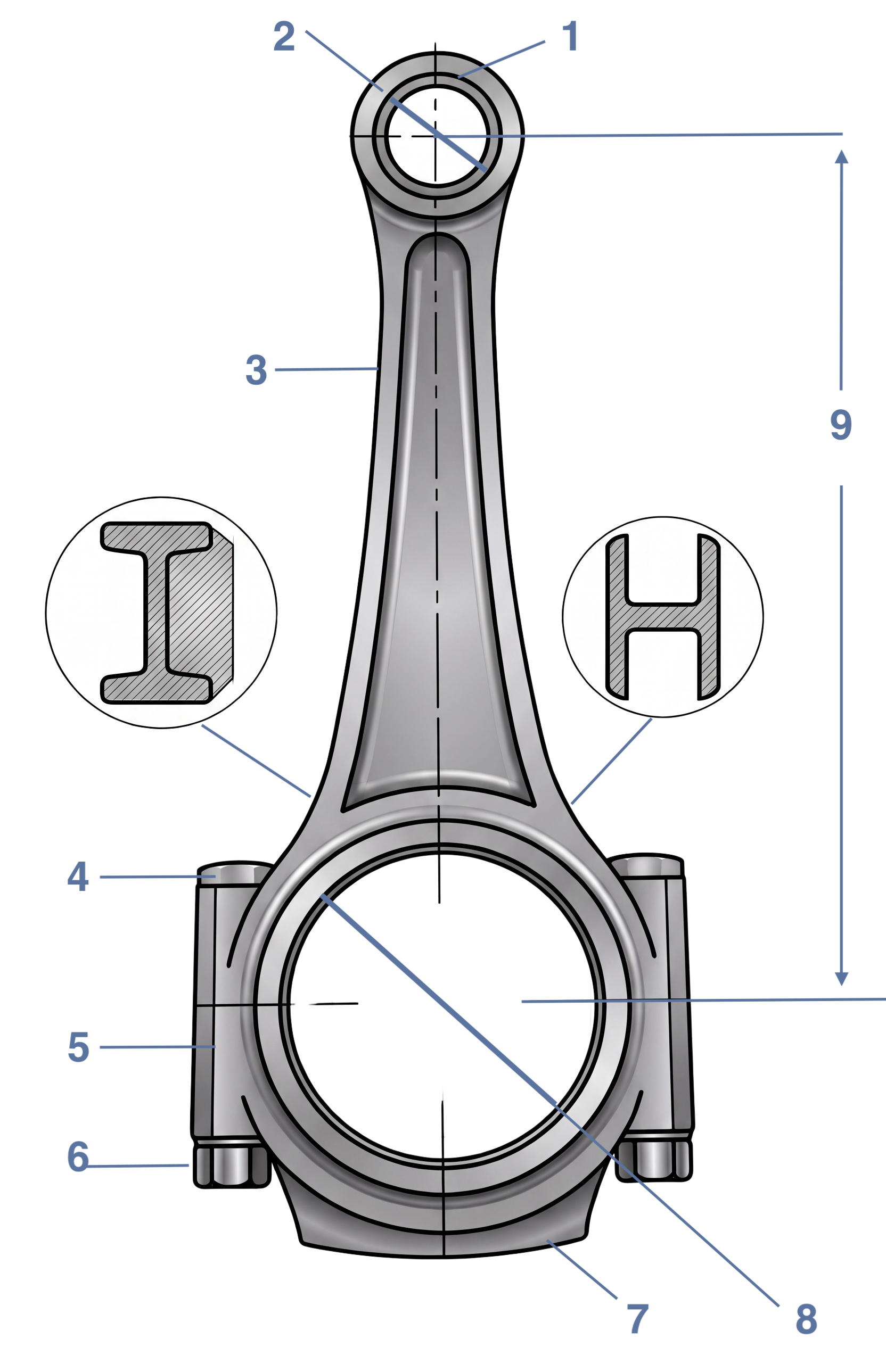 | 1) Small end 2) Small-end diameter 3) Rod beam 4) Rod bolt 5) Big end 6) Rod nut / bolt 7) Rod cap 8) Big-end diameter 9) Center-to-center |
These forged rods fit the Fords powered by the 1.5 L EcoBoost three-cylinder (GTDI), first and foremost the Fiesta ST:
| Brand | Model (chassis) | Engine code | Power | Years |
|---|---|---|---|---|
| Ford | Fiesta ST (Mk8) | GTDI (1.5 EcoBoost) | 147 kW (200 ch) | 2018–présent |
| Ford | Puma ST | GTDI (1.5 EcoBoost) | 147 kW (200 ch) | 2020–présent |
| Ford | Focus (Mk4) | GTDI (1.5 EcoBoost) | 110–134 kW (150–182 ch) | 2018–présent |
A set of forged rods costs vastly less than a blown engine: on a 1.5 EcoBoost pushed on boost and rpm, a factory rod that lets go takes out the block and the crankshaft. By fitting weight-matched forged rods from the outset, you make your build reliable for the long term and spare yourself a full rebuild, for a negligible extra cost next to the price of a new engine.