Product successfully added to your shopping cart
Quantity
Total
There are 0 items in your cart. There is 1 item in your cart.
Total products
Total shipping To be determined
Total

4.0L 32v - S65B40
Manufacturers
4.0L 32v - S65B40
Warning: Last items in stock!
New product
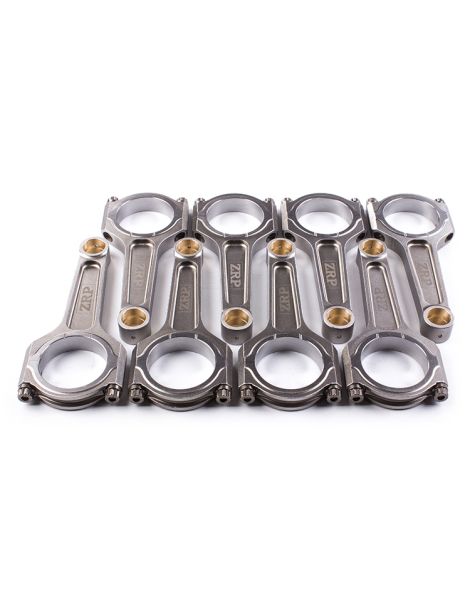
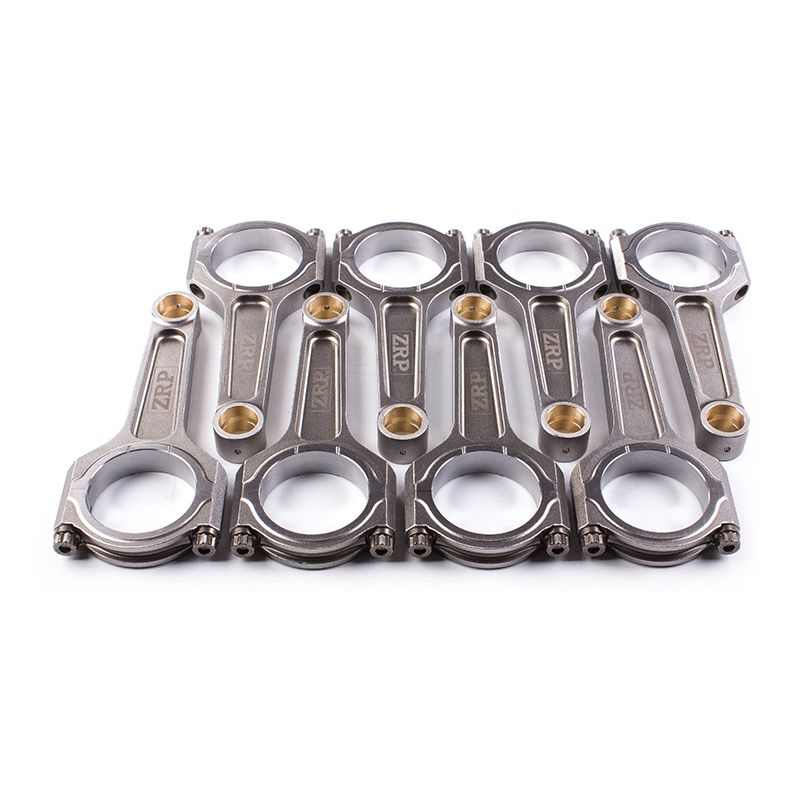
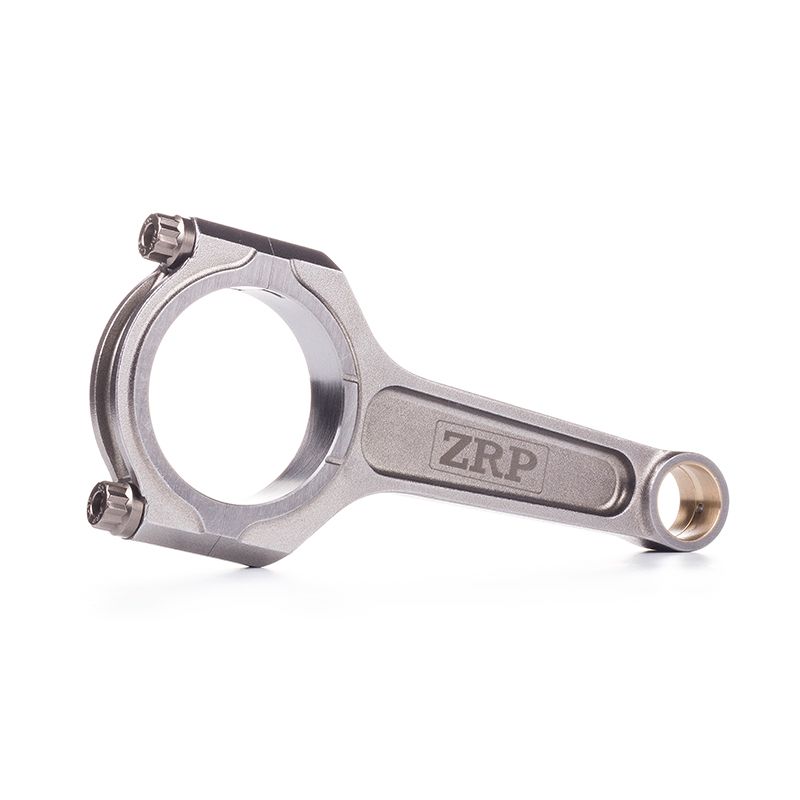
Set of 8 forged 4340 steel connecting rods for BMW M3 E90/E92/E93 4.0L 32V S65B40.
The BMW S65B40 is the naturally aspirated 4.0-litre V8 developed by the M division for the M3 E90/E92/E93. Derived from the S85 V10, it displaces 3,999 cc with a 92 mm bore and a short 75.2 mm stroke, a layout clearly aimed at high engine speeds. With no forced induction, power has to be found in the rev range, and this V8 makes the point: 420 hp at 8,300 rpm, 400 Nm and a red line set at 8,400 rpm. Light-alloy block, an almost seamless pull and a metallic soundtrack: the S65B40 remains one of the most recognisable engines BMW M has built.
Built from 2007 to 2013, this V8 was designed to rev and copes with it as standard. The limits appear as soon as it is taken beyond factory duty: raised rev limiter, back-to-back track sessions, reworked intake and exhaust, a more aggressive map, even added forced induction. The standard connecting rods, sized just as needed for road use, then become the S65B40’s acknowledged weak point, and a failure usually takes the bottom end with it. A set of forged 4340 steel rods, combined with forged pistons, removes that uncertainty.
Forged and then machined from heat-treated 4340 steel, these rods keep the original S65B40 geometry while adding a margin of strength the production part cannot match. Forging aligns the metal grain with the load path, which sharply raises fatigue life, the decisive factor on an engine that piles up cycles beyond 8,000 rpm.
Shot-peened, individually inspected and weight-matched to ±1 g across the eight rods in the set, they preserve the balance of a very high-revving V8. They cover the disciplines the M3 E9x is used in, from circuit racing and track days to hillclimb, time attack, drift, rally and drag, and suit Stage 1, Stage 2 and Stage 3 builds right up to full race engines. The ARP bolts supplied lock the assembly at high rpm.
| Reference | Brand | Profile | Bolts | Pin diameter OEM 21 mm | Small-end width | Big-end diameter OEM 56 mm | Big-end width | Center-to-center OEM 140.72 mm | Weight per rod |
|---|---|---|---|---|---|---|---|---|---|
| R-BMW-014-I | ZRP | I | ARP 2000-3/8"-38mm | 21 | 56 | 18.5 | 140.7 | 499 | |
| R-BMW-014-I-L19 | ZRP | I | ARP L19-3/8"-38mm | 21 | 56 | 18.5 | 140.7 | 499 |
| Rod | Bolts | Torque | Recommended stretch |
|---|---|---|---|
| ZRP (R-BMW-014-I) | ARP 2000 | 61 N·m | 0.140 – 0.152 mm |
| ZRP (R-BMW-014-I-L19) | ARP L19 | 67,8 N·m | 0.152 – 0.165 mm |
A rod bolt is not a lock, it is a calibrated spring: its preload must stay above the separating force seen by the cap at every upward piston travel, and that margin is the first thing to vanish when the bolt is left too loose. On the eight rods of the S65B40, insufficient tightening shows up as fretting on the parting face, progressive hammering of the bearing shell, then widening clearance and falling oil pressure. The opposite fault is just as destructive: beyond the specified range the 3/8" ARP 2000 or ARP L19 bolt creeps, its section necks down, the bearing bore loses its roundness and the big end goes oval, which shifts the bearing contact and breaks the oil film. The values in the table below are those of the fastener manufacturer: they apply with no rounding and no adjustment by feel. Measuring bolt stretch with a dial gauge remains the reference, because it directly qualifies the elastic deformation obtained, torque being only an approximate image of it; ARP assembly lubricant is mandatory and the kit instructions take priority.
| 4340 steel, a nickel-chromium-molybdenum alloy, combines high mechanical strength with good ductility. Against the factory sintered metal, it gains about +19% yield strength, +8% tensile strength and +19 to +37% fatigue resistance. On an engine that lives at high rpm, this means a rod that is far more durable and tolerant of repeated stress. |
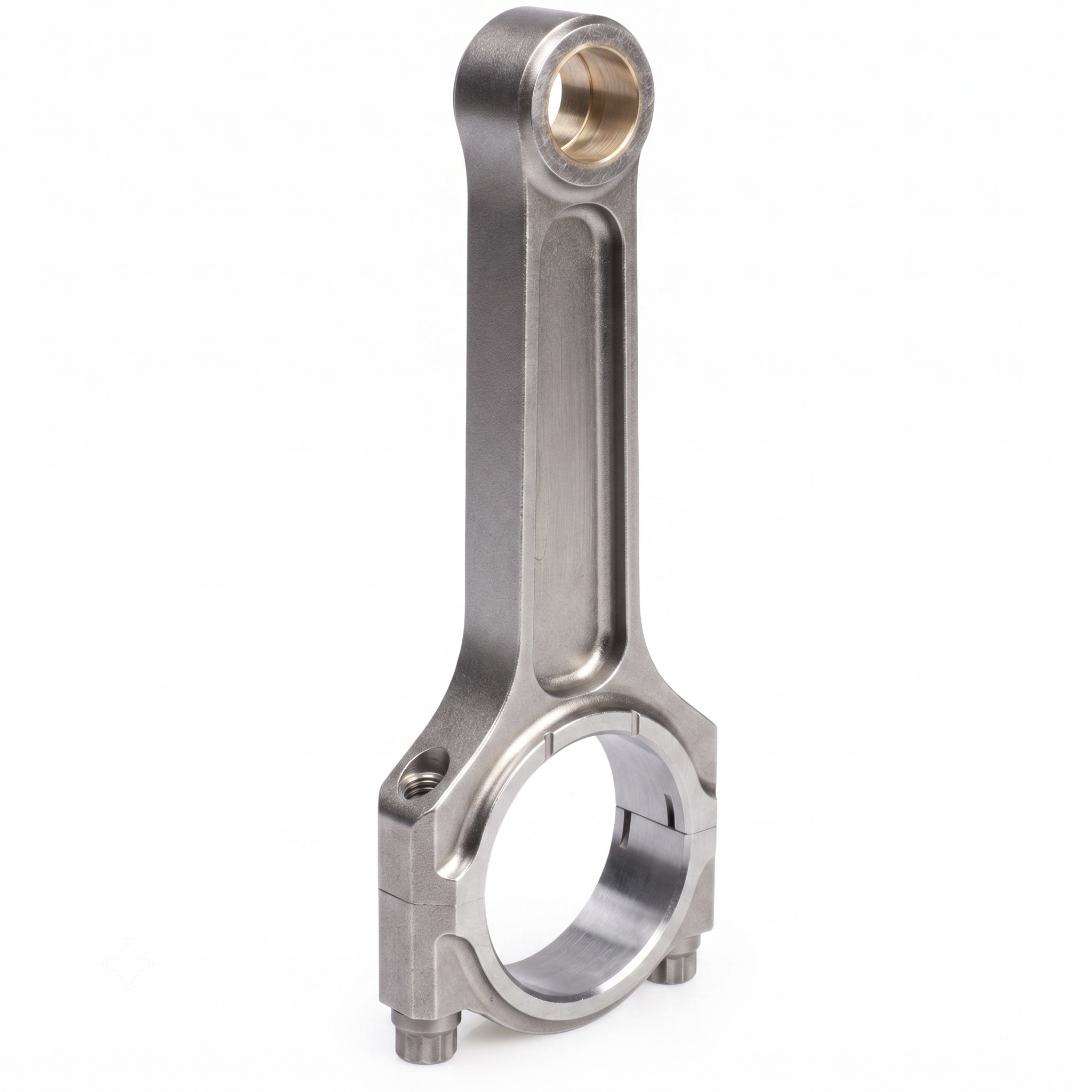 | I-Beam profile. Its slimmer central section cuts reciprocating mass: less inertia, lower loads on the bearings and a freer climb through the rev range, which is decisive on a naturally aspirated engine living beyond 8,000 rpm. Material is concentrated where it actually works, so stiffness remains more than adequate for the track and competition use intended here. It is the only profile offered for this engine, and the one most consistent with its high-revving character. |
The rod bolt is the most heavily loaded part of the assembly: on every revolution it absorbs the inertial force trying to pull the cap away from the rod body. Two ARP grades are offered on this kit; what matters is matching the grade to the real use of the build, then following the specified torque and stretch figures exactly.
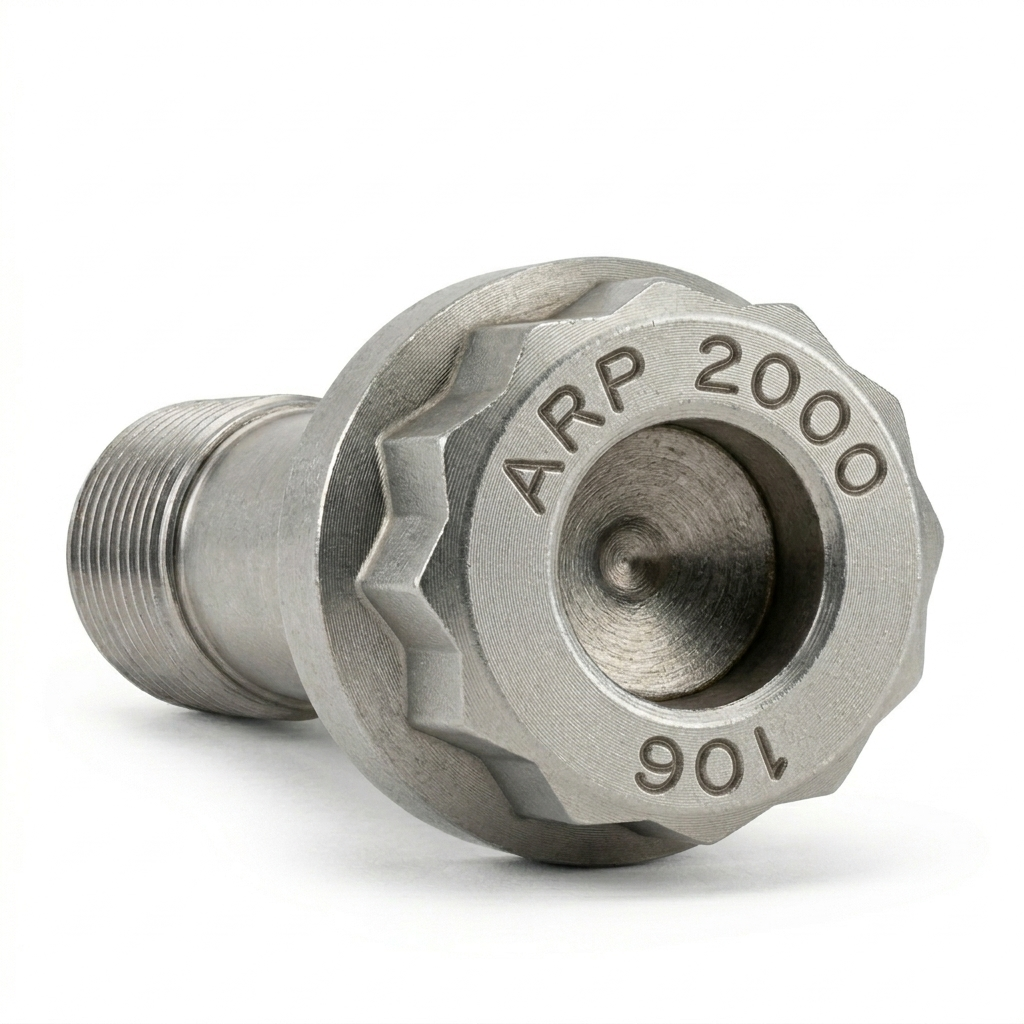 | ARP 2000: the high-performance standard, with tensile strength around 220,000 psi (about 1,517 MPa). In 3/8" it covers builds up to 200 hp per cylinder and 8,500 rpm, which takes in the large majority of tuned S65B40 engines, including sustained track use. It is the usual choice for circuit and track days, drift, rally, drag and hillclimb, valued for its strength and versatility, with no special storage requirements. |
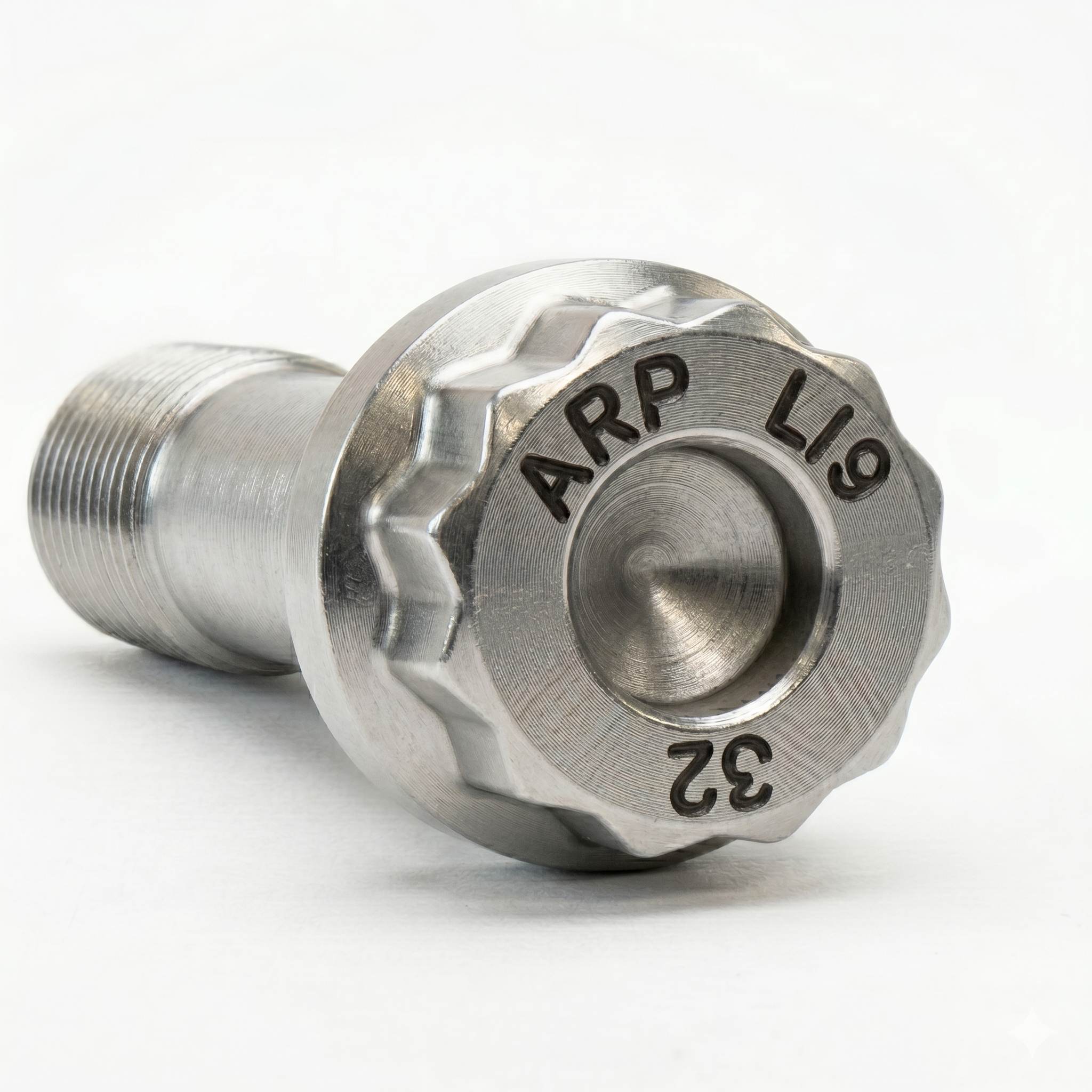 | ARP L19: reserved for engines pushed to the extreme, with tensile strength around 260,000 psi (about 1,793 MPa). In 3/8" it allows up to 250 hp per cylinder and 10,000 rpm, a useful reserve on an S65B40 with a raised limiter or used in competition, where very high engine speeds are held for long periods and cylinder pressure stays high. The trade-off: the alloy is sensitive to corrosion and hydrogen embrittlement, and must be stored and fitted oiled, away from moisture. |
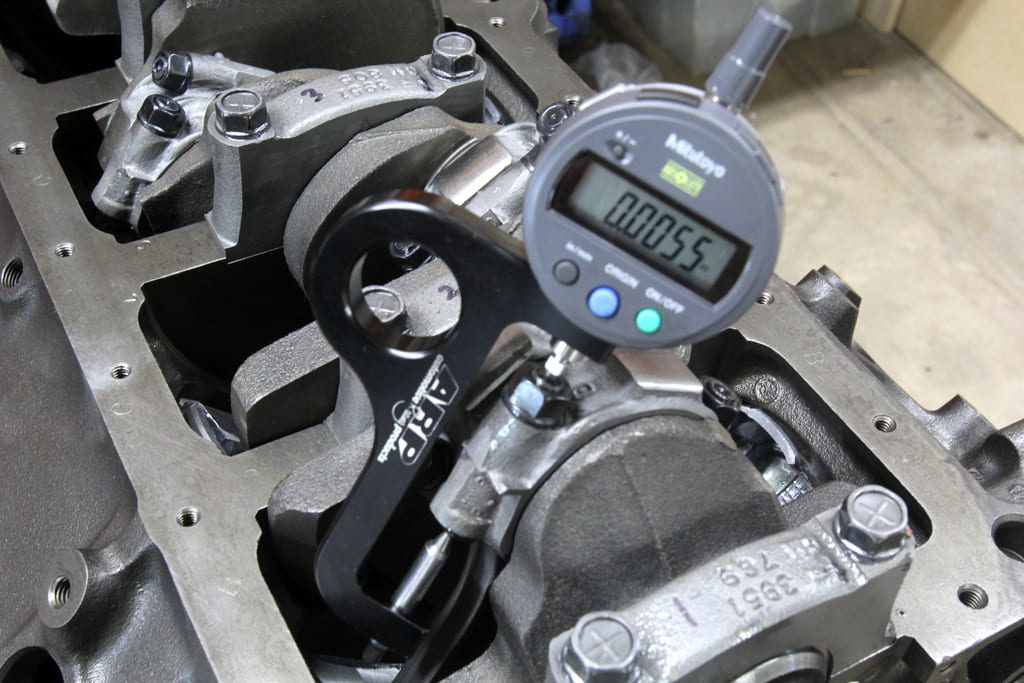
| In addition to torque tightening, measuring bolt stretch with a dial indicator remains the most reliable way to guarantee preload. The instructions supplied with the kit always take precedence. |
 | ZRP, the Greek manufacturer of high-performance forged connecting rods run by Alex Drakos in Athens. Every rod is forged from 4340 steel, precision machined and then weight-matched to protect the balance of a high-revving engine. For the S65B40 the range is limited to the I-Beam profile, with ARP 2000 or ARP L19 bolts depending on the power and rpm targeted. Design, machining and inspection all take place in Greece, and the rods are proven in rally, drift and circuit racing. |
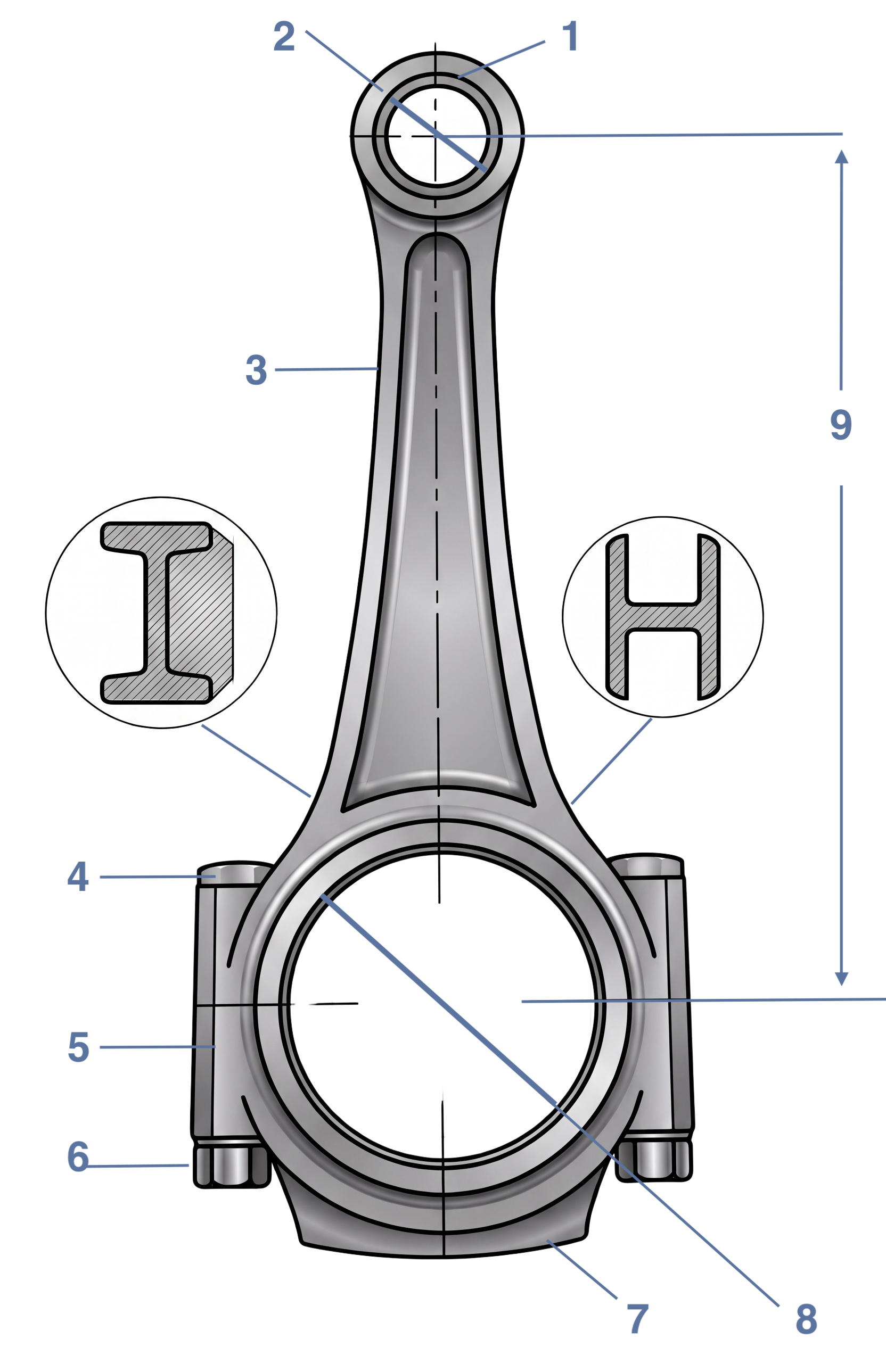 | 1) Small end 2) Small-end diameter 3) Rod beam 4) Rod bolt 5) Big end 6) Rod nut / bolt 7) Rod cap 8) Big-end diameter 9) Center-to-center |
These forged connecting rods are compatible with the factory BMW S65B40 engine and its builds. Vehicles concerned:
| Brand | Model (chassis) | Engine code | Power | Years |
|---|---|---|---|---|
| BMW | M3 (E90/E92) | S65B40 | 420 hp | 2007–2013 |
| BMW | M3 Cabriolet (E93) | S65B40 | 420 hp | 2008–2013 |
OEM reference: 11 24 7 838 623 (rod set).
On an S65B40, a rod that lets go at full revs never fails alone: it marks the crankshaft and often the block and cylinder head. Returning to standard specification then means replacing rods and pistons, with specialist labour and a long period off the road, only to end up back at the original limits.
For a comparable budget, sometimes less, a set of forged 4340 steel rods combined with forged pistons brings a far greater margin of strength, lasting fatigue life at high rpm and the freedom to develop the build further without opening the bottom end again. This is the route European engine builders have taken on the M V8s for more than fifteen years.
For the same budget: more reliability, more usable rpm, more longevity.