Product successfully added to your shopping cart
Quantity
Total
There are 0 items in your cart. There is 1 item in your cart.
Total products
Total shipping To be determined
Total

3.5L 24v - EcoBoost Gen1
Manufacturers
3.5L 24v - EcoBoost Gen1
Warning: Last items in stock!
New product
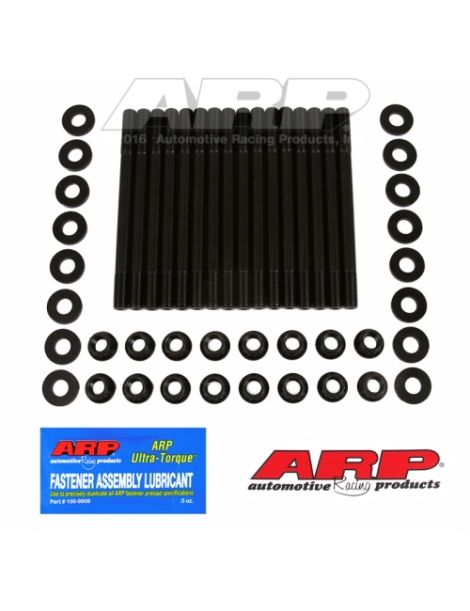
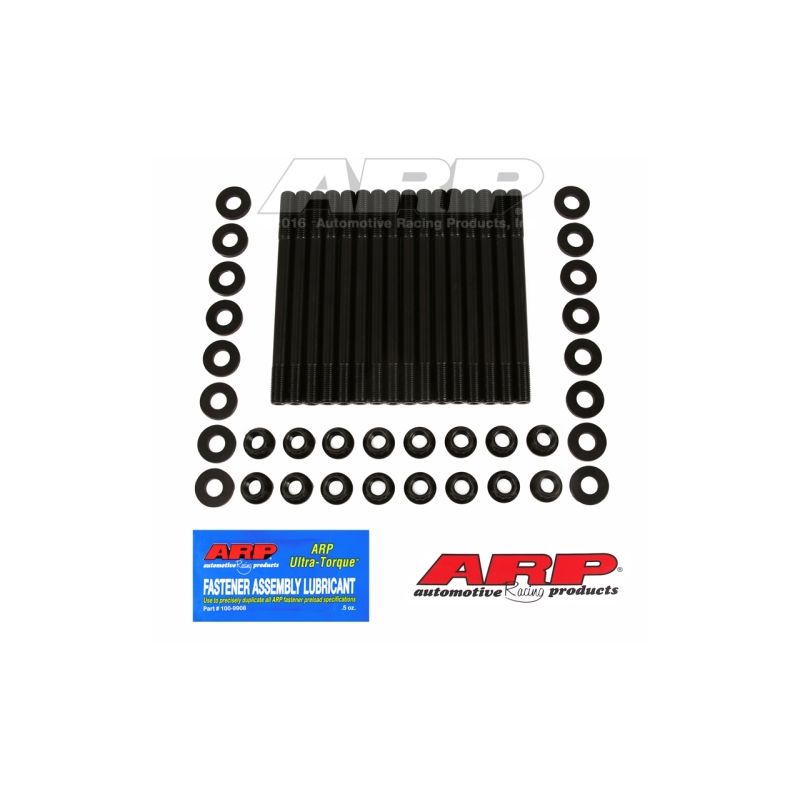
ARP2000 cylinder head studs for the Ford 3.5 EcoBoost and 3.7 Cyclone V6 engines (Explorer, Flex, Taurus, Mustang, GT).
This model covers two 24-valve Ford V6 engines of the same family: the 3.5 EcoBoost, boosted (3,496 cc, bore 92.5 mm, stroke 86.7 mm), and the naturally aspirated 3.7 Cyclone. The 3.5 EcoBoost powers the Ford Explorer, Flex and GT, among others; the 3.7 Cyclone, the Ford Mustang, Explorer and Taurus. ARP gives its 153-4303 kit for the 3.5 EcoBoost and also lists it for the 3.7 Cyclone.
As built, each cylinder head is held by angle-tightened, single-use bolts (Ford part HL3Z-6065-A for the 3.5 EcoBoost). The ARP studs replace these bolts on both cylinder heads of the V6.
The job of the head fasteners is to keep the cylinder head locked to the block despite the pressure inside the combustion chambers. They keep the gasket compressed; as soon as their clamping force drops, leaks appear between head and block.
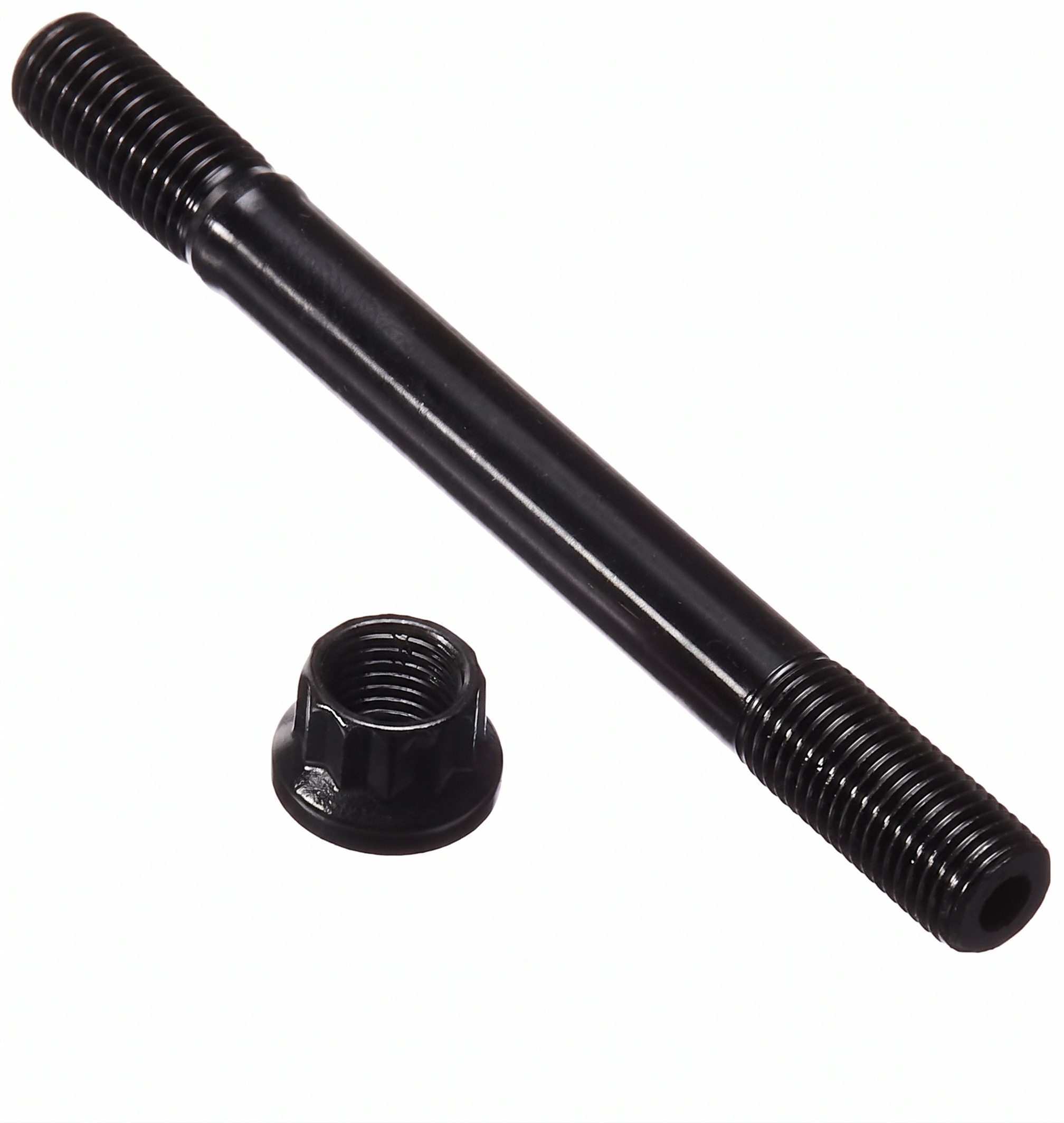
According to the instruction sheet, the gasket and then the head are fitted first; the studs are then screwed into the block by hand, without torque (the hex socket at the end is only for fitting and removal), followed by the washers and the 12-point nuts, run down by hand after lubrication. The ARP2000 range relies on an alloy steel developed by ARP: after heat treatment it reaches 220,000 psi tensile strength, and the threads are rolled afterwards. As standard bolts generally belong to classes 10.9 and 12.9, i.e. 150,800 to 176,900 psi minimum, ARP2000 exceeds them by 24 to 46 %. In M11 x 1.5, the ARP2000 studs hold up to 1,000 hp on this V6 engine (calculated estimate).
| Part number | Brand | Grade / material | Nuts | Thread |
| ARP-153-4303 | ARP | ARP2000 - Undercut | 12-point | M11 x 1.5 |
| Part number | Stage 1 | Stage 2 | Stage 3 |
| ARP-153-4303 | 41 Nm | 81 Nm | 115 Nm |
The studs are fitted by hand into the block threads, without a torque wrench. The instruction sheet makes no provision for thread locker. According to ARP, some installers apply a blue one to the block-end thread only; never on the nuts or together with ARP grease, and tightening must be completed before it sets.
The instruction sheet mentions the ARP thread chaser 912-0005 (M11 x 1.5) to chase the block threads if needed, and asks for the washer seats on the head to be cleaned with solvent or brake cleaner.
The washers go on with the stamped face toward the head, which stops them turning during tightening.
Follow the tightening sequence recommended by the manufacturer and bring to torque in three stages; the stated values assume ARP lubricant on the threads and under the nuts.
The washers go on dry, clean on both faces, onto degreased cylinder head seats; an oil film at this point would distort the tightening.
The torque figures above come from ARP instruction sheet 153-4303, revision applicable on the day the page went online. The official instruction sheet prevails in case of difference and describes the complete procedure, tightening sequence included. Read the ARP 153-4303 instruction sheet
The stated tightening torques only make sense with ARP assembly grease, applied to the threads and under the nuts.
| Buy the ARP assembly grease → |
On an undercut stud, ARP reduces the shank between the two threads. The studs then stretch more evenly from one to the next: the clamping force becomes more consistent and compensates for head gasket compression at installation, which reduces the risk of a blown gasket.
 | ARP (Automotive Racing Products) was born in the early 1970s from the initiative of Gary Holzapfel, an engineer from the aerospace industry, determined to eliminate engine failures caused by weak fasteners in motorsport. The company designs and manufactures thousands of parts in California, in several material grades suited to each use. |
| Criterion | Original head bolts | Reinforced ARP studs |
 |  | |
| Block threads | Stressed at every tightening | Preserved (studs screwed in by hand) |
| Tightening | Angle-tightened, single-use bolts | Three stages up to the torque in the instruction sheet |
Standard fasteners remain suitable as long as the engine keeps its original combustion pressure. They reach their limits in the following cases:
| Model | Engine code | Power | Years |
| Ford Explorer (U5_) 3.5 EcoBoost | T35PDTD | 345 to 370 hp | since 2013 |
| Ford Flex 3.5 EcoBoost | T35PDTD | 360 to 370 hp | since 2009 |
| Ford GT 3.5 EcoBoost | URWA | 600 to 657 hp | since 2016 |
| Ford Mustang 3.7 (coupe and convertible) | Cyclone 3.7 | 309 hp | 2010-2014 |
| Ford Explorer (U5_) 3.7 | 99M | 309 hp | since 2012 |
| Ford Taurus 3.7 | 99M | 309 hp | since 2012 |
OEM reference: HL3Z-6065-A (3.5 EcoBoost)
An EcoBoost V6 fitted from the factory with single-use angle-tightened bolts is calibrated for stock output. Once a build has raised combustion pressure, gasket retention becomes the first weak point. ARP2000 studs hold each head with a more even clamp load; opening a V6 and its two heads again costs far more than this kit.