- On order
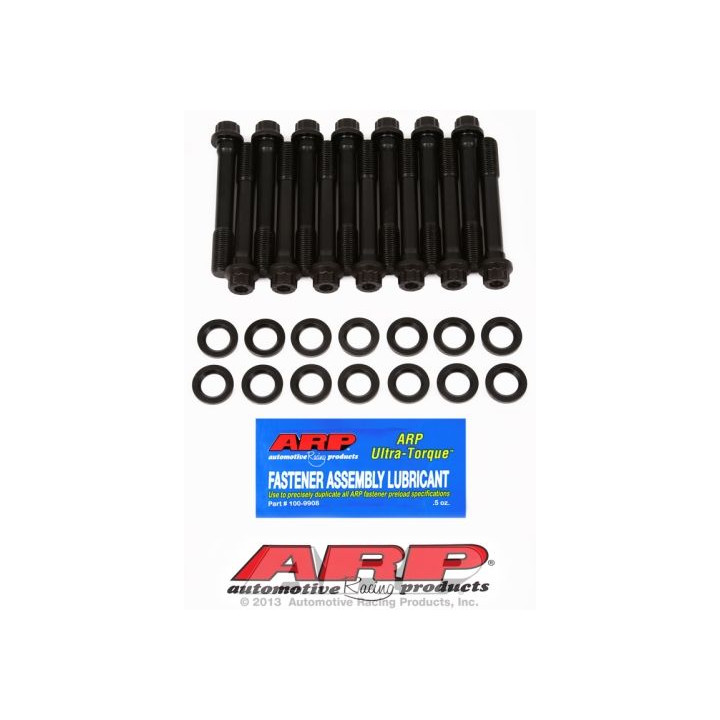

Reinforced ARP cylinder head bolts/studs TOYOTA 7M
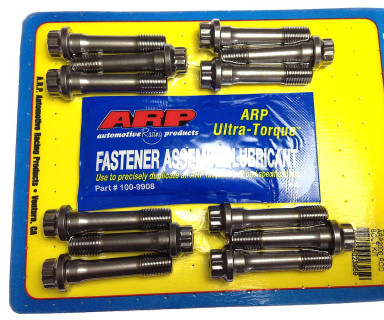
ARP 8740 cylinder head bolt or stud kits for the Toyota Supra, 7M-GE and 7M-GTE engines.
- Brand: ARP
- Engines: 7M-GE, 7M-GTE
- Thread: 12 mm, M12 x 1.25
- Grade: 8740
The engines concerned
The 7M-GE and 7M-GTE are Toyota's 3.0-litre, 24-valve inline six-cylinder engines (2,954 cm³, 83 mm bore, 91 mm stroke), built from 1986 to 1992: the 7M-GE is naturally aspirated, the 7M-GTE turbocharged. The 7M-GTE powers the Supra Turbo (A70, MA70) and the Soarer 3.0 GT Turbo (Z20). ARP lists both engines for each of its kits.
As standard, the cylinder head is held by fourteen oiled bolts, tightened to 78 Nm in several stages in the prescribed order, with no angle tightening.
Reinforced ARP cylinder head bolts and studs
The job of the head fasteners is to keep the cylinder head locked to the block despite the pressure inside the combustion chambers. They keep the gasket compressed; as soon as their clamping force drops, leaks appear between head and block.
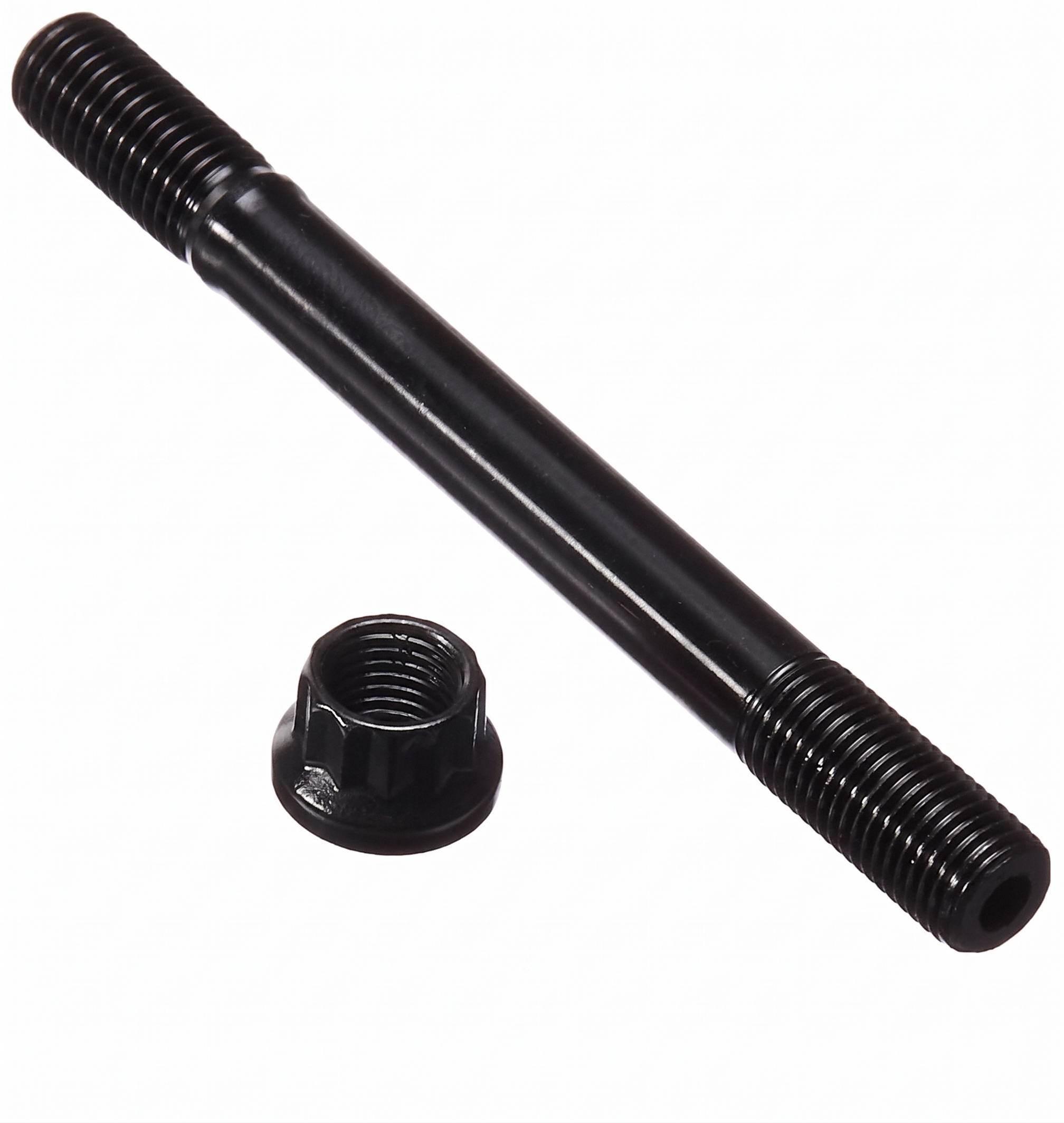
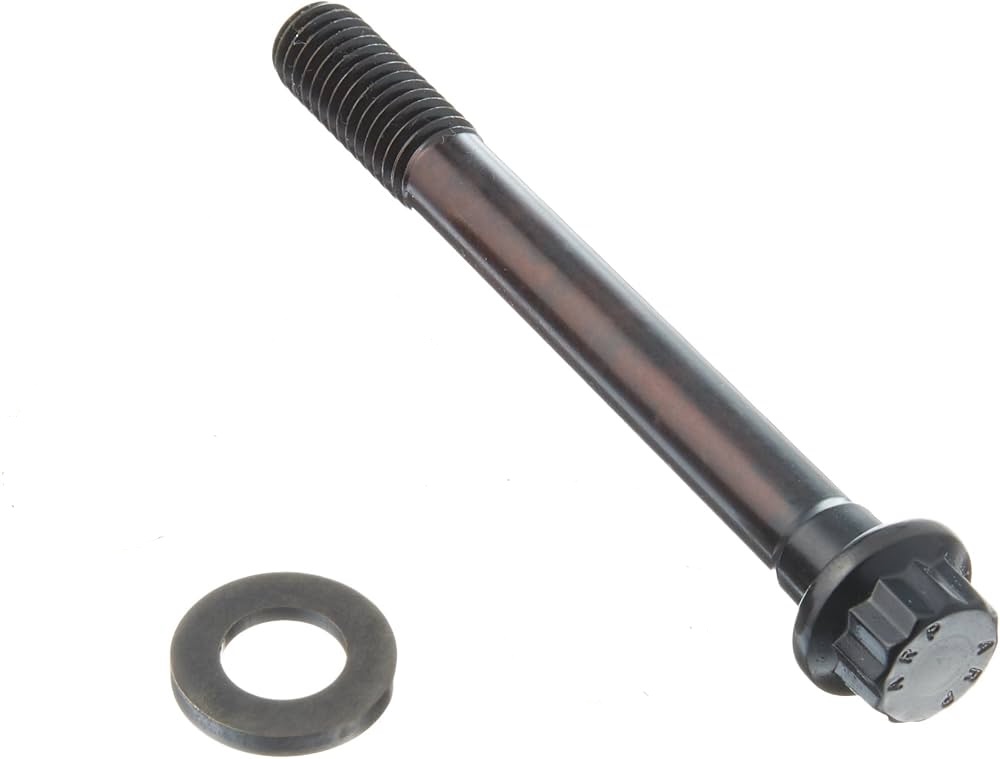
Three ARP kits in 8740 fit these engines: the 203-4202 studs (12 mm thread) and 203-4701 studs (M12 x 1.25, the « undercut » version per the 2026 ARP list), and the 203-3902 bolts (12 mm). Per their instruction sheets, the studs are hand-threaded into the block before the head is fitted, while the nut-free bolts are torqued with the head in place. Material of the fasteners: 8740, a chrome-molybdenum steel that ARP specifies at 190,000 psi tensile strength. Factory-fitted fasteners usually fall into classes 10.9 and 12.9, with 150,800 to 176,900 psi minimum tensile strength. In 12 mm, the 8740 studs hold up to 900 hp on this six-cylinder engine (calculated estimate). On this six-cylinder engine, the limit of the 8740 studs in M12 x 1.25 lies at 900 hp (calculated estimate). These 8740 bolts in 12 mm are calculated to handle up to 900 hp on this six-cylinder engine (calculated estimate).
Technical specifications
| Part number | Type | Brand | Grade / material | Nuts | Thread |
| ARP-203-4202 | Studs | ARP | 8740 | 12-point | 12 mm |
| ARP-203-4701 | Studs | ARP | 8740 - Undercut | 12-point | M12 x 1.25 |
| ARP-203-3902 | Bolts | ARP | 8740 | No nut | 12 mm |
Tightening torque
| Part number | Stage 1 | Stage 2 | Stage 3 |
| ARP-203-4202 (studs) | 41 Nm | 81 Nm | 122 Nm |
| ARP-203-4701 (studs) | 41 Nm | 81 Nm | 122 Nm |
| ARP-203-3902 (bolts) | 41 Nm | 81 Nm | 122 Nm |
Studs 203-4202 and 203-4701: no torque is applied to the studs as they go into the block: they are screwed in by hand. The instruction sheet leaves the option of thread locker to mount them permanently, provided tightening is done before the product hardens.
Studs 203-4202 and 203-4701: where the studs run through into a water jacket, the instruction sheets ask for ARP sealant to be applied to their threads.
Bolts 203-3902: each washer goes on with its chamfered side facing the bolt head; a thread breaking into the water jacket gets the ARP thread sealant, a blind hole the Ultra-Torque lubricant.
Follow the tightening sequence recommended by the manufacturer and bring to torque in three stages; the stated values assume ARP lubricant on the threads and under the nuts or bolt heads.
According to the instruction sheet, ARP lubricant is also applied to the washers, as on the threads.
These values follow ARP instruction sheets 203-4202, 203-4701 and 203-3902; if in any doubt, the current official sheet is the authority, full procedure and tightening order included. Read the ARP 203-4202 instruction sheet; Read the ARP 203-4701 instruction sheet; Read the ARP 203-3902 instruction sheet
Technical guide
To obtain the intended preload, ARP assembly grease must be present on the threads and under the nuts or bolt heads: the torque figures in the table are established with it.
| Buy the ARP assembly grease → |
ARP undercut studs
An undercut stud has a reduced-diameter shank. This profile, ARP explains, spreads stretch more evenly across the studs: the cylinder head is clamped with a steadier force, gasket compression is better compensated and the gasket is less likely to fail.
The ARP brand
 |
ARP (Automotive Racing Products) was born in the early 1970s from the initiative of Gary Holzapfel, an engineer from the aerospace industry, determined to eliminate engine failures caused by weak fasteners in motorsport. The company designs and manufactures thousands of parts in California, in several material grades suited to each use. |
Advantages over the original bolts
| Criterion | Original head bolts | Reinforced ARP studs | Reinforced ARP bolts |
 |
 |
 |
|
| Tightening method | Torque only (78 Nm) | Torque only, in 3 stages | Torque only, in 3 stages |
| Block thread | Stressed at every tightening | Preserved (stud fitted hand tight) | Stressed at every tightening |
When to upgrade the cylinder head fasteners
On an engine left standard, the original fasteners do their job. Switching to reinforced fasteners becomes worthwhile as soon as:
- Higher boost pressure on the 7M-GTE, or a turbo added to a naturally aspirated 7M-GE
- The compression ratio is increased
- A reinforced MLS gasket is fitted, with its need for a high and even preload
- The head has already lifted or the gasket has already failed
- The engine is used in competition, with intense heat cycles and repeated teardowns
Vehicle compatibility
| Model | Engine code | Power | Years |
| Toyota Supra Turbo (A70, MA70) | 7M-GTE | 230-232 hp | 1986-1992 |
| Toyota Soarer 3.0 GT Turbo (Z20, MZ20, MZ21) | 7M-GTEU | 230 hp | 1986-1991 |
Why is it the most cost-effective solution?
Designed for stock output, the original fasteners reach their limit quickly once cylinder pressure climbs; the gasket and fixings suffer first. In reinforced 8740, ARP hardware holds a much higher pressure, which lowers the risk of a failing gasket or a snapped bolt, and of a rebuild costing well beyond the price of the kit.
-
Brand
-
ReferenceARP-203-3902
-
EAN130672036007577