Product successfully added to your shopping cart
Quantity
Total
There are 0 items in your cart. There is 1 item in your cart.
Total products
Total shipping To be determined
Total

1.6L 16v - 4A-GE
Manufacturers
1.6L 16v - 4A-GE
Warning: Last items in stock!
New product
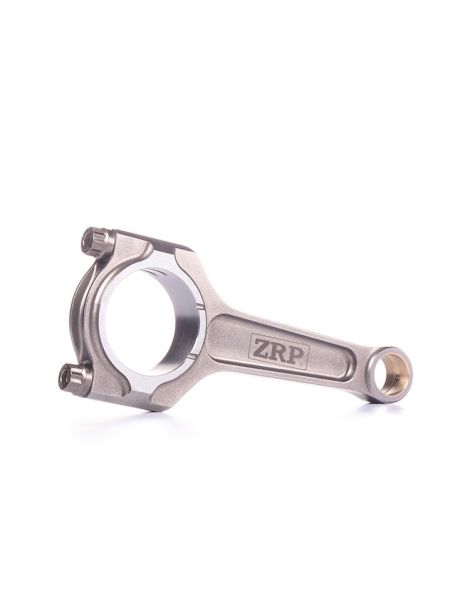
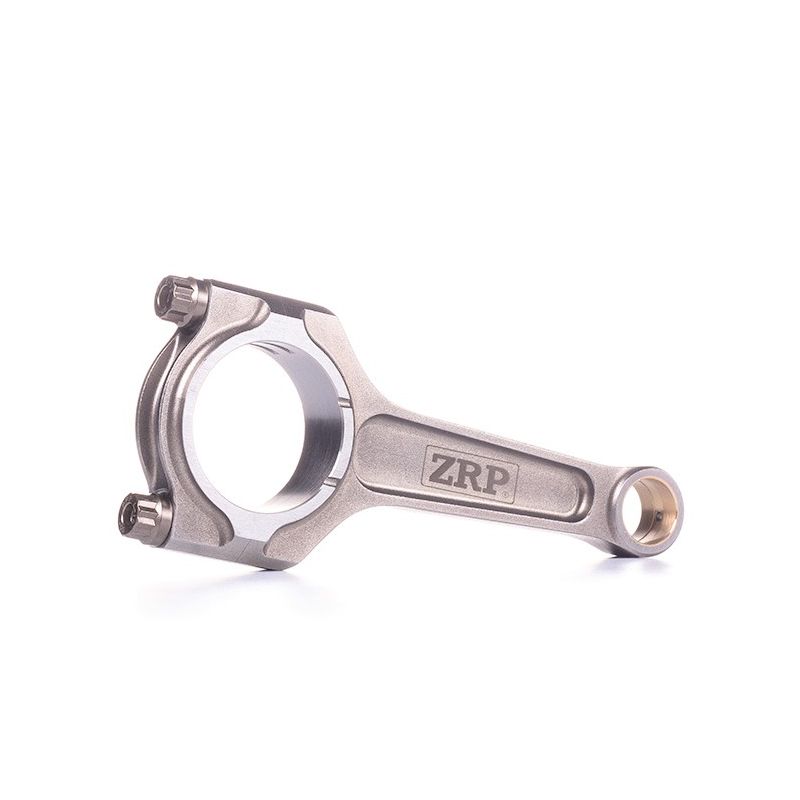
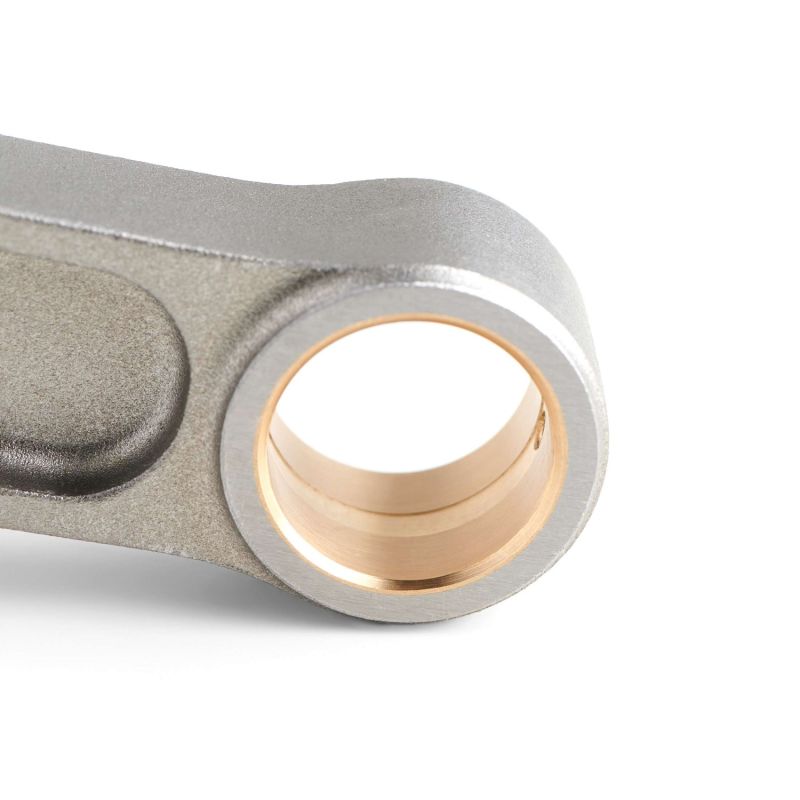
Set of 4 forged connecting rods in 4340 steel for the Toyota 1.6L 16V/20V 4A-GE, 20 mm pin.
Brands: ZRP
Compatibility: Corolla AE86, MR2 AW11, Celica, Carina
Engine codes: 4A-GE
Bolts included: ARP 2000 or L19
Launched in 1983, the 4A-GE is the sporting version of Toyota’s A family: a 1.6-litre inline four (1,587 cc) with twin overhead camshafts, 16 valves at first and 20 valves on the last evolutions, for an 81 mm bore and a 77 mm stroke. This naturally aspirated engine became known for its liveliness and its appetite for high rpm. Built until 2002, it evolved from the first “big port” to the 20V Silvertop and then Blacktop with variable valve timing, and equipped the Corolla AE86, the MR2 AW11, the Celica, Carina, Corona and Sprinter. Its competition reputation has never faded since then.
Made popular by the Corolla AE86, a light rear-wheel-drive car that became an icon of drift and of Japanese car culture, the 4A-GE is among the most heavily built engines on the planet: individual throttle bodies (ITB), aggressive camshafts, raised compression ratio, rpm beyond 8,000, up to conversions to forced induction. Past that point the standard rod becomes the weak spot of the reciprocating assembly and replacing it with a forged rod becomes the decisive step. This listing corresponds to the 20 mm pin version, larger than the original 18 mm: it is fitted with forged pistons made for that diameter, the centre-to-centre length staying at 122 mm and the big-end bore at 45 mm.
Our forged 4A-GE rods are machined from wrought 4340 steel, the reference alloy in motorsport. They suit every discipline: circuit, drift, rally, drag, time attack and hillclimb, and support a high-revving naturally aspirated 4A-GE as well as a heavily built engine. Depending on the target (Stage 1 reliability, Stage 2 tuning, Stage 3 high power and beyond), they lock in the power increase without ever cutting corners on reliability. Supplied as a weight-matched set of 4, they keep the 4A-GE's 20 mm piston pin and 122 mm center-to-center length.
Compared with a cost-driven sintered factory rod, a forged 4340 rod delivers about +19% yield strength, +8% tensile strength and +19 to +37% fatigue endurance. That mechanical reserve lets a 4A-GE pushed in rpm absorb cylinder-pressure peaks and the inertia loads typical of high engine speeds without breakage. The entire range is made from this forged 4340 steel, proven on the most demanding builds.
| Reference | Brand | Profile | Rod bolts | Ø pin (mm) OEM 18 mm | Small-end width (mm) | Ø big end (mm) | Big-end width (mm) | Center-to-center (mm) OEM 122 mm | Weight (g) |
|---|---|---|---|---|---|---|---|---|---|
| R-TOY-004-I | ZRP | I-HD | ARP 2000-3/8"-38mm | 20 | 45 | 21,85 | 122 | 435 | |
| R-TOY-004-I-L19 | ZRP | I-HD | ARP L19-3/8"-38mm | 20 | 45 | 21,85 | 122 | 435 |
A rod bolt is not an unlimited consumable: on this 20 mm pin variant, the workshop keeps a count of how many times each bolt has been tightened and replaces it as soon as a free length read on the gauge drifts from the value logged at first assembly. That is the only reliable way to spot permanent deformation, which the eye cannot see. The hardware available is ARP 2000 or ARP L19 in 3/8" 38 mm; the torque and stretch figures in the table are those specified by its manufacturer and are to be followed scrupulously, the stretch measurement always taking precedence over a plain wrench reading.
| Reference | Brand | Rod bolts | Torque | Recommended stretch |
|---|---|---|---|---|
| R-TOY-004-I | ZRP | ARP 2000-3/8"-38mm | 61 N·m | 0,140 à 0,152 mm |
| R-TOY-004-I-L19 | ZRP | ARP L19-3/8"-38mm | 67,8 N·m | 0,152 à 0,165 mm |
| 4340 is a low-alloy steel with nickel, chromium and molybdenum. Forging aligns the metal fibres in the direction of load, closes internal porosity and delivers far greater mechanical strength than a factory sintered or cast rod. The result is a tensile strength of around 930 to 1080 MPa together with high fatigue endurance, essential as soon as the engine gains torque, power or revs. This is the material used across our entire 4A-GE range. |
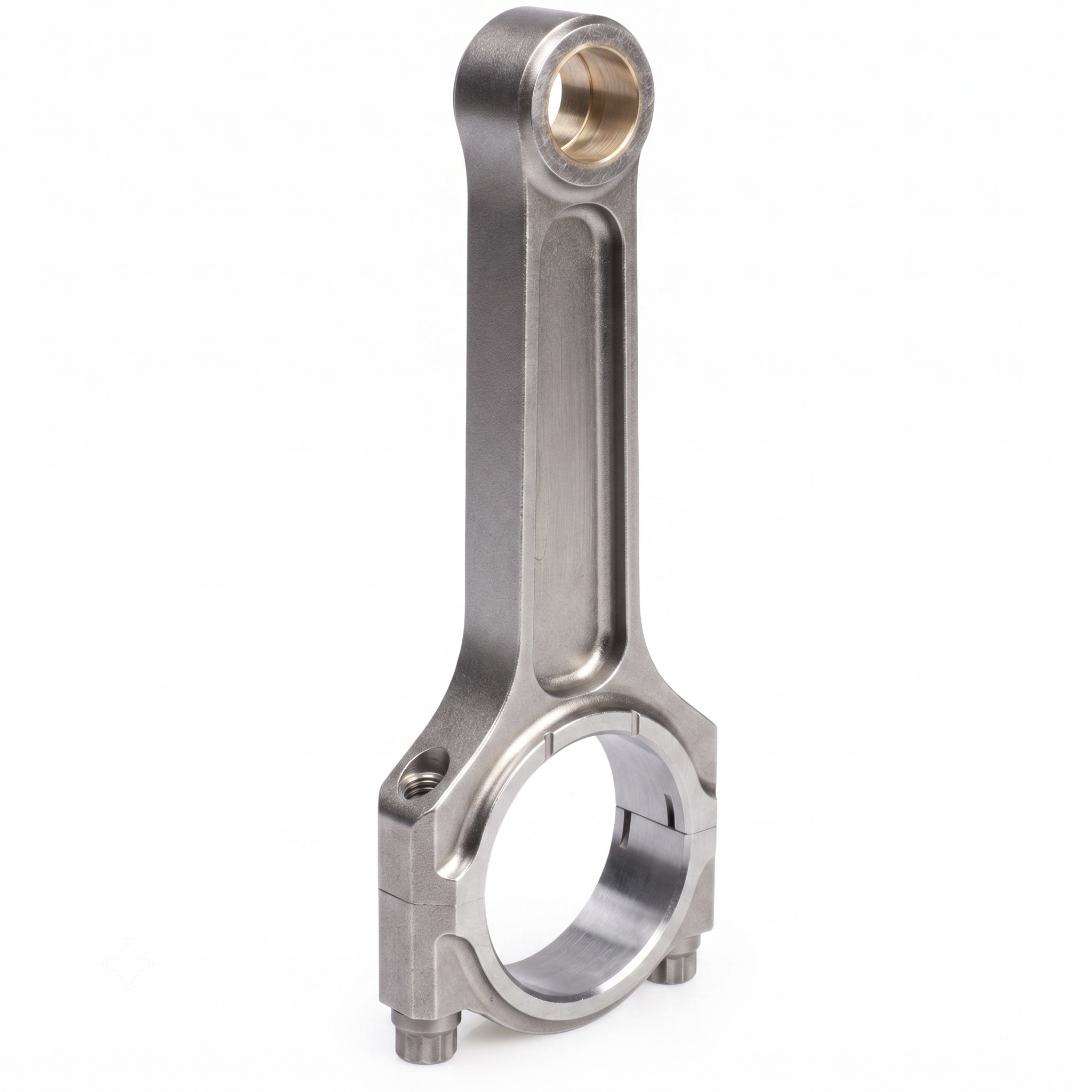 | The I-HD profile (ZRP) is a reinforced version of the I-beam, combining lightness with high compression resistance. Machined from 4340 steel, it suits the 20 mm pin 4A-GE built for high rpm, and is available with ARP 2000 or L19 bolts. |
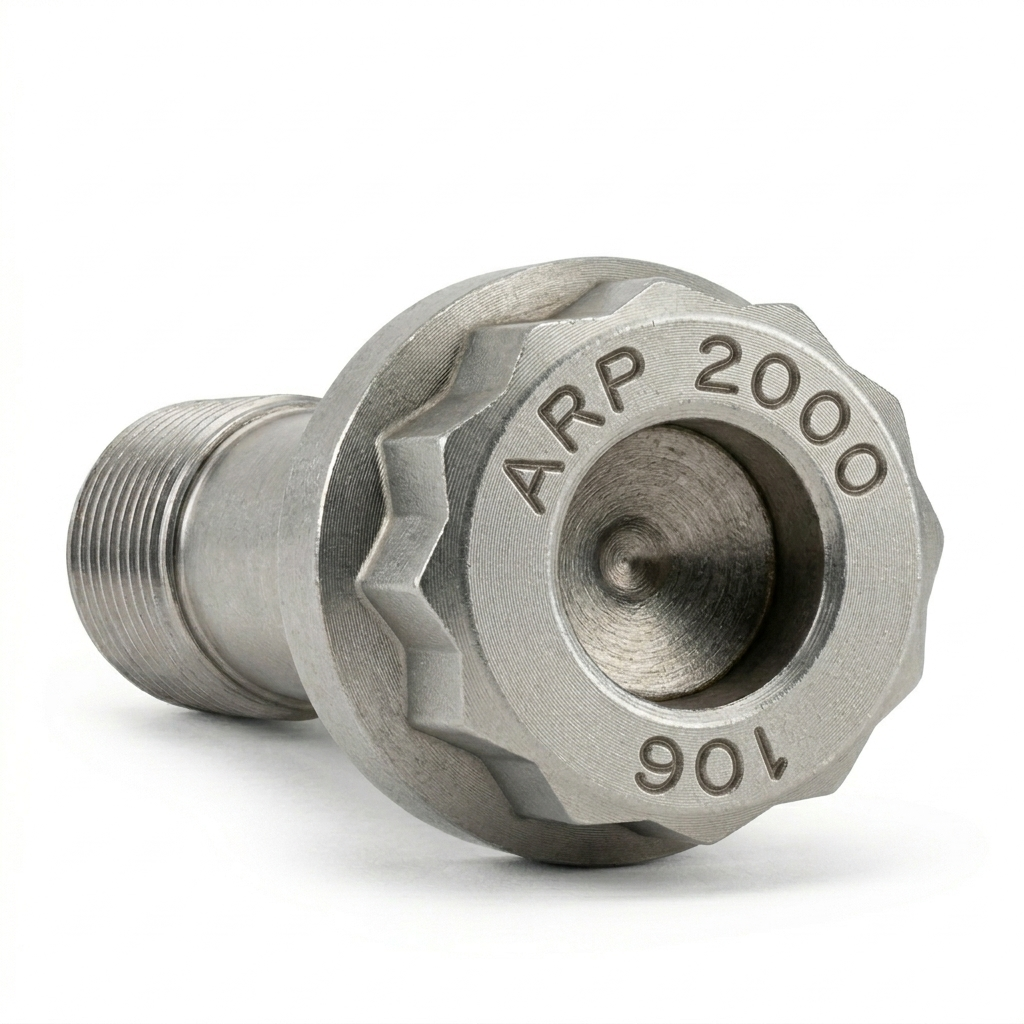 | ARP 2000, with its ~220,000 psi (~1,517 MPa), remains the high-performance standard: up to 200 hp per cylinder in 3/8" and up to 8,500 rpm, far more than a built naturally aspirated 4A-GE requires. It is found in circuit racing, track days, drift, rally, drag racing and hillclimb, and it is stored with no particular precaution. |
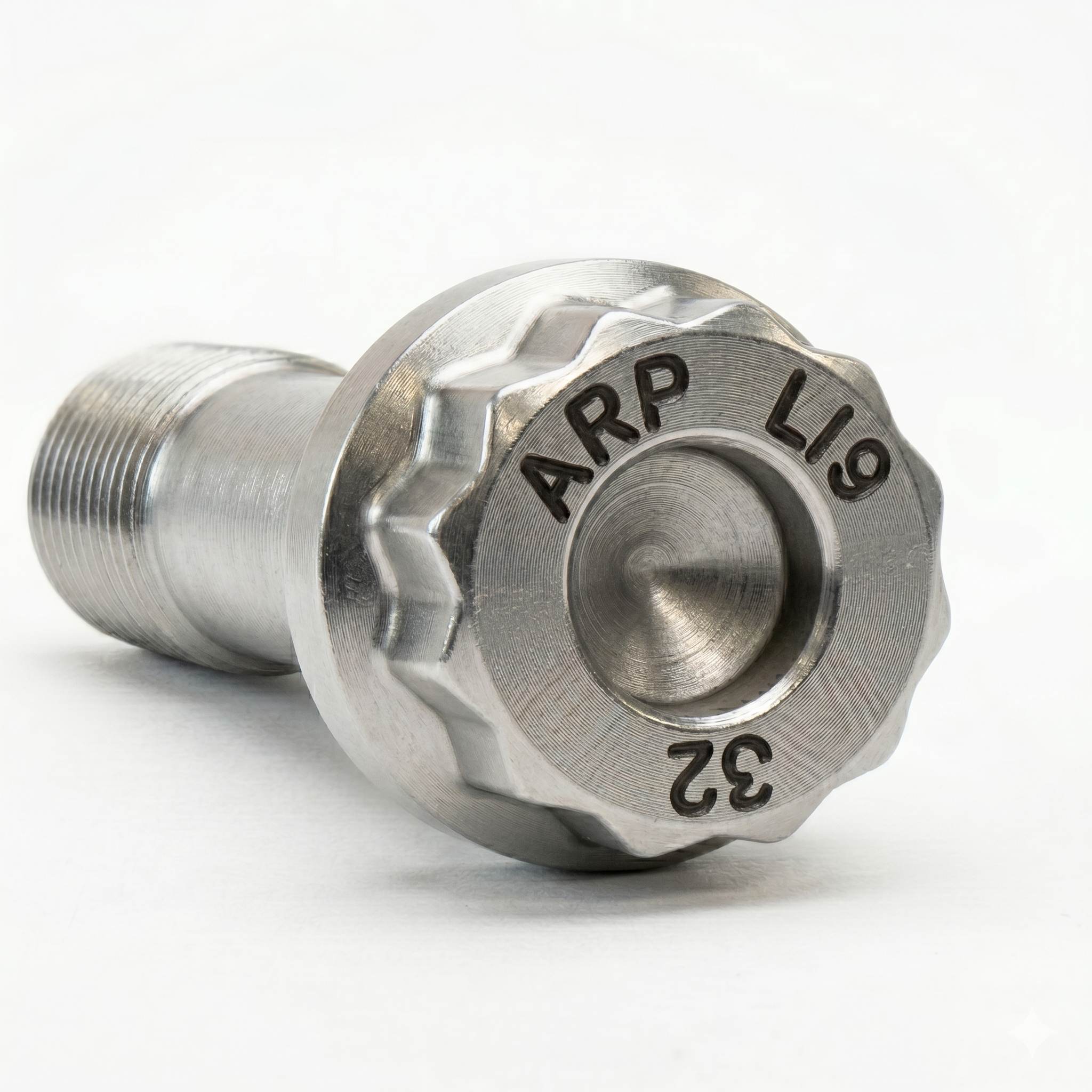 | L19 reaches ~260,000 psi (~1,793 MPa) and allows up to 250 hp per cylinder in 3/8" as well as 10,000 rpm: it is the grade for 4A-GE engines revving beyond the original red line, receiving forced induction or high cylinder pressure, and for the big power levels in drag racing, drift, rally and circuit. In return it requires oiled storage and fitting, away from moisture: the alloy fears corrosion and hydrogen embrittlement. |
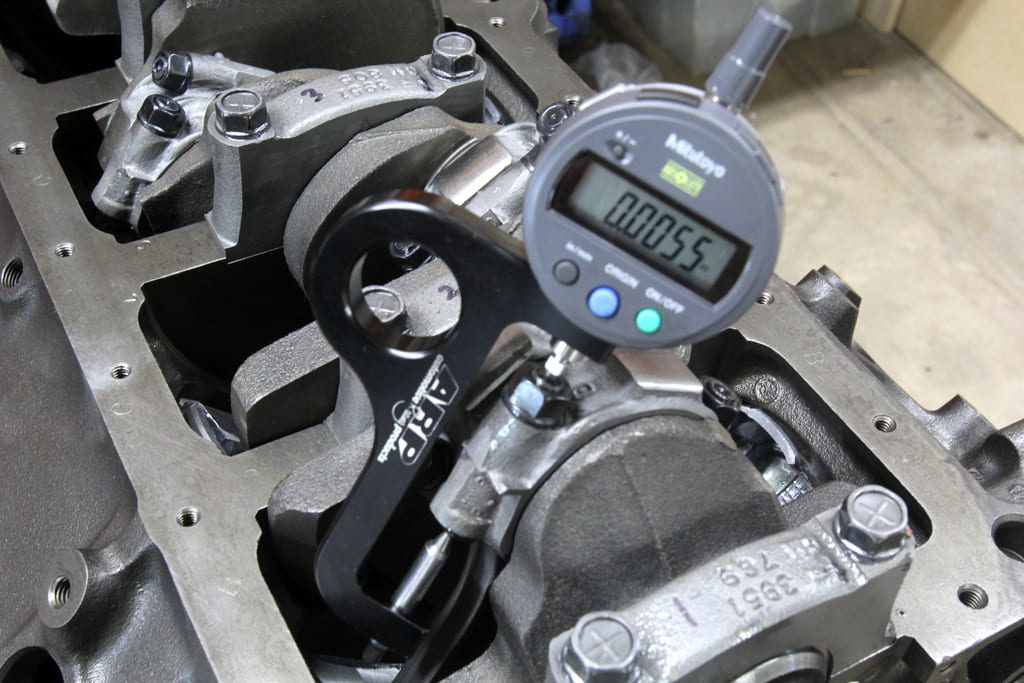
| On a forged rod, the exact bolt preload is checked by its stretch, measured with a dial gauge (stretch gauge), rather than by torque alone: lubrication and run-in distort the torque reading. Always refer to the stretch values given by the bolt manufacturer. |
 | For this 4A-GE range the selected brand is ZRP, competition forged connecting rods designed by Alex Drakos in Athens. Forged from 4340 steel, then machined and matched to ±1 g, each rod keeps its balance at high rpm. Here it comes in an I-HD profile with ARP 2000 or L19 hardware. Engineered and inspected in Greece, these rods have proven themselves in rally, on track and in drift, for the best price-to-performance ratio. |
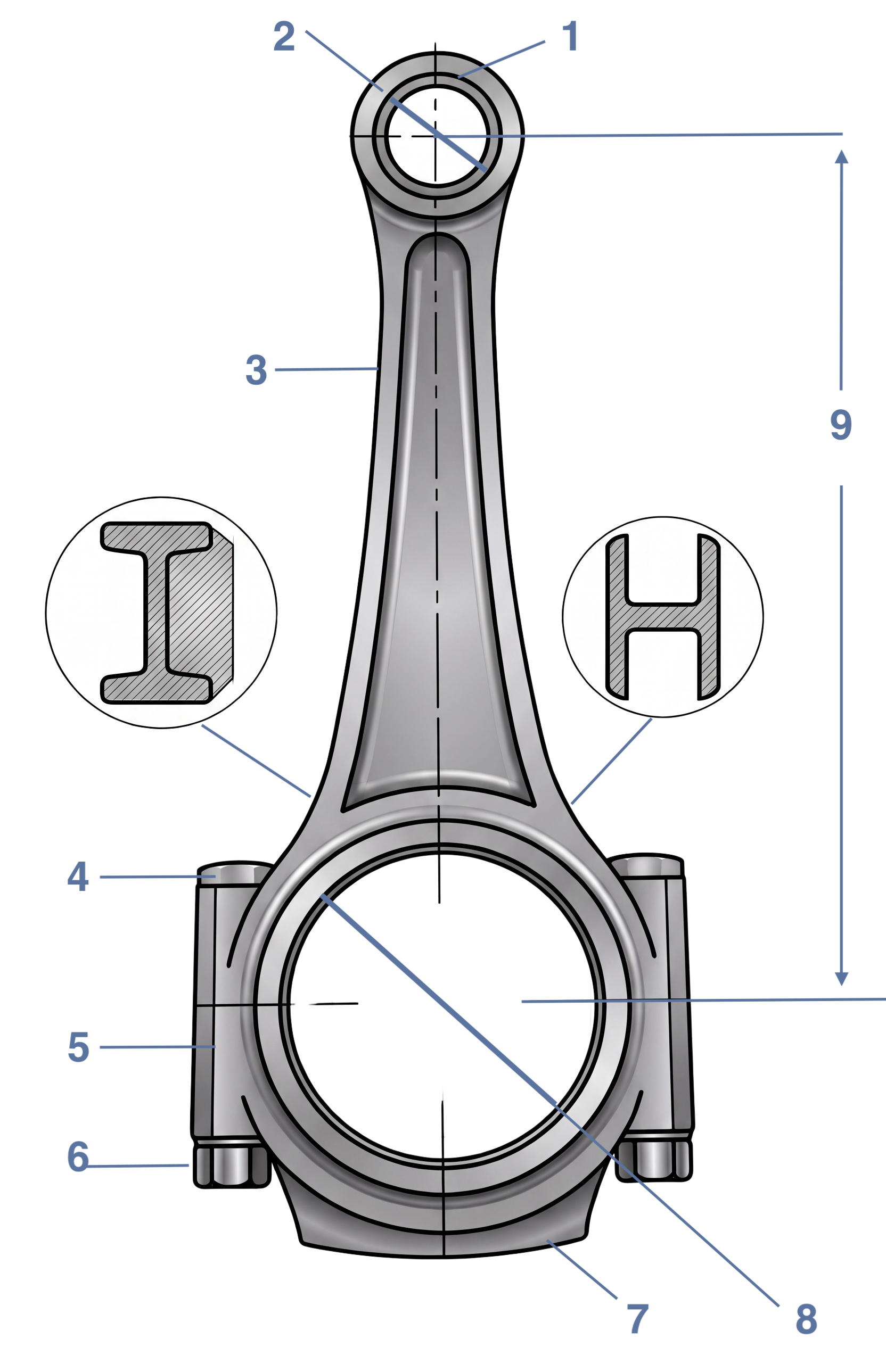 | 1) Small end 2) Small-end diameter 3) Rod beam 4) Rod bolt 5) Big end 6) Rod nut / bolt 7) Rod cap 8) Big-end diameter 9) Center-to-center |
These forged rods fit the Toyota models powered by the 1.6 L 16v (and 20v) 4A-GE inline-four, with a 20 mm pin and 122 mm center-to-center:
| Brand | Model (chassis) | Engine code | Power | Years |
|---|---|---|---|---|
| Toyota | Corolla (AE86) | 4A-GE | 124 ch | 1983–1987 |
| Toyota | Corolla (AE92) | 4A-GE | 116–125 ch | 1987–1994 |
| Toyota | Corolla / Levin (AE101) | 4A-GE (20V) | 156–160 ch | 1991–1998 |
| Toyota | Corolla / Levin (AE111) | 4A-GE (20V) | 165 ch | 1995–2000 |
| Toyota | Sprinter / Trueno (AE82 / AE86) | 4A-GE | 124 ch | 1983–1987 |
| Toyota | Celica (AA63 / ST162) | 4A-GE | 124–125 ch | 1983–1989 |
| Toyota | Carina (AT171) | 4A-GE | 120–140 ch | 1988–1992 |
| Toyota | Carina GT (AT210) | 4A-GE (20V) | 165 ch | 1996–2001 |
| Toyota | Corona Coupé (AT160) | 4A-GE | 131 ch | 1985–1987 |
| Toyota | MR2 (AW11) | 4A-GE | 116–131 ch | 1984–1990 |
| Geo | Prizm 1.6 GSI | 4A-GE | 132 ch | 1989–1992 |
A standard rod that breaks on a 4A-GE destroys the piston and calls for a check of the block: going back to original parts means paying twice for the same limit. For a similar, often lower budget, forged 4340 steel rods with forged pistons using a 20 mm pin give quite different reliability and safety margin, and leave room to raise the rev range or to move to forced induction. European engine builders have worked this way for more than 15 years on highly tuned Japanese naturally aspirated engines. For the same budget: more reliability, more potential, more service life.