- In stock
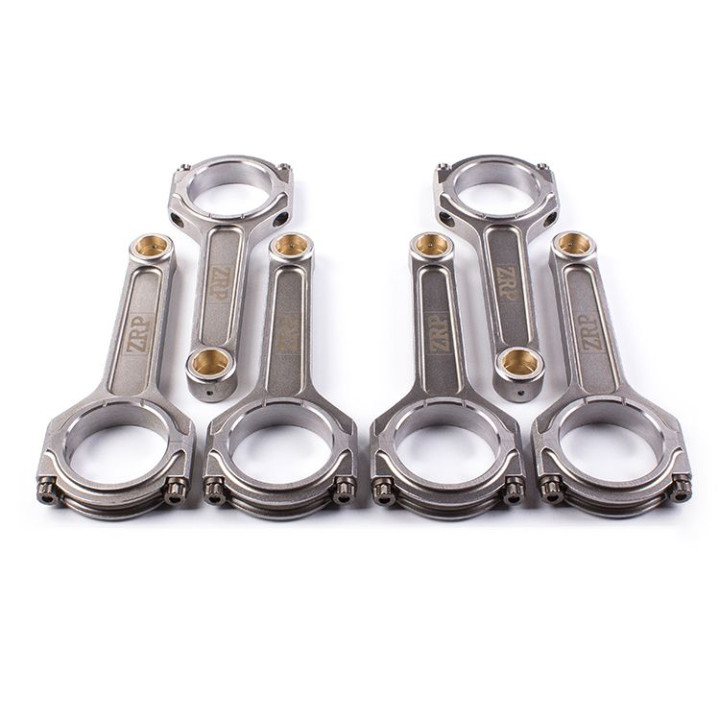
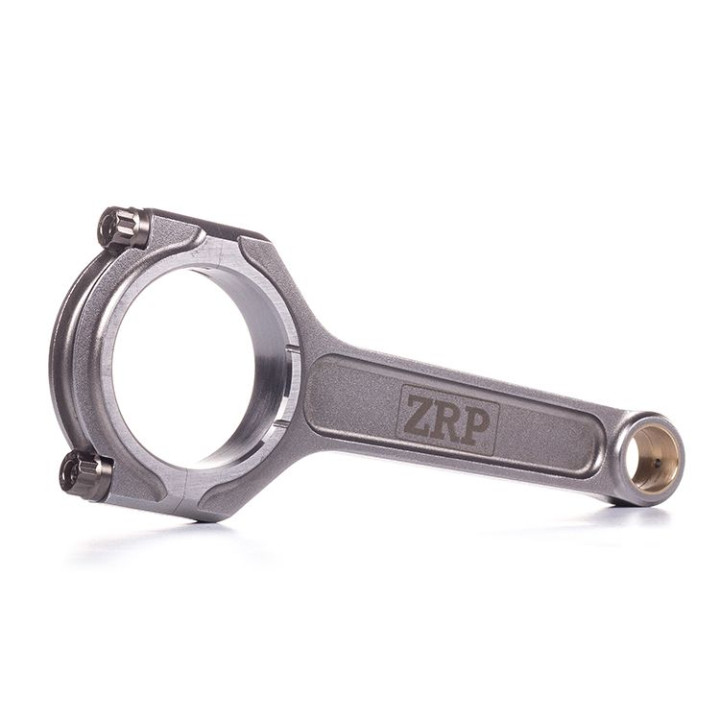
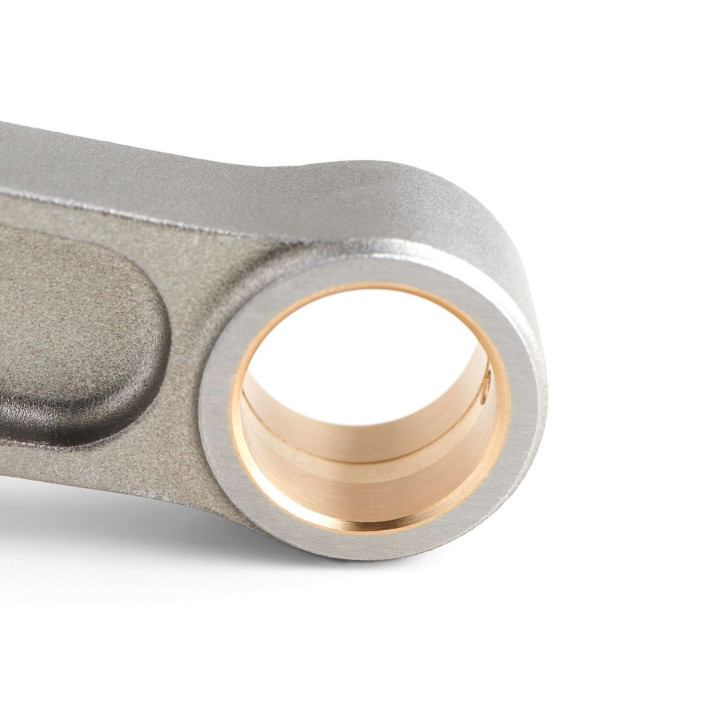


Forged connecting rods VAG - 2.8L / 2.9L 12V-24V & 3.2L 24V - VR6 / R32 for forged pistons
Set of 6 forged 4340-steel connecting rods for VAG VR6 2.8/2.9 12V/24V and 3.2 R32.
- Brands: Boostline, ZRP
- Compatibility: Golf, Corrado, Audi A3, TT
- Engine codes: AAA, ABV, BDE, BML, BFH, BUB
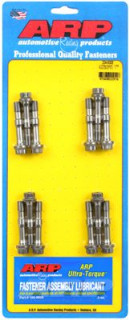
- Bolts included: ARP 2000, L19, CA 625+
The VAG VR6 engine (2.8/2.9 12V, 2.8 24V and 3.2 R32)
The VR6 is the Volkswagen Group's iconic compact six-cylinder: a very narrow 15° V topped by a single cylinder head, fitting six cylinders into the footprint of a four. Introduced in 1991 in the Golf and Corrado, it started as a 2.8L 12-valve (code AAA, 2,792 cc, 81 mm bore × 90.3 mm stroke) producing around 174 hp, joined by the 2.9L Syncro version (ABV, 190 hp). The 24-valve generation then raised the 2.8L to 204 hp (AQP, AUE, BDE), before the block grew into the 3.2L R32 (3,189 cc, 84 mm × 95.9 mm, 241 to 250 hp) in the Golf IV and V R32 and the Audi A3 and TT quattro.
Naturally aspirated as standard, the VR6 is loved for its deep sound and strong low-end torque. Its sturdiness makes it a favourite base for tuning: turbocharging, supercharging or displacement increases. But as soon as power clearly exceeds factory figures, the stock connecting rod becomes the weak link, which is where forged connecting rods come in.
Forged connecting rods
Machined from high-strength 4340 steel, these forged connecting rods reinforce the VR6's bottom end as power rises. They become essential when fitting forged pistons, raising the rev limit, increasing boost pressure or enlarging displacement, where the stock rod reaches its limits.
Built to withstand the heavy loads of tuned VR6 engines (turbo as well as supercharged), they suit every discipline (rally, drift, drag, circuit and track days, hillclimb, time attack) and support Stage 2, Stage 3 and beyond. Depending on the profile and bolts chosen, they safely handle targets of several hundred horsepower while preserving engine longevity.
Technical specifications of the VR6 forged connecting rods
| Reference | Brand | Profile | Bolts | Pin diameter OEM 20 mm | Small-end width | Big-end diameter OEM n.p. | Big-end width | Center-to-center OEM 164 mm | Weight per rod |
|---|---|---|---|---|---|---|---|---|---|
| VW6456-787 | Boostline | I-3P | ARP 2000-3/8"-41mm | 20 mm | 19,91 mm | 56,81 mm | 19,91 mm | 164 mm | 640 g |
| VW6456-787+ | Boostline | I-3P | ARP CA625+-3/8"-41mm | 20 mm | 19,91 mm | 56,81 mm | 19,91 mm | 164 mm | 640 g |
| R-VW-002-I | ZRP | I-HD | ARP 2000-3/8"-38mm | 20 mm | 56,81 mm | 19,9 mm | 164 mm | 618 g | |
| R-VW-002-I-L19 | ZRP | I-HD | ARP L19-3/8"-38mm | 20 mm | 56,81 mm | 19,9 mm | 164 mm | 618 g |
ZRP: For engines with a bore over 84.00 mm only.
Torque and bolt stretch
| Rod | Bolts | Torque | Recommended stretch |
|---|---|---|---|
| Boostline (VW6456-787) | ARP 2000 | 81 N·m | 0,142 – 0,152 mm |
| Boostline (VW6456-787+) | ARP CA625+ | 88 N·m | 0,152 – 0,163 mm |
| ZRP (R-VW-002-I) | ARP 2000 | 61 N·m | 0,140 – 0,152 mm |
| ZRP (R-VW-002-I-L19) | ARP L19 | 67,8 N·m | 0,152 – 0,165 mm |
No amount of mechanic’s experience allows the tension in a rod bolt to be felt by hand: the resistance you sense comes from friction, not from elongation, and the two do not evolve together. That is why a VR6 or an R32 is never tightened by feel, and why the values in the table above, published by the bolt manufacturer, must be followed exactly. The table carries as many lines as there are grades available here, ARP 2000, ARP L19 and ARP CA625+: each has its own range, and you never borrow another one. Across the engine’s twelve bolts, verification is done with a stretch gauge, the reference method because it measures the effect and not the cause. That assumes cleaned threads, an even film of ARP assembly lubricant and load applied in stages. The instruction sheet supplied with the kit has the last word.
Technical guide
4340 forged steel: what is it?
| 4340 steel is a nickel-chromium-molybdenum alloy steel used in aerospace and motorsport alike. Forged then heat-treated (quench and temper), it offers excellent tensile strength, high fatigue resistance and real ductility. Compared with an original rod (often sintered/powder metal, optimised for series-production cost), a 4340 forged rod shows roughly +19% higher yield strength, +8% higher tensile strength and above all +19% to +37% higher fatigue strength, i.e. a fatigue life under cyclic loading several times longer. This is what makes forged 4340 the reference material as soon as boost and rpm climb. |
Connecting rod profiles
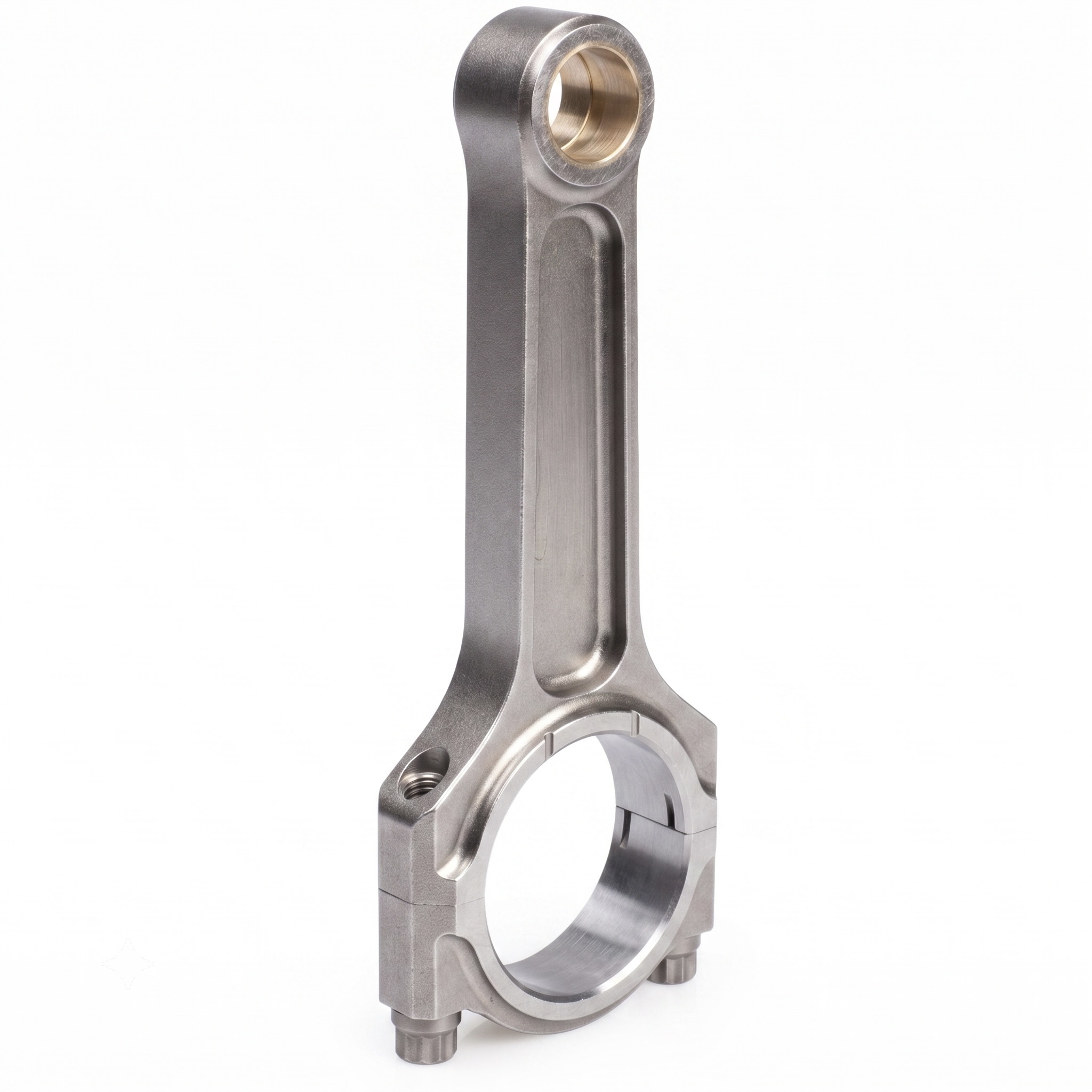 |
I-beam profile. Thanks to a slimmer central web, framed by two flanges that give it its “I” shape, this rod keeps high rigidity for a controlled mass. The manufacturer designs it for high performance and long durability, and it suits builds that put bottom-end strength first. Its I-HD (Heavy Duty) version, with a reinforced and thicker beam, is intended for extreme loads, with a turbo, supercharger or nitrous oxide. |
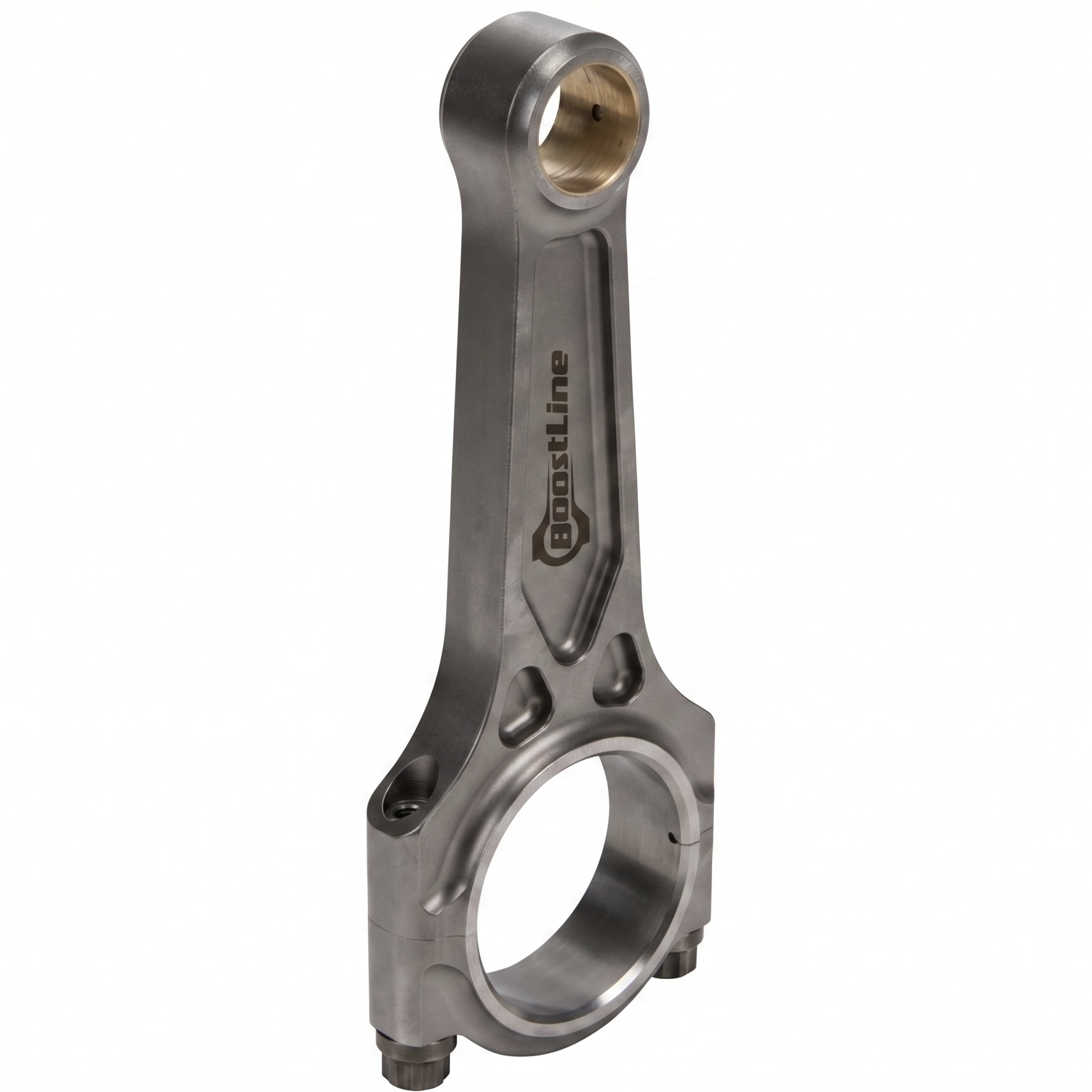 |
I-3P profile (3-pocket I-beam, Boostline). This patented three-pocket profile was designed by Boostline to combine the qualities of H and I sections, offering maximum strength with reduced rotating mass. The manufacturer intends it for forced-induction engines, including at high boost pressures, whether with a turbo, a supercharger or nitrous oxide. |
How to choose your rod bolts?
On a VR6 the rod bolt works in pure tension at the end of every cycle, on all six cylinders: it sets the rpm and cylinder pressure limit of the bottom end. The grade is chosen according to the discipline aimed at, from the low-rpm torque wanted in rally or hillclimb to rpm held for a long time on circuit, up to the very short load peaks of drag racing, then according to power per cylinder. The grades below are offered in 3/8", in 38 mm on the ZRP rods and in 41 mm on the Boostline.
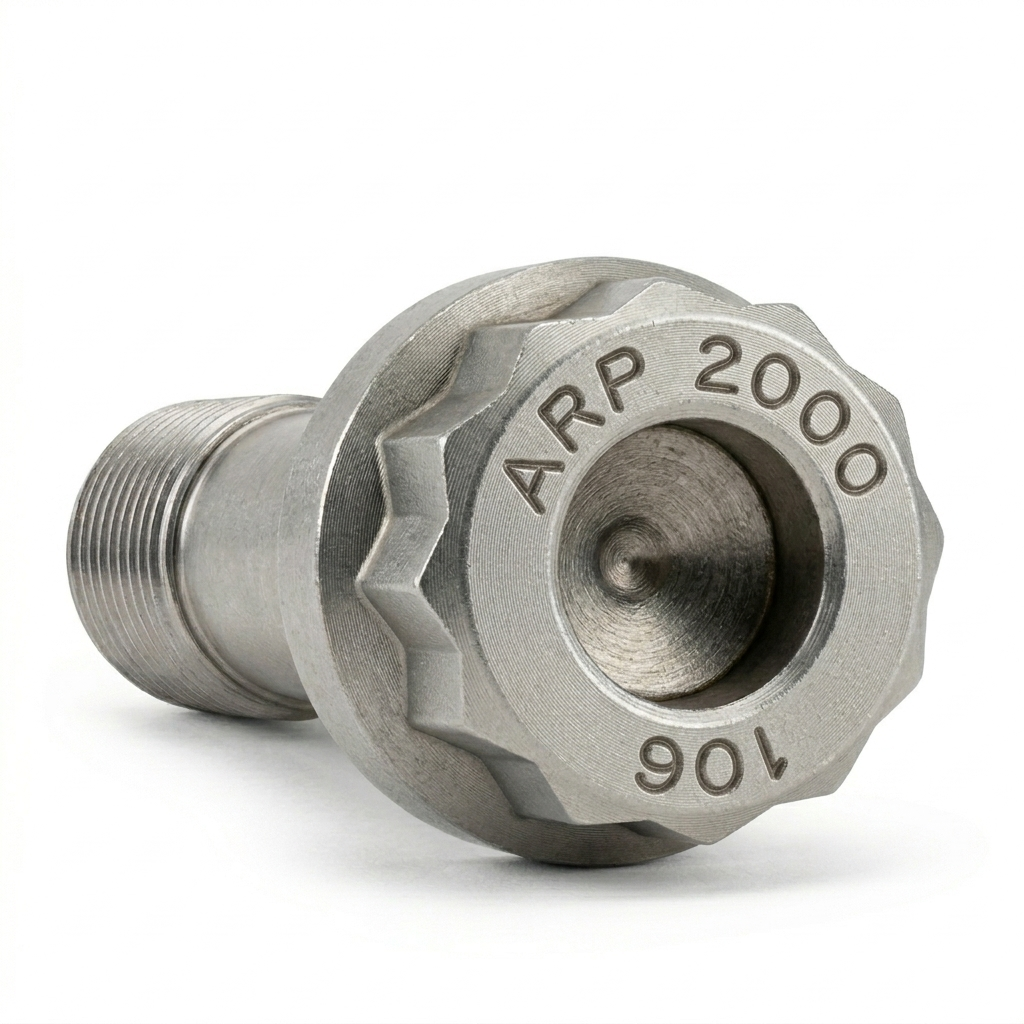 |
ARP 2000, credited with ~220,000 psi (~1,517 MPa) in tension, matches the needs of the vast majority of built VR6 and R32 engines: up to 200 hp per cylinder in 3/8" and up to 8,500 rpm. It is the grade found in circuit racing, track days, drift, rally, drag racing and hillclimb; here it equips the Boostline I-3P in 41 mm and the ZRP I-HD in 38 mm, with no particular storage constraint. |
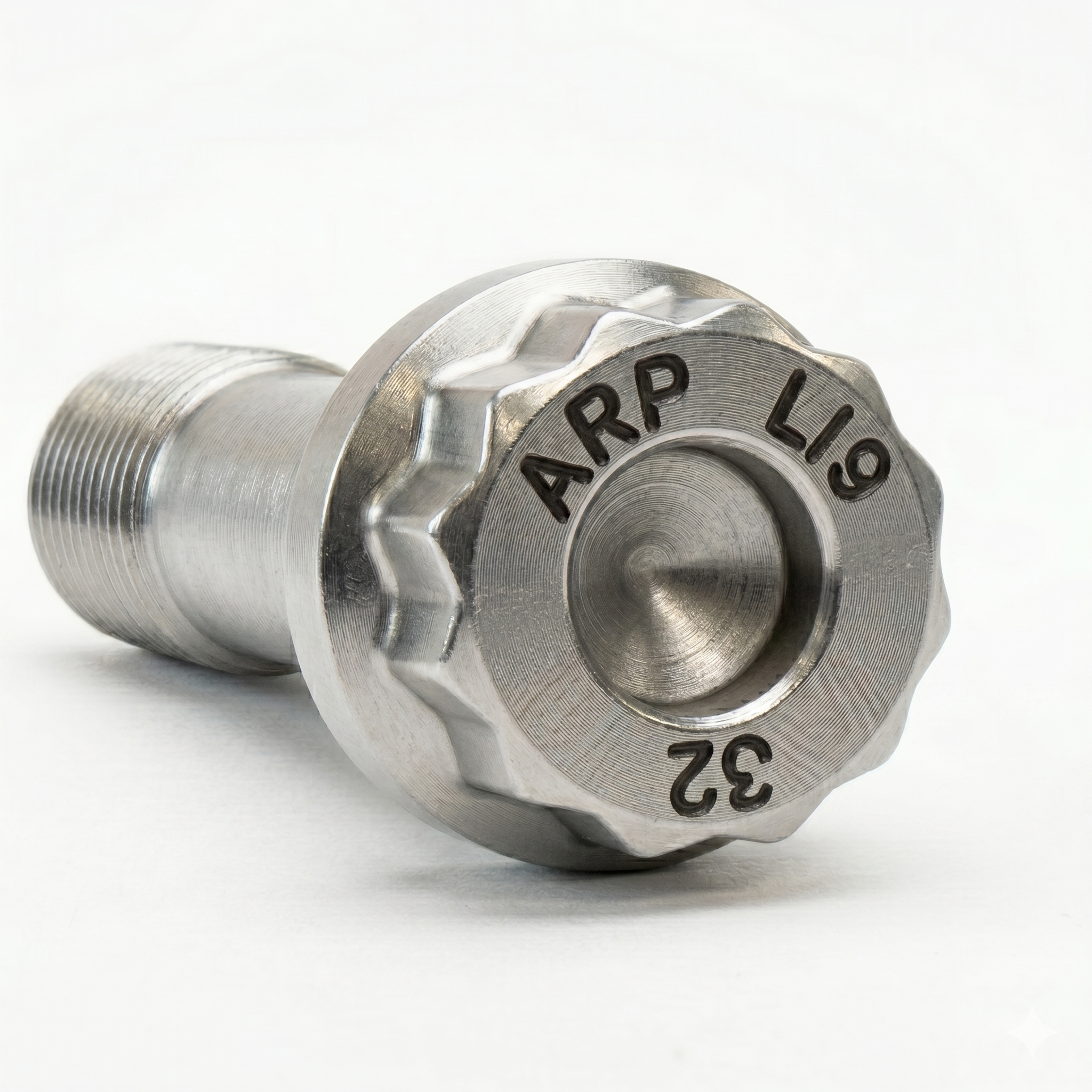 |
L19 climbs to ~260,000 psi (~1,793 MPa), that is up to 250 hp per cylinder in 3/8" and 10,000 rpm. On a heavily boosted VR6, with high cylinder pressure or rpm held high, this is the extra margin needed, as on the big power levels in drag racing, drift, rally and circuit. It is offered here on the ZRP I-HD. Watch its sensitivity to corrosion and to hydrogen embrittlement: storage and fitting oiled, away from moisture, never a bolt left bare. |
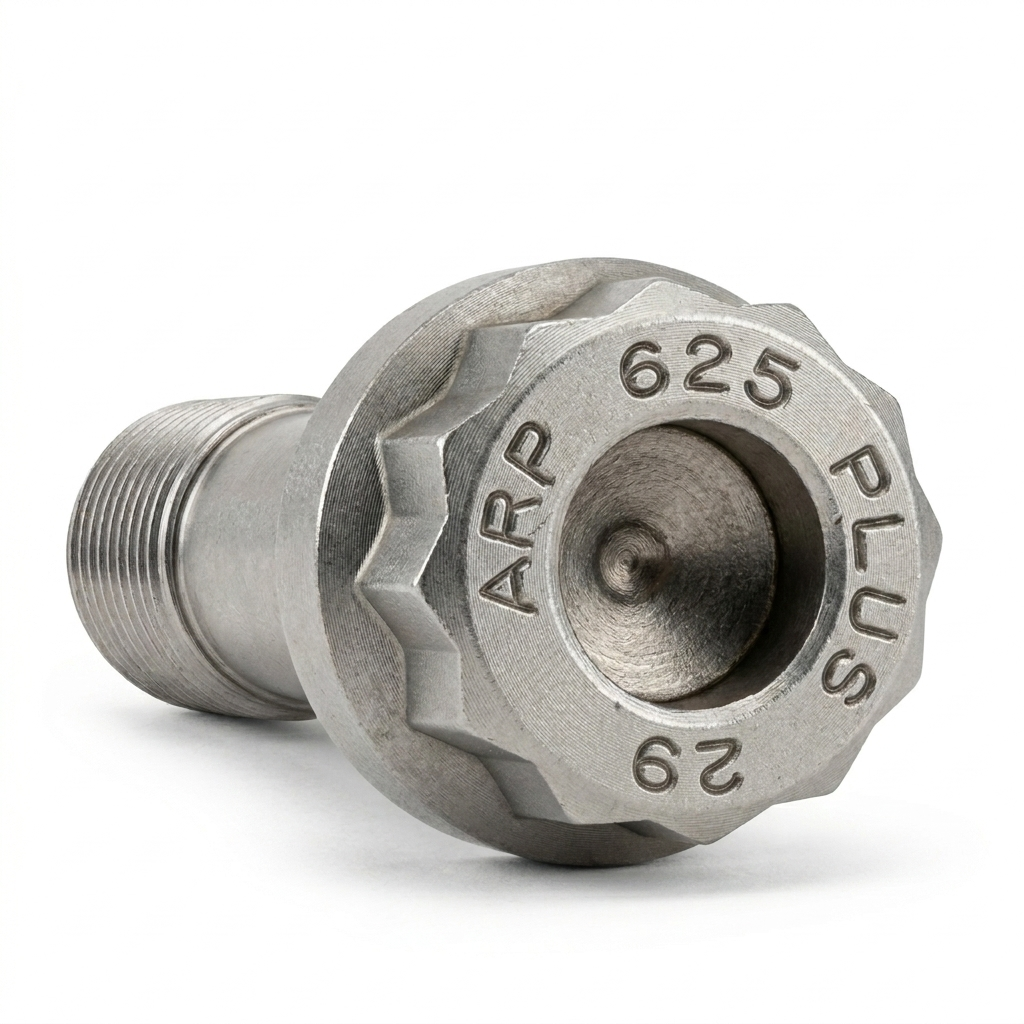 |
CA625+ (Custom Age 625+) is ARP’s premium alloy: 260,000 to 280,000 psi (~1,793 to 1,931 MPa). It targets the most extreme VR6 builds, beyond 250 hp per cylinder in 3/8" and beyond 10,000 rpm, in drag racing as well as time attack. Better protected than ARP 2000 against atmospheric corrosion and oxidation, immune to hydrogen embrittlement, it offers the level of the L19 without its storage constraints. On this listing it equips the Boostline I-3P in 3/8"-41 mm. In practice it is the grade chosen when bottom-end reliability has to be total over a full drag season. |
Measuring bolt stretch
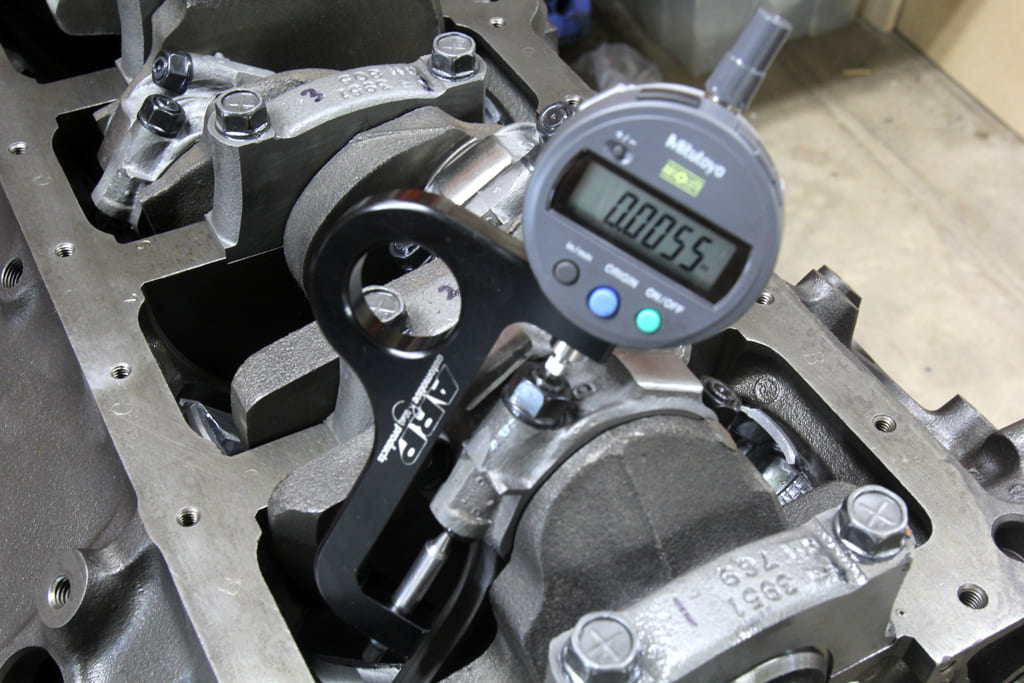
|
In addition to torque tightening, measuring rod-bolt stretch is the most reliable check for optimal preload. The check is done with the bolt fitted: place the gauge (dial indicator) on the two ends of the bolt and read its actual stretch, which must match the recommended value (see the torque & stretch table above). This method removes the friction variations inherent in torque tightening and secures the assembly on heavily stressed engines. |
The brands offered
 |
BOOSTLINE (Wiseco group), a forged connecting rod range from the American Wiseco group, a benchmark since 1941. Its patented 3-pocket design combines the rigidity of an I-beam with the robustness of an H-beam. Forged from 4340 steel and machined in the USA, they come with ARP 2000 bolts (Custom Age 625+ optional) and are built for boosted engines. |
 |
ZRP, a Greek brand of high-performance forged connecting rods, designed by Alex Drakos in Athens. Each rod is forged from 4340 steel, precision-machined and balanced to ±1 g to stay reliable at high rpm. Available in I-beam or H-beam profile with ARP 2000, L19 or Custom Age 625+ bolts, they are designed and inspected in Greece, and proven in rally, on circuit and in drift. |
Glossary
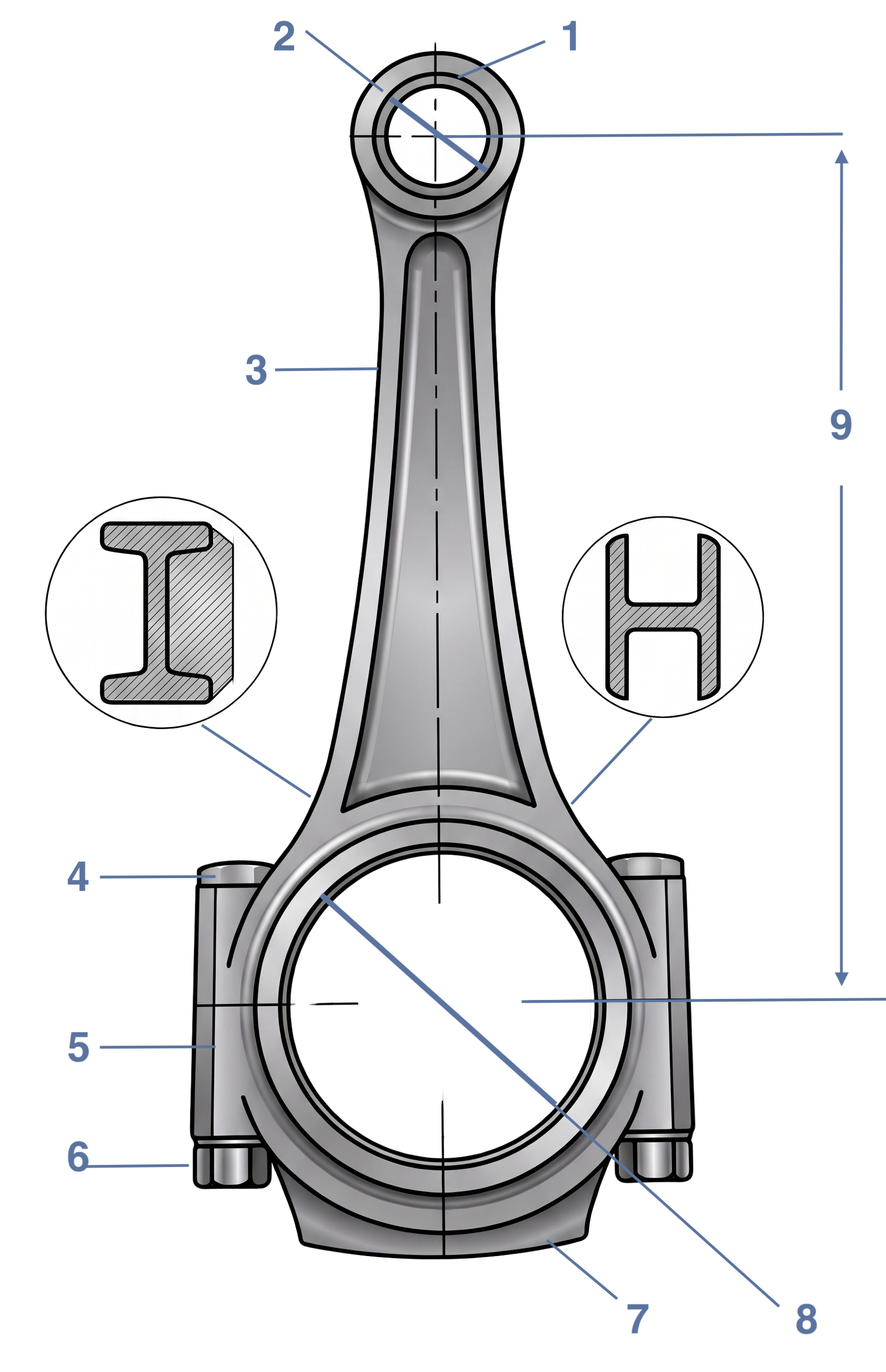 |
1) Small end 2) Small-end diameter 3) Rod beam 4) Rod bolt 5) Big end 6) Rod nut / bolt 7) Rod cap 8) Big-end diameter 9) Center-to-center |
Vehicle compatibility – VAG VR6 (2.8/2.9 and 3.2 R32)
These forged connecting rods fit the Volkswagen-Audi Group VR6 engines listed below:
| Brand | Model (chassis) | Engine code | Power | Years |
|---|---|---|---|---|
| Volkswagen | Golf III VR6 (1H) | AAA | 174 hp | 1992-1997 |
| Volkswagen | Golf III VR6 Syncro (1H) | ABV | 190 hp | 1994-1997 |
| Volkswagen | Golf IV V6 4Motion (1J) | AQP / AUE / BDE | 204 hp | 1999-2005 |
| Volkswagen | Golf IV R32 (1J) | BFH / BML / BJS | 241 hp | 2002-2005 |
| Volkswagen | Golf V R32 (1K) | BUB | 250 hp | 2005-2008 |
| Audi | A3 8P 3.2 V6 quattro | BDB / BMJ / BUB | 250 hp | 2003-2009 |
| Audi | TT 8J 3.2 quattro | BUB | 250 hp | 2006-2010 |
OEM reference: 022 198 401 (set of 6 rods).
Why it’s the most cost-effective solution?
On a VR6, breaking a standard rod is rarely paid for on its own: the piston concerned is generally lost, and both block and crankshaft need checking. Fitting standard rods and pistons again therefore means paying for a full rebuild, only to recover the original fragility.
For a comparable, often lower budget, forged 4340 steel rods with forged pistons bring far greater reliability and safety margin, plus real potential for more power. European engine builders have reasoned this way for more than 15 years on VR6 and R32 six-cylinders.
For the same budget the conclusion comes in three points: more reliability, more potential, more service life.
-
Brand
-
ReferenceR-VW-002-I
-
In stock1 Item