- On order


ACL trimetal connecting rod bearings Toyota 1RZ 2RZ 3RZ-FE 2TZ-FE
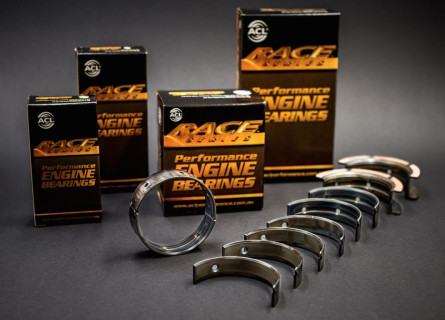
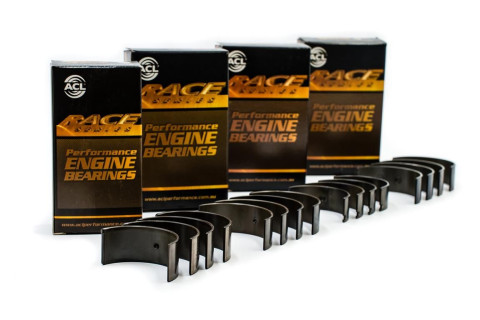
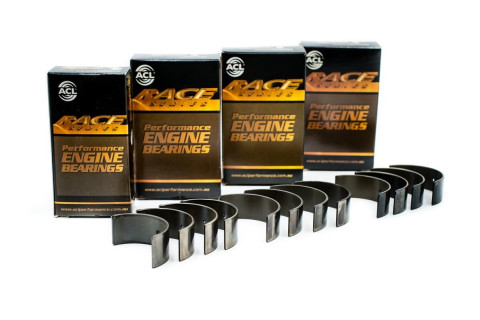
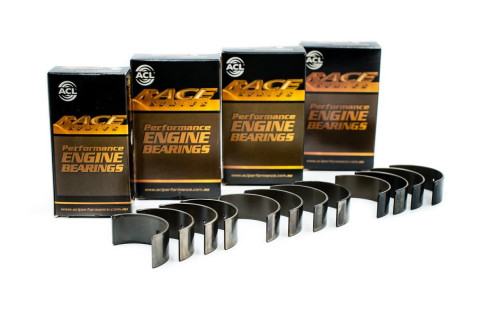
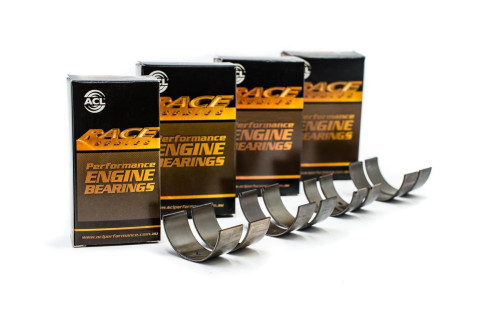
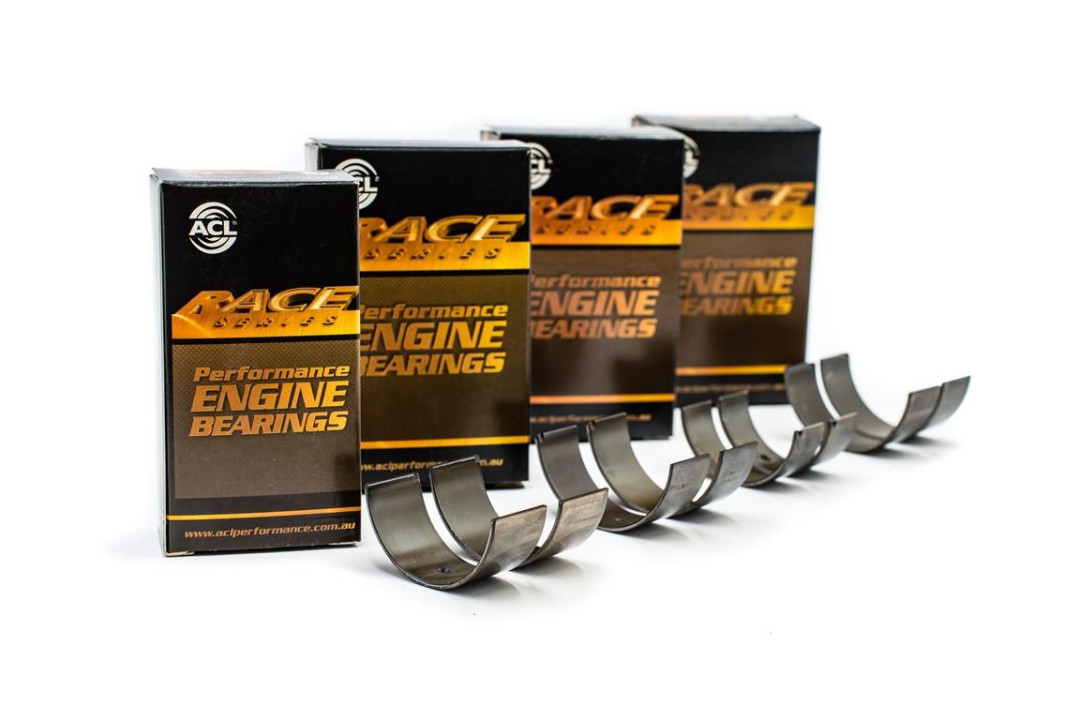
Set of 8 trimetal connecting rod half-bearings for Toyota 1RZ, 2RZ, 3RZ-FE, 2TZ-FE.
- Brand and treatment: ACL Race
- Compatibility: Hiace, Hilux, Previa, Land Cruiser 90, Prado, 4Runner, Tacoma
- Engine codes: 1RZ, 1RZ-E, 2RZ, 3RZ-FE, 2TZ-FE, 2TZ-FZE
- Available sizes: standard to +0.25 mm, increased-clearance version (HX)
The Toyota RZ and 2TZ four-cylinder engines
The 1RZ and 1RZ-E (2.0 litre, 8 valves), 2RZ (2.4 litre, 8 valves), 3RZ-FE (2.7 litre, 16 valves), 2TZ-FE and 2TZ-FZE (2.4 litre, 16 valves) are Toyota four-cylinder engines, fitted to the Hiace, Hilux, Previa, Land Cruiser 90 and Prado, 4Runner, Tacoma and T100. ACL lists a single bearing set for these engines: same crankpin diameter, a single set covers the family.
From the factory, this engine is fitted with standard production connecting rod bearings, sized for the loads of the original engine: as soon as power, engine speed or boost pressure increase, they reach their limits.
Trimetal connecting rod bearings
A trimetal bearing combines three layers with complementary roles: a steel back that provides structural strength, a copper-lead intermediate layer that takes the heavy loads and an anti-friction running layer that protects the crankpin. The complete set contains 8 half shells, i.e. 4 pairs.
An aluminium bi-metal bearing, intended for low to medium loads, tops out at around 8,000 psi; a performance trimetal bearing holds up to 12,000 psi, 50% more load capacity. It therefore gains strength and service life on turbocharged, supercharged or high-revving engines.
Technical specifications
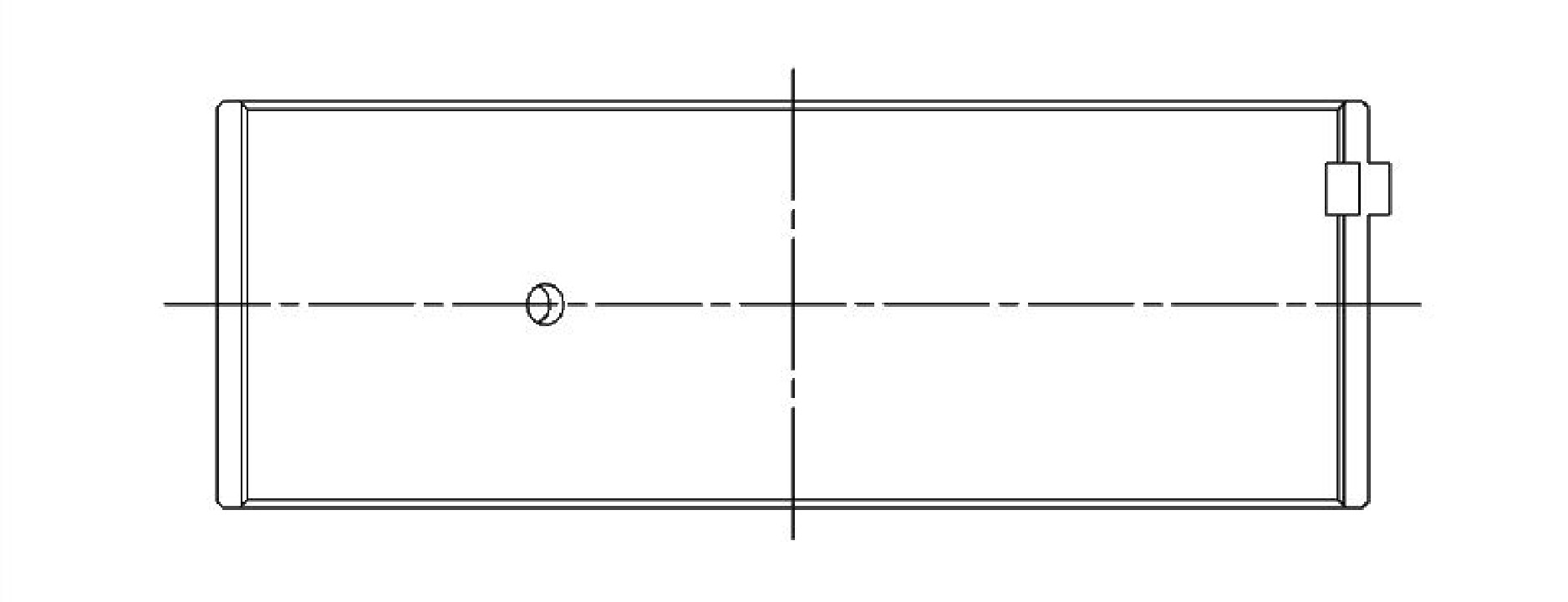
| ACL bearings Crankpin Ø 52.987 / 53.000 mm Housing bore Ø 56.000 / 56.024 mm Width 19.83 mm |
| Reference | Brand and treatment | Size | Wall thickness (mm) |
|---|---|---|---|
| 4B8376H-STD | ACL Race - Untreated | Standard | 1.485 |
| 4B8376HX-STD | ACL Race - Untreated | Std, increased clearance (HX) | 1.472 |
| 4B8376H-.025 | ACL Race - Untreated | +0.025 | 1.498 |
| 4B8376H-.25 | ACL Race - Untreated | +0.25 | 1.610 |
Running clearance
Running clearance is the space left between the bearing and the crankpin, permanently filled by the oil film.
With the engine running, the crankpin does not touch the bearing: it rides on this oil film, which takes the load. The clearance sets the film thickness. Too small, it restricts oil flow, raises the temperature and invites seizure; too large, it lets the oil escape, the film loses its load capacity and oil pressure falls. The right clearance combines sufficient lubrication with an oil film that keeps carrying the load.
| Size / grade | When to choose it | ACL Race Series |
|---|---|---|
| Standard (STD) | Standard journal, not reground | 0.055 to 0.066 mm |
| Increased clearance (HX) | Wider clearance: high oil flow, high rpm | 0.081 to 0.092 mm |
| +0.025 mm | Polished journal | 0.055 to 0.066 mm |
| +0.25 mm | Journal reground to 0.25 mm | 0.055 to 0.066 mm |
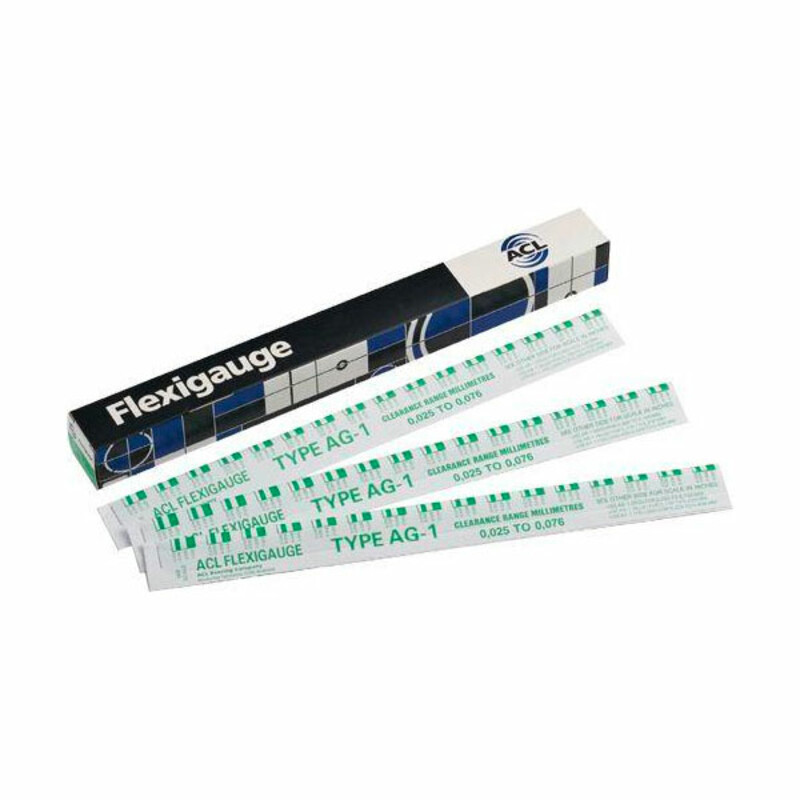
Checking on assembly: lay a calibrated strip (Plastigauge) on the journal, torque the rod cap to spec, then compare the crushed strip against the gauge to read the clearance.
Technical guide
The ACL connecting rod bearings shown here are trimetal bearings built for engine tuning and racing. They withstand far higher loads than a standard bearing and come in several sizes: the standard size, a +0.025 mm size for a crankpin that has only been polished, a +0.25 mm regrind size and the HX version with increased clearance for high-revving engines or engines needing a high oil flow. This range lets you refit a reground crankshaft without changing product line and match the clearance to the oil and use chosen.
The brand
 |
Founded in Australia in 1949, ACL Bearing Company designs high-performance engine bearings. Its Race Series brings together precision trimetal bearings, offered in a wide choice of sizes and fitted to built engines around the world. |
Vehicle compatibility
This connecting rod bearing set fits the 1RZ, 1RZ-E, 2RZ, 3RZ-FE, 2TZ-FE and 2TZ-FZE four-cylinder engines of the following Toyota models:
| Brand | Model (chassis) | Engine code | Power | Years |
|---|---|---|---|---|
| TOYOTA | 4 RUNNER III (_N18_) 2.7 / 2.7 EFI 4WD | 3RZ-FE | 152 hp | 1995–2002 |
| TOYOTA | COASTER Bus (_B4_, _B5_) 2.7 | 3RZ-FE | 133–152 hp | 1993–2003 |
| TOYOTA | DYNA 200 Platform/Chassis 2.7 | 3RZ-FE | 125 hp | 1995–2001 |
| TOYOTA | ESTIMA EMINA / LUCIDA (_R1_, _R2_) 2.4 / 2.4 4x4 | 2TZ-FE, 2TZ-FZE | 135–160 hp | 1990–1999 |
| TOYOTA | GRANVIA (_H2_, _H1_) 2.7 | 3RZ-FE | 145 hp | 1995–1998 |
| TOYOTA | HIACE IV Bus (_H1_) 2.0 / 2.4 | 1RZ, 1RZ-E, 2RZ | 98–110 hp | 1989–2000 |
| TOYOTA | HIACE IV Bus (__H1_, __H2_) 2.7 / 2.7 4WD | 3RZ-FE | 143–144 hp | 1998–2006 |
| TOYOTA | HIACE IV Van (_H1_) 2.0 / 2.4 | 1RZ, 1RZ-E, 2RZ | 98–110 hp | 1989–2004 |
| TOYOTA | HIACE IV Van (__H1_, __H2_) 2.7 / 2.7 4WD | 3RZ-FE | 143–144 hp | 1998–2005 |
| TOYOTA | HILUX III SUV (_N1_, _N2_) 2.7 EFI | 3RZ-FE | 145 hp | 2001–2004 |
| TOYOTA | HILUX VI Platform/Chassis (_N1_) 2.0 EFI / 2.7 EFI | 1RZ-E, 3RZ-FE | 110–145 hp | 1997–2005 |
| TOYOTA | HILUX VI Pickup (_N1_) 2.0 EFI / 2.7 EFI / 2.7 EFI 4WD / 2.7 / 2.0 | 1RZ-E, 3RZ-FE, 1RZ | 92–150 hp | 1997–2005 |
| TOYOTA | LAND CRUISER 90 (_J9_) 2.7 | 3RZ-FE | 150 hp | 1995–2002 |
| TOYOTA | LAND CRUISER PRADO (_J12_) 2.7 | 3RZ-FE | 152 hp | 2002–2004 |
| TOYOTA | PREVIA I (_R1_, _R2_) 2.4 / 2.4 4WD | 2TZ-FE, 2TZ-FZE | 132–160 hp | 1990–2000 |
| TOYOTA | QUALIS (_F5_) 2.0 | 1RZ-E | 94 hp | 1999–2004 |
| TOYOTA | T100 Pickup (_CK_) 2.7 4WD / 2.7 | 3RZ-FE | 152 hp | 1993–1998 |
| TOYOTA | TACOMA Pickup (_N1_) 2.7 / 2.7 4WD | 3RZ-FE | 152 hp | 1995–2004 |
| TOYOTA | TARAGO Bus 2.7 | 3RZ-FE | 144 hp | 1998–2004 |
| TOYOTA | TARAGO Van 2.7 | 3RZ-FE | 144 hp | 1998–2004 |
| TOYOTA | TUV MPV (_F7_, _F8_) 2000 i | 1RZ-E | 97 hp | 2003–2005 |
Why replace the bearings
A failing connecting rod bearing does not fail alone: it scores the crankpin, sends debris through the oil circuit and calls at least for a crankshaft regrind, when it does not also take out the rod and the block. On a built engine, a bearing set costs only a fraction of a regrind, and even less of a full rebuild: it is the cheapest part of the rotating assembly and the one whose failure costs the most.
-
Brand
-
Reference4B8376H-STD