- In stock
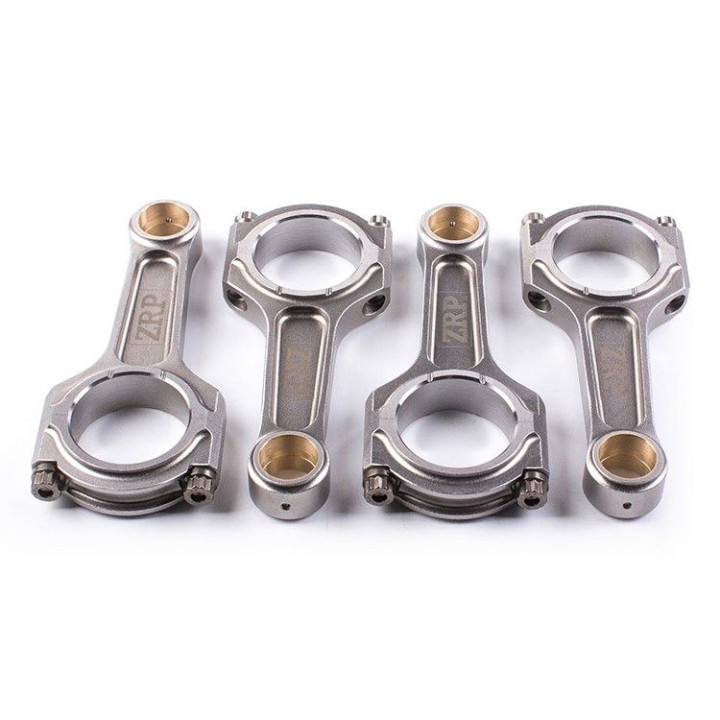

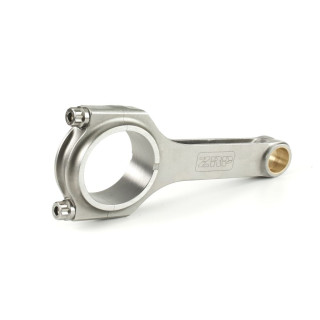
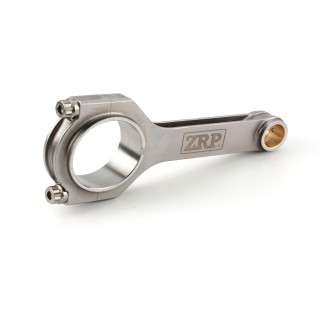
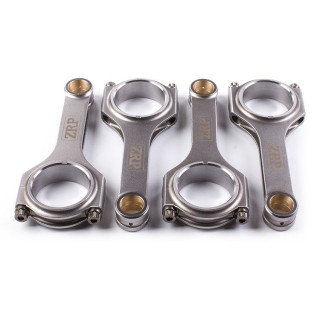
Forged connecting rods Audi Volkswagen - 2.0L 16V TSI - EA888 Gen.2 for forged pistons
Set of 4 forged connecting rods in 4340 steel for the Audi Volkswagen 2.0L 16V TSI.
- Brands: Boostline, ZRP
- Compatibility: Audi A3, TT, A4, Q5, VW Golf GTI
- Engine code: EA888 Gen.2
- Bolts included: ARP 2000, L19 or CA625+
The 2.0 TSI EA888 Gen.2 engine
The second-generation 2.0 TSI EA888 is an inline four-cylinder petrol engine with direct injection and turbocharging, displacing 1,984 cc (82.5 mm bore, 92.8 mm stroke). Built from 2011 to 2014, it powers a large share of the Volkswagen Group (Audi, Volkswagen, SEAT and Škoda) with outputs from 200 to 211 hp depending on the engine code (CCZA, CCZB, CETA, CDNC). This Gen.2 stands apart with a 22 mm piston pin and a 144 mm center-to-center length, specific to its rods.
Known as a strong unit, the 2.0 TSI EA888 readily takes extra power. But as soon as boost pressure, engine speed or torque is raised sharply, the stock rod becomes the weak link of the reciprocating assembly: it is the first part to let go on tuned engines. Fitting forged rods is therefore the essential step to make an EA888 Gen.2 reliable for good when you want to unlock its real potential.
The forged connecting rods
Our forged rods for the 2.0 TSI EA888 Gen.2 are machined from wrought 4340 steel, the benchmark for demanding builds. They cover every discipline , circuit and trackday, drift, rally, drag, time attack, hillclimb , and work equally well on a heavily tuned fast-road 2.0 TSI and on a competition engine. Whether the target is Stage 2, a high-power Stage 3 or Stage 4 and beyond, they follow the rise in performance with no compromise on durability. Each kit gathers 4 rods weight-matched to ±1 g and faithfully keeps the factory 22 mm piston pin and 144 mm center-to-center length.
Where the factory rod is calibrated for high-volume production cost, the forged 4340 rod brings a far wider mechanical margin: around +19% yield strength, +8% tensile strength and +19 to +37% fatigue endurance. That reserve lets the boosted EA888 absorb cylinder-pressure peaks and inertia loads without cracking. Two profiles are offered depending on the goal: the lighter I-HD by ZRP and the reinforced I-3P by Boostline.
OEM reference: 06J198401D (set of 4 rods).
Technical specifications of the EA888 Gen.2 forged rods (22 mm pin, 144 mm center-to-center)
| Reference | Brand | Profile | Rod bolts | Pin bore (mm) OEM 22 mm | Small-end width (mm) | Big-end bore (mm) OEM n.p. | Big-end width (mm) | Center-to-center (mm) OEM 144 mm | Weight (g) |
|---|---|---|---|---|---|---|---|---|---|
| VW5669-866 | Boostline | I-3P | ARP 2000-3/8"-38mm | 22 | 22 | 50,61 | 21,89 | 144 | 613 |
| VW5669-866+ | Boostline | I-3P | ARP CA625+-3/8"-38mm | 22 | 22 | 50,61 | 21,89 | 144 | 617 |
| R-AUD-010-I | ZRP | I-HD | ARP 2000-3/8"-38mm | 22 | 50,6 | 21,9 | 144 | 492 | |
| R-AUD-010-I-L19 | ZRP | I-HD | ARP L19-3/8"-38mm | 22 | 50,6 | 21,9 | 144 | 492 |
ZRP: Straight, non-tapered pin end.
Tightening torque and stretch
Three bolt grades sit side by side in this EA888 Gen.2 range, ARP 2000, ARP CA625+ and ARP L19 in 3/8" 38 mm, and each has its own figures. So the first job in the workshop is to identify the row of the table matching the bolts actually supplied with the kit, then stick to it: mixing two grades in the same engine, or applying one set of figures to the other, amounts to working blind. These torque and stretch figures are the ones specified by the bolt manufacturer and must be followed scrupulously, stretch measured on the gauge being the reference method for validating each bolt.
| Reference | Brand | Rod bolts | Torque | Recommended stretch |
|---|---|---|---|---|
| VW5669-866 | Boostline | ARP 2000-3/8"-38mm | 75 N·m | 0.130 to 0.140 mm |
| VW5669-866+ | Boostline | ARP CA625+-3/8"-38mm | 115 N·m | 0.170 to 0.180 mm |
| R-AUD-010-I | ZRP | ARP 2000-3/8"-38mm | 61 N·m | 0.140 to 0.152 mm |
| R-AUD-010-I-L19 | ZRP | ARP L19-3/8"-38mm | 67.8 N·m | 0.152 to 0.165 mm |
Technical guide
Forged 4340 steel: what is it?
| 4340 is a low-alloy steel with nickel, chromium and molybdenum. Forging aligns the metal grain with the load paths, closes foundry micro-porosity and delivers mechanical strength on another level from a cast or sintered production rod: about +19% yield strength, +8% tensile strength and +19 to +37% fatigue endurance. The aim is a tensile strength of around 930 to 1,080 MPa, exactly what is needed as soon as the engine gains torque, revs or boost. This is the material that makes up our entire EA888 Gen.2 range. |
The rod profiles offered
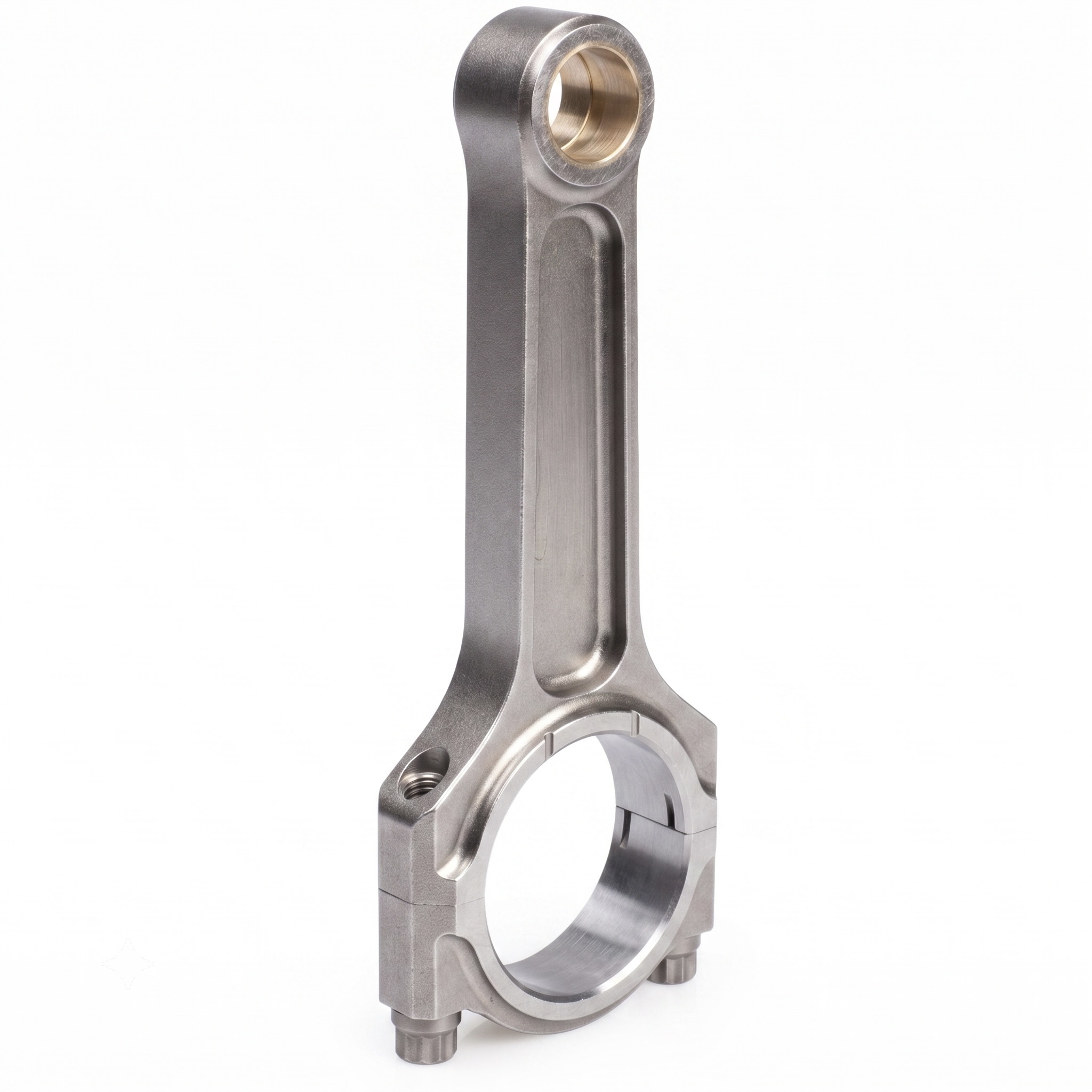 |
I-HD profile (ZRP): a “Heavy Duty” variant of the I-beam rod that retains its overall design while gaining a thickened, strengthened beam, built to cope with far greater stresses. ZRP reserves it for extreme duty: turbo, supercharged or nitrous builds pushed to high power under substantial boost pressure. |
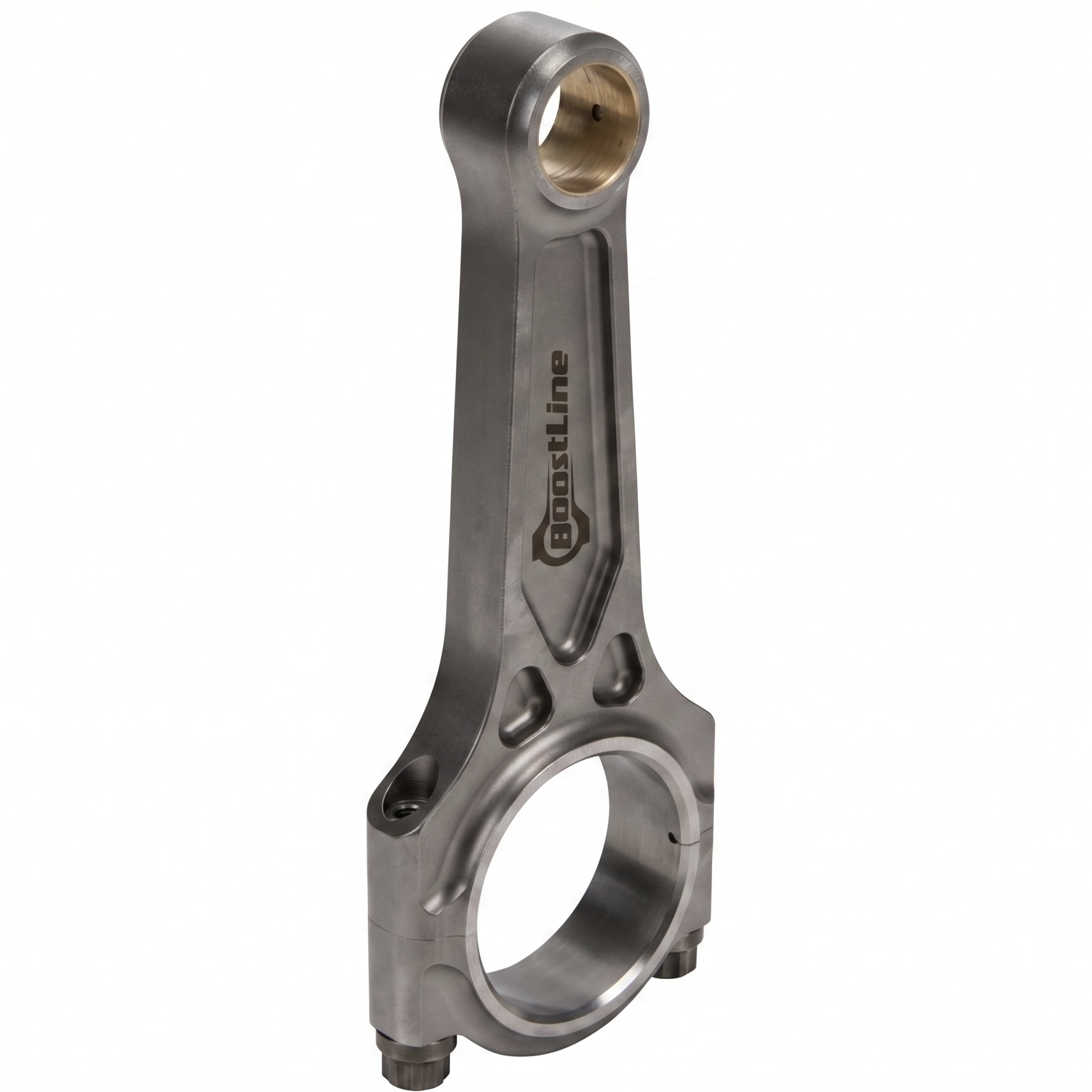 |
I-3P profile (Boostline): a patented section machined with three pockets, developed by Boostline to merge the advantages of H-beam and I-beam designs, aiming for the greatest possible strength with contained rotating mass. Boostline intends it for forced-induction engines, including very high boost pressures, whether the boost comes from a turbo, a supercharger or nitrous oxide. |
How to choose your rod bolts? 
Bolts are chosen according to the level of tuning; three ARP grades are offered, all in the 3/8" diameter suited to the EA888 Gen.2 center-to-center:
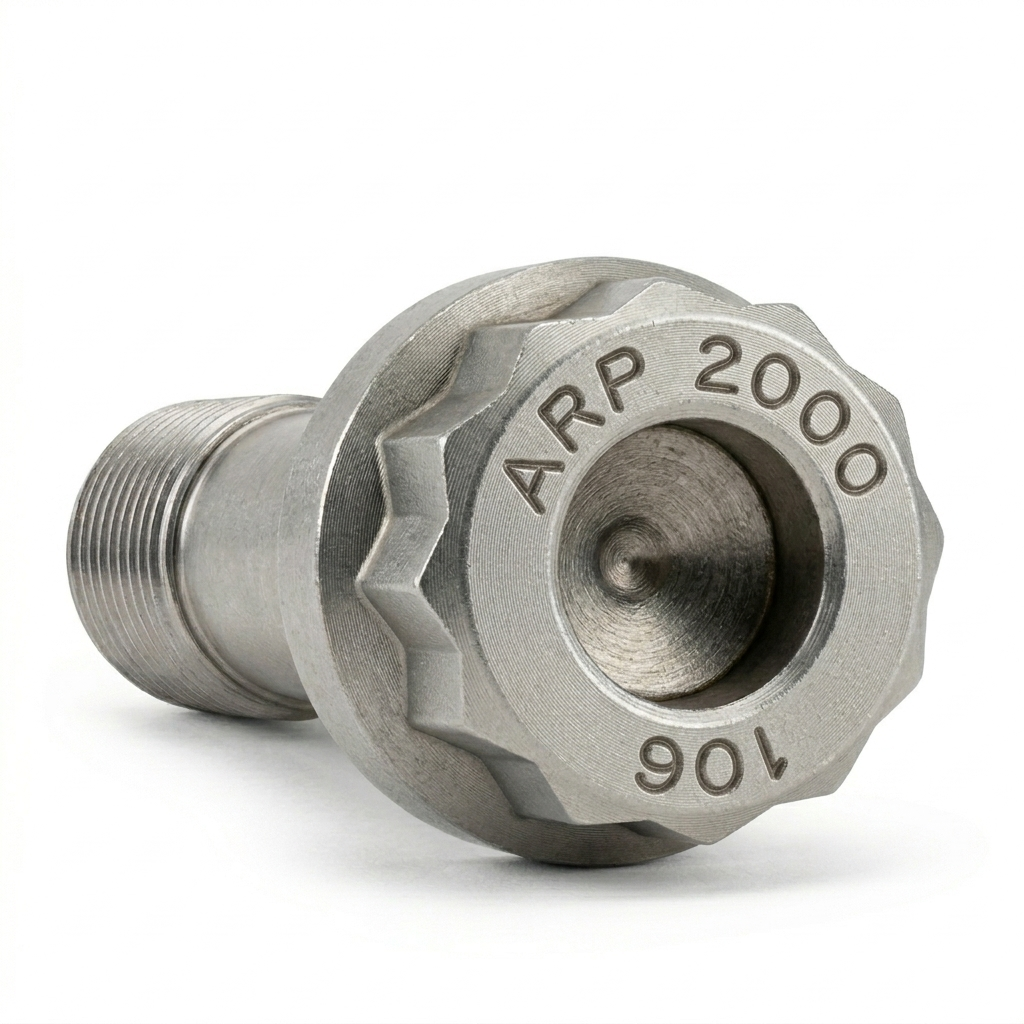 |
ARP 2000: the all-round benchmark alloy, with a tensile strength of about 220,000 psi (1,517 MPa). It is the default choice: it covers the vast majority of builds, from simply raised boost to high power, and makes the bottom end reliable for good. It secures power of around 200 hp per cylinder and rpm up to 8,500. |
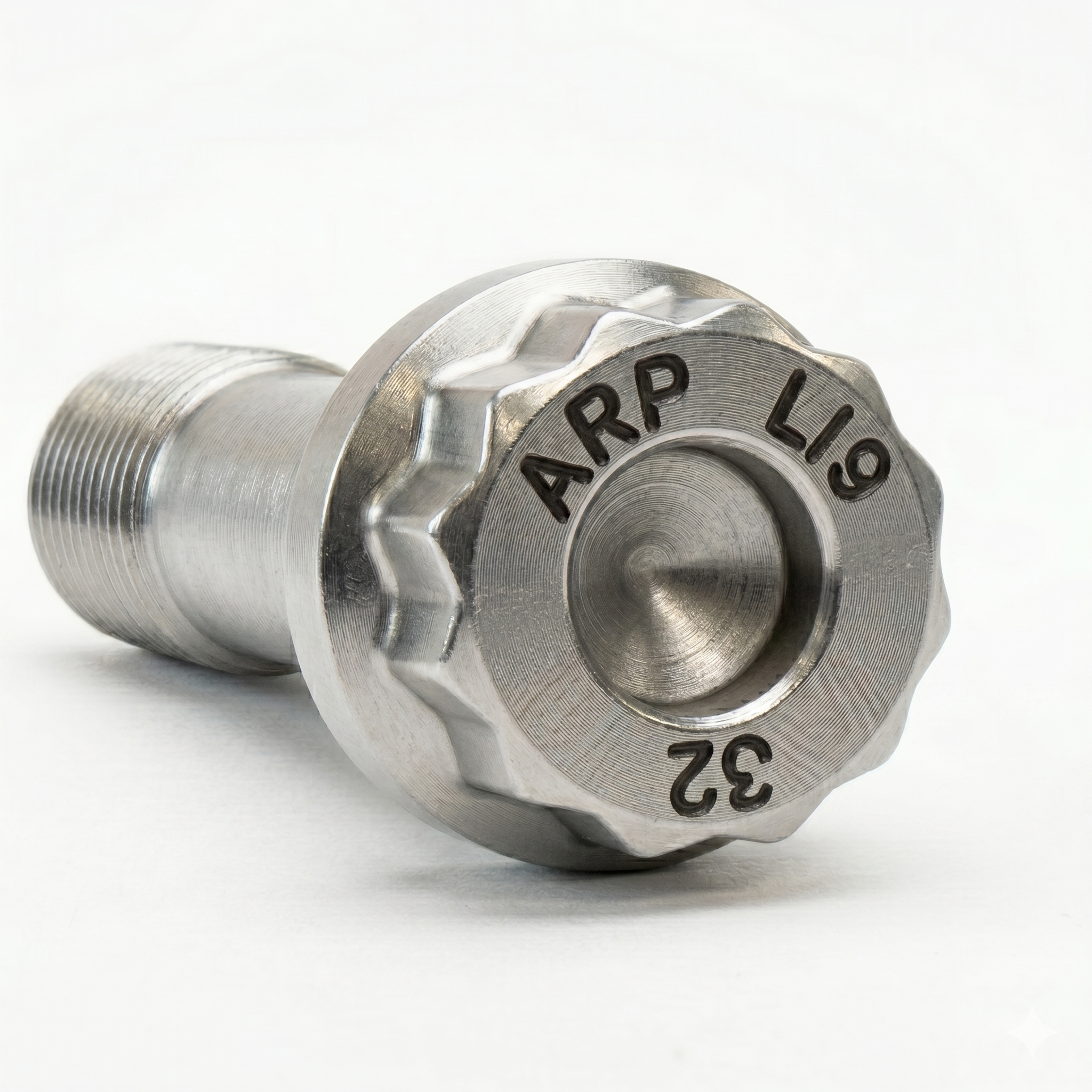 |
ARP L19: a higher-strength alloy, around 260,000 psi (1,793 MPa), intended for heavily tuned engines run at high rpm and high cylinder pressure. More sensitive to corrosion and hydrogen, it needs careful storage and is reserved for pushed builds (ZRP I-HD profile). It targets serious turbo builds, up to nearly 250 hp per cylinder and rpm up to 10,000. |
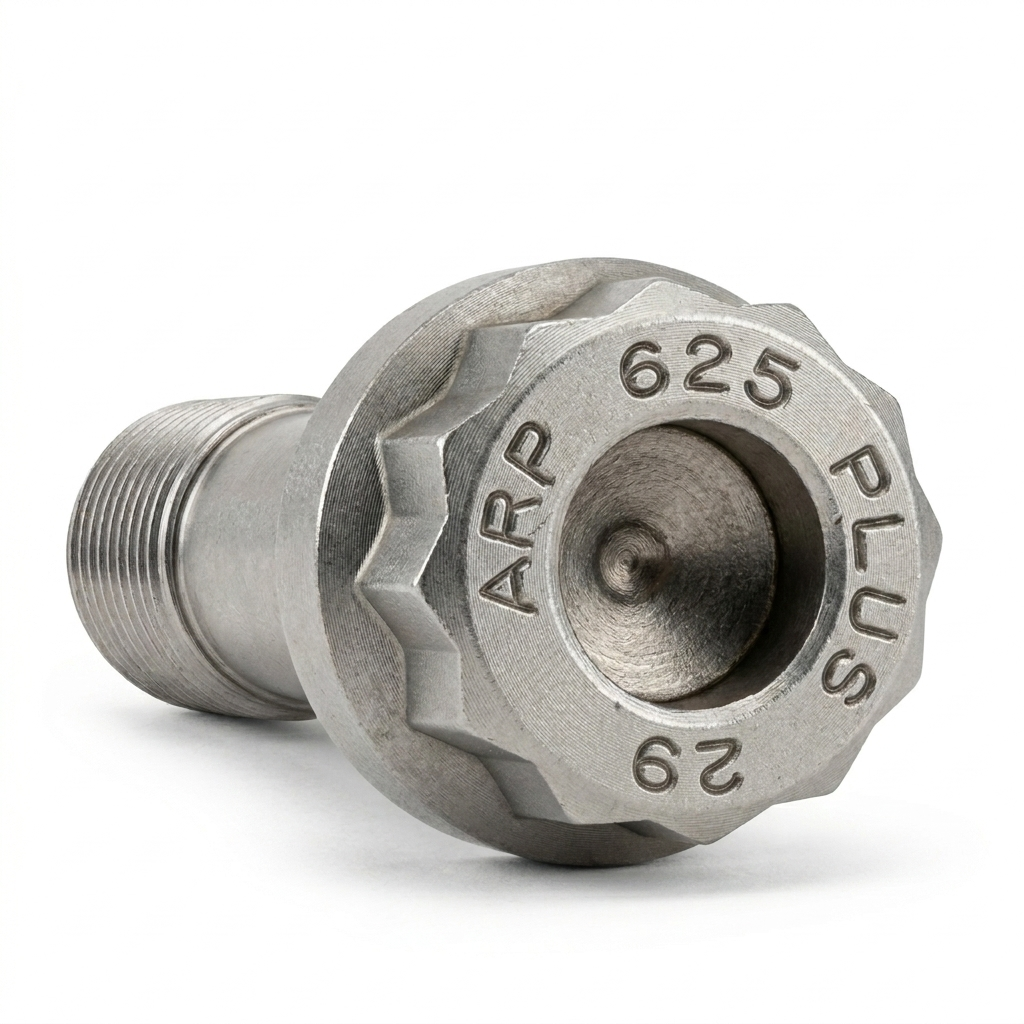 |
ARP Custom Age 625+: the premium alloy, from 260,000 to 280,000 psi (1,793 to 1,931 MPa), combining very high strength with immunity to hydrogen embrittlement and no storage constraint. It is the grade for the most extreme builds (Boostline I-3P profile). Reserved for extreme builds, beyond 250 hp per cylinder. |
Measuring bolt stretch
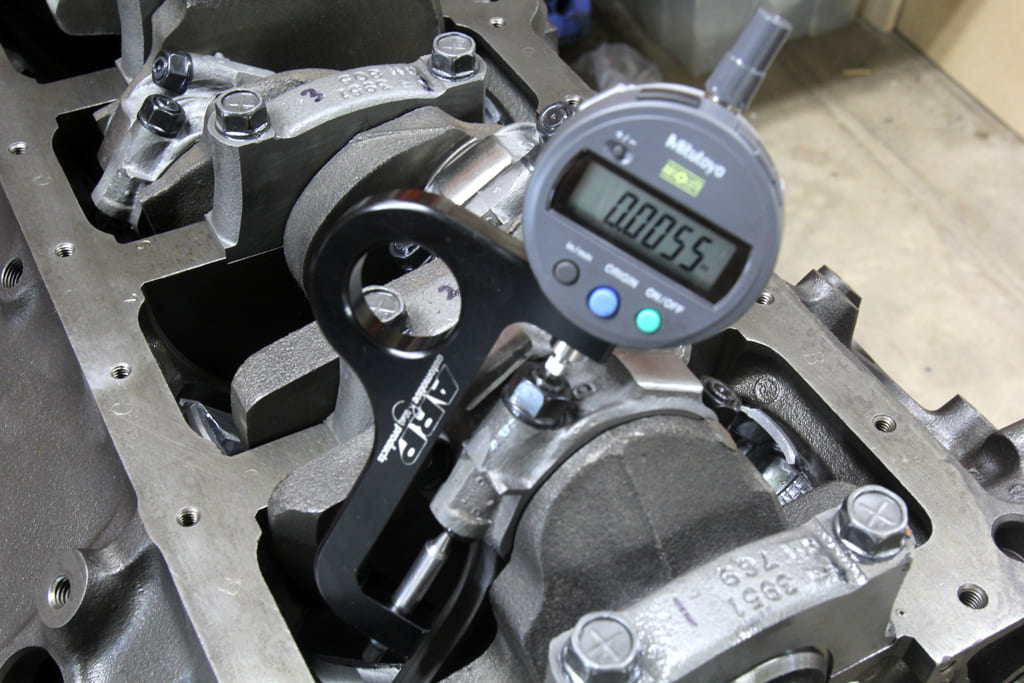
| The most reliable way to guarantee preload is not to aim for a torque figure but to measure bolt stretch with a dial gauge. Tighten in steps until the recommended stretch is reached , 0.140 to 0.152 mm for ARP 2000, 0.152 to 0.165 mm for ARP L19, 0.170 to 0.180 mm for ARP Custom Age 625+ , ensuring an even, repeatable clamp load, cylinder after cylinder. |
The brands offered
 |
Boostline , a forged-rod range from the American Wiseco group. Its three-pocket I-beam body (I-3P) offers increased bending stiffness for high-torque, high-power engines. The rods are weighed and matched, supplied with ARP 2000 or ARP Custom Age 625+ bolts, as a complete set of 4. |
 |
ZRP , a specialist in race forged rods founded by Alex Drakos in Athens (Greece). Each rod is machined from forged 4340 steel and weight-matched to ±1 g. For the EA888 Gen.2, ZRP supplies the I-HD profile, with either ARP 2000 or ARP L19 bolts, as a complete set of 4. |
Glossary
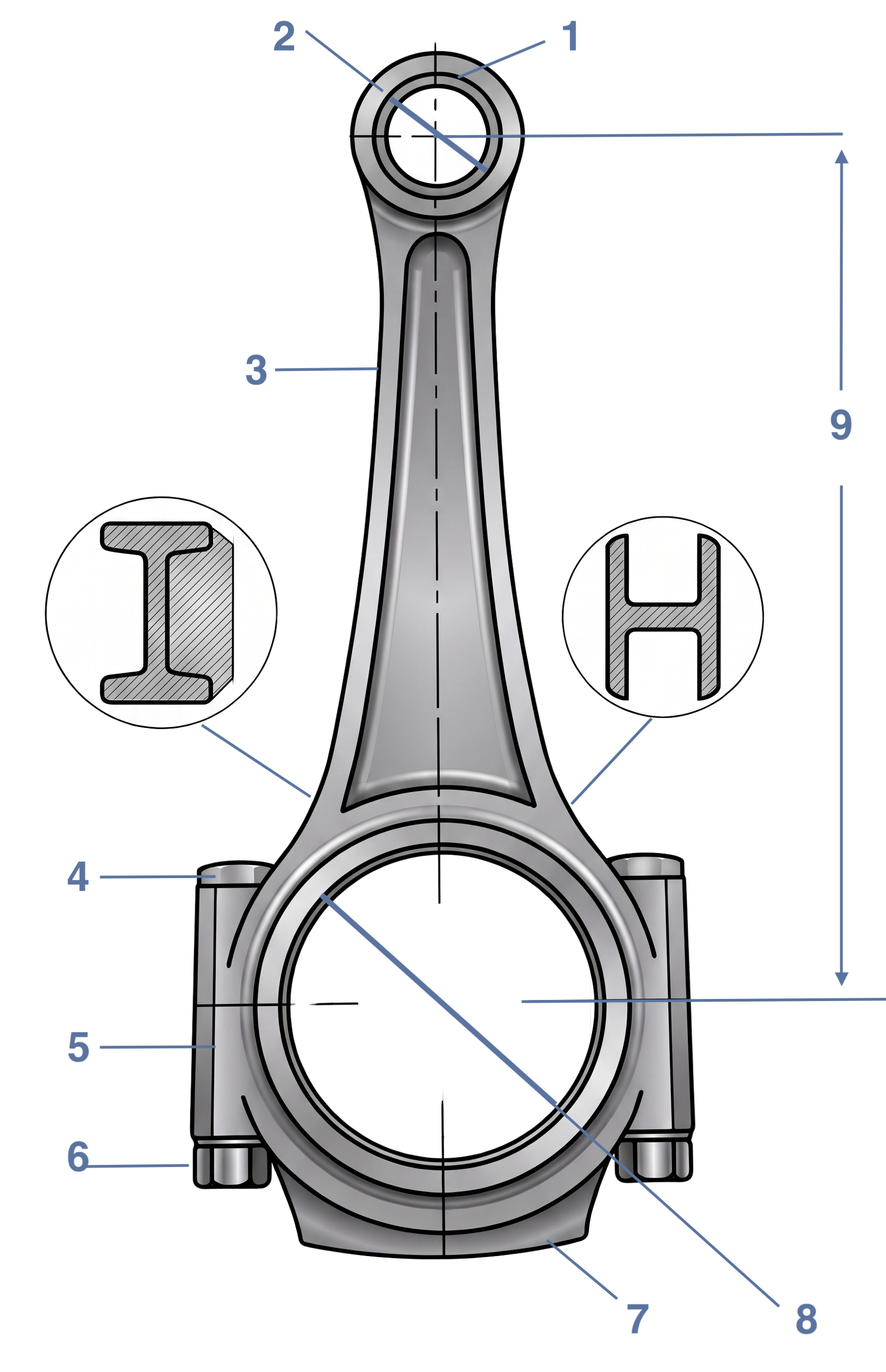 |
1) Small end 2) Small-end diameter 3) Rod beam 4) Rod bolt 5) Big end 6) Rod nut / bolt 7) Rod cap 8) Big-end diameter 9) Center-to-center |
Vehicle compatibility for the 2.0 TSI EA888 Gen.2 engine
The table below lists the vehicles built with the Audi Volkswagen 2.0L 16V TSI EA888 Gen.2 engine. Before ordering, check the piston pin diameter and the centre-to-centre length of your original rods.
| Make | Model (chassis) | Engine code | Power | Years |
|---|---|---|---|---|
| Audi | A3 (8P1) / Sportback (8PA) / Cabriolet (8P7) 2.0 TFSI | CCZA | 200 hp | 2004–2013 |
| Audi | TT (8J3) / TT Roadster (8J9) 2.0 TFSI quattro | CCZA, CETA | 200–211 hp | 2008–2014 |
| Audi | A4 B8 (8K2) / Avant (8K5) / Allroad (8KH) 2.0 TFSI | CDNC | 211 hp | 2008–2016 |
| Audi | A5 (8T3) / Sportback (8TA) / Cabriolet (8F7) 2.0 TFSI | CDNC | 211 hp | 2008–2017 |
| Audi | Q5 (8R) 2.0 TFSI | CDNC | 211 hp | 2008–2012 |
| SEAT | Alhambra (710, 711) 2.0 TSI | CCZA | 200 hp | 2010–2012 |
| SEAT | Altea XL (5P5, 5P8) 2.0 TFSI / 4x4 | CCZB | 211 hp | 2009–2015 |
| SEAT | Leon (1P1) 2.0 TFSI | CCZB | 211 hp | 2009–2012 |
| Škoda | Octavia II (1Z3) / Combi (1Z5) 2.0 TFSI | CCZA | 200 hp | 2005–2013 |
| Škoda | Superb II (3T4) / Break (3T5) 2.0 TSI | CCZA | 200 hp | 2010–2015 |
| Volkswagen | Golf VI (5K1) 2.0 GTI / Cabriolet (517) | CCZB | 210–211 hp | 2009–2016 |
| Volkswagen | Golf VI Variant (AJ5) 2.0 TSI | CCZA | 200 hp | 2009–2013 |
| Volkswagen | Scirocco III (137, 138) 2.0 TSI | CCZB | 210 hp | 2009–2017 |
| Volkswagen | Passat B6 (3C) / CC (357) 2.0 TSI | CCZA | 200 hp | 2005–2012 |
| Volkswagen | Passat B7 (362) / Variant (365) / Alltrack 4motion 2.0 TSI | CCZB | 210 hp | 2010–2015 |
| Volkswagen | Beetle (5C) / Cabriolet 2.0 TSI | CCZA | 200 hp | 2011–2016 |
| Volkswagen | EOS (1F7, 1F8) 2.0 TSI | CCZA, CCZB | 200–210 hp | 2006–2015 |
| Volkswagen | Jetta IV (162, 163) 2.0 TSI | CCZA | 200 hp | 2010–2014 |
| Volkswagen | Sharan (7N1, 7N2) 2.0 TSI | CCZA | 200 hp | 2010–2015 |
| Volkswagen | Tiguan (5N_) 2.0 TSI / 4motion | CCZA, CCZB | 200–211 hp | 2007–2018 |
Why is it the most economical solution?
On a tuned 2.0 TSI EA888 Gen.2, a stock rod that lets go usually takes the block, crankshaft and pistons with it. Investing in a forged rod set from the outset costs far less than a full rebuild after a failure. You permanently strengthen the bottom end, preserve the value of your build and drive with peace of mind, in intensive use as much as day to day.
-
Brand
-
ReferenceR-AUD-010-I
13 other products in the same category
Viewed products