Product successfully added to your shopping cart
Quantity
Total
There are 0 items in your cart. There is 1 item in your cart.
Total products
Total shipping To be determined
Total

2.0L 16v - 4G63 7-bolt
Manufacturers
2.0L 16v - 4G63 7-bolt
Warning: Last items in stock!
New product
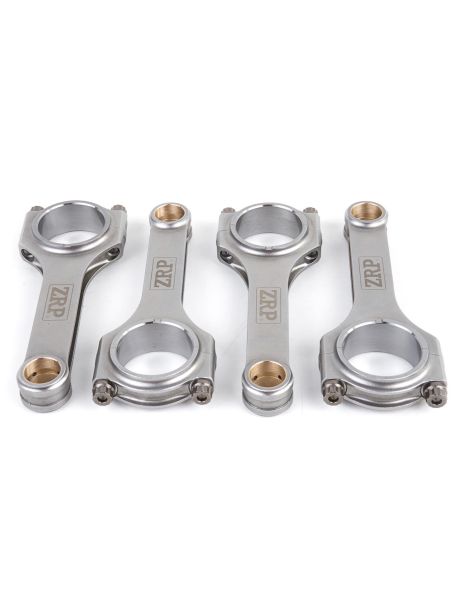
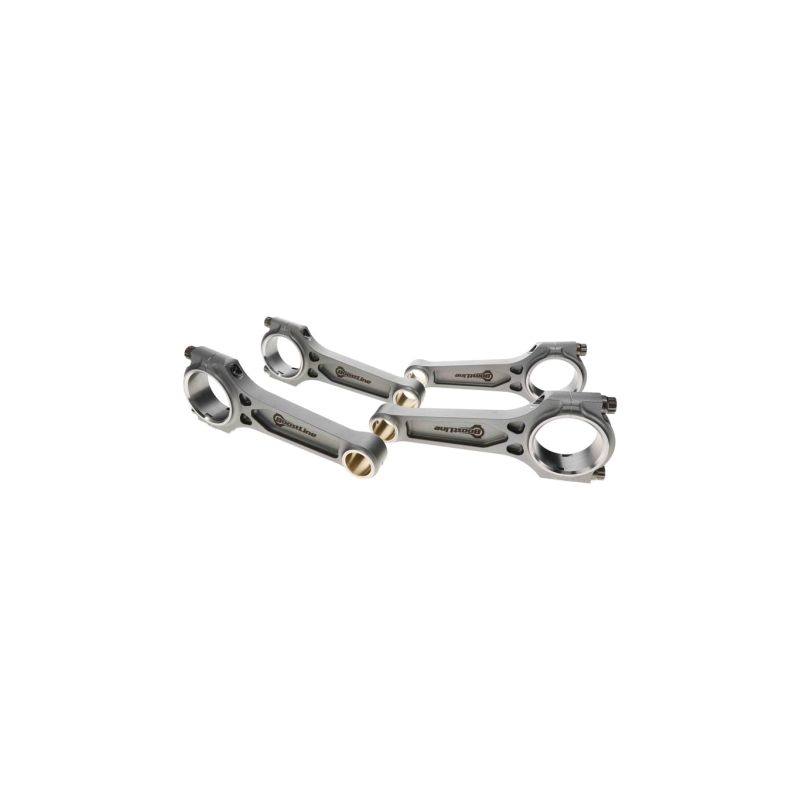
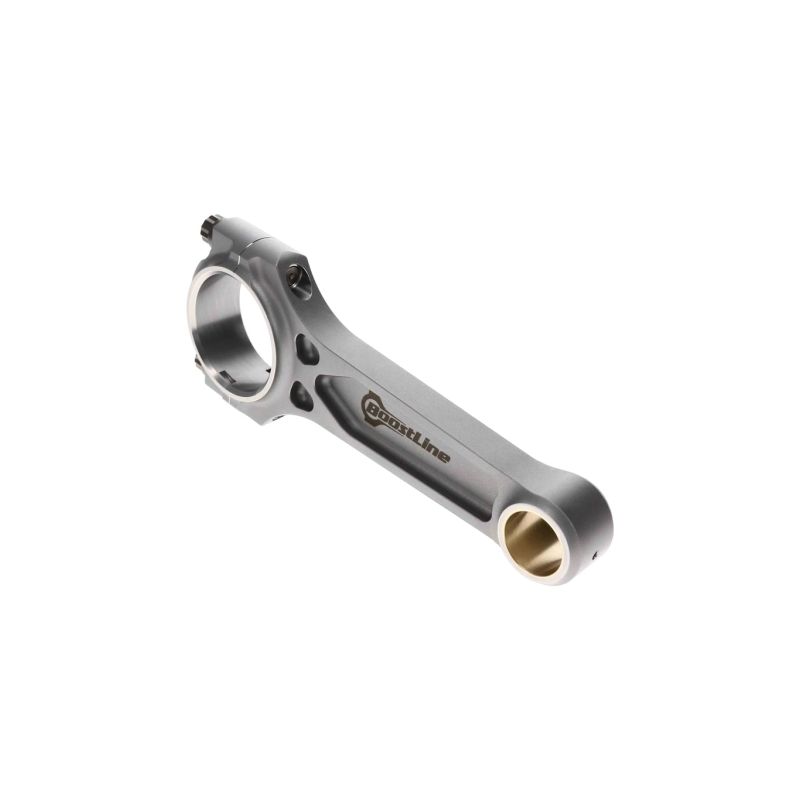
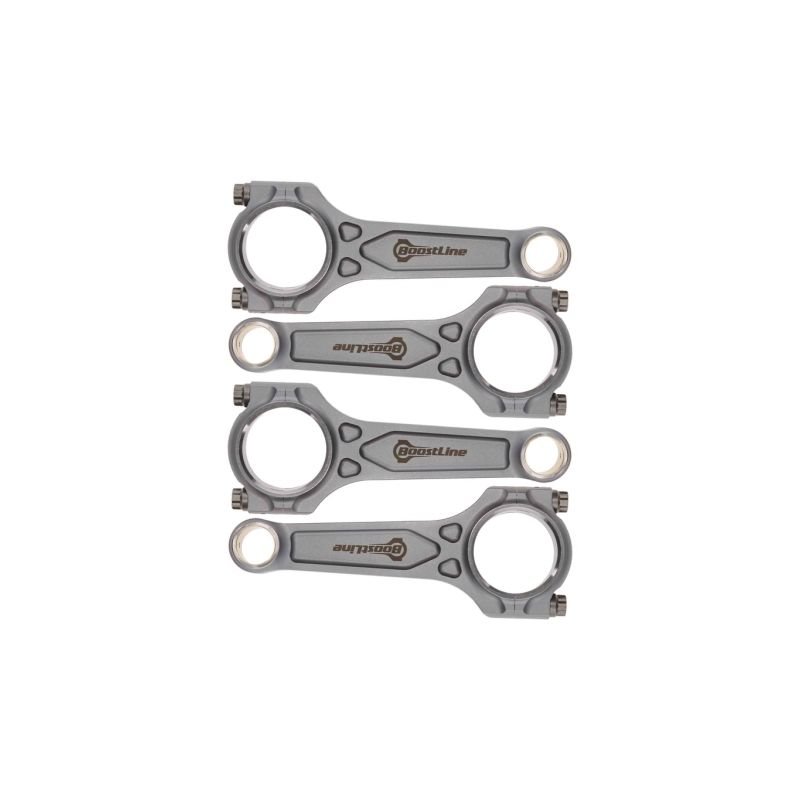
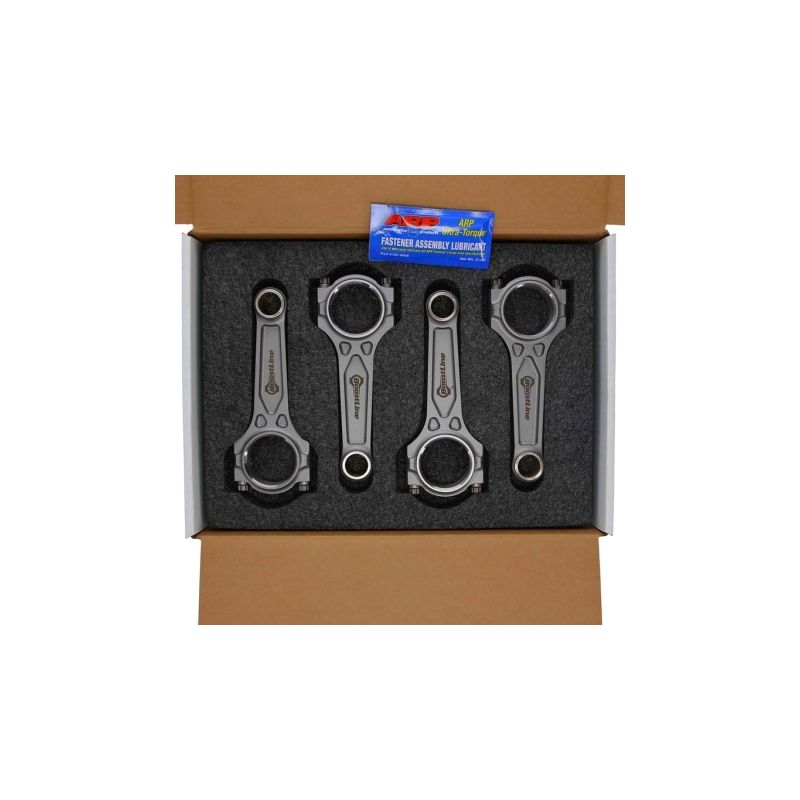
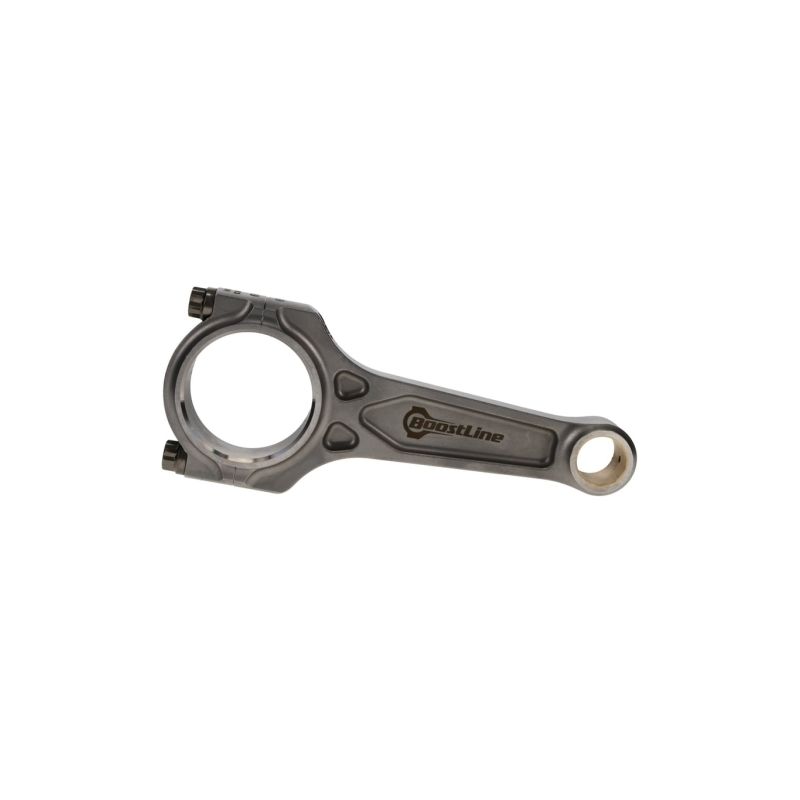
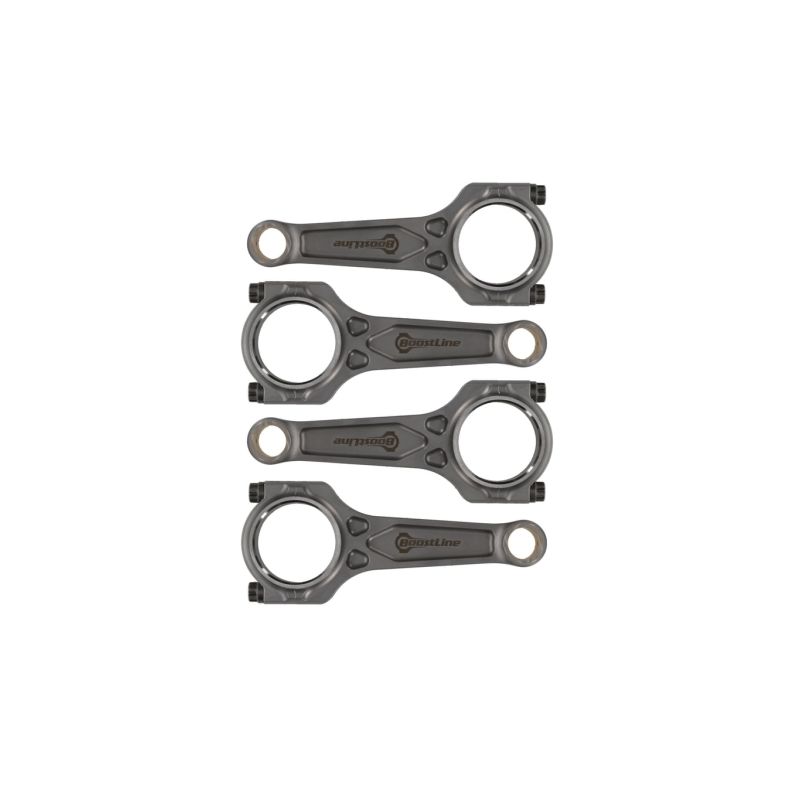
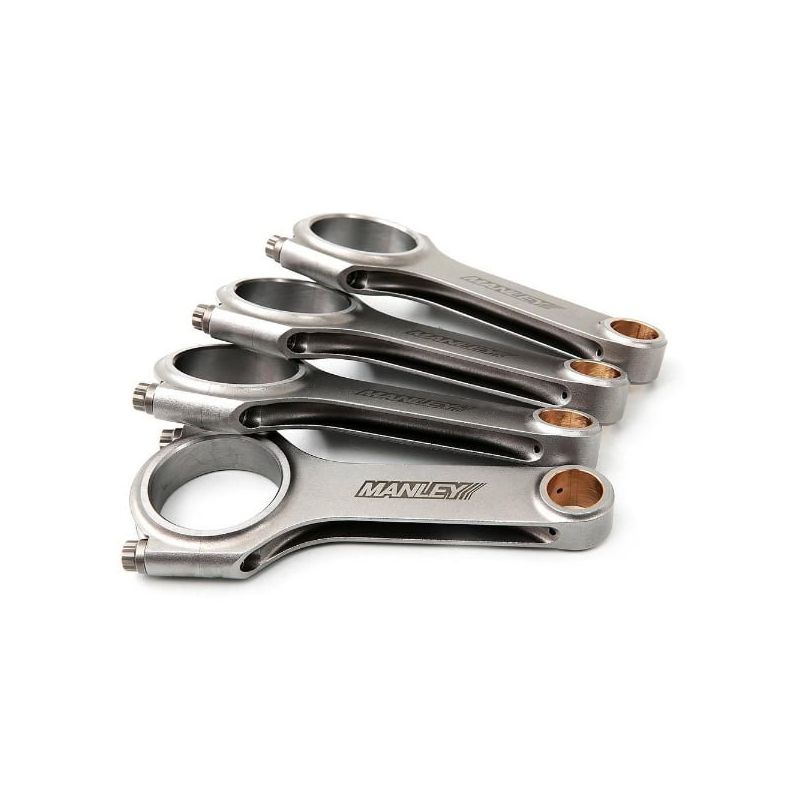
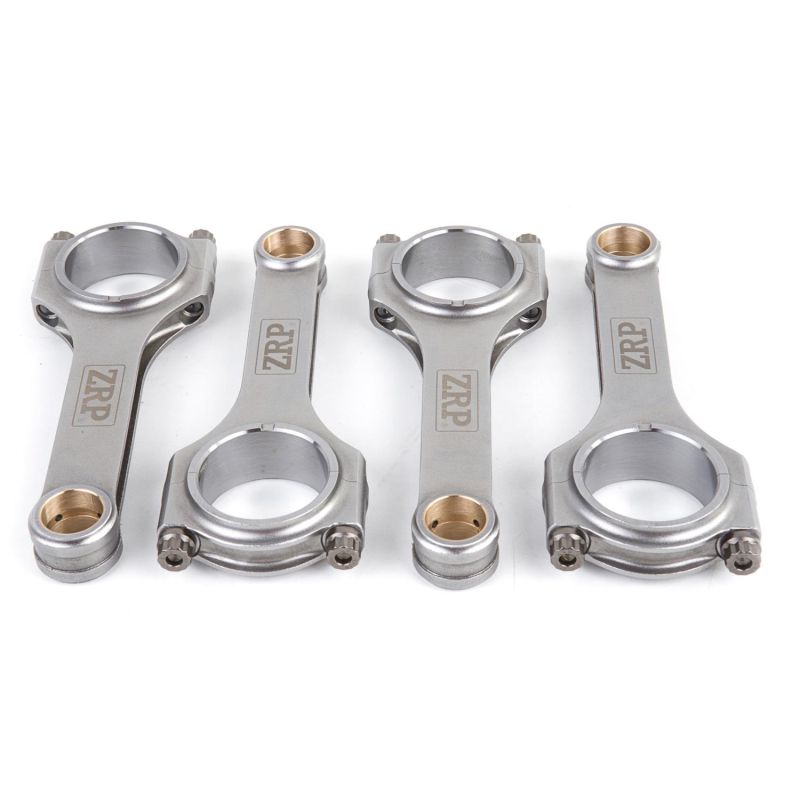
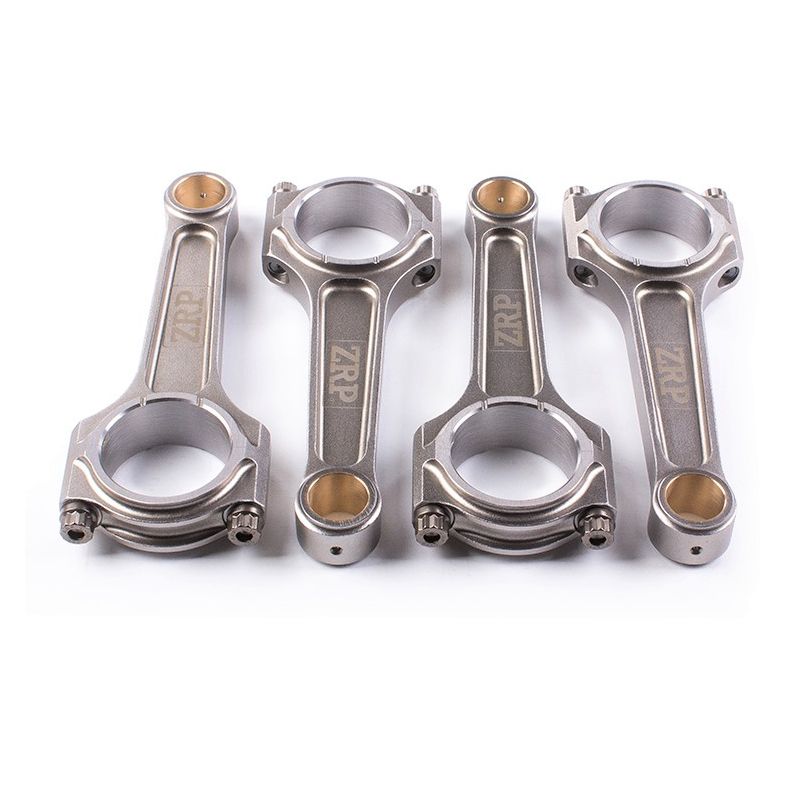
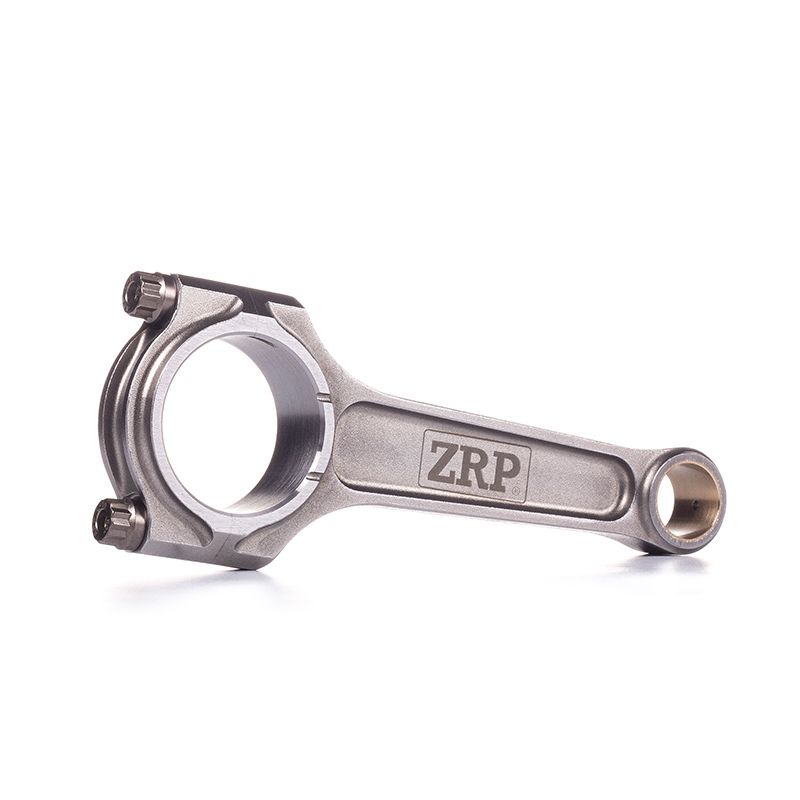
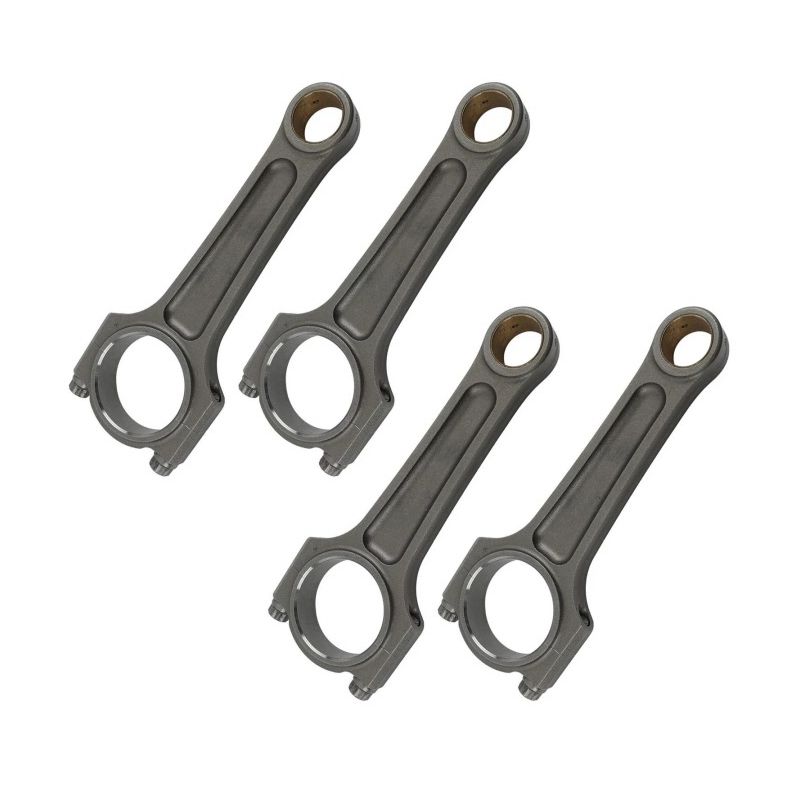
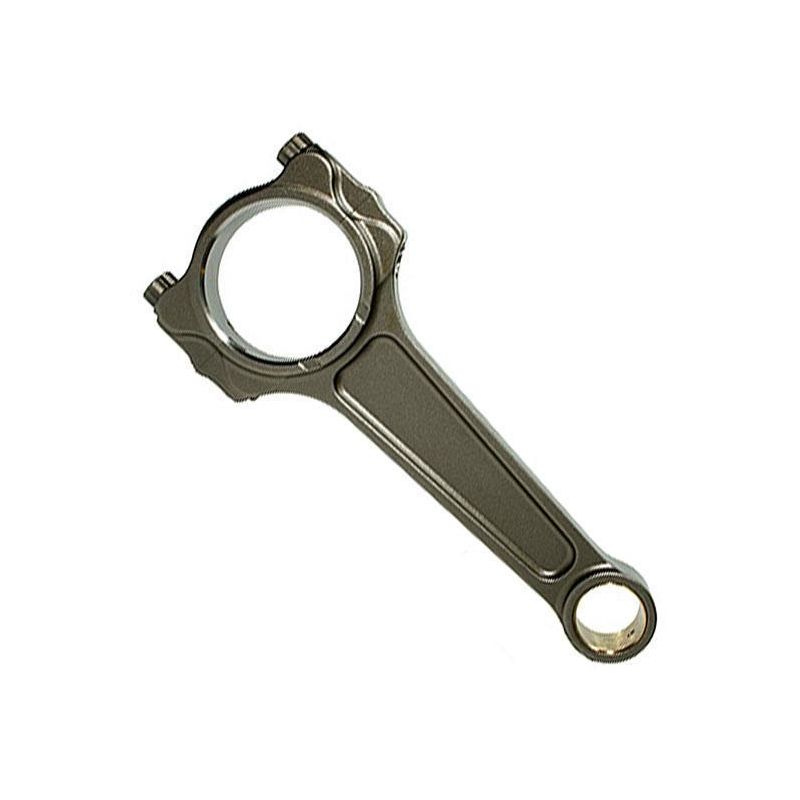
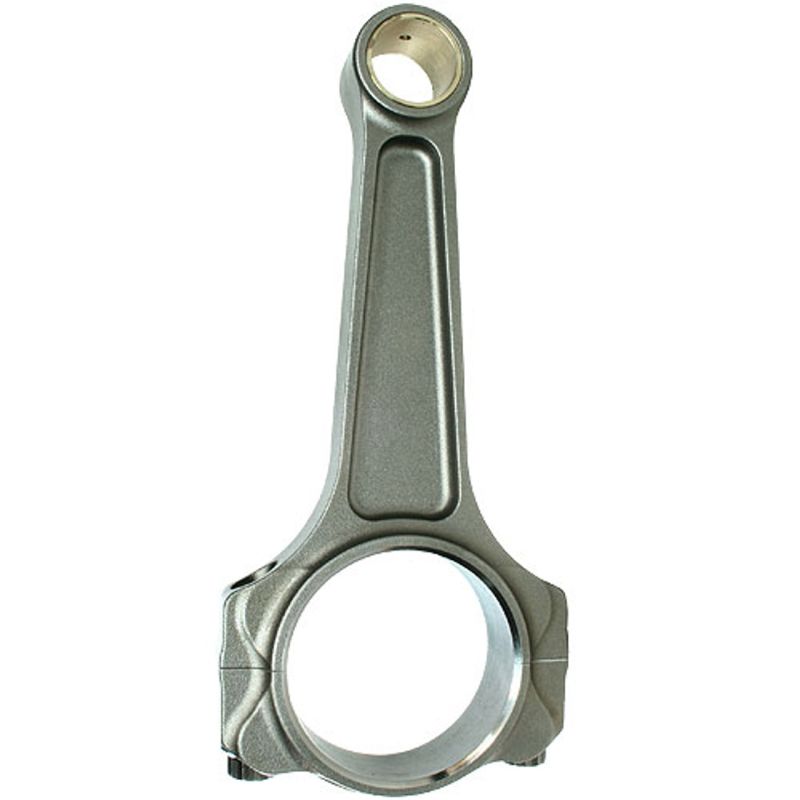
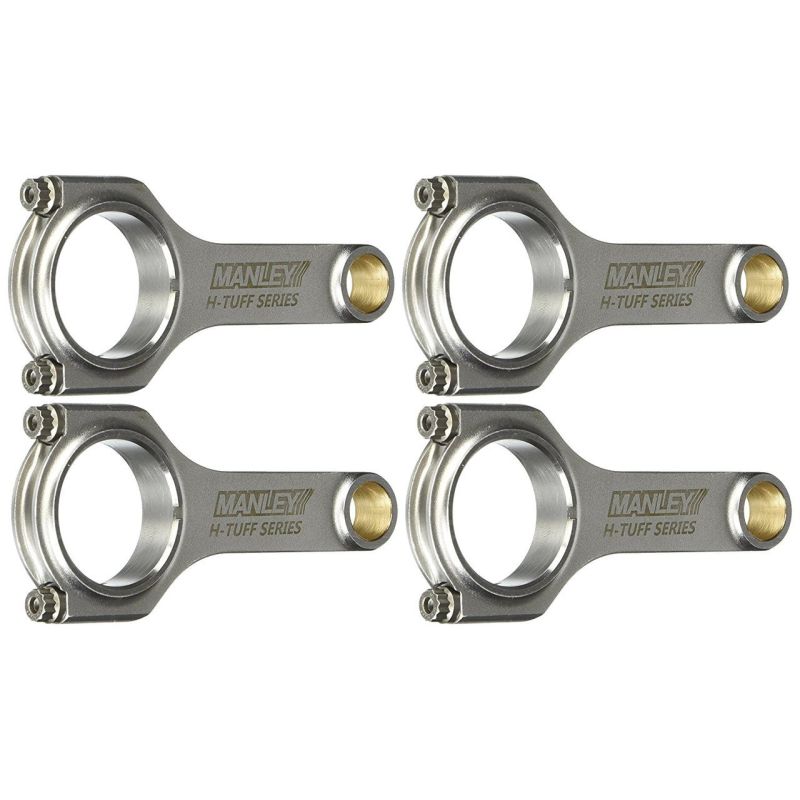
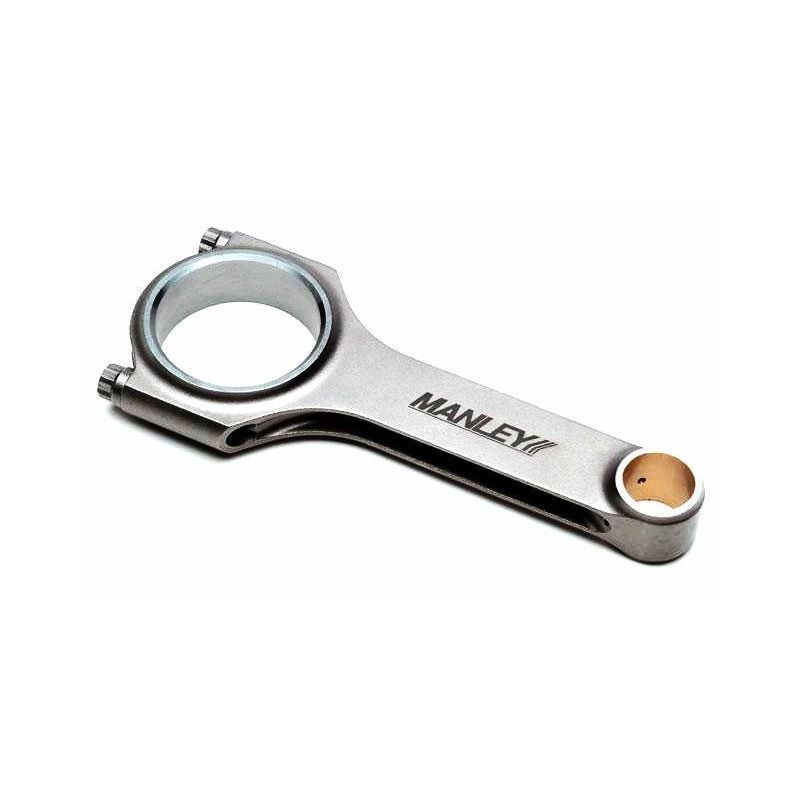
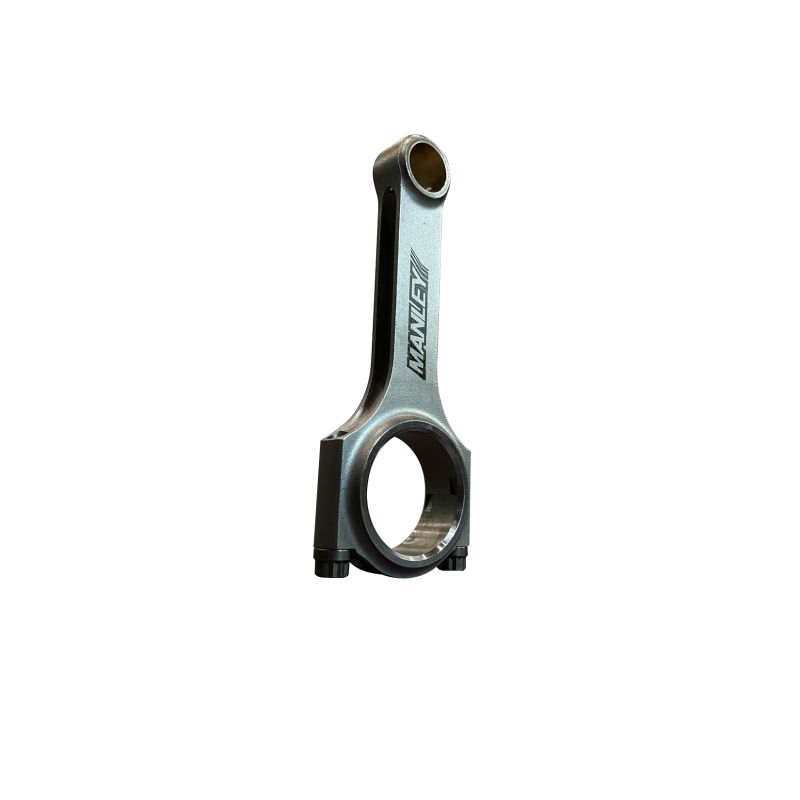
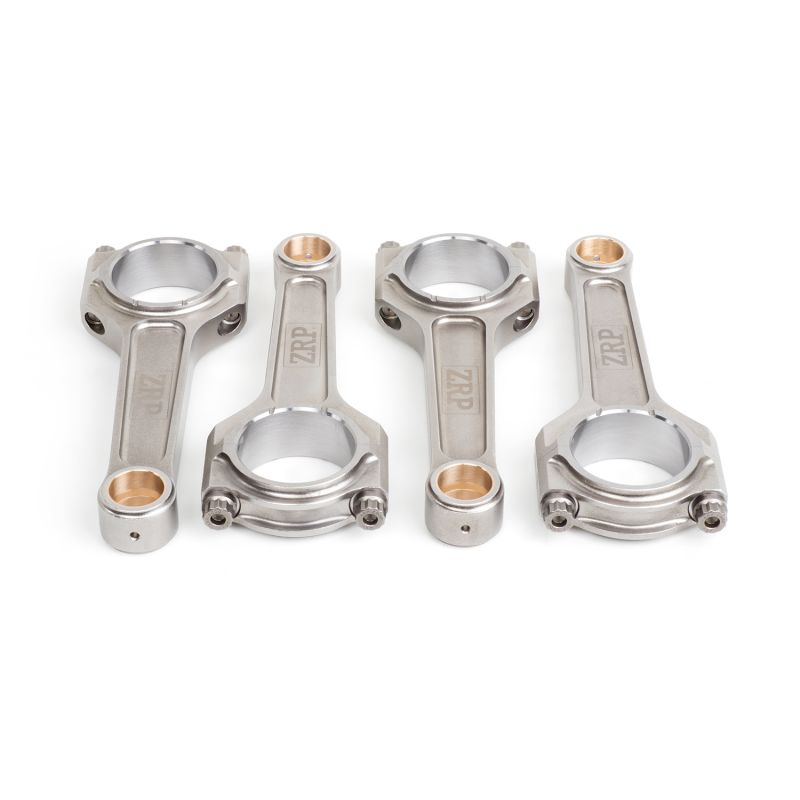
Set of 4 forged connecting rods for the Mitsubishi 4G63 7-bolt (150 mm rod length), for high-performance forged pistons.
The 4G63 is Mitsubishi's turbocharged 2.0-litre four-cylinder with double overhead camshafts and sixteen valves. Its so-called "7-bolt" version (the crankshaft flange is secured by seven bolts, versus six on earlier blocks) powers the Lancer Evolution IV to IX as well as the second-generation Eclipse and Talon. Cast-iron block, aluminium cylinder head: this architecture, reputed to be indestructible, explains its icon status in the tuning world.
On the Lancer Evolution, the 4G63T turbo produces around 280 hp in stock form, with considerable room for improvement; built engines routinely clear 400 to 600 hp. This rise in power stresses the rotating assembly far beyond what the factory connecting rods can withstand, and they eventually bend or break. Fitting forged connecting rods with a 150 mm rod length is the decisive step to make the bottom end of a pushed 7-bolt 4G63 reliable.
Machined from high-strength forged steel (4340, and up to 300M or 817M40T steel for the most extreme versions), these rods offer fatigue and bending resistance far superior to the original sintered rods. Forging aligns the metal grain flow with the loads applied, whereas a sintered part contains crack-initiation sites.
They cover every discipline in which the 4G63 excels: rally, drift, drag, circuit, hillclimb and time attack. Depending on the profile and bolts chosen, they suit a Stage 2 build just as well as a Stage 3, Stage 4 and beyond competition engine, clearing 500 hp with ease. This listing brings together four brands (ZRP, Wössner, Boostline, Manley) and five profiles (H, H-HD, I, I-HD, I-3P), with ARP 2000, ARP L19 or ARP CA625+ bolts, all in 3/8" diameter.
| Reference | Brand | Profile | Bolts | Pin Ø (mm) | Small-end width (mm) | Big-end Ø (mm) | Big-end width (mm) | Rod length (mm) | Steel | Weight (g) |
| MI5906-866 | Boostline | I-3P | ARP 2000-3/8"-38mm | 22 | 22,86 | 48 | 26,37 | 150 | 4340 | 657 |
| MI5906-866+ | Boostline | I-3P | ARP CA625+-3/8"-38mm | 22 | 22,86 | 48 | 26,37 | 150 | 4340 | 660 |
| 14022-4 | Manley | H | ARP 2000-3/8"-38mm | 22 | 48 | 26,37 | 150 | 4340 | 580 | |
| 15022-4 | Manley | H-HD | ARP 2000-3/8"-38mm | 22 | 48 | 26,37 | 150 | 4340 | 635 | |
| 15022R6-4 | Manley | H-HD | ARP CA625+-3/8"-38mm | 22 | 48 | 26,37 | 150 | 4340 | 635 | |
| 14400-4 | Manley | I-HD | ARP 2000-3/8"-38mm | 22 | 48 | 26,37 | 150 | 4340 | 625 | |
| 14403-4 | Manley | I-HD | ARP 2000-3/8"-41mm | 22 | 48 | 26,37 | 150 | 4340 | 630 | |
| 14400R6-4 | Manley | I-HD | ARP CA625+-3/8"-38mm | 22 | 48 | 26,37 | 150 | 4340 | 625 | |
| 14403R6-4 | Manley | I-HD | ARP CA625+-3/8"-41mm | 22 | 48 | 26,37 | 150 | 4340 | 630 | |
| 15403-4 | Manley | I-HD-300M | ARP 2000-3/8"-41mm | 22 | 48 | 26,37 | 150 | 300M | 675 | |
| 15403R6-4 | Manley | I-HD-300M | ARP CA625+-3/8"-41mm | 22 | 48 | 26,37 | 150 | 300M | 675 | |
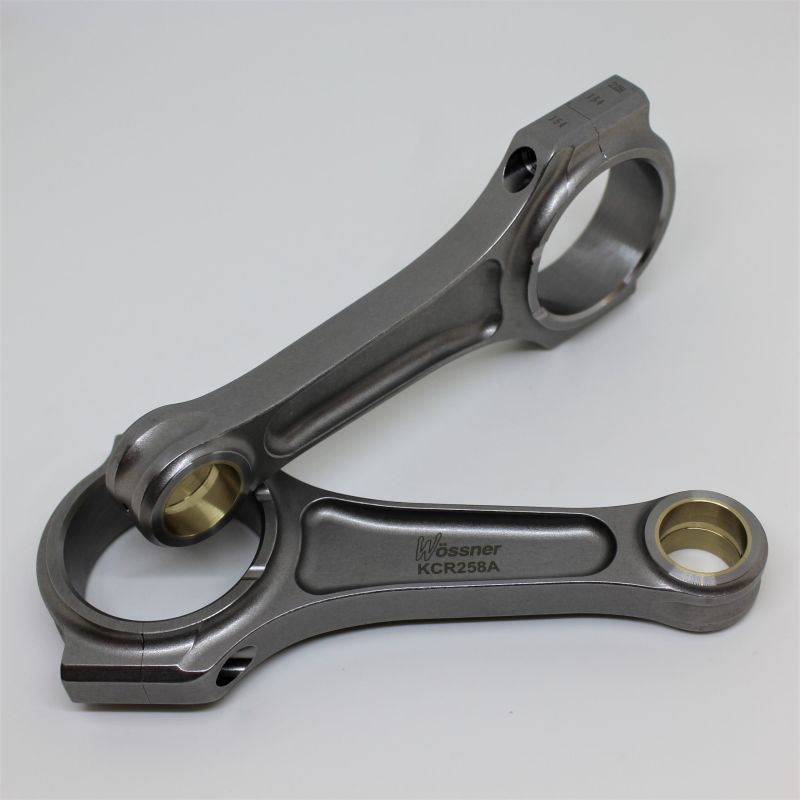
| KCR237A | Wössner | I | ARP 2000-3/8"-38mm | 22 | 25,5 | 48 | 26,35 | 150 | 4340 | 656 |
| R-MIT-002-H | ZRP | H | ARP 2000-3/8"-38mm | 22 | 48 | 26,4 | 150 | 4340 | 552 | |
| R-MIT-002-H-L19 | ZRP | H | ARP L19-3/8"-38mm | 22 | 48 | 26,4 | 150 | 4340 | 552 | |
| R-MIT-002-I | ZRP | I-HD | ARP 2000-3/8"-38mm | 22 | 48 | 26,4 | 150 | 4340 | 675 | |
| R-MIT-002-I-L19 | ZRP | I-HD | ARP L19-3/8"-38mm | 22 | 48 | 26,4 | 150 | 4340 | 675 | |
| R-MIT-002-IP | ZRP | I | ARP L19-3/8"-38mm | 22 | 48 | 26,4 | 150 | 817M40T | 610 |
| Connecting rod | Bolts | Torque | Recommended stretch |
| MI5906-866 | ARP 2000 | 75 N·m | 0,130 à 0,140 mm |
| MI5906-866+ | ARP CA625+ | 115 N·m | 0,170 à 0,180 mm |
| 14022-4 | ARP 2000 | 81,3 N·m | 0,147 à 0,157 mm |
| 15022-4 | ARP 2000 | 81,3 N·m | 0,147 à 0,157 mm |
| 15022R6-4 | ARP CA625+ | 88,1 N·m | 0,160 à 0,170 mm |
| 14400-4 | ARP 2000 | 81,3 N·m | 0,147 à 0,157 mm |
| 14403-4 | ARP 2000 | 81,3 N·m | 0,147 à 0,157 mm |
| 14400R6-4 | ARP CA625+ | 81,3 N·m | 0,160 à 0,170 mm |
| 14403R6-4 | ARP CA625+ | 88,1 N·m | 0,165 à 0,190 mm |
| 15403-4 | ARP 2000 | 81,3 N·m | 0,147 à 0,157 mm |
| 15403R6-4 | ARP CA625+ | 88,1 N·m | 0,165 à 0,190 mm |
| KCR237A | ARP 2000 | 74,6 N·m | 0,140 à 0,152 mm |
| R-MIT-002-H | ARP 2000 | 61 N·m | 0,140 à 0,152 mm |
| R-MIT-002-H-L19 | ARP L19 | 67,8 N·m | 0,152 à 0,165 mm |
| R-MIT-002-I | ARP 2000 | 61 N·m | 0,140 à 0,152 mm |
| R-MIT-002-I-L19 | ARP L19 | 67,8 N·m | 0,152 à 0,165 mm |
| R-MIT-002-IP | ARP L19 | 67,8 N·m | 0,152 à 0,165 mm |
Manufacturers recommend the stretch-gauge method as the reference: the instructions supplied with the kit always take precedence. The torque figures correspond to assembly with ARP lubricant.
| 4340 steel is a nickel-chromium-molybdenum alloy steel used in aerospace and motorsport alike. Forged then heat-treated (quench and temper), it offers excellent tensile strength, high fatigue resistance and real ductility. Compared with an original rod (often sintered/powder metal, optimised for series-production cost), a 4340 forged rod shows roughly +19% higher yield strength, +8% higher tensile strength and above all +19% to +37% higher fatigue strength, i.e. a fatigue life under cyclic loading several times longer. This is what makes forged 4340 the reference material as soon as boost and rpm climb. |
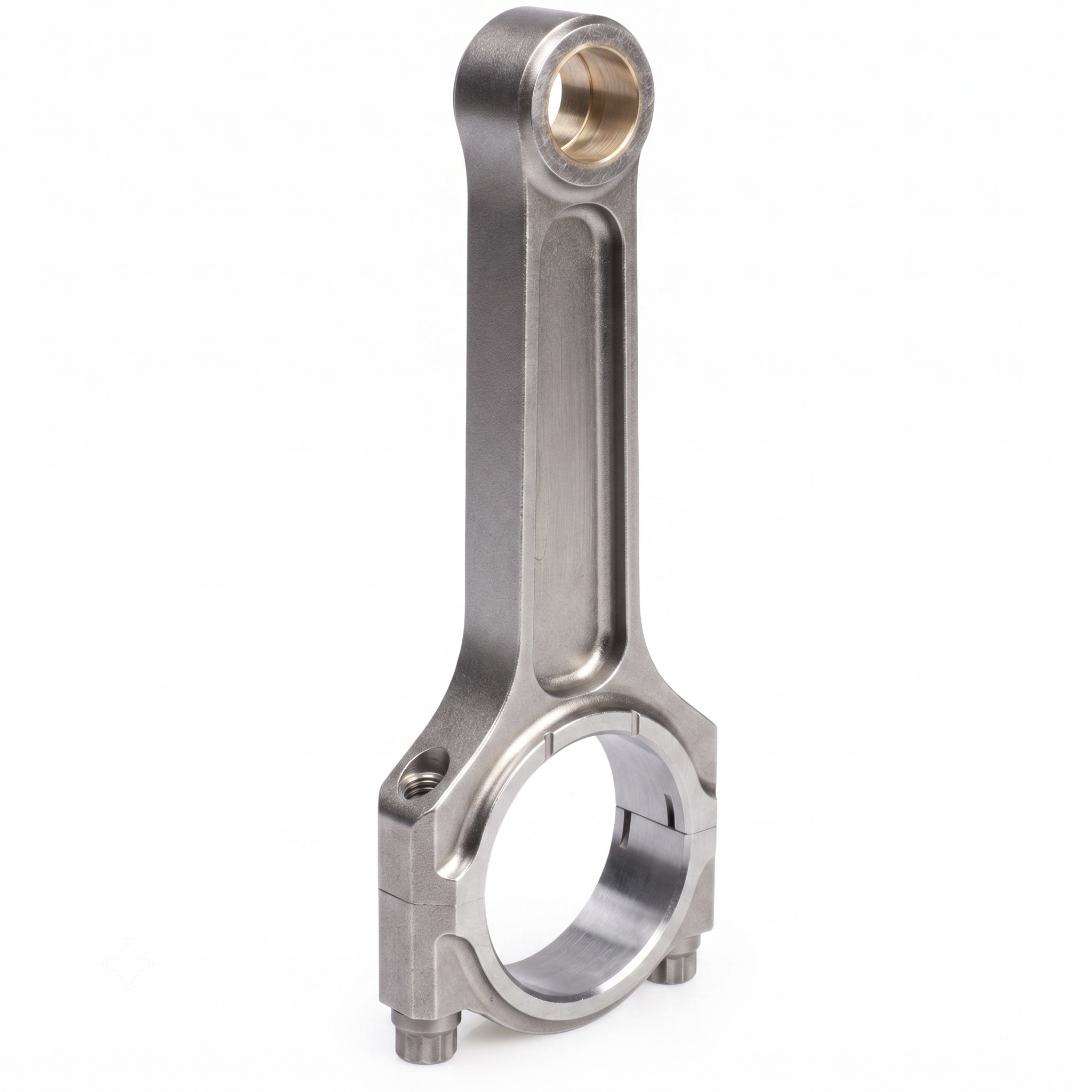 | I-beam profile. With its thinner central section, the I-beam rod is lighter: less inertia and freer rev pick-up. It is the preferred profile on modern turbo engines like the 4G63. Its I-HD (Heavy Duty) version is a reinforced variant, designed for higher loads. |
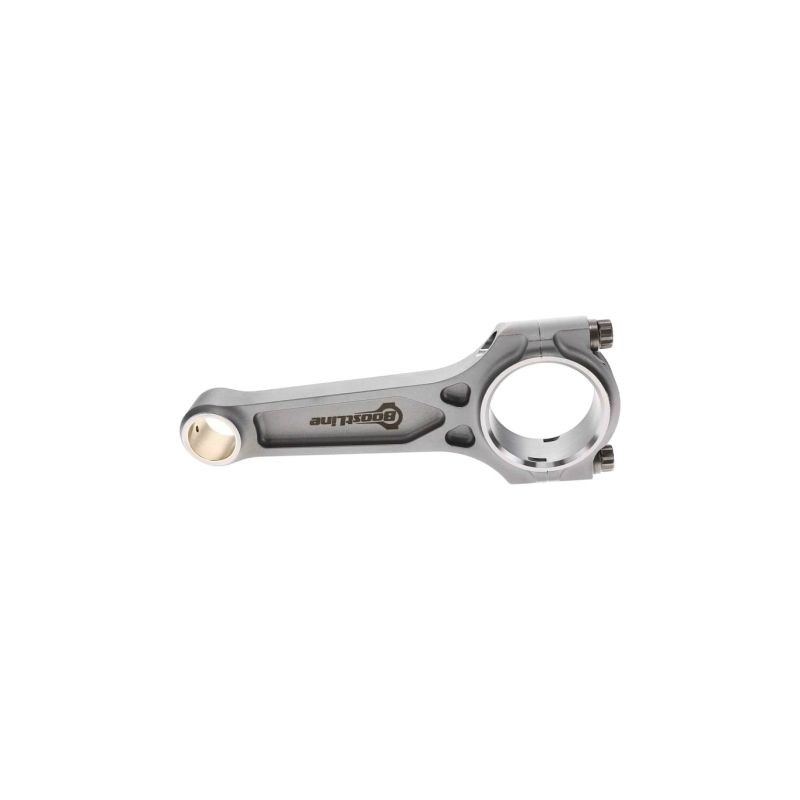
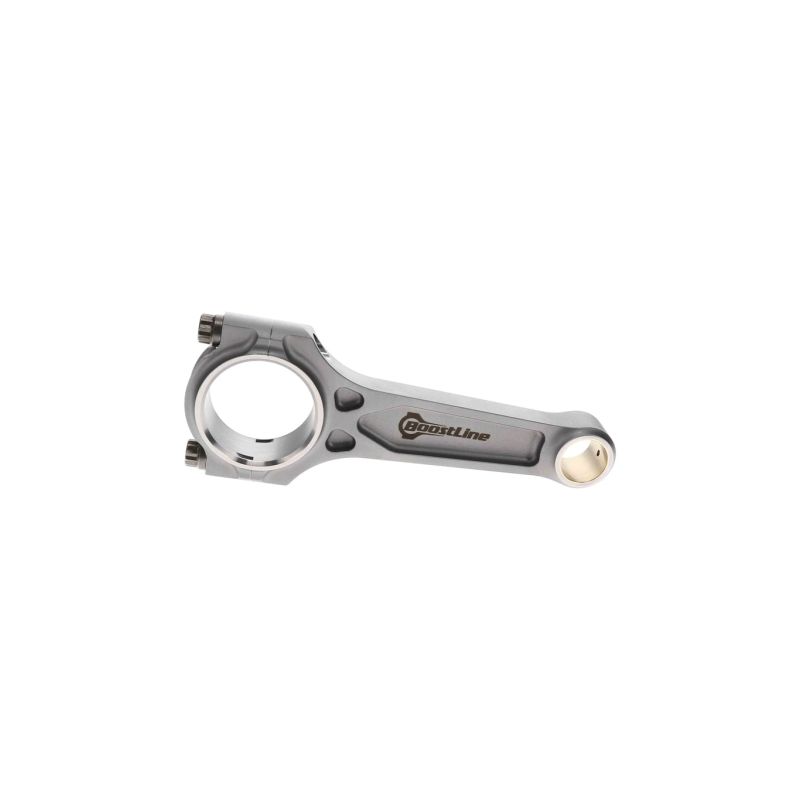
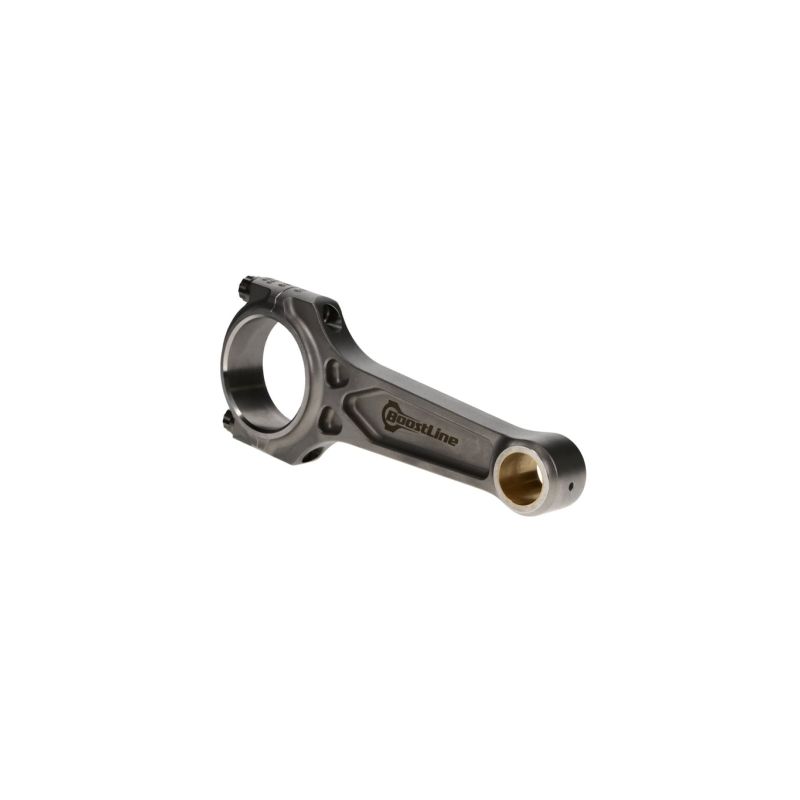
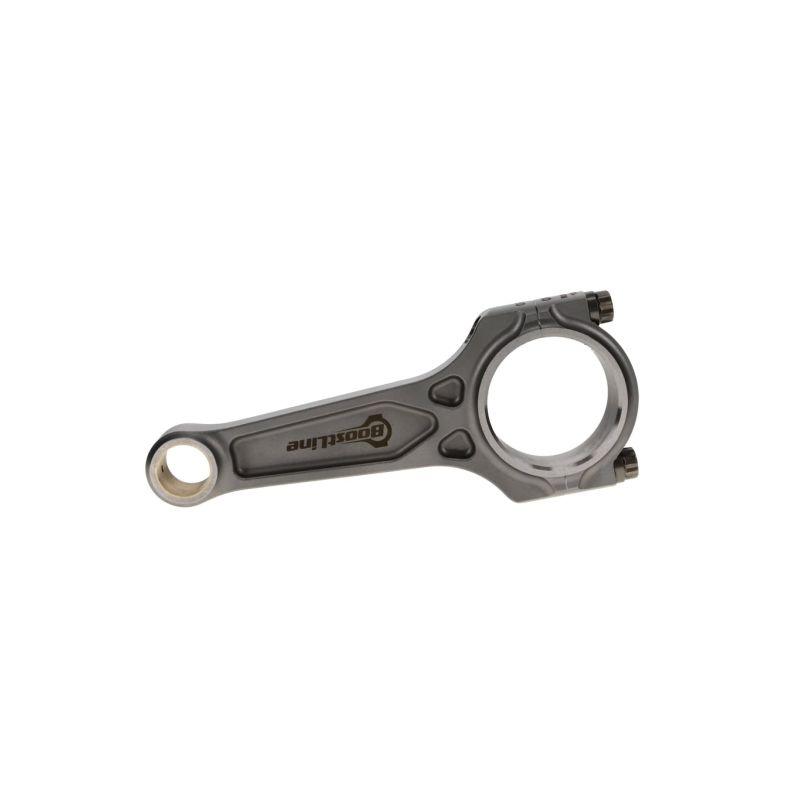
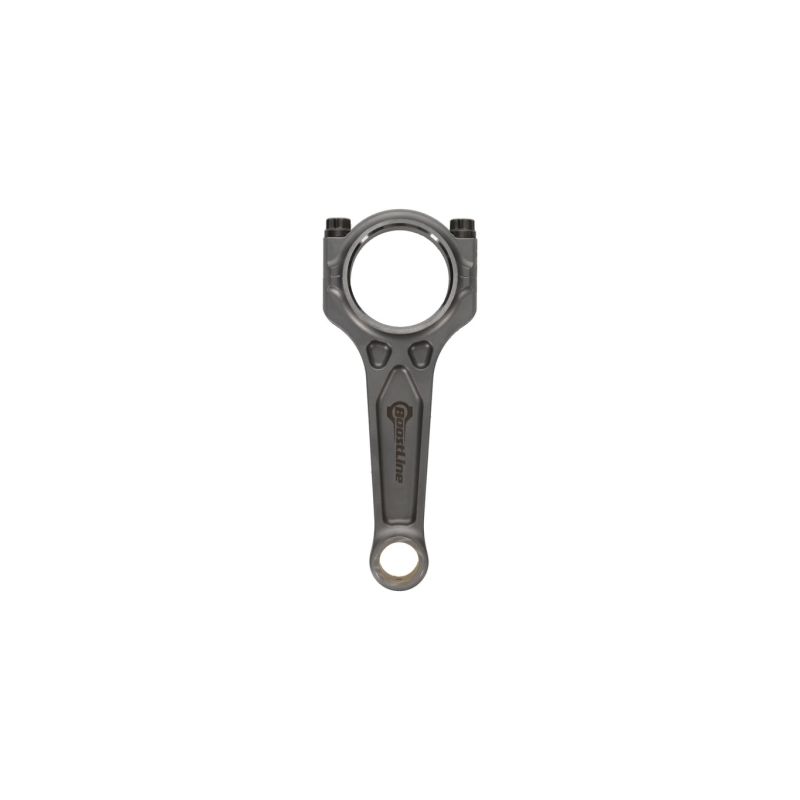
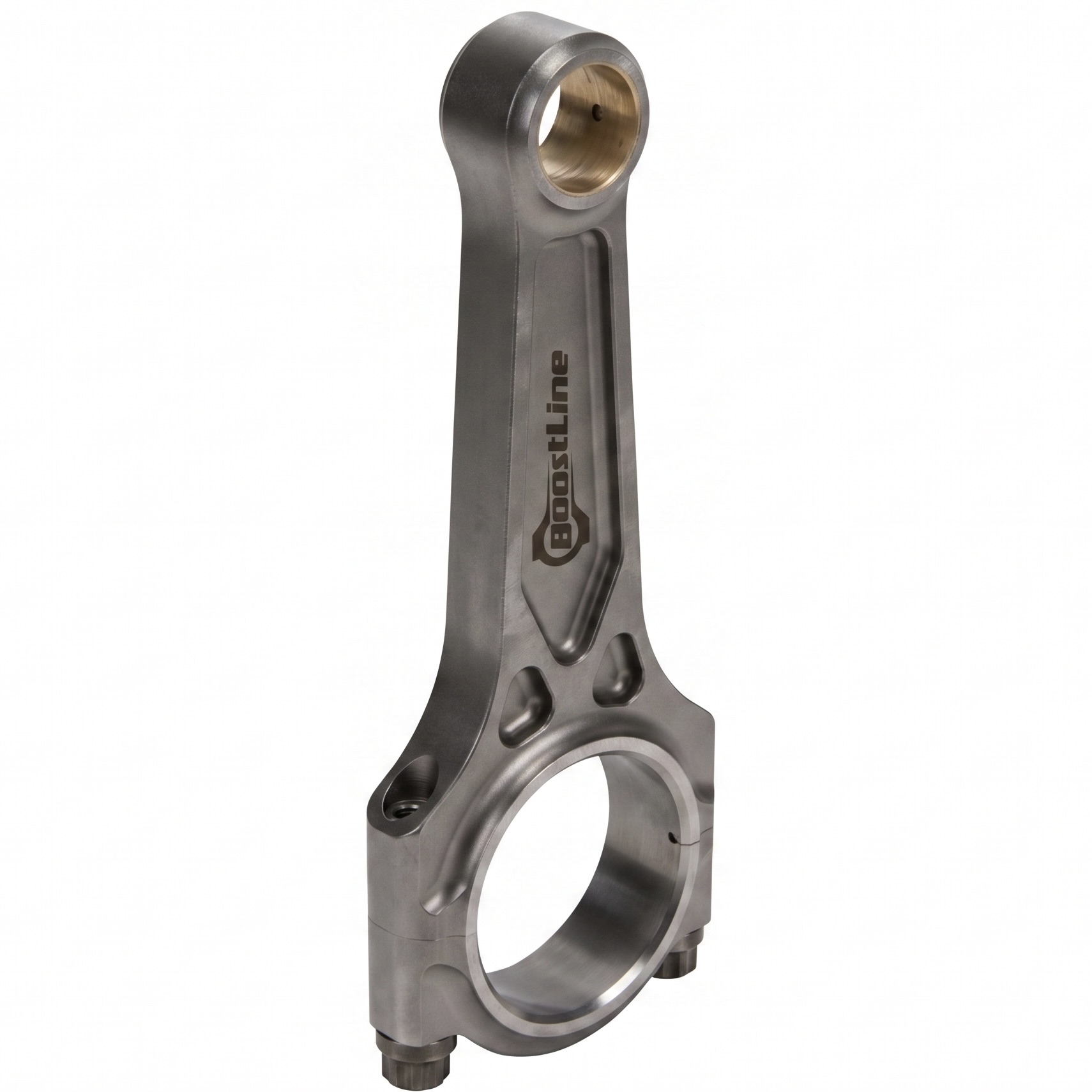 | I-3P profile (3-pocket I-beam, Boostline). Patented profile that keeps the lightness of an I-beam while adding triangulated reinforcements on the big end: bending resistance about 60% higher than an H-beam. Ideal on heavily boosted engines. |
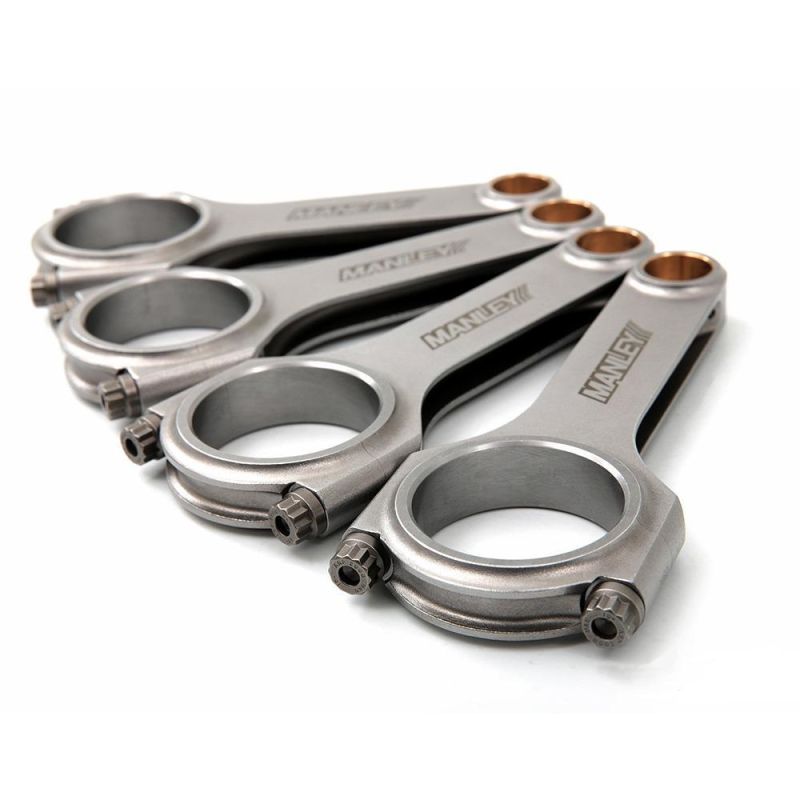
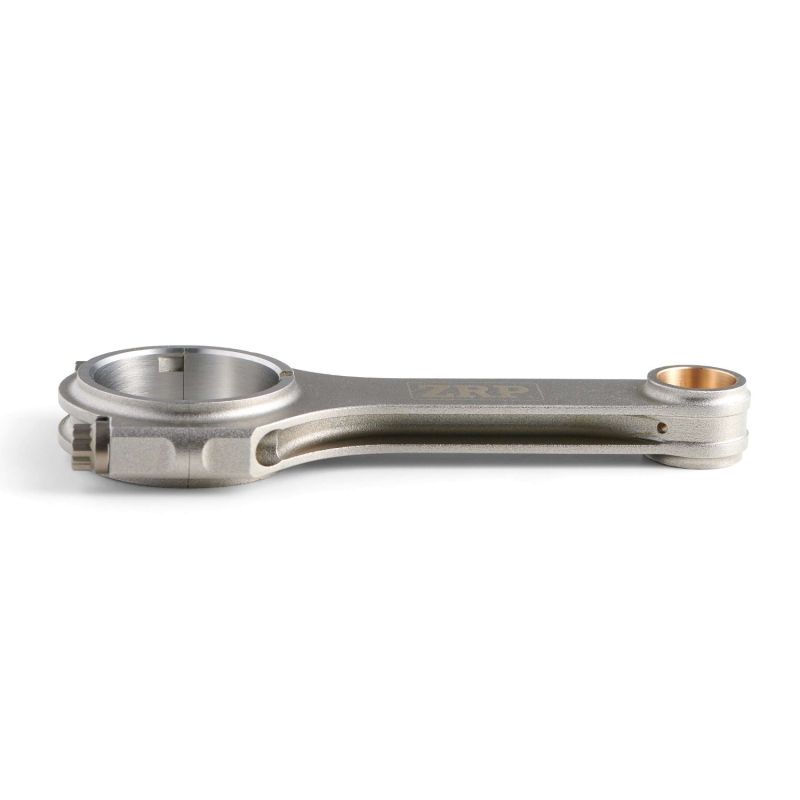
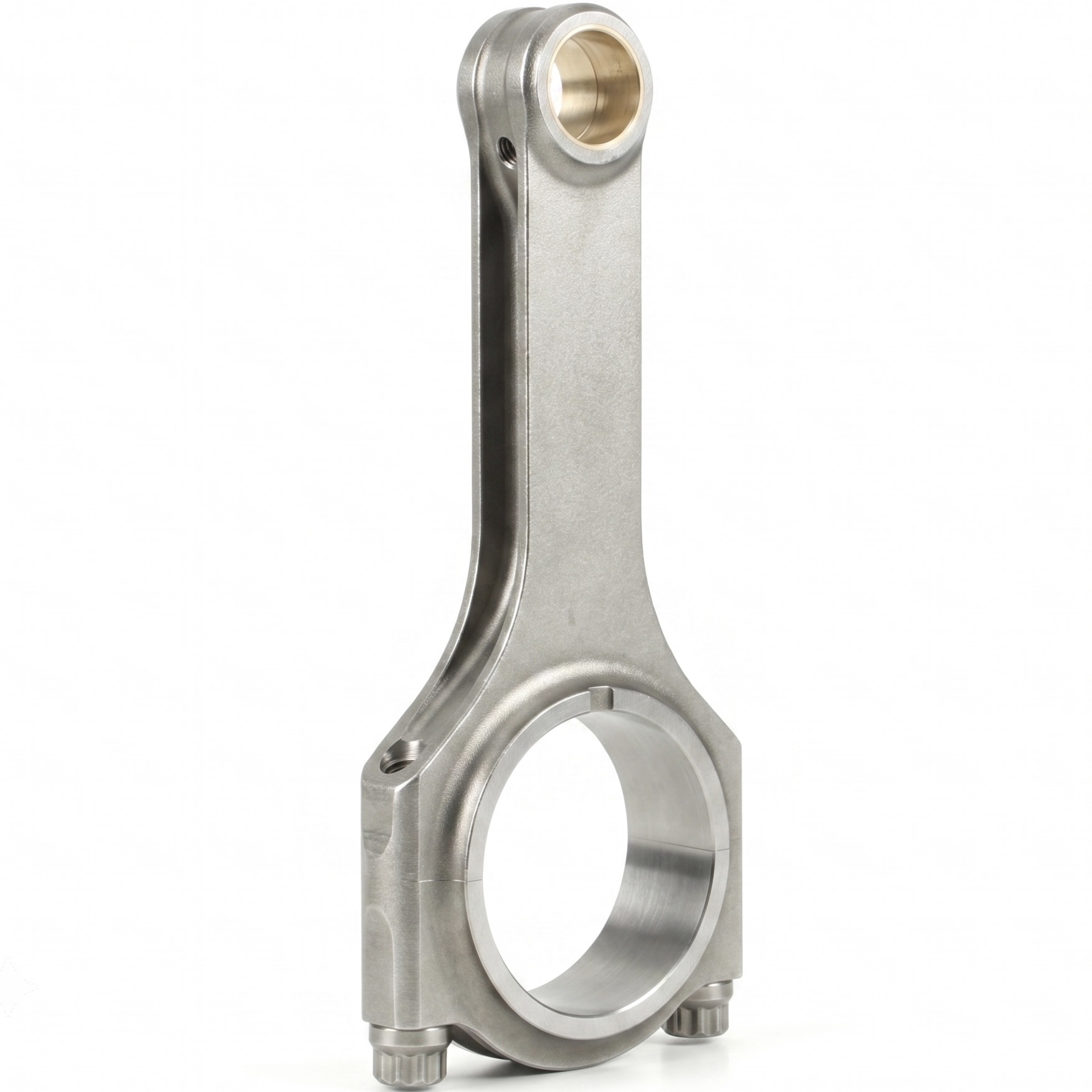 | H-beam profile. “H”-shaped section offering great rigidity and excellent resistance to bending and compression. Slightly heavier than an I-beam, it favours strength: the choice for high-torque engines, large displacements and drag. On a torque-oriented, reliability-focused 4G63, it is a safe bet. |
The rod bolt is the most heavily stressed part of the assembly: it holds the cap clamped onto the crank pin on every cycle. On a built 4G63, the bolt choice governs how the engine copes with high rpm and heavy boost pressure. Every rod in this listing uses ARP bolts in 3/8" diameter.
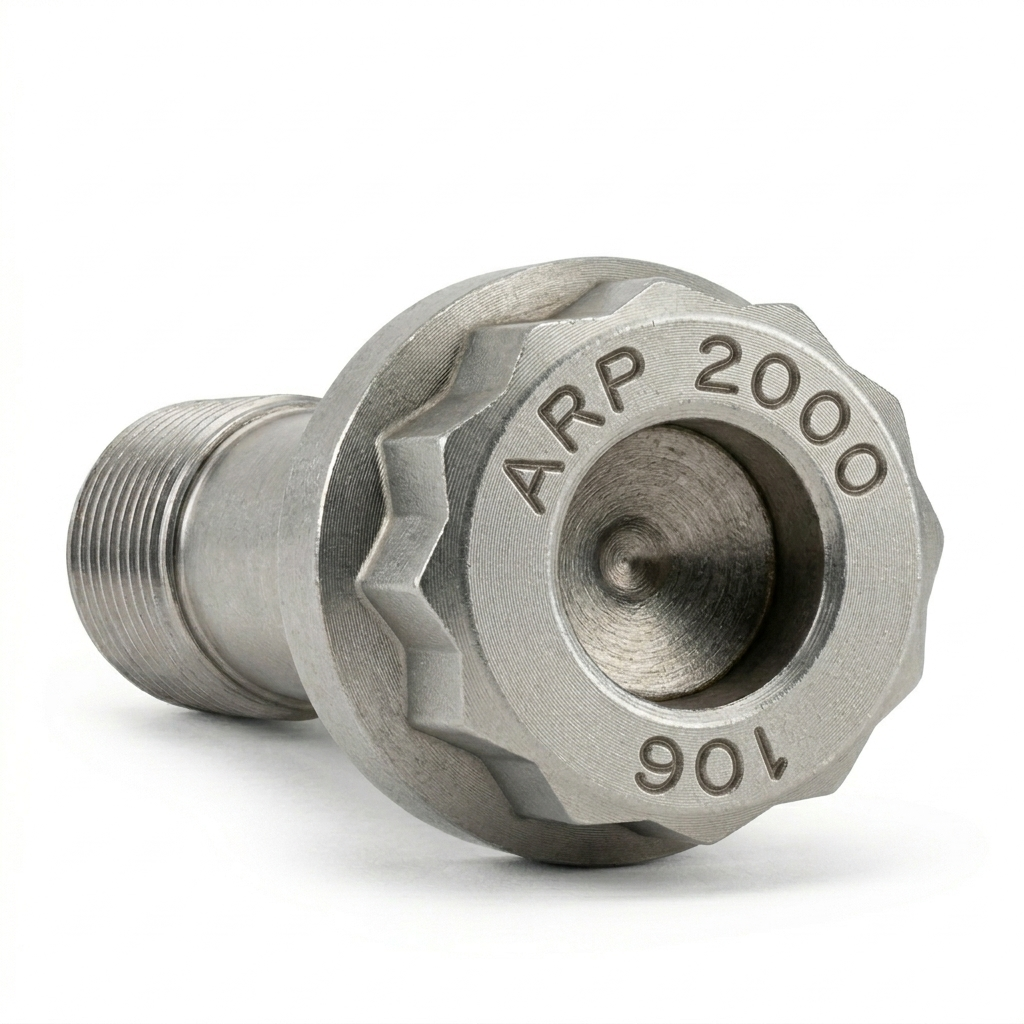 | ARP 2000: tensile strength of around 220,000 psi (~1,517 MPa). In 3/8" diameter it handles roughly 200 hp per cylinder and covers the vast majority of builds, up to speeds close to 8,500 rpm. Best strength/price ratio and no storage constraints. |
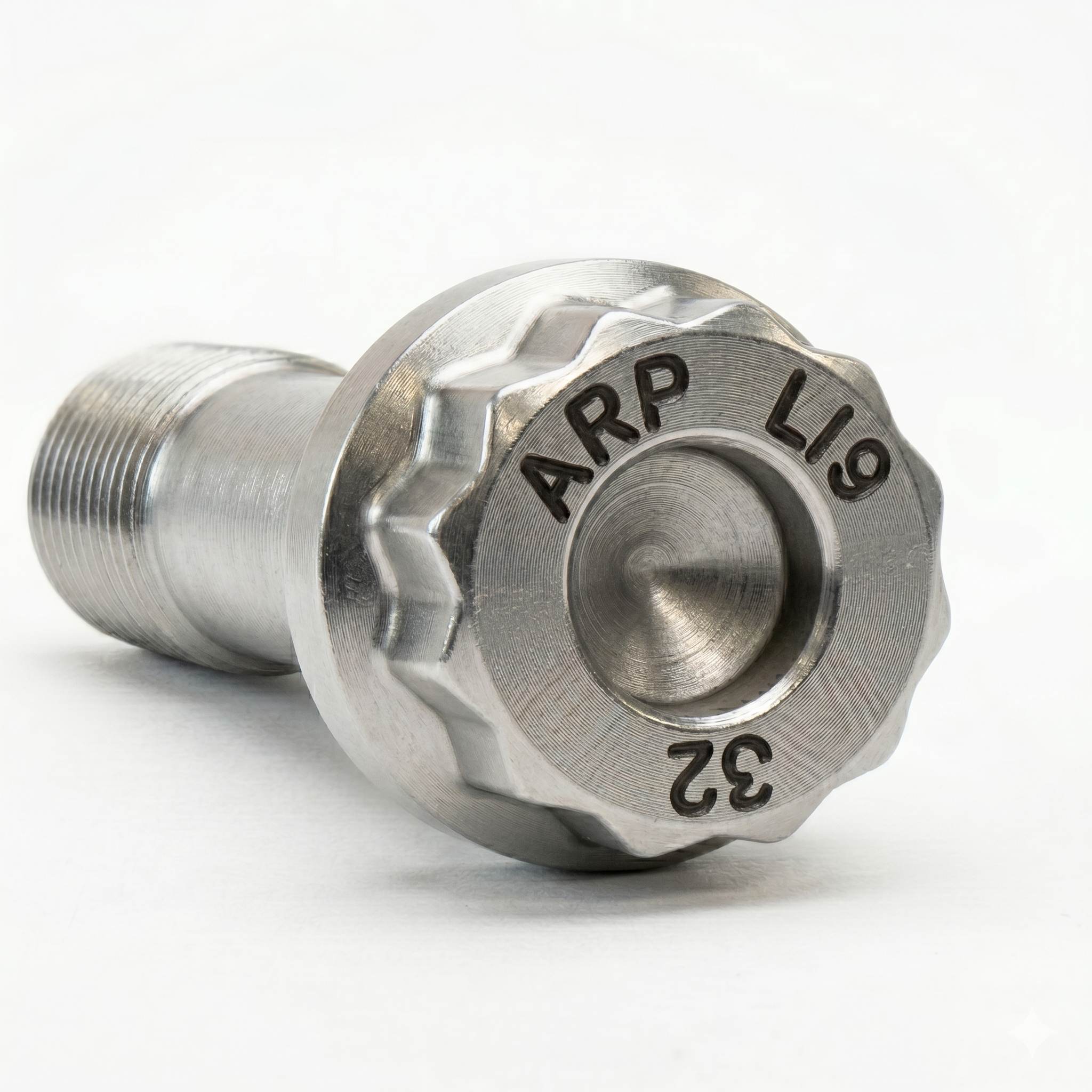 | ARP L19: high-strength bolts (~260,000 psi). In 3/8" it pushes the threshold to about 250 hp per cylinder and targets high power outputs and elevated engine speeds. Sensitive to oxidation: oil it and store it away from moisture. |
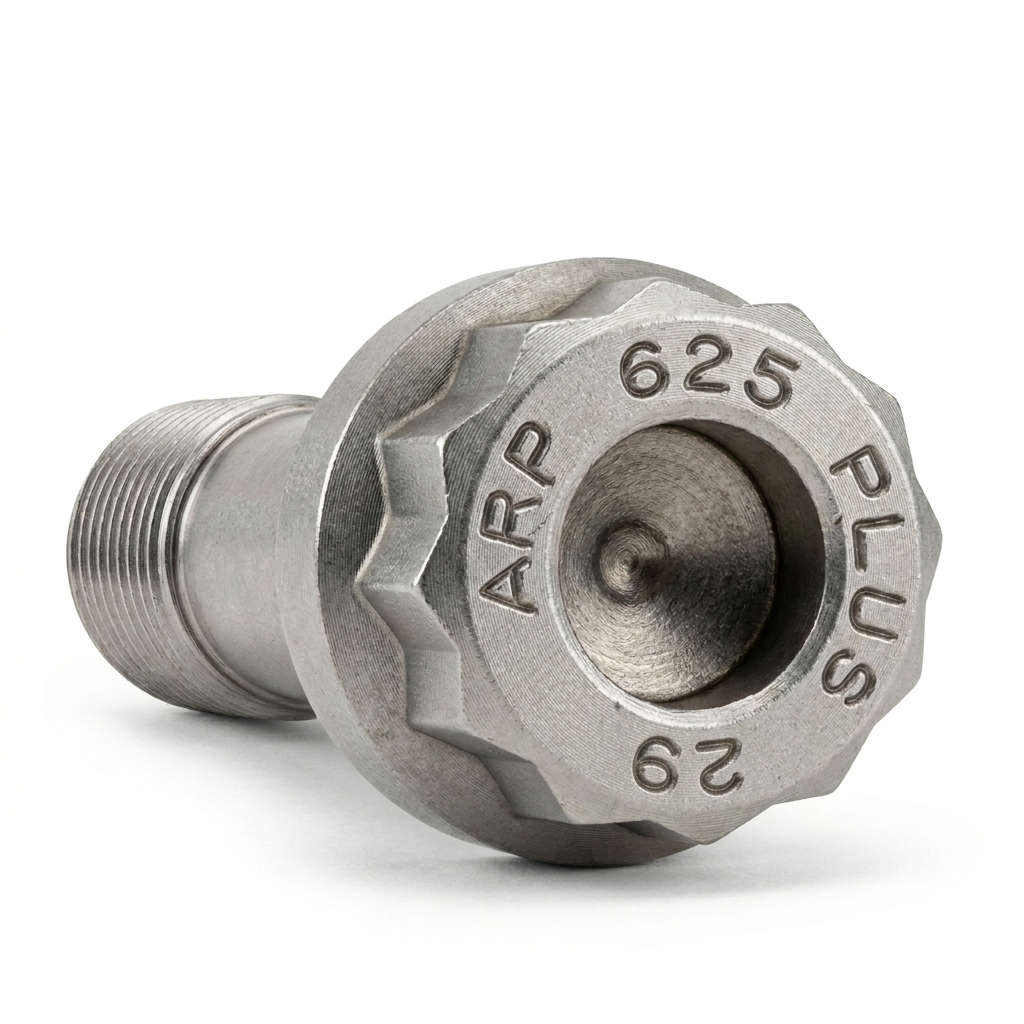 | ARP CA625+: very high-performance stainless steel (~260,000 psi) with excellent corrosion resistance. Reserved for extreme builds and endurance use, in 3/8". |
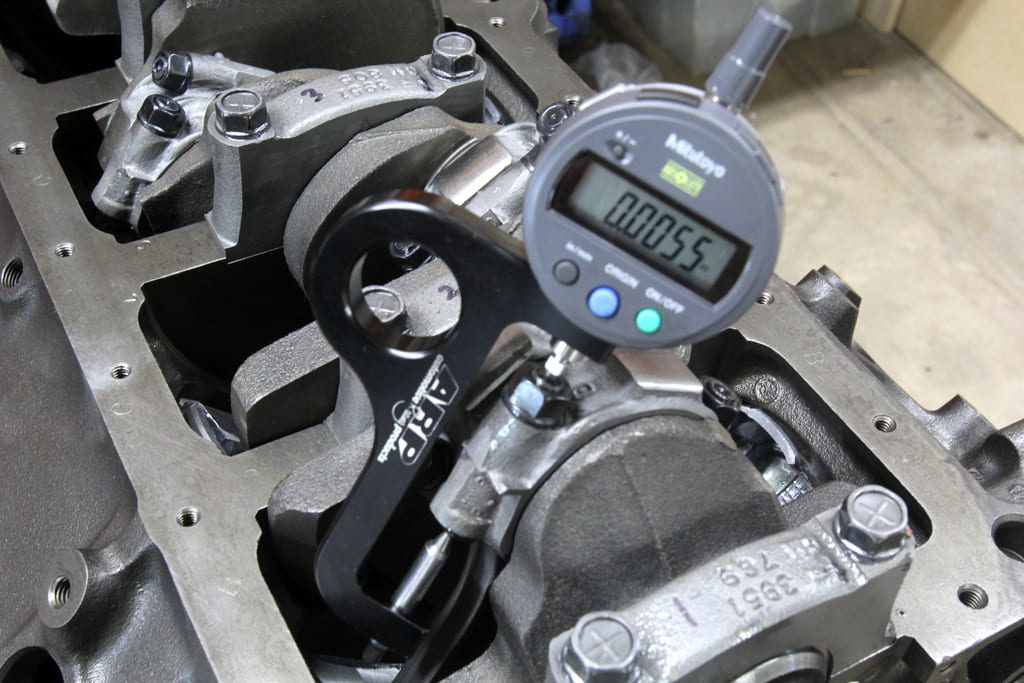
In addition to torque tightening, measuring rod-bolt stretch is the most reliable check for optimal preload. The check is done with the bolt fitted: place the gauge (dial indicator) on the two ends of the bolt and read its actual stretch, which must match the recommended value (see the torque & stretch table above). This method removes the friction variations inherent in torque tightening and secures the assembly on heavily stressed engines. |
 | Boostline, the forged connecting-rod line of the American Wiseco group, in business since 1941. Its I-3P profile is built on an I-beam body hollowed by three pockets, a patented design that brings an I-beam’s rigidity closer to an H-beam’s toughness without adding weight. Forged in 4340 steel and machined in the United States, it is listed here with ARP 2000 or ARP Custom Age 625+ bolts for the hardest-driven 4G63s. |
 | Manley, an American maker of competition connecting rods since 1966, and the widest range on this page. The body is forged from vacuum-degassed aerospace 4340 steel, shot-peened and then inspected individually; an I-HD variant is offered in 300M steel, tougher still. The 4G63 therefore gets H, H-HD and I-HD profiles, with ARP 2000 or ARP Custom Age 625+ bolts depending on the part number. |
 | Wössner, a German maker of top-end pistons and forged connecting rods, known for the precision of its machining. On the 4G63 it lists a single part number, an I profile in 4340 steel with ARP 2000 hardware, but weighed and matched set by set. It is the European entry in this selection, a sound fit for a careful build aiming at consistency rather than peak power. |
 | ZRP, a Greek brand founded by Alex Drakos in Athens, where the rods are designed, forged in 4340 steel, machined, then weighed and matched to ±1 g. The 4G63 is covered by three bodies: an H profile and an I-HD profile, both available with ARP 2000 or ARP L19 bolts, and an I profile supplied with ARP L19. The brand’s experience comes from rallying, circuit racing and drift, where the 4G63 is a regular. |
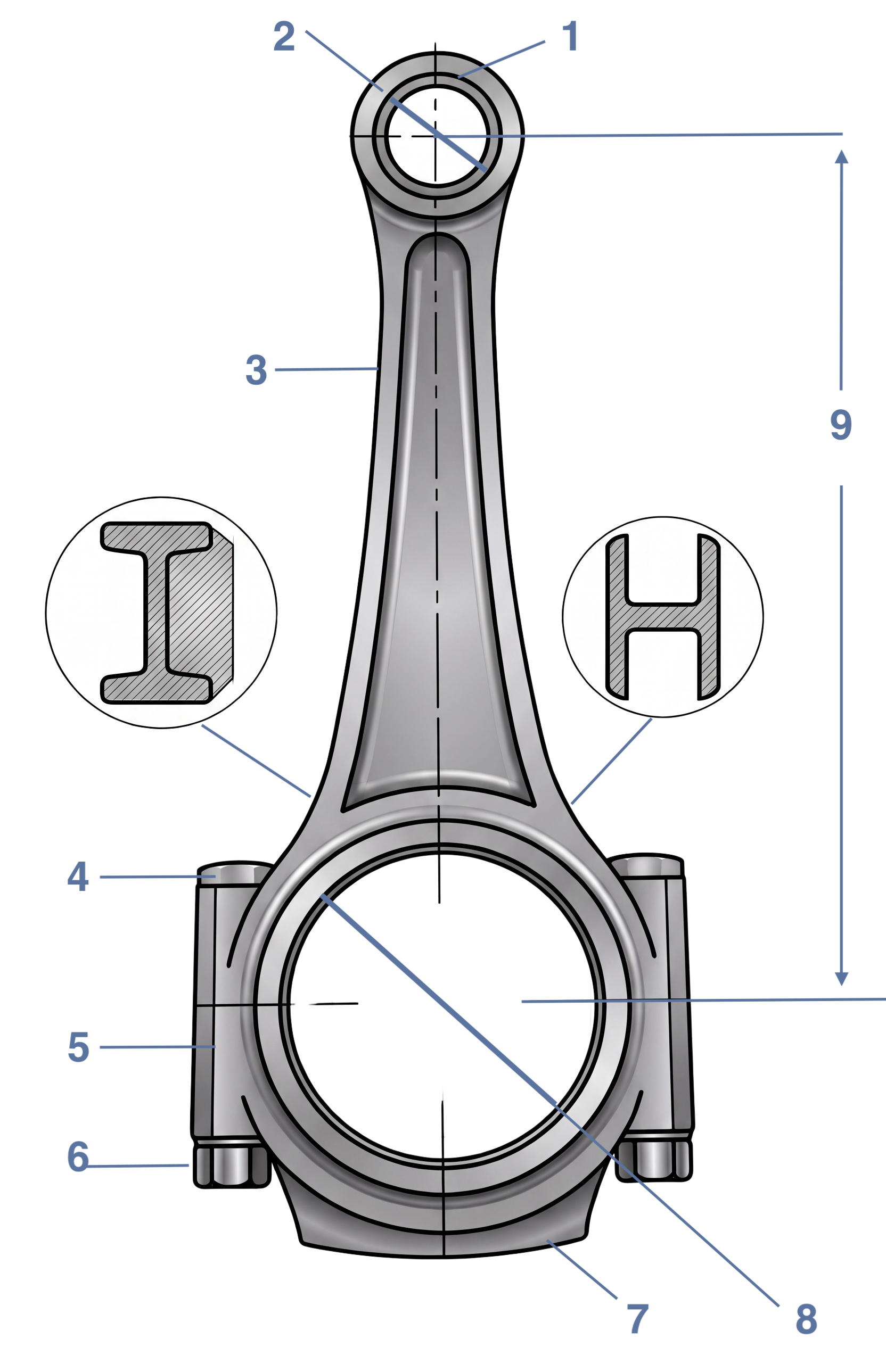 | 1) Small end 2) Small-end diameter 3) Rod beam 4) Rod bolt 5) Big end 6) Rod nut / bolt 7) Rod cap 8) Big-end diameter 9) Center-to-center |
| Brand | Model (chassis) | Engine code | Power | Years |
| Mitsubishi | Lancer Evolution IV-VI (CN9A/CP9A) | 4G63T | 280 hp | 1996-2001 |
| Mitsubishi | Lancer Evolution VII-IX (CT9A) | 4G63T | 280 hp | 2001-2007 |
| Mitsubishi | Eclipse (2G, D30) | 4G63T | 210 hp | 1995-1999 |
| Eagle | Talon (2G) | 4G63T | 210 hp | 1995-1998 |
OEM reference:
On a pushed 4G63, an original rod that lets go destroys the block, the crankshaft and sometimes the cylinder head: the bill then runs into thousands of euros. Investing in a set of forged connecting rods matched to the target power makes the bottom end reliable for the long term and removes the risk of failure. It is mechanical insurance, not just an expense: the best safety-to-investment ratio for building a 7-bolt 4G63.
For an equivalent budget, or even less, fitting 4340 forged steel connecting rods together with forged pistons brings markedly higher reliability and a greater safety margin, plus real potential for power growth. This is the solution chosen by European engine builders for more than 15 years.
At the same budget: more reliability, more potential, more longevity.