- On order
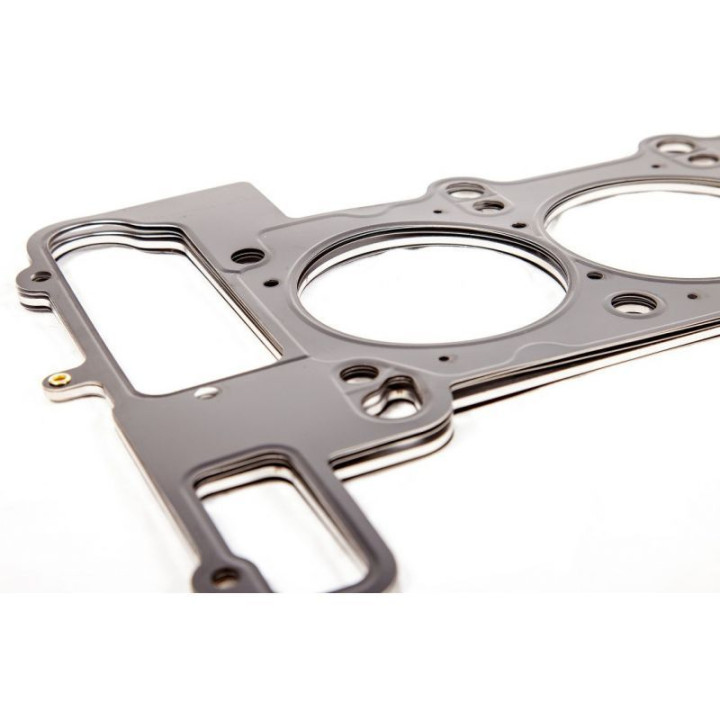

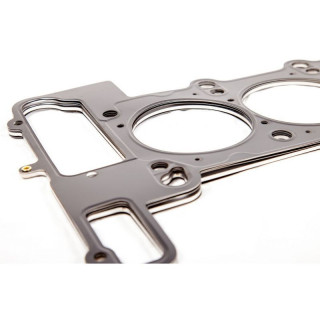
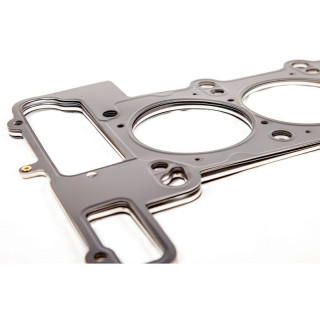
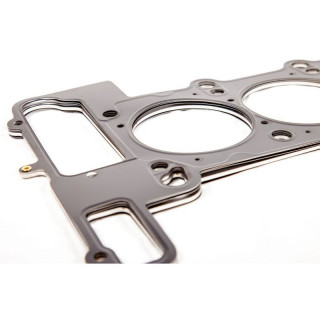
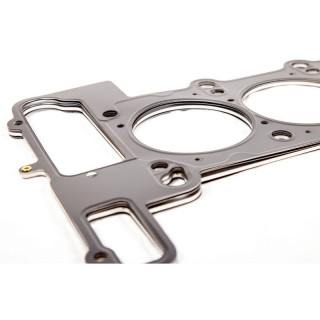
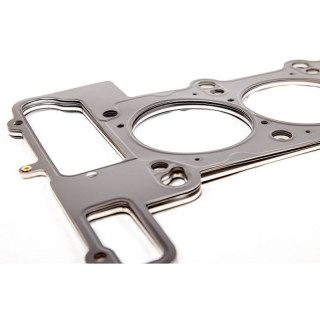
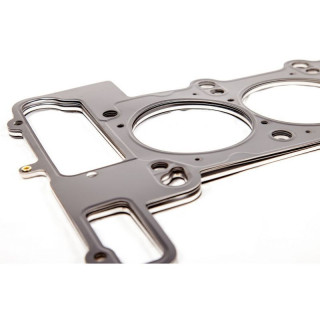
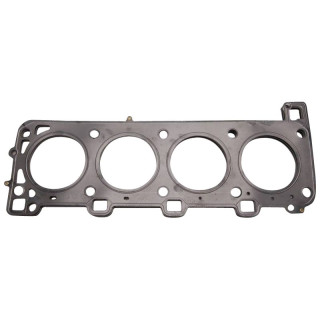
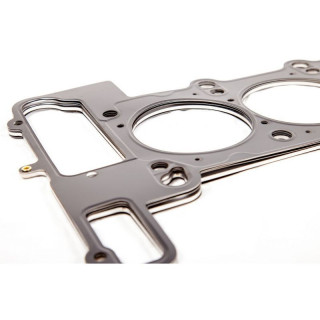
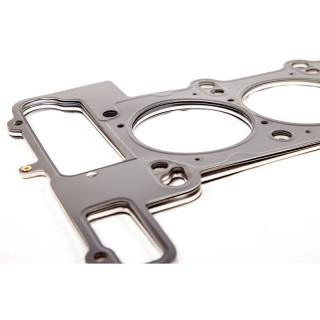
Reinforced head gasket Triumph Spitfire 1500 FM11
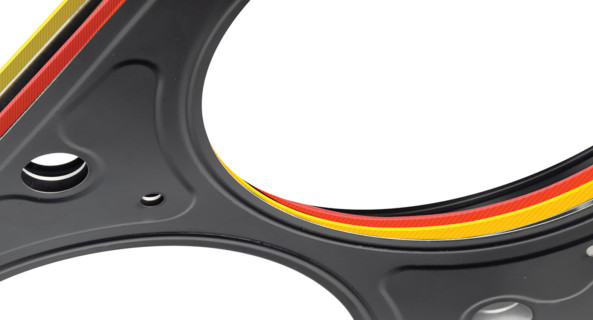
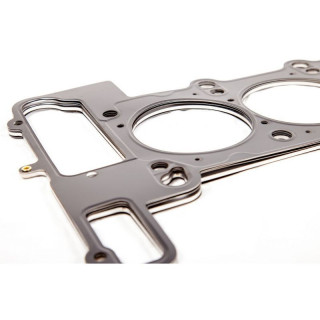
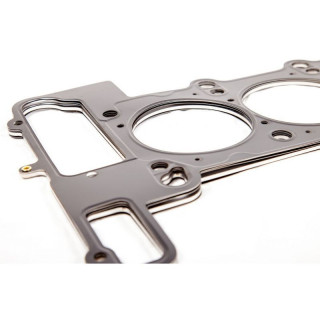
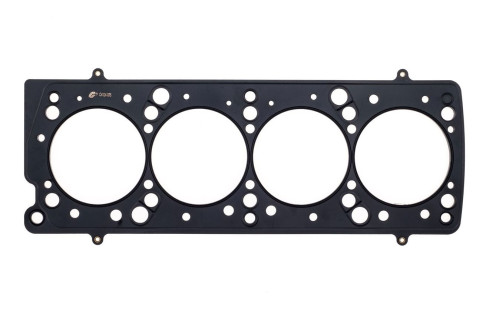
Reinforced Cometic head gasket, in copper. Sold individually, one gasket per engine.
- Brand: Cometic
- Engine: FM11
- Bore: 74 mm
- Thickness: 0.81 and 1.09 mm
The Triumph engines covered
The FM11 petrol engine (1.5 litre, four cylinders) powers the Triumph Spitfire 1500 listed below.
The part number of the original gasket is not published by the manufacturer, nor are its bore, construction or thickness. It is meant for standard combustion pressure: when that pressure climbs, the head loses its clamping force, lifts off the block and lets coolant into a cylinder.
Reinforced cylinder head gaskets
The seal does not rest on the gasket alone: it also depends on the fasteners that press the head onto the block. Copper at 99.9% resists corrosion, deforms without breaking and conducts heat well, without turning brittle when hot.
This page offers the part numbers of the American maker Cometic, a specialist in racing gaskets, in one construction only: copper. Their bore is 74 mm and their thickness 0.81 or 1.09 mm. As a reminder, the gasket bore should be at least 0.5 mm larger than the real cylinder bore. They are sold individually, one gasket being enough for an engine.
Technical specifications
| Gasket bore | Thickness | Gasket volume | Gasket type OEM not specified |
Brand | Part number |
| 74 mm | 0.81 mm | 3.48 | Copper | Cometic | C4153-032 |
| 74 mm | 1.09 mm | 4.69 | Copper | Cometic | C4153-043 |
The volume of a gasket is the space it keeps free above each cylinder. It adds to the combustion chamber and reduces the compression ratio, the more so as it is large. Values can only be compared between gaskets of the same bore.
Preparation and fitting
| Fasteners | Engines | Tightening torque |
| Original cylinder head bolts | FM11 | not published by the manufacturer |
Before fitting, run a straight edge over the head and the block to check their flatness, then have them resurfaced if needed. Cometic checks the flatness of its copper gaskets itself.
Technical guide
The construction offered
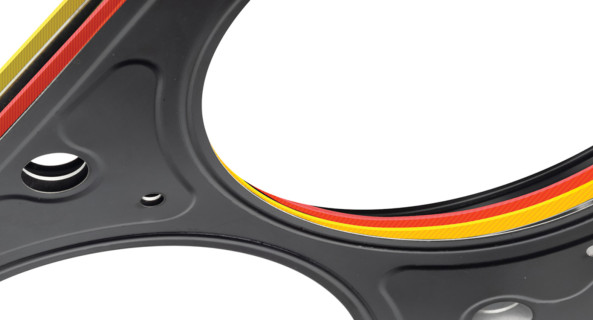
| Cometic copper A sheet of pure oxygen-free copper (C110 grade, 99.9% copper). This metal withstands corrosion, compresses without cracking, carries heat away well and stays supple when hot. Cometic checks the flatness of every piece and advises, for best results, fitting it with a crimped sealing ring. |
Choosing bore and thickness
Gasket bore. The Cometic copper gasket is made in 74 mm (C4153), that bore only.
Thickness. The manufacturer does not publish the thickness of the original gasket. A thicker gasket enlarges the combustion chamber and lowers the compression ratio; a thinner one reduces it and raises the ratio.
| Your goal | Thickness to choose |
| Keep the original compression ratio | Original thickness not published: measure the removed gasket and compare it with the two gaskets offered, 0.81 and 1.09 mm |
| Skimmed cylinder head, make up the lost height | Two thicknesses exist, 0.81 and 1.09 mm: compare them with that of the removed gasket, plus the material machined off |
| Forced induction build, lower the ratio | 1.09 mm, when the thickness of the original gasket measured at removal is lower |
| Naturally aspirated build, raise the ratio | 0.81 mm, when the thickness of the original gasket measured at removal is higher |
As the original thickness remains unknown, use a dial gauge to read how far your pistons stand above the block, above all if the removed gasket is thicker than 0.81 mm: that figure decides the clearance left between piston and head.
The brand
 |
Cometic Gasket, Inc., an American company making gaskets and sealing solutions for engines, was founded in 1989 in Concord, Ohio. It made its name with the custom gasket, cut to the bore and thickness requested. Everything is made in the United States from American raw materials. |
Advantages over the original gasket
| Criterion | Original gasket, part number not published | Reinforced gaskets |
| Construction | Construction not stated by the manufacturer | Pure copper, 99.9% (C110 grade) |
| Gasket bore | not published by the manufacturer | 74 mm |
| Thicknesses available | thickness not published by the manufacturer | 0.81 mm and 1.09 mm |
| Compression ratio adjustment | None | Through the thickness chosen |
| Resistance to overpressure | Limited to standard output | Designed for forced induction |
When a reinforced gasket becomes necessary
- Adding forced induction, or raising boost on an already turbocharged engine
- Cylinder rebored beyond what the bore of the original gasket, not published covers
- Looking for a compression ratio different from standard, higher or lower
- Engine that has already lost its gasket, or is consuming coolant
- Competition use, where the gasket goes through repeated temperature rises
Vehicle compatibility
| Model | Engine code | Power | Years |
| Spitfire 1500 (FM) 1.5 | FM11 | 69 hp | 1975-1980 |
OEM part number: not published by the manufacturer.
Important: the part number on this page is reserved for the FM11 engine: check your car's engine code before ordering.
Why switch to a reinforced gasket?
This copper gasket takes over when the original gasket reaches its limits: pure copper is ductile and stays supple when hot, which keeps the seal between head and block.
A turbo, a supercharger or a raised compression ratio expose the head gasket first, the weakest link of the top end. Opting for a reinforced gasket protects the engine: it avoids the leak and the head removal that follows.
-
Brand
-
ReferenceC4153-043
16 other products in the same category