- On order
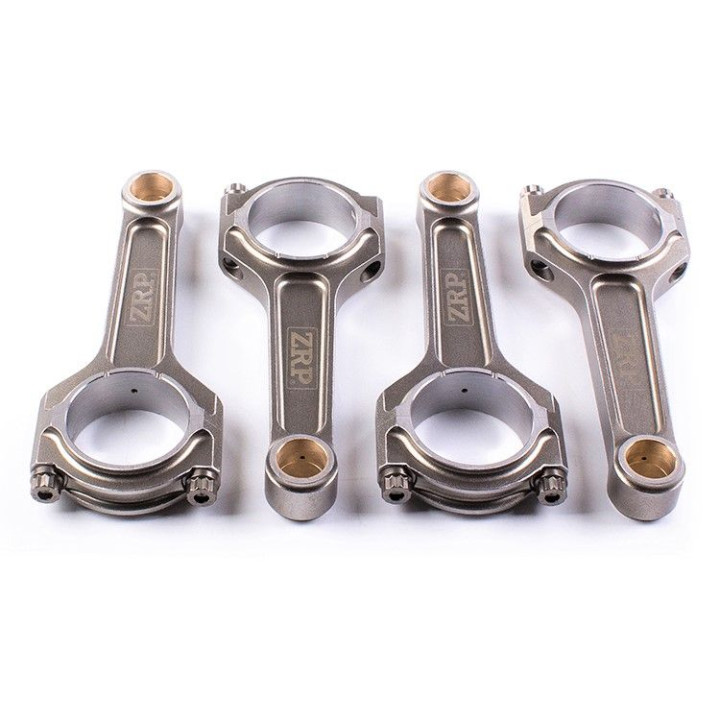
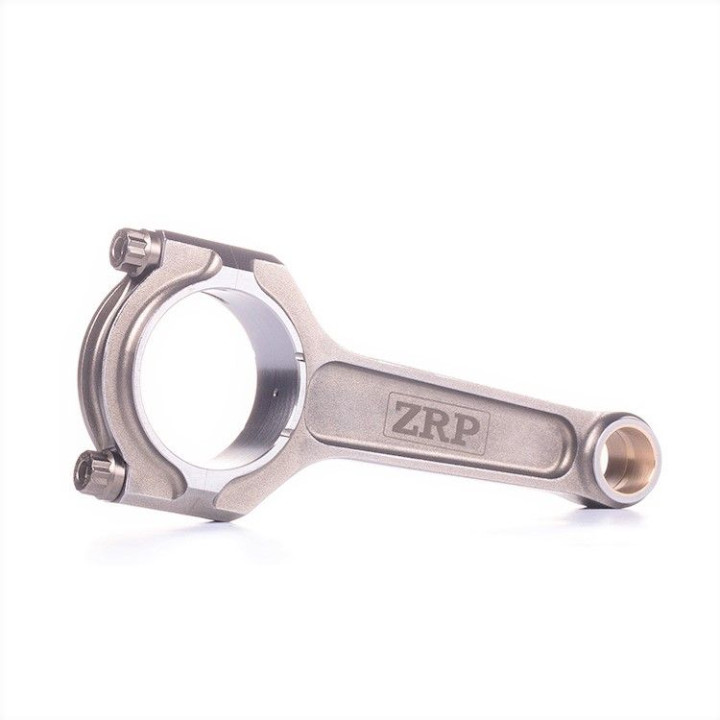


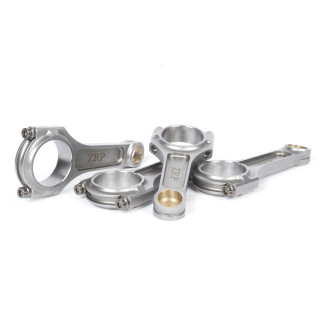
Forged connecting rods Audi Volkswagen - 1.8L 20V Turbo - EA113 (20 mm pin, oiling hole) for forged pistons
Set of 4 oil-fed forged rods in 4340 steel for the Audi Volkswagen 1.8T 20V EA113.
Brand: ZRP
Profile: I-HD (rifle-drilled pin)
Compatibility: Audi, Volkswagen 1.8T 20V
Engine codes: EA113
Bolts included: ARP 2000 or L19
The 1.8T 20V EA113 engine
Part of the EA113 family, the 1.8T 20V is a turbocharged inline-four petrol engine with five valves per cylinder – 20 in total – and a displacement of 1,781 cc (81 mm bore, 86.4 mm stroke). Introduced in 1995 on the Audi A4 B5, it powered a broad Audi, Volkswagen, SEAT and Škoda line-up for over a decade, both longitudinally (A4, A6, Passat) and transversely (Golf IV, Bora, A3 8L, TT, Leon, Octavia).
Depending on the turbo (K03, K04) and the tune, output ranges from 150 to 225 hp, which made it one of the most popular tuning bases in Europe. The flip side of that popularity: as soon as boost and torque rise, the stock rod becomes the weak link of the bottom end. Fitting forged rods is therefore the key step to turn a 1.8T 20V into a durable high-power unit.
The forged connecting rods
Designed for the 1.8T 20V EA113, these rods are machined from wrought 4340 steel, the racing benchmark. Their standout feature is rifle-drilled oiling : a drilled passage feeds pressurised oil to the piston pin, a real asset on engines that see high rpm and cylinder pressure. Offered in the I-HD profile (reinforced Heavy-Duty I-beam), they suit every discipline – circuit, drift, rally, drag, time attack, hillclimb – from a strong street build to a full race engine.
Supplied as a weight-matched set of 4 (20 mm pin, 144 mm stock center-to-center, 507 g), they lock in the torque climb from Stage 2 through Stage 4 and beyond. Where the stock rod is sized for production cost, a forged 4340 part brings a far greater margin : roughly +19% yield strength, +8% tensile strength and +19 to +37% fatigue life. That headroom absorbs pressure spikes and inertia loads without failure.
Technical specifications of the EA113 forged connecting rods (I-HD profile, 20 mm pin, 144 mm center-to-center)
| Reference | Brand | Profile | Bolts | Pin Ø (mm) | Small end width (mm) | Big end Ø (mm) | Big end width (mm) | Center-to-center (mm) | Weight (g) |
|---|---|---|---|---|---|---|---|---|---|
| R-AUD-001-IR | ZRP | I-HD | ARP 2000-3/8"-38mm | 20 | 50,6 | 24,89 | 144 | 507 | |
| R-AUD-001-IR-L19 | ZRP | I-HD | ARP L19-3/8"-38mm | 20 | 50,6 | 24,89 | 144 | 507 |
ZRP: Straight, non-tapered pin end; rifle-drilled rods.
Tightening torque and stretch
The figures below refer to the ARP bolts supplied with the kit (ARP 2000 or ARP L19) ; always check the enclosed data sheet. Stretch-gauge measurement remains the most reliable way to guarantee an even pre-load, cylinder after cylinder.
| Reference | Brand | Bolts | Torque | Recommended stretch |
|---|---|---|---|---|
| R-AUD-001-IR | ZRP | ARP 2000-3/8"-38mm | 61 N·m | 0,140 to 0,152 mm |
| R-AUD-001-IR-L19 | ZRP | ARP L19-3/8"-38mm | 67,8 N·m | 0,152 to 0,165 mm |
Technical guide
Forged 4340 steel: what is it?
| 4340 is a low-alloy nickel-chromium-molybdenum steel. Forging aligns the metal fibres with the load paths, closes internal porosity and delivers strength well above a stock cast or sintered rod. It reaches tensile strength of roughly 930 to 1,080 MPa together with high fatigue endurance – decisive as soon as the engine gains torque, power and rpm. It is the material of our entire EA113 range. |
The rod profile offered
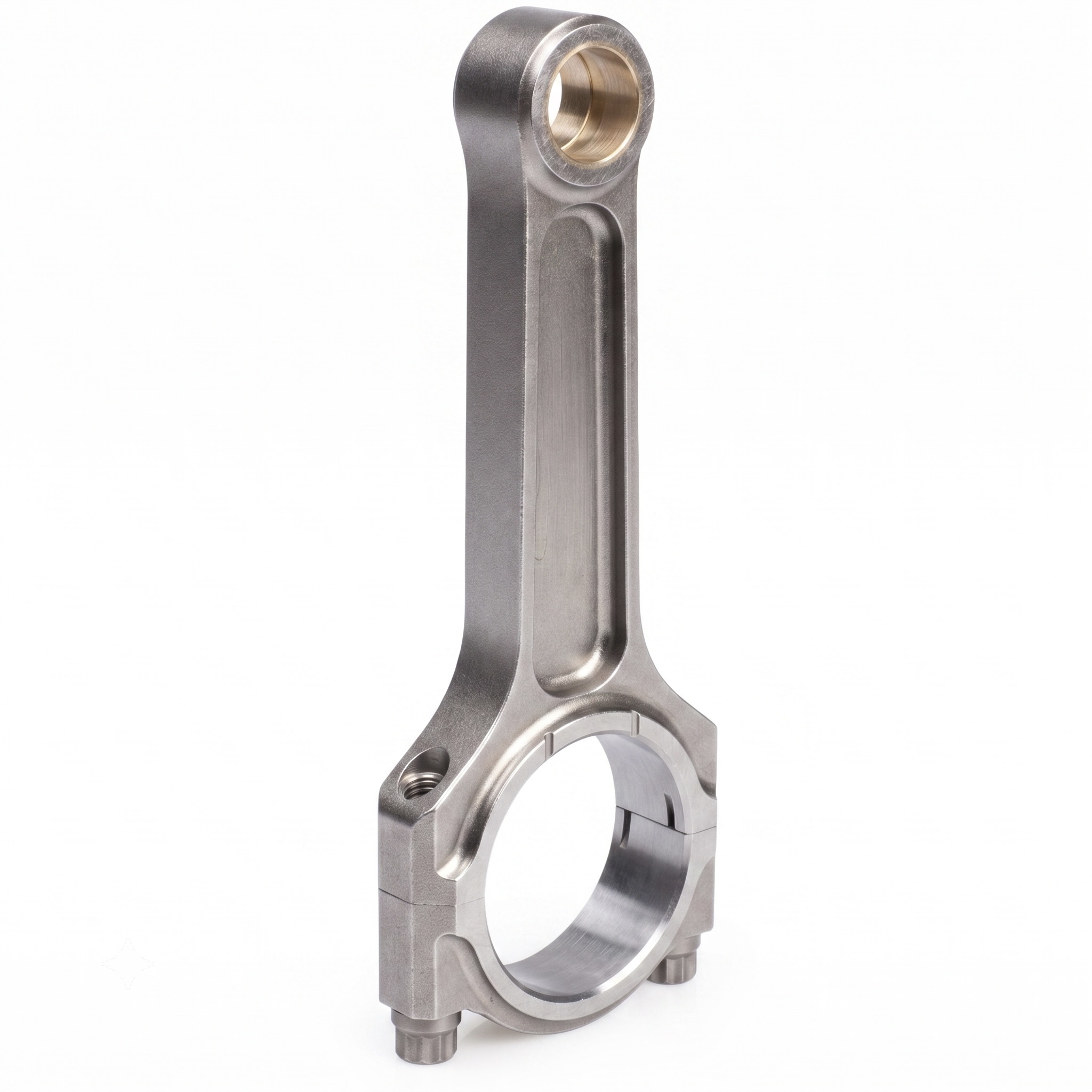 |
I-HD profile. The Heavy Duty version of the I profile, this rod keeps the same architecture but adopts a reinforced, thicker beam, engineered to cope with markedly greater forces. ZRP intends it for extreme loads, on high-power, high-boost 1.8T 20V builds, whether turbocharged, supercharged or running nitrous oxide. |
How to choose your rod bolts?
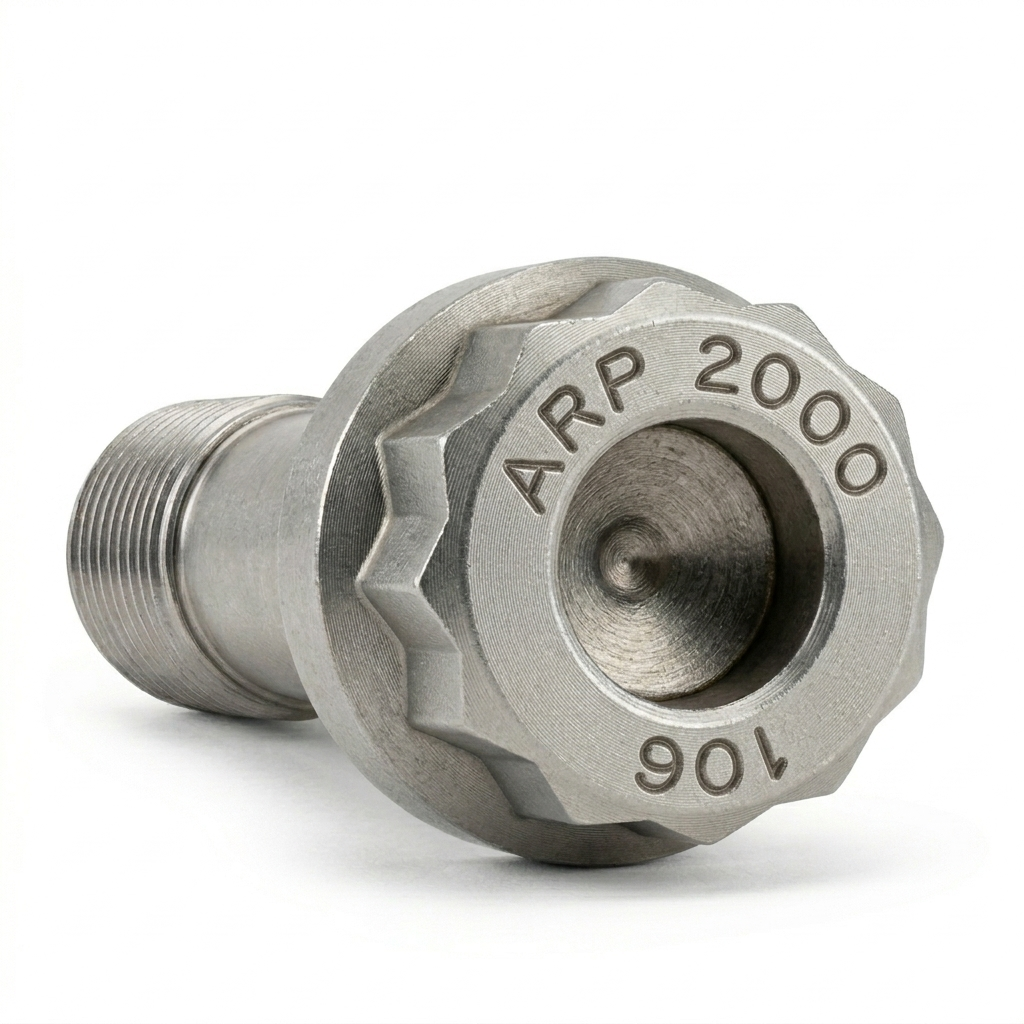 |
ARP 2000 : the versatile reference alloy, with a tensile strength of about 220,000 psi (1,517 MPa). Offered here in 3/8", it suits builds up to 200 hp per cylinder and 8,500 rpm and covers the vast majority of 1.8T 20V builds, from a simple boost increase to high power. It is the default choice to reliably strengthen the bottom end. |
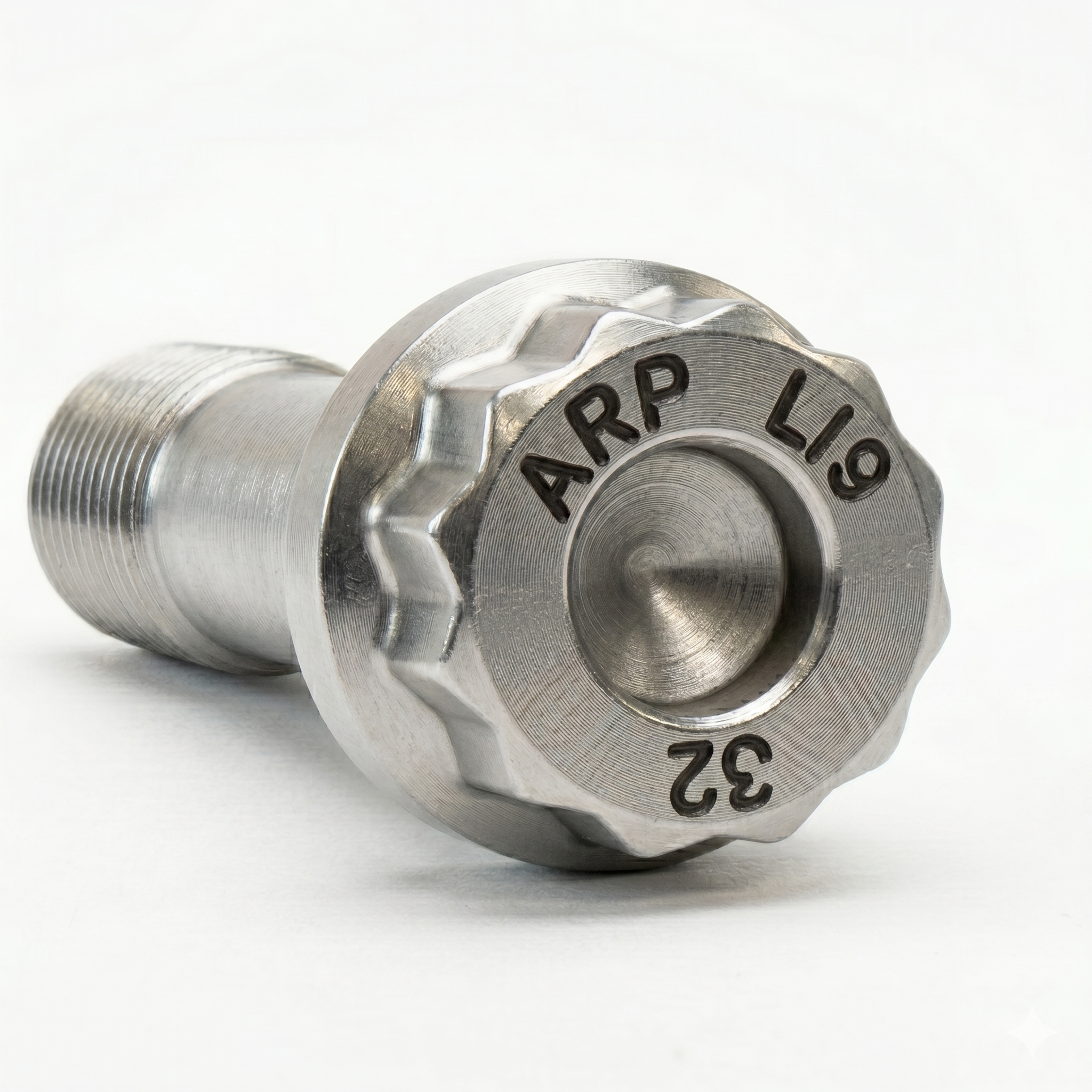 |
ARP L19 : a very high-strength steel (about 260,000 psi / 1,793 MPa) reserved for extreme builds running the highest torque and rpm. More corrosion-sensitive, it demands careful assembly and is aimed at race engines seeking the ultimate pre-load margin. |
Measuring bolt stretch
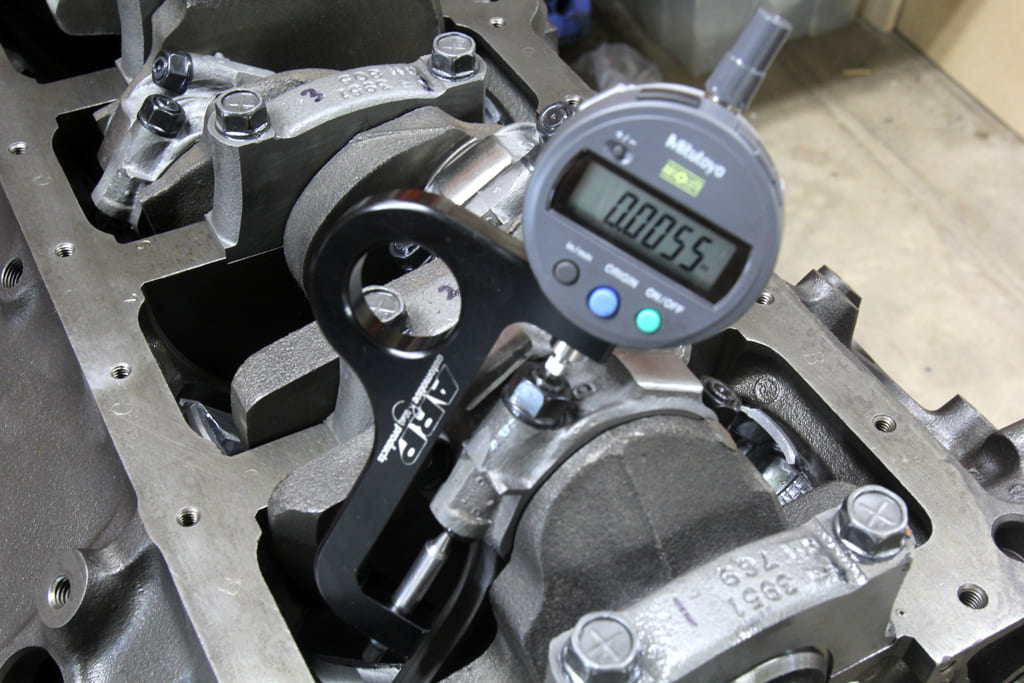
| The safest way to guarantee pre-load is not to aim for a torque figure but to measure bolt stretch with a dial gauge. Tighten gradually until the recommended stretch is reached – 0.140 to 0.152 mm for ARP 2000, 0.152 to 0.165 mm for ARP L19 – for an even, repeatable clamp load. |
The brand offered
 |
This EA113 range is made by ZRP, a manufacturer of high-performance forged racing rods. It is offered in the I-HD profile, rifle-drilled for pin oiling, machined from 4340 steel and supplied with ARP 2000 or ARP L19 bolts in 3/8". Every reference ships as a complete, weight-matched set of 4 with its dedicated ARP hardware. |
Glossary
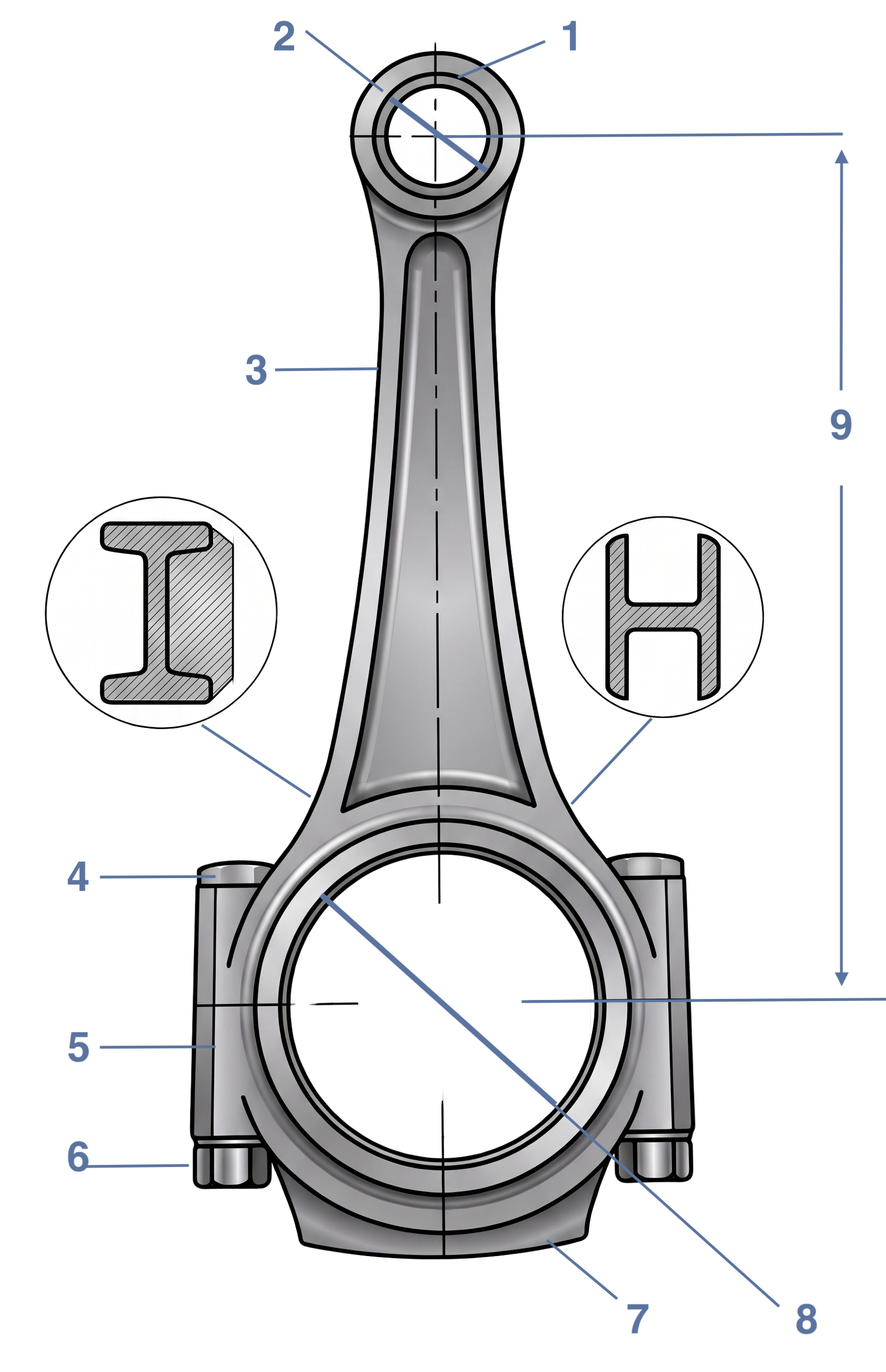 |
1) Small end 2) Small-end diameter 3) Rod beam 4) Rod bolt 5) Big end 6) Rod nut / bolt 7) Rod cap 8) Big-end diameter 9) Center-to-center |
Vehicle compatibility for the 1.8T 20V EA113 engine
The models listed below receive the Audi Volkswagen 1.8L 20V Turbo EA113 engine. Check the piston pin diameter and the rod centre-to-centre length before validating your basket. Variant concerned: 20 mm pin, oiling hole.
| Make | Model (chassis) | Engine code | Power | Years |
|---|---|---|---|---|
| Audi | A3 (8L) | AGU | 150 hp | 1996–2003 |
| Audi | A3 (8L) S3 quattro | APY, AMK | 210 hp | 1999–2002 |
| Audi | A3 (8L) S3 quattro | BAM | 224 hp | 2001–2003 |
| Audi | A4 (B5) / quattro | AEB, ANB | 150 hp | 1995–2001 |
| Audi | A4 (B5) quattro | AWM | 170 hp | 2000–2001 |
| Audi | A4 (B6) / quattro | AWM | 170–173 hp | 2001–2004 |
| Audi | A6 (C5) / quattro | AEB, ANB | 150 hp | 1997–2005 |
| Audi | TT (8N) quattro | APX, BAM | 224 hp | 1998–2006 |
| SEAT | Leon (1M) Cupra R | AMK | 209 hp | 2002–2006 |
| SEAT | Leon (1M) Cupra R | BAM | 225 hp | 2003–2006 |
| Škoda | Octavia I (1U) | AGU | 150 hp | 1997–2010 |
| Volkswagen | Bora (1J) | AGU | 150 hp | 2000–2005 |
| Volkswagen | Golf IV (1J) GTI | AGU | 150 hp | 1997–2005 |
| Volkswagen | New Beetle (9C) / Cabriolet | AVC, AWU, AGU | 150 hp | 1999–2010 |
| Volkswagen | Passat (B5) | AEB, ANB | 150 hp | 1996–2000 |
| Volkswagen | Passat (B5.5) | AWM | 170 hp | 2001–2005 |
| Donkervoort | D8 1.8 T | AGU | 150 hp | 1999–2012 |
Why is it the most economical solution?
On a tuned 1.8T 20V, a stock rod that lets go usually takes the block, crankshaft and pistons with it. Investing up front in an oil-fed forged kit costs far less than a failure followed by a full rebuild. You strengthen the bottom end for the long run, protect the value of your build and drive with peace of mind, in hard use as in daily driving.
-
Brand
-
ReferenceR-AUD-001-IR
16 other products in the same category