Product successfully added to your shopping cart
Quantity
Total
There are 0 items in your cart. There is 1 item in your cart.
Total products
Total shipping To be determined
Total

5.7L 16v - LS1
Manufacturers
5.7L 16v - LS1
Warning: Last items in stock!
New product
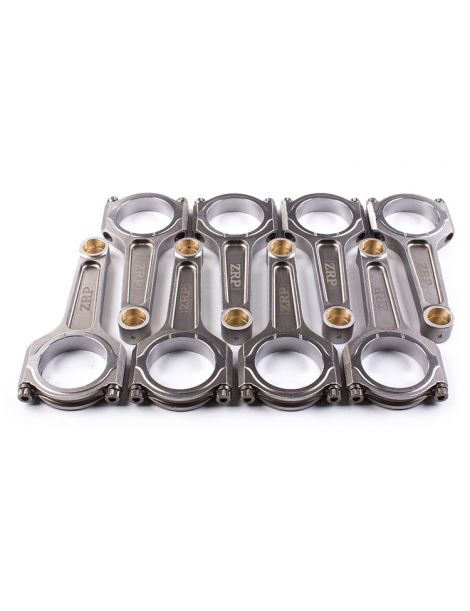
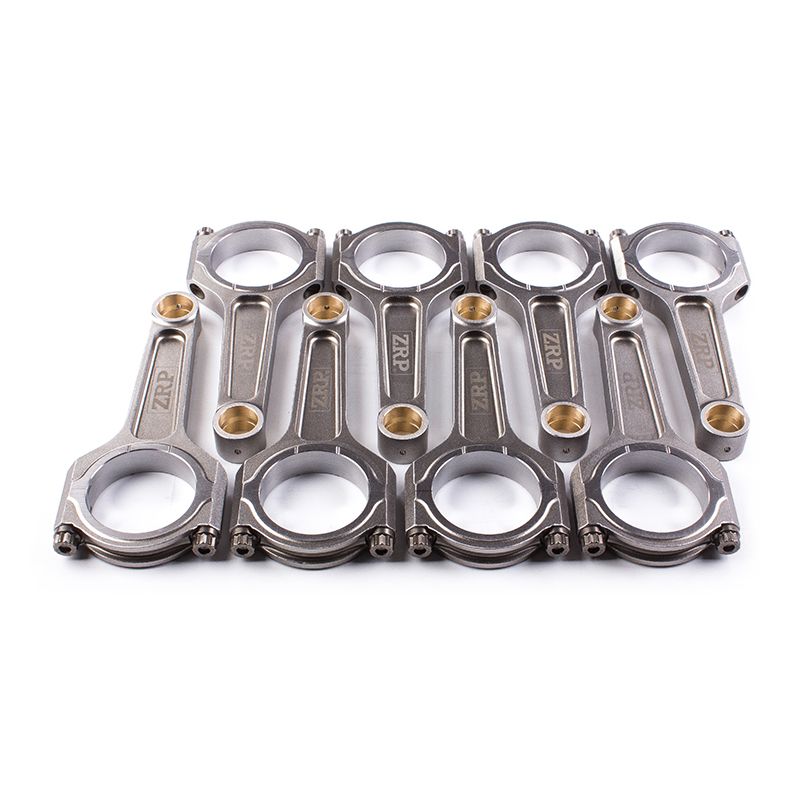
Set of 8 forged 4340 steel connecting rods for the Chevrolet 5.7 V8 LS1.
The Chevrolet LS1 ushered in General Motors' third-generation small-block V8 in 1997. This 5.7 L (5,665 cc) unit abandons cast iron for an all-aluminium architecture (block, cylinder heads and intake manifold) that trims around fifty kilos off the earlier small-blocks. It pairs a 99 mm bore with a 92 mm stroke, sequential multi-point injection and coil-on-plug ignition. Debuting in the C5 Corvette, it was rated at 345 hp (257 kW) at 5,600 rpm and 470 N·m at 4,400 rpm; the 2001 revision of the manifolds raised output to 350 hp (260 kW) and 495 N·m.
The LS1 quickly spread beyond the Corvette: from 1998 it powered the Chevrolet Camaro and Pontiac Firebird Trans Am (F-Body platform) through 2002, before equipping the 2004 Pontiac GTO. In Australia, Holden fitted it to the Commodore, Monaro, Ute and Caprice/Statesman, with HSV versions climbing to 382 hp. Simple, durable and highly responsive to tuning, it became one of the favourite bases for built engines: this is precisely where forged connecting rods become essential.
Machined from wrought 4340 steel, these reinforced rods replace the factory items, often sintered powder-metal, whose strength reserve runs out as soon as power rises. Forging aligns the metal grain flow and eliminates porosity: at a comparable section, the rod withstands far higher alternating loads without creep or the onset of cracking.
Designed for built engines, whether high-revving naturally aspirated or forced-induction, they secure the rotating assembly during high-rpm sweeps and under strong boost pressure. They are found in drift, drag, rally, circuit racing, hillclimb and time attack alike, where every cycle stresses the rod well beyond what the manufacturer intended.
| Reference | Brand | Profile | Bolts | Pin diameter | Small-end width | Big-end diameter | Big-end width | Center-to-center | Weight per rod |
|---|---|---|---|---|---|---|---|---|---|
| R-LS1-001-I | ZRP | I | ARP 8740 (7/16") | 23.55 mm | 56.52 mm | 23.88 mm | 155.58 mm | 611 g |
| Rod | Bolts | Torque | Recommended stretch |
|---|---|---|---|
| ZRP (R-LS1-001-I) | ARP 8740 (7/16") | 88,1 N·m | 0,127–0,140 mm |
Only one bolt grade is offered here, ARP 2000, which makes the table above easier to read but changes nothing about the discipline required: the scatter in an assembly does not come from the bolt, it comes from the hand. On the LS1, sixteen bolts must get the same preparation and the same build-up of load, otherwise some rods will end up less firmly held than others even though the wrench showed the same figure everywhere. The torque and stretch values shown are the bolt manufacturer’s; they apply in full and without adjustment. Because torque measures resistance to rotation and not tension, checking stretch with a dial gauge remains the reference method for validating each bolt. Work on clean threads, with an even film of ARP assembly lubricant and tightening taken up in stages. The kit instruction sheet prevails over any other indication.
| 4340 is a nickel-chromium-molybdenum alloy steel used in aerospace as well as motorsport. Forged then heat-treated (quench and temper), it combines high tensile strength, excellent fatigue life and genuine ductility. Compared with a factory rod, frequently sintered and calibrated for series-production cost, a forged 4340 rod gains roughly +19% yield strength, +8% tensile strength and above all +19 to +37% fatigue strength, i.e. a service life under cyclic loading several times longer. That is why forged 4340 is the reference material as soon as rpm and boost rise. |
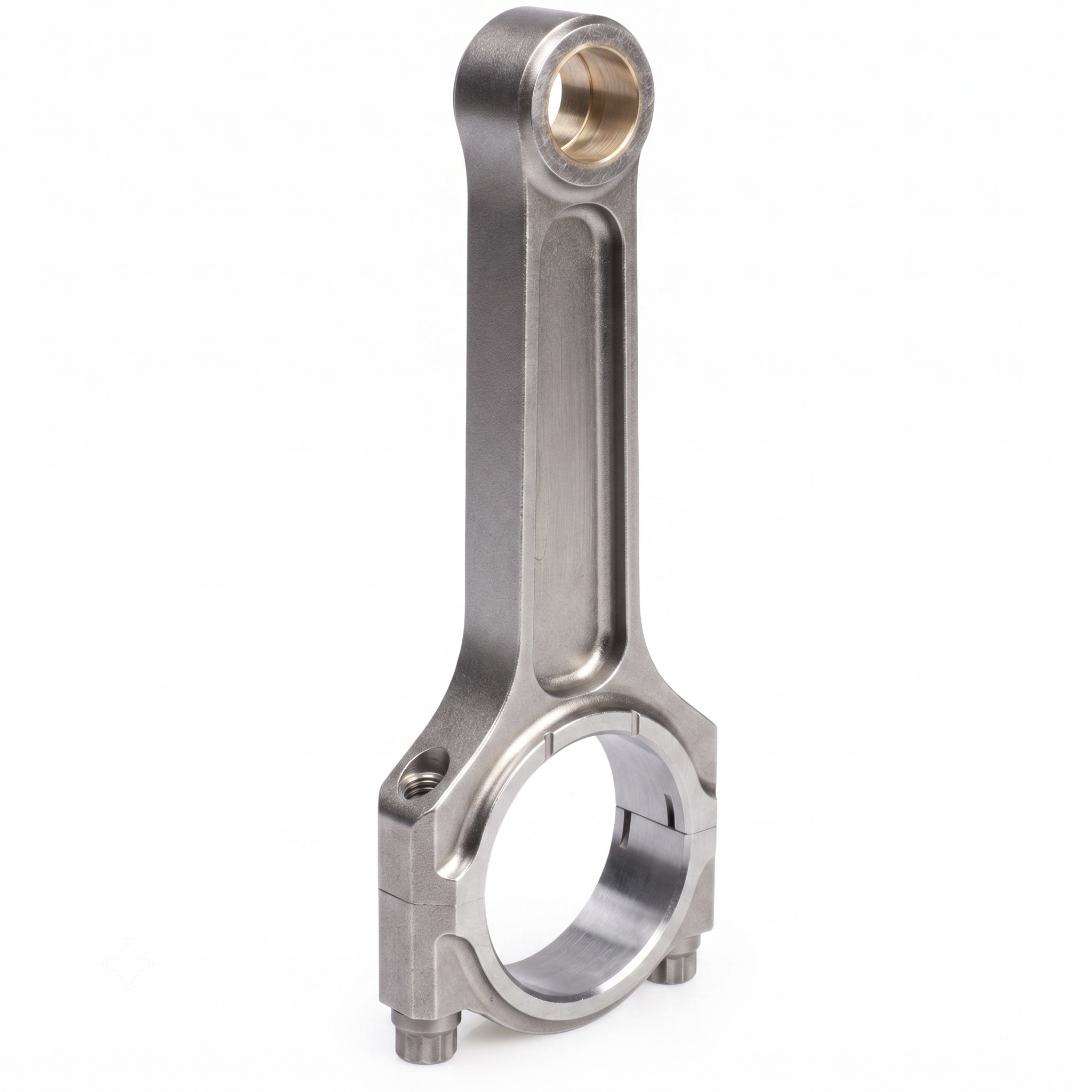 | I-beam profile. Its slimmer central section reduces mass: less inertia, quicker rpm pick-up and lower stress on the bolts. It is the profile of choice for heavily worked modern V8s such as the LS1, where a light assembly is sought without sacrificing mechanical strength. |
The rod bolt is among the most heavily stressed parts of the engine. The key is to match the ARP grade to the real use of the build, then to follow the assembly torque and stretch to the letter.
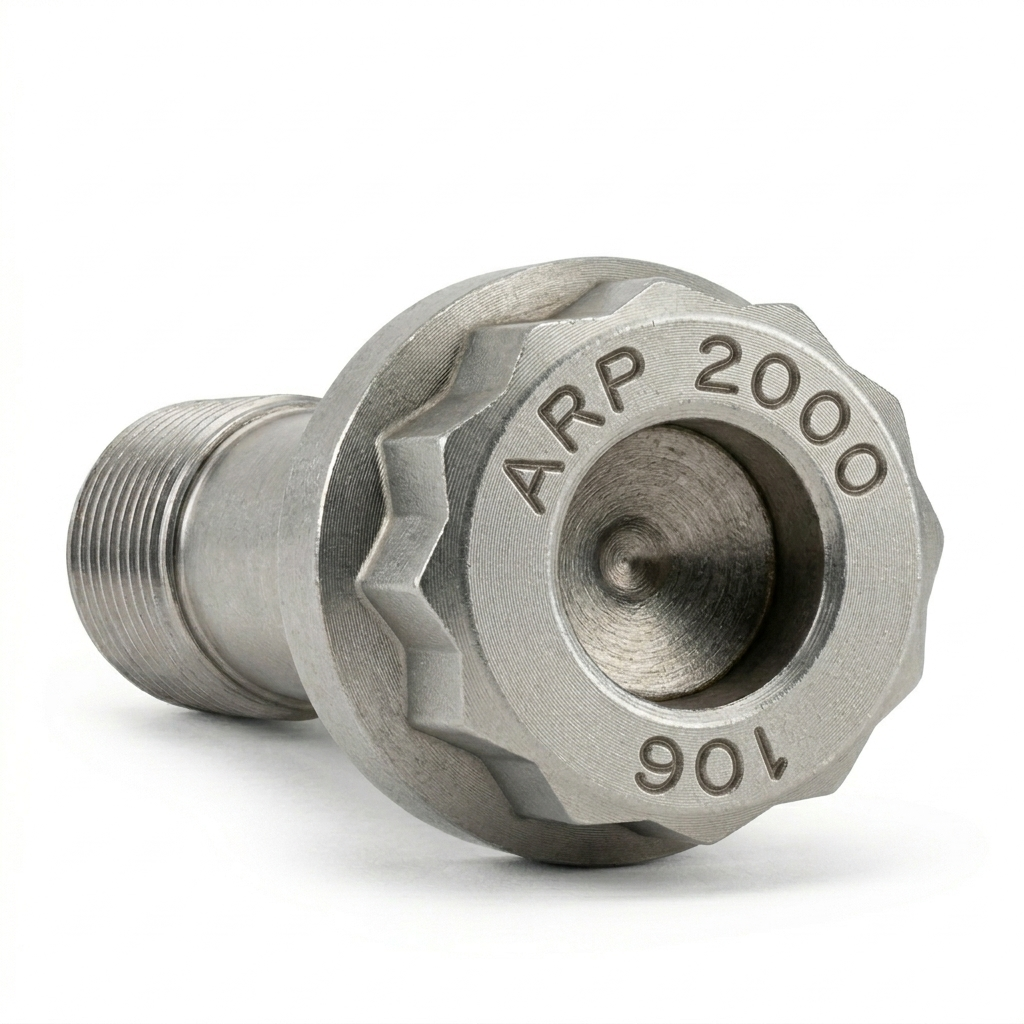 | ARP 2000 (tensile strength ~220,000 psi, i.e. ~1,517 MPa) is the high-performance standard. Suited to builds up to 8,500 rpm, it is the most common grade in circuit, trackday, drift, rally, drag and hillclimb, valued for its robustness, reliability and versatility, with no particular storage constraint. |
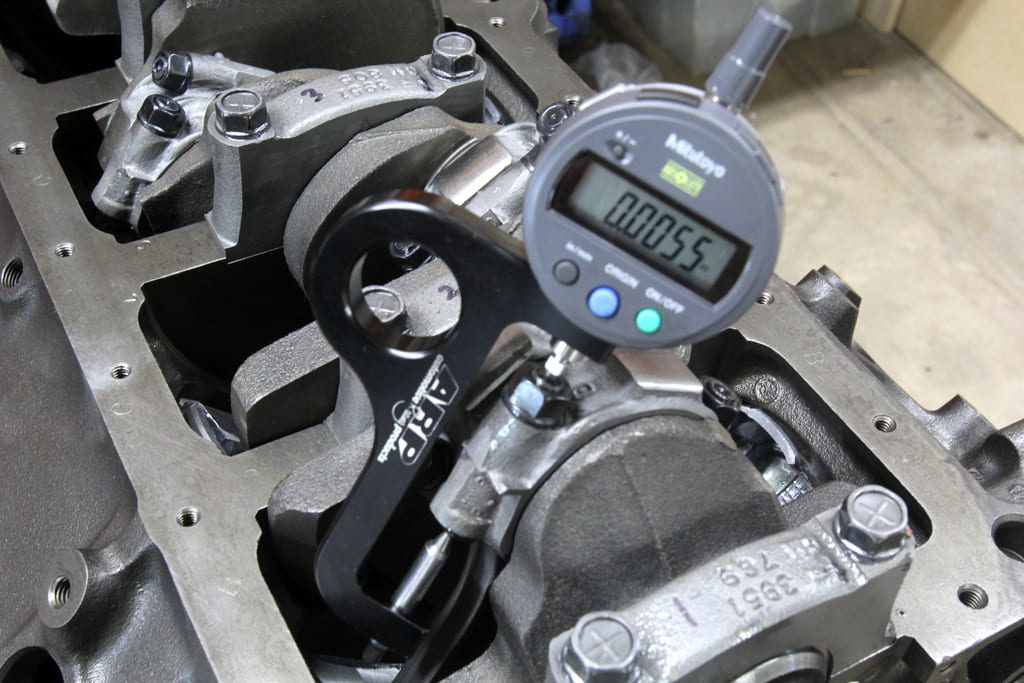
In addition to torque tightening, measuring rod-bolt stretch is the most reliable check for optimal preload. The check is done with the bolt fitted: place the gauge (dial indicator) on the two ends of the bolt and read its actual stretch, which must match the recommended value (see the torque & stretch table above). This method removes the friction variations inherent in torque tightening and secures the assembly on heavily stressed engines. |
 | ZRP is a Greek brand of high-performance forged connecting rods created by Alex Drakos in Athens. Each rod is forged from 4340 steel, precision-machined and balanced to ±1 g to stay reliable at high rpm. Offered here in I-beam profile with ARP 2000 bolts, they are designed and inspected in Greece, then proven in rally, on circuit and in drift. |
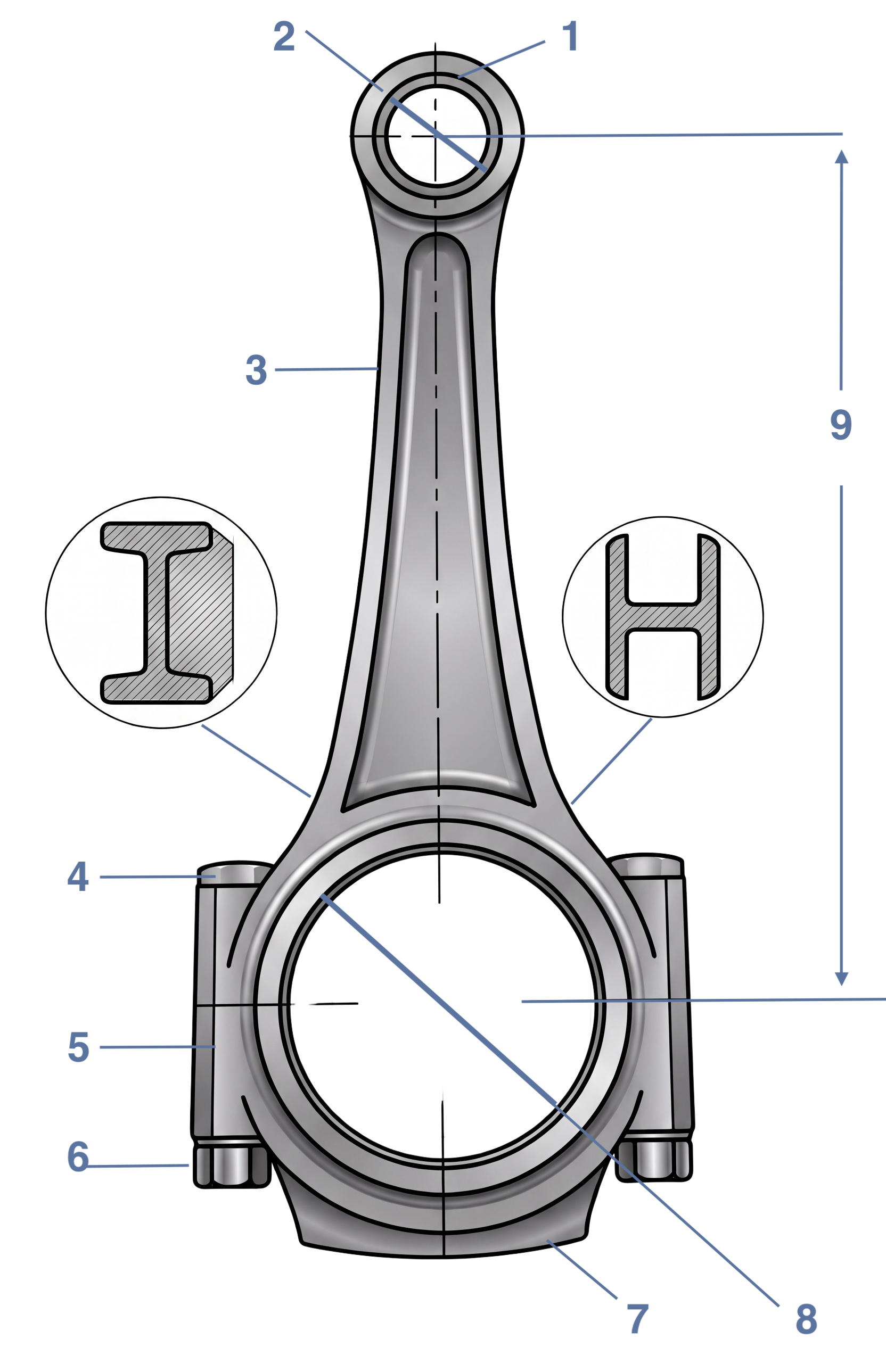 | 1) Small end 2) Small-end diameter 3) Rod beam 4) Rod bolt 5) Big end 6) Rod nut / bolt 7) Rod cap 8) Big-end diameter 9) Center-to-center |
These forged connecting rods are compatible with all vehicles fitted with the Chevrolet 5.7 L V8 LS1 engine:
| Brand | Model (chassis) | Engine code | Power | Years |
|---|---|---|---|---|
| Chevrolet | Corvette (C5) | LS1 | 345–350 hp | 1997–2004 |
| Chevrolet | Camaro Z28 / SS (F-Body) | LS1 | 305–325 hp | 1998–2002 |
| Pontiac | Firebird Trans Am (F-Body) | LS1 | 305–325 hp | 1998–2002 |
| Pontiac | GTO | LS1 | 350 hp | 2004 |
| Holden | Commodore / HSV (VT–VZ) | LS1 | 300–382 hp | 1999–2006 |
| Holden | Monaro | LS1 | 2001–2005 |
OEM reference:
When a factory bottom end lets go (a broken, bent or scored rod), returning to the manufacturer configuration means replacing rods and pistons, often damaged at the same time. The bill climbs quickly for a mere restoration.
For a comparable budget, or even lower, pairing forged 4340 steel rods with forged pistons brings clearly higher reliability and safety margin, plus real headroom for power increases. It is the route chosen by European tuners for over fifteen years.
For the same budget: more reliability, more potential, more longevity.