- In stock
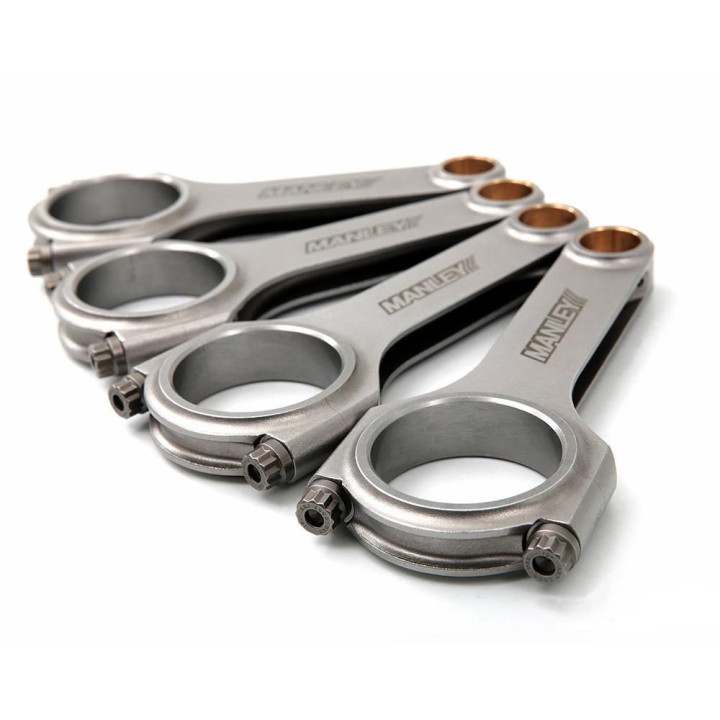
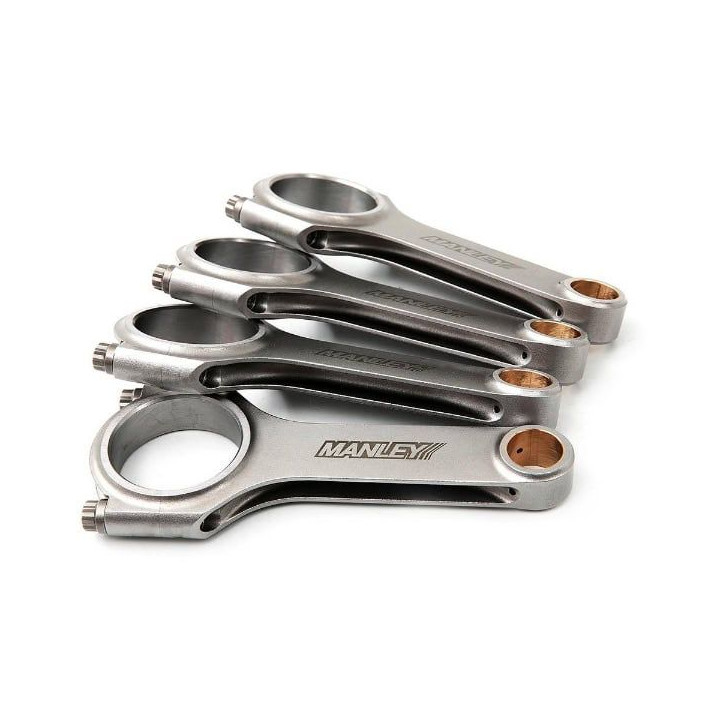


Forged connecting rods Ford - 2.3L 16V EcoBoost - YVDA (Focus RS) for forged pistons
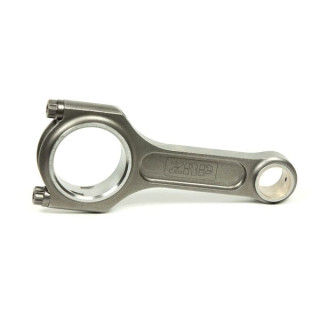
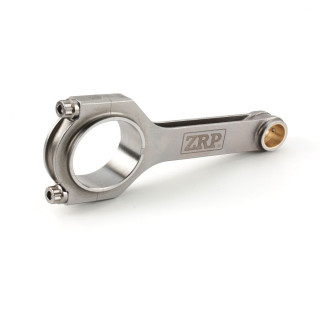
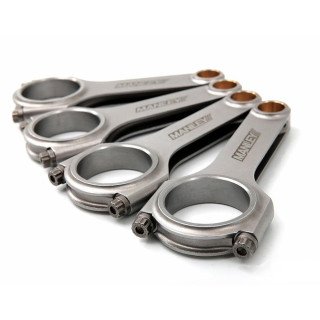
Set of 4 forged 4340 steel connecting rods for the Ford 2.3L EcoBoost (Focus RS).
- Brands: ZRP, Manley, Boostline (Wiseco group)
- Compatibility: Ford Focus III RS, VUHL 05
- Engine codes: YVDA
- Bolts included: ARP 2000, L19 or CA625+
The Ford 2.3L EcoBoost engine
The Ford 2.3L EcoBoost (2,261 cc) is an inline four-cylinder with double overhead camshafts, sixteen valves, direct injection and a twin-scroll turbocharger. Developed by Ford within the EcoBoost family, it combines a compact block with high torque density, which made it the basis for several of the brand’s sporting models.
Best known in the Ford Focus III RS (code YVDA, 350 hp / 257 kW, 2015-2018) and closely related to the 2.3 EcoBoost of the Ford Mustang, it responds very well to tuning: remapping, exhaust, upgraded cooling and higher boost pressure quickly unlock power. Beyond a certain stage the factory rods become the weak link of the bottom end, which is where forged connecting rods become essential to keep the assembly reliable.
Forged connecting rods
Forged from high-strength 4340 steel, these rods take the dimensions of the 2.3 EcoBoost (22.5 mm pin, 149.2 mm centre-to-centre length) to make reliable a bottom end that quickly sees a lot of boost pressure. Replacement is required when fitting forged pistons, when raising the rev limit, when increasing boost pressure or when adding displacement, as soon as the standard YVDA rod becomes the weak point.
Developed for built engines, turbocharged as well as supercharged, they cover every discipline: rally, drift, drag racing, circuit and track use, hillclimb, time attack. They follow Stage 2, Stage 3 and Stage 4+ builds up to a fully rebuilt competition engine, and are offered here in I, I-3P and H profiles, from 576 to 638 g per rod depending on the brand chosen.
Technical specifications of the 2.3L EcoBoost forged connecting rods
| Reference | Brand | Profile | Bolts | Pin diameter OEM 22,5 mm | Small-end width | Big-end diameter OEM 55,04 mm | Big-end width | Center-to-center OEM 149,2 mm | Weight per rod |
|---|---|---|---|---|---|---|---|---|---|
| FD5866-886 | Boostline | I-3P | ARP 2000-3/8"-41mm | 22,5 mm | 21,82 mm | 55,03 mm | 21,82 mm | 149,2 mm | 634 g |
| FD5866-886+ | Boostline | I-3P | ARP CA625+-3/8"-41mm | 22,5 mm | 21,82 mm | 55,03 mm | 21,82 mm | 149,2 mm | 638 g |
| 14081-4 | Manley | H | ARP 2000-3/8"-38mm | 22,5 mm | 21,82 mm | 55,04 mm | 21,84 mm | 149,2 mm | 585 g |
| 14434-4 | Manley | I | ARP 2000-3/8"-38mm | 22,5 mm | 21,84 mm | 55,04 mm | 21,84 mm | 149,2 mm | 585 g |
| 14434R6-4 | Manley | I | ARP CA625+-3/8"-38mm | 22,5 mm | 21,84 mm | 55,04 mm | 21,84 mm | 149,2 mm | 585 g |
| R-FOR-009-I | ZRP | I | ARP 2000-3/8"-38mm | 22,5 mm | 55,04 mm | 21,84 mm | 149,2 mm | 576 g | |
| R-FOR-009-I-L19 | ZRP | I | ARP L19-3/8"-38mm | 22,5 mm | 55,04 mm | 21,84 mm | 149,2 mm | 576 g |
ZRP: Straight, non-tapered pin end.
Torque and bolt stretch
| Rod | Bolts | Torque | Recommended stretch |
|---|---|---|---|
| Boostline (FD5866-886) | ARP 2000 | 81 N·m | 0,142 – 0,152 mm |
| Boostline (FD5866-886+) | ARP CA625+ | 88 N·m | 0,152 – 0,163 mm |
| Manley (14081-4) | ARP 2000 | 81,3 N·m | 0,147 – 0,157 mm |
| Manley (14434-4) | ARP 2000 | 81,3 N·m | 0,147 – 0,157 mm |
| Manley (14434R6-4) | ARP CA625+ | 81,3 N·m | 0,160 – 0,170 mm |
| ZRP (R-FOR-009-I) | ARP 2000 | 61 N·m | 0,140 – 0,152 mm |
| ZRP (R-FOR-009-I-L19) | ARP L19 | 67,8 N·m | 0,152 – 0,165 mm |
On a built 2.3 EcoBoost, the slightest guesswork in tightening shows up in the bearing: it is preload that keeps the cap seated when the rod and piston assembly decelerates at the top of the stroke, and nothing else. Tightening below the specified range leaves that preload under the separating force: cyclic cap lift, contact corrosion on the parting face, a hammered shell and drifting clearance, up to a dull knock and then seizure. Tightening above it work-hardens then yields the bolt: it no longer returns any elastic load, the bearing bore distorts, the big end goes oval and the shell stops bearing across its full width. As this listing brings together several brands, Boostline, Manley and ZRP, and several ARP fastener grades, each row of the table below has its own values set by the fastener manufacturer: they are applied without ever being mixed. Stretch measurement with a dial gauge remains the reference, because a torque wrench mostly pays for thread and seat friction; assemble with ARP lubricant, the kit instructions taking priority.
Technical guide
4340 forged steel: what is it?
| 4340 steel is a nickel-chromium-molybdenum alloy steel used in aerospace and motorsport alike. Forged then heat-treated (quench and temper), it offers excellent tensile strength, high fatigue resistance and real ductility. Compared with an original rod (often sintered/powder metal, optimised for series-production cost), a 4340 forged rod shows roughly +19% higher yield strength, +8% higher tensile strength and above all +19% to +37% higher fatigue strength, i.e. a fatigue life under cyclic loading several times longer. This is what makes forged 4340 the reference material as soon as boost and rpm climb. |
Connecting rod profiles
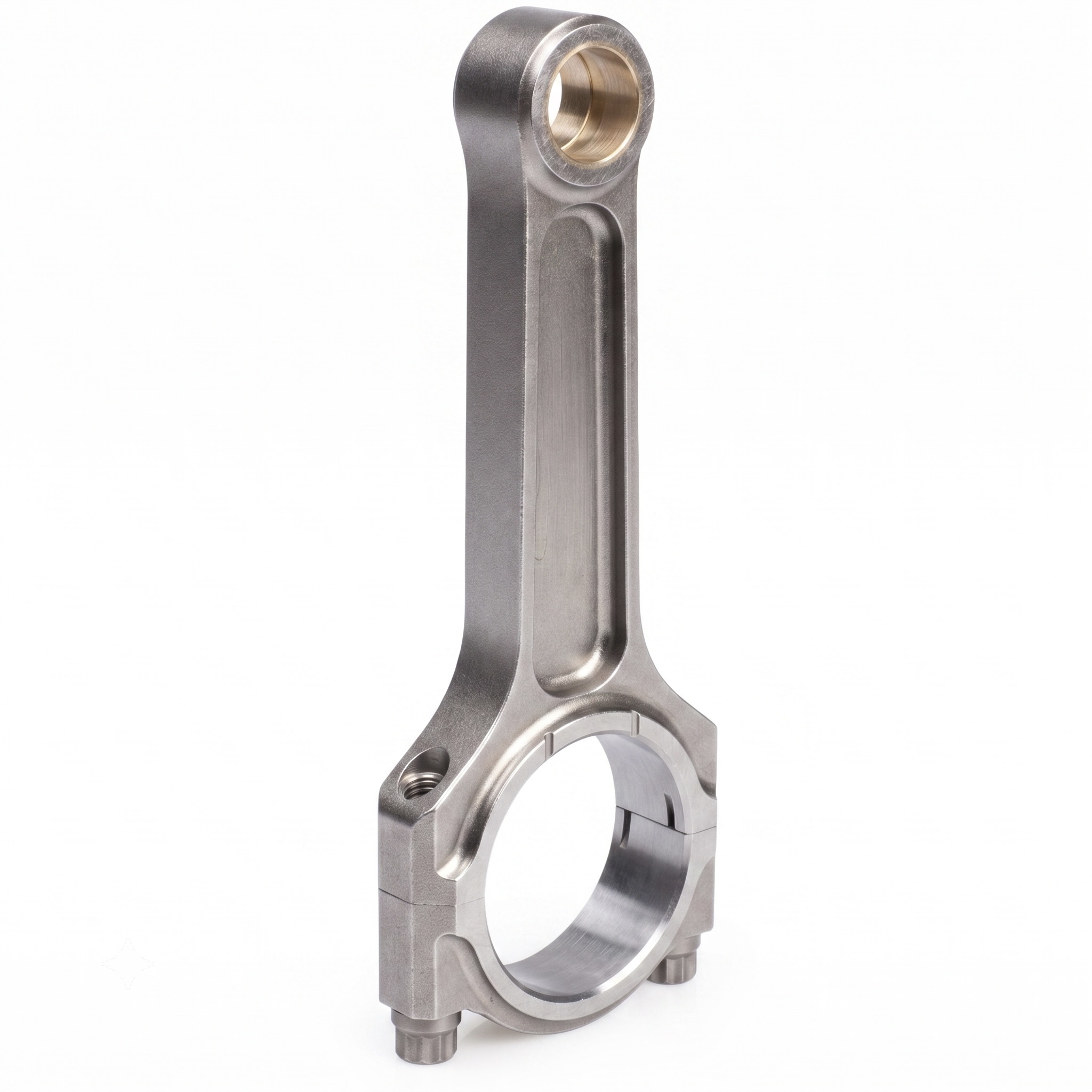 |
I-beam profile. Built around a thinner central web, framed by two flanges that form its "I", the rod combines high stiffness with a controlled mass. On modern turbo engines such as the 2.3L EcoBoost it is the profile of choice, serving both to secure the bottom end and to support rising boost pressure. |
|
I-beam profile (Pro Series I-Beam). From Manley's Pro Series range, in its standard-weight version, this I-section rod is forged to keep high stiffness along its whole length. Manley reserves it for heavily loaded engines, particularly with a turbocharger, a supercharger or nitrous oxide, once power and boost pressure reach high levels. |
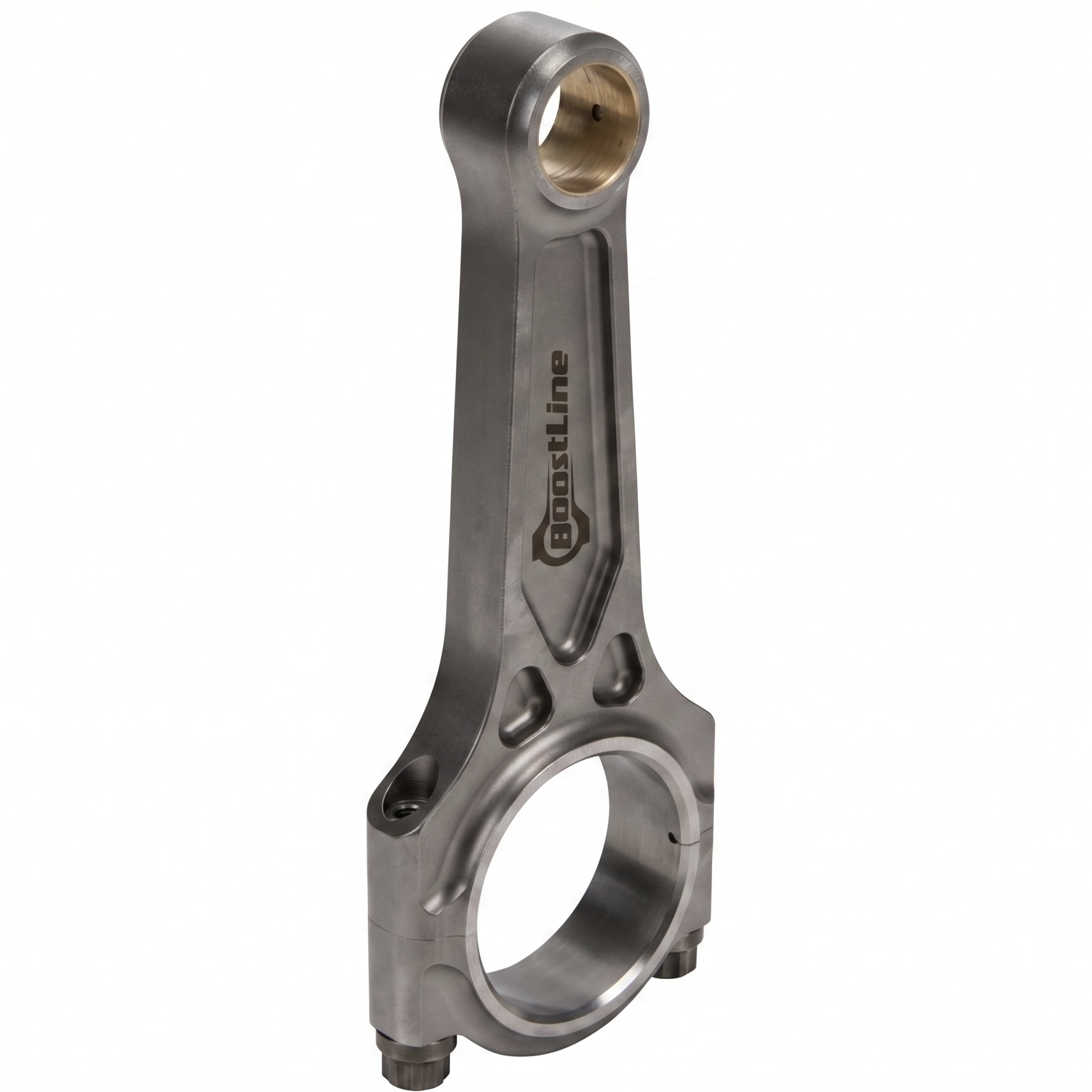 |
I-3P profile (3-pocket I-beam, Boostline). Devised by Boostline, this patented three-pocket profile combines the strengths of H and I sections to deliver maximum strength with a lighter rotating mass. The manufacturer intends it for boosted engines, including high boost pressure, whether with a turbocharger, a supercharger or nitrous oxide. |
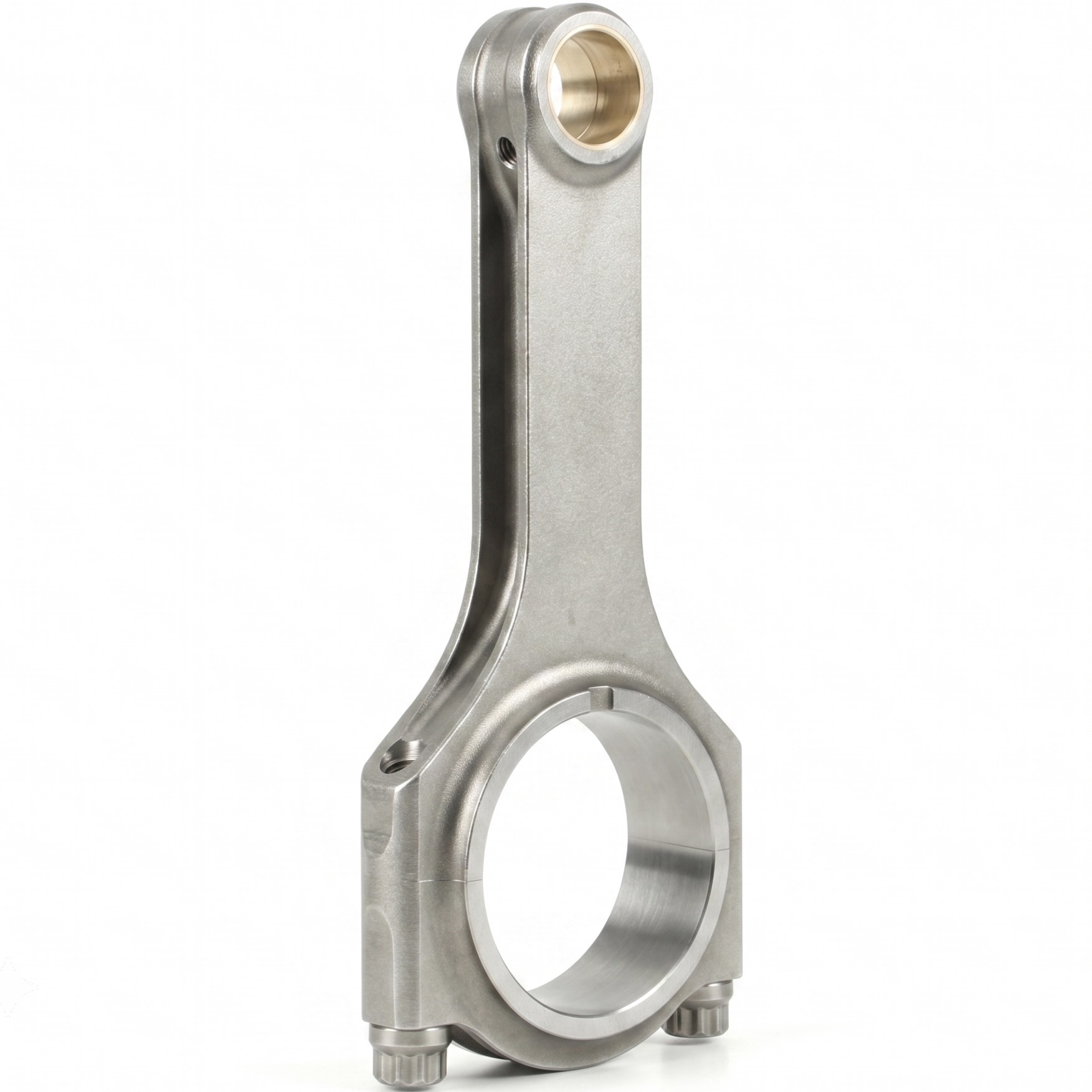 |
H-beam profile. Made of two wide flat flanks joined by a central web, its “H” section gives the rod a massive, consistent shape from one end to the other. On a turbo engine such as the 2.3L EcoBoost it is a robust, versatile profile, cut out for mainstream builds: from securing the bottom end when moving to forged pistons to a moderate increase in boost pressure. |
How to choose your rod bolts?
On a 2.3 EcoBoost the rod bolt decides the cylinder pressure and the rpm the bottom end will accept: it is the first thing to settle, even before choosing a rod. The reasoning starts from use and not from a catalogue, because a rally engine taking up torque at low rpm, a circuit engine holding high rpm for a long time and a drag engine taking a few violent runs do not load the bolts in the same way. The three grades below are offered in 3/8", in 38 mm or 41 mm depending on the rod.
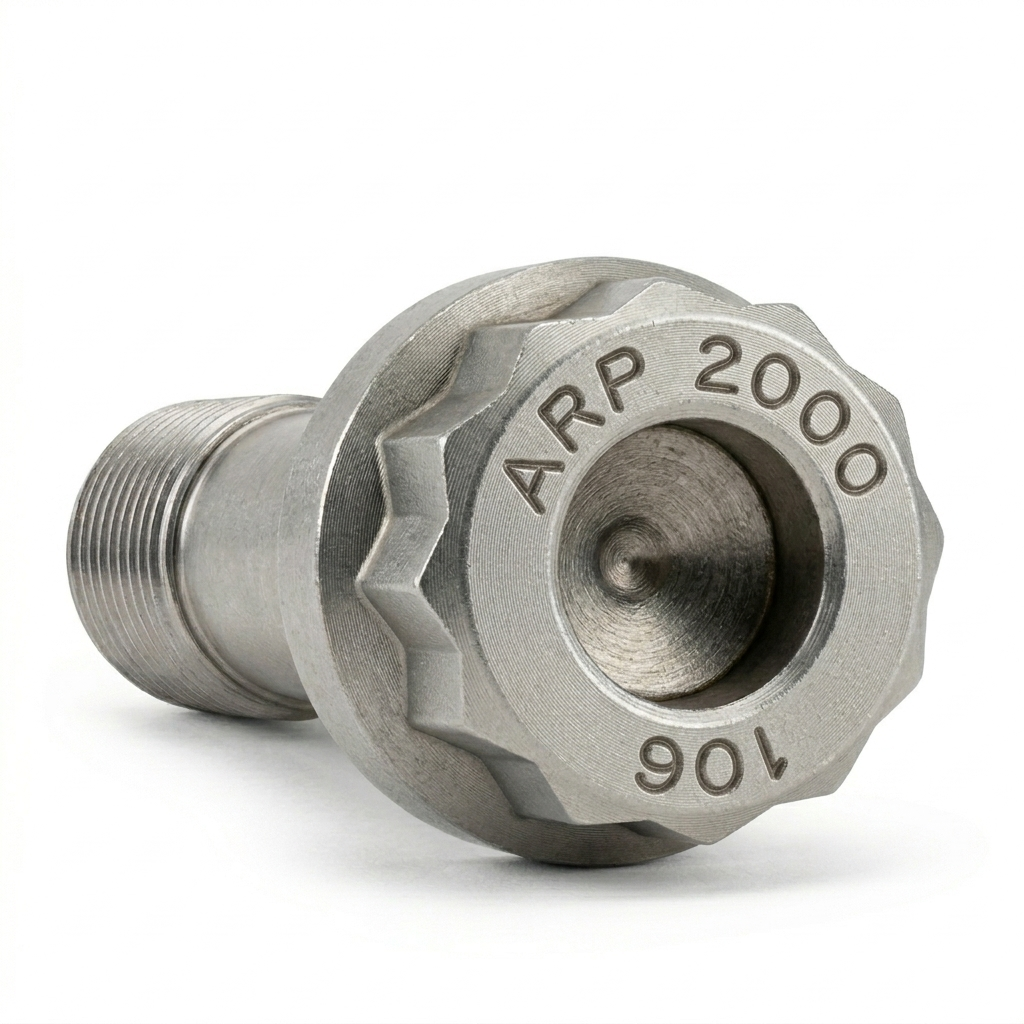 |
ARP 2000, with its tensile strength of ~220,000 psi (~1,517 MPa), is enough for most built 2.3 EcoBoost engines: up to 200 hp per cylinder in 3/8" and up to 8,500 rpm. It is the grade found on the majority of Focus RS used in circuit racing, track days, drift, rally, drag racing and hillclimb, here in 38 mm on the Manley and ZRP rods as well as in 41 mm on the Boostline. No storage constraint to observe. |
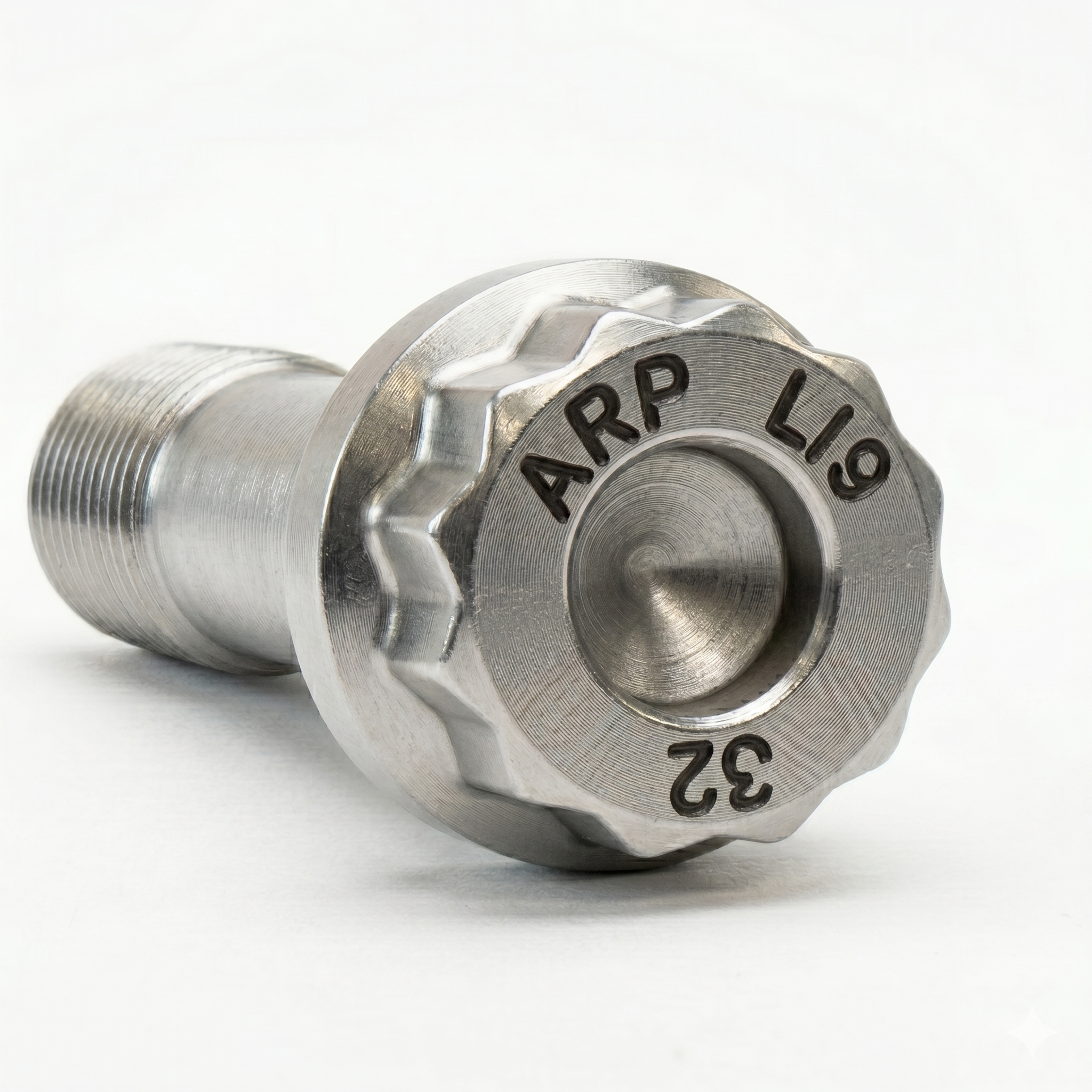 |
L19 takes the level to ~260,000 psi (~1,793 MPa), that is up to 250 hp per cylinder in 3/8" and up to 10,000 rpm. On a 2.3 EcoBoost running very high boost pressure, with high cylinder pressure and sustained high rpm, this is the grade that provides the margin: drag racing, drift, rally and high-power circuit work. It is offered here on the ZRP rod in I profile. In return, the alloy is sensitive to corrosion and to hydrogen embrittlement: the bolts are stored and fitted oiled, away from moisture, and never left bare. |
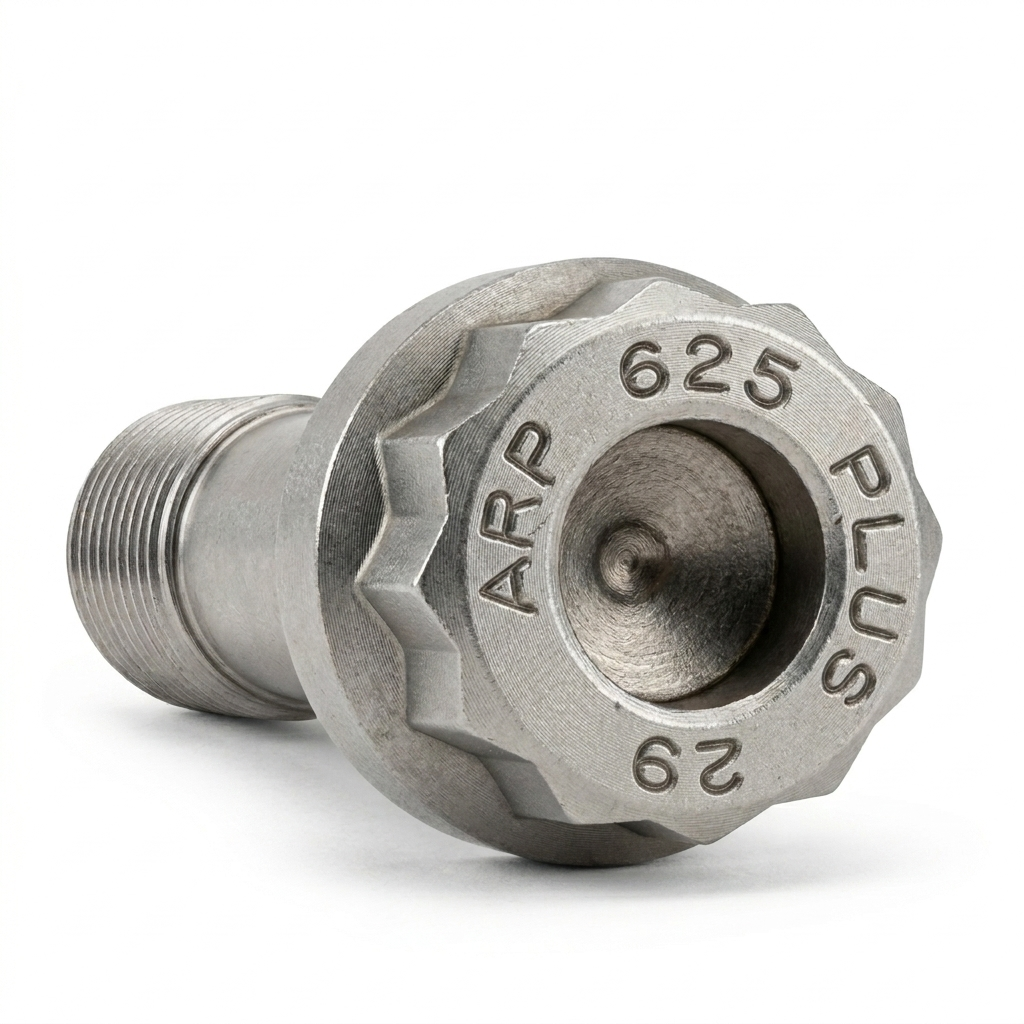 |
CA625+ (Custom Age 625+) is ARP’s premium alloy, from 260,000 to 280,000 psi (~1,793 to 1,931 MPa). It targets the most extreme 2.3 EcoBoost builds, beyond 250 hp per cylinder in 3/8" and beyond 10,000 rpm, typically a drag or time attack engine. It resists atmospheric corrosion and oxidation better than ARP 2000 and remains immune to hydrogen embrittlement: you keep the level of the L19 without its storage precautions. Here it equips the Boostline I-3P in 41 mm and the Manley I in 38 mm. |
Measuring bolt stretch
|
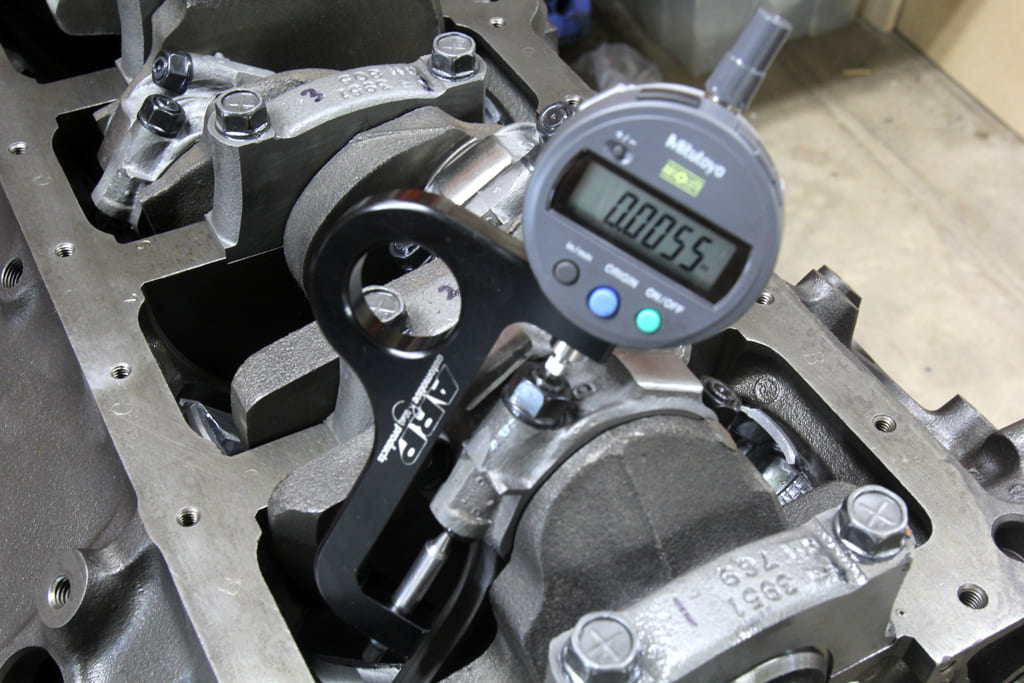
In addition to torque tightening, measuring rod-bolt stretch is the most reliable check for optimal preload. The check is done with the bolt fitted: place the gauge (dial indicator) on the two ends of the bolt and read its actual stretch, which must match the recommended value (see the torque & stretch table above). This method removes the friction variations inherent in torque tightening and secures the assembly on heavily stressed engines. |
The brands offered
 |
BOOSTLINE (Wiseco group), a forged connecting rod range from the American Wiseco group, a benchmark since 1941. Its patented 3-pocket design combines the rigidity of an I-beam with the robustness of an H-beam. Forged from 4340 steel and machined in the USA, they come with ARP 2000 bolts (Custom Age 625+ optional) and are built for boosted engines. |
 |
MANLEY, an American forged connecting rod manufacturer since 1966. Machined from vacuum-degassed aerospace-grade 4340 steel, shot-peened and inspected one by one, its “Turbo Tuff” rods come in H-beam and I-beam profiles, with ARP 2000 or Custom Age 625+ bolts. A major name in engine building, from street to competition. |
 |
ZRP, a Greek brand of high-performance forged connecting rods, designed by Alex Drakos in Athens. Each rod is forged from 4340 steel, precision-machined and balanced to ±1 g to stay reliable at high rpm. Available in I-beam or H-beam profile with ARP 2000, L19 or Custom Age 625+ bolts, they are designed and inspected in Greece, and proven in rally, on circuit and in drift. |
Glossary
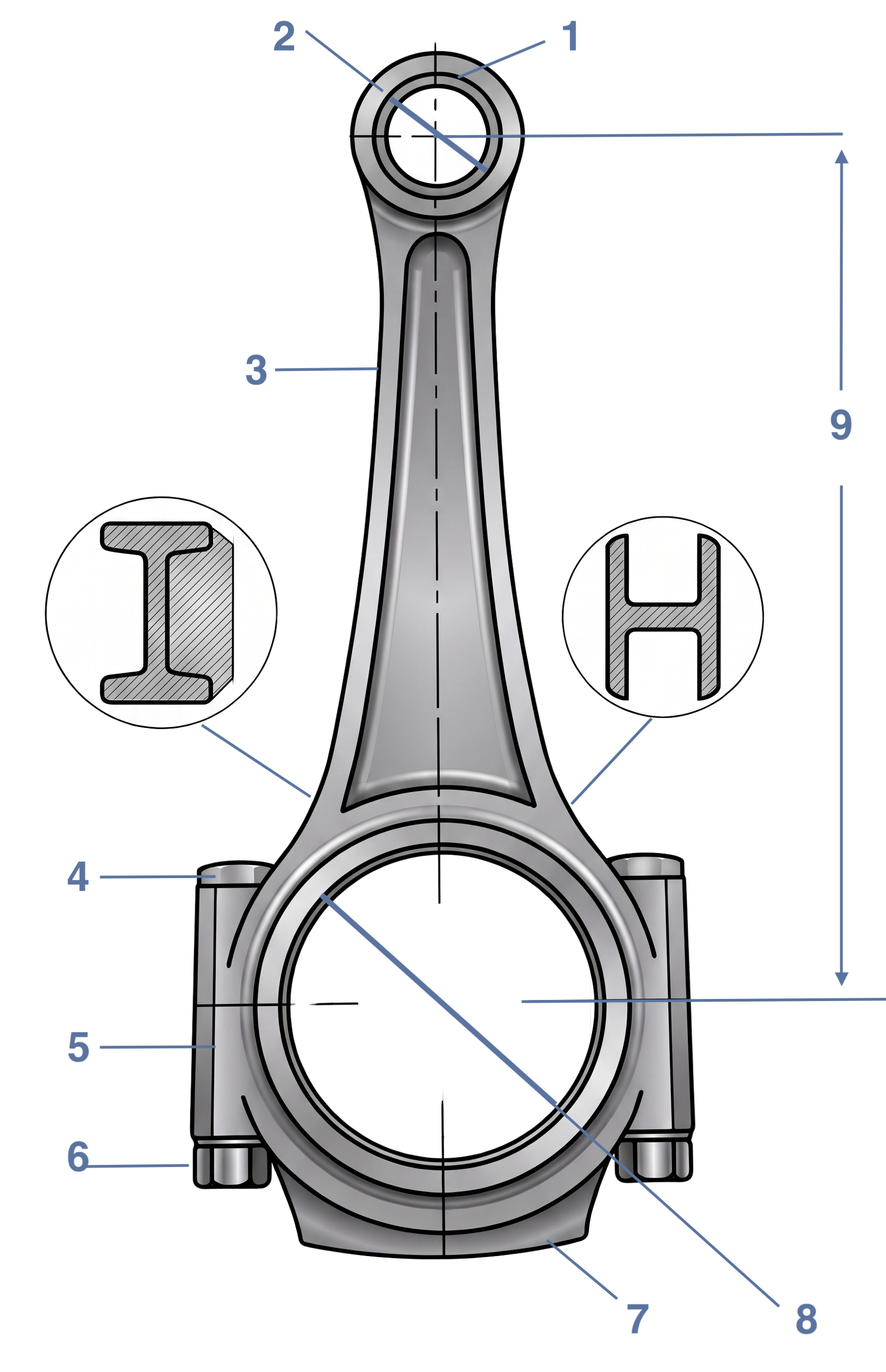 |
1) Small end 2) Small-end diameter 3) Rod beam 4) Rod bolt 5) Big end 6) Rod nut / bolt 7) Rod cap 8) Big-end diameter 9) Center-to-center |
Vehicle compatibility for the Ford 2.3L EcoBoost engine
These forged connecting rods are compatible with the versions fitted with the Ford 2.3L EcoBoost engine listed below.
| Brand | Model (chassis) | Engine code | Power | Years |
|---|---|---|---|---|
| Ford | Focus III RS AWD (LZ) | YVDA | 350 hp (257 kW) | 2015–2018 |
| VUHL | 05 (2.3 RR) | YVDA | 390 hp (287 kW) | 2016– |
Why it’s the most cost-effective solution?
On a YVDA, a standard rod that gives way takes the piston with it, often scores the liner and calls for a full check of the block. Rebuilding with standard parts therefore means paying for original rods and pistons, for an engine that will set off again with exactly the same limits as before the failure.
For an equivalent, sometimes lower budget, a set of forged 4340 rods with forged pistons brings far greater reliability and safety margin, and opens the way to more power without taking the engine apart again. This is the logic European engine builders have applied for more than 15 years, and it is particularly true for heavily boosted EcoBoost engines.
For the same budget the result is clear: more reliability, more potential, more service life.
-
Brand
-
Reference14081-4
14 other products in the same category
Viewed products