- In stock
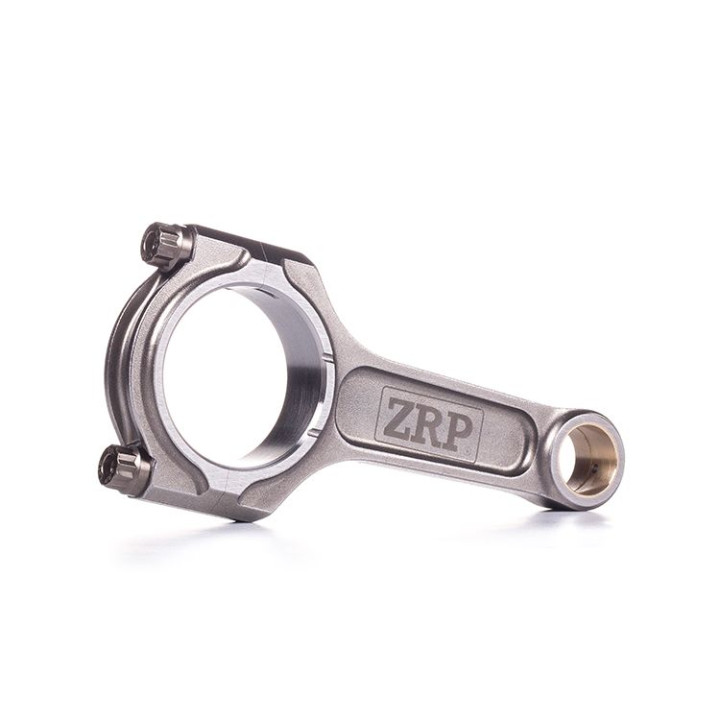
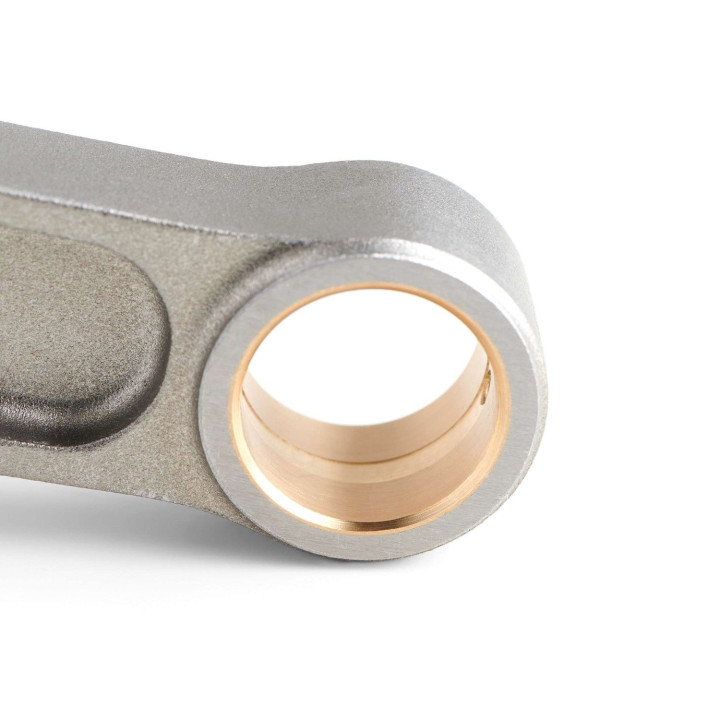


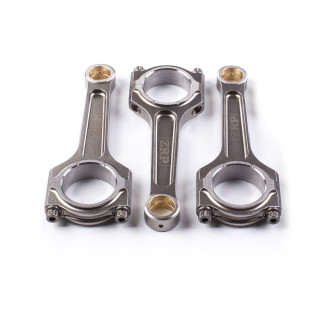
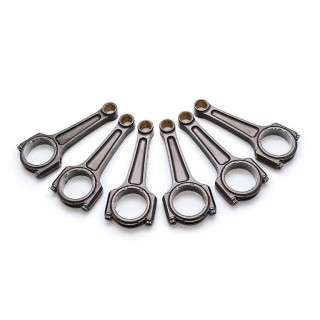
Forged connecting rods Nissan - 2.5L & 2.6L 24V Turbo - RB25DET / RB26DETT (Skyline GT-R) 21 mm pin for forged pistons
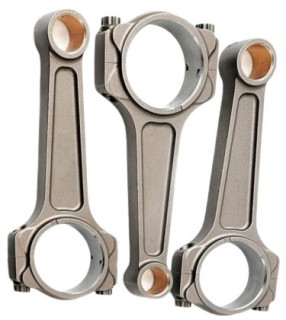
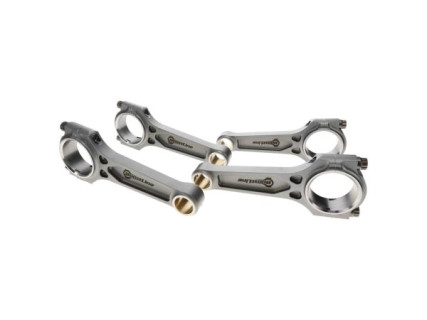
Set of 6 forged connecting rods in 4340 steel for the Nissan 2.5L & 2.6L 24V Turbo.
- Brands: ZRP, Wössner, Boostline, Manley
- Compatibility: R32, R33, R34
- Engine codes: RB25DET / RB26DETT
- Bolts included: ARP 2000, L19 or CA625+
The Nissan RB25DET / RB26DETT engine
The RB26DETT is the 2.6 L twin-turbo inline-six, 24-valve engine that made the legend of the Nissan Skyline GT-R (R32, R33 and R34) and of the Stagea 260RS wagon. Its smaller brother, the 2.5 L single-turbo RB25DET, powers the Skyline GTS-25t and GT-t, the Laurel, Stagea, Cedric and Gloria. With its famously indestructible closed-deck block, twin-cam head and seven-bearing crankshaft, the RB platform copes with power levels far beyond stock, provided its weak links are reinforced. On these tuned engines the factory rods become the breaking point as soon as boost pressure and engine speed rise.
The forged connecting rods
Machined from drop-forged 4340 chrome-molybdenum steel, these rods deliver fatigue strength and bending resistance far beyond the original sintered rods. They are designed for engine building in motorsport as well as on the open road: circuit, time attack, drift, drag, rally and hillclimb. Depending on the chosen profile and bolts, the kit supports builds from Stage 1 to Stage 3 and beyond, with power outputs commonly ranging from 400 to over 800 hp on a built RB. The complete set of 6 rods is weight-matched to preserve the balance of the rotating assembly and reliability at high rpm.
Technical specifications
| Reference | Brand | Profile | Bolts | Pin Ø (mm) | Small end width (mm) | Big end Ø (mm) | Big end width (mm) | Center-to-center (mm) | Weight (g) |
|---|---|---|---|---|---|---|---|---|---|
| NI4783-827 | Boostline | I-3P | ARP 2000-3/8"-41mm | 21 | 21,77 | 51 | 21,77 | 121,5 | 579 |
| NI4783-827+ | Boostline | I-3P | ARP CA625+-3/8"-41mm | 21 | 21,77 | 51 | 21,77 | 121,5 | 579 |
| 14028-6 | Manley | H | ARP 2000-3/8"-38mm | 21 | 51 | 21,77 | 121,49 | 490 | |
| 14411-6 | Manley | I-HD | ARP 2000-3/8"-41mm | 21 | 51 | 21,77 | 121,49 | 565 | |
| 14411R6-6 | Manley | I-HD | ARP CA625+-3/8"-41mm | 21 | 51 | 21,77 | 121,49 | 565 | |
| KCR185A | Wössner | I | ARP 2000-3/8"-38mm | 21 | 21,75 | 51 | 21,75 | 121,5 | 565 |
| R-NIS-003-I | ZRP | I-HD | ARP 2000-3/8"-38mm | 21 | 51 | 21,8 | 121,5 | 494 | |
| R-NIS-003-I-L19 | ZRP | I-HD | ARP L19-3/8"-38mm | 21 | 51 | 21,8 | 121,5 | 494 | |
| R-NIS-004H | ZRP | H | ARP 2000-3/8"-38mm | 21 | 51 | 21,8 | 119,5 | 477 | |
| R-NIS-004H-L19 | ZRP | H | ARP L19-3/8"-38mm | 21 | 51 | 21,8 | 119,5 | 477 |
ZRP: Stroker version, shortened centre-to-centre length.
OEM reference: 12100-05U01 (RB26DETT); 12100-AB025 (R34 V-Spec) (set of 6 rods).
Tightening torque and stretch
Forged rod bolts are set by measuring bolt stretch with a gauge, not by torque alone. The values below are indicative: always refer to the bolt manufacturer's instructions.
| Rod | Bolts | Torque | Recommended stretch |
|---|---|---|---|
| Boostline I-3P (NI4783-827) | ARP 2000 | 81 N·m | 0,142 – 0,152 mm |
| Boostline I-3P (NI4783-827+) | ARP CA625+ | 88 N·m | 0,152 – 0,163 mm |
| Manley H (14028-6) | ARP 2000 | 81,3 N·m | 0,147 – 0,157 mm |
| Manley I-HD (14411-6) | ARP 2000 | 81,3 N·m | 0,147 – 0,157 mm |
| Manley I-HD (14411R6-6) | ARP CA625+ | 88,1 N·m | 0,165 – 0,190 mm |
| Wössner I (KCR185A) | ARP 2000 | 74,6 N·m | 0,140 – 0,152 mm |
| ZRP I-HD (R-NIS-003-I) | ARP 2000 | 61 N·m | 0,140 – 0,152 mm |
| ZRP I-HD (R-NIS-003-I-L19) | ARP L19 | 67,8 N·m | 0,152 – 0,165 mm |
| ZRP H (R-NIS-004H) | ARP 2000 | 61 N·m | 0,140 – 0,152 mm |
| ZRP H (R-NIS-004H-L19) | ARP L19 | 67,8 N·m | 0,152 – 0,165 mm |
Technical guide
4340 forged steel
4340 is a nickel-chromium-molybdenum alloy recognised as the benchmark for high-performance connecting rods. Forged then heat-treated, it keeps a continuous grain flow giving tensile strength of around 1,000 to 1,200 MPa and toughness far greater than a mass-produced sintered rod, which is brittle by nature. Where the original rod is optimised for cost and factory efficiency, the forged 4340 rod is sized to absorb overpressure, sudden rpm surges and the thousands of cycles of intensive use.
Rod profiles
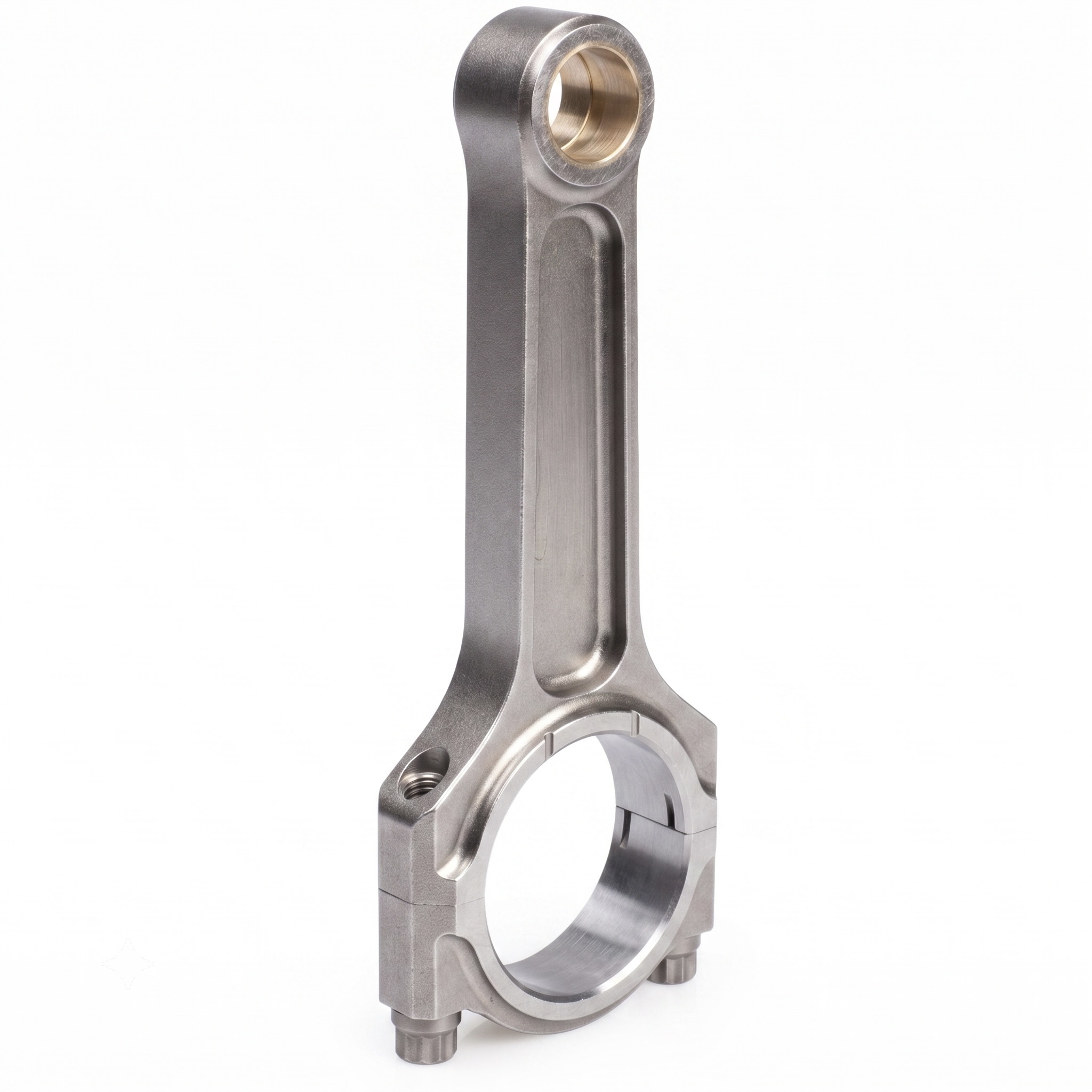 |
I-beam profile. Its slimmer central section, bordered by two flanges that form its “I” shape, gives the rod high rigidity for a controlled mass. On boosted engines such as the RB25DET / RB26DETT, it is the profile of choice, both to make the bottom end reliable and to support a rise in boost pressure. Its I-HD (Heavy Duty) version, with a reinforced and thicker beam, targets extreme loads, with turbo, supercharger or nitrous oxide. |
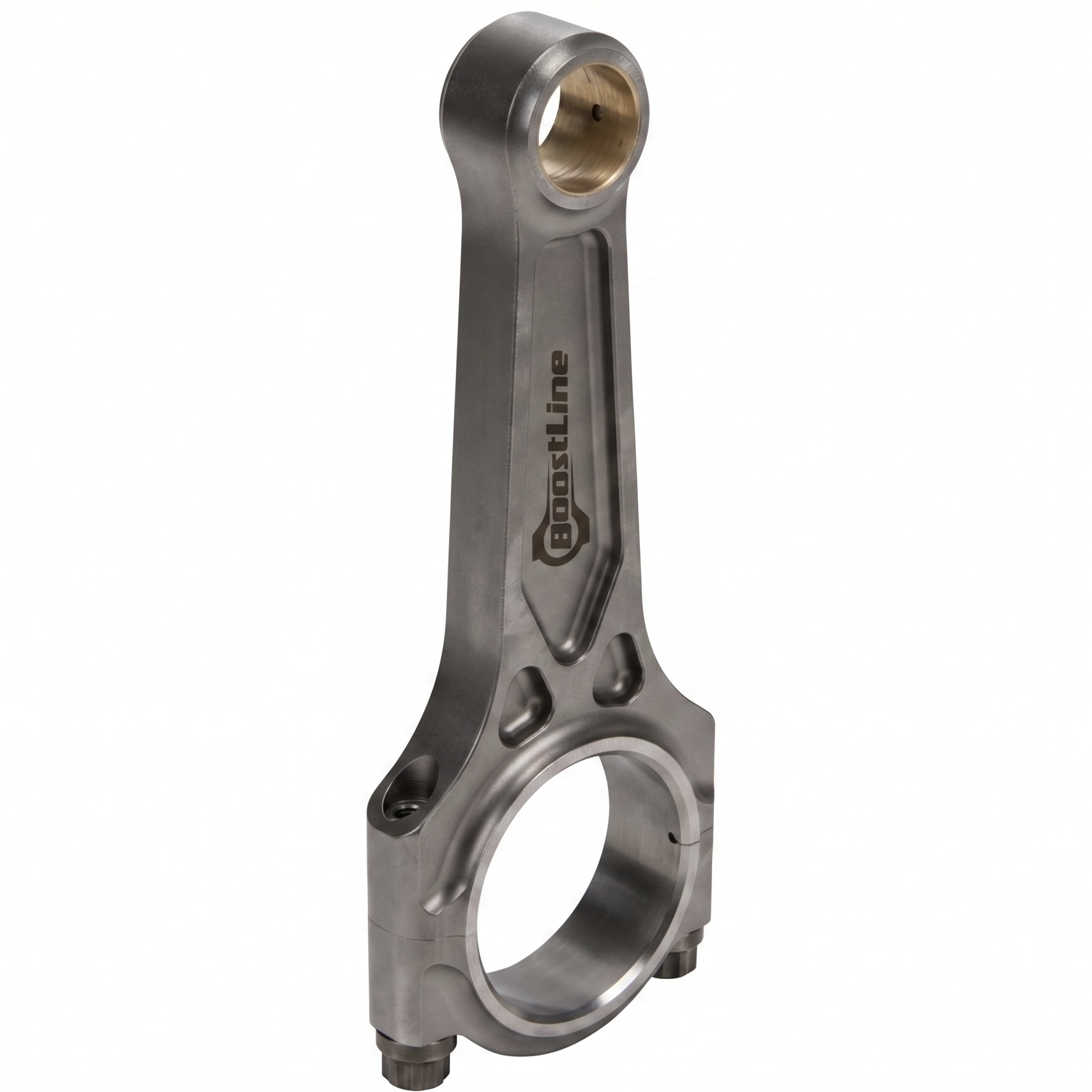 |
I-3P profile (Boostline). This patented three-pocket profile, developed by Boostline, combines the qualities of H-beam and I-beam sections to deliver maximum strength with reduced rotating mass. The manufacturer reserves it for boosted engines, including the highest boost pressures, whether fitted with a turbo, a supercharger or nitrous oxide. |
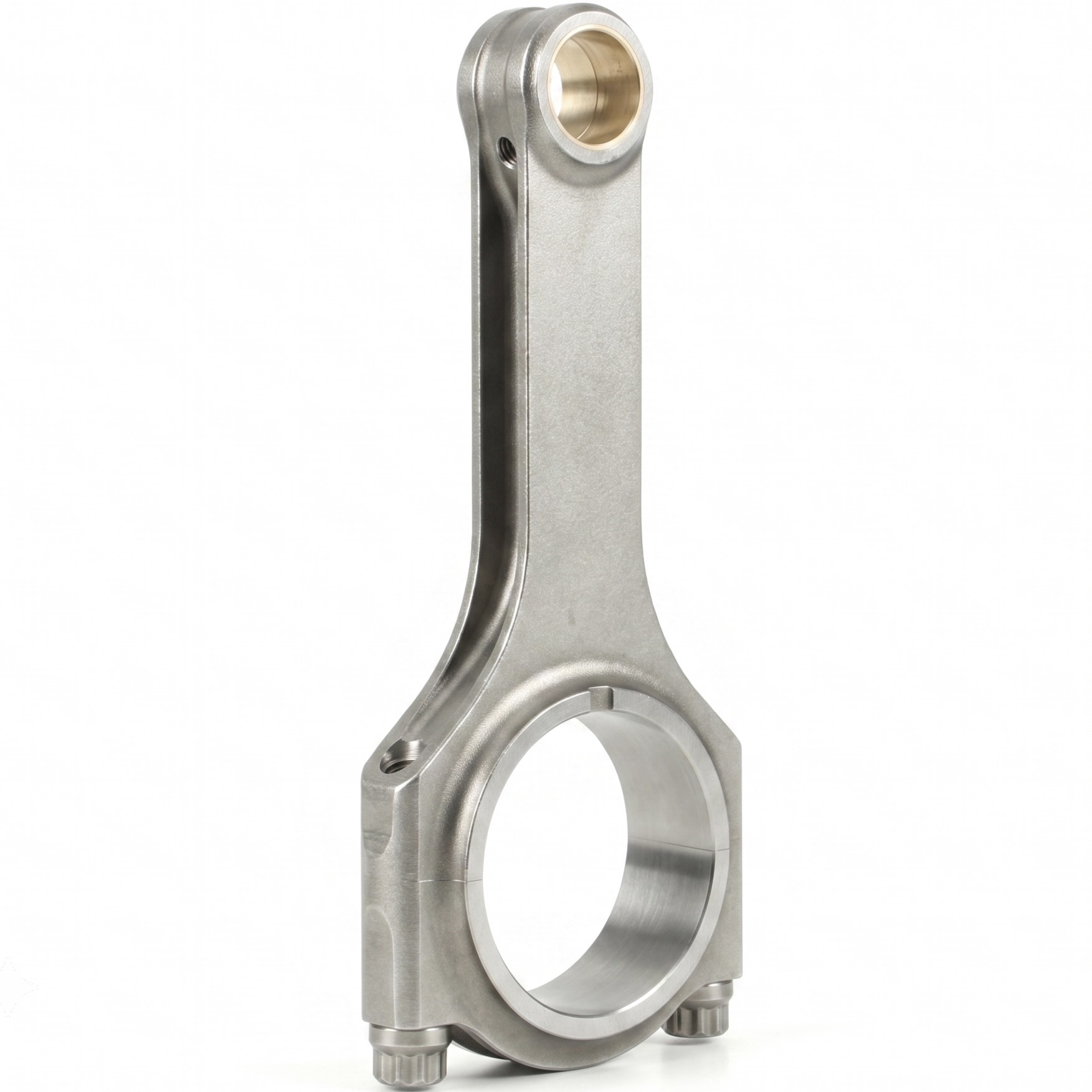 |
H-beam profile. Two wide flat flanks joined by a central web make up its “H” section and give the rod a solid, consistent outline from one end to the other. On a turbo engine such as the RB25DET / RB26DETT, this robust and versatile profile suits mainstream builds, from making the bottom end reliable when switching to forged pistons to a measured increase in boost pressure. |
This listing offers several profiles depending on the brand: I-HD (ZRP, Manley), optimised A-Beam I (Wössner), three-piece I-3P (Boostline) and H (ZRP, Manley). The choice depends on the target power and use, the specification table giving the center-to-center length and weight of each reference.
How to choose your rod bolts? 
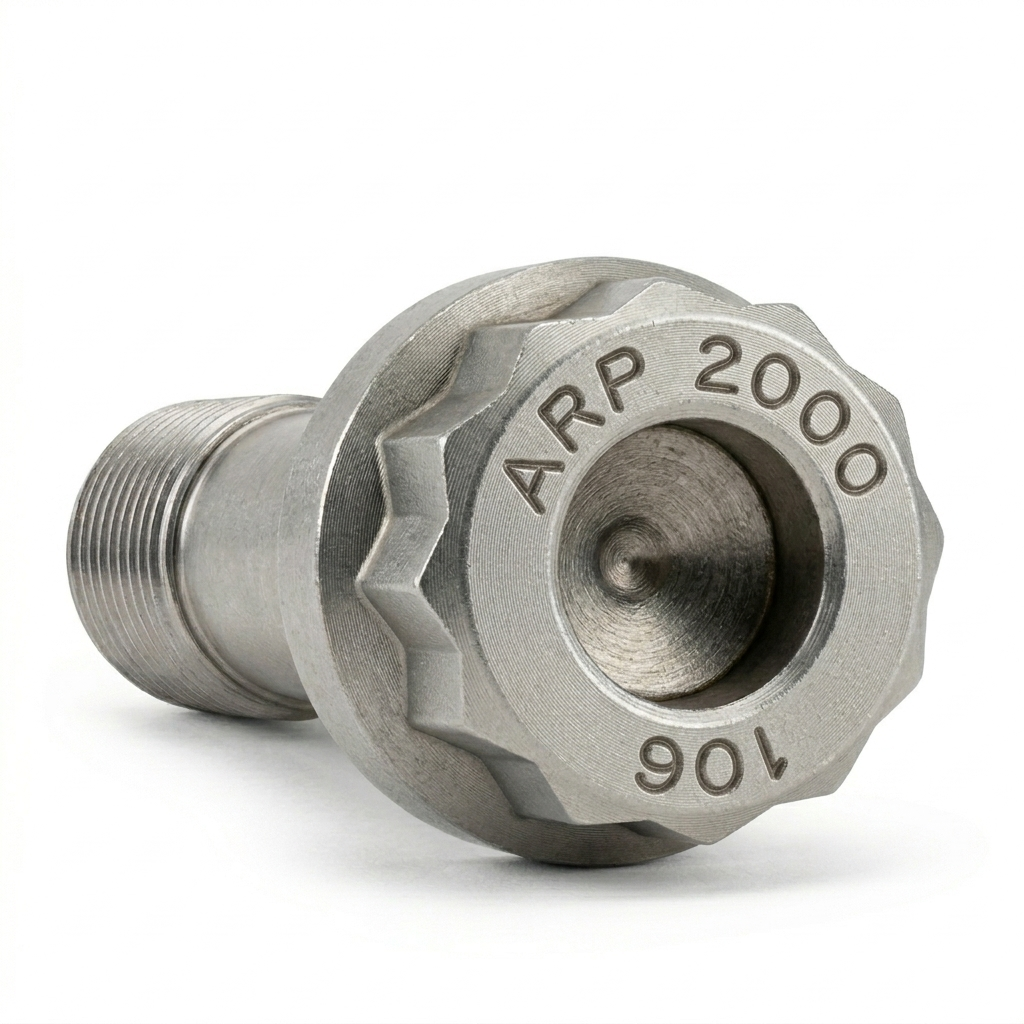 |
ARP 2000 is the reference bolt in 3/8" diameter. With a tensile strength of about 220,000 psi (1,517 MPa), it secures power of around 200 hp per cylinder and rpm up to 8,500. Versatile and with no storage constraints, it covers circuit, drift, rally, drag and hillclimb. |
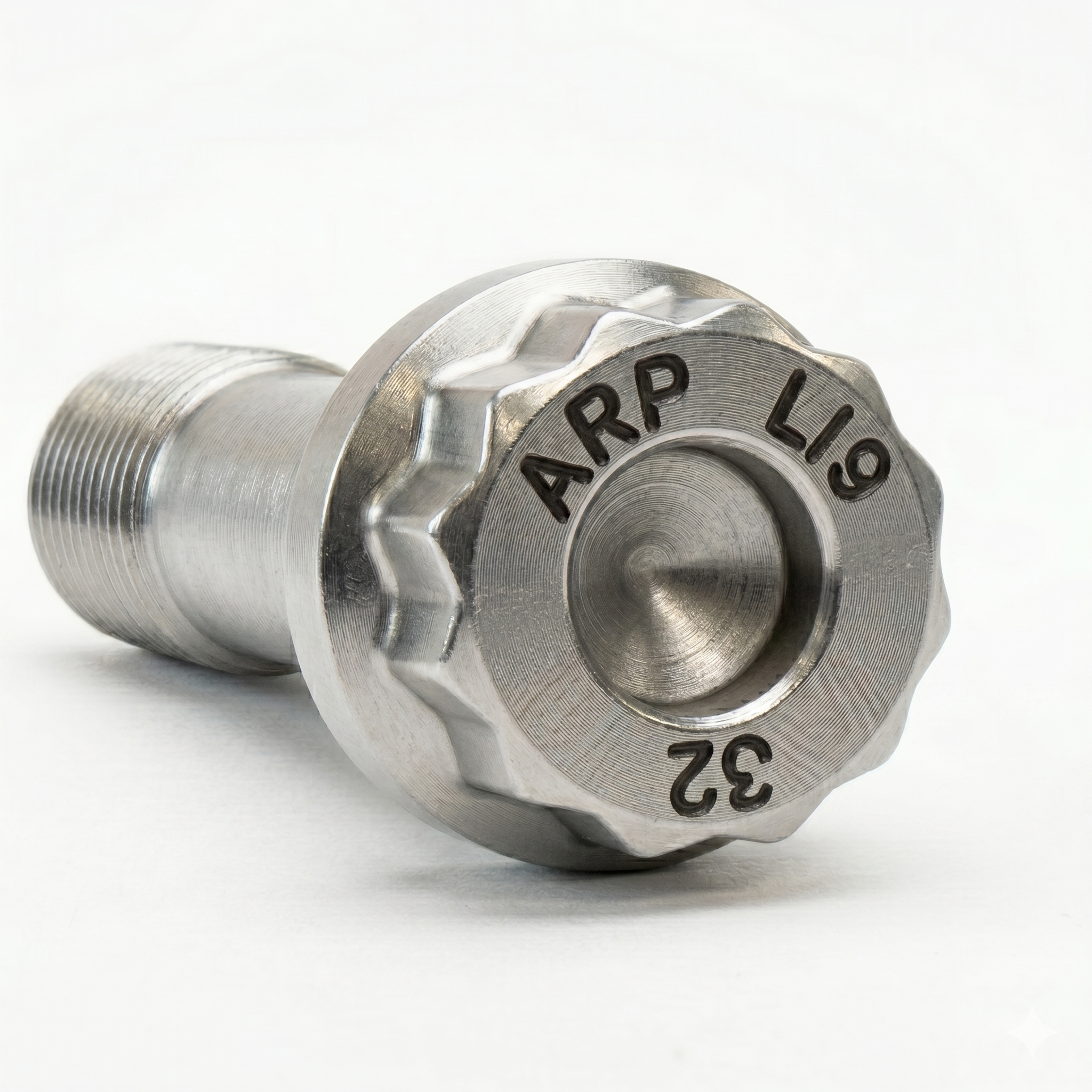 |
ARP L19 in 3/8" uses a higher-strength alloy (about 260,000 psi). It targets serious turbo builds, up to 250 hp per cylinder in 3/8" and up to 10,000 rpm. More sensitive to oxidation, it must be fitted and stored oiled. |
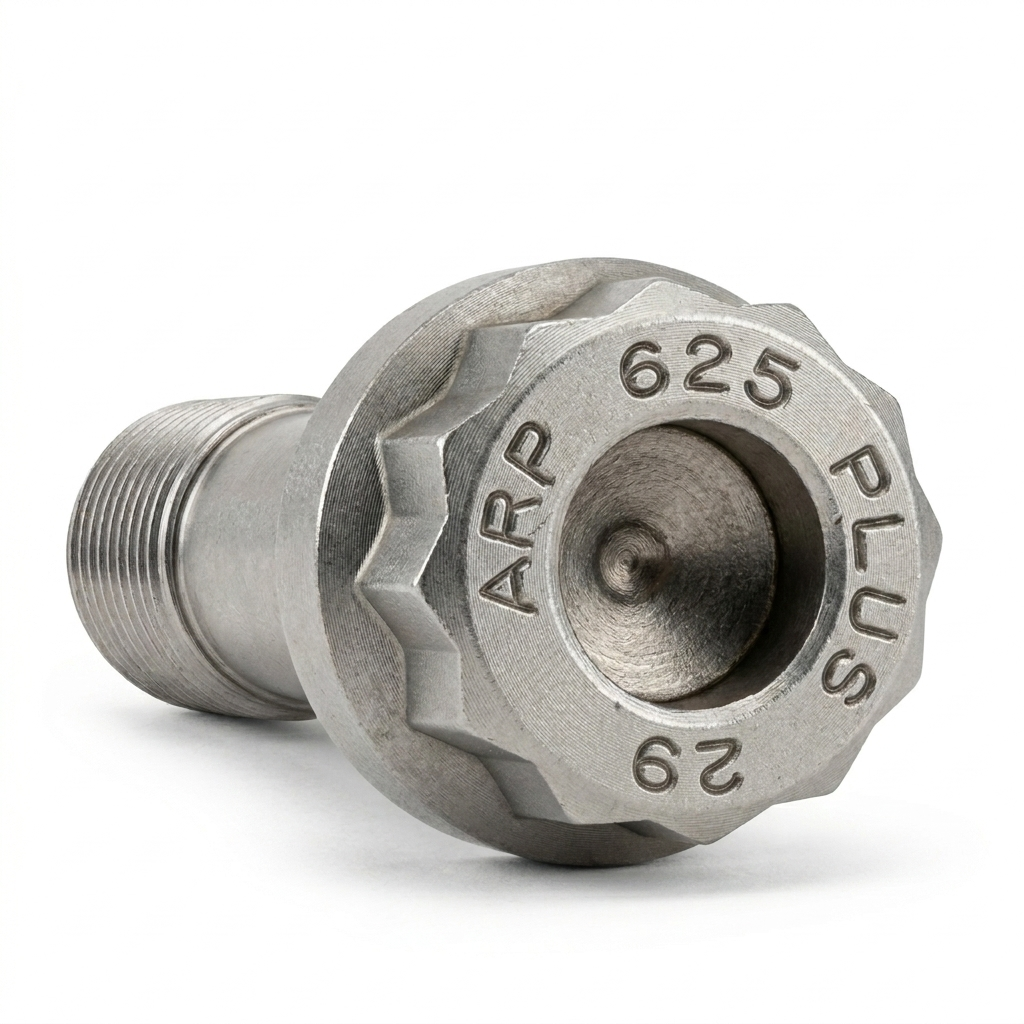 |
ARP CA625+ in 3/8" is ARP's top Custom Age maraging steel (about 260,000 to 280,000 psi), with extreme fatigue resistance. It is the bolt for the most violent builds, drag and records, for power beyond 250 hp per cylinder in 3/8" and above 10,000 rpm. |
Stretch measurement
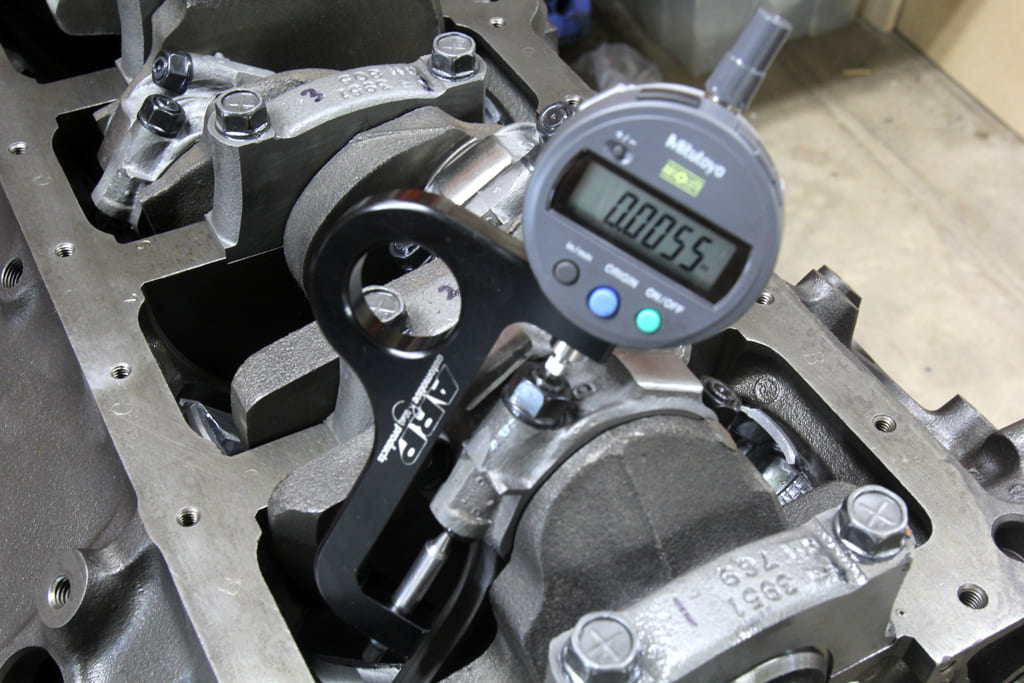
Discover the ARP stretch gauge
Available brands
 |
Boostline is the connecting-rod line of the American Wiseco group, whose history goes back to 1941. Its patented three-pocket shape borrows the stiffness of an I-beam and the strength of an H-beam: that is the I-3P chosen for the RB. Forged in 4340 steel and machined in the United States, it ships with ARP 2000 bolts, with an ARP Custom Age 625+ version for the hardest-worked engines. |
 |
Manley has been building forged rods in the United States since 1966. Its “Turbo Tuff” bodies are cut from vacuum-degassed aerospace-grade 4340 steel, shot-peened to delay crack initiation and inspected piece by piece. For the RB the choice is between the H profile and the I-HD profile, with ARP 2000 or ARP Custom Age 625+ bolts depending on the part number. |
 |
Wössner brings German machining discipline to the RB: a forged-steel rod in an I profile, held to tight dimensions, weighed then matched set by set before shipping, with ARP 2000 hardware. It is the choice for a carefully executed build, where consistent masses and traceable European production matter as much as raw strength. |
 |
ZRP is the catalogue’s Greek marque, born in Athens under Alex Drakos. Its RB rods start from forged 4340 steel and are then fully machined, with the set of six weight-matched to within ±1 g. Two architectures appear here: the I-HD profile and the H profile, each available with ARP 2000 or ARP L19 bolts. Development and final inspection take place in Greece, in a culture shaped by rallying, circuit racing and drift. |
Four forged competition rod makers are gathered on this reference: ZRP (Alex Drakos rods, Athens), Wössner, Boostline and Manley. Each offers several profiles and bolt grades, from a reliable entry-level kit to I-3P and Custom Age 625+ assemblies for extreme builds.
Glossary
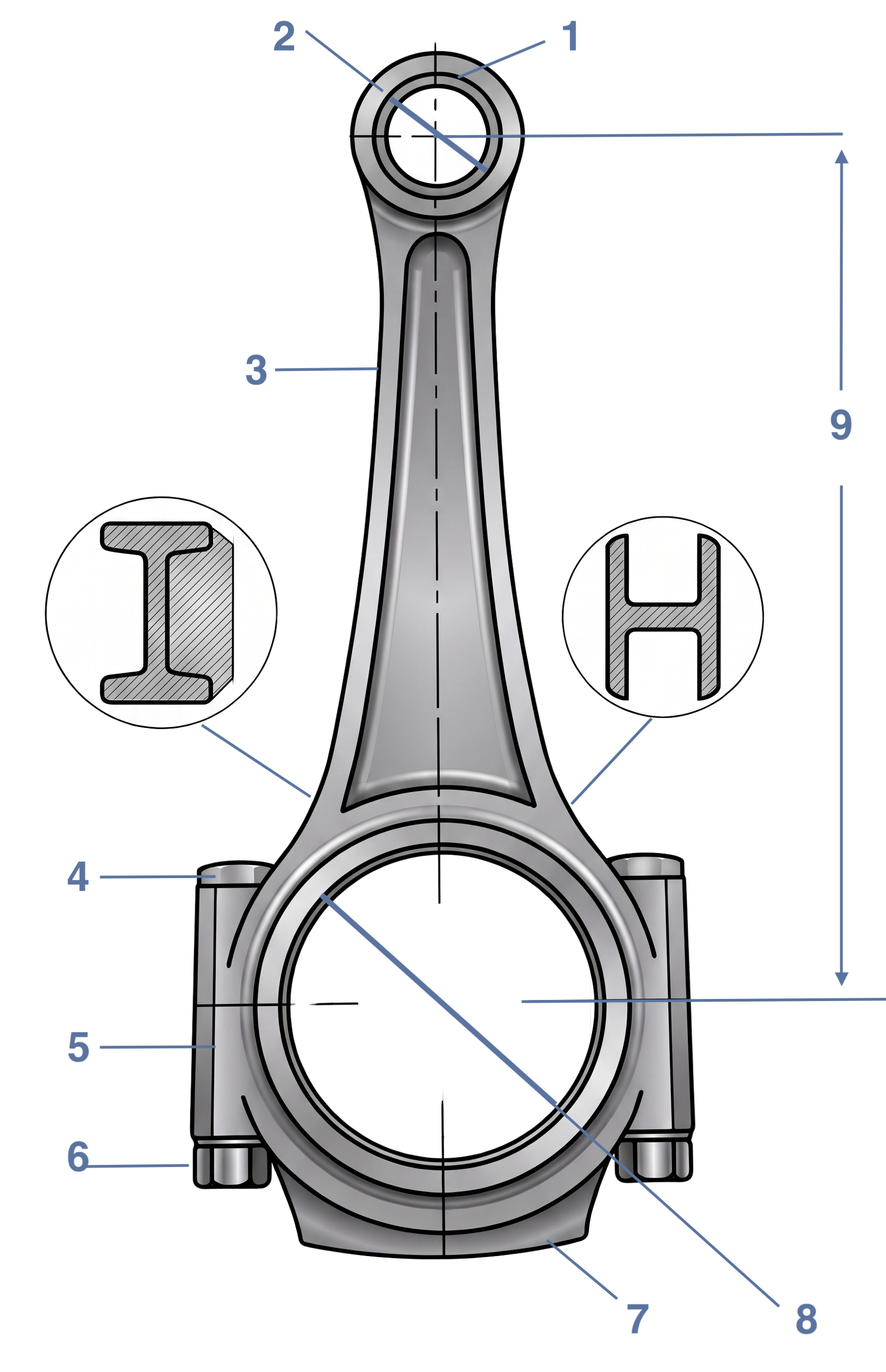 |
1) Small end 2) Small-end diameter 3) Rod beam 4) Rod bolt 5) Big end 6) Rod nut / bolt 7) Rod cap 8) Big-end diameter 9) Center-to-center |
Vehicle compatibility
Rods compatible with the following Nissan RB25DET and RB26DETT engines (21 mm piston pin):
| Brand | Model (chassis) | Engine code | Power | Years |
|---|---|---|---|---|
| Nissan | Skyline GT-R (R32 / BNR32) | RB26DETT | 206 kW (280 ch) | 1989 – 1993 |
| Nissan | Skyline GT-R (R33 / BCNR33) | RB26DETT | 206 kW (280 ch) | 1994 – 1999 |
| Nissan | Skyline GT-R (R34 / BNR34) | RB26DETT | 206 – 245 kW (280 – 333 ch) | 1999 – 2002 |
| Nissan | Stagea 260RS (WC34 / WGNC34) | RB26DETT | 206 kW (280 ch) | 1996 – 2001 |
| Nissan | Skyline GT-t (R34 / ER34) | RB25DET | 206 kW (280 ch) | 1998 – 2002 |
| Nissan | Skyline GTS-25t (R33 / ECR33) | RB25DET | 184 kW (250 ch) | 1994 – 2000 |
| Nissan | Laurel (C34 / C35) | RB25DET | 172 – 206 kW (234 – 280 ch) | 1993 – 2002 |
| Nissan | Stagea (WC34 / WGNC34) | RB25DET | 173 kW (235 ch) | 1996 – 2001 |
| Nissan | Cedric / Gloria (Y34) | RB25DET | 184 – 191 kW (250 – 260 ch) | 1999 – 2004 |
Why it is the most economical solution
Investing in a set of forged rods costs far less than an engine failure: on a built RB, an original rod that lets go destroys the block, crankshaft and head. By choosing weight-matched forged rods from the start, you make your build reliable for the long term and avoid a full rebuild, for a marginal extra cost compared with the price of a new engine.
-
Brand
-
ReferenceR-NIS-003-I
16 other products in the same category


Viewed products