Product successfully added to your shopping cart
Quantity
Total
There are 0 items in your cart. There is 1 item in your cart.
Total products
Total shipping To be determined
Total

2.3L 20v - B5234T
Manufacturers
2.3L 20v - B5234T
Warning: Last items in stock!
New product
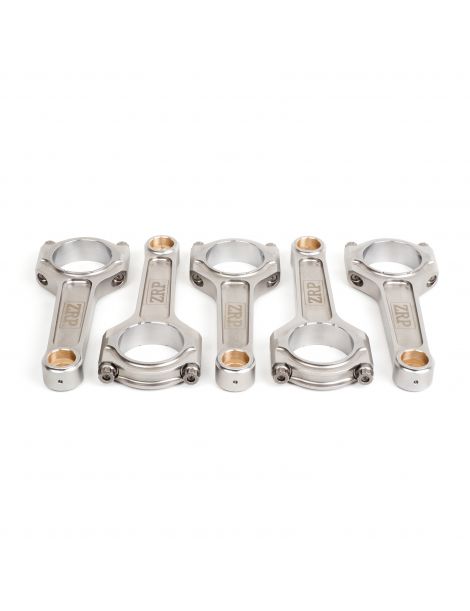
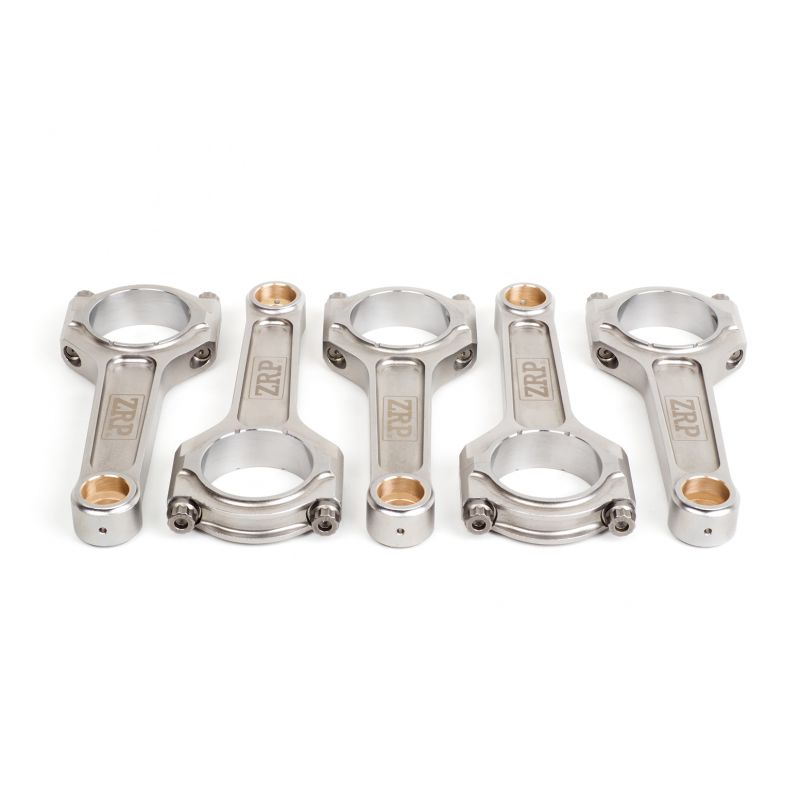
Set of 5 forged 4340 steel connecting rods for the Volvo B5234 white block 2.3 20v turbo (139.5 mm centre-to-centre).
The B5234 belongs to Volvo's white block family (modular engines), launched in the early 1990s to replace the long-serving red block. It is an all-aluminium 2.3-litre inline five (2,319 cc, 81 mm bore, 90 mm stroke) with four valves per cylinder and twin overhead camshafts. Light, compact and turbocharged, it powered Volvo's most potent T5 models between 1993 and 2000.
It appears in the 850 T5 and later in the S70, V70 and C70 T5, where, depending on the variant, it delivers from 215 to 250 hp and around 300 N·m of torque. Its reputation for reliability and its broad tuning headroom made it a benchmark for Swedish forced induction. Yet as soon as boost and cylinder pressure rise, the sintered factory rod quickly reaches its limit and becomes the weak link of the rotating assembly.
On the B5234T the stress has its own signature: the five-cylinder delivers massive torque from low down, so peak cylinder pressure arrives while engine speed is still moderate. The rod then works in pure compression, exactly the load case that bends a sintered part. Big-turbo builds, common on the 850 T5 and C70, stack that early torque with a raised rev limit: a forged set and ARP hardware become a prerequisite rather than an option.
Linking piston to crankshaft, the connecting rod turns reciprocating motion into rotation. On every revolution it faces tension, compression and bending loads that grow with engine speed, boost and transmitted torque. On a tuned B5234 these loads soon exceed what the original sintered rod was designed for, and a failed rod almost always destroys the block.
Forged from 4340 steel by hot stamping and then machined, these ZRP rods feature a grain flow that follows the part's shape, giving fatigue strength far above that of a sintered rod. Built to the original dimensions, 139.5 mm centre-to-centre, 23 mm pin, 53 mm big end, they fit without modification and preserve the five-cylinder's balance. Sorted to within ±1 g, they suit both naturally aspirated and turbo builds, from Stage 2 up to competition: circuit, hillclimb, drift, rally, drag and time attack. Combined with forged pistons, they form the basis of a rotating assembly able to withstand sustained high rpm and high cylinder pressure.
| Reference | Brand | Profile | Bolts | Pin Ø OEM 23 mm | Small-end width | Big-end Ø OEM n.p. | Big-end width | Centre-to-centre OEM 139.5 mm | Weight per rod |
|---|---|---|---|---|---|---|---|---|---|
| R-VOL-005-I-5 | ZRP | I | ARP 2000-3/8"-38mm | 23 mm | 53 mm | 25.65 mm | 139.5 mm | 531 g | |
| R-VOL-005-I-5-L19 | ZRP | I | ARP L19-3/8"-38mm | 23 mm | 53 mm | 25.65 mm | 139.5 mm | 531 g |
| Reference | Bolts | Torque | Recommended stretch |
|---|---|---|---|
| ZRP (R-VOL-005-I-5) | ARP 2000-3/8"-38mm | 61 N·m | 0.140 – 0.152 mm |
| ZRP (R-VOL-005-I-5-L19) | ARP L19-3/8"-38mm | 67.8 N·m | 0.152 – 0.165 mm |
A five-cylinder forces you to keep an order: ten bolts, five caps and no symmetry to rely on from memory. So the workshop numbers the rods one to five, runs the bolts down by hand to contact, then tightens cap by cap, reading the stretch of each bolt again before moving on. The fifth rod, often dealt with last and in a hurry, deserves the same attention as the first. The torque and stretch figures in the table are those specified by the bolt manufacturer, ARP 2000 or ARP L19 in 3/8" 38 mm depending on the variant, and must be followed scrupulously, the gauge stretch measurement serving as the reference.
| 4340 is a low-alloy steel containing nickel, chromium and molybdenum, used in aerospace for the most heavily loaded components. Forged, then quenched and tempered, it combines high mechanical strength with real ductility: it takes overloads and impacts by deforming rather than snapping, decisive behaviour for a part working alternately in tension and compression. Compared with the sintered metal fitted as standard, it offers around 19% more yield strength, 8% more tensile strength and 19 to 37% more fatigue resistance, which means a life under cyclic load several times longer. On a boosted five-cylinder such as the B5234T, which revs and holds those revs, that endurance matters more than peak strength alone: a rod does not fail because one load exceeded a limit, but because millions of cycles finally started a crack. The heat treatment therefore matters as much as the grade itself, and it is what sets the final level of the part. |
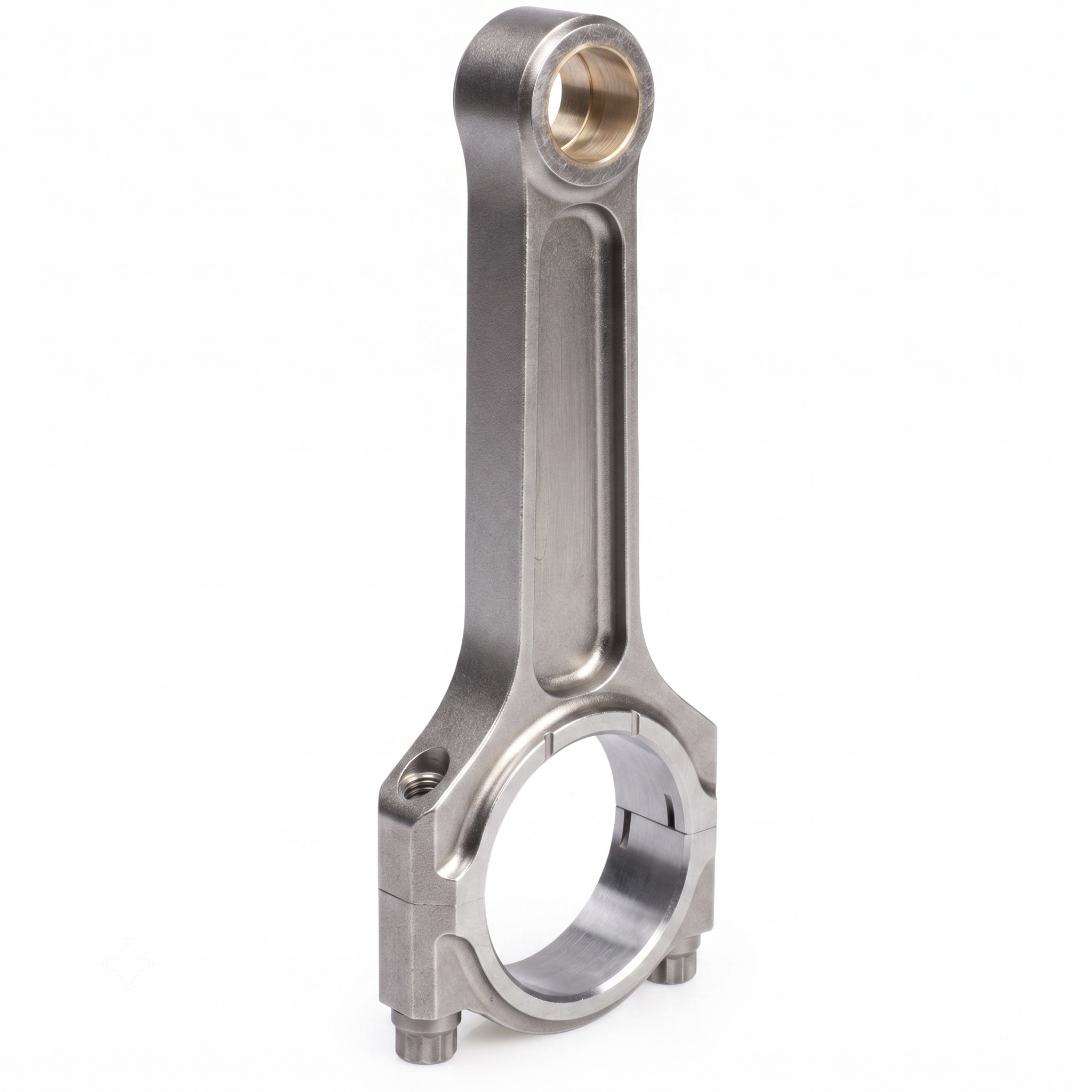 | I-beam profile: this is the section chosen for this application. The I-shaped body places material exactly where the loads act: it stays light, helping the engine pick up revs by reducing the rotating assembly's inertia, while remaining amply stiff for the B5234's power range. The best weight / strength compromise, in naturally aspirated as well as turbo builds. |
On this turbocharged five-cylinder, ten bolts hold the five caps: a single under-tensioned bolt is enough to make the bottom end the weak link. Consistency of preload therefore matters as much as the grade chosen. The work is done bolt by bolt: visual check of the thread and of the seat, cleaning and blowing out, assembly lubricant in a thin even film, tightening in three rising passes, then stretch measured with a dial gauge to confirm tension, with the ten readings written down. The two grades offered, ARP 2000 and ARP L19 in 3/8"-38 mm, are chosen according to boost pressure, operating engine speed and the safety margin wanted; each of them is detailed in the table below.
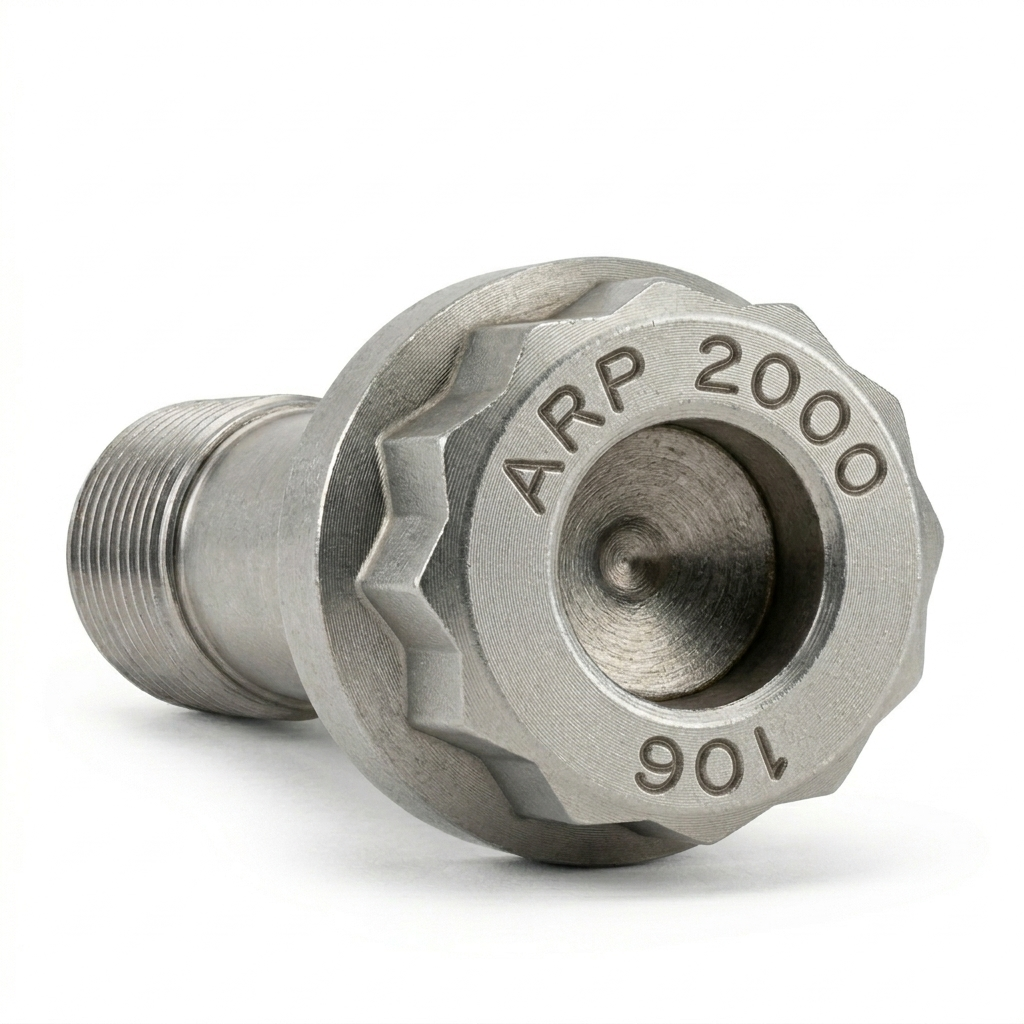 | ARP 2000: tensile strength of around 220,000 psi (~1,517 MPa). It handles up to 200 hp per cylinder in 3/8", for speeds up to 8,500 rpm. It is the benchmark high-performance bolt: robust, reliable and versatile, with no special storage requirement. Perfectly at home on circuit, trackday, drift, rally, drag and hillclimb. |
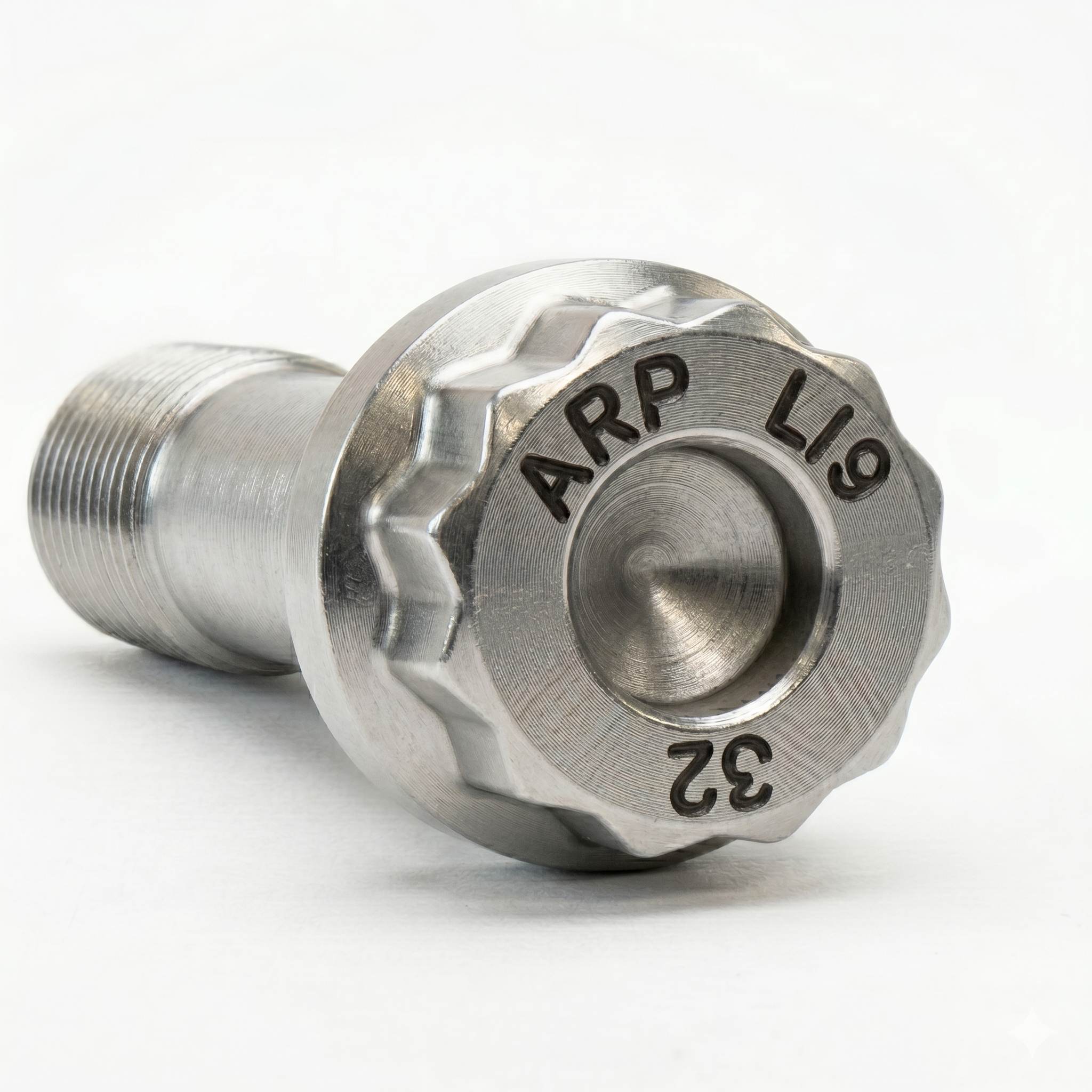 | ARP L19: tensile strength of about 260,000 psi (~1,793 MPa), i.e. 250 hp per cylinder in 3/8", up to 10,000 rpm. It targets engines pushed to the extreme: high boost, sustained high rpm and high cylinder pressure. It is the choice for big-power builds; this hydrogen-sensitive steel must be stored away from moisture. |
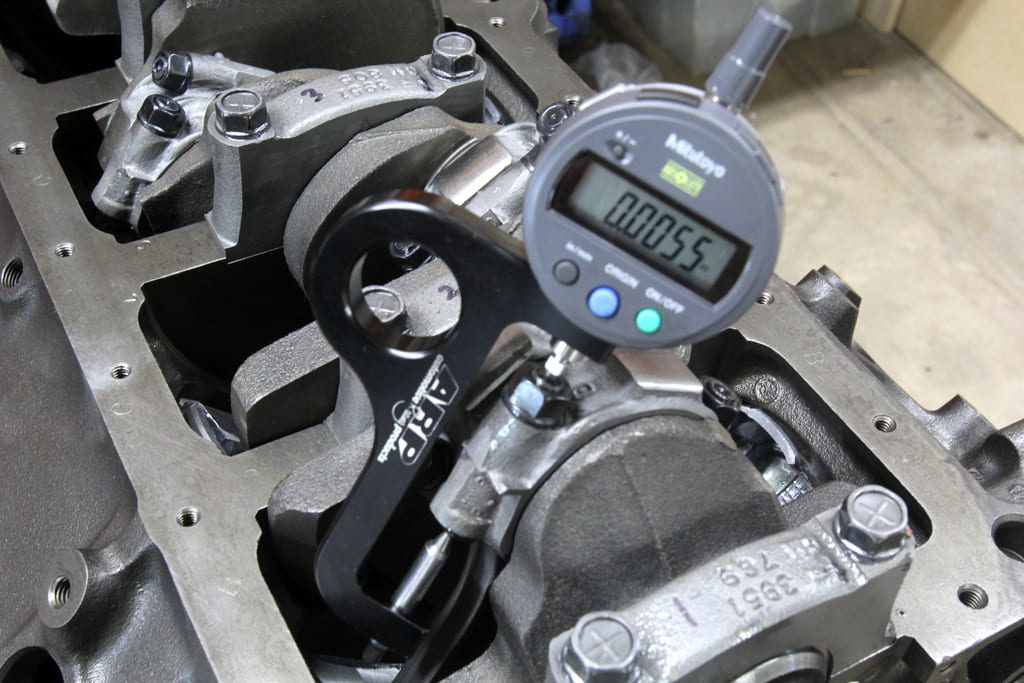
| Pre-loading by stretch is the most accurate way to tighten a rod bolt: instead of relying on torque alone, you measure the bolt's actual elongation once fitted, with a dial gauge. This removes friction-related scatter and gives an even pre-load across all five rods. Where the two disagree, the stretch value always takes precedence over torque: follow the ARP instructions supplied with the kit. |
 | ZRP: a Greek brand founded by Alex Drakos (Athens), specialising in high-performance forged rods. Each rod is forged from 4340 steel, precision-machined and then matched to within ±1 g to limit vibration and imbalance in the rotating assembly. Meticulous manufacturing, proven in competition (circuit, rally, drift, drag), offered here in an I-beam profile with ARP 2000 or ARP L19 bolts. |
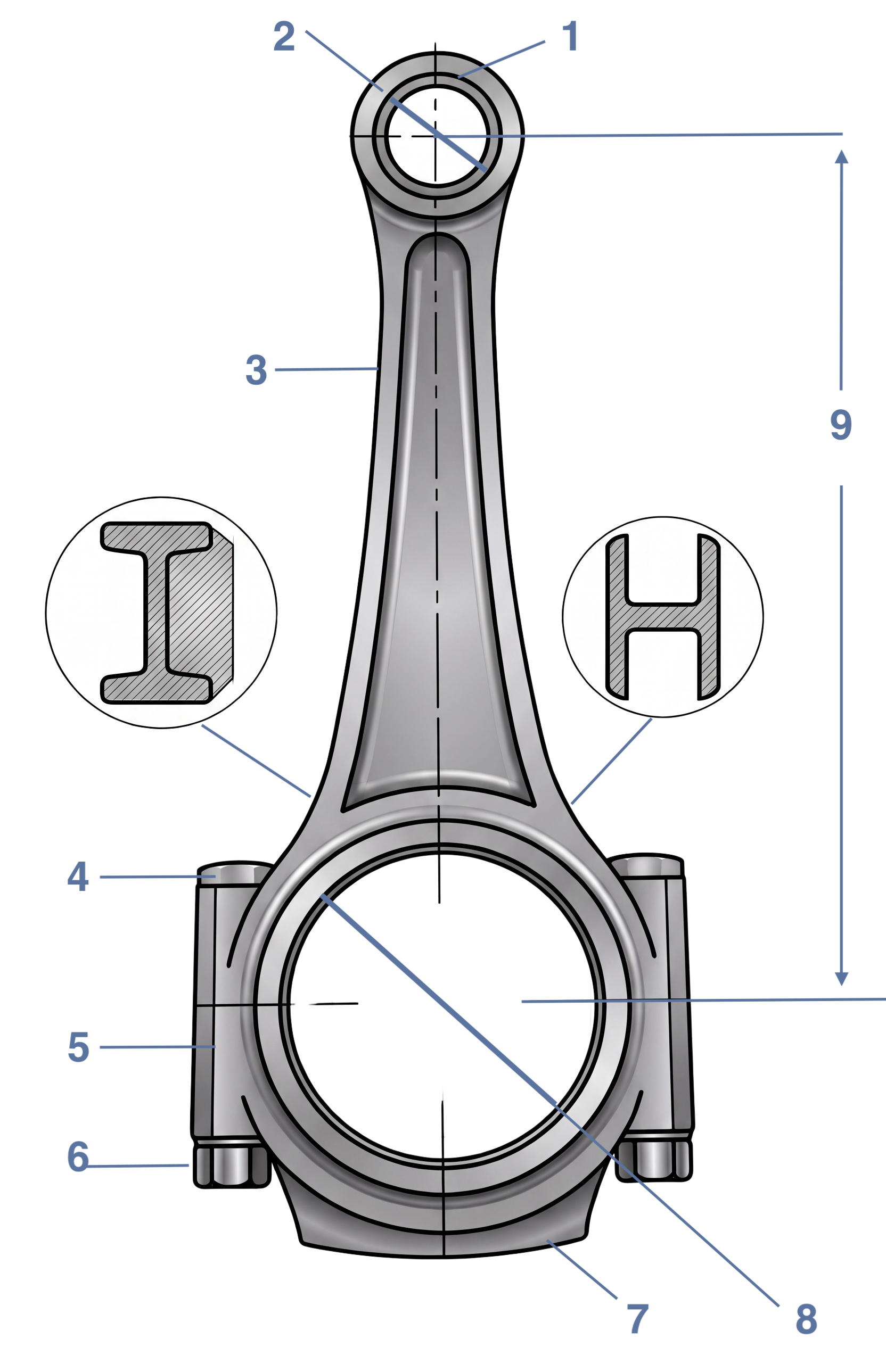 | 1) Small end 2) Small-end diameter 3) Rod beam 4) Rod bolt 5) Big end 6) Rod nut / bolt 7) Rod cap 8) Big-end diameter 9) Center-to-center |
The vehicles in the table below leave the factory with the Volvo 2.3L 20V Turbo B5234T engine. Confirm the piston pin diameter and the centre-to-centre length of your rods before placing an order. Variant concerned: 850 / C70 T5.
| Make | Model (chassis) | Engine code | Power | Years |
|---|---|---|---|---|
| Volvo | 850 / 850 T5 (854/855) | B5234T / T3 | 225 – 240 hp | 1993–1997 |
| Volvo | 850 T5-R / 850 R (854/855) | B5234T4 | 240 – 250 hp | 1995–1997 |
| Volvo | S70 / V70 T5 (P80) | B5234T3 | 240 hp | 1996–2000 |
| Volvo | C70 T5 (coupé / cabriolet) | B5234T3 | 240 hp | 1997–2005 |
OEM reference:
On a prepared B5234T, a broken standard rod almost never stops at the rod: it takes the block, the crankshaft and often the head with it, sometimes the turbocharger downstream. The result is either a complete replacement engine or a full rebuild, with boring, regrinding, gaskets and labour included.
The price of such a rebuild is far beyond that of a set of forged rods fitted as a precaution. Investing straight away in ZRP rods in 4340 steel, at the original 139.5 mm centre distance and with a 23 mm pin, puts the rotating assembly out of the equation and makes the next step realistic: more boost, more revs, without opening the bottom end again.
It is therefore the part that protects everything else, and the most profitable spend in a build meant to last: once, at the right moment, rather than twice in a hurry.