- In stock
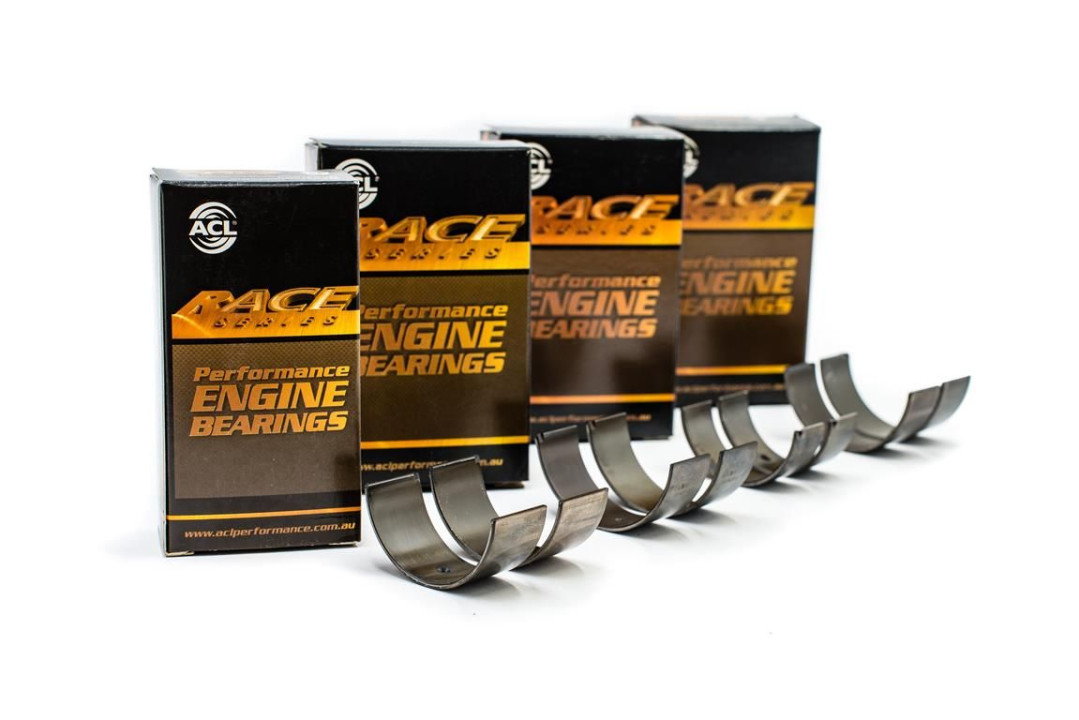
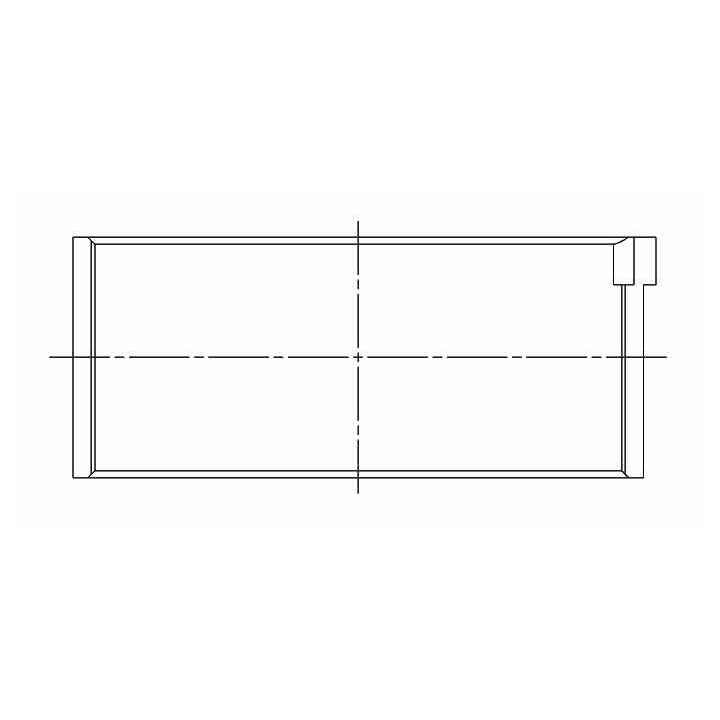


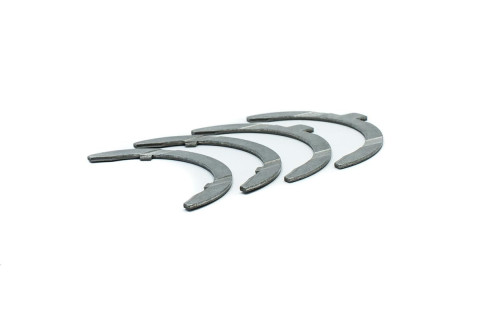
Trimetal connecting rod bearings 50 mm Peugeot Citroën XU9 XU10
Set of 8 trimetal connecting rod half-bearings for Peugeot and Citroën XU9, XU10 (Ø 50 mm).
- Brand and treatment: ACL Race, King Racing
- Compatibility: Peugeot 205, 305, 306, 309, 405, 406, 605, 806; Citroën BX, ZX, XM, Xantia, Evasion, Xsara
- Engine codes: XU9, XU10
- Available sizes: standard to +0.25 mm, increased-clearance version (HX / STDX)
The Peugeot and Citroën XU9 and XU10 four-cylinder engines
The XU9 (1.9 litre) and XU10 (2.0 litre) are in-line four-cylinder engines from Peugeot and Citroën, in 8-valve (XU92C, XU9JA, XU10J2 and derivatives) and 16-valve (XU9J4, XU10J4, XU10J4RS) versions, fitted to the Peugeot 205, 305, 306, 309, 405, 406, 605 and 806 and to the Citroën BX, ZX, XM, Xantia, Evasion and Xsara. ACL and King list the same bearing set for these engines: a single set covers the family.
From the factory, these engines are fitted with standard production connecting rod bearings, sized for the loads of the original engine: as soon as power, engine speed or boost pressure increase, they reach their limits.
Trimetal connecting rod bearings
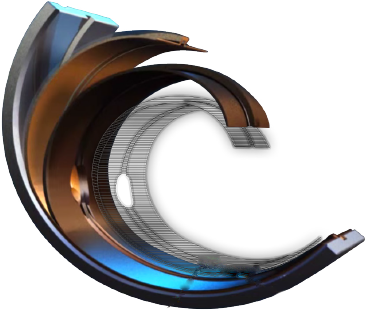
In a trimetal bearing, a steel back carries a copper-lead intermediate layer with high load capacity, itself covered by an anti-friction running layer that spares the crankpin. The set is supplied complete: 8 half shells, i.e. 4 pairs.
Trimetal targets high, sustained loads, whereas aluminium bi-metal is limited to low to medium loads: about 8,000 psi for the latter, up to 12,000 psi for a performance trimetal, 50% more. The benefit shows in strength and durability on turbo, supercharged and high-revving engines.
Technical specifications
| ACL / King bearings Crankpin Ø 49.984 / 50.000 mm Housing bore Ø 53.695 / 53.708 mm Width 20.2 / 20.25 mm |
| Reference | Brand and treatment | Size | Wall thickness (mm) |
|---|---|---|---|
| 4B7700H-STD | ACL Race - Untreated | Standard | 1.834 |
| 4B7700HX-STD | ACL Race - Untreated | Std, increased clearance (HX) | 1.820 |
| 4B7700H-.25 | ACL Race - Untreated | +0.25 | 1.959 |
| CR4602XP | King Racing - Untreated | Standard | 1.834 |
| CR4602XP STDX | King Racing - Untreated | Std, increased clearance (STDX) | 1.821 |
| CR4602XP0.25 | King Racing - Untreated | +0.25 | 1.961 |
Running clearance
Running clearance is the gap between the bearing and the crankpin, filled by the oil film.
While the engine turns, the crankpin floats on this oil film, which carries the load without direct contact with the bearing. Film thickness depends on clearance: too tight, oil passes poorly, temperature rises and the risk of seizure grows; too wide, oil escapes, the film carries less and oil pressure decreases. A correct clearance ensures both sufficient lubrication and a well-maintained film.
| Size / grade | When to choose it | ACL Race Series | King XP |
|---|---|---|---|
| Standard (STD) | Standard journal, not reground | 0.053 to 0.063 mm | 0.050 mm |
| Increased clearance (HX / STDX) | Wider clearance: high oil flow, high rpm | 0.078 to 0.088 mm | 0.075 mm |
| +0.25 mm | Journal reground to 0.25 mm | 0.053 to 0.063 mm | 0.050 mm |
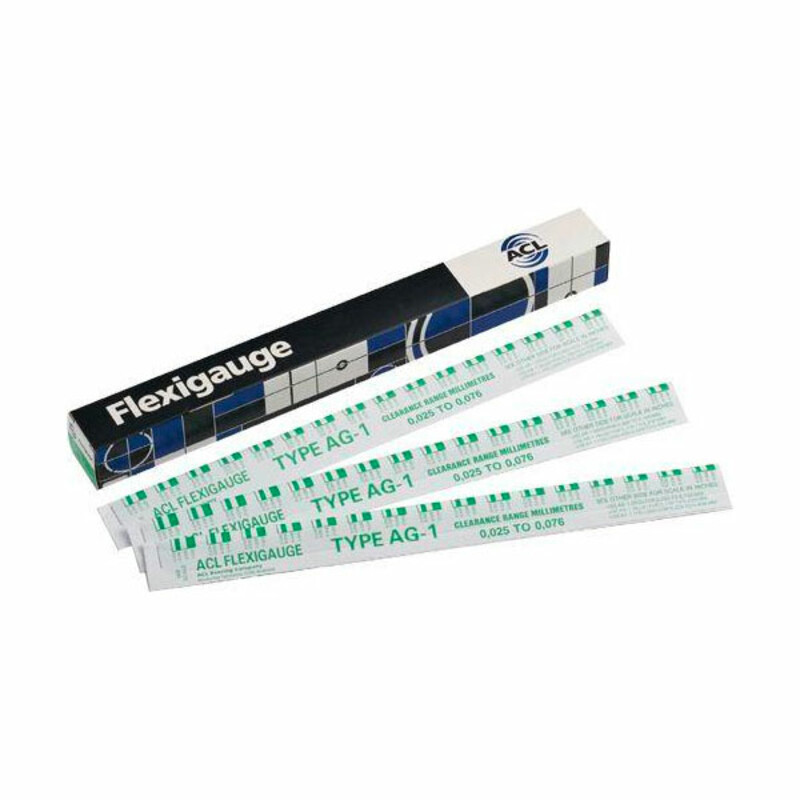
Checking on assembly: lay a calibrated strip (Plastigauge) on the journal, torque the rod cap to spec, then compare the crushed strip against the gauge to read the clearance.
Technical guide
These ACL and King trimetal connecting rod bearings are aimed at built engines and racing: where a standard bearing quickly reaches its limit, they accept more power, more rpm and more boost. The range includes the standard size, a +0.25 mm regrind size and the HX / STDX version with increased clearance for high-revving engines or engines needing a high oil flow. It allows the same part number to be kept after the crankshaft is reground and the clearance to be tailored to the oil used and the engine's duty.
The two brands
 |
An Australian specialist in high-performance engine bearings since 1949, ACL Bearing Company produces the Race Series: precisely made trimetal bearings, available in numerous sizes and recognised on built engines across the world. |
 |
Since the 1960s, Israel's King Engine Bearings has built high-performance engine bearings; its pMax Black trimetal alloy bearings are sized for heavy loads. |
Construction and advantages
| Criterion | ACL Race Series | King Racing |
| Cross-section | 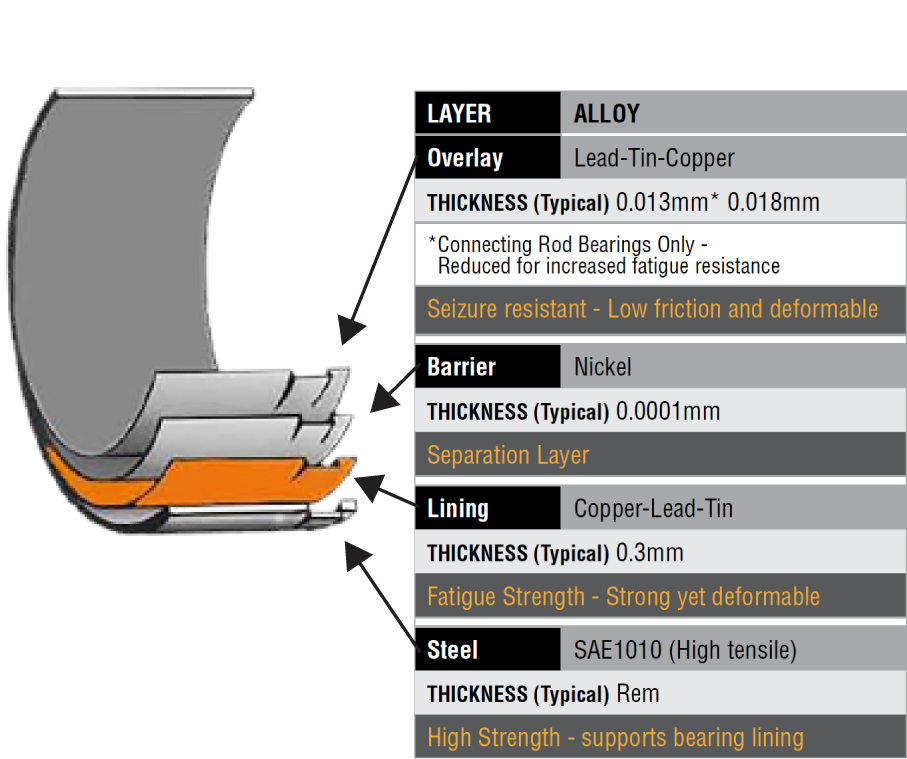 |
 |
| Type | High-performance trimetal bearing | High-performance trimetal bearing |
| Country of manufacture | Australia | Israel |
| Construction | Trimetal: steel back, copper layer, soft surface | Trimetal: steel back, copper layer, soft surface |
| Alloy | Race Series (copper-lead) | pMax Black (hardened copper-lead) |
| Protective coating | No | No |
| Available sizes | Standard to +0.25 mm (+ increased clearance HX) | Standard to +0.25 mm (+ increased clearance STDX) |
Vehicle compatibility
This connecting rod bearing set fits the XU9 and XU10 engines of the following Peugeot and Citroën models:
| Brand | Model (chassis) | Engine code | Power | Years |
|---|---|---|---|---|
| PEUGEOT | 205 I (741A/C) 1.9 GTI | XU9J1, XU9JA | 102–128 hp | 1986–1987 |
| PEUGEOT | 205 I Décapotable (741B, 20D) 1.9 / 1.9 CTI / 1.9 CTi | XU9J1, XU9JAZ | 101–125 hp | 1986–1994 |
| PEUGEOT | 205 II (20A/C) 1.9 / 1.9 GTI / 1.9 GTI Cat | XU92C, XU9J1, XU9JA, XU9JAZ | 102–131 hp | 1987–1998 |
| PEUGEOT | 305 II (581M) 1.9 | XU9J1, XU9S | 98–102 hp | 1982–1988 |
| PEUGEOT | 305 II Break (581E) 1.9 | XU9J1, XU9S | 98–102 hp | 1984–1988 |
| PEUGEOT | 309 I (10C, 10A) 1.9 / 1.9 GTI | XU9J1, XU9JA, XU9JAZ, XU9M, XU9S | 98–131 hp | 1985–1989 |
| PEUGEOT | 309 II (3C, 3A) 1.9 / 1.9 GTI / 1.9 GTI 16V | XU9J1, XU9J4, XU9J4Z, XU9JA, XU9JAZ, XU9M | 98–158 hp | 1989–1993 |
| PEUGEOT | 405 I (15B) 1.9 / 1.9 (15BDFV) / 1.9 4x4 / 1.9 Injection / 1.9 Injection 4x4 / 1.9 SPort MI-16 4x4 / 1.9 Sport MI-16 | XU92C, XU9J1, XU9J2, XU9J4, XU9J4Z, XU9JAZ, XU9M | 95–158 hp | 1987–1993 |
| PEUGEOT | 405 I Break (15E) 1.9 / 1.9 4x4 / 1.9 AWD | XU92C, XU9J1, XU9J4, XU9JAZ, XU9M | 95–158 hp | 1987–1992 |
| PEUGEOT | 405 II (4B) 1.9 / 1.9 (4BD5A2) / 2.0 / 2.0 16V / 2.0 MI-16 / 2.0 T 16 X4 / 2.0 X4 | XU10J2, XU10J4, XU10J4TE/Z, XU10J4Z, XU92C, XU9JAZ | 97–196 hp | 1992–1999 |
| PEUGEOT | 405 II Break (4E) 1.9 / 2.0 / 2.0 4x4 | XU10J2, XU10J4TE/Z, XU92C, XU9J2 | 107–196 hp | 1992–1997 |
| PEUGEOT | 605 (6B) 2.0 / 2.0 16V / 2.0 16V (6BRFV2, 6BRFV9) / 2.0 Turbo | XU102C, XU10J2, XU10J2TE, XU10J2Z, XU10J4R, XU10MZ | 107–147 hp | 1989–1999 |
| PEUGEOT | 306 (7B, N3, N5) 2.0 / 2.0 S16 / 2.0 ST | XU10J2, XU10J4, XU10J4R, XU10J4Z | 121–152 hp | 1994–2001 |
| PEUGEOT | 306 Berline à hayon (7A, 7C, N3, N5) 2.0 / 2.0 16V / 2.0 S16 / 2.0 XSi | XU10J2, XU10J4, XU10J4R, XU10J4RS, XU10J4Z | 121–169 hp | 1993–2001 |
| PEUGEOT | 306 Break (7E, N3, N5) 2.0 / 2.0 16V | XU10J4R | 132–135 hp | 1997–2002 |
| PEUGEOT | 306 Décapotable (7D, N3, N5) 2.0 / 2.0 16V | XU10J2, XU10J4R | 121–135 hp | 1994–2002 |
| PEUGEOT | 406 (8B) 2.0 / 2.0 16V / 2.0 Turbo | XU10J2TE, XU10J4R | 132–147 hp | 1995–2004 |
| PEUGEOT | 406 Break (8E/F) 2.0 / 2.0 16V / 2.0 Turbo | XU10J2TE, XU10J4R | 132–147 hp | 1996–2004 |
| PEUGEOT | 406 Coupé (8C) 2.0 16V | XU10J4R | 132–136 hp | 1997–2004 |
| PEUGEOT | 806 (221) 2.0 / 2.0 16V / 2.0 Turbo | XU10J2, XU10J2TE, XU10J4R | 121–147 hp | 1994–2002 |
| CITROËN | BX (XB-_) 1.9 / 1.9 GTi (XB) / 19 / 19 E / 19 GTi / 19 GTi 16V / 19 GTi 4x4 | XU92C, XU9J2, XU9J4, XU9JA, XU9M | 95–160 hp | 1984–1994 |
| CITROËN | BX Break (XB-_) 1.9 TZi / 19 / 19 4x4 / 19 Cat | XU92C, XU9J1, XU9J2, XU9JA, XU9M | 95–125 hp | 1986–1994 |
| CITROËN | EVASION Monospace (22, U6) 2.0 / 2.0 16V / 2.0 Turbo C.T. | XU10J2/C, XU10J2TE, XU10J4R | 121–147 hp | 1994–2002 |
| CITROËN | XANTIA (X1_, X2_) 2.0 / 2.0 16V / 2.0 Turbo / 2.0 i / 2.0 i 16V | XU10J2C, XU10J2C/Z L3, XU10J2TE, XU10J4/Z, XU10J4R | 121–157 hp | 1993–2003 |
| CITROËN | XANTIA Break (X1_, X2_) 2.0 Turbo / 2.0 i / 2.0 i 16V | XU10J2C, XU10J2TE, XU10J4R | 121–147 hp | 1995–2003 |
| CITROËN | XM (Y3) 2.0 i / 2.0 i Turbo | XU10J2, XU10J2TE/Z, XU10J4R, XU10MZ | 107–141 hp | 1989–1994 |
| CITROËN | XM Break (Y3) 2.0 Turbo / 2.0 i / 2.0 i (Y3A) | XU102C, XU10J2, XU10J2TE/Z, XU10MZ | 107–141 hp | 1991–1994 |
| CITROËN | XM (Y4) 2.0 / 2.0 Turbo / 2.0 i 16V | XU10J2, XU10J2TE, XU10J4R | 121–147 hp | 1994–2000 |
| CITROËN | XM Break (Y4) 2.0 / 2.0 Turbo / 2.0 i 16V | XU10J2, XU10J2TE, XU10J2TE/Z, XU10J4R | 121–147 hp | 1994–2000 |
| CITROËN | XSARA (N1) 2.0 16V | XU10J4R | 132 hp | 1998–2000 |
| CITROËN | XSARA Break (N2) 2.0 16V | XU10J4R | 132 hp | 1998–2000 |
| CITROËN | XSARA Coupé (N0) 2.0 / 2.0 16V / 2.0 VTS / 2.0 i 16V | XU10J4R, XU10J4RS | 132–167 hp | 1998–2005 |
| CITROËN | ZX (N2) 1.9 / 1.9 i / 2.0 / 2.0 i / 2.0 i 16V | XU10J2C, XU10J4/Z, XU10J4RS, XU9JA | 120–166 hp | 1991–1997 |
| CITROËN | ZX Break (N2) 2.0 | XU10J2C/Z L3 | 121 hp | 1993–1995 |
Why replace the bearings
Replacing the bearings during a build or rebuild guards against the most expensive failure: a worn-out connecting rod bearing scores the crankpin, contaminates the oil circuit with debris and forces at least a crankshaft regrind, or even a new rod and block. Against such costs a new set weighs little: it is the cheapest part of the rotating assembly, but the one whose failure costs the most.
-
Brand
-
Reference4B7700HX-STD
12 other products in the same category
Viewed products