Product successfully added to your shopping cart
Quantity
Total
There are 0 items in your cart. There is 1 item in your cart.
Total products
Total shipping To be determined
Total

2.0L 16v - G4KF
Manufacturers
2.0L 16v - G4KF
 View larger
 Warning: Last items in stock!
New product
Set of 4 forged 4340 and EN24T steel connecting rods for Hyundai 2.0L 16V Turbo G4KF / G4KH.
The 2.0-litre turbo of the Theta II family powers two sporty generations of the Korean brand: the G4KF of the Genesis Coupe (2009–2016) and the twin-scroll G4KH that drives the i30 N and the more recent T-GDi saloons. Four inline cylinders, direct injection and forced induction give it generous torque from low revs.
These engines respond very well to tuning: higher boost, remapping and larger injectors quickly raise the power. The factory rod, forged but sized for series production, then becomes the weak link as soon as power is held well above stock.
A forged rod is shaped under press from a heated steel billet, which aligns the grain flow of the metal and gives it far greater strength than a cast part. The result is a component able to withstand high tensile and compressive loads without deforming.
On a tuned engine, replacing the series rods with forged rods clearly pushes back the mechanical failure threshold. It is essential insurance for running safely with increased boost and engine speed.
On the 2.0 Turbo Theta II they quickly prove essential: forged pistons, higher rpm, increased boost pressure or a displacement gain push the standard rod beyond what it can handle. Sized for the heavy loads of built engines, whether turbocharged or supercharged, these rods answer every discipline (rally, drift, drag, circuit and track days, hillclimb, time attack) and support Stage 2, Stage 3 and Stage 4+ builds, all the way to the competition engine.
| Reference | Brand | Profile | Bolts | Pin diameter OEM 22 mm | Small-end width | Big-end diameter OEM 51 mm | Big-end width | Center-to-center OEM 146 mm | Weight per rod |
|---|---|---|---|---|---|---|---|---|---|
| R-HYU-EN24T-002-I | ZRP | I | ARP 2000-3/8"-38mm | 22 mm | 51 mm | 21,86 mm | 146,28 mm | 512 g | |
| R-HYU-EN24T-002-I-L19 | ZRP | I | ARP L19-3/8"-38mm | 22 mm | 51 mm | 21,86 mm | 146,28 mm | 512 g | |
| 14410-4 | Manley | I-HD | ARP 2000-3/8"-38mm | 22 mm | 51 mm | 21,84 mm | 146,13 mm | 630 g |
| Rod | Bolts | Torque | Recommended stretch |
|---|---|---|---|
| ZRP (R-HYU-EN24T-002-I) | ARP 2000 | 61 N·m | 0,140 – 0,152 mm |
| ZRP (R-HYU-EN24T-002-I-L19) | ARP L19 | 67,8 N·m | 0,152 – 0,165 mm |
| Manley (14410-4) | ARP 2000 | 81,3 N·m | 0,147 – 0,157 mm |
Values provided by the bolt manufacturer. Tightening must follow the stretch-gauge method, which always takes precedence over torque alone.
| Steel 4340 is a nickel-chromium-molybdenum alloy used in aerospace as well as motorsport. Forged then heat-treated by quench and temper, it combines high tensile strength, excellent fatigue life and genuine ductility. Compared with a standard rod, usually made of sintered metal optimised for production cost, a forged 4340 rod gains around +19% yield strength, +8% tensile strength and above all +19 to +37% fatigue resistance, meaning a cyclic-load service life several times longer. That is why forged 4340 remains the reference material as soon as boost and rpm rise. |
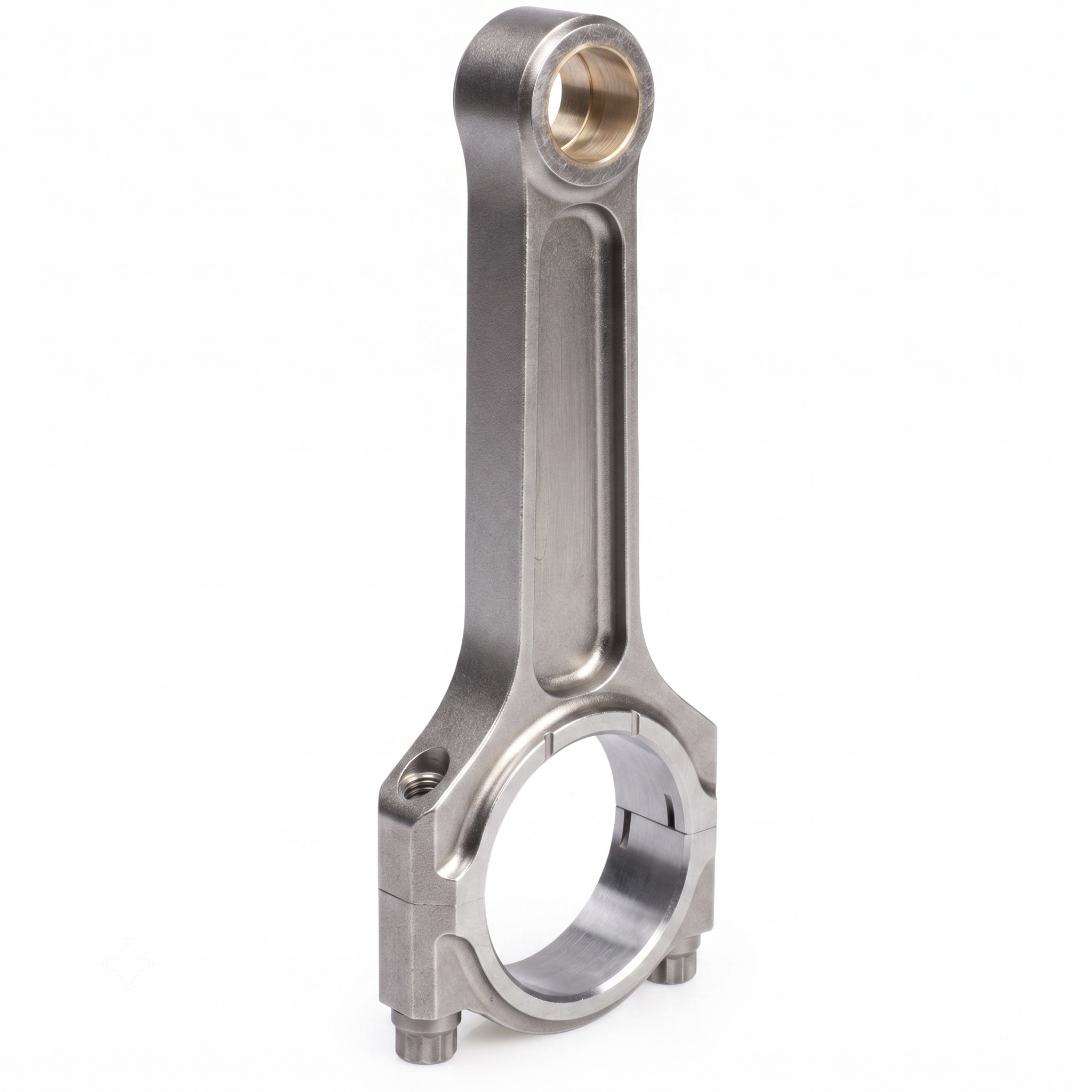 | I-beam profile. With its thinner central section, the I-beam rod is lighter: less inertia and freer rev pick-up. It is the preferred profile on modern turbo engines like the Theta II 2.0T. Its I-HD (Heavy Duty) version is a reinforced variant, designed for higher loads. |
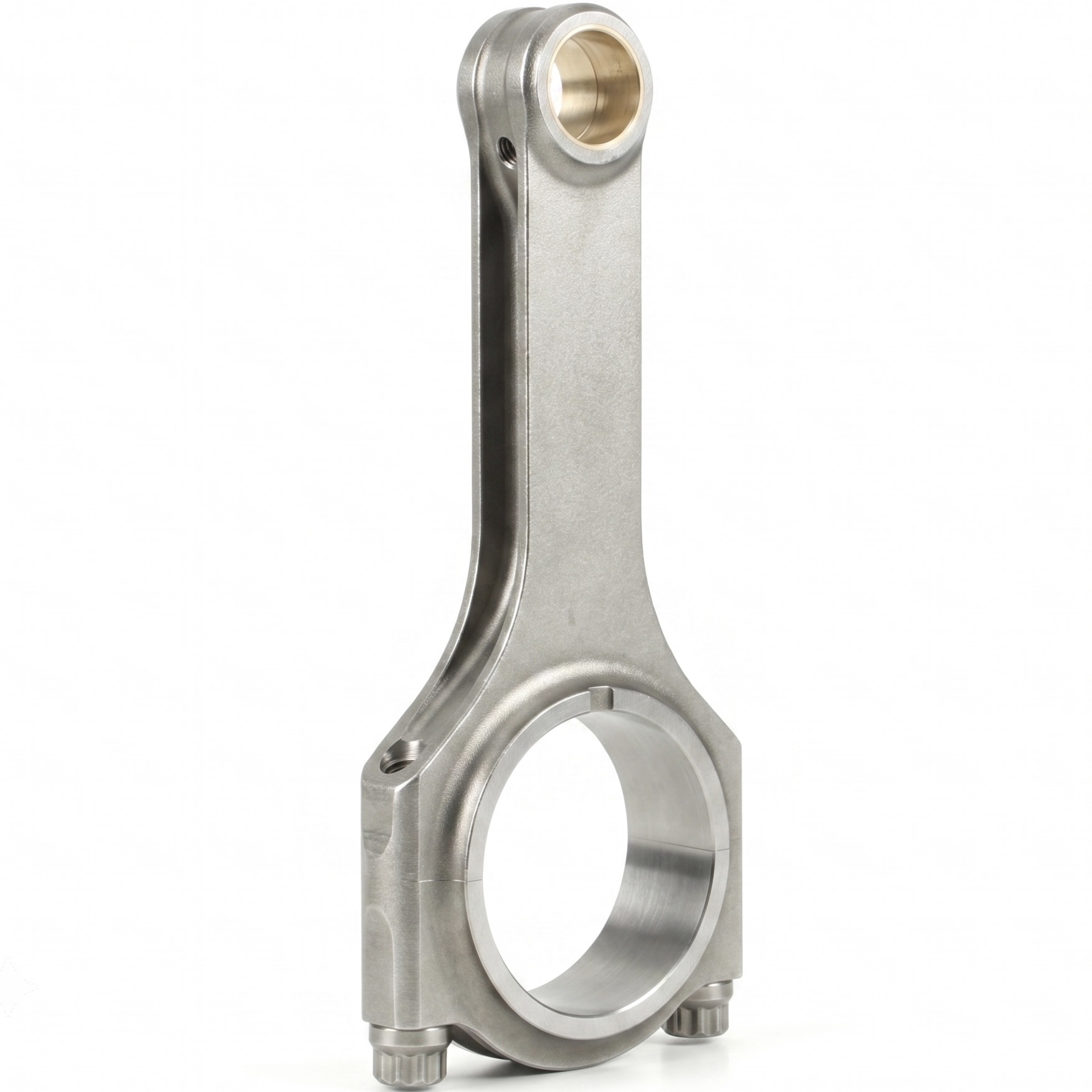 | H-beam profile. “H”-shaped section offering great rigidity and excellent resistance to bending and compression. Slightly heavier than an I-beam, it favours strength: the choice for high-torque engines, large displacements and drag. On a torque-oriented, reliability-focused Theta II 2.0T, it is a safe bet. |
The rod bolt is the most stressed part of the assembly. ARP2000 bolts amply cover the needs of common builds. The ARP L19 grade, with a higher yield strength, is recommended for extreme power and sustained high revs; it is, however, more sensitive to corrosion and requires particular installation care.
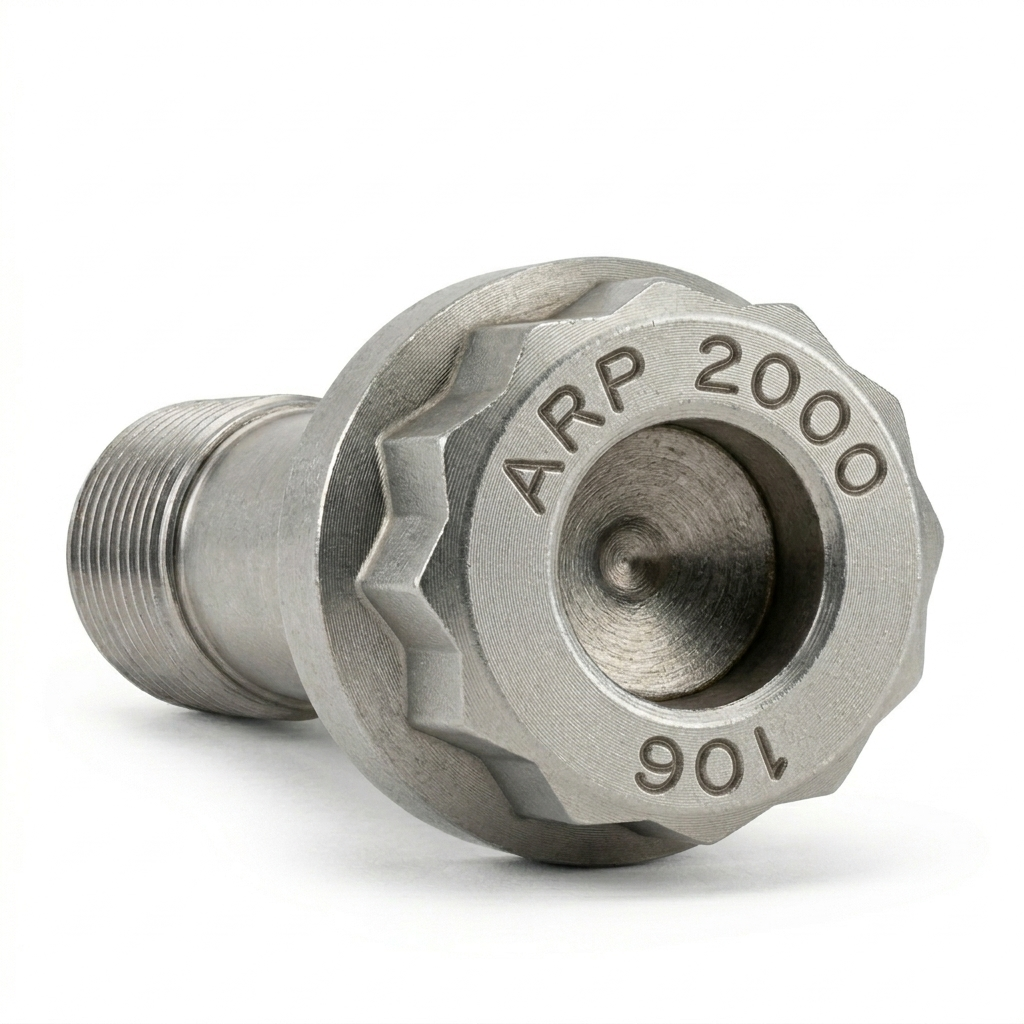 | ARP 2000 (tensile strength ~220,000 psi, i.e. ~1,517 MPa) is the high-performance standard. Suited to builds up to 150 hp per cylinder with 5/16" bolts or 200 hp per cylinder with 3/8" bolts, and up to 8,500 rpm, it is the most common grade in circuit, track days, drift, rally, drag and hillclimb, recognised for its strength, reliability and versatility, with no particular storage constraints. |
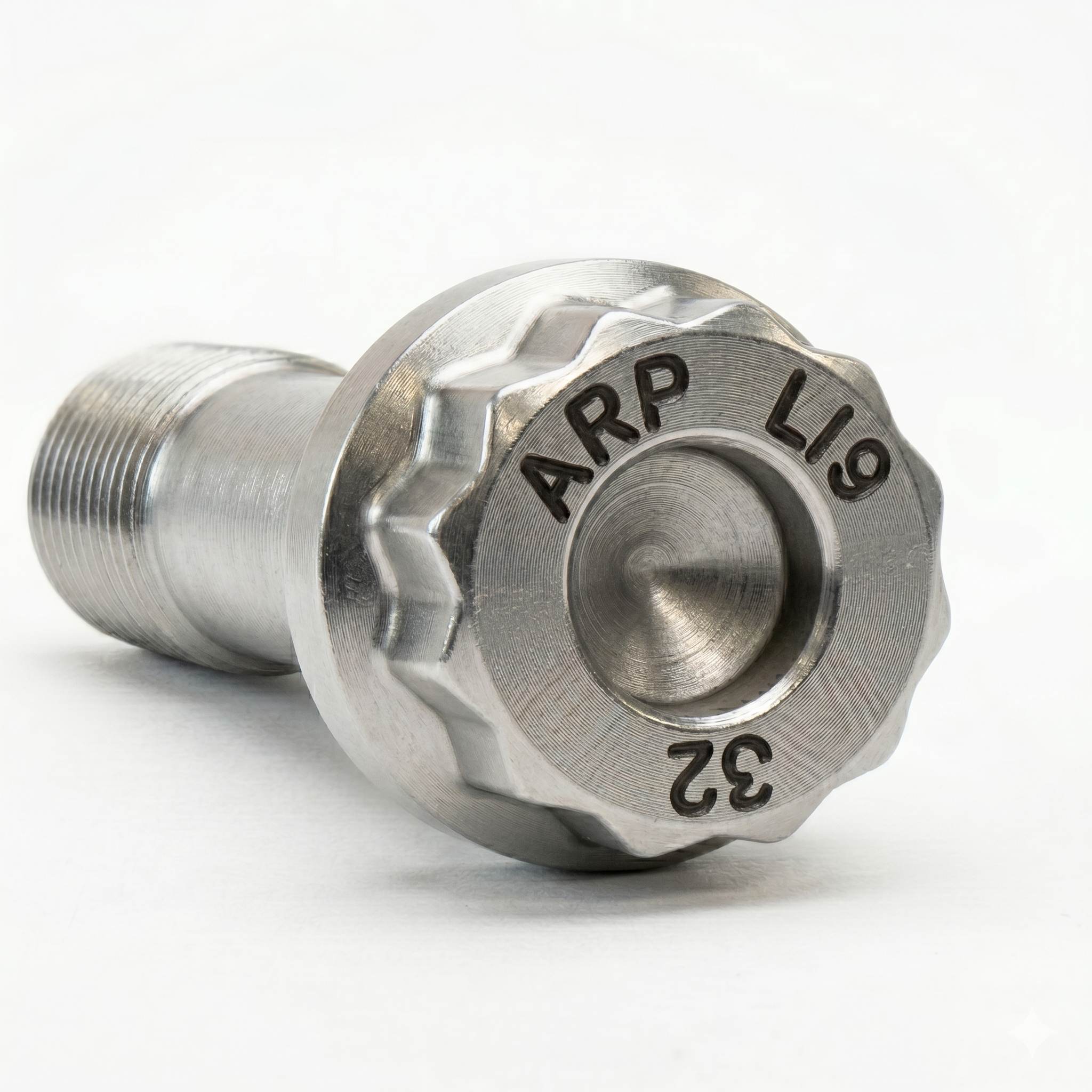 | L19 (tensile strength ~260,000 psi, i.e. ~1,793 MPa) is designed for engines pushed to the extreme, up to 200 hp per cylinder with 5/16" bolts or 250 hp per cylinder with 3/8" bolts, and up to 10,000 rpm: very high boost pressure, sustained high rpm and high cylinder pressure. It is the choice for big-power builds: drag racing, drift, rally and circuit use. Caution: sensitive to corrosion and hydrogen embrittlement, it must always be stored and fitted oiled, away from moisture. |
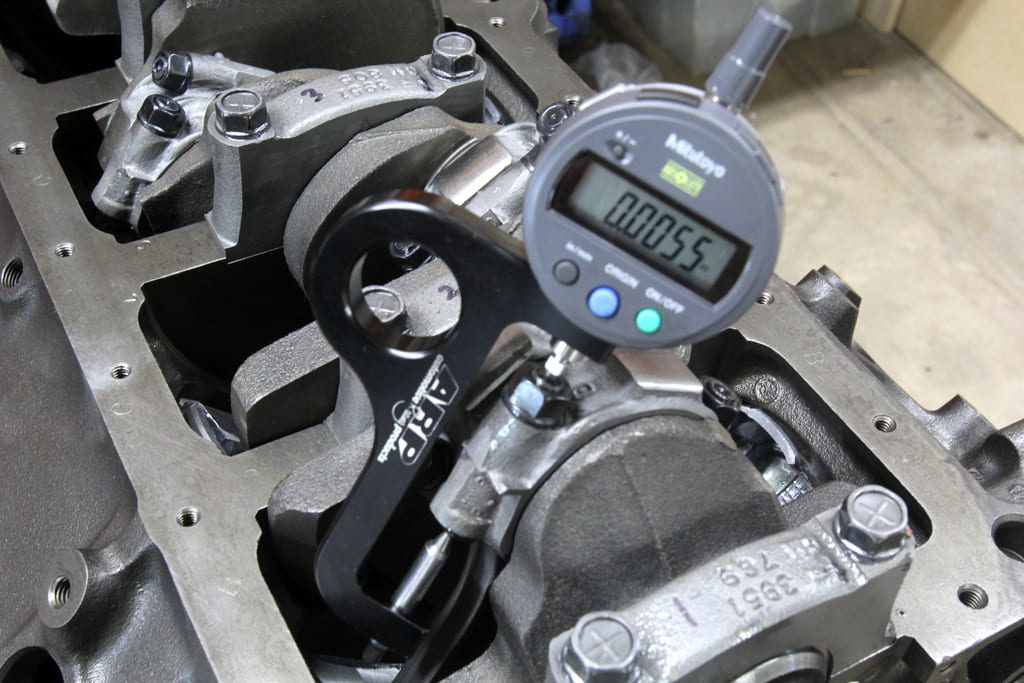
| On demanding builds, tightening with a stretch gauge is more accurate than a simple torque setting: it guarantees a uniform and reliable bolt tension, independent of thread friction. |
 | ZRP, a Greek brand of high-performance forged connecting rods, designed by Alex Drakos in Athens. Each rod is forged from 4340 steel, precision-machined and balanced to ±1 g to stay reliable at high rpm. Available in I-beam or H-beam profile with ARP 2000 or L19 bolts, they are designed and inspected in Greece, and proven in rally, on circuit and in drift. |
 | MANLEY, an American forged connecting rod manufacturer since 1966. Machined from vacuum-degassed aerospace-grade 4340 steel, shot-peened and inspected one by one, its “Turbo Tuff” rods come in H-beam and I-beam profiles, with ARP 2000 bolts. A major name in engine building, from street to competition. |
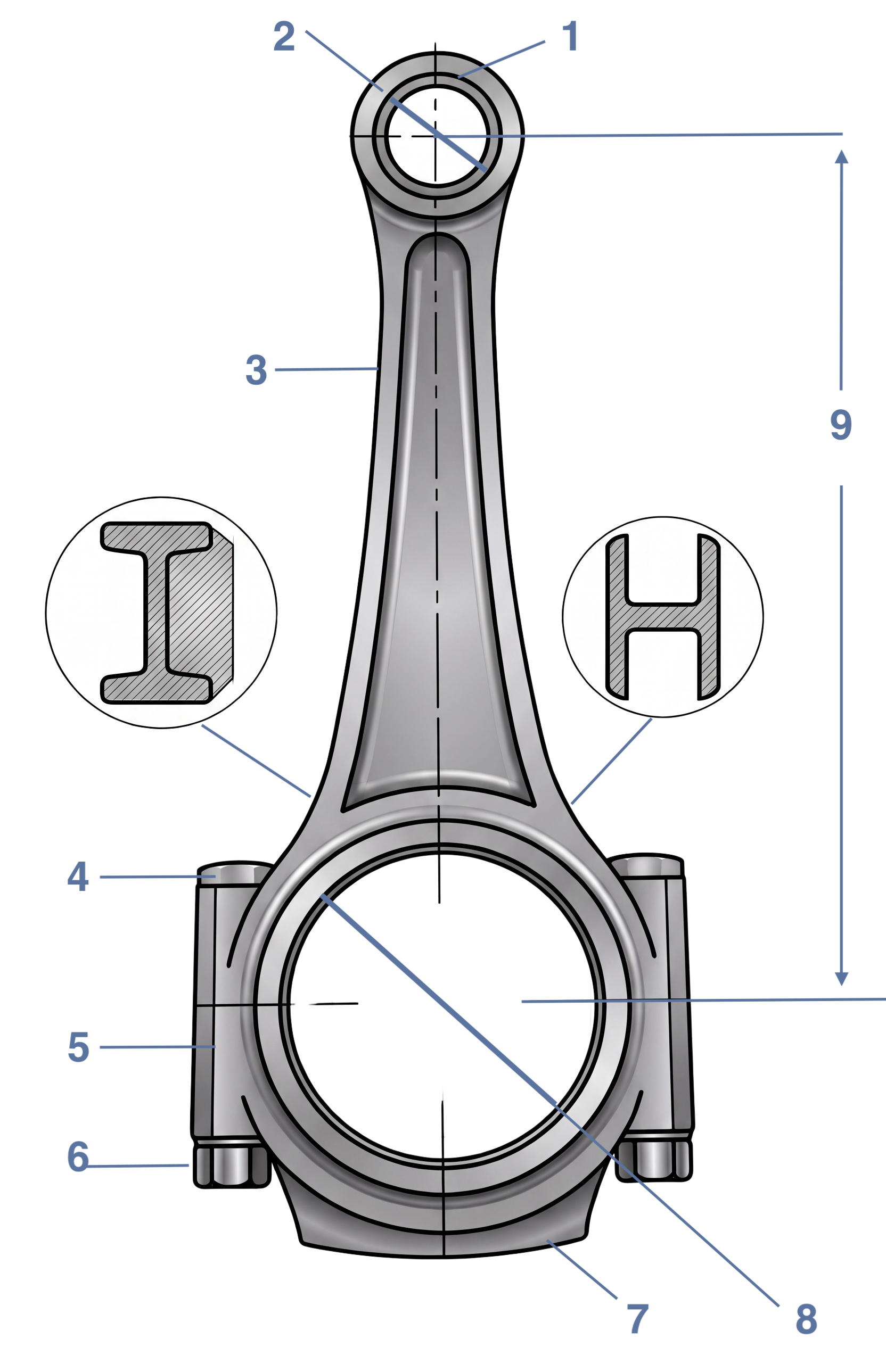 | 1) Small end 2) Small-end diameter 3) Rod beam 4) Rod bolt 5) Big end 6) Rod nut / bolt 7) Rod cap 8) Big-end diameter 9) Center-to-center |
These rods are designed for Hyundai 2.0 Turbo Theta II engines fitted notably to:
| Brand | Model (chassis) | Engine code | Power | Years |
|---|---|---|---|---|
| Hyundai | Genesis Coupe 2.0 Turbo | G4KF | 2009–2016 | |
| Hyundai | i30 N | G4KH | 2017–présent | |
| Hyundai | Sonata 2.0 T-GDi | G4KH | ||
| Hyundai | Santa Fe 2.0 T-GDi | G4KH | ||
| Kia | Optima 2.0 T-GDi | G4KH | ||
| Kia | Sportage 2.0 T-GDi | G4KH |
Associated OEM rod references: 23510-2C400, 23510-2G440, 23510-2G430.
Reinforcing the bottom end should not drain your tuning budget. By combining the ZRP and Manley options under a single listing, you pick the bolt grade and the brand that match your project, from a road turbo build to competition, with no needless extra cost.
On the Hyundai 2.0T Theta (G4KF / G4KH), turning up the boost eventually pushes the stock connecting rods past their limit: when a rod bends or breaks it usually takes the piston with it and damages the block. Rebuilding a wrecked engine costs far more than preventing the failure beforehand.
For a contained budget, ZRP or Manley forged 4340 connecting rods secure the build and handle high power without breaking. Investing in stronger rods instead of gambling on the block protects the engine, adds longevity and leaves headroom to make more power: by far the most cost-effective solution in the long run.