- In stock
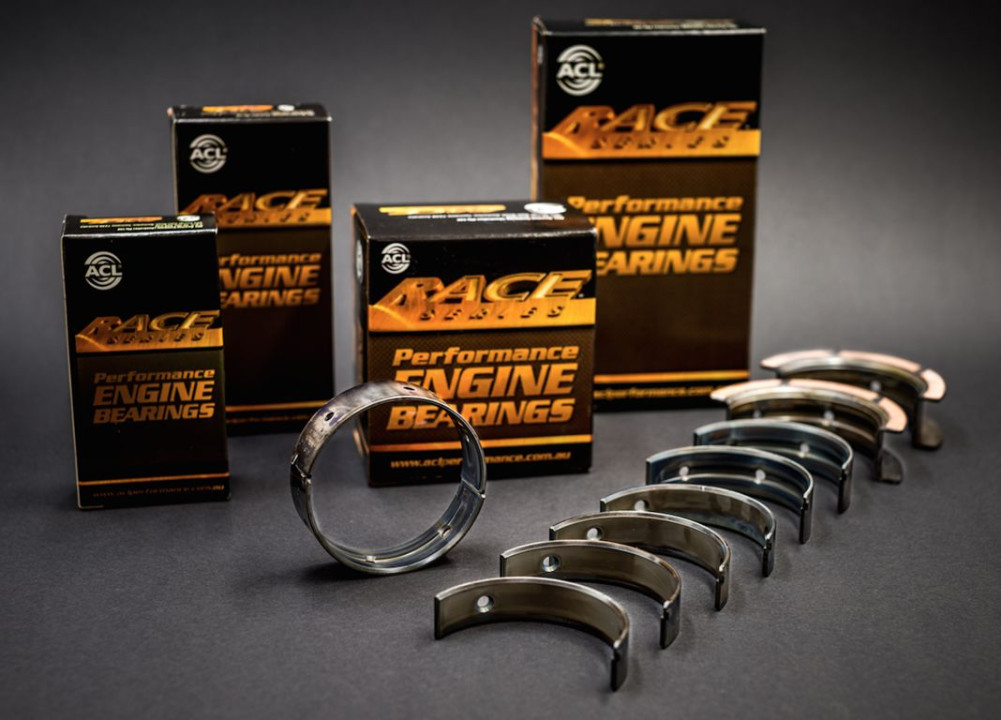

ACL trimetal connecting rod bearings Saab 2.0 2.3 16v
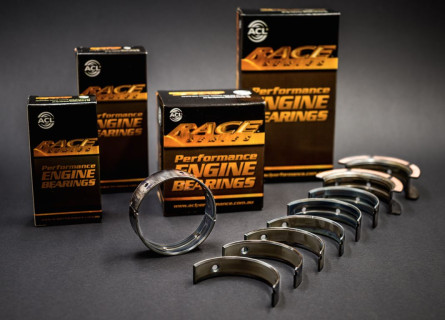
Set of 8 trimetal connecting rod half-bearings for Saab 2.0-2.3.
- Brand and treatment: ACL Race
- Compatibility: 900, 9000, 9-3, 9-5
- Engine codes: see the compatibility table
- Available sizes: standard to +0.25 mm, increased-clearance version (HX)
The Saab petrol four-cylinder engines of 2.0 to 2.3 litres
These Saab petrol four-cylinder engines of 2.0 to 2.3 litres, with twin overhead camshafts and 16 valves (B202, B202I, B202L, B202S, B202XI, B202XL, B204E, B204I, B204L, B204R, B204S, B205E, B205L, B205R, B206I, B234E, B234I, B234L, B234R, B235E, B235L, B235R), are fitted notably to the 900, 9000, 9-3 and 9-5. ACL lists a single bearing set for these engines: same crankpin diameter, a single set covers the family.
From the factory, these engines are fitted with standard production connecting rod bearings, sized for the loads of the original engine: as soon as power, engine speed or boost pressure increase, they reach their limits.
Trimetal connecting rod bearings
In a trimetal bearing, a steel back carries a copper-lead intermediate layer with high load capacity, itself covered by an anti-friction running layer that spares the crankpin. The set is supplied complete: 8 half shells, i.e. 4 pairs.
Trimetal targets high, sustained loads, whereas aluminium bi-metal is limited to low to medium loads: about 8,000 psi for the latter, up to 12,000 psi for a performance trimetal, 50% more. The benefit shows in strength and durability on turbo, supercharged and high-revving engines.
Technical specifications
| ACL bearings Crankpin Ø 51.981 / 52.000 mm Housing bore Ø 56.000 / 56.019 mm Width 20.25 mm |
| Reference | Brand and treatment | Size | Wall thickness (mm) |
|---|---|---|---|
| 4B2010H-STD | ACL Race - Untreated | Standard | 1.988 |
| 4B2010HX-STD | ACL Race - Untreated | Std, increased clearance (HX) | 1.975 |
| 4B2010H-.25 | ACL Race - Untreated | +0.25 | 2.113 |
Running clearance
Running clearance is the gap between the bearing and the crankpin, filled by the oil film.
While the engine turns, the crankpin floats on this oil film, which carries the load without direct contact with the bearing. Film thickness depends on clearance: too tight, oil passes poorly, temperature rises and the risk of seizure grows; too wide, oil escapes, the film carries less and oil pressure decreases. A correct clearance ensures both sufficient lubrication and a well-maintained film.
| Size / grade | When to choose it | ACL Race Series |
|---|---|---|
| Standard (STD) | Standard journal, not reground | 0.055 to 0.065 mm |
| Increased clearance (HX) | Wider clearance: high oil flow, high rpm | 0.080 to 0.090 mm |
| +0.25 mm | Journal reground to 0.25 mm | 0.055 to 0.065 mm |
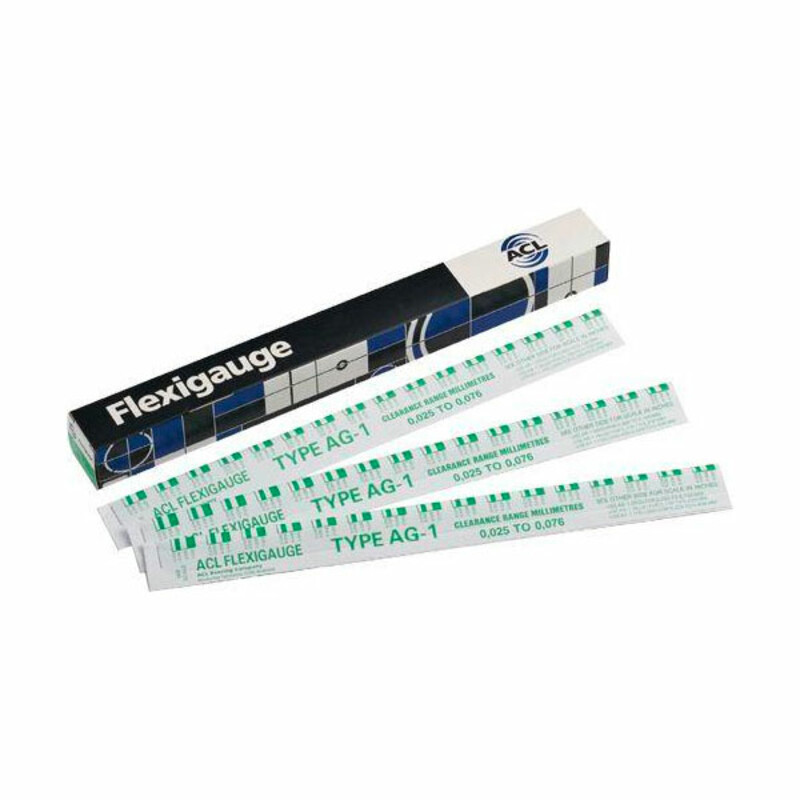
Checking on assembly: lay a calibrated strip (Plastigauge) on the journal, torque the rod cap to spec, then compare the crushed strip against the gauge to read the clearance.
Technical guide
These ACL trimetal connecting rod bearings are aimed at built engines and racing: where a standard bearing quickly reaches its limit, they accept more power, more rpm and more boost. The range includes the standard size, a +0.25 mm regrind size and the HX version with increased clearance for high-revving engines or engines needing a high oil flow. It allows the same part number to be kept after the crankshaft is reground and the clearance to be tailored to the oil used and the engine's duty.
The brand
 |
An Australian specialist in high-performance engine bearings since 1949, ACL Bearing Company produces the Race Series: precisely made trimetal bearings, available in numerous sizes and recognised on built engines across the world. |
Vehicle compatibility
This connecting rod bearing set fits the petrol four-cylinder engines of the following Saab models:
| Brand | Model (chassis) | Engine code | Power | Years |
|---|---|---|---|---|
| SAAB | 900 I (AC4, AM4) 2.0 / 2.0 -16 / 2.0 S Turbo-16 / 2.0 Turbo-16 / 2.0 Turbo-16 S / 2.0 Turbo-16 S Cat | B202I, B202L, B202S, B202XI, B202XL | 125–175 hp | 1984–1993 |
| SAAB | 900 I Combi Coupe 2.0 -16 / 2.0 S Turbo-16 / 2.0 Turbo-16 / 2.0 Turbo-16 S / 2.0 Turbo-16 S Cat | B202I, B202L, B202S, B202XI, B202XL | 125–180 hp | 1984–1994 |
| SAAB | 900 I Convertible 2.0 / 2.0 -16 / 2.0 16v / 2.0 S Turbo-16 / 2.0 Turbo-16 / 2.0 Turbo-16 S | B202I, B202S, B202XL | 126–175 hp | 1986–1994 |
| SAAB | 900 II 2.0 -16 Turbo / 2.0 i / 2.3 / 2.3 -16 | B204I, B204L, B206I, B234I | 131–185 hp | 1993–1998 |
| SAAB | 900 II Coupé 2.0 -16 Turbo / 2.0 i / 2.3 -16 | B204I, B204L, B206I, B234I | 131–185 hp | 1993–1998 |
| SAAB | 900 II Convertible 2.0 -16 Turbo / 2.0 i / 2.3 / 2.3 -16 | B204I, B204L, B234I | 131–185 hp | 1993–1998 |
| SAAB | 9000 2.0 / 2.0 -16 / 2.0 -16 CD / 2.0 -16 Turbo / 2.0 -16 Turbo CD / 2.0 Carlsson / 2.0 T16 / 2.3 / 2.3 -16 CD / 2.3 -16 CD Turbo / 2.3 -16 CDE / 2.3 -16 CDE Eco-Power / 2.3 -16 Turbo | B202, B202I, B202L, B202S, B202XL, B204E, B204I, B204L, B204S, B234E, B234I, B234L, B234R | 128–224 hp | 1985–1998 |
| SAAB | 9000 Hatchback 2.0 / 2.0 -16 / 2.0 -16 CS / 2.0 -16 ND Turbo / 2.0 -16 Turbo / 2.0 -16 Turbo CS / 2.0 16v / 2.0 T16 / 2.3 / 2.3 -16 Aero CS / 2.3 -16 CS / 2.3 -16 CSE / 2.3 -16 CSE Eco Power / 2.3 -16 Turbo / 2.3 -16 Turbo CSE | B202, B202I, B202L, B202S, B202XI, B202XL, B204E, B204I, B204S, B234E, B234I, B234L, B234R | 125–228 hp | 1984–1998 |
| SAAB | 9-3 (YS3D) 2.0 i / 2.0 SE Turbo / 2.0 Turbo / 2.3 / 2.3 i / 2.3 Turbo | B204E, B204I, B204L, B204R, B205E, B205L, B205R, B234I, B235R | 131–230 hp | 1998–2002 |
| SAAB | 9-3 Cabriolet (YS3D) 2.0 i / 2.0 SE Turbo / 2.0 Turbo / 2.3 / 2.3 i / 2.3 Turbo | B204E, B204I, B204L, B204R, B205E, B205L, B205R, B234I, B235R | 131–230 hp | 1998–2003 |
| SAAB | 9-5 (YS3E) 2.0 t / 2.0 t BioPower / 2.0 t Biopower / 2.0 Turbo SE / 2.3 / 2.3 t / 2.3 t BioPower / 2.3 Turbo | B205E, B205L, B235E, B235L, B235R | 150–305 hp | 1997–2009 |
| SAAB | 9-5 Estate (YS3E) 2.0 t / 2.0 t BioPower / 2.0 t Biopower / 2.3 / 2.3 t / 2.3 t BioPower / 2.3 Turbo | B205E, B205L, B235E, B235L, B235R | 150–305 hp | 1998–2009 |
Why replace the bearings
Replacing the bearings during a build or rebuild guards against the most expensive failure: a worn-out connecting rod bearing scores the crankpin, contaminates the oil circuit with debris and forces at least a crankshaft regrind, or even a new rod and block. Against such costs a new set weighs little: it is the cheapest part of the rotating assembly, but the one whose failure costs the most.
-
Brand
-
Reference4B2010H-STD