Product successfully added to your shopping cart
Quantity
Total
There are 0 items in your cart. There is 1 item in your cart.
Total products
Total shipping To be determined
Total

1.6L 16v - X16XE
Manufacturers
1.6L 16v - X16XE
Warning: Last items in stock!
New product
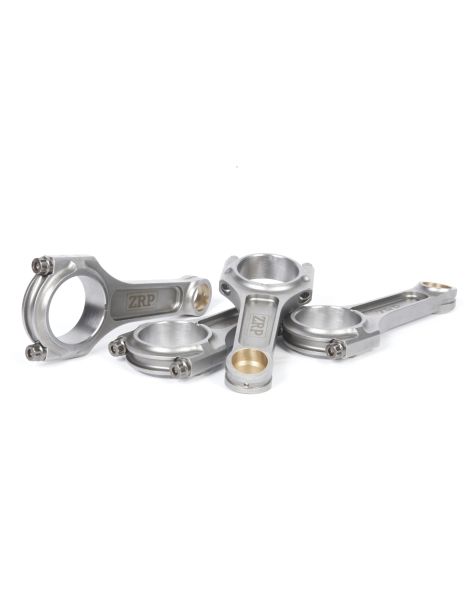
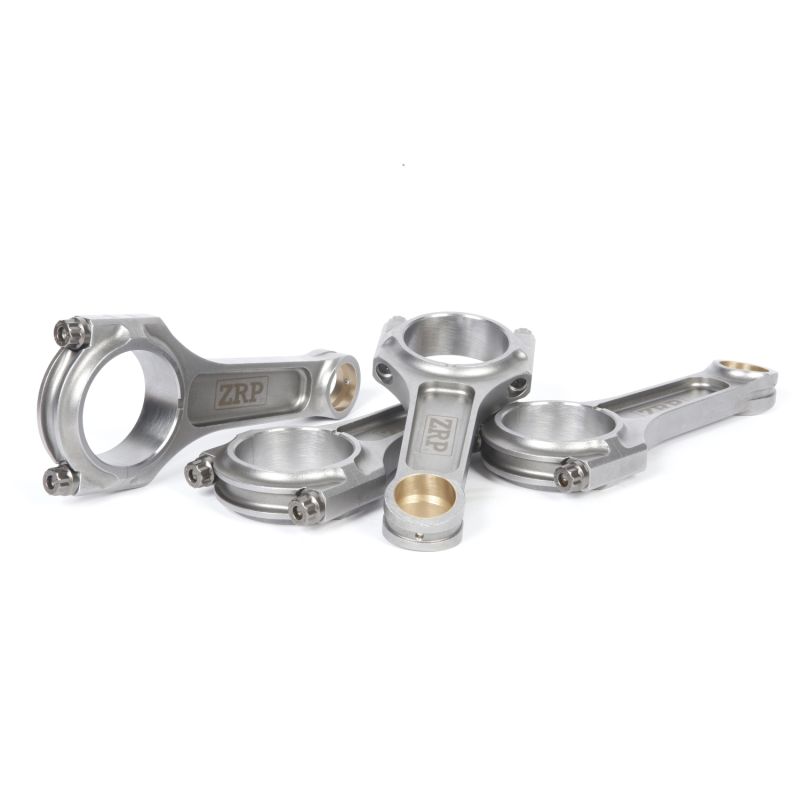
Kit of 4 forged 4340 connecting rods for Opel 1.6 16v/8v X16XE / C16NZ.
The Opel/Vauxhall 1.6-litre belongs to the wide Family II range, one of the manufacturer's most common four-cylinder platforms of the 1990s. Two versions are covered here by the same connecting rod: the sixteen-valve twin-cam engine, codes X16XE and X16XEL, and the older eight-valve single-cam engine, codes C16NZ and C16N2. All share the same 1,598 cc capacity, obtained from a 79 mm bore and an 81.5 mm stroke, on a naturally aspirated in-line four architecture. The sixteen-valve head takes output to between 100 and 106 hp depending on trim, while the eight-valve version stays at around 75 hp.
These engines powered the Opel/Vauxhall Corsa B and Astra F, two cars that remain very much alive in club motorsport and in home builds thanks to their low weight and the availability of parts. The absence of a turbocharger does not put the rotating assembly out of danger: the standard rod is made of sintered metal, sized for production power and production rev limits, and its manufacturing process leaves it very little reserve. As soon as the rev limit is raised, a reworked head improves cylinder filling, or heavier forged pistons increase inertia loads, it becomes the weak point of the bottom end. A set of forged rods keeping the original 129.75 mm centre distance and 18 mm pin restores headroom without touching the crankshaft.
Machined from high-strength 4340 steel, these upgraded rods reproduce the engine's own dimensions (129.75 mm centre distance, 18 mm piston pin, 46 mm small-end width) for a weight of 403 g per rod. They become necessary as soon as capacity, engine speed or the level of preparation changes, and above all when forged pistons are fitted: heavier than the production items, they increase the reciprocating loads the rod has to absorb on every revolution, where the sintered standard rod offers only a slim reserve.
The I-beam profile offered here, combined with ARP 2000 or ARP L19 3/8" 38 mm hardware, covers Stage 2 builds (intake, exhaust, engine management), Stage 3 builds (ported head, camshafts, full exhaust system) and Stage 4+ for the most extreme engines, including high-revving naturally aspirated developments. The field of use is broad: rally and hillclimb, where the engine spends its life at high rpm, drift and drag, circuit racing and track days, time attack, and also the simple reliability build on an engine you never want to open again.
| Reference | Brand | Profile | Bolts | Pin diameter OEM 18 mm | Small-end width | Big-end diameter OEM n.p. | Big-end width | Center-to-center OEM 129.75 mm | Weight per rod |
|---|---|---|---|---|---|---|---|---|---|
| R-OPE-002-I | ZRP | I | ARP 2000-3/8"-38mm | 18 mm | 46 mm | 21.9 mm | 129.75 mm | 403 g | |
| R-OPE-002-I-L19 | ZRP | I | ARP L19-3/8"-38mm | 18 mm | 46 mm | 21.9 mm | 129.75 mm | 403 g |
| Rod | Bolts | Torque | Recommended stretch |
|---|---|---|---|
| ZRP (R-OPE-002-I) | ARP 2000-3/8"-38mm | 61 N·m | 0.140 – 0.152 mm |
| ZRP (R-OPE-002-I-L19) | ARP L19-3/8"-38mm | 67.8 N·m | 0.152 – 0.165 mm |
A new bolt is not bedded in: on these small Opel 1.6 blocks, workshop practice is to run one load-and-release cycle before the final measurement, so the seating faces settle and friction stabilises. You then record the free length, tighten to the required value and read the stretch again. Any bolt that does not return to its original length after release is set aside. The torque and stretch figures given are the bolt manufacturer's own, ARP 2000 or ARP L19 in 3/8" 38 mm depending on the chosen variant, and are to be followed scrupulously; stretch measured on the gauge remains the reference method for validating the tightening.
| 4340 is a chrome-nickel-molybdenum alloy steel widely used in aerospace and motorsport. Forged and then heat-treated (quenched and tempered), it combines excellent mechanical strength with good ductility. Compared with a factory rod, usually sintered metal optimised for production cost, a forged 4340 rod gains roughly 19% yield strength, 8% tensile strength and up to 19-37% fatigue resistance, translating into a markedly longer service life under repeated loads. This is why forged 4340 is the reference once revs or the build step up. |
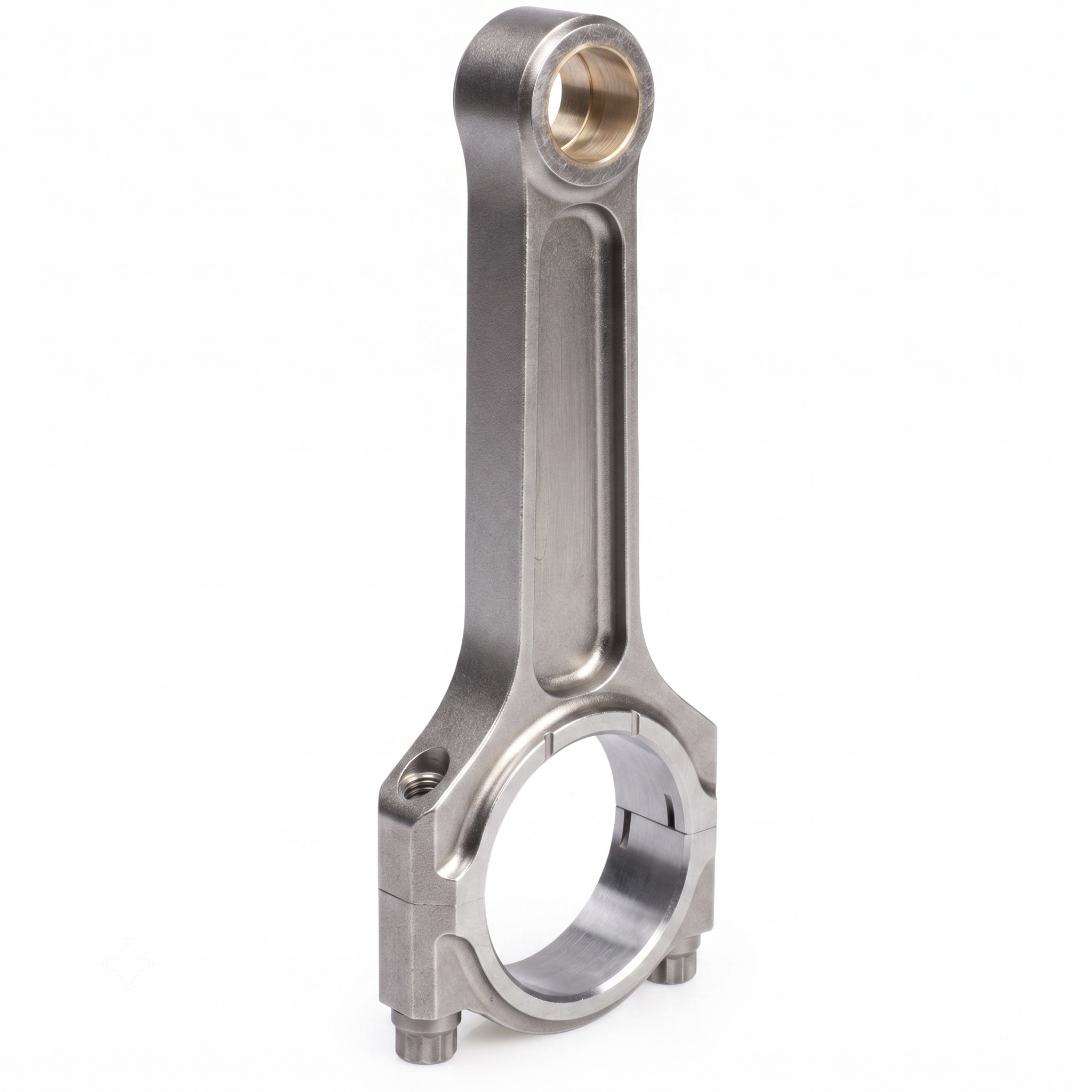 | I-beam. Its narrower central section makes the rod lighter and cuts reciprocating inertia, favouring quicker revs. It is the preferred profile for moderate-displacement engines like this 1.6 Opel unit. Its I-HD (Heavy Duty) variant reinforces the structure for the most demanding uses. |
On this 1.6 16V the rod bolt is the upper limit of the bottom end: it decides the acceptable rpm and cylinder pressure, well before the rod itself. The grade is therefore chosen by the discipline aimed at, from torque used low down in rally to rpm held high on circuit, up to the short load peaks of drag racing, then by the target power per cylinder. The two grades below are offered in 3/8"-38 mm and are fitted to the torque and stretch of the table.
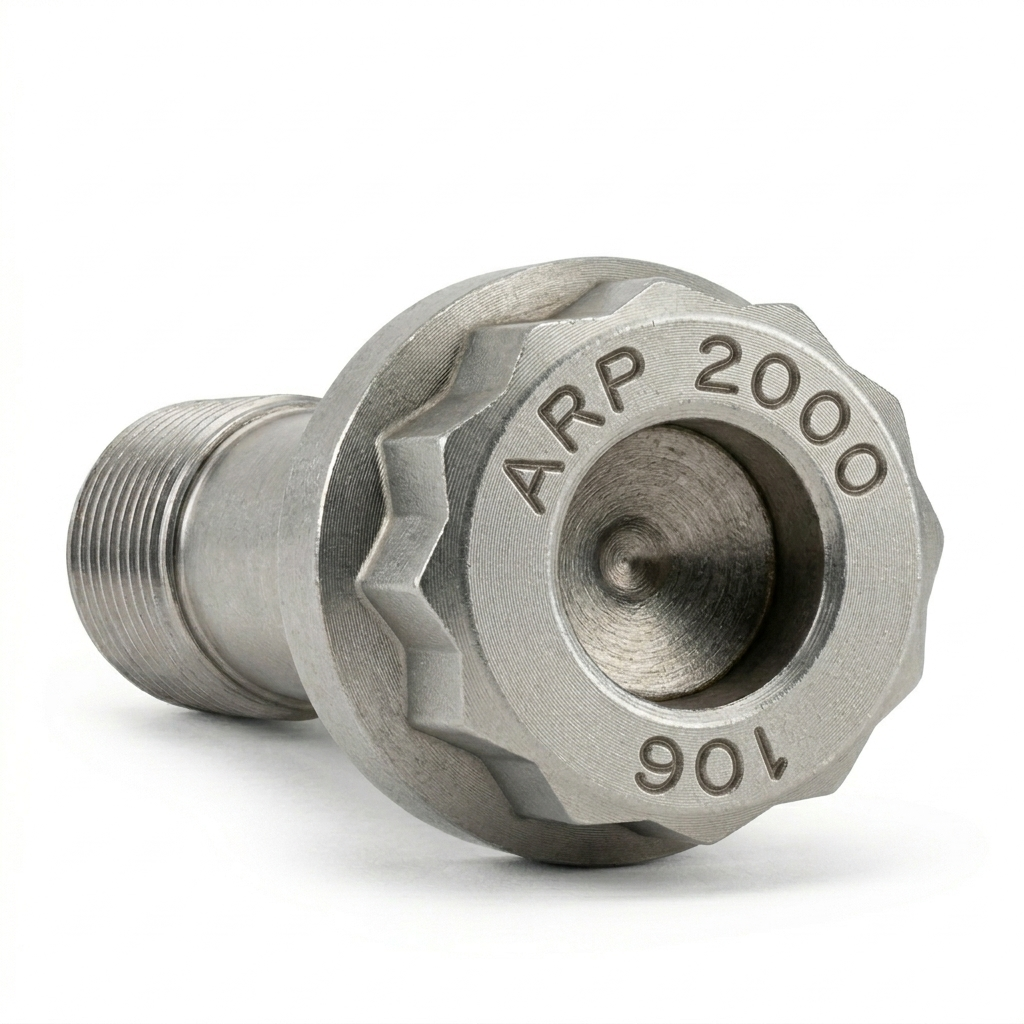 | ARP 2000, quoted at ~220,000 psi (~1,517 MPa) tensile strength, goes well beyond what a built 1.6 16V asks for: the grade is rated up to 200 hp per cylinder in 3/8" and up to 8,500 rpm. On a rally, circuit or hillclimb engine the reserve is therefore comfortable, including after moderate forced induction. It is also the most common grade in track days, drift and drag racing, with no storage constraint at all. |
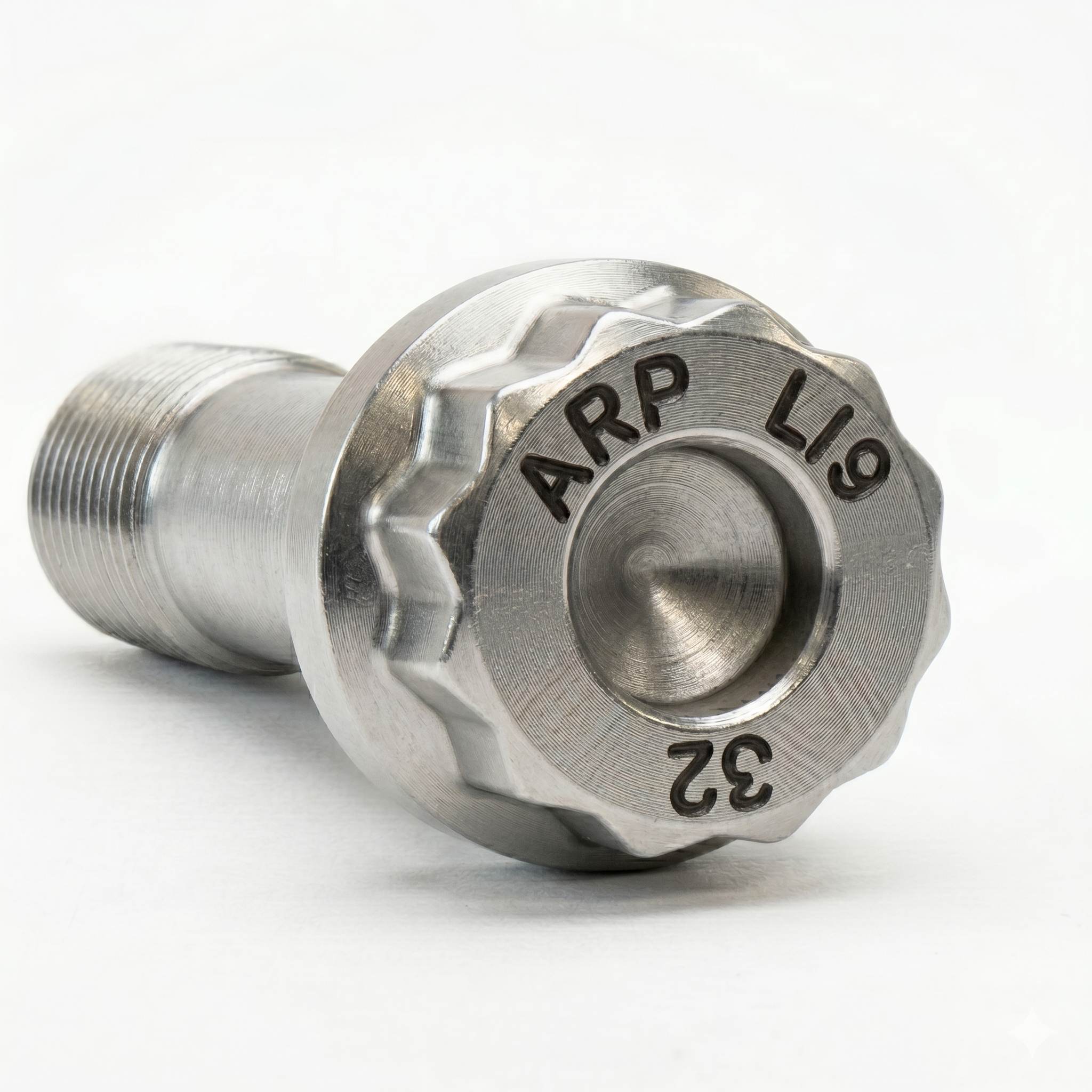 | L19 climbs to ~260,000 psi (~1,793 MPa) and allows up to 250 hp per cylinder in 3/8" as well as 10,000 rpm. On this small four-cylinder it is aimed at heavily boosted versions, with high cylinder pressure or rpm held very high, and more generally at the big power levels in drag racing, drift, rally and circuit. In exchange it asks for a little method: sensitive to corrosion and to hydrogen embrittlement, it is stored and fitted oiled, away from moisture, never bare in a drawer. |
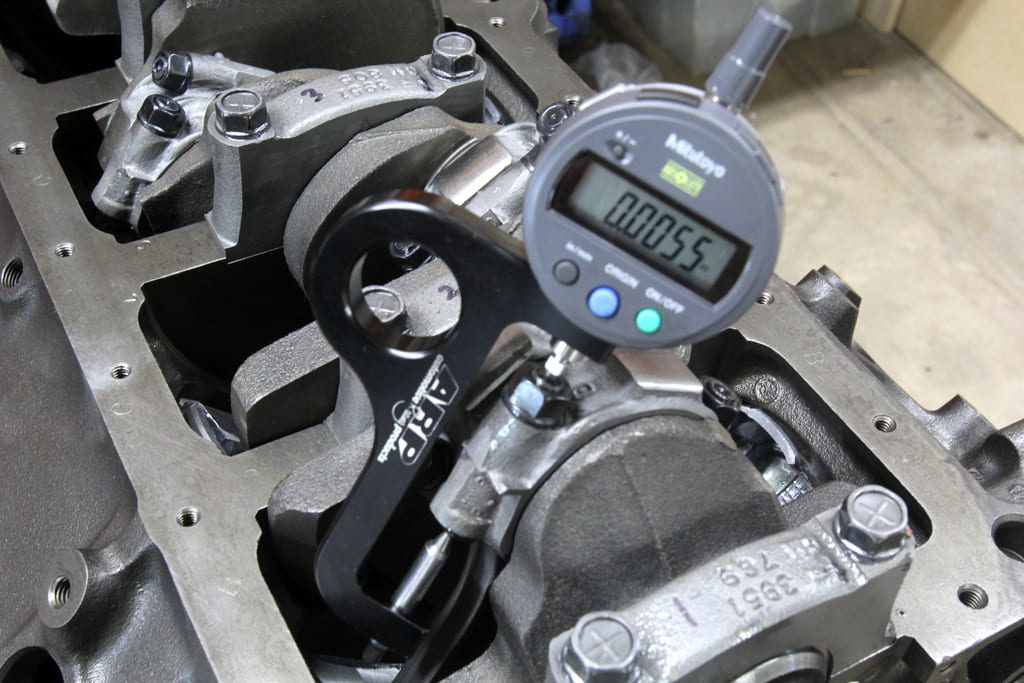
| In addition to torque tightening, measuring rod-bolt stretch remains the most reliable check for achieving optimal preload. With the bolt fitted, a gauge (dial indicator) is placed at both ends and the actual stretch is read, which should match the value in the table above. This method removes the friction variation inherent to torque tightening and makes assembly more reliable on heavily loaded engines. |
 | ZRP is a Greek brand of high-performance forged connecting rods created by Alex Drakos in Athens. Each rod is forged from 4340 steel, precision-machined and balanced to ±1 g for reliability at high rpm. Offered here in I-beam profile with ARP 2000 or L19 bolts, it is developed and controlled in Greece, proven in rally, on circuit and in drift. |
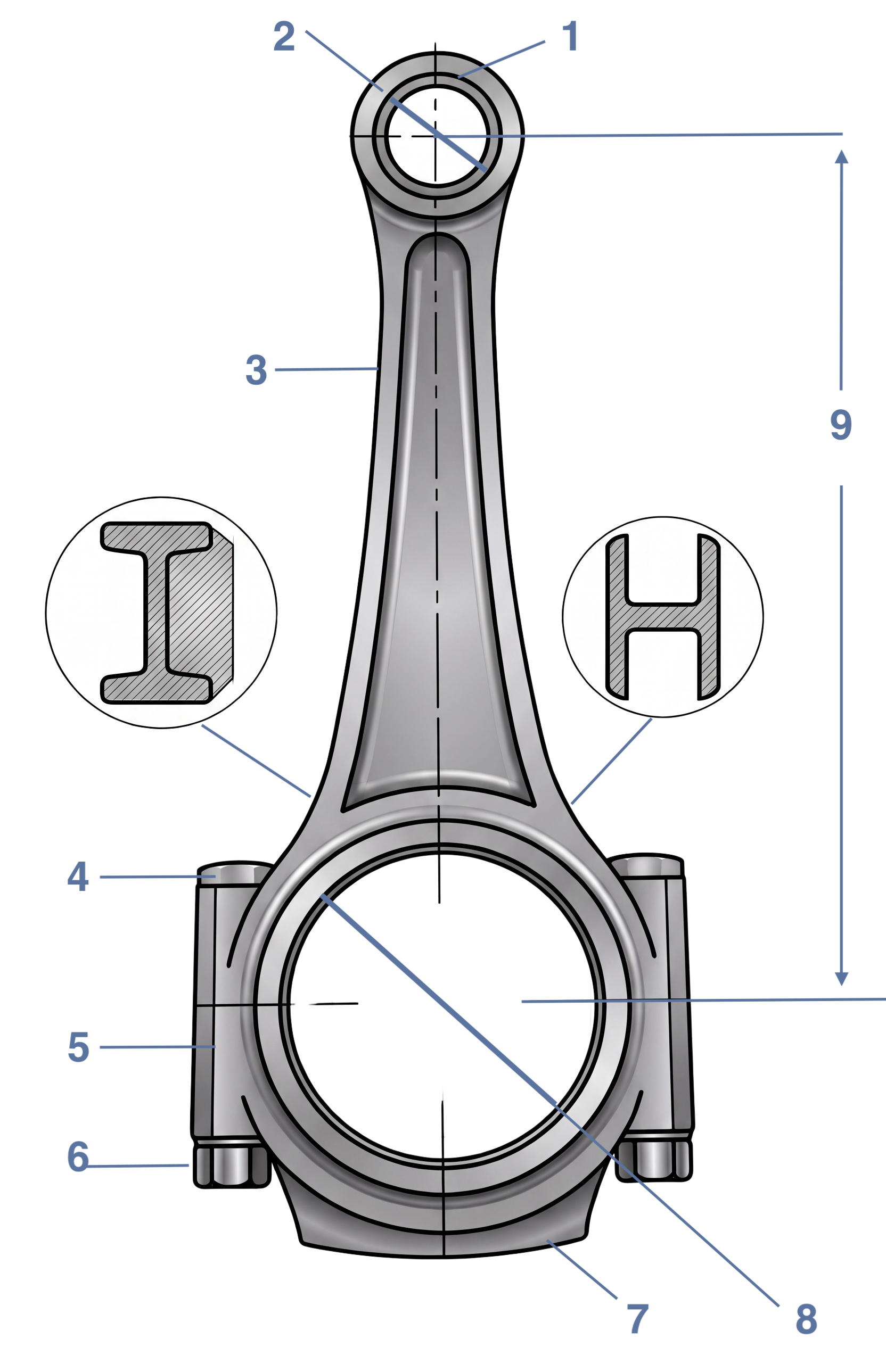 | 1) Small end 2) Small-end diameter 3) Rod beam 4) Rod bolt 5) Big end 6) Rod nut / bolt 7) Rod cap 8) Big-end diameter 9) Center-to-center |
These forged rods fit Opel/Vauxhall 1.6 engines sharing the same rod (129.75 mm centre distance, 18 mm gudgeon pin):
| Make | Model (chassis) | Engine code | Power | Years |
|---|---|---|---|---|
| Opel / Vauxhall | Astra F (T92) | X16XEL | 100–101 hp (74 kW) | 1994–2002 |
| Opel / Vauxhall | Corsa B (S93) | X16XE | 106 hp (78 kW) | 1994–2000 |
| Opel / Vauxhall | Astra F (T92) | C16NZ | 75 hp (55 kW) | 1991–1998 |
OEM reference: 90297422 (set of 4 rods) for X16XE / X16XEL.
On an X16XE or a C16NZ, a broken standard rod never stops at the rod: the matching piston is lost and the block has to be checked. Rebuilding the engine with standard parts therefore means buying both rods and pistons, a heavy outlay for an engine that will stay exactly as fragile as before. For a comparable, often lower budget, a set of forged 4340 steel rods combined with forged pistons brings reliability and a safety margin on another scale, and above all room to develop: intake, camshafts, forced induction, the bottom end will keep up. This is the logic European engine builders have applied for more than 15 years on small Opel blocks. For the same budget: more reliability, more potential, more service life.