Product successfully added to your shopping cart
Quantity
Total
There are 0 items in your cart. There is 1 item in your cart.
Total products
Total shipping To be determined
Total

1.5L 16v - 5E-FTE
Manufacturers
1.5L 16v - 5E-FTE
Warning: Last items in stock!
New product
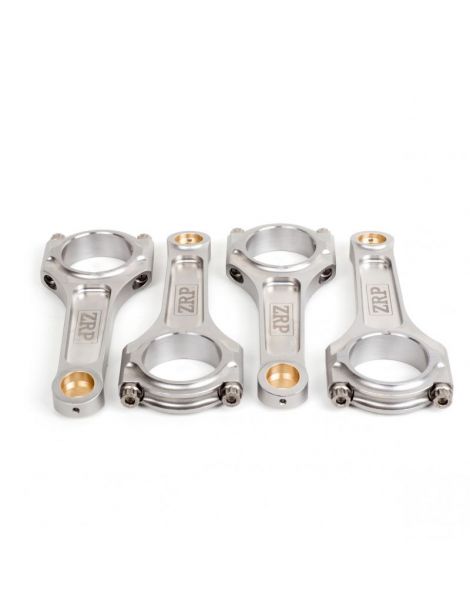
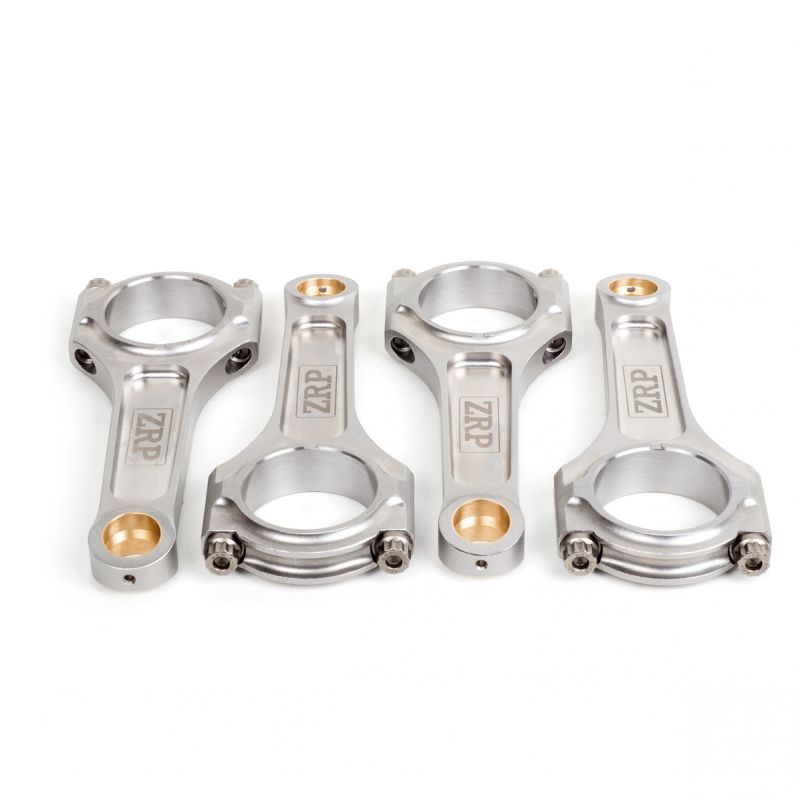
Set of 4 forged 4340 steel connecting rods for Toyota 5E-FE / 5E-FTE 1.5 16v, 18 mm pin.
Launched at the turn of the 1990s, the 5E-FE belongs to Toyota's E engine family: a 1.5-litre (1,497 cc) inline-four with twin overhead camshafts and 16 valves, with a 74 mm bore and an 87 mm stroke. This naturally aspirated unit pairs a cast-iron cylinder block with an aluminium cylinder head, a compact and sturdy architecture built for reliability and economy. Produced from around 1990 to 2003, it powered a long line of Toyota compacts and city cars, from the Corolla II to the Paseo by way of the Corsa, the Tercel, the Caldina, the Sprinter and the Raum.
Alongside the naturally aspirated version sits the 5E-FTE, a turbocharged derivative that is more powerful and more heavily stressed. As soon as engine speed, load or boost pressure climb beyond factory values, the stock rods, sized above all for economical use, become the weak link of the reciprocating assembly. Replacing them with forged rods is the decisive step to reliably secure a high-revving 5E-FE as much as a 5E-FTE running raised boost.
Our forged 5E-FE and 5E-FTE rods are machined from wrought 4340 steel, the reference alloy in motorsport. They suit every discipline, from circuit to drift by way of rally, drag, time attack and hillclimb, and support both a small high-revving naturally aspirated 1.5 and a turbocharged 5E-FTE build. Depending on the target (Stage 2 tuning, Stage 3 high power, Stage 4 and beyond), they lock in the power increase without ever cutting corners on reliability. Supplied as a weight-matched set of 4 to within ±1 g, they keep the factory 18 mm piston pin and 130.5 mm center-to-center length.
Compared with a factory rod designed above all for high-volume manufacturing cost, a forged 4340 rod offers a clearly greater mechanical reserve: around +19% yield strength, +8% tensile strength and +19 to +37% fatigue endurance. That margin lets a high-revving 5E-FE or a boosted 5E-FTE absorb cylinder-pressure peaks and inertia loads without breakage. The entire range offered here is made from this same forged 4340 steel.
| Reference | Brand | Profile | Rod bolts | Ø pin (mm) | Small-end width (mm) | Ø big end (mm) | Big-end width (mm) | Center-to-center (mm) | Weight (g) |
|---|---|---|---|---|---|---|---|---|---|
| R-TOY-002H | ZRP | H | ARP 2000-5/16"-38mm | 18 | 46 | 20,85 | 130,5 | 422 | |
| R-TOY-002-I | ZRP | I | ARP 2000-5/16"-38mm | 18 | 46 | 20,85 | 130,5 | 426 |
Torque and stretch refer to the ARP 2000 bolts supplied with the kit; refer to the datasheet provided. Checking stretch with a gauge remains the most reliable and repeatable method to guarantee preload.
| Reference | Brand | Rod bolts | Max torque (no gauge) | Stretch (gauge check) |
|---|---|---|---|---|
| R-TOY-002H | ZRP | ARP 2000-5/16"-38mm | 40,7 | 0,140 à 0,152 |
| R-TOY-002-I | ZRP | ARP 2000-5/16"-38mm | 40,7 | 0,140 à 0,152 |
| 4340 steel is a nickel-chrome-molybdenum alloy used both in aerospace and in motorsport. Forged and then heat-treated (quench and temper), it combines excellent tensile strength, high fatigue resistance and real ductility. Compared with an OE connecting rod (usually sintered, optimised for series-production cost), a forged 4340 rod gains roughly +19% yield strength, +8% tensile strength and, above all, +19 to +37% fatigue life, i.e. a cyclic-load service life several times higher. That is what makes it the reference material as soon as load and engine speed increase on a 5E-FE. |
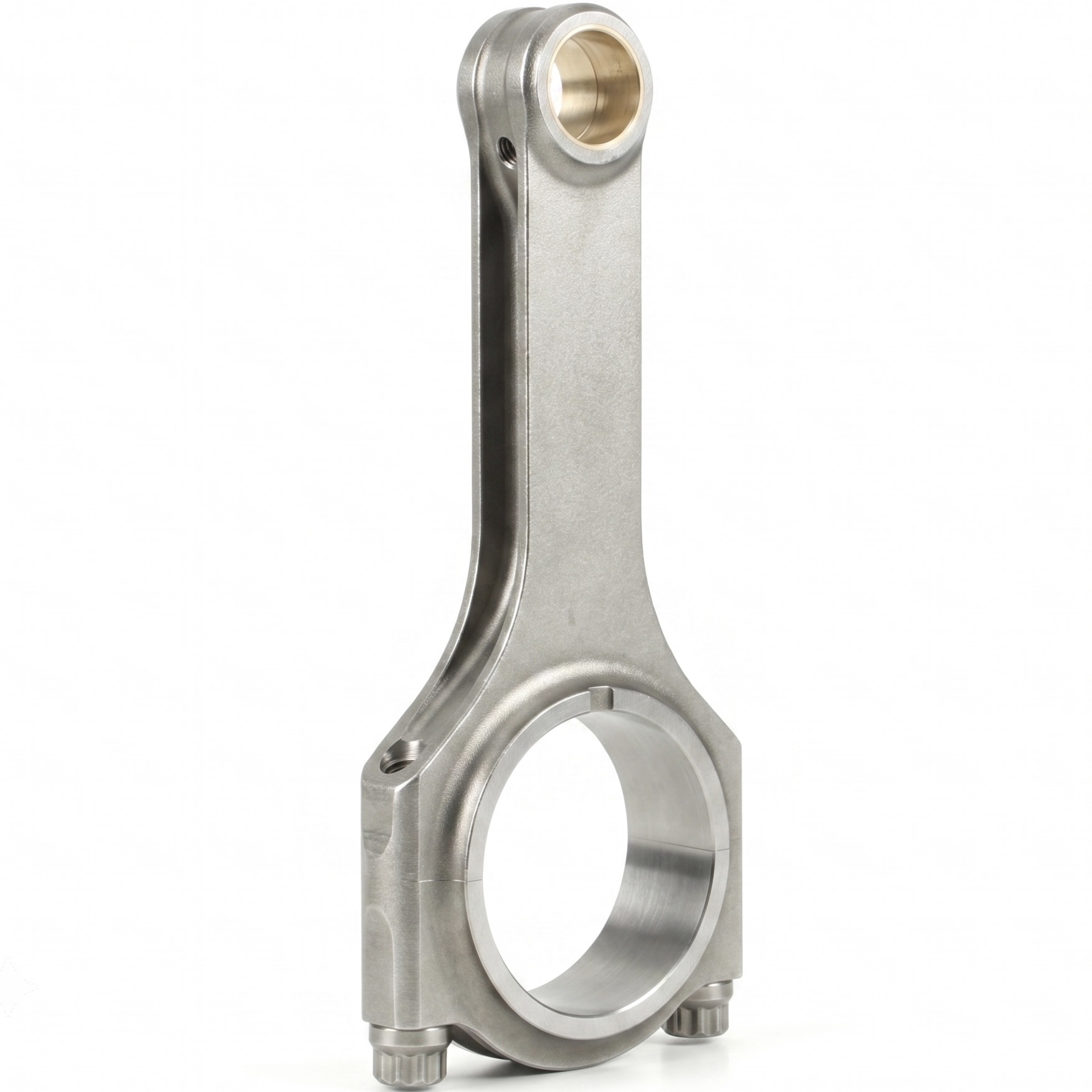 | The H profile, recognisable by its two flat flanks, offers great rigidity and excellent resistance to bending and compression. Slightly heavier than an I-beam rod, it favours strength: the choice for high-torque engines and demanding builds. On a 5E-FE it is a safe bet, machined from 4340 steel and supplied with ARP 2000 hardware in 5/16". |
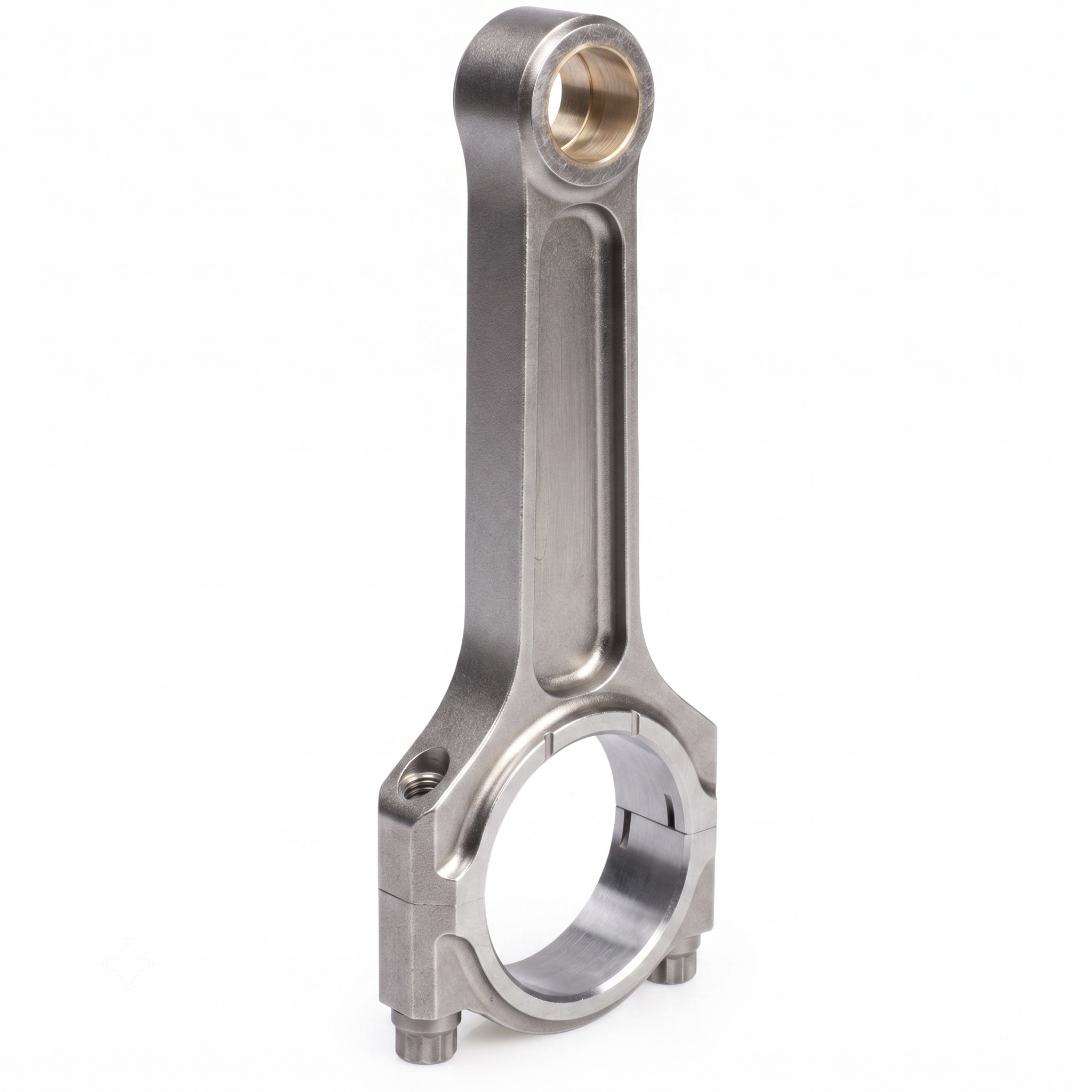 | The I profile, with its thinner central section, is lighter: less inertia and freer rev climbs, an asset on a small 1.5 that likes to rev. It favours lightness while keeping solid resistance to compression. Machined from the same 4340 steel, it is likewise supplied with ARP 2000 hardware in 5/16". |
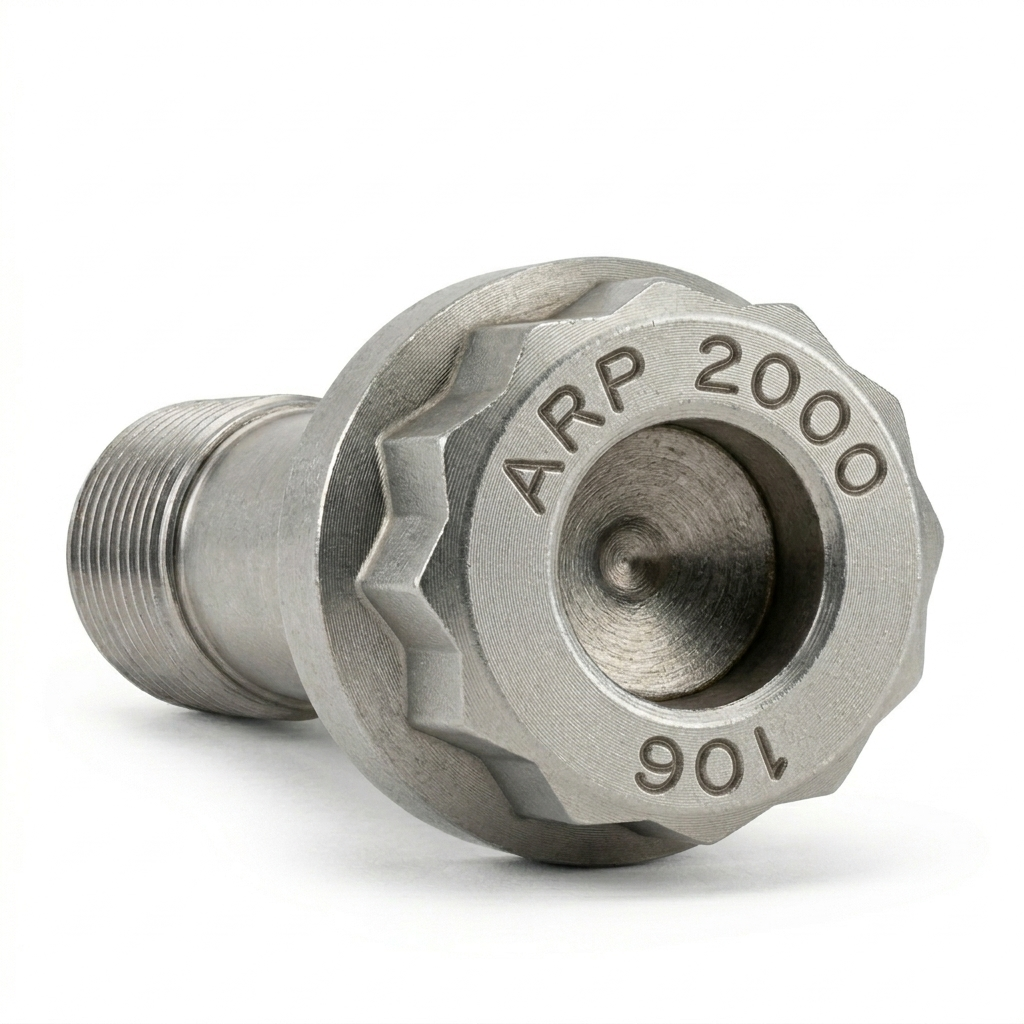 | ARP 2000 (tensile strength around 220,000 psi, ~1,517 MPa) is the high-performance standard. Offered here in 5/16" diameter, it suits builds up to about 150 hp per cylinder and engine speeds up to 8,500 rpm. It is the most versatile grade, used in circuit, track day, drift, rally, drag and hillclimb, valued for its strength, reliability and versatility, with no particular storage constraints. It is the default choice to reliably reinforce the 5E-FE bottom end. |
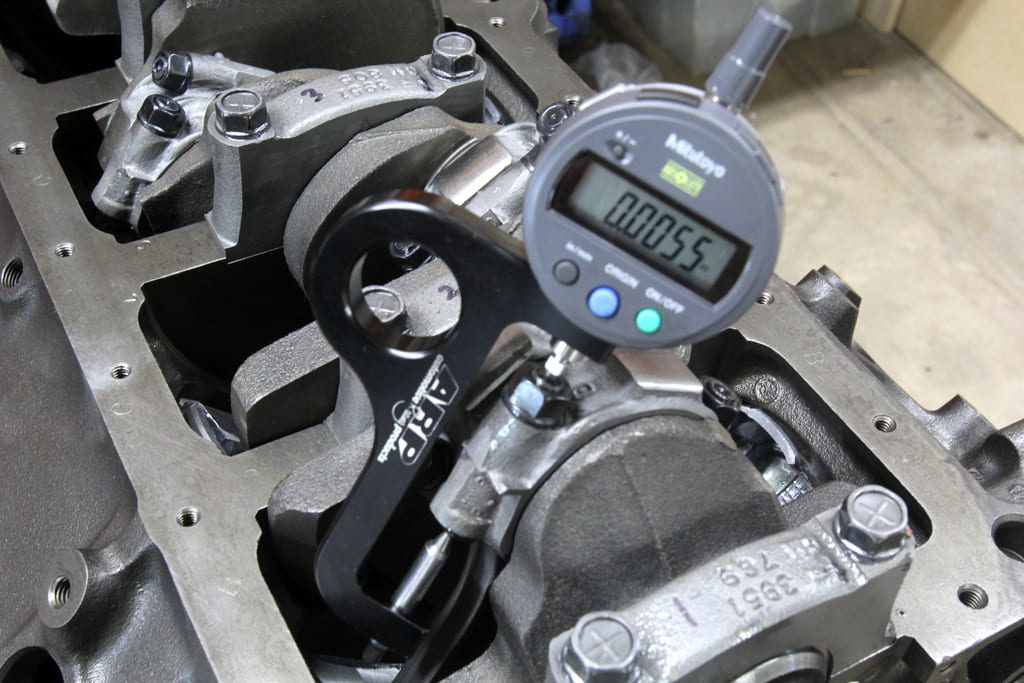
| On a forged rod, the exact bolt preload is checked by its stretch, measured with a dial gauge (stretch gauge), rather than by torque alone: lubrication and run-in distort the torque reading. Always refer to the stretch values given by the bolt manufacturer. |
 | ZRP is a Greek brand of high-performance forged connecting rods, designed by Alex Drakos in Athens. Each rod is forged from 4340 steel, precision-machined and weight-matched to ±1 g to stay reliable at high rpm. For the 5E-FE, ZRP offers the H and I profiles with ARP 2000 hardware, proven in rally, on circuit and in drift. Each reference ships as a complete set of 4, weight-matched, with its dedicated ARP hardware. |
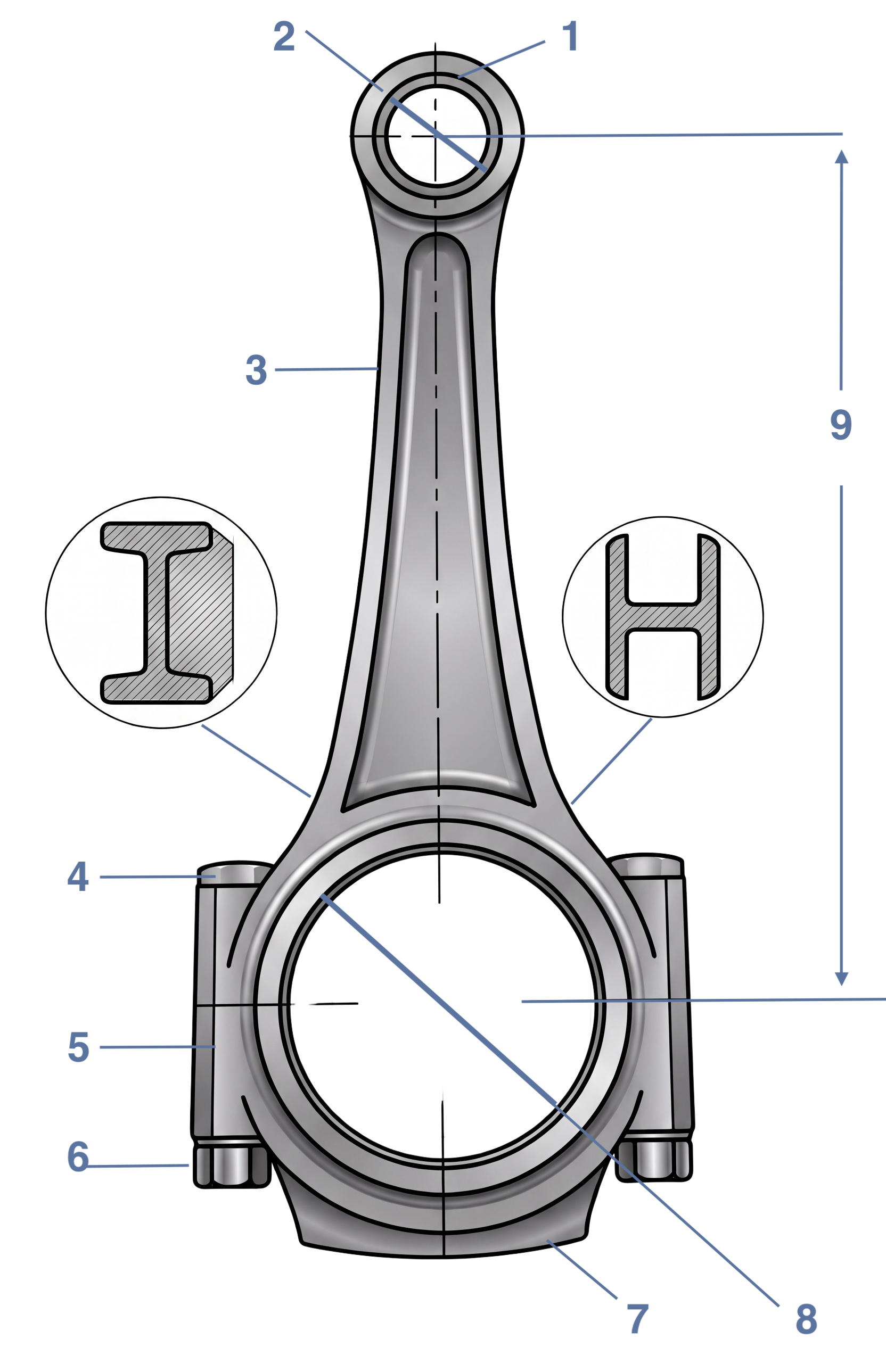 | 1) Small end 2) Small-end diameter 3) Rod beam 4) Rod bolt 5) Big end 6) Rod nut / bolt 7) Rod cap 8) Big-end diameter 9) Center-to-center |
These forged rods fit the Toyota models powered by the 1.5 L 16v 5E-FE inline-four, with an 18 mm pin and 130.5 mm center-to-center (the turbocharged 5E-FTE derivative shares the same bottom-end architecture):
| Brand | Model (chassis) | Engine code | Power | Years |
|---|---|---|---|---|
| Toyota | Corolla Compact / Liftback (E9) | 5E-FE | 116–125 ch | 1989–1992 |
| Toyota | Corolla II (L4 / L5, EL43 / EL53) | 5E-FE | 94–116 ch | 1990–1999 |
| Toyota | Corsa (L4 / L5, EL43 / EL53 / EL55) | 5E-FE | 95–116 ch | 1990–1999 |
| Toyota | Tercel (L3 / L5, EL43 / EL53 / EL55) | 5E-FE | 94–112 ch | 1990–1999 |
| Toyota | Paseo / Cynos (L5, EL54) | 5E-FE | 90–110 ch | 1990–1999 |
| Toyota | Caldina Break (T19, ET196V) | 5E-FE | 95 ch | 1992–2002 |
| Toyota | Sprinter Break (E10, EE104) | 5E-FE | 97 ch | 1994–2002 |
| Toyota | Raum (EXZ10 / EXZ15) | 5E-FE | 90–94 ch | 1997–2003 |
When an OE bottom end lets go (a broken, bent or scored rod), returning to the factory configuration means replacing rods and pistons, often damaged together: the bill climbs fast for a mere restoration. For an equivalent or even lower budget, fitting forged 4340 rods with forged pistons brings markedly higher reliability and safety margin, plus real power-evolution potential. It is the solution European engine builders have relied on for over 15 years: for the same budget, more reliability, more potential, more longevity.