
Product successfully added to your shopping cart
Quantity
Total
There are 0 items in your cart. There is 1 item in your cart.
Total products
Total shipping To be determined
Total

2.0L 16v - 4U-GSE
Manufacturers
2.0L 16v - 4U-GSE
 View larger
 Warning: Last items in stock!
New product
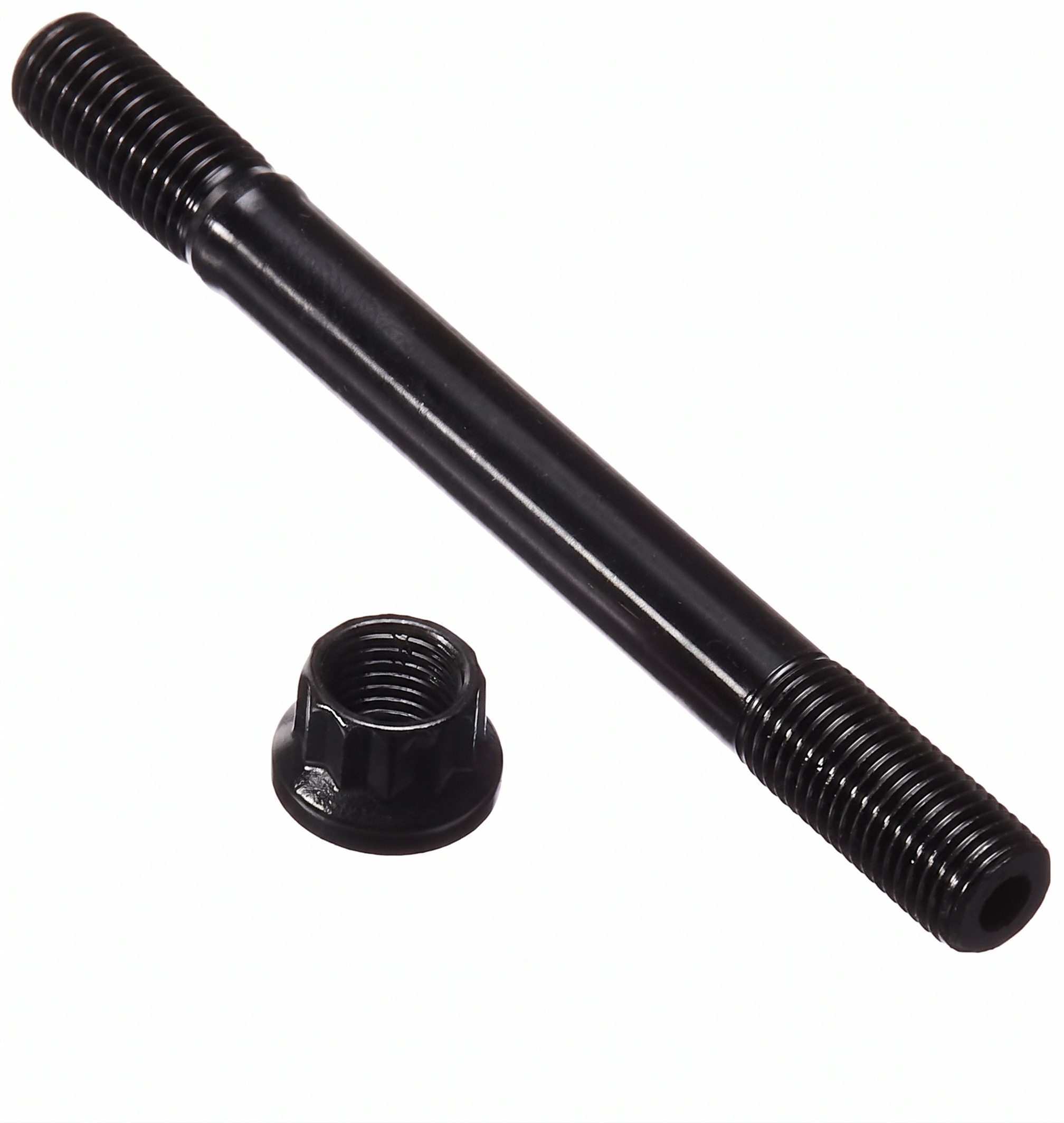
Kits of ARP2000 cylinder head studs for the Toyota 4U-GSE and Subaru FA20 flat-four (GT 86, BRZ).
The 4U-GSE, known as FA20 at Subaru, is the 2.0-litre naturally aspirated sixteen-valve flat-four (boxer) developed jointly by Toyota and Subaru; it powers the Toyota GT 86, the Scion FR-S and the Subaru BRZ. ARP matches it with two stud kits in ARP2000, both supplied with 12-point nuts: the 203-4305, listed for Toyota, and the 260-4301, listed for Subaru.
As built, the cylinder head of this engine is secured by head bolts; these ARP kits replace them with studs and nuts.
Cylinder head fasteners work constantly: they hold the head tight against the block, crush the gasket to the right value and hold back the push of the gases at every combustion. If they lose even a little tension, the gasket starts to leak.
Two ARP kits are offered for this engine: the 203-4305, listed for Toyota, and the 260-4301, listed for Subaru, both in ARP2000, with an M11 x 1.25 thread and 12-point nuts. Their instruction sheets differ: the 203-4305 sheet has the studs screwed in by hand before the head is fitted, the 260-4301 sheet once the head and its gasket are in place. The ARP2000 range relies on an alloy steel developed by ARP: after heat treatment it reaches 220,000 psi tensile strength, and the threads are rolled afterwards. As standard bolts generally belong to classes 10.9 and 12.9, i.e. 150,800 to 176,900 psi minimum, ARP2000 exceeds them by 24 to 46 %. In M11 x 1.25, the ARP2000 studs hold up to 700 hp on this four-cylinder engine (calculated estimate).
| Part number | Brand | Grade / material | Nuts | Thread |
| ARP-203-4305 | ARP | ARP2000 | 12-point | M11 x 1.25 |
| ARP-260-4301 | ARP | ARP2000 | 12-point | M11 x 1.25 |
| Part number | Stage 1 | Stage 2 | Stage 3 |
| ARP-203-4305 | 43 Nm | 86 Nm | 129 Nm |
| ARP-260-4301 | 41 Nm | 81 Nm | 129 Nm |
Studs 203-4305: no torque is applied to the studs as they go into the block: they are screwed in by hand. The instruction sheet leaves the option of thread locker to mount them permanently, provided tightening is done before the product hardens.
The instruction sheet asks for the block threads to be cleaned before fitting, if needed with the ARP M11 x 1.25 chaser.
A stud that opens into the water jacket gets ARP thread sealer on the part screwed into the block; Loctite is tolerated for a permanent fit.
Unlike the 260-4301, this sheet has both faces of the washers coated with Ultra-Torque, along with the threads and nuts, before the three equal passes.
Studs 260-4301: each stud is screwed into the block by hand, without torque. This kit's instruction sheet does not mention thread locker; ARP states that some engine builders use a medium-strength (blue) one on the block end, but never on the nuts, never with ARP grease, and only if tightening is finished before it hardens.
This sheet calls for dry head seating surfaces and dry washers: any trace of oil is wiped off both faces of each washer, and the Ultra-Torque goes only on the stud threads and under the nuts.
The block threads are cleaned before fitting, if needed with the ARP M11 x 1.25 thread chaser; the sheet does not mention a sealant either, and the hex socket at the end of each stud is for fitting and removal only.
Final tightening is done in three successive stages, following the manufacturer's tightening sequence; these torque figures only hold with ARP assembly lubricant on the threads and under the nuts.
These torque figures follow ARP instruction sheets 203-4305 and 260-4301; for the full procedure, including the manufacturer's tightening sequence, the official sheet in force for each kit remains the reference. Read the ARP 203-4305 instruction sheet; Read the ARP 260-4301 instruction sheet
The stated tightening torques only make sense with ARP assembly grease, applied to the threads and under the nuts.
| Buy the ARP assembly grease → |
 | Founded in the early 1970s by Gary Holzapfel, who came from the aerospace industry, ARP (Automotive Racing Products) set itself the mission of eliminating engine failures caused by inadequate fasteners in competition. Its thousands of parts are designed and produced in California, in several material grades depending on the application. |
| Criterion | Original head bolts | Reinforced ARP studs |
 |  | |
| Block threads | Stressed at every tightening | Preserved: studs fitted by hand |
On an engine left standard, the original fasteners do their job. Switching to reinforced fasteners becomes worthwhile as soon as:
| Model | Engine code | Power | Years |
| Toyota GT 86 (ZN6) 2.0 | 4U-GSE / FA20 | 200 hp | since 2012 |
| Toyota GT 86 (ZN6) 2.0, late series | 4U-GSE / FA20D | 207 hp | since 2016 |
| Scion FR-S 2.0 | FA20D | 203 hp | since 2012 |
| Subaru BRZ (ZC6) 2.0 | FA20D | 200 hp | since 2012 |
| Subaru BRZ (ZC6) 2.0 | FA20D | 208 hp | since 2014 |
| Subaru BRZ (ZC6) 2.0, late series | FA20C | 207 hp | since 2016 |
On a tuned 4U-GSE or FA20, it is the original bolts that cap the load on the gasket. ARP2000 studs of 11 mm carry it much higher, for a budget out of all proportion to a cylinder head to be skimmed and a gasket to be replaced.