Product successfully added to your shopping cart
Quantity
Total
There are 0 items in your cart. There is 1 item in your cart.
Total products
Total shipping To be determined
Total

3.0L 24v - VR30DDTT
Manufacturers
3.0L 24v - VR30DDTT
Warning: Last items in stock!
New product
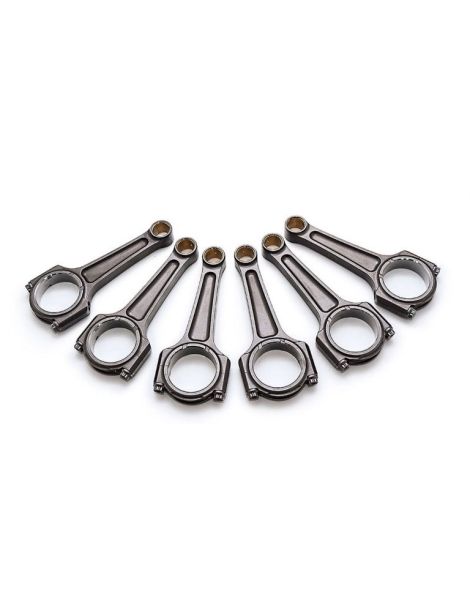
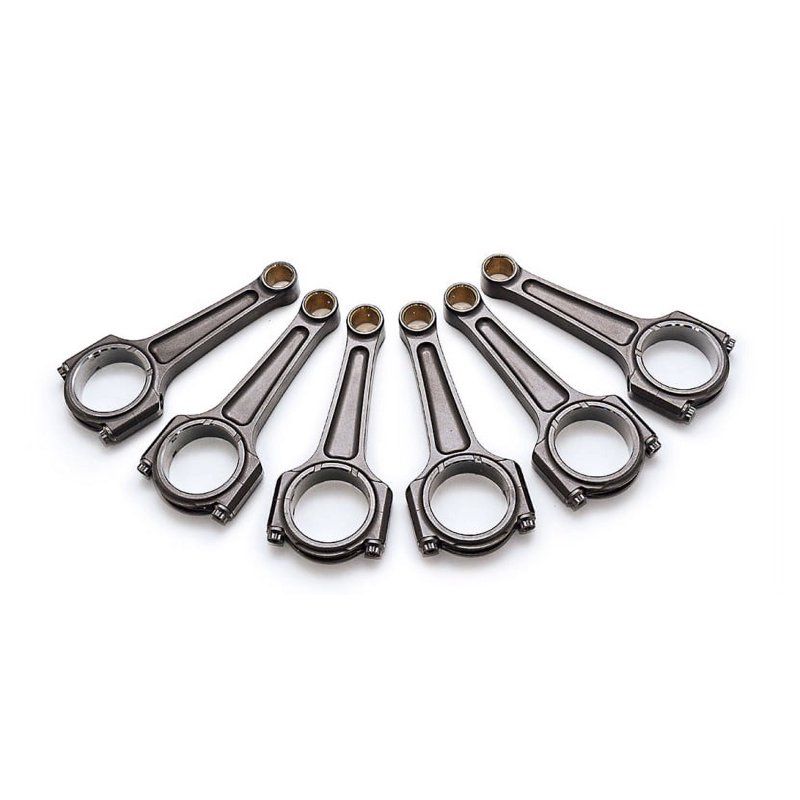
Kit of 6 forged connecting rods in 4340 steel for Infiniti Q50 / Q60 and Nissan Skyline / Z 3.0 V6 Biturbo VR30DDTT.
The VR30DDTT is a twin-turbocharged 3.0-litre V6 (2,997 cc) developed by Nissan within the VR engine family, with a bore and stroke of about 86 mm each. Introduced in 2015, it powers the Infiniti Q50 and Q60 (sedan and coupe, V37 platform) in 3.0t (305 hp / 224 kW) and Red Sport 400 (405 hp / 298 kW) tunes, as well as the Nissan Skyline (V37) sold in Japan until 2023. Since 2022 it has also powered the Nissan Z (RZ34) at 405 hp, rising to 420 hp (309 kW) on the NISMO version. This compact aluminium-block, direct-injection engine combines high boost pressure with a responsive rev range, which puts the factory connecting rods under heavy strain as soon as tuning goes beyond factory limits.
On paper the VR30DDTT electronics take the first rounds of remapping in their stride, and that is exactly what makes the rod question central. The standard part, in sintered steel, was calculated for the 305 to 420 hp band: beyond that, cylinder pressure and the tensile load at the end of the power stroke rise faster than the available margin, and the rod becomes the component that sets engine life. On a twin-turbo V6, its failure takes the crankshaft, the cylinder concerned and very often the block with it.
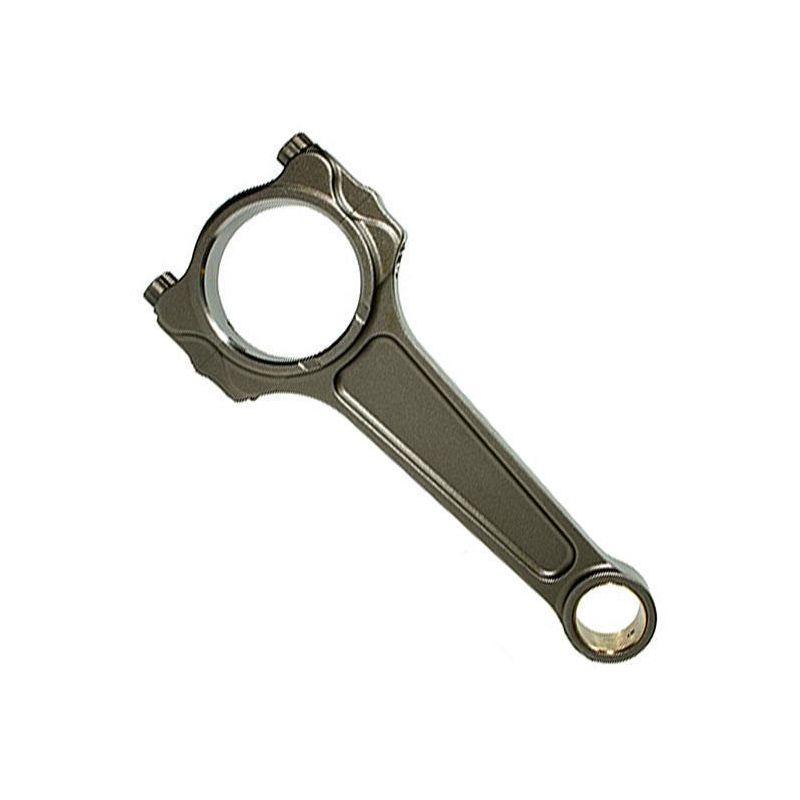
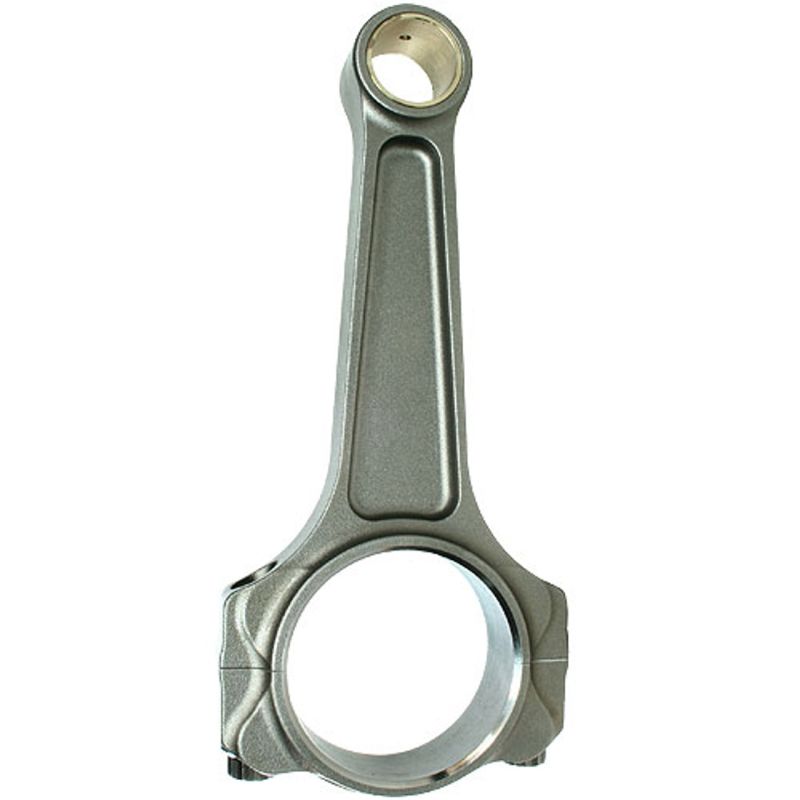
NSB Concept forged connecting rods replace the factory rod on the VR30DDTT to withstand the stress of a twin-turbo engine pushed beyond its factory map. Forged as a single billet and then machined, they offer far greater fatigue and bending resistance than the stock part, essential as soon as boost pressure, rpm or power increase. They cover every motorsport use: rally, drift, drag, circuit racing, hillclimb and time attack, as well as Stage 2, Stage 3, Stage 4 builds and beyond. Paired with forged pistons, they secure builds where the instant torque of the two turbochargers and high-rpm running put the rotating assembly under heavy load. The profile used here is Manley's I-HD (Pro Series I-Beam Turbo Tuff), which combines low weight with high-rpm durability.
| Reference | Brand | Profile | Bolts | Pin Ø | Small end width | Big end Ø | Big end width | Center-to-center | Weight |
|---|---|---|---|---|---|---|---|---|---|
| 14437-6 | Manley | I-HD | ARP 2000-3/8"-41mm | 23 mm | 57 mm | 20.78 mm | 151.76 mm | 640 g |
| Rod | Bolts | Torque | Recommended stretch |
|---|---|---|---|
| Manley (14437-6) | ARP 2000-3/8"-41mm | 81.3 N·m | 0.147 - 0.157 mm |
Indicative values, bolts lubricated with ARP assembly lube. Checking stretch with a dial gauge remains the most reliable method to guarantee even preload.
4340 belongs to the family of low-alloy nickel-chromium-molybdenum steels, the same family found in landing gear as in racing crank assemblies. How it is made matters as much as what it contains: the rod is hot die forged, which runs the grain of the metal along the part, then quenched and tempered to reach high hardness without losing the ability to absorb a shock. A production rod in sintered metal, made by pressing and sintering powder, cannot offer that continuity of material: forged 4340 beats it by around 19 % in yield strength, 8 % in tensile strength and 19 to 37 % in fatigue strength, which means a service life under alternating load several times longer. On a twin-turbo V6 whose cylinder pressure climbs from the very first remap, that reserve is what counts.
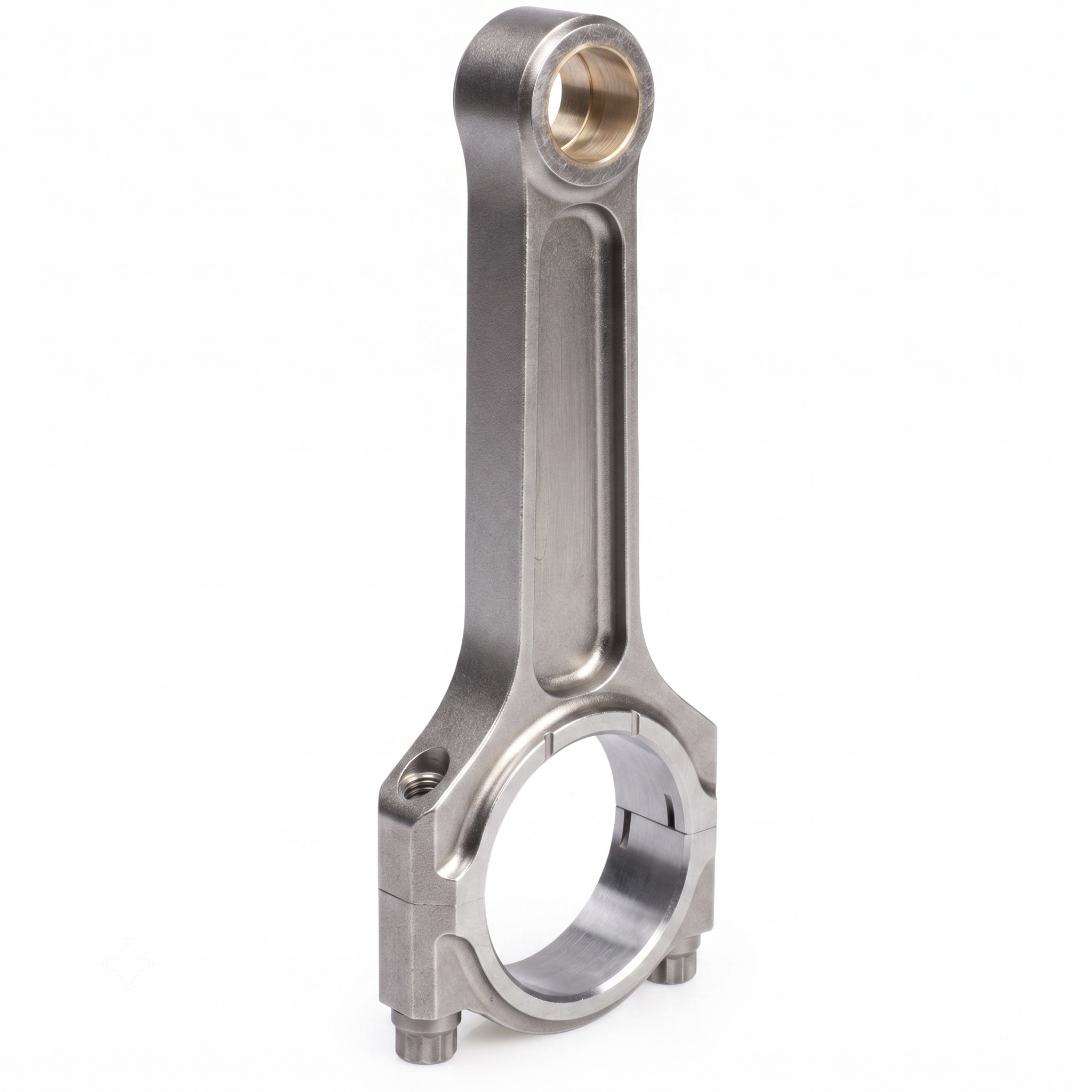 | The I-HD (Pro Series I-Beam Turbo Tuff) is Manley's reinforced I-beam design: an optimised I-section that is lighter than an H-beam while retaining strong resistance under high boost pressure. This trade-off limits the inertia of the rotating assembly and favours quick revs, a key point on a fast-responding twin-turbo V6 such as the VR30DDTT. + Optimised I-section (Pro Series I-Beam Turbo Tuff) |
This rod is supplied with ARP 2000 bolts, made in the USA. This alloy offers a tensile strength of about 220,000 psi (~1,517 MPa), well above factory fasteners. In 3/8" diameter, the size used here, ARP 2000 supports up to roughly 200 hp per cylinder, well beyond the power levels targeted on a tuned VR30DDTT. Strong, reliable and versatile, it can be reused as long as the stretch procedure is followed, and it has no particular storage constraints, which makes it a standard choice for rally, circuit racing, drift, drag and hillclimb.
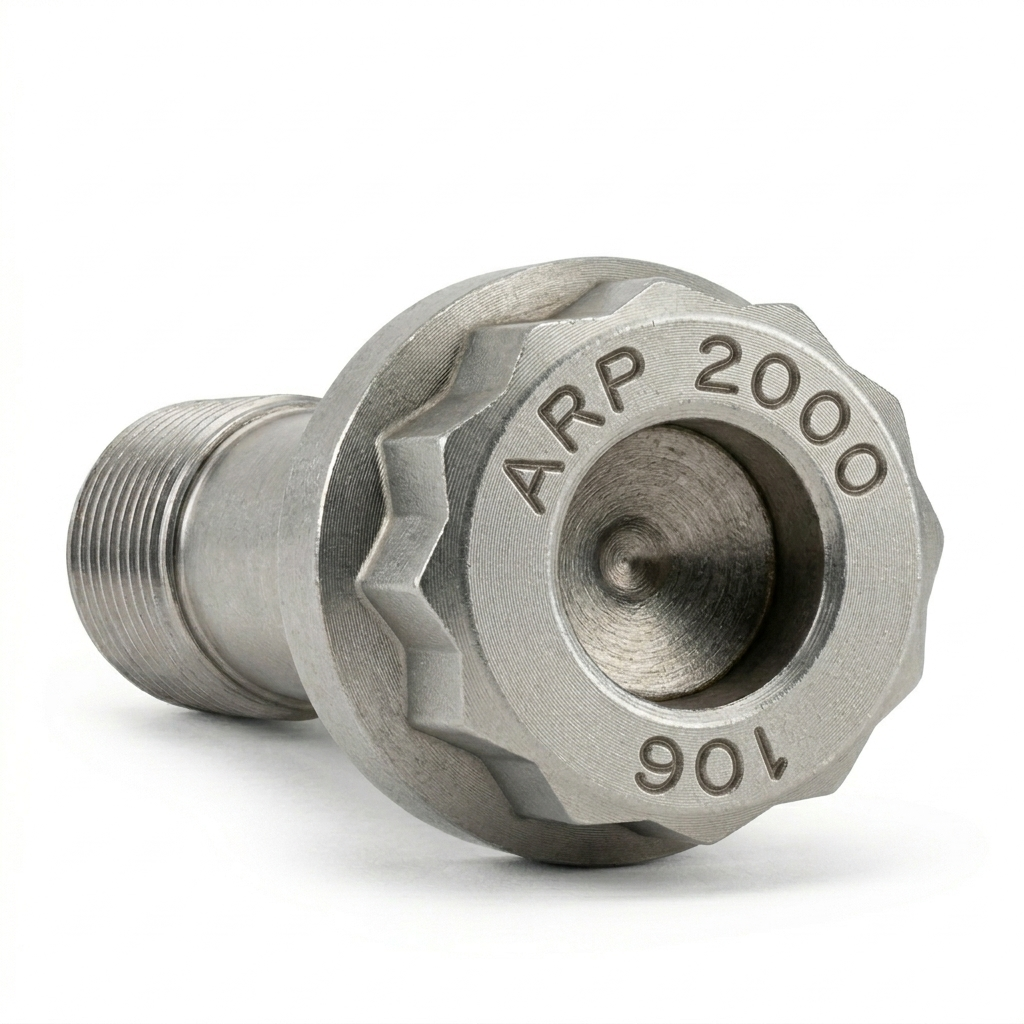 | ARP 2000: this modified 8740 steel, with tensile strength around 220,000 psi (close to 1,517 MPa), is the standard of engine building. In 3/8" it covers outputs up to about 200 hp per cylinder and speeds up to 8,500 rpm, which takes in almost every tuned VR30DDTT, from track days to drag racing. Unlike the more extreme grades it needs no particular storage precautions, and here it is torqued to 81.3 N·m for a stretch of 0.147 to 0.157 mm. |
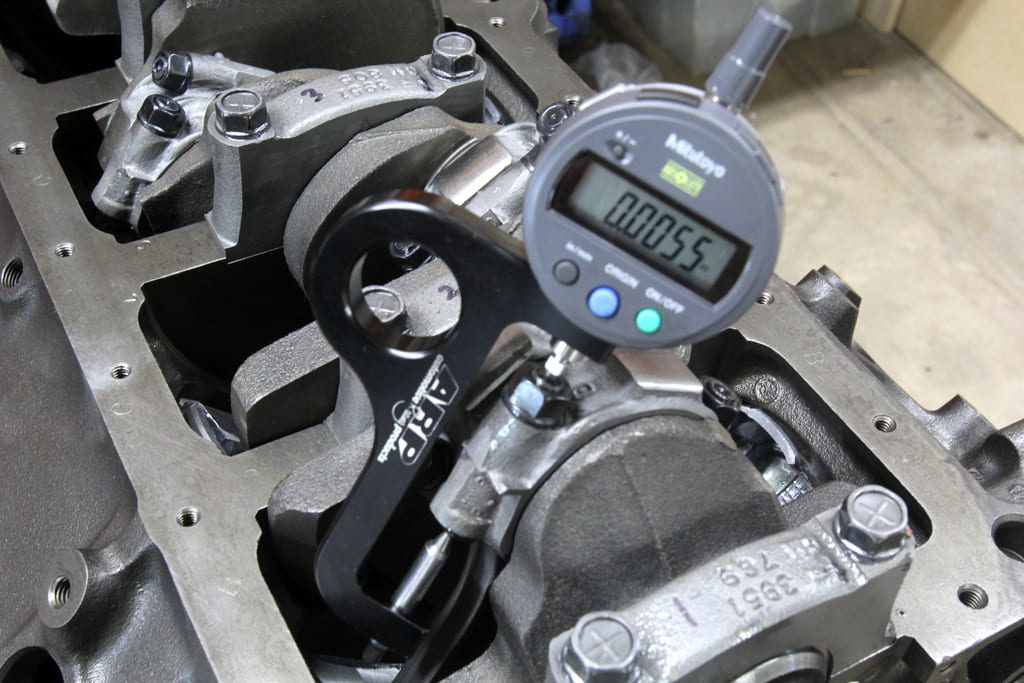
Rod bolt preload is controlled by measuring length, not torque alone. Using a stretch gauge, the bolt is measured at rest and then torqued: the difference must match the recommended stretch (here 0.147 to 0.157 mm). This method guarantees even preload across all rods, removes the uncertainty caused by thread friction, and remains the reference for a reliable high-performance build.
 | Manley Performance is an American manufacturer of competition engine parts, part of the Wiseco group. Its rods are forged, machined, then inspected and weight-matched, with tightly controlled weight variance from rod to rod. Known for consistency and durability, Manley rods equip rally and circuit racing engines as well as the most demanding drag and drift builds. |
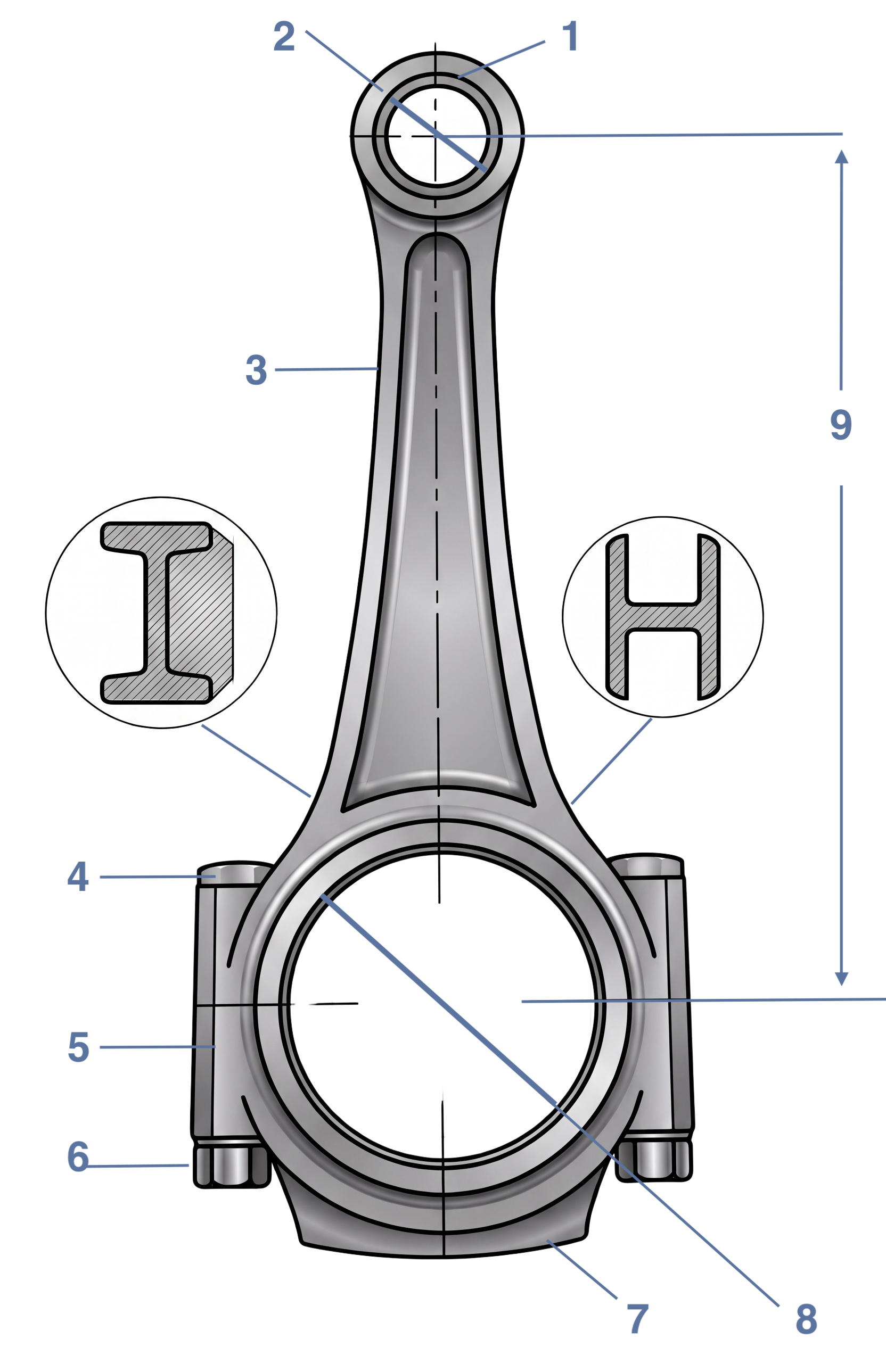 | 1) Small end 2) Small-end diameter 3) Rod beam 4) Rod bolt 5) Big end 6) Rod nut / bolt 7) Rod cap 8) Big-end diameter 9) Center-to-center |
Listed below are the vehicles equipped with the Nissan 3.0L 24V Biturbo VR30DDTT engine. Before ordering, take the piston pin diameter and the rod length from the engine concerned.
| Make | Model (chassis) | Engine code | Power | Years |
|---|---|---|---|---|
| Infiniti | Q50 (V37) 3.0t | VR30DDTT | 305 hp (224 kW) | since 2015 |
| Infiniti | Q50 (V37) Red Sport 400 | VR30DDTT | 405 hp (298 kW) | since 2015 |
| Infiniti | Q60 Coupe (V37) 3.0T | VR30DDTT | 305 hp (224 kW) | since 2016 |
| Infiniti | Q60 Coupe (V37) Red Sport 400 | VR30DDTT | 405 hp (298 kW) | since 2016 |
| Nissan | Skyline (V37, JDM) | VR30DDTT | 305 hp (224 kW) | 2019 to 2023 |
| Nissan | Z (RZ34) | VR30DDTT | 405 hp (298 kW) | since 2022 |
| Nissan | Z (RZ34) NISMO | VR30DDTT | 420 hp (309 kW) | since 2023 |
OEM reference: not sold separately by the manufacturer (set of 6 rods).
Investing in forged connecting rods protects the whole engine. The price of a rod set is nothing compared with the cost of an engine failure, which often takes the piston, crankshaft and block with it. On a tuned VR30DDTT, the factory rotating assembly becomes the weak link: fitting a forged 4340 rod with ARP 2000 bolts extends engine life and lets you pursue more power with confidence.
The reasoning is as much accounting as engineering: a set of six forged rods is a modest share of a build budget, whereas a rebuild after a failure adds up crankshaft, pistons, block and labour on a V6 that is anything but easy to reach. Fitting the rods while the engine is already open removes that risk and unlocks the VR30DDTT potential instead of capping it.