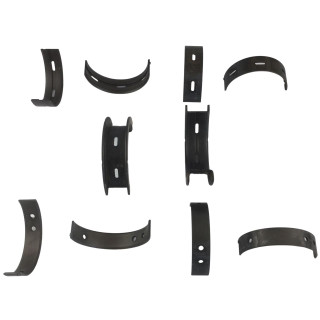
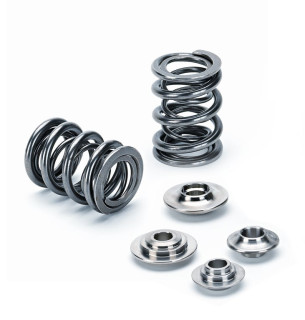
- On order
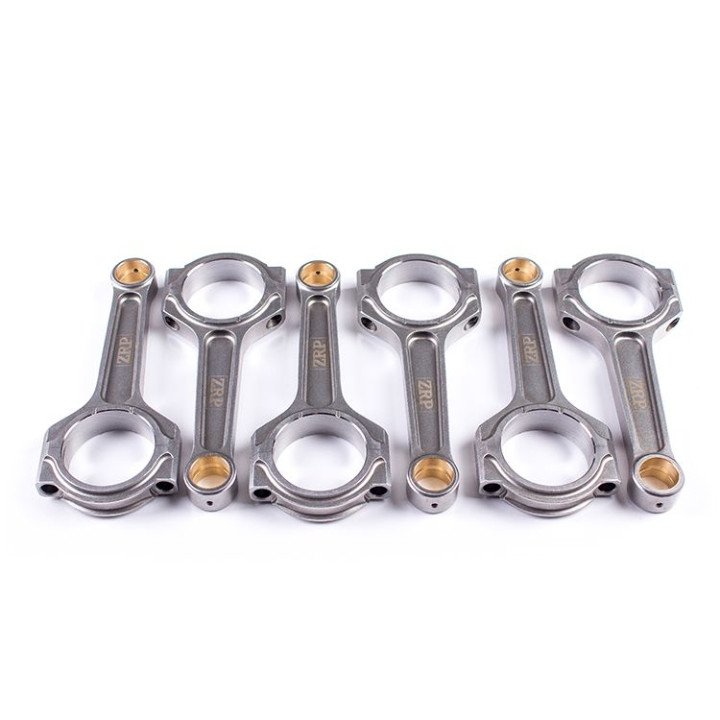
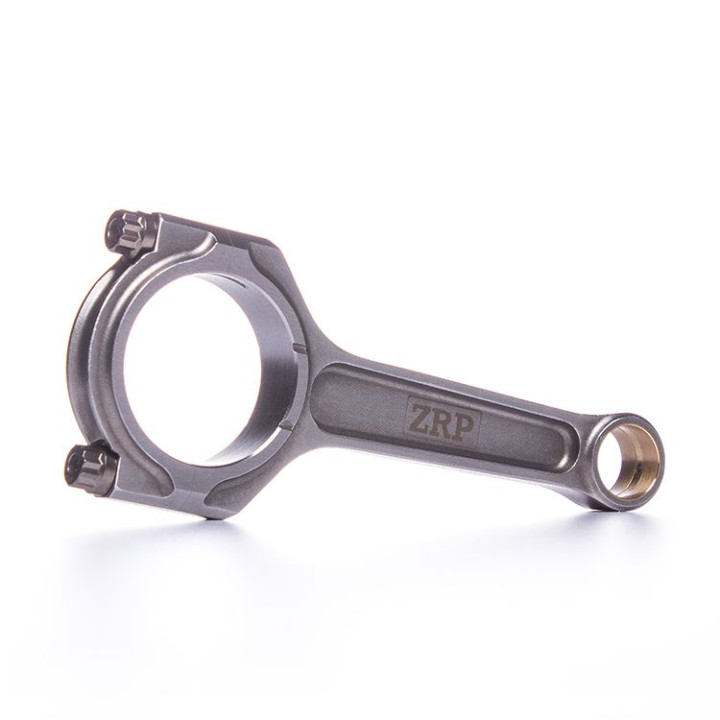


Forged connecting rods BMW - 3.0L 24V - N55B30 / S55B30 for forged pistons
Set of 6 forged 4340 steel connecting rods for BMW N55B30 / S55B30.
- Brands: ZRP, Manley
- Compatibility: 335i (F30), M2 (F87), M3 (F80), M4 (F82)
- Engine codes: N55B30, S55B30
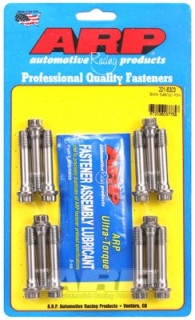
- Bolts included: ARP 2000 or ARP L19
The BMW N55B30 / S55B30 engine
The N55B30 is the 2,979 cc turbocharged inline-six that took over from the N54 in 2010. Direct injection, Double-VANOS, Valvetronic variable lift and a single twin-scroll turbo: a flexible, responsive engine found from the 135i to the 640i, including the 335i, 435i, 535i and the first M2.
The S55B30 is its M version, twin-turbo, with a closed-deck block and uprated cooling, powering the M3 (F80), M4 (F82), M2 Competition and M2 CS for 411 to 500 hp. On both blocks, raising boost pressure quickly exceeds what the original rotating assembly can take: that is where forged rods become essential to make intensive use reliable.
Forged connecting rods
Hot-forged, a rod has its steel grain follow the contour of the part, giving it endurance and shock resistance far beyond an original sintered rod. Precision machining then follows, then balancing, ensuring smooth running at high rpm.
Two manufacturers share this listing: ZRP in I profile, Manley in H and I-HD "Turbo Tuff" profiles. All forge in 4340 nickel-chromium-molybdenum steel and supply the set of six with its ARP bolts.
Technical specifications
| Reference | Brand | Profile | Bolts | Pin diameter OEM 22 mm | Small-end width | Big-end diameter OEM 53.6 mm | Big-end width | Center-to-center OEM 144,35 mm | Weight per rod |
|---|---|---|---|---|---|---|---|---|---|
| 14079-6 | Manley | H | ARP 2000-3/8"-41mm | 22 mm | 53.6 mm | 20.9 mm | 144 mm | 565 g | |
| 14449-6 | Manley | I-HD | ARP 2000-3/8"-41mm | 22 mm | 53.6 mm | 20.9 mm | 144 mm | 555 g | |
| R-BMW-019-I | ZRP | I | ARP 2000-3/8"-38mm | 22 mm | 53.6 mm | 20.9 mm | 144 mm | 487 g | |
| R-BMW-019-I-L19 | ZRP | I | ARP L19-3/8"-38mm | 22 mm | 53.6 mm | 20.9 mm | 144 mm | 487 g |
ZRP: Straight, non-tapered pin end.
Torque and bolt stretch
| Rod | Bolts | Max torque (N·m) | Stretch (mm) |
|---|---|---|---|
| Manley (14079-6) | ARP 2000 | 88.1 | 0.147 – 0.157 |
| Manley (14449-6) | ARP 2000 | 81.3 | 0.147 – 0.157 |
| ZRP (R-BMW-019-I) | ARP 2000 | 61 | 0.140 – 0.152 |
| ZRP (R-BMW-019-I-L19) | ARP L19 | 67.8 | 0.152 – 0.165 |
Manufacturers rank stretch measurement (stretch gauge) above torque alone; the kit's instructions remain the ultimate reference. The values above assume the use of ARP lubricant.
Technical guide
4340, a steel that takes it
|
Alloyed with nickel, chromium and molybdenum, 4340 reaches high strength while keeping enough flexibility not to snap. Against the original sintered metal, measurements show nearly 19% more yield strength, 8% in tension and 19 to 37% in fatigue depending on the case, enough to hold the pressure of a remapped N55 or S55 without flinching. |
The rod profiles
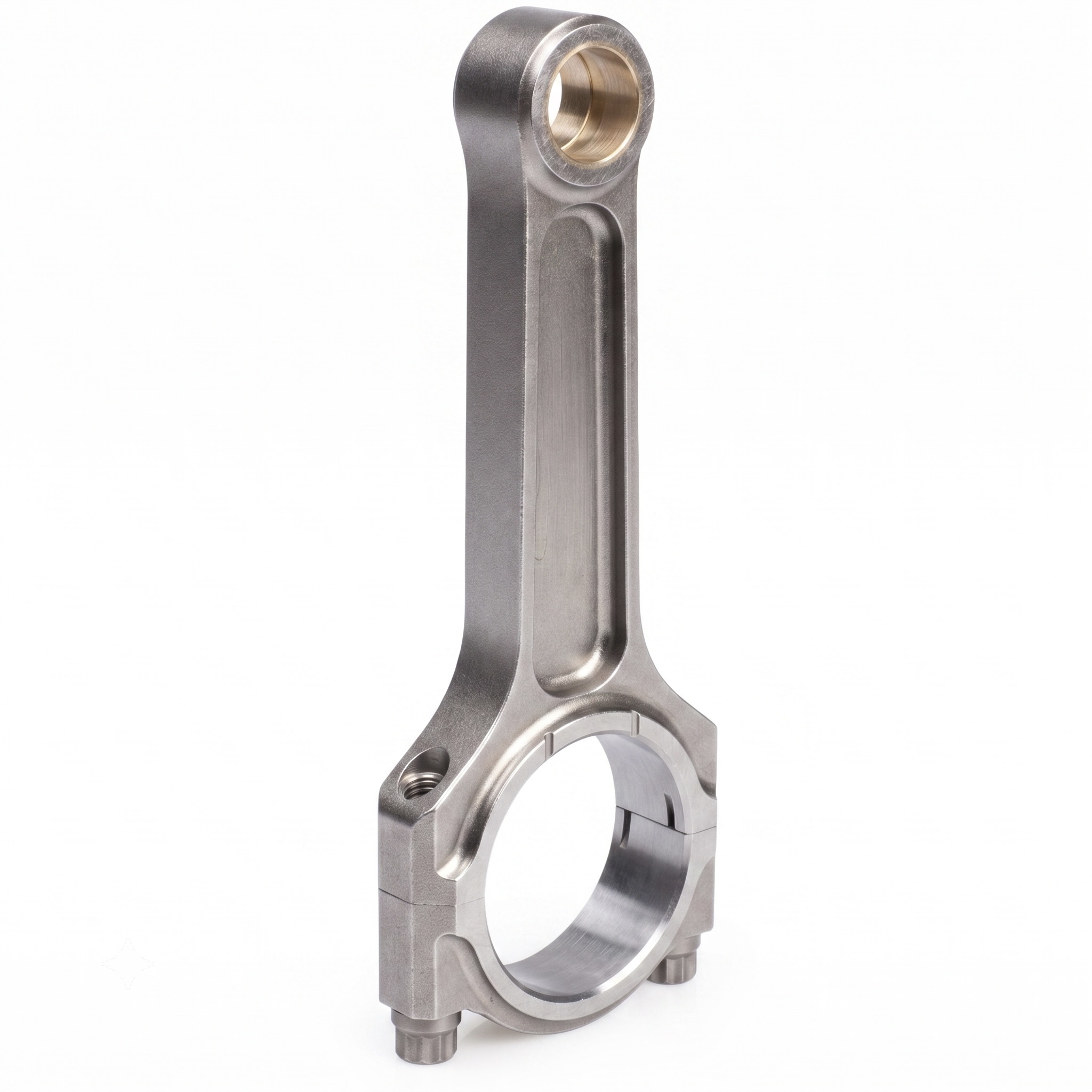 |
I profile / I-Beam (ZRP I and Manley I-HD) Its slimmer central web, framed by two flanges that give it its “I” shape, keeps the rod very stiff while holding its mass in check. On modern turbo engines such as the N55B30 or S55B30 it is the preferred profile, equally relevant for making the bottom end reliable and for supporting an increase in boost pressure. Its I-HD (Heavy Duty) version, offered here by Manley as the Pro Series I-Beam “Turbo Tuff”, has a reinforced, thicker beam intended for extreme loads with turbo, supercharger or nitrous oxide. |
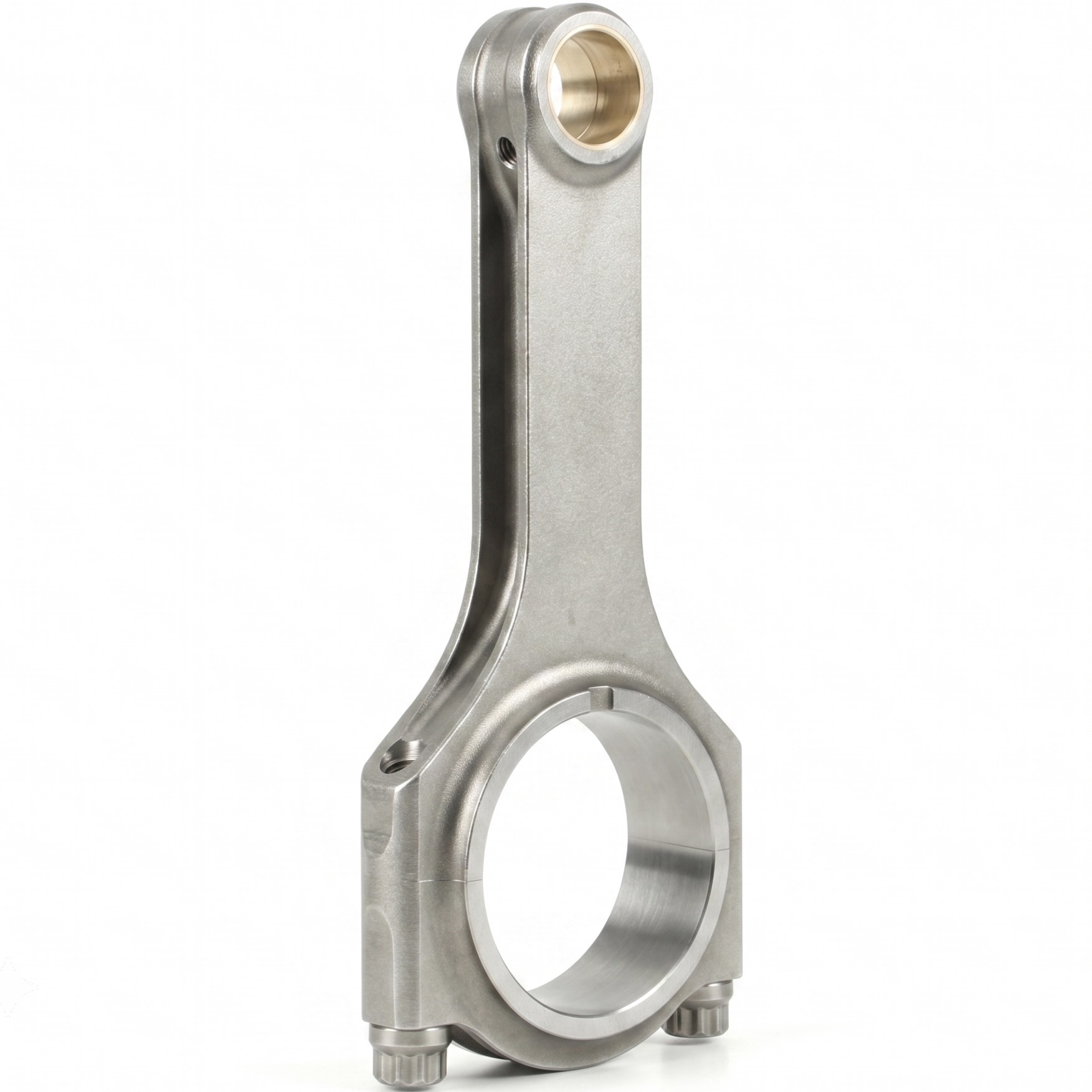 |
H profile / H-Beam (Manley H) Made up of two wide flat sides joined by a central web, its “H” section gives the rod a massive, even outline along its whole length. On a turbo engine such as the N55B30 or S55B30, this robust and versatile profile suits mainstream builds, whether the aim is to make the bottom end reliable when switching to forged pistons or to support a moderate increase in boost pressure. |
How to choose your rod bolts? 
It is the rod bolt that ensures the cohesion of the whole. This kit comes with two families of ARP hardware.
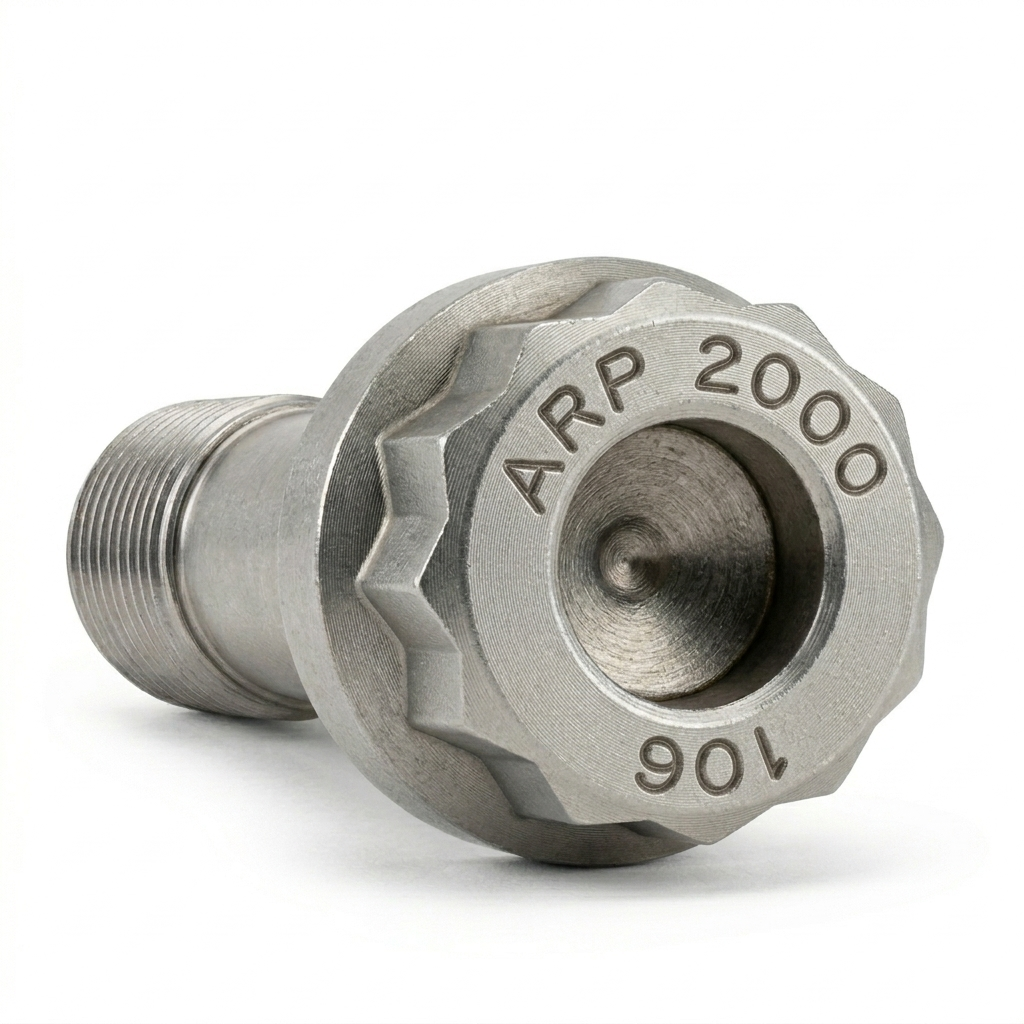 |
ARP 2000 Versatile and with no storage worries, it is the safe bet. In 3/8" it holds up to around 200 hp per cylinder and 8,500 rpm, covering most uses: track, trackday, drift, rally, drag, hillclimb. |
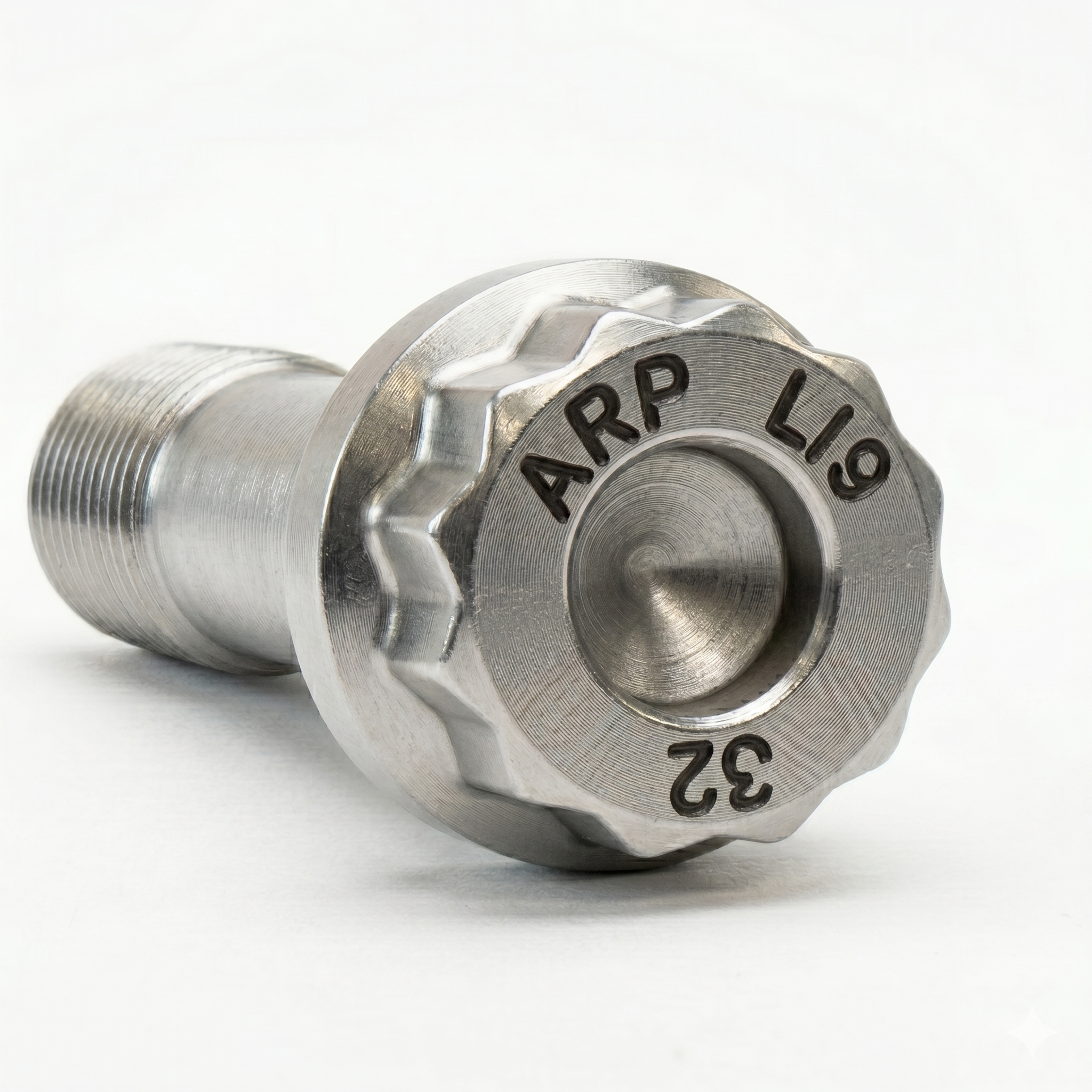 |
ARP L19 (tensile strength of approximately 260,000 psi, or ~1,793 MPa) When the engine plays in the big league (sustained high revs, strong cylinder pressure), the L19 takes over: around 250 hp per cylinder and 10,000 rpm in 3/8". More sensitive to corrosion and hydrogen, it calls for oiled storage and fitting. |
Measuring bolt stretch
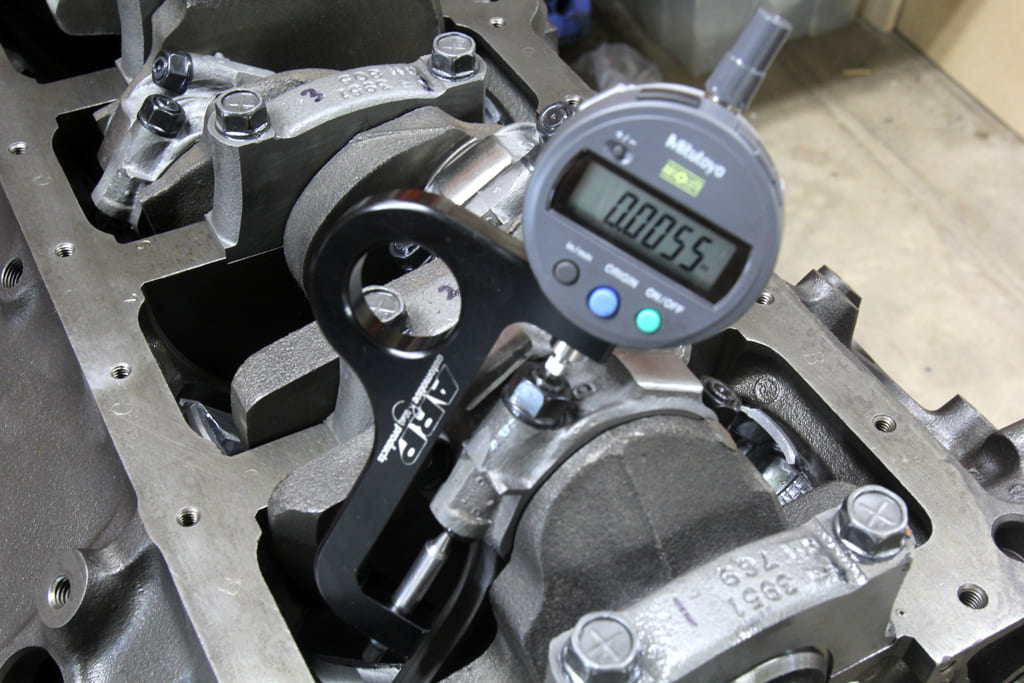
| On big builds, bolt stretch reflects the true preload far better than torque, which depends too much on friction. With an ARP stretch gauge, the check is done directly, bolt tightened. |
The brands offered
 |
MANLEY, an American manufacturer of forged connecting rods since 1966. Machined from vacuum-degassed aerospace-grade 4340 steel, shot-peened and inspected one by one, its « Turbo Tuff » rods come in H and I profiles, with ARP 2000 bolts. A major name in engine building, from street to competition. |
 |
ZRP, a Greek brand of high-performance forged connecting rods, designed by Alex Drakos in Athens. Each rod is forged from 4340 steel, precision-machined and balanced to ±1 g to stay reliable at high rpm. Available in I-beam or H-beam profile with ARP 2000 or L19 bolts, they are designed and inspected in Greece, and proven in rally, on circuit and in drift. |
Glossary
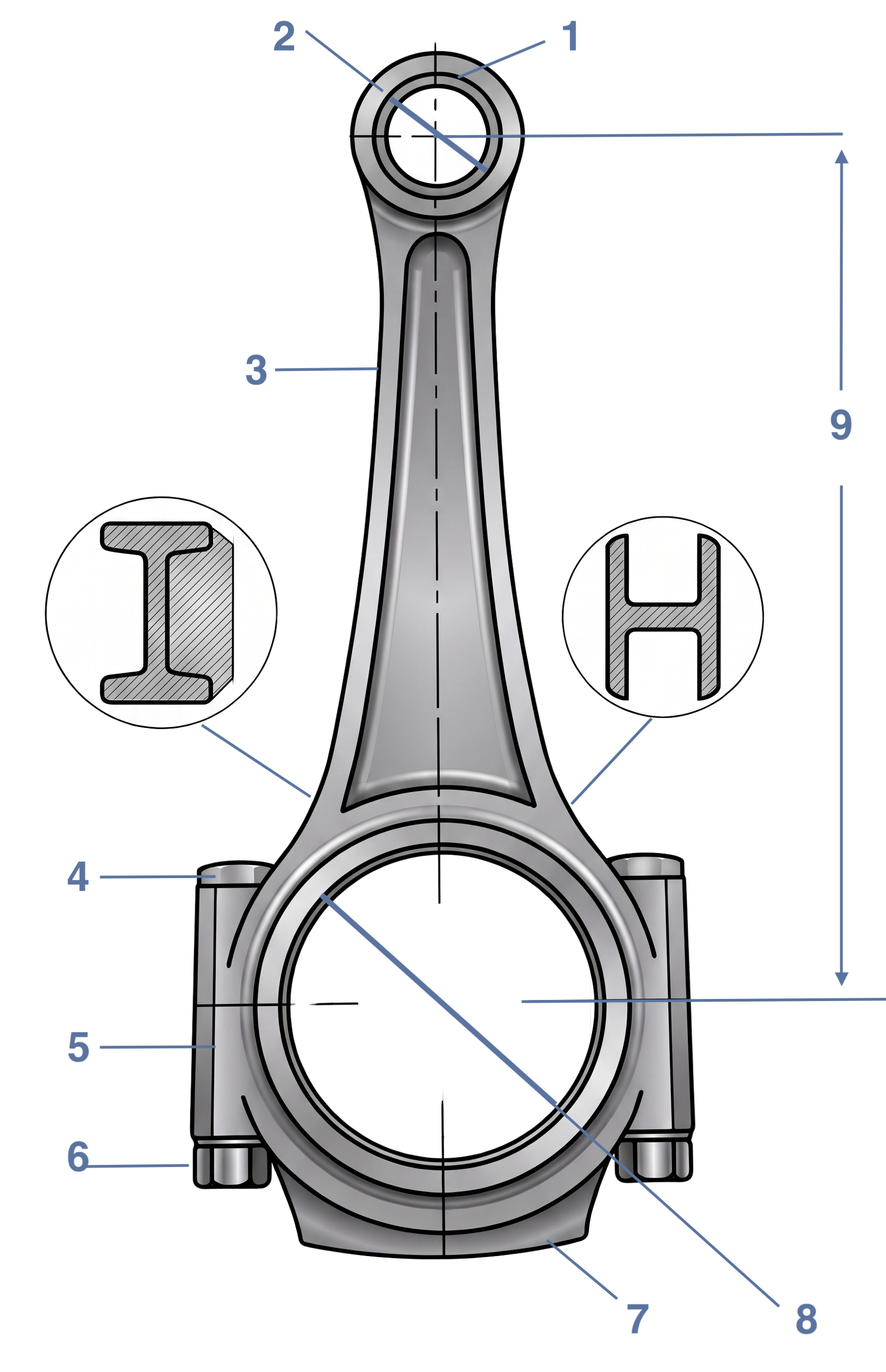 |
1) Small end 2) Small-end diameter 3) Rod beam 4) Rod bolt 5) Big end 6) Rod nut / bolt 7) Rod cap 8) Big-end diameter 9) Center-to-center |
Vehicle compatibility
Listed below are the vehicles equipped with the BMW 3.0L 24V N55B30 / S55B30 engine. Before ordering, take the piston pin diameter and the rod length from the engine concerned.
| Brand | Model (chassis) | Engine code | Power | Years |
|---|---|---|---|---|
| BMW | 135i (E82/E88) | N55B30 | 306–326 hp | 2010–2013 |
| BMW | M135i (F20/F21) | N55B30 | 320–326 hp | 2012–2016 |
| BMW | M235i (F22/F87) | N55B30 | 326 hp | 2013–2016 |
| BMW | M2 (F87) | N55B30 | 370 hp | 2015–2018 |
| BMW | 335i (E90/E92) | N55B30 | 306–326 hp | 2010–2011 |
| BMW | 335i (F30) | N55B30 | 306–340 hp | 2011–2015 |
| BMW | 435i (F32/F82) | N55B30 | 306–340 hp | 2013–2016 |
| BMW | 535i (F10) | N55B30 | 306–326 hp | 2010–2016 |
| BMW | 640i (F06/F13) | N55B30 | 320 hp | 2011–2017 |
| BMW | M2 Competition (F87) | S55B30 | 411 hp | 2018–2021 |
| BMW | M2 CS (F87) | S55B30 | 450 hp | 2019–2021 |
| BMW | M3 (F80) | S55B30 | 431 hp | 2014–2018 |
| BMW | M3 Competition (F80) | S55B30 | 450 hp | 2016–2018 |
| BMW | M4 (F82) | S55B30 | 431 hp | 2014–2020 |
| BMW | M4 Competition (F82) | S55B30 | 450 hp | 2016–2020 |
| BMW | M4 GTS (F82) | S55B30 | 500 hp | 2016–2017 |
OEM reference: 11 24 7 624 615 (jeu de 6, remplace 11 24 7 586 492)
Why it is the most cost-effective solution
On a pushed N55 or S55, losing an original rod usually means rebuilding the block and head, no comparison with the cost of a forged set. Fitting them from the outset shelters the engine for the long run and protects the whole rotating assembly.
A complete, balanced, ready-to-fit set: no back-and-forth to the workshop, no nasty surprise. The extra cost stays modest given what the engine is worth and the peace of mind behind the wheel.
-
Brand
-
ReferenceR-BMW-019-I